Quick checklist before establishing a hazelnut orchard
Content generated by artificial intelligence — verify before application
This article was automatically compiled from a collection of hazelnut literature using artificial intelligence and may contain errors or outdated information. It serves as a starting point for further research, not as professional advice. Dosages, products, and timelines are informative and depend on the cultivar, location, and applicable regulations — always verify with advisory services and official sources before implementation.
This checklist is intended as a one-page entry point for anyone considering establishing a hazelnut orchard. A hazelnut orchard bears fruit for 50 years or more, so mistakes in the first phase (wrong terrain, unsuitable cultivar, lack of pollinizers, underestimating machinery costs) are paid for over decades. The goal of this list is not to replace detailed articles, but to give you a sequence of checks and warn you about what is most often forgotten. Each item is briefly explained and linked to the parent article that elaborates on the topic in full. Go in order: top-level decisions (economics, terrain, water) determine everything else, and they are the most expensive to fix later.
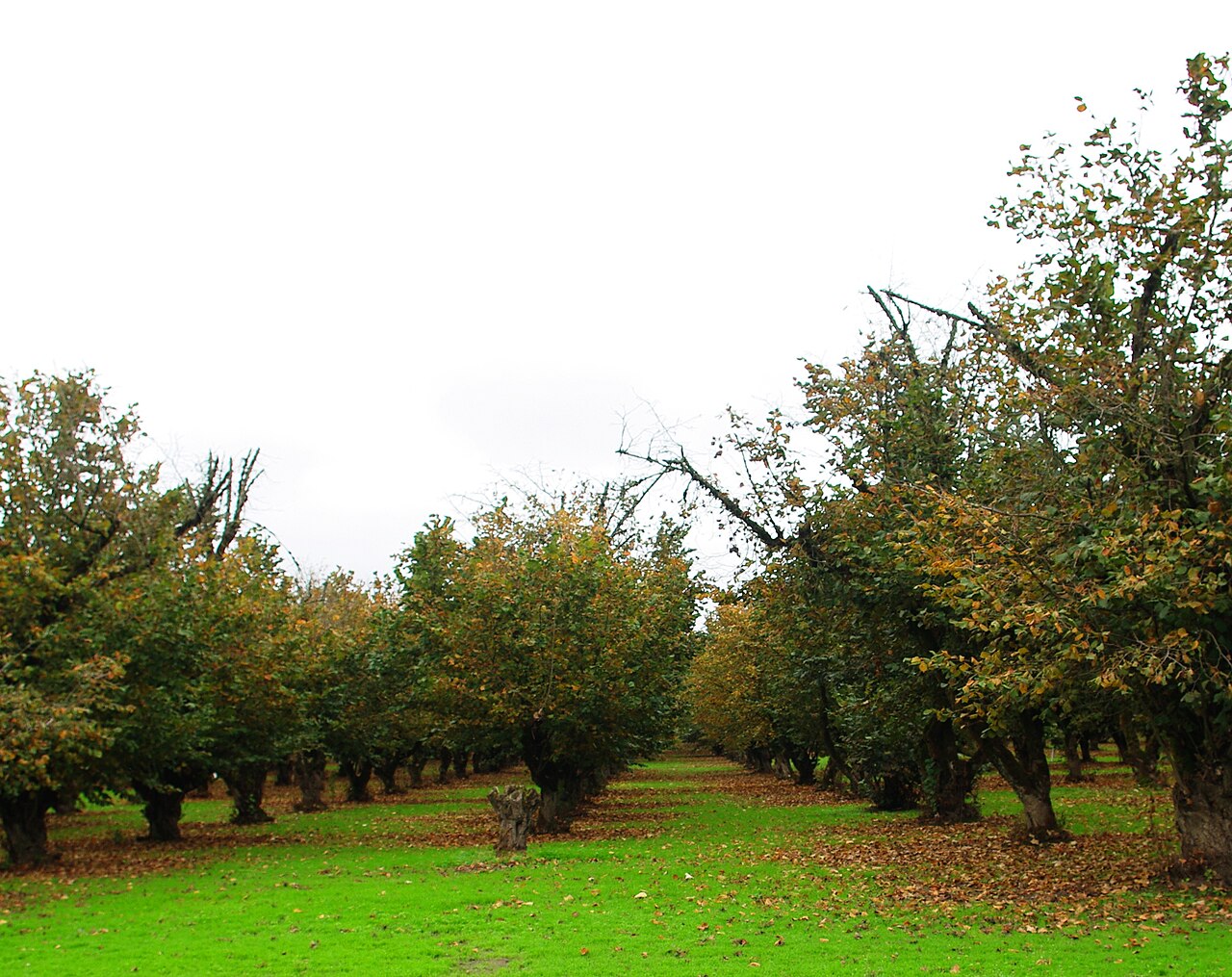
How to use this checklist
The list is organized by decision sequence, not alphabetically. Go through each item and mark it only when it is truly resolved (you have a document, analysis, quote, or signed plan — not just "I think it's OK"). The rule is simple: first the numbers, then the terrain, then the shovel. A technically perfect orchard on a wrongly chosen or unprofitable location is still a failure.
| Phase | What it covers | Approx. timeline before planting |
|---|---|---|
| A. Decision and economics | Market, economic analysis, legal form, subsidies | 12+ months |
| B. Terrain and resources | Climate, site, soil, water and drainage | 9–12 months |
| C. Biological choice | Cultivar, pollinizers, planting material | 6–12 months |
| D. Technical project | Spacing/density, blocks, machinery | 3–9 months |
| E. Preparation and planting | Clearing, amelioration, trenching, planting | summer–autumn |
A. Decision, market, and legal framework
☐ 1. Economic profitability analysis
Check: has a preliminary budget of investment and cash flow for the first 8–10 years been prepared? Hazelnuts do not reach full production until years 5 to 8, meaning several years of investment without income. The corpus explicitly emphasizes that an economic profitability analysis should be conducted before deciding to establish an orchard, and only then the technical part.
The largest cost item is usually not planting, but machinery for harvest and processing (vacuum harvester, dryer, grader). Plan for this now, not after planting.
➡️ Parent article: Is hazelnut cultivation profitable? · Economics of establishment and operation
☐ 2. Market and sales
Check: to whom and in what form are you selling (raw nuts in shell, shelled, processing/added value)? Is there a buyer nearby, or do you plan your own processing? Historically, Croatian producers had problems with marketing after the termination of large contractual chains, so do not leave marketing "for later."
➡️ Parent article: Market, prices, and sales
☐ 3. Legal form and records
Check: do you have the appropriate legal form (most commonly an OPG [Family Farm], but also a sole proprietorship or d.o.o. depending on size and ambition)? Are you registered in the required registers (e.g., Register of Farmers) and do you have proof of land use rights (ownership or lease for a sufficiently long term — the orchard lasts for decades)?
➡️ Parent article: Regulations, subsidies, and legal framework
☐ 4. Subsidies and co-financing
Check: which subsidies (direct payments, rural development measures / Strategic Plan of the CAP, subsidies for establishing perennial orchards) can you use, and what are the conditions/deadlines for calls? Conditions change — check current calls with the Payment Agency and advisory services before planning your investment schedule.
➡️ Parent article: Regulations, subsidies, and legal framework
B. Terrain, soil, and water
☐ 5. Climate and site position
Check: does the microclimate suit hazelnuts? Hazelnut is a heliophyte (requires full sun) and is thermophilic, but it blooms very early (in winter/late winter), so late frosts are dangerous for flowers and newly set nuts. Avoid frost pockets (hollows, enclosed depressions) and overly windy, exposed sites.
| Parameter | Approximate recommendation from literature | Note |
|---|---|---|
| Precipitation | ~700 mm/year (need ≥500 mm is also cited) | with less — irrigation is mandatory |
| Light | full sun, heliophyte | avoid shading |
| Topography | preferably flat to gently sloping | for mechanical harvest |
| Frost pockets | avoid | early blooming = risk of late frost |
➡️ Parent article: Site selection and assessment · Phenology, dormancy, and climate
☐ 6. Soil analysis (pedological and chemical)
Check: has a soil analysis been performed before any fertilization? This is the most frequently repeated mandatory action in the corpus: "Before establishing an orchard, a soil analysis is mandatory." The goal is to determine phosphorus (P) and potassium (K) availability, content of physiologically active lime, organic matter (humus), and soil reaction (pH).
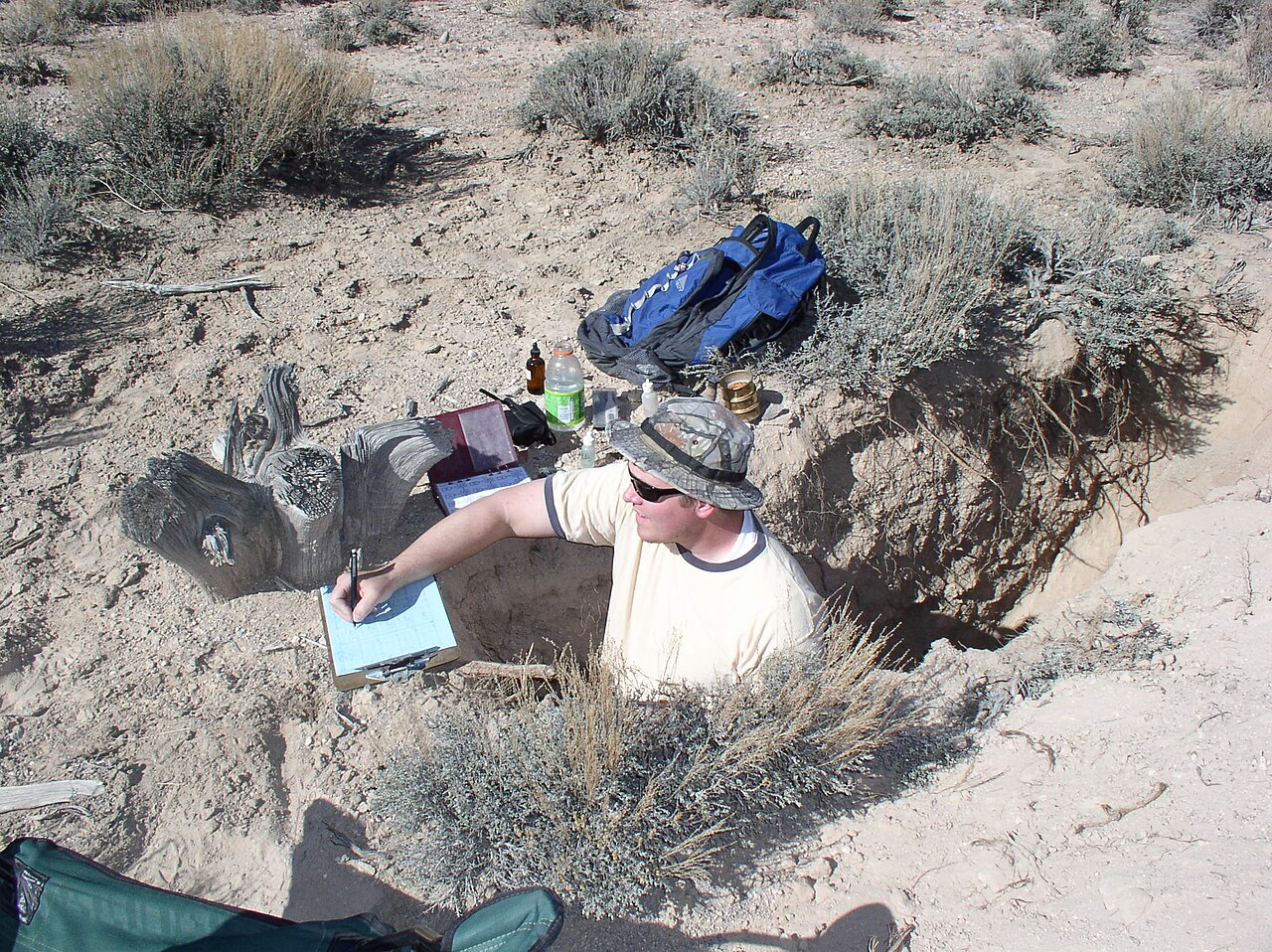
For chemical analysis, take at least two samples by depth:
- one from 0–30 cm depth,
- another from 30–60 cm depth.
Approximate target/reference values from literature (informative, depend on cultivar and location):
| Indicator | Approximate value | Source (RAG) |
|---|---|---|
| pH | ~6.0–8.0 (also cited ~7.0) | advisory / guide |
| Humus | ~3 % | cultivation guide |
| P₂O₅ | ~10 mg/100 g | cultivation guide |
| K₂O | ~15 mg/100 g | cultivation guide |
| Mg | ~10 mg/100 g | cultivation guide |
Based on the findings, the laboratory/advisor provides ameliorative (agromeliorative) fertilization — e.g., correction of P and K and liming of acidic soil. The figures are informative; apply the recommendation of an authorized laboratory.
➡️ Parent article: Soil preparation and amelioration · Nutrition and fertilization
☐ 7. Water and drainage
Check both sides of the same coin — enough water when needed and drainage of excess water:
- Irrigation: hazelnut is sensitive to drought during the vegetation period (especially in summer, during the nut filling stage). Does the plot have a water source (well, watercourse, reservoir, tanker delivery) and is the permit for water abstraction resolved? In practice, a "drip irrigation" system is planned, and irrigation is usually carried out from April to August.
- Drainage: hazelnut does not tolerate waterlogged soils during the vegetation period. Its root system is shallower than most fruit trees, so the root zone suffers quickly from excess water. Check the groundwater level and provide drainage if the soil is heavy/clayey.
➡️ Parent article: Irrigation and water management · Site selection and assessment
C. Cultivar, pollinizers, and planting material
☐ 8. Selection of main cultivar
Check: was the cultivar selected based on the climate of the location and market purpose (table nut/kernel, size, kernel percentage, frost and disease resistance)? Cultivar selection is cited in literature as the first step in establishing an orchard. In Croatia, Istarski duguljasti and Rimski are traditionally represented (more resistant to low temperatures); for mechanical harvest, cultivars whose nuts easily fall out of the husk are valued.
➡️ Parent article: Cultivar catalog · Genetics, breeding, and cultivars
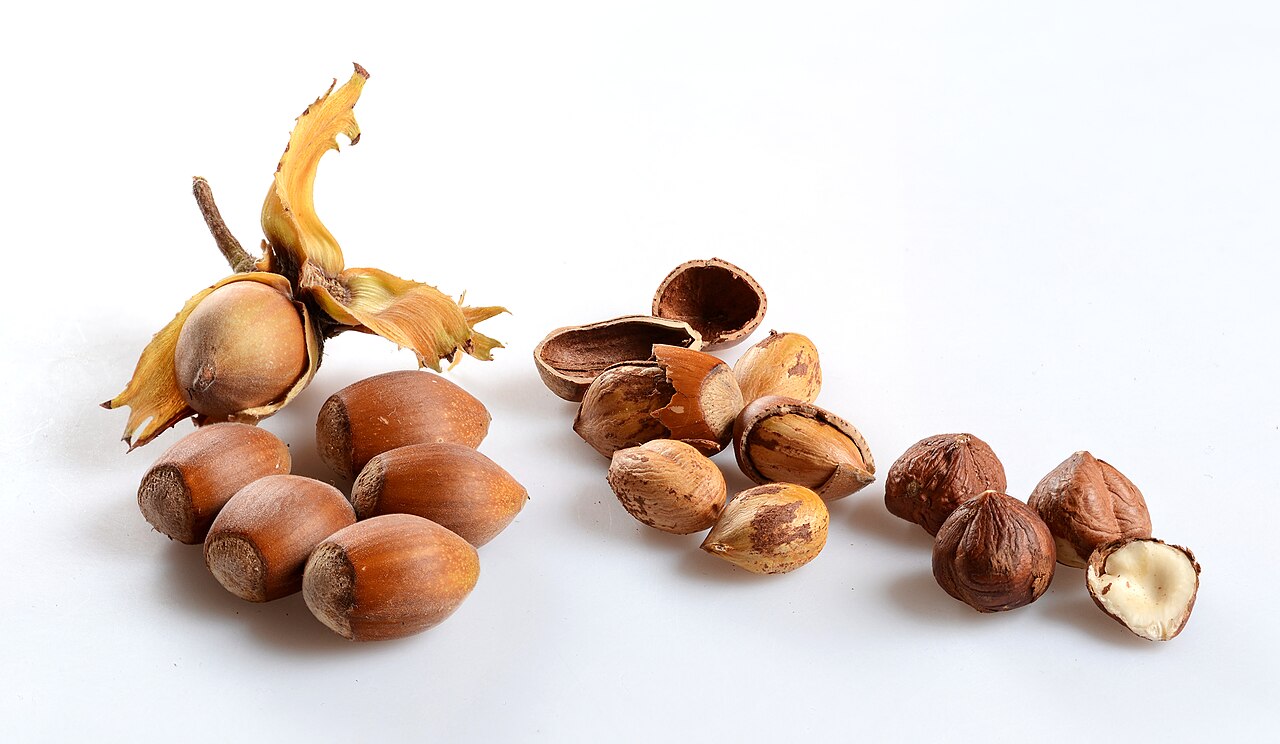
☐ 9. Pollinizer cultivars (CRITICAL!)
Check: has the planting of multiple pollinizer cultivars been planned? Hazelnut is monoecious but self-incompatible and is pollinated by wind, and the blooming of male and female flowers lasts a long time and does not always overlap. Without good pollination — there is no yield, no matter how good the main cultivar is.
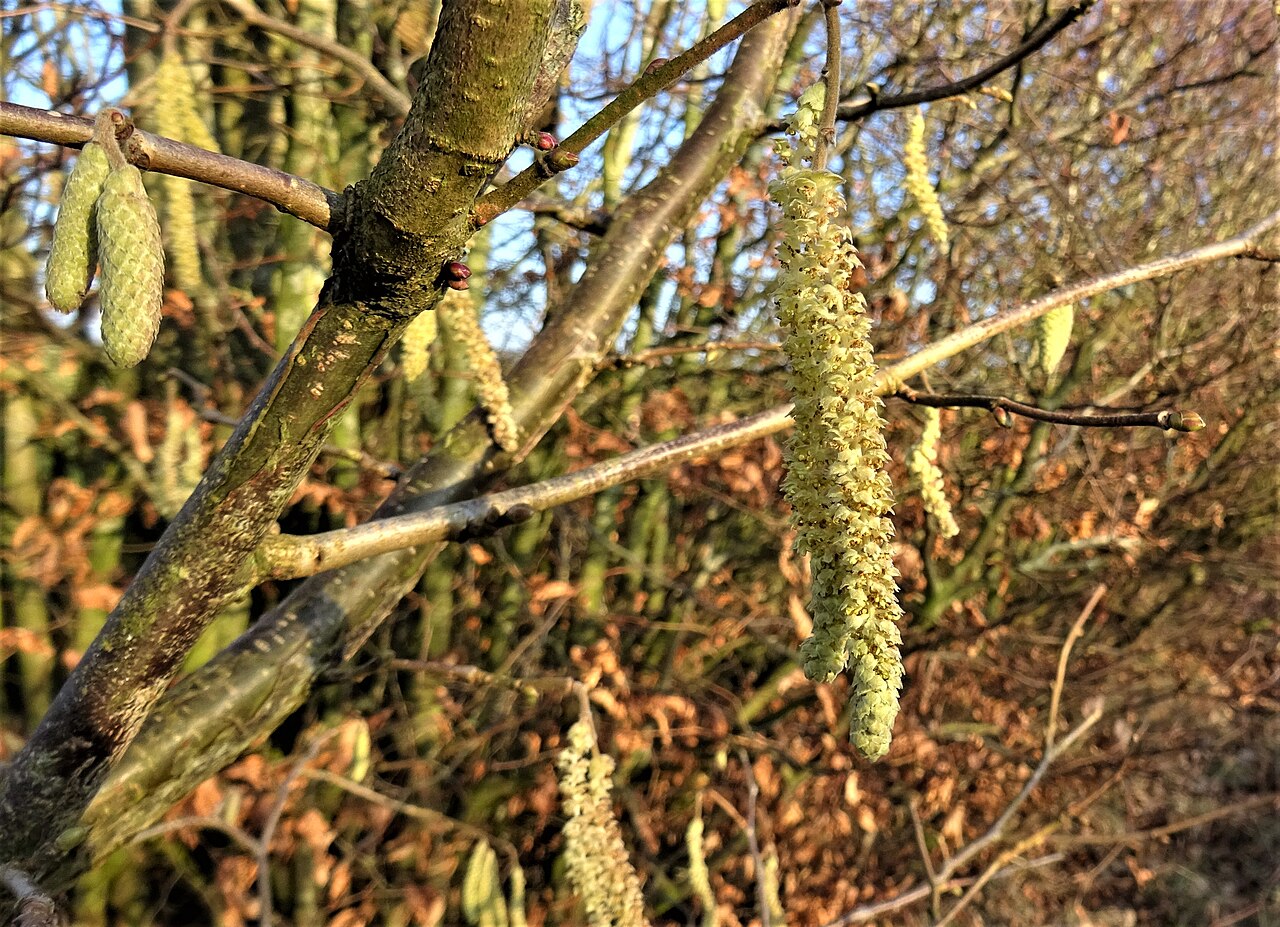
- Practical rule from the corpus: most commonly 1–2 main cultivars + 2–3 pollinizer cultivars (possibly 1+1), with mutual temporal overlap of blooming with the main cultivar.
- Foreign guidelines cite approximately ~8 % of trees as pollinizers, e.g., arranged so that every third row / every third tree is a pollinizer.
- Plant at least three bushes for guaranteed pollination (and preferably not all of the same cultivar).
➡️ Parent article: Cultivar catalog · Orchard design and planting
☐ 10. Certified planting material
Check: are you ordering seedlings on time and exclusively from reputable, certified nurseries (healthily sound, varietally pure material, declaration)? Quality planting material is one of the "critical points" on which the success of the entire project depends. Order seedlings 6–12 months in advance because good cultivars can sell out quickly.
➡️ Parent article: Planting material, propagation, nursery
D. Spacing, Density, and Mechanization
☐ 11. Planting Spacing and Stand Density
Check: Is the spacing aligned with harvest mechanization and the vigor of the cultivar? Overly dense spacing hinders machine passage and ground harvesting; overly wide spacing reduces yield per hectare in the first years.
| Spacing (row × plant) | Approximate Density | Note / Source |
|---|---|---|
| 5 × 4 m | ~500 trees/ha | Common in HR plans |
| 5 × 5 m | ~400 trees/ha | Traditional (min. 5 m to neighbor) |
| 6 × 6 m (≈20×20 ft) | ~267 trees/ha | Wide, adaptable |
| 5.5 × 5.5 m (≈18×18 ft) | ~331 trees/ha | Good soils, more intensive |
Figures are indicative and depend on the cultivar, training system (bush vs. tree), and machinery.
➡️ Main article: Orchard Design and Planting
☐ 12. Mechanization and Technological Investments
Check: How are you handling harvest and processing — own equipment, service providers, or cooperatives? The most frequently cited problem among Croatian producers is the high cost of mechanization (fruit collectors/vacuums, dryers, graders/sorters, shellers). Row spacing, lane width, and block layout must be aligned with the selected mechanization — this is why the terrain should ideally be flat.
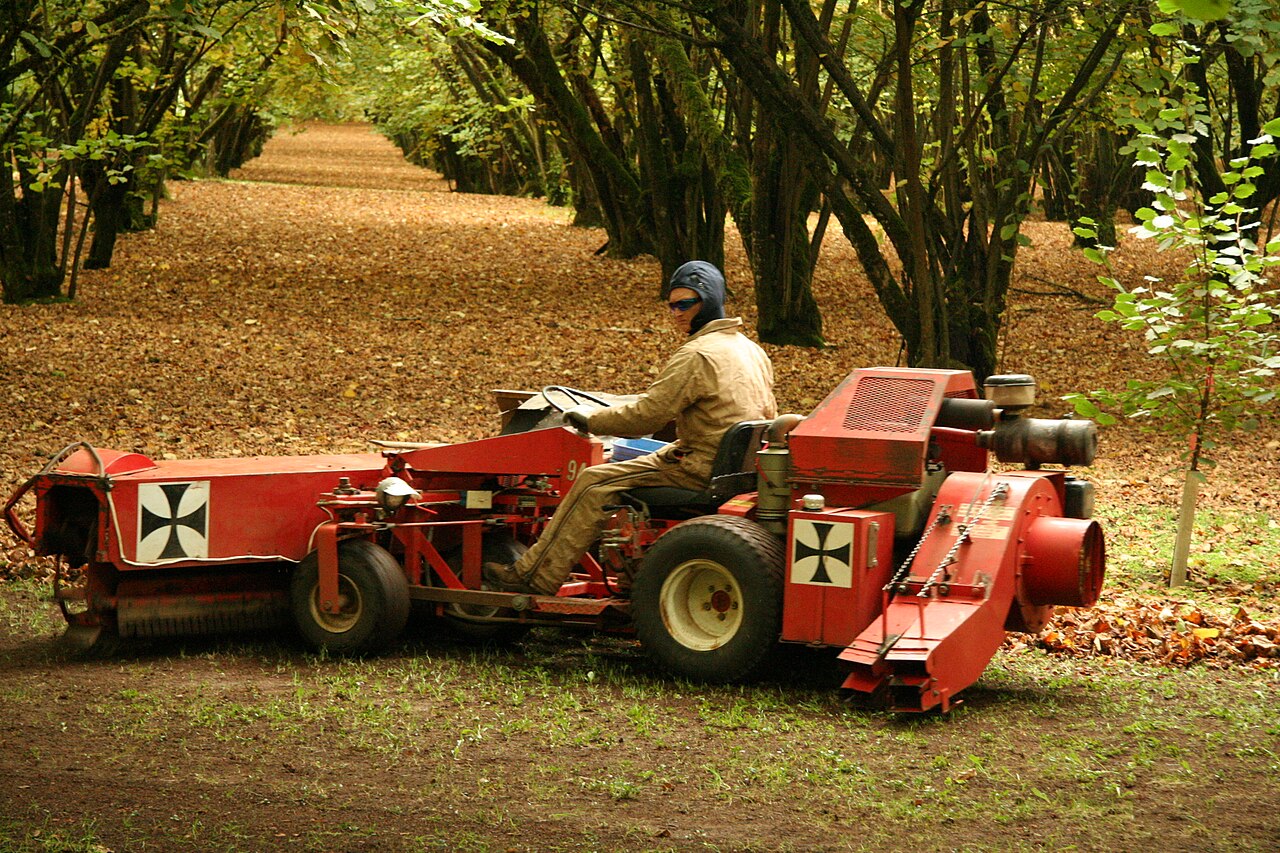
➡️ Main article: Mechanization and Technological Investments
☐ 13. Orchard Project: Blocks, Lanes, Row Orientation
Check: Is there a technological plan with division into blocks, technological lanes, row orientation (considering wind/pollination and slope), and a plotted layout of pollinizers? In larger Croatian projects, parcels are divided into blocks connected by lanes (e.g., a ~12 ha orchard divided into 4 blocks).
➡️ Main article: Orchard Design and Planting
E. Site Preparation and Planting
☐ 14. Soil Preparation and Meliorative Measures
Check the sequence of operations (usually summer before autumn planting):
- Clearing and cleaning — removal of volunteer vegetation, shrubs, stumps, stones; control of perennial weeds at least in the rows, ideally over the entire area.
- Meliorative fertilization based on soil analysis (correction of P, K; liming if necessary).
- Deep tillage — ripping followed by subsoiling (vibratory subsoilers are recommended as they do not invert the soil but loosen it to the desired depth, up to ~60 cm).
- Finishing — plowing, harrowing, rototilling for size reduction and leveling.
- On steep terrain — terracing.
➡️ Main article: Soil Preparation and Melioration
☐ 15. Planting Technique and Timing
Check: Are you planning autumn planting (recommended) and prepared planting holes/pits? From the corpus, for informational purposes:
- Planting holes are approximately 60×60 cm, ~50 cm deep (smaller, ~0.5 m, on well-supplied soils); in practice, machine digging with an auger Ø40 cm, ~40 cm deep is also used.
- Organic matter/humus and, if recommended, mineral fertilizer are added to the hole (e.g., ~10 kg of humus and ~0.5 kg of mineral fertilizer per hole — check according to analysis).
- The root collar should remain ~5 cm above soil level after planting.
- After planting: tamping, stake/support, abundant watering (30–50 L per seedling), and mulching (3–5 cm layer).
Rates, dimensions, and timing are indicative and depend on the cultivar, soil, and location — align them with recommendations from the advisory service.
➡️ Main article: Orchard Design and Planting
☐ 16. Care and Protection Plan for the First Years
Check: Do you have a pre-planned irrigation, fertilization, soil maintenance, training, and basic protection plan for years 1–4? If meliorative fertilization has been performed and the soil is well-supplied with P and K, hazelnut is generally top-dressed with nitrogen in early spring, before bud break. Hazelnut is attacked by relatively few diseases and pests — often 3–4 treatments under integrated pest management principles are sufficient.
➡️ Main articles: Canopy Training and Pruning · Soil Management and Sodding · Integrated Protection — Strategy · Orchard Work Calendar
Most Common Mistakes (which this checklist prevents)
- Planting without soil analysis. Blind fertilization wastes money and does not correct the actual deficiency (e.g., low P/K or acidic soil).
- Single cultivar without a pollinizer. The most expensive mistake — a vigorous, healthy orchard with no crop because there is no wind pollination.
- Neglected water. Without irrigation in dry summers, yield and quality drop; without drainage, roots suffer on heavy soils.
- Spacing misaligned with harvest. Machines cannot pass, ground harvesting is difficult — and spacing cannot be changed for 50 years.
- Mechanization "for later". Harvest/processing cost is the main cost; if this is not resolved (equipment/service/cooperative), the economics do not work.
- Placement "it will sort itself out". Without a buyer or processing, the nut loses value.
Golden Rule of Sequence
The items listed above (A and B — economics, site, water) determine the lower items (C, D, E). The cheapest corrections are made before you plant anything. Once you plant the wrong cultivar in a frost pocket without water, "fixing" it means a new orchard.
Sources
This article is an AI summary compiled from an internal literature collection on hazelnut (RAG corpus) and publicly available sources. The content is informational and may contain errors — verify with the advisory service and official sources before application. Main sources used:
- Ministry of Agriculture — Advisory Service: From Planting to Harvest of Hazelnut — https://savjetodavna.mps.hr/2017/10/24/od-sadnje-do-berbe-lijeske/
- Advisory Service: Hazelnut Cultivation Guide (2024) — savjetodavna.mps.hr
- Mechanization in Hazelnut Production and Processing at Minas-Zrno d.o.o. (2021) — RAG corpus (PDF)
- Huzjak, A.: Technology and Economic Efficiency of Organic Hazelnut Production at OPG Hobolić Alen (VGU repository, 2021) — RAG corpus (PDF)
- State and Trends in Hazelnut Production and Consumption — https://doi.org/10.31727/gzb.42.3.9
- Environmental protection assessments for establishing permanent hazelnut orchards (Donji Hrastovac/Sunja; Vojnić; Čuntić and Pecki; Grubišno Polje) — RAG corpus (PDF)
- Cultivation of Hazelnut (book) and other sources from the RAG corpus on soil preparation and spacing
- OSU Extension: Growing Hazelnuts in the Pacific Northwest — Orchard Design / Site Selection (EM 9077 / EM 9076) — https://extension.oregonstate.edu/sites/extd8/files/documents/em9077.pdf
- Province of British Columbia — Hazelnut plant spacing / Hazelnut Reference Guide (2023) — https://www2.gov.bc.ca/gov/content/industry/agriculture-seafood/agriservice-bc/production-guides/hazelnuts/hazelnut-orchard-design/plant-spacing
- Penn State Extension: Orchard Establishment — Checklist for New Plantings — https://extension.psu.edu/orchard-establishment-checklist-for-new-plantings
- Midwest Hazelnut Development Initiative: Hazelnuts 101 — Establishment — https://www.midwesthazelnuts.org/uploads/3/8/3/5/38359971/fact_sheet_series_2_establishment_final_jan_22.pdf