Machine Maintenance and Fleet Management
Content generated by artificial intelligence — verify before application
This article was automatically compiled from a collection of hazelnut literature with the assistance of artificial intelligence and may contain errors or outdated information. It serves as a starting point for further research, not as professional advice. Dosages, products, and timing are informative and depend on the cultivar, location, and applicable regulations — always consult with an advisory service and official sources before application.
Mechanization is one of the largest capital investments in modern hazelnut cultivation, but also one of the largest items in current operating costs. Tractors, atomizers, mowers, tillers, harvesters, dryers, and associated tools together form the fleet, the reliability of which directly determines whether work can be completed within tight agrotechnical windows. Poorly maintained machines break down precisely when they are most needed — in the midst of harvest, when every day of downtime means nuts lying on the ground for too long, increasing the risk of contamination and declining quality. This article explains how to establish a maintenance plan, organize a spare parts inventory, track operating hours, and systematically reduce downtime costs during the harvest season.
Why maintenance is a strategic, not just a cost, issue
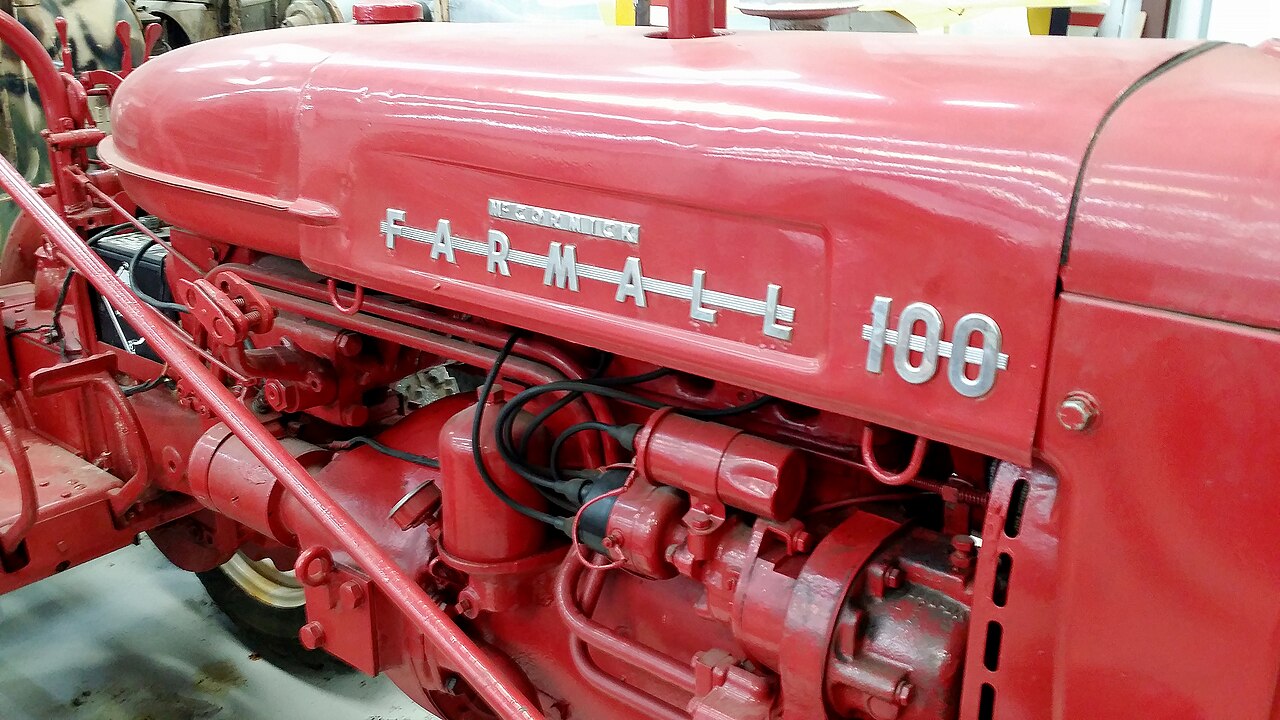
Literature on hazelnut cultivation is unanimous: agricultural machinery should be maintained with the "care of a prudent steward" to ensure the longest possible lifespan and optimal functionality. Machines are exposed to numerous negative influences during use (dust, vibrations, moisture, acidic plant sap during harvest), and poor maintenance almost certainly leads to breakdowns and significantly increases production costs.
It is crucial to understand that maintenance is not wasted money, but insurance against far more expensive unplanned downtime. A breakdown in the middle of harvest costs not only parts and mechanic labor, but also:
- nuts that remain on the ground for too long (risk of mold, aflatoxins, and reduced quality),
- rental of replacement machinery or emergency services at higher, urgent rates,
- overtime work and frustration among seasonal workers,
- missed optimal agrotechnical windows that cannot be recovered.
For this reason, the modern approach shifts the focus from reactive (repair when it breaks) to preventive and predictive maintenance (service before failure, based on actual operating hours and machine condition data).
Types of maintenance: technical and service
According to the standard classification in Croatian agricultural literature (Emert et al., 1995), maintenance is divided into two basic groups.
| Type of Maintenance | Who Performs It | When | Examples of Tasks |
|---|---|---|---|
| Technical — daily/shift | Machine Operator | Before/after each shift | Checking oil, coolant, tire pressure, lubrication, cleaning, visual inspection |
| Technical — weekly | Machine Operator | Weekly | More detailed checks, tightening connections, belt and filter inspection |
| Preventive Service | Authorized Service / Mechanic | Based on operating hour intervals | Oil and filter changes, adjustments, regular major services |
| Warranty Service | Authorized Service | According to warranty terms | Mandatory services that preserve the warranty |
| Out-of-Warranty Service | Service or Own Workshop | As needed | Repairs after warranty expiration, general overhauls |
Preventive service maintenance consists of a set of operations performed on technically sound machines to continuously maintain their operational capability — i.e., waiting for a breakdown is not an option. Technical maintenance is mostly performed by the operator themselves according to the manufacturer's instructions (operation and maintenance manuals), and consists of checking specified parameters and correcting identified deficiencies.
Planning maintenance throughout the year
A good maintenance plan is linked to the orchard phenological calendar and the operating hours of each machine. Hazelnut cultivation machinery has highly seasonal peak loads, so preventive tasks are scheduled during quieter periods.
Approximate Annual Maintenance Calendar
| Period | Main Orchard Operations | Maintenance Priority |
|---|---|---|
| Winter (December–February) | Dormancy, pruning, preparation | Major services, general inspections, ordering parts, conservation and storage of machines out of use |
| Spring (March–May) | Fertilization, mulching, initial protections | Checking atomizers/sprayers, calibration, tractor inspection before the season |
| Summer (June–July) | Protection, mowing, sucker removal, irrigation | Routine maintenance, preparing harvesters and dryers before harvest |
| Harvest (Late August–September) | Harvesting, gathering, transport, drying | Only quick technical maintenance; key readiness and spare parts supplies |
| Autumn (October–November) | Final soil treatment, fertilization | Cleaning and inspection of harvesting equipment, preparation for winter storage |
Key principle: perform major services and order parts outside the harvest season. Machines entering harvest must already have been generally inspected, as there is no time for tasks lasting more than a few hours in the midst of harvest.
Machine-by-Machine Plan
For each machine, it is useful to maintain a card with:
- service intervals in engine hours (e.g., oil change every 250–500 h according to manufacturer instructions),
- list of consumable parts and their numbers (catalog number for filters, belts, knives),
- record of all performed tasks with date and hour meter reading,
- planned next service.
Operating Hours (Engine Hours) Record
For tractors, harvesters, and other self-propelled machines, operating hours (engine hours), not the calendar or kilometers, most accurately reflect actual wear. Modern telematics systems and built-in hour meters allow service intervals to be planned based on actual usage, avoiding both premature (expensive) and late (risky) servicing.
What to track per machine:
- Engine hours / operating hours — the basis for service intervals.
- Fuel consumption — a sudden increase can signal a problem (clogged filters, engine tuning). In hazelnut orchard elaborates, it is calculated, for example, that a tractor uses approximately 500 operating hours per year with ~5,000 liters of fuel — an indicative figure that depends on orchard size and operations.
- Processed area (ha) — for some attachments (mowers, atomizers), wear is better tracked by area than by hours.
- Error codes / diagnostics — telematics in newer machines report faults before the machine "stops."
Keeping records is not just a technical discipline — it is also the basis for accounting and depreciation. In the FADN system, agricultural mechanization is usually depreciated at a rate of approximately 25% per year (indicative; depends on category and regulations), so accurate records of purchases, services, and operating hours directly affect cost calculations and tax items.
Example of a Simple Record Card
| Date | Machine | Meter (h) | Operation | Maintenance Task | Parts Used | Cost |
|---|---|---|---|---|---|---|
| 12.06 | Tractor | 1,430 | Mulching | Oil check, lubrication | — | — |
| 28.06 | Tractor | 1,485 | — | Service: oil + filters (250 h) | oil filter, air filter | … |
| 20.08 | Harvester | 310 | Harvest Prep | Knife replacement, belt tightening | knives, belt | … |
Fleet Management
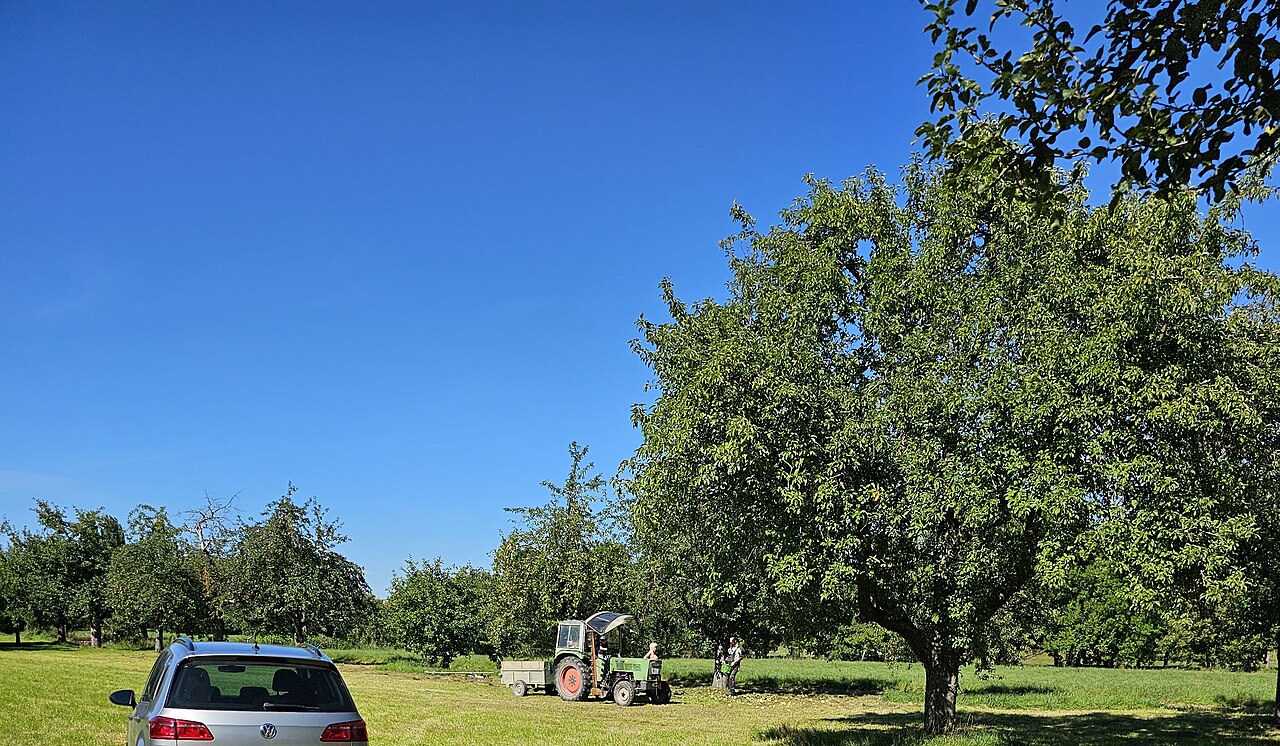
Fleet management means strategic alignment, monitoring, and optimization of all vehicles and machines on the farm to increase productivity, lower costs, and ensure regulatory compliance. For an average Croatian hazelnut farm, this does not necessarily mean expensive systems — even a simple, consistently maintained spreadsheet provides significant benefit. Larger farms (those with multiple tractors over 100 HP, self-propelled and trailed harvesters, atomizers, mowers, cultivators, and a series of trailers) almost inevitably require a digital system.
Typical Fleet in Hazelnut Cultivation
Examples from literature on Croatian producers show the scope of the fleet:
- Small enterprise: one tractor (e.g., 75 HP), mower, harvester, depositor, debris separator, tiller, subsoiler, forklift, trailer, atomizer, conveyor belts, trimmer, dryer, grader, cracker, sorting belt, and "other maintenance tools" (compressor, high-pressure washer, shears).
- Large farm: e.g., 6 tractors at ~100 HP, 2 self-propelled harvesters, 8 trailed harvesters, 4 atomizers, 3 mowers, 3 cultivators, 2 disc harrows, and several loading and transport trailers.
The larger and more diverse the fleet, the greater the risk that the lack of a single part or one breakdown will stop the entire chain (harvest → transport → drying → processing).
Modern Tools for Fleet Management
Telematic and software systems for managing agricultural fleets today offer:
- GPS tracking and location of machines in real time,
- automatic service reminders based on engine hours, area, or calendar,
- engine diagnostics and error codes before a breakdown occurs,
- fault reporting and inspections directly from the field along with tracking repairs, supplies, and operating hours,
- analytics on fuel consumption and machine load.
The transition from reactive repairs to predictive maintenance — based on actual usage data — is the main advantage of these systems: it reduces the number of unexpected breakdowns precisely during critical sowing and harvest windows.
Shared Use and Rental of Machinery
For smaller producers, full spare parts inventories and expensive machines are often not cost-effective. A proven strategy is shared equipment use through cooperatives or associations, or rental. EU and national programs (e.g., IPARD type / rural development measures) promote joint purchase and use of mechanization to reduce costs and increase efficiency. In this context, a good maintenance and repair program is a prerequisite for the functioning of shared equipment: without a clear inspection and repair process, a group easily ends up with faulty machines when they are most needed. Recommendations for shared equipment include:
- clear rules on what each user does before each use (cleaning, lubrication, topping up fluids),
- record sheets and instructions stored with the machine itself,
- a designated person responsible for planned maintenance (winter conservation, fluid and filter replacement, sharpening/replacing knives, regular inspections and test runs).
Spare Parts and Inventory
The fastest way to turn a breakdown into a prolonged downtime is waiting for a part to arrive. Therefore, spare parts management should be planned in advance, especially for the harvest season.
Parts Categorization
| Category | Examples | Inventory Strategy |
|---|---|---|
| Fast-moving / Critical | Filters (oil, air, fuel), belts, harvester and mulcher blades, oils and lubricants, fuses, light bulbs | Keep in stock before the season; rule of thumb: "reserve = consumption per shift × number of harvest days" |
| Occasional | Hoses, seals, bearings, atomizer nozzles | Know the supplier and lead times; keep key components in reserve |
| Expensive / Rare | Pumps, transmission parts, electronics | Do not keep in stock; secure a service contract and know the procurement lead time |
Practical Recommendations for Inventory
- Before each season, calibrate and inspect the atomizer/sprayer and replace worn nozzles — faulty protection means loss of yield, not just lost time.
- For the harvester and mulcher, always have a spare set of blades and belts ready next to the machine.
- Maintain minimal stocks of consumables and use a reorder point rule (when stock falls below the threshold, place an order).
- Record catalog numbers for parts for each machine to avoid incorrect orders in a rush.
- Store inventory dry and labeled, close to the point of use.
Reducing Downtime Costs During the Harvest Season
Hazelnut harvest is relatively short, but nuts fall over a longer period (approximately 20–30 days) under changing weather conditions, so harvesting in two or more passes is recommended to prevent nuts from staying on the ground for too long. Any machinery downtime directly prolongs the time nuts spend on the ground and increases the risk of contamination and quality loss. The goal is therefore maximum readiness (uptime) within this narrow window.
Pre-Harvest Measures
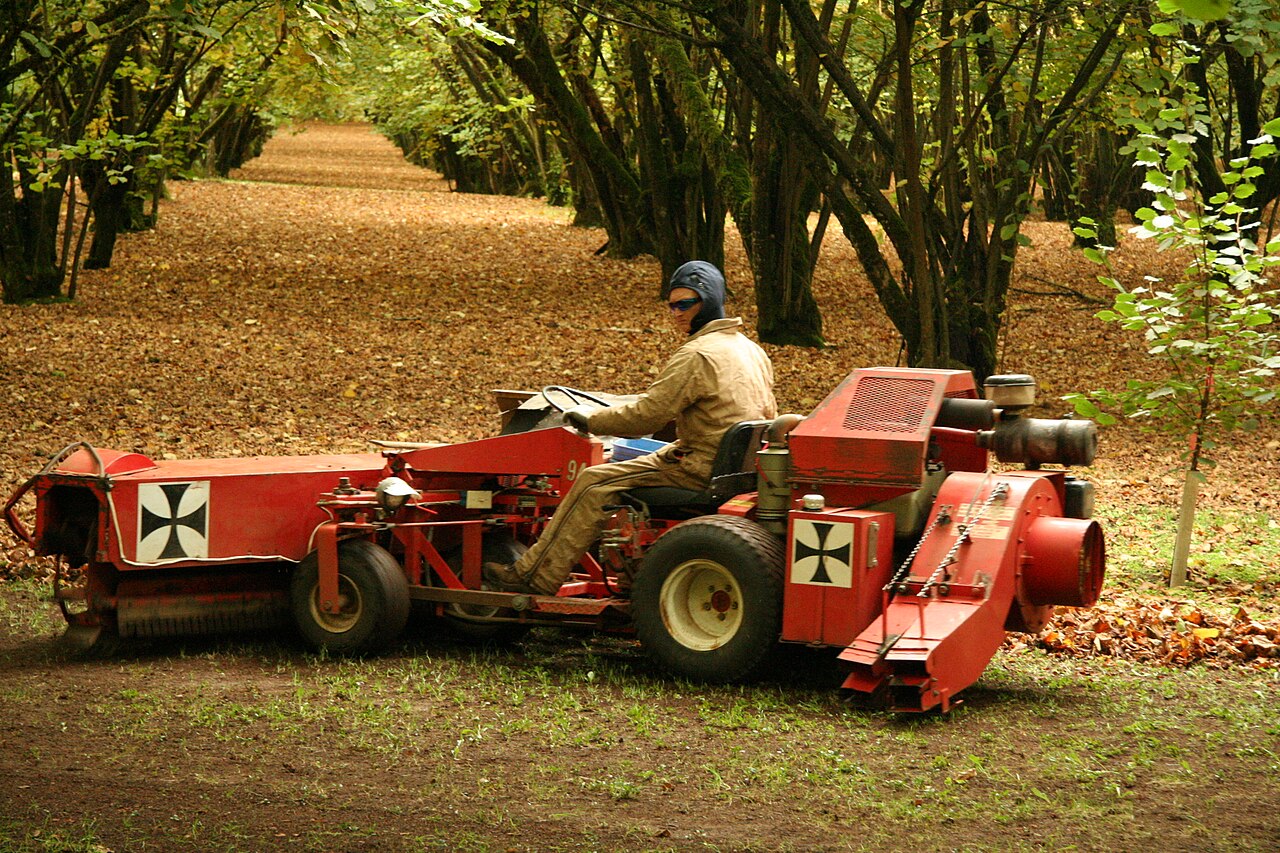
- General inspection of all harvesting machines (collector/vacuum, harvester, conveyors, dryer, separator) weeks before harvest, not on the day itself.
- Test run of each machine under load to uncover hidden issues.
- Final soil preparation (leveling small depressions) before harvest improves the performance of ground collection machines; the soil should be dry and weed-free, but light rain before harvest can help firm up the soil and reduce dust.
- Check stocks of critical parts and fuel for the entire duration of the harvest.
In-Season Measures
- Daily technical maintenance before and after each shift: lubrication, cleaning of dust and leaves, checking fluids and tire pressure.
- Quick replacement, not repair: in-season, worn parts (belts, blades) are swapped with spares, and repairs are deferred until after the season.
- Plan B (redundancy): for key operations, arrange in advance for a replacement machine or contractor service, so that one breakdown does not halt the entire harvest.
- Monitor status via counters and, where available, telematics, to detect deviations (e.g., sudden increase in fuel consumption) before a failure occurs.
Measures That Reduce Labor Needs and Costs
Mechanization lowers costs on its own if it is functioning correctly. Examples from literature: mechanized harvesting significantly reduces labor costs compared to manual harvesting; using trimmers to remove suckers reduces labor needs by approximately 54.5% and costs by about 17.2% (Beyhan, 1996 — indicative data, dependent on conditions). In other words, investing in maintaining existing mechanization pays off faster than it seems, as it preserves these very savings.
Practical Recommendations and Common Mistakes
Recommendations:
- Tie service intervals to engine hours, not to feeling or calendar dates.
- Perform all major interventions and part purchases outside the harvest season.
- Keep written records per machine — this has both technical and accounting value.
- Conserve and garage machines out of use according to the manufacturer's instructions.
- Follow the manufacturer's instructions (operation and maintenance manual) as the primary source for intervals and procedures.
Common Mistakes:
- Waiting for a breakdown instead of preventive service ("it works, let it work").
- Entering the harvest without spare blades, belts, and filters.
- Not knowing the lead time for critical parts from suppliers.
- Neglecting atomizer/sprayer calibration.
- Storing machines unprotected, dirty, and without preservation over the winter.
- Keeping records "in the head" — without written records, there is no planning or cost analysis.
Summary
Maintenance of mechanization and fleet management in hazelnut cultivation boils down to a few disciplines: planned (preventive, and increasingly predictive) maintenance tied to operating hours, consistent record-keeping, thoughtful inventory of spare parts, and special readiness for the narrow harvest window. Machines that are serviced off-season, equipped with spare consumables, and tracked via hour logs break down far less often when it costs the most. This directly protects both yield and fruit quality, and investment in maintenance pays back through lower downtime costs and a longer lifespan for expensive machinery.
Gallery
Sources
This article is an AI summary generated from an internal collection of hazelnut literature (RAG corpus) and public internet sources. Content should be verified with advisory services and equipment manufacturer instructions before application. Main sources used:
- Maintenance of Agricultural Machinery (technical and service-preventive; Emert et al., 1995.) — RAG corpus, Croatian agricultural literature, doi.org/10.18485/bibliotekar.2025.67.2.6
- Vrtodušić et al. (2022): Harvesting, Drying, and Storage Technology of Hazelnuts: Literature Review, Journal of Central European Agriculture — jcea.agr.hr
- Mechanization in Hazelnut Production and Processing at Minas-zrno 1 — RAG corpus (machinery list and costs)
- Technological and Economic Characteristics of Hazelnut Cultivation (2018) — RAG corpus
- Catalog of Models for Variable Cost Coverage in Agricultural Production 2022 / Cost Calculation Catalog (Ministry of Agriculture of the Republic of Croatia) — RAG corpus (own mechanization costs)
- Farm Accountancy Data Network (FADN) — Manual (machinery depreciation ~25%) — RAG corpus
- Environmental Protection Study — Hazelnut and Plum Orchards (tractor operating hours and fuel consumption) — RAG corpus
- A Guide to Sharing Farm Equipment (2018) — RAG corpus (shared equipment maintenance program)
- Sectoral Document 2023–2027, Agricultural Machinery and Technologies (IPARD, shared use of mechanization) — RAG corpus
- Farm Equipment Maintenance / Downtime Prevention — eworkorders.com, farmonaut.com, fleetio.com
- Agriculture Fleet Management / Telematics — geotab.com, oxmaint.com, verizonconnect.com
Recommended equipment
🔎 nut harvester machine — Amazon →Affiliate links — we may earn a small commission at no extra cost to you.
Hazelnut Harvesting Equipment
Compare manual, semi-mechanized, and larger solutions.
| Use Case | Option Type | What to Check Before Purchase |
|---|---|---|
| Small gardens | Manual rakes and nets | Handle length and net durability |
| Medium orchards | Semi-mechanized sweepers | Engine power and collection capacity |
| Large plantations | Over-the-row harvesters | Professional machinery specifications |