Chilling and Heat Requirements: Chilling Units for Cultivar Selection
Content generated by artificial intelligence — verify before application
This article was automatically compiled from a collection of hazelnut literature using artificial intelligence and may contain errors or outdated data. It serves as a starting point for further research, not as professional advice. Dosages, products, and timing are informative and depend on the cultivar, location, and applicable regulations — always consult an advisory service and official sources before application.
Hazelnut (Corylus avellana) is a fruit species with a specific overwintering and flowering strategy. For its buds to break winter dormancy, the plant must first "count" a sufficient amount of chilling (chilling requirement), and only then a sufficient amount of heat (forcing requirement) that drives the development and opening of flowers. These two conditions are not abstract physiology: they directly determine whether a specific cultivar will bear regularly and abundantly in your location, how early it will flower, and how exposed it is to the risk of late frost. In this article, we explain how chilling and heat are quantified (hours, units, and models), what the approximate values are for hazelnut and its organs, how to match a cultivar to the climate, and why increasingly mild winters are becoming a serious problem for cultivar selection.
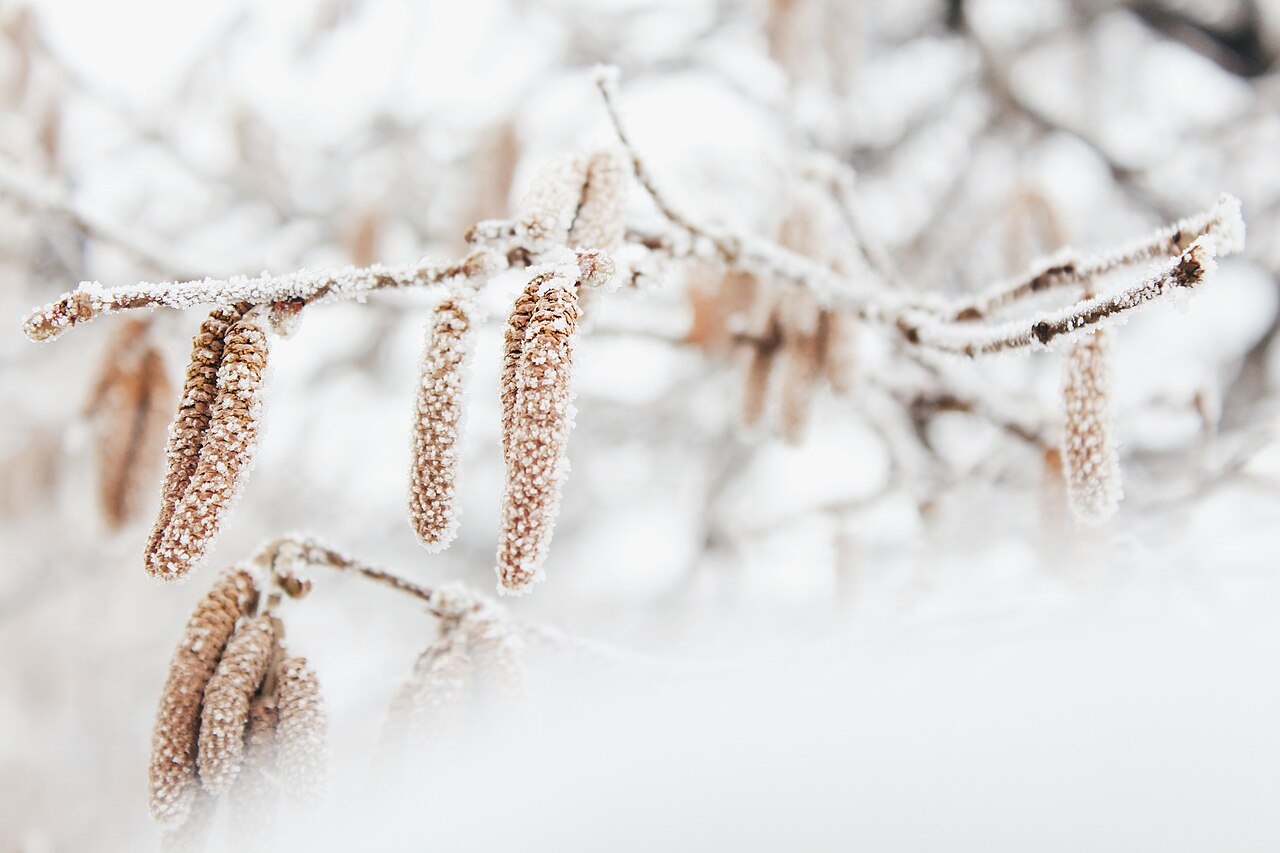
Why hazelnut needs both chilling and heat
The chilling requirement is an adaptive mechanism that prevents premature vegetative movement in the middle of winter, when warm, transient periods could trigger leafing or flowering, only for the next wave of frost to destroy sensitive organs. In other words, the "chill lock" keeps buds closed until enough cold hours have passed to assume that winter is truly ending.
The sequence is always the same and occurs in two steps:
- Chilling accumulation (endodormancy). The bud does not start growing even if moved to warmth, until it receives a minimum amount of low temperatures. Only when this "quota" is met is endodormancy broken.
- Heat accumulation (ectodormancy). After the chilling requirement is met, further development is controlled solely by external conditions. The bud waits for a sufficient amount of heat ("growing degree hours") to resume growth, open catkins or female flowers, and proceed toward flowering.
This two-stage control explains an important practical phenomenon: two orchards in the middle of winter may look equally dormant, but one is still accumulating chilling (safe from warm spells), while the other has already met its quota and is waiting only for the first warm week to push out — thus exposing itself to late frost.
Quantifying the chilling requirement
What counts as "chilling"
Chilling is not counted equally at all temperatures. In the literature, there are several approaches, but all share the fact that there is an optimal range in which chilling "works" most effectively, as well as thresholds outside of which chilling does not contribute or even negates previously accumulated chilling.
| Term | Typical range / threshold | Note |
|---|---|---|
| Freezing (0 °C and below) | Does not contribute to chilling | Temperatures below freezing generally do not help chilling accumulation |
| Effective chilling range | approximately 3–7 °C (often taken as 0–7 °C) | Most commonly used window for counting chilling hours |
| Optimal chilling temperature | around 6 °C | In the Richardson model, yields 1 full unit per hour |
| Above ~15–16 °C | Chilling is "negated" | Warm days can write off part of the accumulated chilling |
| Very low temperatures | May prevent fulfillment of the requirement | Extremely low temperatures slow down accumulation |
Figures are informative
The thresholds mentioned vary among models, cultivars, and sources and depend on location and year. Use them for rough orientation, not as absolute limits.
Measurement units: Chilling Hours vs. Chilling Units
In practice, two basic methods of expression are encountered:
- Chilling Hours (CH). The simplest method: it counts the total number of hours when the temperature was within the effective range (most commonly 0–7 °C). The advantage is simplicity; the disadvantage is that every hour within the range counts equally, regardless of whether the temperature was the ideal 6 °C or the marginal 0.5 °C.
- Chilling Units (CU) — Richardson / Utah model. A more sophisticated approach: one hour at the optimal temperature (around 6 °C) counts as 1 unit, hours at less favorable temperatures count partially, and warm hours (above ~16 °C) receive a negative weight, modeling the negation of chilling. Units do not accumulate below approximately 1.4 °C.
There is also a more advanced Dynamic Model, which expresses chilling in "portions" and better describes accumulation in warmer climates, where simple hour counting tends to underperform. It is important to remember that figures from different models are not directly comparable — you must always know which model and which temperature range were used.
Models are unreliable in mild winters
Classical models (chilling hours, Utah model) were developed for colder climates and have proven inaccurate in mild winter conditions. In the Mediterranean and increasingly warmer continental Croatia, the dynamic model and its derivatives usually provide a more realistic picture.
Different organs — different requirements
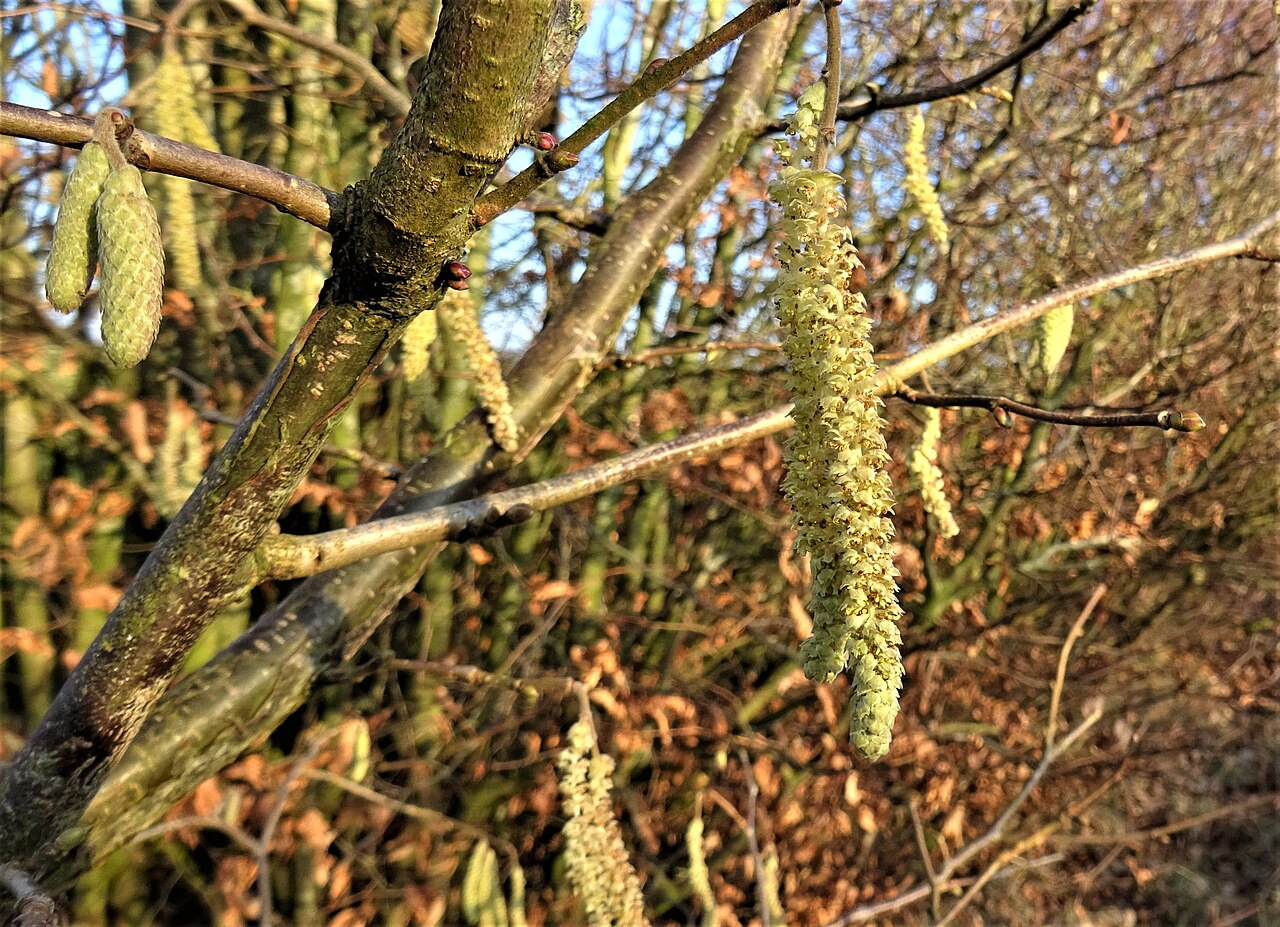
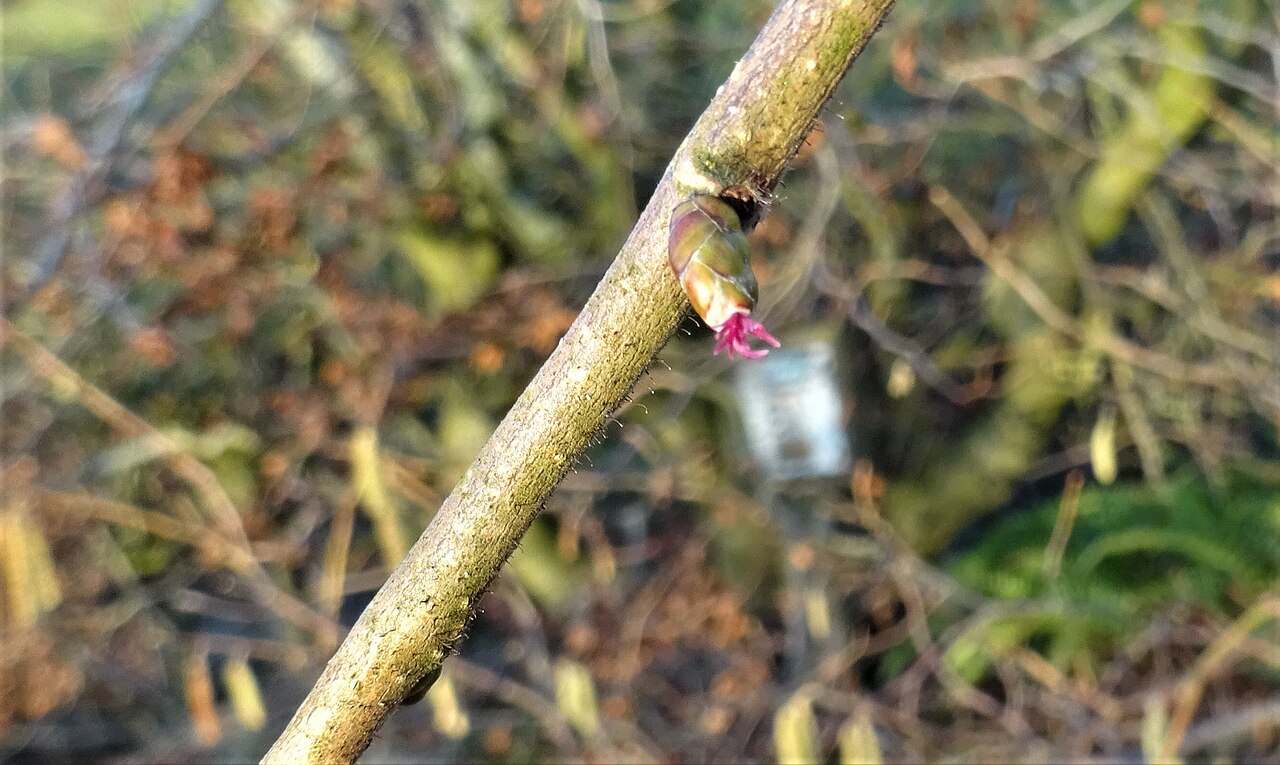
A key characteristic of hazelnut is that different parts of the plant have different chilling requirements. Catkins (male flowers) generally require the least chilling, female flowers require more, and leaf (vegetative) buds require the most. Therefore, catkins bloom before female flowers and before leafing.
| Organ | Approximate chilling requirement | Note |
|---|---|---|
| Catkins (male flowers) | from < 100 to ~860 h | Lowest requirement — bloom first |
| Female flowers | around 290–1550 h | Medium to high requirement |
| Leaf (vegetative) buds | around 365–1690 h | Highest requirement — leafing is delayed |
These values come from experiments (e.g., Mehlenbacher, 1991.) in which branches were cut from the orchard at intervals during winter and transferred to a greenhouse at ~20 °C; the number of hours in the 0–7 °C range recorded up to the moment of cutting was taken as the achieved chilling.
Range by cultivar
Depending on the cultivar, hazelnut typically requires somewhere between ~800 and ~1600 chilling hours for optimal bud development. The difference among cultivars is large and closely linked to origin:
- Cultivars from Turkey and southern Italy have lower chilling requirements (adapted to milder winters).
- Cultivars originating from Central Europe have higher chilling requirements.
Specific examples from the literature (informative, depending on organ, model, and location):
| Cultivar / parent | Chilling requirement | Source / context |
|---|---|---|
| TGdL (Italian origin) | ~760–860 CH for leafing | counted in the 0–7 °C range |
| MB (Central Europe) | ~990–1040 CH for leafing | counted in the 0–7 °C range |
| 'Tonda di Giffoni' | ~640 h for female flowers | lower requirement, southern Italian cultivar |
| Çakıldak (Turkey) | ~1064 chilling units (CU) | highest in the group of Turkish cultivars in that experiment |
| 'Aurea' (ornamental) | very high for all organs | not for production, illustrates the range |
Quantifying the heat requirement
Once the chilling requirement is met, the second phase begins: the bud must accumulate enough heat to develop and open. Heat is most often expressed as:
- Growing Degree Hours (GDH) — the sum of hourly temperature values above the base temperature.
- Growing Degree Days (GDD) — the daily equivalent, where the base temperature is often taken as around 2 °C, and counting starts on January 1st (one of the most accurate combinations for predicting hazelnut flowering).
Approximate figures from the literature:
- Hazelnut requires approximately 220 growing degree hours (GDH) before it can flower. At high temperatures, this can be achieved in just ~10 days, while at low temperatures, accumulation can take up to ~35 days.
- The most favorable temperatures during fertilization (which occurs much later, mid-May to early June) are above 22 °C; at lower temperatures, there is increased shedding of fertilized nuts due to poor fertilization.
Hazelnut is biologically unusual
In hazelnut, from flowering to fertilization, 2–6 months can pass (often cited as "up to 4 months"). The ovary is not formed at the moment of pollination, but develops significantly later; its growth is enhanced by rising temperatures. Therefore, heat accumulation plays a role in both winter flowering and the late spring completion of fertilization.
Modern models linking chilling and heat
Older models looked at chilling and heat separately. The newer PhenoFlex framework combines the dynamic model (for chilling) with the concept of growing degree hours (for heat) and allows both requirements to be modeled simultaneously. This is important because in reality, chilling and heat act together: if chilling is barely met, the plant needs more heat to start (and vice versa). Precisely because of this interaction, simplified models overestimate the influence of warming on spring phenology when they incorrectly depict chilling accumulation.
Cultivar and Climate Compatibility
The entire discussion on chilling units boils down to one practical question: does the cultivar’s chilling requirement match the available chilling on my site?
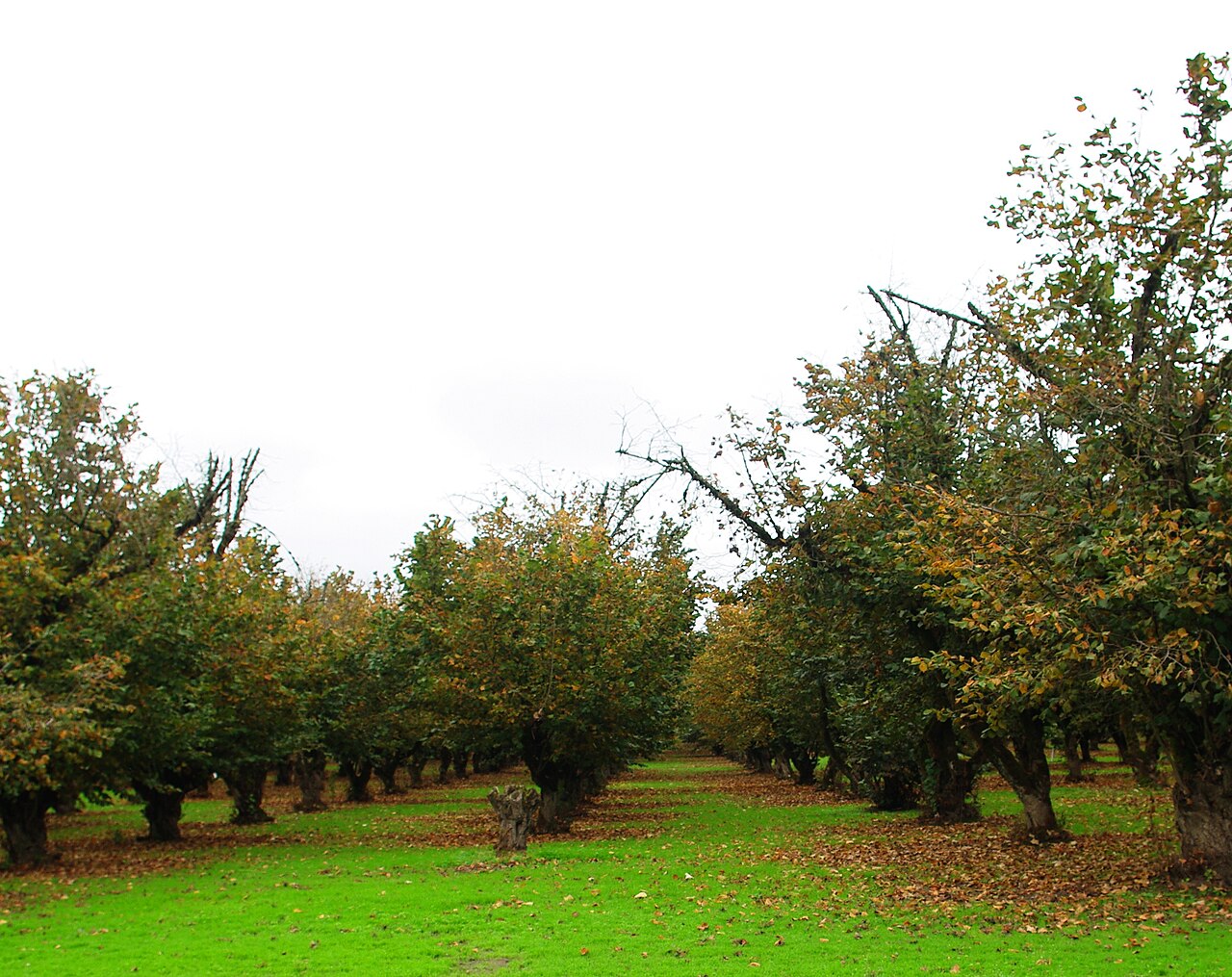
- If a cultivar has a chilling requirement that is too high for a given location (too few cold hours in winter), the chilling requirement is not met in time: flowering and leafing are uneven and delayed, flowering is prolonged, pollination is weakened, and yield declines.
- If a cultivar has a chilling requirement that is too low for a cold location, the quota is met too early, the cultivar blooms very early, and is exposed to late (spring) frost.
Therefore, the grower must choose a climate-adapted cultivar, just as cultivars for other fruit species (e.g., blueberry) are selected based on their chilling requirement range.
How to estimate available chilling in the field
A simple field assessment (e.g., from the "Hazelnut Growers' Handbook") uses the average temperature of the coldest months and a so-called ready reckoner table/graph:
- For each of the coldest months, calculate the average daily temperature (sum of daily maximums and minimums divided by 2, then averaged over the month).
- Use the graph to estimate the number of chilling hours for that month.
- Sum the months to obtain an approximate seasonal accumulation.
This is only a rough guide — it does not account for site-specificities (altitude, exposure, cold air stagnation). Chilling accumulation increases with altitude, so elevated, well-ventilated sites usually meet the chilling requirement more easily.
Croatian climatic framework for hazelnut
From Croatian literature (advisory guides from the Ministry of Agriculture and others), the following approximate requirements emerge, which must be viewed in conjunction with the chilling requirement:
| Factor | Approximate Value | Note |
|---|---|---|
| Critical absolute min. temperature | approx. -26 °C (in deep dormancy) | with gradual cooling, some cultivars can withstand -25 to -30 °C |
| Insolation (vegetation) | preferably ~1250 sunny hours | hazelnut is a strong heliophile |
| Precipitation | 700–800 mm annually, well distributed | drought reduces kernel percentage and kernel size |
| Relative humidity | 60–90 % | optimal range |
| Wind during flowering | mild, not cold | important for wind pollination |
Sensitivity of organs to frost (Krpina, 2004; indicative):
| Organ / Stage | Approximate Freezing Point |
|---|---|
| One-year-old shoots | -30 °C |
| Vegetative buds | -25 °C |
| Unopened male catkins (aments) | -18 °C |
| Unopened female flowers | -16 °C |
| Opened male catkins | -7 to -10 °C |
| Opened female flowers | -8 °C |
| Leaf buds (start of vegetation) | -3 to -5 °C |
These values show why cultivar-climate compatibility is so important: early flowering (caused by low chilling requirement and warm winters) exposes the most sensitive, opened flowers to temperatures that easily damage them.
Impact of Mild Winters
All warmer and milder winters directly change the balance of chilling and heat — and this in several ways that are detrimental to the grower.
1. Insufficient chilling accumulation. In mild winters, fewer chilling hours/units accumulate. Cultivars with high chilling requirements (especially Central European ones) then struggle to break endodormancy, resulting in prolonged and uneven flowering, and pollination and productivity suffer. For this reason, cultivars with lower chilling requirements (Turkish, Southern Italian) are recommended for warmer areas.
2. Heat waves that negate chilling. Since temperatures above ~15–16 °C can negate a portion of the accumulated chilling, increasingly common winter heat waves can "reset" the accumulation progress, further delaying dormancy release.
3. Premature flowering and increased frost risk. Where the chilling requirement is low, mild winters and warm winter periods accelerate heat accumulation and promote very early flowering. Hazelnut blooms in winter anyway (from December to March, depending on climate and cultivar), so any shift in flowering to an earlier date adds further exposure to frost. Croatian research (e.g., Vujević et al., 2014) records that temperature fluctuations during flowering repeatedly stop and restart flowering: when average daily temperatures drop below 0 °C, flowering stops, and when they rise above 0 °C, flowering resumes, resulting in very long flowering periods (recorded average ~62 days for male and ~60 days for female flowers).
4. Unreliable models. Classical models (chilling hours, Utah model) were originally calibrated for cold winters and do not perform well in mild conditions. For assessment in the Mediterranean and warmer continental Croatia, the dynamic model and PhenoFlex are more realistic.
Good news from practice
Croatian experience shows a certain resilience: Vujević et al. (2014) note that, despite low temperatures during flowering (down to -17.9 °C recorded that year), productivity did not vary significantly from year to year; Krpina et al. (1994) report satisfactory yields even in years with flowering at -6.5 to -19.5 °C. This does not eliminate the risk, but shows that hazelnut, with good cultivar and site selection, is more resilient than often thought.
Practical Recommendations
- Choose a cultivar based on climate, not fashion. For warmer areas with mild winters, prefer cultivars with lower chilling requirements (Turkish, Southern Italian, e.g., 'Tonda di Giffoni' type). For colder continental sites, cultivars with higher chilling requirements may be more suitable and safer against premature budbreak.
- Request chilling requirement data (CH/CU) from suppliers/advisory services and the organ to which it refers — catkins, female flowers, and leaf buds differ.
- Estimate available chilling at your site (average temperatures of the coldest months, altitude, micro-location) before planting.
- Choose elevated, well-ventilated sites on gentle slopes where cold air does not stagnate; avoid frost pockets (hollows).
- Ensure compatible pollinizers with overlapping flowering periods — long and interrupted flowering in mild winters changes the dynamics of overlap between male and female phases.
- Monitor your own data. Personal records of flowering and temperatures are more valuable than general tables because they reflect your specific microclimate (as shown by the example of the plantation in Orahovica, where hazelnut tolerated lower temperatures than those cited in the literature).
Common Mistakes
- Comparing figures from different models. "800 hours" and "800 units" are not the same; always check the method and temperature range.
- Ignoring differences among organs. If you only look at the "cultivar's chilling requirement" without knowing whether it refers to catkins, female flowers, or leaf buds, you may misestimate the risk.
- Relying on classical models in mild winters. In warmer conditions, use the dynamic model / PhenoFlex.
- Planting a cultivar with a high chilling requirement in a warm area — uneven flowering and low yield.
- Planting a cultivar with a low chilling requirement in a cold area — premature flowering and frost damage.
Sources
This article is an AI summary compiled from an internal collection of hazelnut literature (RAG corpus) and public internet sources. Figures (hours, units, temperatures, timelines) are indicative and depend on cultivar, site, model, and year — consult advisory services and official sources before application.
Main sources used:
- Mehlenbacher, S. A. (1990/1991) — research on chilling and heat requirements of hazelnut organs (catkins, female flowers, leaf buds).
- High density SNP mapping and QTL analysis for time of leaf budburst in Corylus avellana L. (2018) — DOI: 10.1371/journal.pone.0195408 (chilling requirements of parents TGdL and MB; differences among cultivars and organs).
- Wang et al. (2020) Overestimation of the effect of climatic warming on spring phenology due to misrepresentation of chilling — Nature Communications (interaction of chilling and heat; models C1–C12).
- GUIDE FOR hazelnut cultivation — Ministry of Agriculture / advisory service (savjetodavna.hr) (Croatian climatic requirements, freezing temperatures, insolation, precipitation).
- An Analysis of the Feasibility of Providing Federal Multi-Peril Crop Insurance to Nut Tree Growers (1998) (definition of chilling requirement, temperature range).
- Sustainable Land Use Opportunities for the Tararua District (2020) (effective cooling range 3–7 °C, negation above 15 °C, dependence on altitude).
- Hazelnut Growers' Handbook (2024) (estimation of chilling hours via average temperatures; differences among organs).
- Alkoshab & Othman (1989) (Richardson model of chilling units; optimal temperature ~6 °C; limitations in mild winters).
- Development of an MSE Multi-Peril Risk Management Concept — Technical Report Azerbaijan (2022) (chilling unit models; thresholds 2.5–9.2 °C / above 16 °C no effect).
- Vujević et al. (2014) Flowering period of hazelnut cultivars and occurrence of dihogamy in the agroecological conditions of continental Croatia (temperature fluctuations and prolonged flowering).
- Impact of low temperatures on hazelnut freezing (2021) and Technology and economic efficiency of organic hazelnut production at OPG Hobolić Alen (2021) (organ sensitivity to frost; Krpina, 2004.).
- Chilling requirements of hazelnut cultivars — ScienceDirect: 030442389190010V (chilling requirement ranges by organ and cultivar).
- Studies on the chilling requirements and total growing degree hours of the main Turkish hazelnut varieties — ISHS: 445_25 (e.g., Çakıldak ~1064 CU).
- The role of air temperature in determining dormancy release and flowering of Corylus avellana L. — Springer (Aerobiologia): BF02272908 (~220 GDH to flowering; ~1000 chilling units).
- Modelling future flowering trends of Alnus, Corylus, and Betula in Central Europe using the PhenoFlex framework — ScienceDirect: S161886672500593X (PhenoFlex: dynamic model + GDH; base temperature ~2 °C).
- Climate Requirements for Thriving Hazelnut Trees — Hazelnut Hub: hazelnuthub.com (approximate range ~800–1600 chilling hours per cultivar).