Calculating Water Requirements and Sourcing Dimensioning (Well, Reservoir, Water Rights Permit)
Content generated by artificial intelligence — verify before application
This article was automatically compiled from a collection of hazelnut literature using artificial intelligence and may contain errors or outdated data. It serves as a starting point for further research, not as professional advice. Dosages, products, and timelines are informative and depend on the cultivar, location, and applicable regulations — always verify with an advisory service and official sources before implementation.
Water is one of the most common and underestimated bottlenecks in establishing hazelnut (Corylus avellana) orchards in Croatia. Many producers plant saplings only to realize later that they lack a reliable water source with sufficient yield, that their well is too small for peak summer demands, or that they have not resolved the legal framework for abstraction. This article connects three elements that must go hand in hand: how much water the orchard actually needs (m³/year, mm/day, ET balance), how to dimension the water source (well/borehole, reservoir, rainwater harvesting), and how to legalize it (water rights permit from Hrvatske vode or concession). The goal is to provide a reference calculation method that you can adapt to your area, climate, and soil, before purchasing your first sapling or pump.
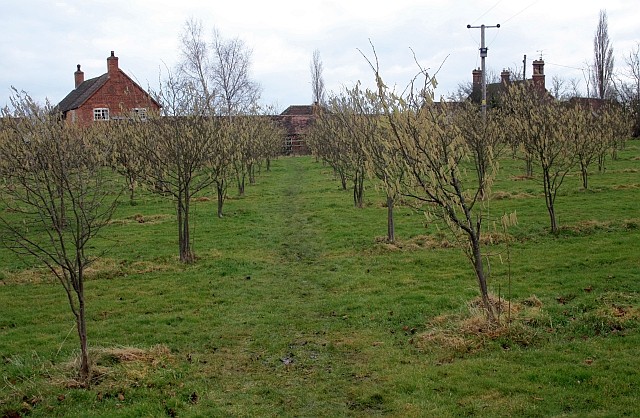
Step 1: How much water does hazelnut actually need?
Hazelnut has a shallow root system and is highly sensitive to summer water deficits. Its highest water requirements occur from April to September, during the period of shoot growth, pollination, kernel development, and filling. Literature generally agrees on the following ranges:
| Indicator | Approximate Value | Source |
|---|---|---|
| Optimal annual precipitation (full year) | 800–1200 mm | PDF "Technology and Economic Efficiency of Organic Cultivation", 2021. |
| Requirement during vegetation (months 4–9) | at least 350–400 mm | Krpina, 2004.; "Technology and Economic Efficiency…", 2021. |
| Requirement April–July | approx. 280 mm (≈ 70 mm/month) | Krpina, 2004. |
| Typical summer deficit to be compensated by irrigation | around 100 mm (Sisak area) | Elaborat Water Abstraction Glina, 2022. |
Irrigation covers only the DEFICIT, not the total requirement
The total seasonal requirement (e.g., 350–400 mm) is NOT what you must supply via irrigation. You supply only the difference between the plant's requirement and effective rainfall. In the Sisak example from the corpus, although average precipitation is above 400 mm, due to high summer evapotranspiration and poorly distributed rainfall, the net irrigation requirement was estimated at around 100 mm seasonally. This deficit is what you must be able to deliver from your source.
Conversion Rule: mm to m³
The entire calculation rests on one simple conversion:
1 mm of water on 1 ha = 10 m³
Thus, if you need a net 100 mm for the season on a 5 ha orchard:
100 mm × 10 m³ × 5 ha = 5000 m³/year
This aligns directly with real Croatian elaborates: for a 5.2 ha orchard at full production, the estimated average annual requirement was exactly 5200 m³/year (Glina Elaborate, 2022.). Another elaborate for an orchard of similar size cites 5000 m³/year (Donji Hrastovac, Sunja, 2021.).
ET Balance: A More Precise Method
A professional approach uses a water balance based on evapotranspiration. The formula is:
ETc = ETo × Kc
where ETo is reference evapotranspiration (local meteorological data, mm/day), and Kc is the crop coefficient for hazelnut. The net irrigation requirement for a given period is then:
Net Irrigation = ETc − Effective Precipitation − Soil Water Contribution
And the gross amount (what the pump must deliver) accounts for system losses:
Gross = Net / System Efficiency
| Irrigation System | Typical Efficiency |
|---|---|
| Drip irrigation | ~90 % |
| Micro-sprinklers | ~85 % |
| Surface irrigation | ~75 % |
For hazelnut, drip irrigation is almost exclusively used, which is also most favorable for calculation as it has the lowest losses.
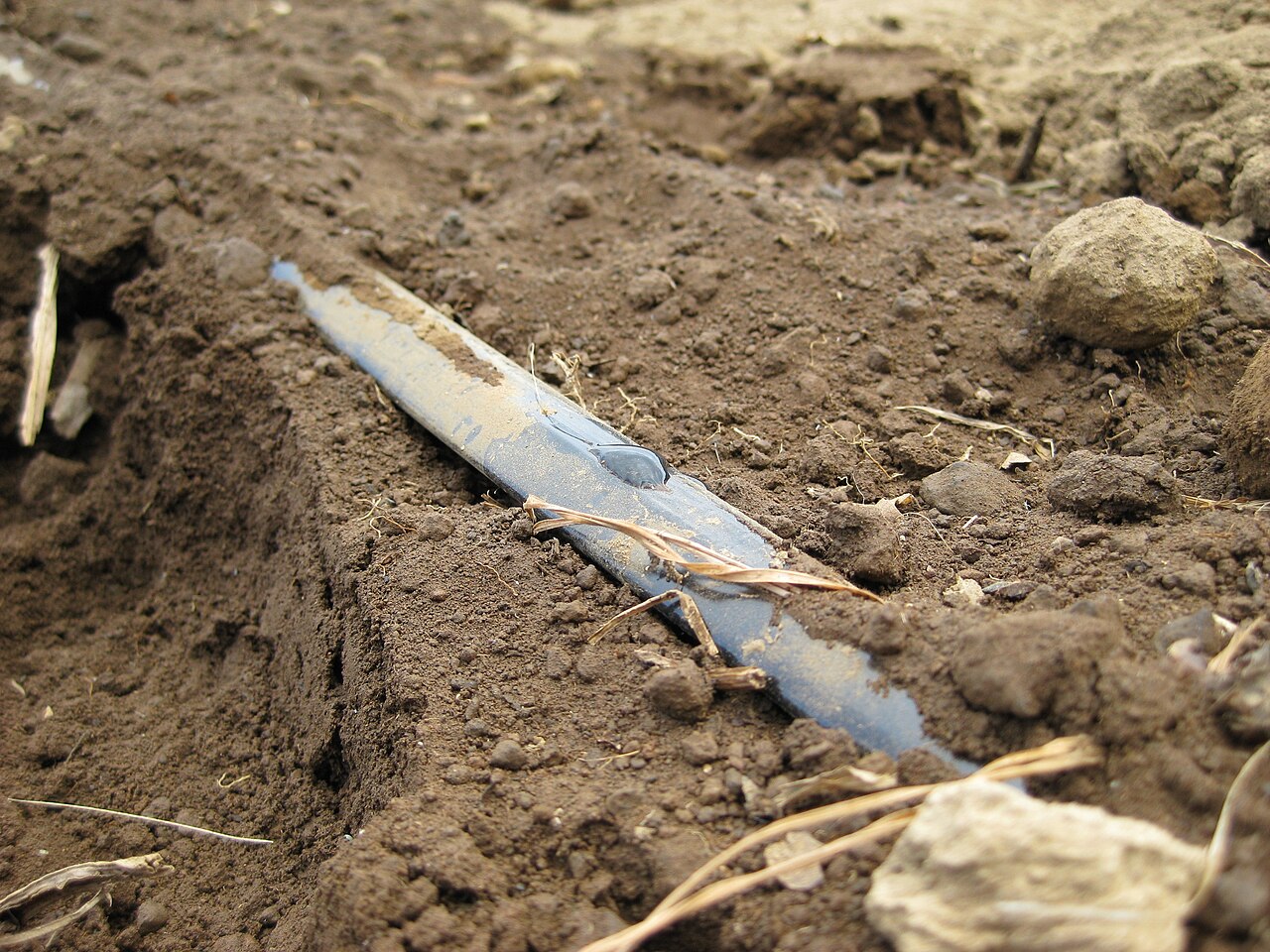
It should be noted that recent research (e.g., a study on Kc for young grafted hazelnuts in dense orchards, MDPI Water 2023) showed that measured Kc values for hazelnut are lower than previously assumed literature values, and that Kc strongly depends on the degree of soil cover by the canopy and tree height. Therefore, for an accurate project, you should seek local Kc and ETo values, and use the approximate figures in this article only for a preliminary estimate.
mm/day: Peak Requirement — The Most Important Figure for Dimensioning
Annual m³ tells you how much water is needed in total, but the source and pump are dimensioned by the peak daily intensity during the hottest part of summer. From the corpus: a capacity covering a minimum of 3 mm/day is required.
For this, we have a concrete example from Glina:
To ensure 3 mm/day, the required well flow rate was calculated at 12.8 m³/h, with a submersible pump of 12.8 m³/h and a lift height of 80 m.
The logic for calculating peak flow:
- Peak requirement: e.g., 3 mm/day = 30 m³/ha/day.
- For 5 ha, this is 150 m³/day.
- If the pump runs for 12 hours/day → 150 / 12 = 12.5 m³/h.
- If it runs only 8 hours/day → 150 / 8 ≈ 18.75 m³/h.
Peak requirement, not average, ruins unprepared orchards
The most common mistake is dimensioning the source based on the average annual requirement. A well that "on average" provides enough may dry up or fail to fill the system in July and August — when hazelnut kernels are filling and demand is highest. Always dimension based on the peak daily intensity (mm/day) and number of pump operating hours, not the annual average.
Step 2: Range of Actual Figures from Croatian Orchards
To see how values vary with area, location, and irrigation method, here is an overview from elaborates in the corpus:
| Location / Orchard | Area | Planned Annual Requirement | Note |
|---|---|---|---|
| Glina (Alfa-kolekt) | 5.2 ha | 5200 m³/year (max 10,400, young orchard 1040) | well ~35 m, flow 12.8 m³/h |
| Donji Hrastovac, Sunja | — | ~5000 m³/year | well 2.77 l/s, reservoir 3200 m³ |
| Nova Kapela, Dubrava | 34.1 ha | up to 900 m³/year | young orchard, avg. 0.03 l/s |
| Vojnić (AGRO Utinja) | ~40 ha | up to 3880 m³/year | two reservoirs 2000 + 1500 m³ |
| Dragodinac | — | ~113,500 m³/year | large orchard |
It is evident that figures depend on whether the orchard is young or at full production, and on how much area is actually irrigated. For a young orchard, the requirement is significantly lower (in the Glina example, only ~1040 m³/year vs. 5200 m³/year at full production) because the canopy is small and soil cover is low.
Maximum, Average, and Minimum Year
The Glina elaborate clearly distinguishes three scenarios for the same 5.2 ha: max year 10,400 m³, average 5200 m³, minimum (rainy) 1560 m³. The source and legal framework should be dimensioned based on the maximum (dry) year, as irrigation is decisive for yield precisely at that time.
Step 3: Sizing the Water Source
There are three main sources, which are often combined in practice.
A) Well (Groundwater)
The most reliable source, but it requires investigation and permits. Key steps:
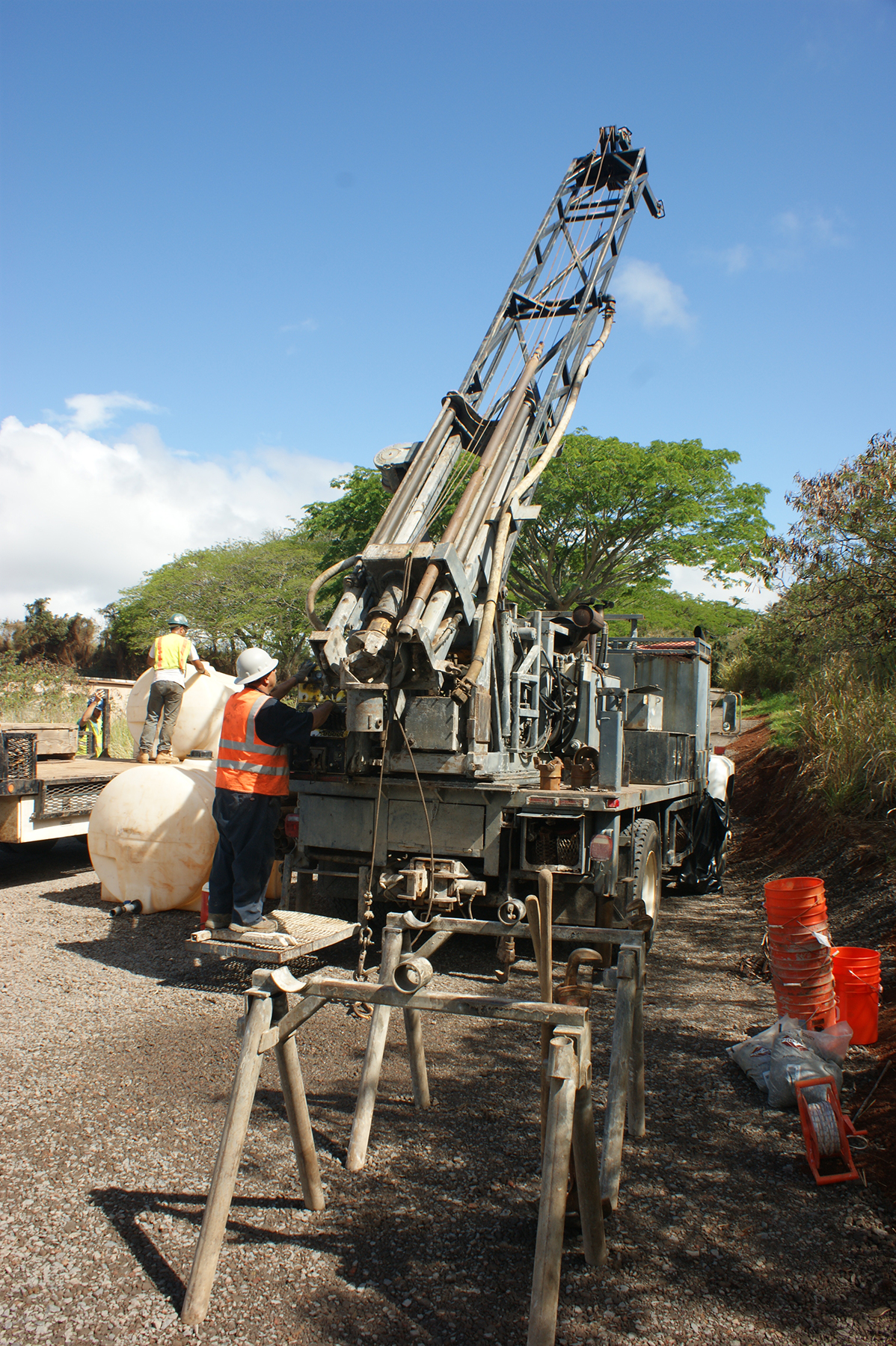
- Hydrogeological investigation — determines the expected depth and yield. In the Glina example, the borehole depth was estimated at ~35 m; in Donji Hrastovac, a well with a Ø 400 mm diameter was drilled to a depth of 120 m.
- Pump test — determines the actual yield of the well. This is a mandatory step; without it, you do not know if the well can meet peak demand. Elaborates explicitly state that "the exact capacity of the well will be determined by a pump test, and the number of irrigation sections will be adjusted according to that capacity."
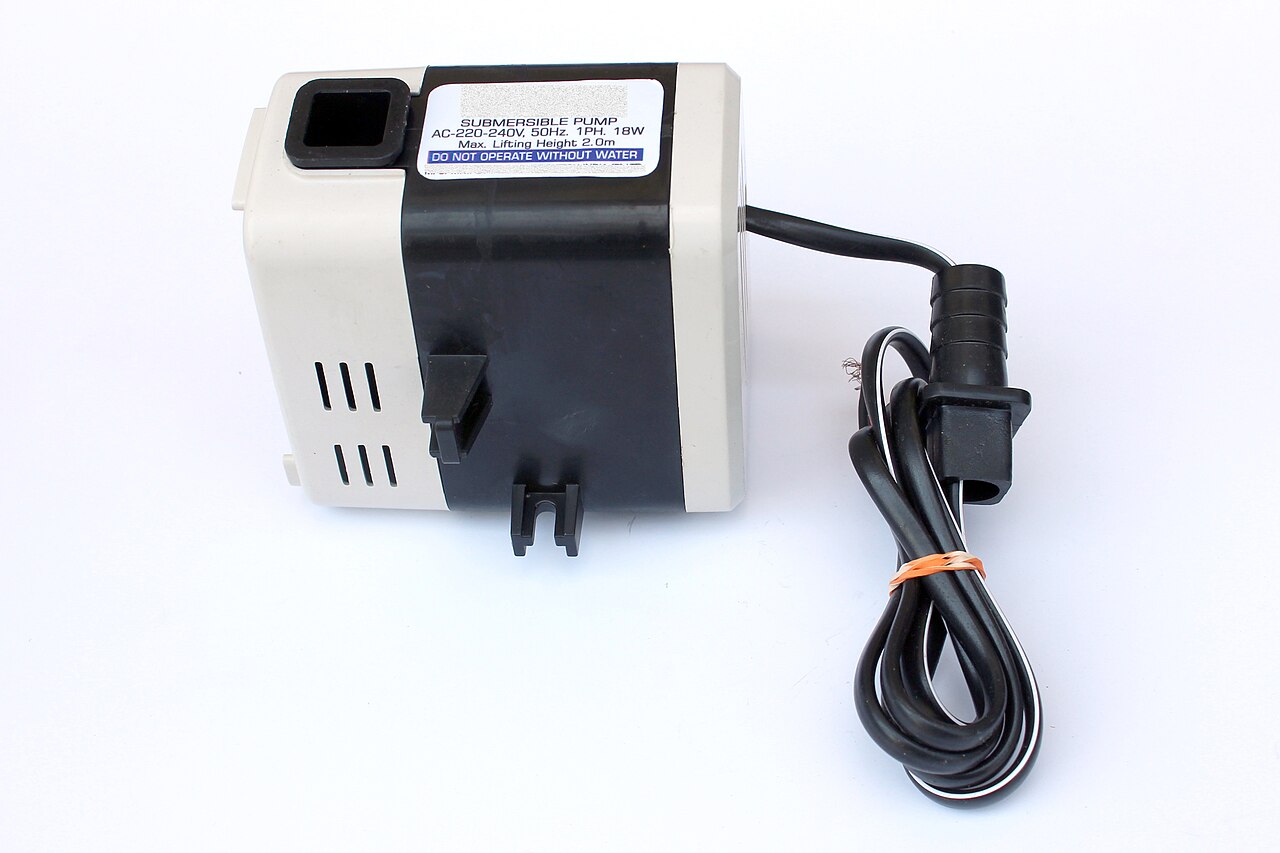
- Pump selection — based on required flow rate (m³/h) and head height (m). In Glina: 12.8 m³/h at 80 m head.
If the well is not sufficient — relocate it or add a reservoir
From the corpus: "If it is determined that the planned well will not meet the orchard's needs due to its yield, it will be constructed at a different location." A second, more common strategy: keep a lower-yield well but fill a reservoir over 24 hours, from which the system is then fed by a separate pump during peak hours.
Well Yield Pump Test (How it is done)
A pump test measures how much water a well can provide with an acceptable drop in water level. Key terms:
- Static water level — the water level at rest, before pumping.
- Dynamic (pumping) water level — the level while the pump is operating.
- Drawdown — the difference between the static and dynamic levels.
- Specific capacity = flow rate / drawdown (e.g., m³/h per meter of drawdown). The higher the value, the "stronger" the well.
- Sustainable yield — the flow rate at which the water level stabilizes and does not continue to drop.
Two standard methods (international practice, e.g., Ontario, Washington State aquifer test guidance):
| Method | What it does | Typical duration |
|---|---|---|
| Step-drawdown test | Pumping at several increasing flow rates (usually 4 steps) | min. ~2 h per step |
| Constant-rate test | Pumping at a constant rate while measuring drawdown over time | 24–72 h |
| Recovery test | Measures the return of the water level after the pump is stopped | after the main test |
For a hazelnut orchard, the most important conclusion from the constant-rate test is: at what constant flow rate (m³/h) does the water level stabilize and remain stable. This flow rate must be equal to or greater than your peak requirement (e.g., the mentioned 12.8 m³/h).
B) Reservoir (Open or Closed)
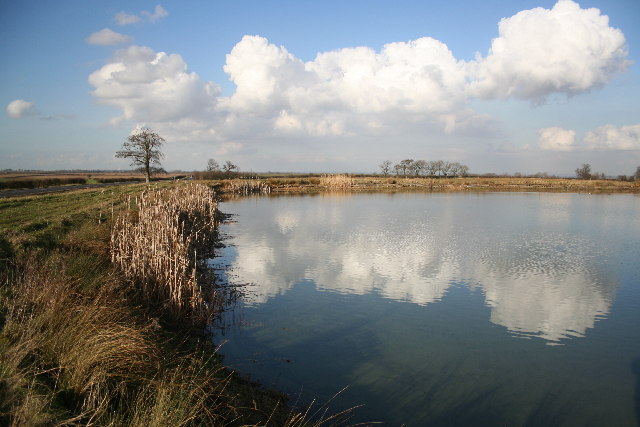
A reservoir is a container (earthen basin, lined lagoon, or closed tank) that balances the mismatch between a weak/intermittent source and high peak demand. It is typical in three situations: a low-yield well, great distance or elevation difference between the source and the orchard, and reliance on rainwater.
Examples of dimensions from the corpus:
| Location | Reservoir Volume | Dimensions / Type |
|---|---|---|
| Donji Hrastovac | 3200 m³ | 40 × 20 × 4 m, open, filled by rain + well |
| Zmajevac I | 2000 m³ | depth 3.5 m, area ~1400 m² |
| Vojnić (AGRO Utinja) | 2000 + 1500 m³ | two open reservoirs for 30.59 ha |
| Vojnić — smaller plots | 50–100 m³ | closed tanks / cisterns |
Closed reservoirs are constructed as galvanized steel tanks with floating or tensioned covers, or as flexible water tanks made of PE film ~1.5 mm thick.
Rule of thumb for reservoir volume
A good starting goal is for the reservoir to cover at least several of the driest weeks of peak demand if the source fails. Example: peak demand 150 m³/day × 14 days = 2100 m³. You can see this aligns with real Croatian reservoirs (2000–3200 m³). The less reliable the source (only rainwater), the larger the reservoir must be.
C) Rainwater
Collecting rainwater (from building roofs, handling areas, or directly into a reservoir) is interesting because it is generally the least legally restricted (see Step 4). Estimating potential:
Collected rainwater (m³) = catchment area (m²) × precipitation (m) × runoff coefficient
E.g., a 1000 m² roof × 0.8 m annual precipitation × 0.8 coefficient ≈ 640 m³/year. For larger orchards, rainwater is rarely sufficient on its own, so it serves as a supplement to the well/reservoir. In Vojnić, rainwater (along with trucked cisterns) was the main planned source for ~40 ha.
Step 4: Legal Framework for Extraction in Croatia
This is the part that most often "stops" an orchard project. The legal framework in Croatia is based on the Water Act and the jurisdiction of Croatian Waters (Hrvatske vode).
What is free, and what requires a permit
| Source / Action | Legal Status (approximate) |
|---|---|
| Collection of precipitation (rain) water on own land | Generally free use — no water permit required |
| Extraction of groundwater from a well for irrigation | Water permit or concession required for water abstraction |
| Abstraction of surface water (rivers, lakes) | Generally concession / water permit required |
From the corpus (request for EIA assessment, Croatia): "Irrigation, regardless of the surface area, is carried out in accordance with the conditions of the Concession Agreement for the economic use of water… or a water permit… except in the case of free use of water in the sense of using precipitation water collected on the owner's land."
Furthermore (Glina Elaborate): "For the use of groundwater, i.e., pumping for the purpose of new irrigation systems, the user is obliged to obtain a water permit or concession… and establish a system for measuring the quantities of water abstracted."
Measuring abstracted water is mandatory
A water permit almost always includes the obligation to install a water meter and record the quantities abstracted. Plan for a measurement point at the source during the design phase. EU funds (e.g., for irrigation measures) often also require the installation of consumption meters as a condition for funding.
Typical path to a permit (approximate)
- Hydrogeological investigation and source location.
- Environmental Impact Assessment (EIA) Elaborate — in practice, for orchards pumping groundwater, the procedure for Assessment of the Need for an Environmental Impact Assessment (OPUO) is initiated with the competent administrative body. Large orchards (e.g., ~40 ha) almost always go through this procedure.
- Pump test to prove yield and acceptable impact on the water body.
- Water permit (or concession) from Croatian Waters, with pumping conditions and measurement obligations.
- Installation of water meter and regular reporting.
Obligations are tied to the permit, not your wish
From the corpus: "The obligations of the holder of the abstraction in terms of use and pumping up to 5200 m³ of water/year are reflected in the provisions that will be defined for him in the water permit." In other words — how much you are allowed to pump, when, and under what conditions, is determined by the permit. Therefore, size the source and request a permit for the realistic maximum annual quantity, not the minimum.
Strategic Context
At the national level (Agriculture Strategy to 2030, NAPNAV — National Irrigation Project), investments in modernizing irrigation and simplifying the permit issuance process at the county level for local irrigation systems are emphasized. This means the framework is changing, and it is worth checking current conditions with the competent branch of Croatian Waters and the county advisory service before establishing the orchard.
Practical Calculation Procedure (Summary, Step-by-Step)
- Determine net seasonal requirement (mm). Starting point: 350–400 mm vegetative requirement, minus effective precipitation = net deficit (often around 100 mm in continental areas).
- Convert to m³/year.
net mm × 10 × ha. Calculate for average and maximum (dry) years. - Determine peak requirement (mm/day). Target ≥ 3 mm/day → 30 m³/ha/day.
- Calculate required flow rate (m³/h).
(mm/day × 10 × ha) / pump working hours. - Prove source with a pump test. The constant flow rate at which the level stabilizes must be ≥ peak flow.
- Size the reservoir if the source does not cover peak hours or is unreliable (orientation: 1–3 weeks of peak demand).
- Resolve the legal framework. Rainwater is usually free; well/surface water → water permit/concession + water meter.
Common Mistakes
- Sizing based on annual average, not peak summer demand. The most common and costly mistake.
- Planting before the source is proven by a pump test. An irrigation-dependent orchard without a secure source is risky from the first dry year.
- Ignoring the legal framework. Pumping without a water permit is illegal and can block EU funding.
- Forgetting the water meter and records. An obligation from the permit; plan the measurement point in advance.
- Overly simplistic adoption of literature Kc values. Recent research shows that the hazelnut Kc is lower and highly dependent on canopy cover — request local data for the project.
- Reservoir too small to bridge a dry spell. If relying on rainwater or a weak well, the reservoir must be generously sized.
Sources
This article is an AI summary compiled from a collection of hazelnut literature (RAG corpus) and public sources. Figures are informative and depend on cultivar, location, soil, climate, and current regulations — always check with the advisory service, a licensed hydrogeologist, and the competent branch of Croatian Waters before implementation.
Main sources used from the corpus:
- Environmental Impact Assessment Elaborate — Water Extraction for Hazelnut Orchard, Glina (Alfa-kolekt d.o.o.), 2022.
- Elaborate — Groundwater Extraction for Hazelnut Irrigation, Donji Hrastovac, Municipality of Sunja, 2021.
- Environmental Impact Assessment Elaborate — Establishment of permanent hazelnut orchard ~40 ha, Municipality of Vojnić (AGRO Utinja), 2021.
- Elaborate — Groundwater Extraction, Zmajevac I, Municipality of Kneževi Vinogradi, 2021.
- Elaborate — Water Extraction, Nova Kapela, Municipality of Dubrava, 2021.
- Elaborate — Groundwater Extraction, Dragodinac, 2021.
- Request for Assessment of the Need for Environmental Impact Assessment (Croatia), 2014 — Water Act, water permit / concession
- "Technology and Economics of Organic Hazelnut Cultivation", 2021 (water requirements 800–1200 mm)
- Krpina, 2004 (monthly requirements during vegetation)
- Agriculture Strategy to 2030 / NAPNAV — Croatian Waters
Main public (web) sources:
- Assessment of the Midseason Crop Coefficient for Young Grafted Hazelnut Trees in High-Density Orchards — MDPI Water 15(9):1683 — https://www.mdpi.com/2073-4441/15/9/1683
- A Crop Water Stress Index for Hazelnuts Using Low-Cost Infrared Thermometers — PMC — https://www.ncbi.nlm.nih.gov/pmc/articles/PMC11644836/
- ASABE — Design and Operation of Farm Irrigation Systems, Ch. 8 Water Requirements (Allen) — https://irrigationtoolbox.com/IrrigationToolBox/Section%202%20-%20Irrigation%20System%20Planning/ASABE%20DesignandOperationofFarmIrrigationSystems/Ch8.pdf
- Using Specific Capacity to Monitor Well Performance — Southeast Hydrogeology — https://sehydrogeology.com/using-specific-capacity-monitor-well-performance/
- Government of Ontario — Water Supply Wells, Yield Test — https://www.ontario.ca/document/water-supply-wells-requirements-and-best-practices/yield-test
- Washington State Dept. of Ecology — Aquifer Test Procedures (2020) — https://apps.ecology.wa.gov/publications/documents/2011093.pdf
Recommended equipment
🔎 drip irrigation kit — Amazon →Affiliate links — we may earn a small commission at no extra cost to you.
Drip Irrigation Kit
Suitable for small to medium orchards or gardens.
| Use Case | Option Type | What to Check Before Purchase |
|---|---|---|
| Small plots | Basic drip lines | Emitter spacing and flow rate |
| Medium orchards | Complete kit with filters | Pressure regulation and filtration quality |
| Large scale systems | Professional installation | Hydraulic calculation and zoning |