Sunburn and Heat Damage (Sunscald) on Fruit and Leaves
Content generated by artificial intelligence — verify before application
This article was automatically compiled from a collection of hazelnut literature with the aid of artificial intelligence and may contain errors or outdated data. It serves as a starting point for further research, not as professional advice. Dosages, products, and timing are informative and depend on the cultivar, location, and current regulations — always consult with an advisory service and official sources before application.
Sunburn and heat damage are increasingly becoming a problem in hazelnut orchards, especially during hot and dry summers that are becoming more frequent in continental and coastal Croatia. Unlike injuries caused by fungi, bacteria, or insects, this is abiotic stress — the direct effect of solar radiation and high temperatures on leaf, fruit, and bark tissue. Although symptoms are sometimes mistaken for diseases, recognizing insolation burns is crucial because they are not controlled by disease protection products, but rather by cooling, shading, and light-reflecting measures. This article systematically covers the identification of burns on fruit, leaves, and trunks, the role of orientation, exposure, and cultivar, as well as specific protection measures (kaolin, shading, trunk whitewashing), with a link to branch canker. It is complementary to the article on heat and drought, but here we focus specifically on sunburn as a separate, practical problem.
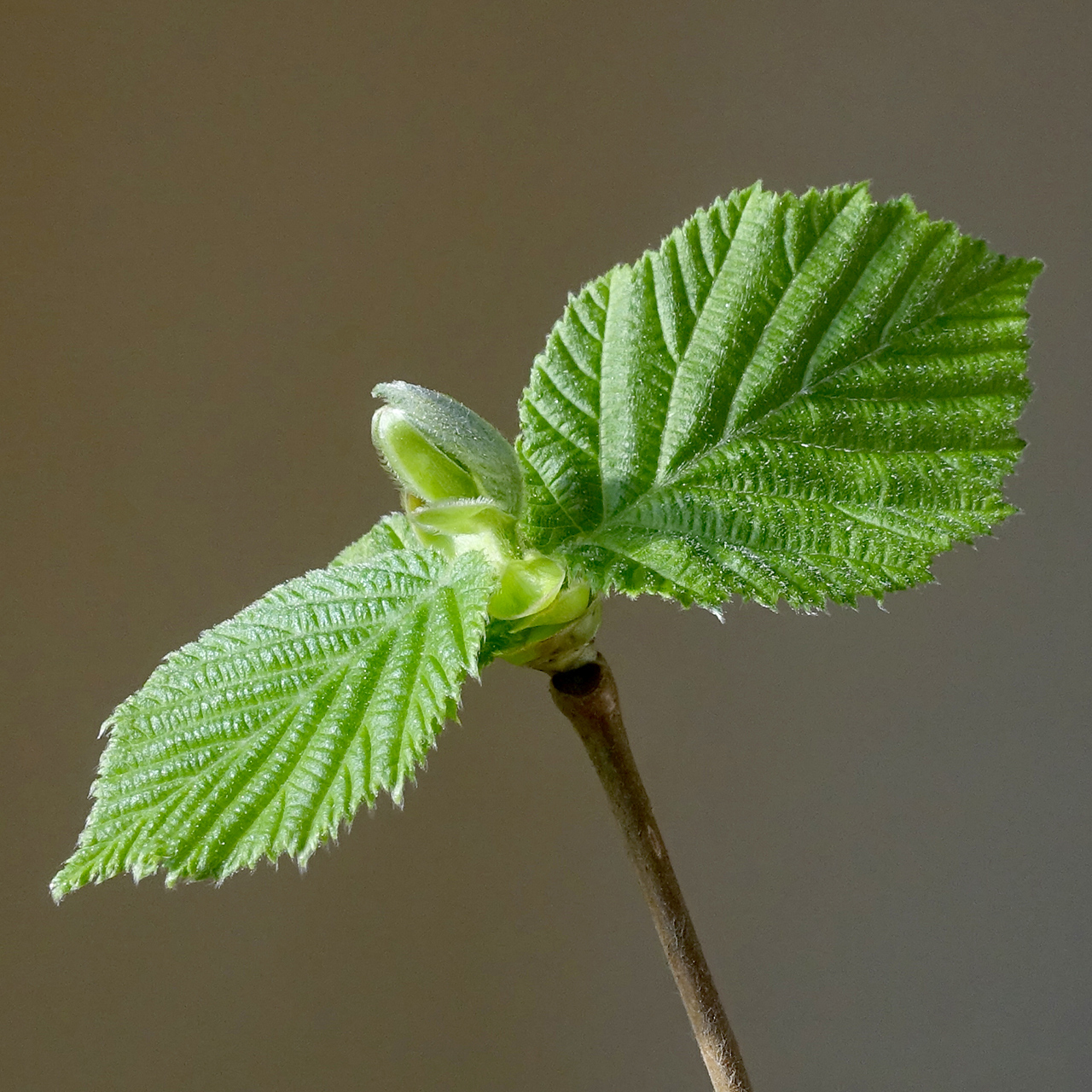
What is sunscald and how it differs from other damages
In English literature, two related but distinct terms are used, which is important to distinguish because they require different measures:
- Sunburn (summer sunburn) — occurs in the height of summer due to a combination of high air temperature and strong solar radiation (insolation). Tissue overheats above a critical temperature and dies. It affects fruit, leaves, and bark of exposed, unacclimatized plants — especially young seedlings and trunks that have suddenly been exposed to the sun after heavy pruning.
- Sunscald (winter-early spring bark sunburn) — occurs when the sun warms the bark during the day, which loses its cold resistance ("deacclimatizes"), and then, when the sun sets, the tissue freezes suddenly and deeply. The result is the death of the cambium and phloem in a narrow, longitudinal strip of bark.
Both mechanisms practically result in a similar final image — a longitudinal strip of dead, cracked, and peeling bark with exposed, dead wood — and both predominantly occur on the southwest side of the trunk (in the Northern Hemisphere), where afternoon radiation is strongest and hottest. In Croatian conditions, summer sunburn on fruit and leaves and bark burns on young trunks are the most common forms of the problem.
Key for diagnosis
Sunburns are always associated with the most exposed side (south/southwest, top of the canopy, edge rows) and with periods of extreme heat. Diseases, on the other hand, are more common in moist, shaded areas and after rainy periods. This difference in spatial distribution is the first and most reliable sign.
Symptom Identification
On the fruit (hazelnut)
Fruit sunburns occur on the side facing the sun, most often on the outer, upper, and southwest parts of the canopy and on edge rows.
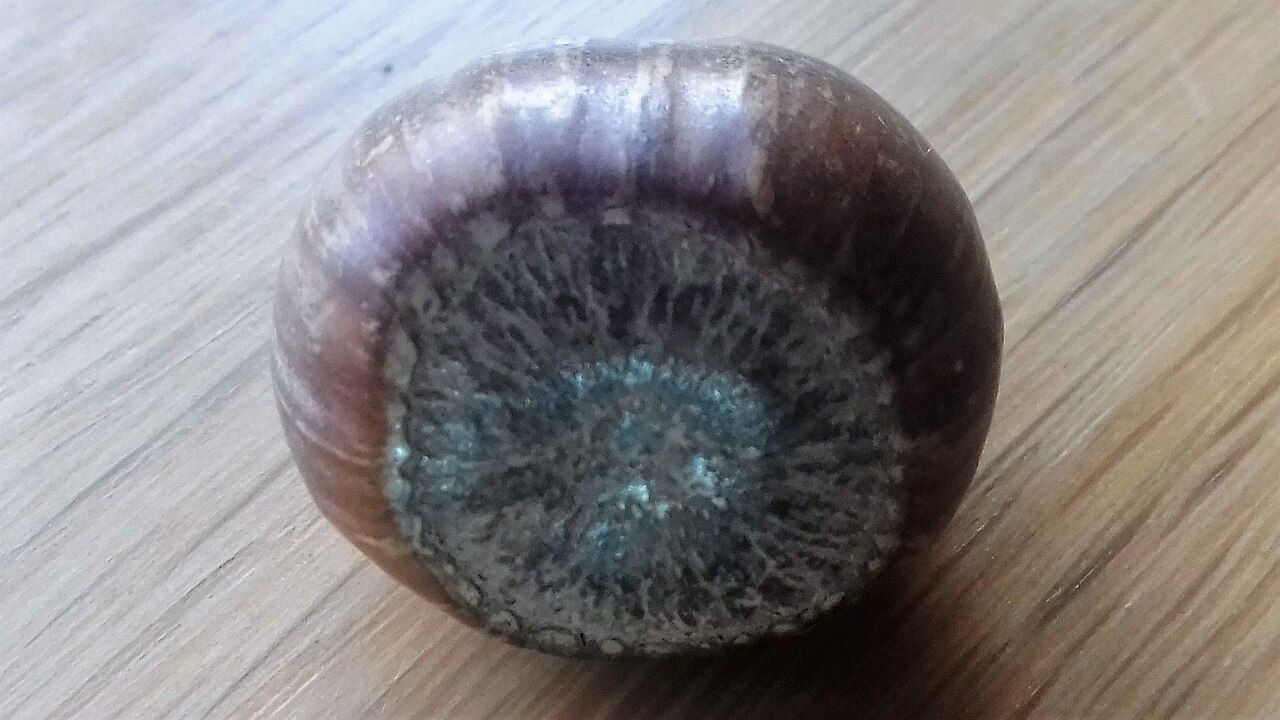
- Lightened, whitish to yellowish-brown, later dark brown depressed spot on the involucre (husk) and shell of the fruit, on the sunny side.
- Premature drying of the husk and smaller, poorly filled kernels; in severe cases, fruit drop before harvest.
- Heat stress during kernel filling can contribute to the appearance of hollow ("blind") fruits without kernels, although this defect has other genetic and pollination causes (poor differentiation of the embryonic sac).
Link with rot and mycotoxins
Puncture sites and cracks on sunburned fruits are entry points for fungal infections (brown rot Monilinia fructigena, gray spot, kernel rot). Literature emphasizes that puncture and damaged sites on the fruit are the main site of infection, especially with rain in May and June. Heat damage therefore indirectly increases the risk of kernel rot and potentially mycotoxins — which is the last stage of the diagnostic chain that needs to be monitored.
On the leaves
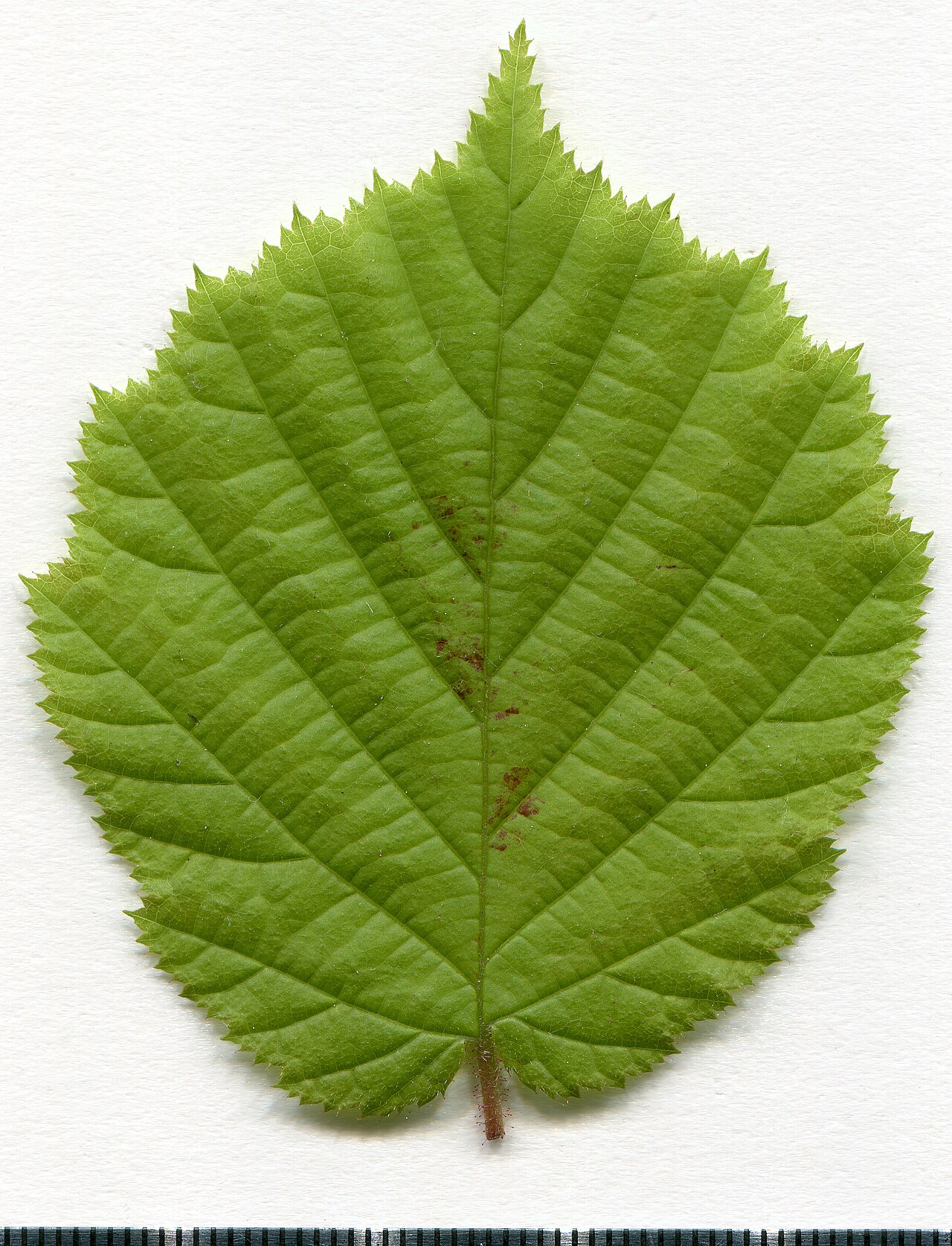
- Marginal and intercostal necrotic edge — the leaf turns brown and dries from the edge towards the interior, first at the top and edges exposed to the sun; tissue along the main veins remains green longer.
- Lightening (paling, "bleaching") of the blade, loss of turgor, and curling of exposed leaves during the hottest part of the day.
- In a combination of heat and drought, symptoms accelerate because the plant fails to cool the leaf through transpiration; measurements of relative water content in leaves (RWC) help distinguish water stress from pure heat stress.
- Unlike leaf spot diseases (brown/gray leaf spot), insolation necrosis does not have sharply defined spots with a border or fungal fruiting bodies, but rather diffuse, "baked" edge tissue on the sunny side.
On the trunk and branches (bark sunburn)
- Longitudinal, elongated strip of depressed, cracked, and peeling bark on the southwest side of the trunk.
- Under the damaged bark, the cambium and phloem die; over time, the bark separates and exposes dead wood.
- Most vulnerable are young, thin, and smooth trunks (young seedlings) and branches that have suddenly been exposed to the sun after heavy pruning.
- The wound is attractive to secondary pests and pathogens (see chapter on branch canker).
The Role of Orientation, Exposure, and Microclimate
The risk of sunburn is not evenly distributed throughout the orchard. The most severely affected are:
| Position | Why it is risky | Practical Consequence |
|---|---|---|
| Southwest side of trunk and canopy | Highest temperature and radiation in afternoon hours | Whitening/protection should be directed to the SW side |
| Top and outer edge of canopy | Direct insolation, least self-shading | Fruits on the edge suffer first |
| Edge rows of the orchard (especially S and W) | Without neighboring shelter | Greater need for kaolin/shading |
| Young seedlings and recently transplanted plants | Thin bark, unacclimatized tissue | Mandatory trunk protection from the first year |
| Trees after heavy pruning | Sudden exposure before shaded branches | Plan pruning gradually |
Row orientation (north–south vs. east–west) affects how much fruit and trunk are exposed to afternoon sun — analogous to vineyards, where grape clusters on the west side of the canopy in N–S oriented rows are more affected due to warmer afternoons. When establishing a new orchard, this is a valuable element of planning.
The Role of Cultivar
Genetics affects susceptibility to sunburn through several traits: leaf density and size (self-shading of fruit), bark thickness and pigmentation, ripening time, and resistance to heat stress. In literature, cultivar susceptibility is primarily documented for diseases (e.g., large differences in susceptibility to powdery mildew among Georgian, Azerbaijani, and French cultivars), but the same principle applies to abiotic stress: there is no "universally resistant" cultivar, and the choice should be adapted to the location.
Practical guidelines:
- Cultivars with denser and more vigorous canopies better self-shade the fruits and reduce direct insolation.
- On very hot, exposed positions, preference should be given to cultivars known for tolerance to summer heat in the specific location (check local trials and advisory services).
- When choosing pollinizers and main cultivars, consider phenology — cultivars that fill kernels in the height of the hottest period are more exposed to risk.
Informative
A specific list of "resistant" cultivars depends on climate, soil, and year. Look for data on the behavior of a specific cultivar in your area with the advisory service and in local cultivar trials.
Protection: Kaolin (particulate film)
Kaolin is an inert white clay (Al₄Si₄O₁₀(OH)₈) that disperses in water on leaves, fruit, and trunk, creating a reflective white film. The film reflects part of the solar radiation, lowers tissue temperature, and thus alleviates heat stress; incidentally, it also acts as a physical barrier against some pests and as a hindering factor for pathogen entry.
What literature says about hazelnut and related crops:
- Coating with kaolin lowers leaf temperature by 2.9 to 6.9 °C (experiments on European hazelnut and other crops), with increased albedo (light reflection).
- The effect on photosynthesis is dual: under conditions of good water supply, there is generally no negative effect on net photosynthesis (Pₙ), stomatal conductance (gₛ), and water use efficiency (WUE); under drought, kaolin can increase stomatal resistance and reduce assimilation. Therefore, kaolin is not a substitute for irrigation, but a supplement.
- Summer rains do not completely wash off the film, so average coverage remains sufficient for protection of photosynthetic efficiency of PSII (Fᵥ/Fₘ) — but for full effect, the coating should be renewed.
Orientational dosages (informative — always follow the product label):
| Product / context | Orientational dosage | Note |
|---|---|---|
| Kaolin BPLN (commercial, fruit/olive/vine) | 0.2–5 kg / 100 L water | According to product declaration |
| Kaolin in scientific trials on hazelnut | 3% and 6% suspension | Higher concentrations = thicker film |
| Commercial kaolin (nuts, hazelnut/almond) | ~1.0–1.5 kg / 100 L; up to ~20 kg/ha | Applicable until harvest day (check pre-harvest interval) |
Practical notes for kaolin application:
- Apply the first coating before the predicted heat wave, not after the appearance of symptoms.
- Ensure an even, continuous white layer on the sunny side; an incomplete film offers poor protection.
- Renew the coating after heavy rains and as the plant grows (new leaves are not protected).
- Be mindful of the possible residue of the white film on fruits and the pre-harvest interval — check the declaration.
- Under drought, combine with irrigation; kaolin alone does not compensate for lack of water.
Protection: Trunk Whitewashing
Whitewashing the trunk and larger branches with diluted white paint or lime solution is a classic and inexpensive measure against bark sunburn — and against both summer sunburn and winter sunscald. The white surface reflects the sun, reduces bark heating during the day, and alleviates sudden temperature oscillations.
- Use water-based white latex (acrylic) paint diluted with water (commonly approximately half-and-half) or dedicated preparations; avoid oil paints that can damage the bark.
- Coat the trunk and base of main branches, with emphasis on the southwest side.
- Most important for young seedlings and for trunks/branches suddenly exposed after heavy pruning.
- Renew the coating as needed every year, before summer (and in areas with harsh winters, before winter).
Protection: Shading and Mechanical Guards
- Trunk guards (grow tubes / trunk guards): Opaque, light-impermeable tubes protect the thin bark of young seedlings from direct sunlight. Research in hazelnut orchards (OSU) has specifically examined the effect of such guards; it is crucial that they are opaque, as transparent ones can exacerbate overheating ("greenhouse effect").
- Shading (shade nets): On very exposed, edge, or sandy sites, temporary nets reduce insolation during the peak of summer.
- Canopy management: Maintain sufficient foliage to self-shade the nuts and the lower trunk; avoid severe pruning that suddenly exposes previously shaded tissue.
- Irrigation: Adequate water supply enables transpirational cooling and is a fundamental preventive measure (see article on heat and drought).
Link to Branch Canker and Secondary Pests
Bark sunburn is not just an aesthetic issue — it creates wounds that serve as entry points for branch canker and wood rot. Dead, cracked tissue is colonized by opportunistic pathogens and fungi causing cankers and necrosis (in literature, hazelnut necrosis and bark canker are described, and lesion lengths in artificial inoculations can exceed 70 mm with more aggressive isolates). Similarly, sunburn on the trunk attracts bark beetles and other pests that attack weakened tissue.
Practical consequence: preventing sunburn is also preventing branch canker. Where wounds have already formed, they should be cleaned, monitored, and, if necessary, protective measures applied to the bark (e.g., autumn copper application during leaf fall against leaf spots and necrosis — informational, subject to checking registration status).
Practical Recommendations and Common Mistakes
Recommended annual rhythm (informational, adapt to location):
| Period | Measure |
|---|---|
| Early spring / before summer | Whitewashing the trunks of young seedlings; checking trunk guards |
| Before the first heat wave | First application of kaolin on the sun-exposed side of the canopy and nuts |
| Summer (heat/drought) | Irrigation; reapplication of kaolin after rains; shading if necessary |
| Pre-harvest | Check kaolin pre-harvest interval (PHI); monitor sunburned nuts for rot risk |
| Autumn (leaf fall) | Inspect bark wounds; measures against necrosis/leaf spots |
Common mistakes:
- Confusing sunburn with disease and unnecessary fungicide treatment — always verify if the damage is on the sun-exposed side and linked to heat.
- Applying kaolin only after symptoms appear — the film is preventive, not a cure for already sunburned tissue.
- Incomplete or un-renewed coating — a thin or washed-off film offers little protection; new foliage remains unprotected.
- Relying solely on kaolin while neglecting irrigation — under drought conditions, the effect is absent, and photosynthesis may even decline.
- Severe pruning in spring/summer that suddenly exposes the trunk and branches — tissue exposure should be gradual.
- Transparent trunk guards that overheat the bark instead of protecting it.
- Neglecting bark wounds that subsequently develop into branch canker.
Gallery
Sources
This article is an AI summary compiled from an internal literature collection on hazelnut (RAG corpus) and public sources. Figures, dosages, and timeframes are informational and depend on the cultivar, location, and applicable regulations and product labels. Main sources used:
- Use of Micronized Calcium Carbonate-Based Sunscreen on Young Hazelnut / review of kaolin application as protection (reduction of leaf temperature by 2.9–6.9 °C) — RAG corpus.
- Luciani et al. (2020), Mitigation of multiple summer stresses on hazelnut — kaolin, albedo, photosynthesis, WUE — RAG corpus.
- Khavari, Fattahi et al. (2021), Salicylic acid and kaolin effects on pomological, physiological and phytochemical characters of hazelnut (Corylus avellana) at warm summer condition, Scientific Reports 11:4568 — https://doi.org/10.1038/s41598-021-83790-0
- Kaolin treatments on Tonda Giffoni hazelnut (sensitivity of the west-facing side of the canopy) — https://www.sciencedirect.com/science/article/pii/S0304423819309835
- Kaolin BPLN — product label (dosage 0.2–5 kg/100 L); ORMIX PLUS kaolin (nut crops, 1–1.5 kg/100 L, up to 20 kg/ha) — RAG corpus.
- Diseases and pests of hazelnut (Repository) — leaf spots, brown rot, kernel rot, bark canker — RAG corpus.
- Notification for hazelnut producers / Agroklub — puncture and damaged sites as entry points for rot — https://www.agroklub.com/vocarstvo/trulez-plodova-lijeske-se-javlja-na-mjestima-napada-stetnika-vrijeme-je-za-zastitu/60175/
- Josip Juraj Strossmayer University of Osijek — diploma/final thesis on hazelnut diseases (brown leaf spot, brown rot, autumn copper) — RAG corpus.
- Springer, necrosis and bark canker of hazelnut (lesion lengths) — https://link.springer.com/article/10.1007/s10722-023-01790-7
- Pacific Northwest Pest Management Handbooks — Hazelnut (Corylus avellana) — Sunburn — https://pnwhandbooks.org/plantdisease/host-disease/hazelnut-corylus-avellana-sunburn
- Pacific Nut Producer — Sunburn vs. Sunscald on Young Hazelnut Tree Trunks (OSU Extension) — https://pacificnutproducer.com/2019/12/30/sunburn-vs-sunscald-on-young-hazelnut-tree-trunks/
- West Coast Nut — Impact of Trunk Guards in Hazelnut Orchards — https://wcngg.com/2020/07/10/new-research-looks-at-the-impact-of-trunk-guards-in-hazelnut-orchards/
- Forest Pathology — Sunburn and Sunscald (mechanism, southwest exposure, cambium/phloem, secondary pathogens) — https://forestpathology.org/abiotic/sunburn-sunscald/