Spanish and other European cultivars: Negret, Pauetet, Fertile de Coutard, Segorbe
Content generated by artificial intelligence — verify before application
This article was automatically compiled from a collection of hazelnut literature using artificial intelligence and may contain errors or outdated data. It serves as a starting point for further research, not as professional advice. Dosages, products, and timing are informative and depend on the cultivar, location, and current regulations — always consult with an advisory service and official sources before application.
Mediterranean and Western European hazelnut (Corylus avellana L.) cultivars — the Spanish Negret and Pauetet, the cultivar of uncertain origin Segorbe, and the French Fertile de Coutard (synonym Barcelona) — form the backbone of industrial hazelnut production in northeastern Spain (Catalonia, especially the province of Tarragona) and southwestern France, while Barcelona has become the most widespread European cultivar in the USA via Oregon. This profile consolidates the agronomic traits of these cultivars — habitus, nut and kernel, kernel percentage, cropping behavior, resistance to diseases and pests, and, crucially for growers, their role in planting combinations and as pollinizers. The summary is based on a collection of hazelnut literature (RAG corpus) and public sources.
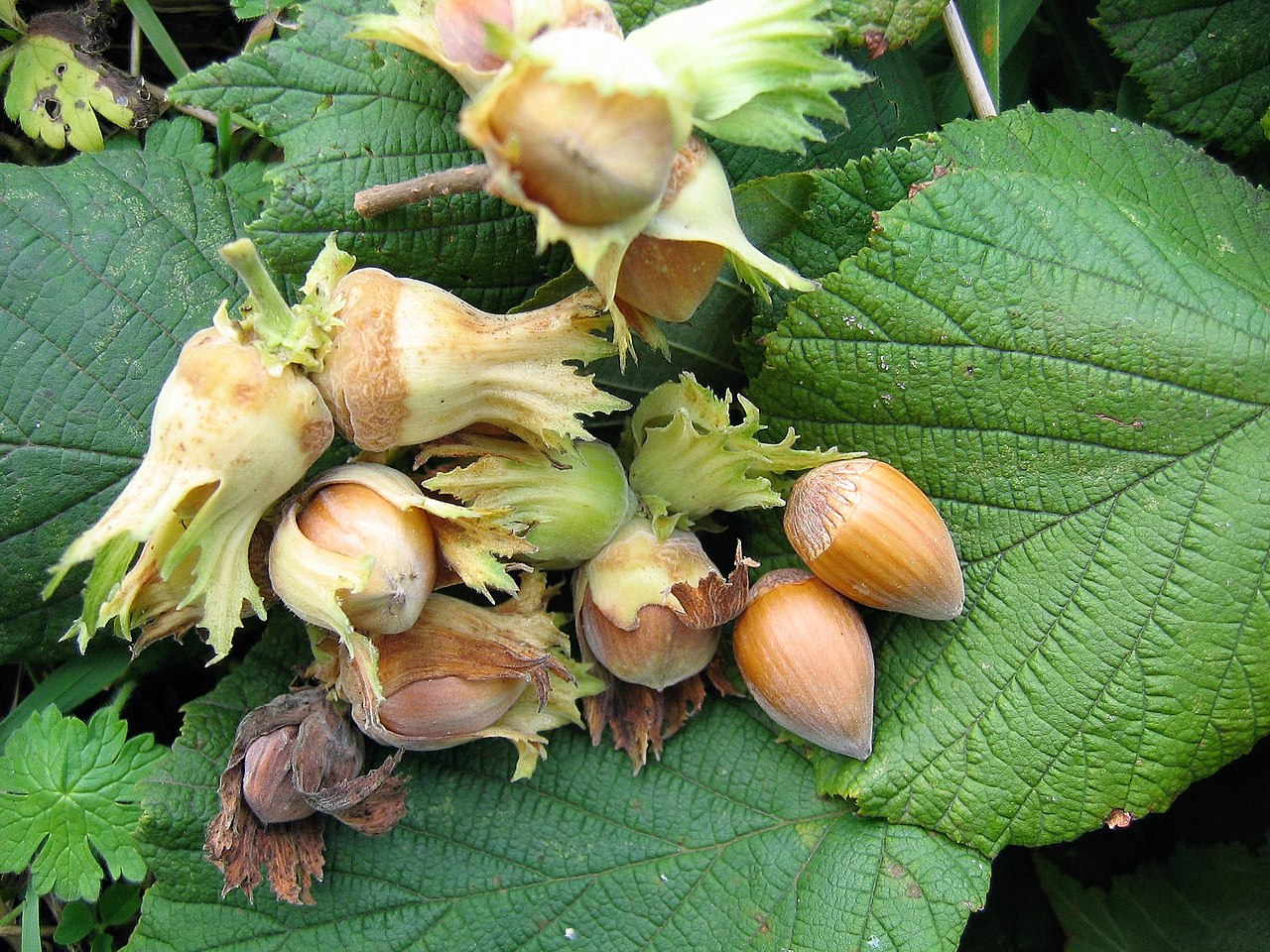
Fertile de Coutard / Barcelona — primary profile is elsewhere
The cultivar Barcelona and the French Fertile de Coutard (also known in Croatian as „Rodni kutard") are the same cultivar. To avoid contradictory figures, the complete profile of this cultivar — agronomy, nut and kernel, phenology, S-alleles, and pollinizers — is maintained in the article Barcelona, Ennis and Hall's Giant. Here, we discuss it only in the context of Mediterranean orchards and pollination schemes, referring to the primary profile. Numerical data in both articles are aligned according to the same sources.
Why cultivar combination is mandatory
Before individual profiles, it is important to understand the common denominator of all these cultivars: hazelnut is wind-pollinated, blooms in mid-winter to early spring, and the vast majority of cultivars are autosterile (self-incompatible) and strongly dichogamous — male (catkins) and female flowers of the same cultivar do not bloom simultaneously. Therefore, a single cultivar, even if there are hundreds of bushes of the same name in the orchard, cannot fertilize itself.
- Therefore, at least three mutually fertile (mutually compatible) cultivars are planted in orchards to overlap the long and unpredictable blooming period.
- Cultivars in the orchard are divided into main (most prevalent, bearing yield), supplementary, and pollinizers. According to Spanish experience, one cultivar should not represent more than ~43 %, and pollinizers should not occupy more than ~25 % of the area (in France, 20–30 % pollinizers are proposed).
- Pollinizers should be spaced at distances of up to ~30 m from the main cultivar; although wind can carry pollen up to 1 km, better results are achieved at shorter intervals.
- When choosing pollinizers, temporal overlap of the pollinizer's blooming period with the stigma receptivity of the main cultivar and pollen compatibility (S-alleles) are decisive. The statement "A pollinates B" is only valid if the blooming periods coincide at a given location and year.
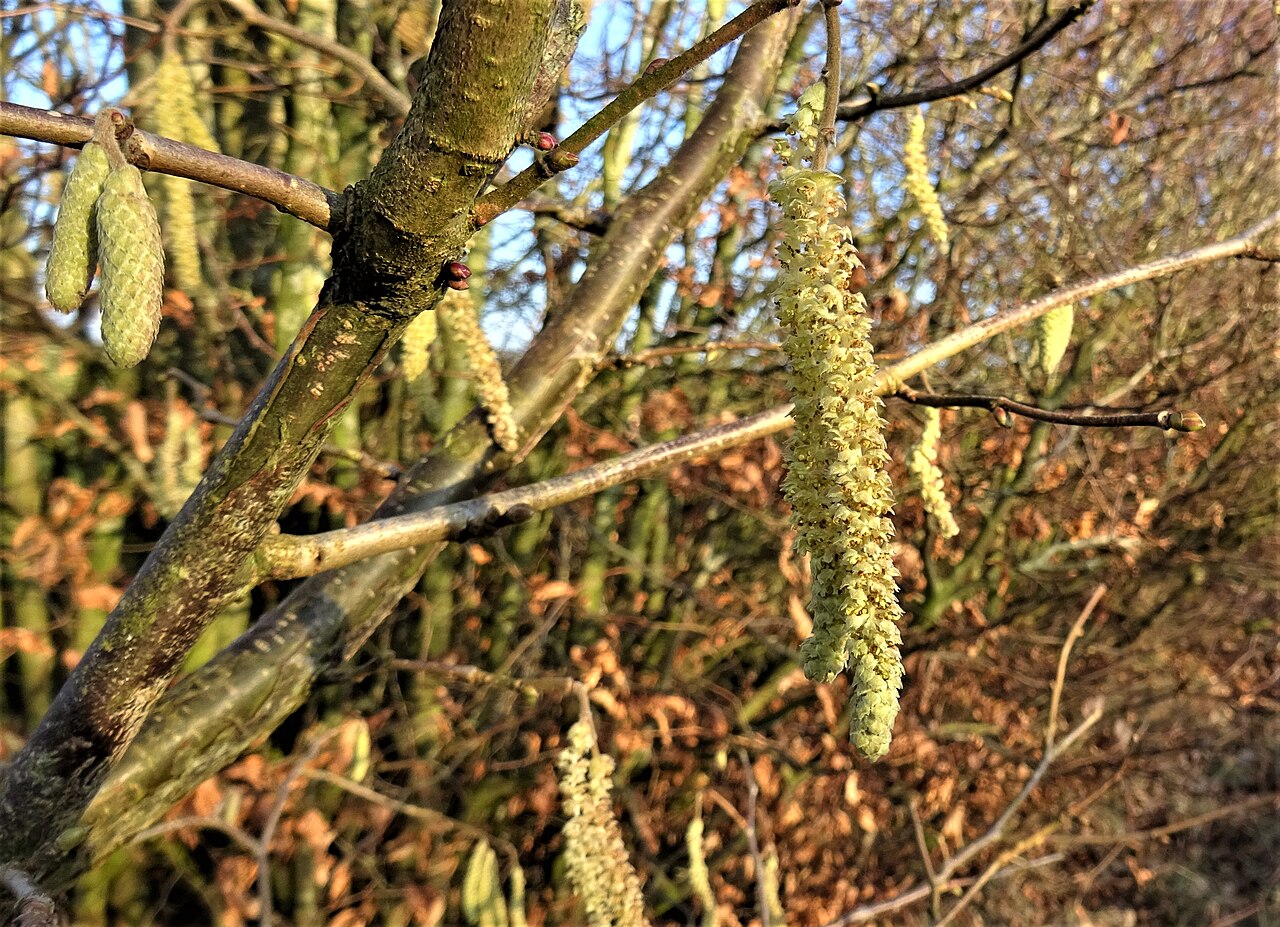
Dichogamy in practice. Cultivars are divided into protandrous (first catkins, e.g., Fertile de Coutard) and protogynous (first female flowers, e.g., Negret). By combining protandrous and protogynous cultivars, it is easier to cover the entire blooming period.
Negret — leading Spanish industrial cultivar
Negret (C. avellana) originates from Spain, where it is the leading hazelnut cultivar, especially in Catalonia (most widespread in orchards in the province of Tarragona). This is a classic high-quality kernel cultivar for the confectionery (chocolate) industry.
- Habitus and vigor: bush of medium vigor, upright growth, with semi-wide crowns. Produces abundant root suckers, which means higher maintenance costs (regular removal of suckers). See specific note on vigor below.
- Blooming: blooms early; it is a protogynous cultivar.
- Nut: medium-sized, approx. 3 g, dimensions ~20.5 × 16.9 × 14.6 mm, roundish (index ~0.77), somewhat elongated; 3–4 nuts per cluster. The husk is slightly longer than the nut, with strongly serrated edges; ripe nuts drop easily from the husk (favorable for harvest). The shell is thin and brittle, striped, dark Havana color.
- Kernel: good taste, easily removed from the shell; the pellicle separates well during roasting. Kernel percentage ~47.7 % (literature citation; virus-free selections report 47–49 %). Average kernel mass approx. 1.1 g.
- Kernel chemical composition (2020 season, approximate): fat ~66.7 %, proteins ~13.1 %, carbohydrates ~15.5 %, ash ~2.4 %, water ~2.5 %.
- Weaknesses: abundant root suckering, susceptibility to iron chlorosis on calcareous soils, and expression of low vigor under certain growing conditions (see below).
Note on Negret vigor (data alignment)
In the literature, seemingly contradictory statements about Negret are found simultaneously — "medium vigor" and "medium to low vigor." The difference is not an error, but depends on growing conditions:
- The inherent (genetic) vigor of Negret is medium — this is how Croatian and Italian pomological reviews (Pavlović, Miljković) describe the cultivar itself.
- In practice in Tarragona, where Negret has traditionally been grown on its own roots, trees develop low vigor, iron chlorosis, and abundant suckering — these are three linked agronomic problems described by Catalan research (IRTA).
In other words: it is inherently a medium-vigor cultivar, but on its own roots and on demanding (calcareous, dry) soils, it expresses low vigor. This is precisely why Negret is increasingly grafted onto rootstocks that do not produce suckers and tolerate drought better (see next section).
Negret on non-suckering rootstocks (C. colurna)
To simultaneously address suckers, low vigor, and chlorosis, recent research and nursery practice for Negret (and virus-free selections, e.g., Negret-N9) graft onto non-suckering rootstocks, primarily Persian hazel (Corylus colurna):
- C. colurna does not produce root suckers, develops a large and deep root system, and is suitable for poorer, skeletal soils.
- Grafted trees tolerate drought better and typically show greater vigor, longer one-year shoot length, and higher yield than those on own roots (because deeper roots reduce drought stress).
- The price of grafted saplings is higher, but savings are made on permanent sucker removal and a more resilient orchard is obtained.
- Caution: not all cultivar × rootstock combinations are equally successful — compatibility and scion behavior should be confirmed for the specific rootstock (in addition to C. colurna, selected C. avellana rootstocks are also used).
Negret as a pollinizer. Negret is cited in literature as a pollinizer for cultivars Fertile de Coutard / Barcelona and Cosford and Long Spanish. Caution: some studies on pollen source effects found that pollen from Negret did not always achieve satisfactory results — therefore, Negret as a pollinizer should be confirmed for a specific combination; Daviana has proven more reliable.
Pauetet (Pautet, Pauete) — vigorous Catalan cultivar
Pauetet (synonyms Pautet, Pauete, d'en Bardina) is a Spanish cultivar originating from the area of Alcover (province of Tarragona), selected from open pollination due to good nut traits and yield.
- Habitus: develops very vigorous bushes; habitus semi-upright to upright.
- Blooming / Vegetation: blooms and begins vegetation medium-late.
- Yield: enters productive age early and bears very well, regularly; cumulative trials report up to ~35 kg/tree.
- Nut: small to medium-large, roundish-elongated, uniform size, thickness ~16–18 mm; average mass ~1.9–2.4 g. Husk very hairy, slightly longer than the nut, expanded and serrated at the tip; ripe nuts drop from the husk (facilitates harvest). Shell thin (~1.1–1.2 mm), dark Havana color; shells separate very well from the husk (90–100 %).
- Kernel: roundish, ~0.9–1.2 g; kernel percentage very high — 46–50 % (some sources cite ~50 %), making it interesting for the industry. During roasting, the pellicle separates poorly (a drawback for some uses).
- Resistance: sensitive to anthracnose and bacterial blight, moderately sensitive to powdery mildew.
Fertile de Coutard (= Barcelona) in Mediterranean orchards
The complete profile of this cultivar (nut morphology, kernel percentage, S-alleles S1 S2, alternate bearing, EFB) is found in the article Barcelona, Ennis and Hall's Giant. Here we summarize only what is relevant for combination with Mediterranean cultivars from this profile:
- Vigor. In Mediterranean/Istrian conditions, Fertile de Coutard is very vigorous — in a trial in Istria (on C. colurna rootstock, spacing 5 × 5 m / 400 trees/ha), it achieved the highest vigor and widest crown of all seven tested cultivars (difference highly significant). This makes it the most demanding regarding planting spacing in this group.
- Phenology. Blooms early and is protandrous (first catkins), with an exceptionally long period of female flower receptivity — so it pairs well with protogynous Negret and with Daviana.
- Maturity. Matures late, which is its main agronomic drawback because harvest falls in the rainy period — plan drying and processing.
- Pollination (in the context of this profile): good partners are Daviana (very compatible), Negret (with caution — not always satisfactory), Long Spanish, Cosford, and Segorbe.
Terminology note. From seedlings of Fertile de Coutard, a newer table cultivar was developed in Bordeaux (since 1992, the main table cultivar in France): very vigorous, early bearing, nut ~3.6–4.5 g, Havana-colored shell 1.2–1.3 mm, kernel percentage 43–48 %; late maturity and sensitivity to bacterial blight/anthracnose are its weaknesses. Do not confuse it with the parent cultivar Barcelona/Fertile de Coutard.
Segorbe — a cultivar of uncertain origin, valued as a pollinizer
The origin of the Segorbe cultivar has not been reliably established
Sources disagree on the origin of the Segorbe cultivar. Some Croatian literature (Miljković, 2018, in the PBF work on chemical composition) explicitly states that the cultivar is "originally from France", while other sources (e.g., Mitar, 2016) list Segorbe as a Spanish cultivar — which aligns with the name of the place Segorbe in the province of Castellón (Valencian Community, Spain). The origin data should therefore be taken with caution until confirmed by a primary, reliable source; below we present the agronomic traits about which sources consistently report.
In practice, Segorbe is particularly valued for its pollinizer characteristics — it is often planted as a pollinizer alongside large-nut cultivars.
- Habit: very vigorous bushes/trees, with an upright to semi-upright habit. Flowers and begins vegetating late.
- Cropping: Enters productive age early; crops well to moderately.
- Nut: Round, slightly flattened laterally, uniform, ~2.6–3.1 g (some sources describe it as medium-large, round-oval). Shell is light tobacco-colored; it has shown greater resistance to cracking than some other cultivars. Shells peel off 80–90 %.
- Kernel: Variable round shape, ~0.99 g; kernel percentage ~43 % (one source notes "up to 45 %"); the pellicle separates moderately during roasting. Primary use: industrial processing.
- Resistance: Susceptible to powdery mildew and mites (hazelnut mite), less susceptible to bacterial canker and anthracnose.
- Role: In addition to its own yield, its value lies primarily in its compatibility as a pollinizer for commercial large-nut cultivars (listed as a pollinizer for Barcelona; S-alleles S9 S23).
Comparative table of agronomic traits
| Cultivar | Origin | Habit / Vigor | Flowering | Dichogamy | Nut Weight (g) | Kernel % | Primary Use | Key Weaknesses |
|---|---|---|---|---|---|---|---|---|
| Negret | Spain (Catalonia) | Upright; moderate cultivar vigor, often weak on own roots | Early | Protogynous | ~3.0 | ~47.7 (47–49) | Confectionery / Industry | Root suckers, Fe-chlorosis, poor vigor on own roots |
| Pauetet | Spain (Tarragona/Alcover) | Upright, very vigorous | Medium-late | — | ~1.9–2.4 | 46–50 | Industry | Anthracnose, bacterial canker; poor pellicle removal |
| Fertile de Coutard (Barcelona) | France (SW) | Semi-upright, very vigorous | Early | Protandrous | ~3.0–4.2 | 39–45 | Industry / Table | Late ripening (rainy harvest), alternate bearing, EFB outside EU |
| Segorbe | Uncertain (FR or ES / Castellón) | Upright, very vigorous | Late | — | ~2.6–3.1 | ~43 (up to 45) | Industry + Pollinizer | Powdery mildew, mites |
Figures are from literature and indicative; they vary with type/clon, rootstock, location, and year. For procurement and planning, always rely on nursery data and local trials. Complete figures for Fertile de Coutard / Barcelona can be found in the primary profile.
Role in planting combinations (pollinizer schemes)
These cultivars often enter the same scheme because their flowering periods partially overlap, and their roles complement each other. The following table summarizes pollinizer relationships from literature — apply with local verification of flowering overlap.
| Main Cultivar | Listed Pollinizers (Literature) | Note |
|---|---|---|
| Fertile de Coutard / Barcelona | Daviana, Negret, Dugi španjolski, Cosford, Segorbe, Mortarella, Imperiale di Trebisonda, Corabel, Butler, Merveille de Bollwiller | Daviana very compatible; Negret not always satisfactory; watch for EFB outside EU. S-alleles and full list: primary profile |
| Negret | (combine with complementary Catalan cultivars and Daviana) | Protogynous → pairs well with protandrous cultivars |
| Pauetet | Complements the Catalan cultivar assortment (Negret, etc.) | Medium-late flowering shifts the overlap |
| Segorbe | Often itself in the role of pollinizer for large-nut cultivars | Valued for pollen compatibility (S9 S23); late flowering covers the end of the season |
Practical rules for orchard layout:
- At least 3 interplanted cultivars; main cultivar ≤ ~43 % (Spanish practice), pollinizers ≤ ~25 % (France 20–30 %).
- Place pollinizers within ~30 m of each row of the main cultivar (e.g., every 5th–8th row or in a combination of multiple pollinizers with early and late flowering).
- Cover the entire flowering period with pairs of protandrous + protogynous cultivars (e.g., Fertile de Coutard ↔ Negret) and by adding a late-flowering cultivar (Segorbe).
- Synchronize ripening within the orchard as much as possible for harvest organization; consciously decide whether the orchard will also include a late-ripening cultivar (Fertile de Coutard) with the risk of rainy harvest.
- Vigor dictates spacing: Very vigorous cultivars (Fertile de Coutard, Pauetet, Segorbe) require greater spacing (e.g., 5 × 5 m / ~400 trees/ha on C. colurna rootstock) than the moderately vigorous Negret.
Grafting onto Corylus colurna — when and why
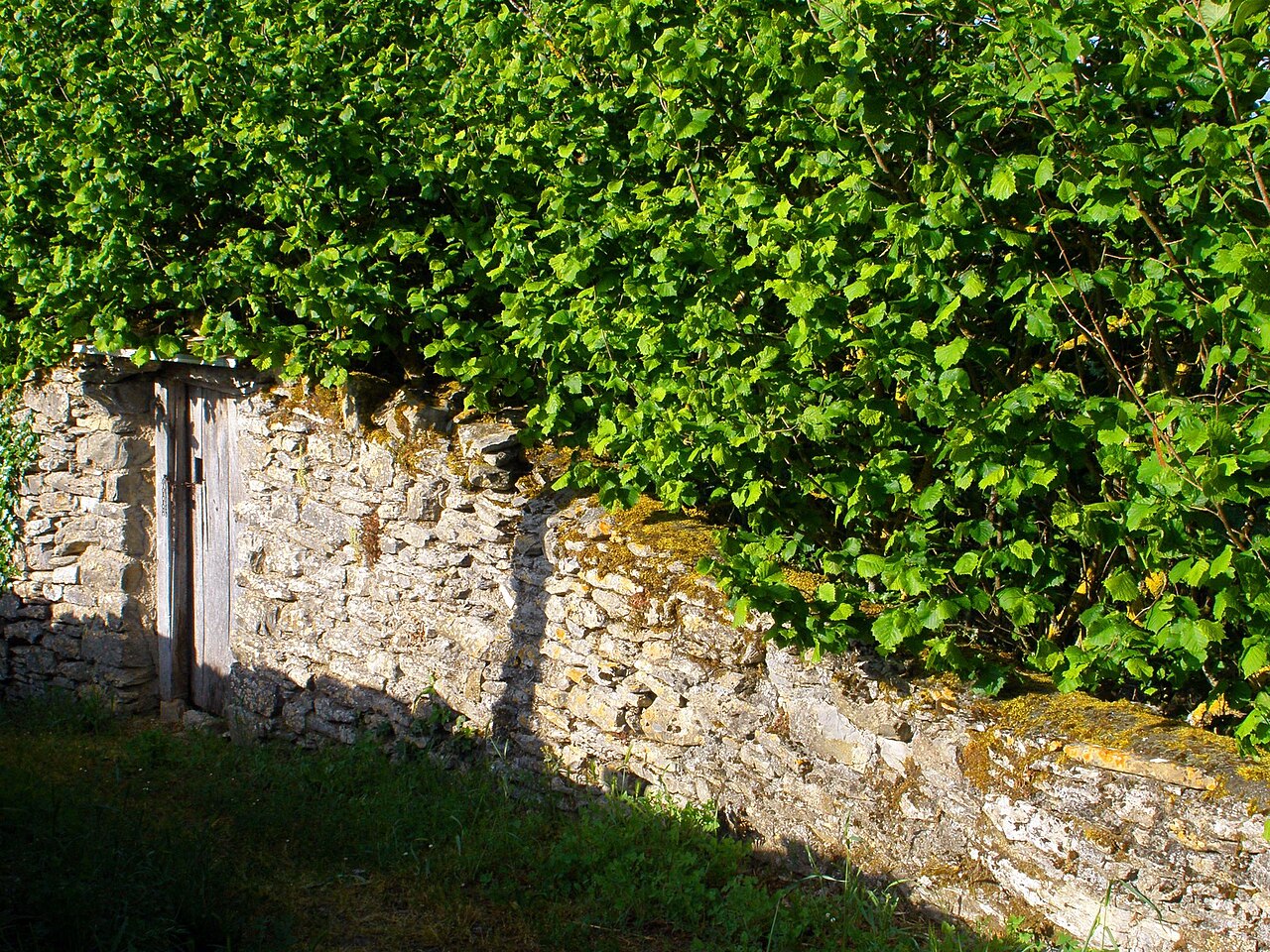
Although many Mediterranean cultivars are traditionally grown on own roots, for orchards on calcareous and dry soils (common in Croatia) grafting onto Turkish hazel (C. colurna) solves multiple problems at once:
| Problem on own roots | Effect of C. colurna rootstock |
|---|---|
| Abundant root suckers (Negret) | Rootstock does not produce suckers → no annual removal cost |
| Drought stress, poor vigor (Negret on limestone) | Deep root system, better drought resistance and greater vigor/cropping |
| Poor, skeletal soils | Rootstock suitable for poorer soils |
| Shallow root system | Larger and deeper root system |
Disadvantages: more expensive saplings, need for certified grafted material, and verification of scion-rootstock compatibility. Grafted saplings on C. colurna are common in Croatian nurseries — see the next section.
Availability in Croatia (realistic picture)
- Croatian nursery assortment is primarily oriented towards domestic and Italian cultivars (Istrian Long, Roman, Tonda di Giffoni, Tonda Gentile, etc.), regularly offered as grafted saplings on C. colurna. Specific Catalan/Spanish cultivars from this profile (Negret, Pauetet, Segorbe) are not routinely available "off the shelf" in Croatian nurseries and usually need to be ordered specially or obtained from specialized (import) suppliers.
- Fertile de Coutard / Barcelona appears in domestic literature and trials (e.g., Istrian trials on C. colurna), so it is more available than Spanish cultivars, but still needs to be sought specifically.
- Practical recommendation for HR: Before establishing an orchard, check actual availability and delivery times with authorized nurseries, insist on certified planting material (health status, cultivar identity), and, where soil conditions require, choose grafted saplings on C. colurna. For most Croatian locations, a core of domestic/Italian cultivars is more realistic, with Spanish cultivars as a supplement or pollinizers if they can be sourced.
Nursery availability, prices, and assortment change from year to year — the above describes the current general picture, not a guarantee; check directly with suppliers.
Resistance to diseases and pests — summary
| Cultivar | Powdery Mildew | Bacterial Canker | Anthracnose | Mites | Note |
|---|---|---|---|---|---|
| Negret | Moderate | Moderate | Moderate | — | Main problems are Fe-chlorosis and suckers, not diseases |
| Pauetet | Moderately susceptible | Susceptible | Susceptible | — | Watch leaf and nut protection |
| Fertile de Coutard | Moderately susceptible | Susceptible | Susceptible | — | Alternate bearing; outside EU: EFB risk (see primary profile) |
| Segorbe | Susceptible | Less susceptible | Less susceptible | Susceptible | Monitor powdery mildew and mites |
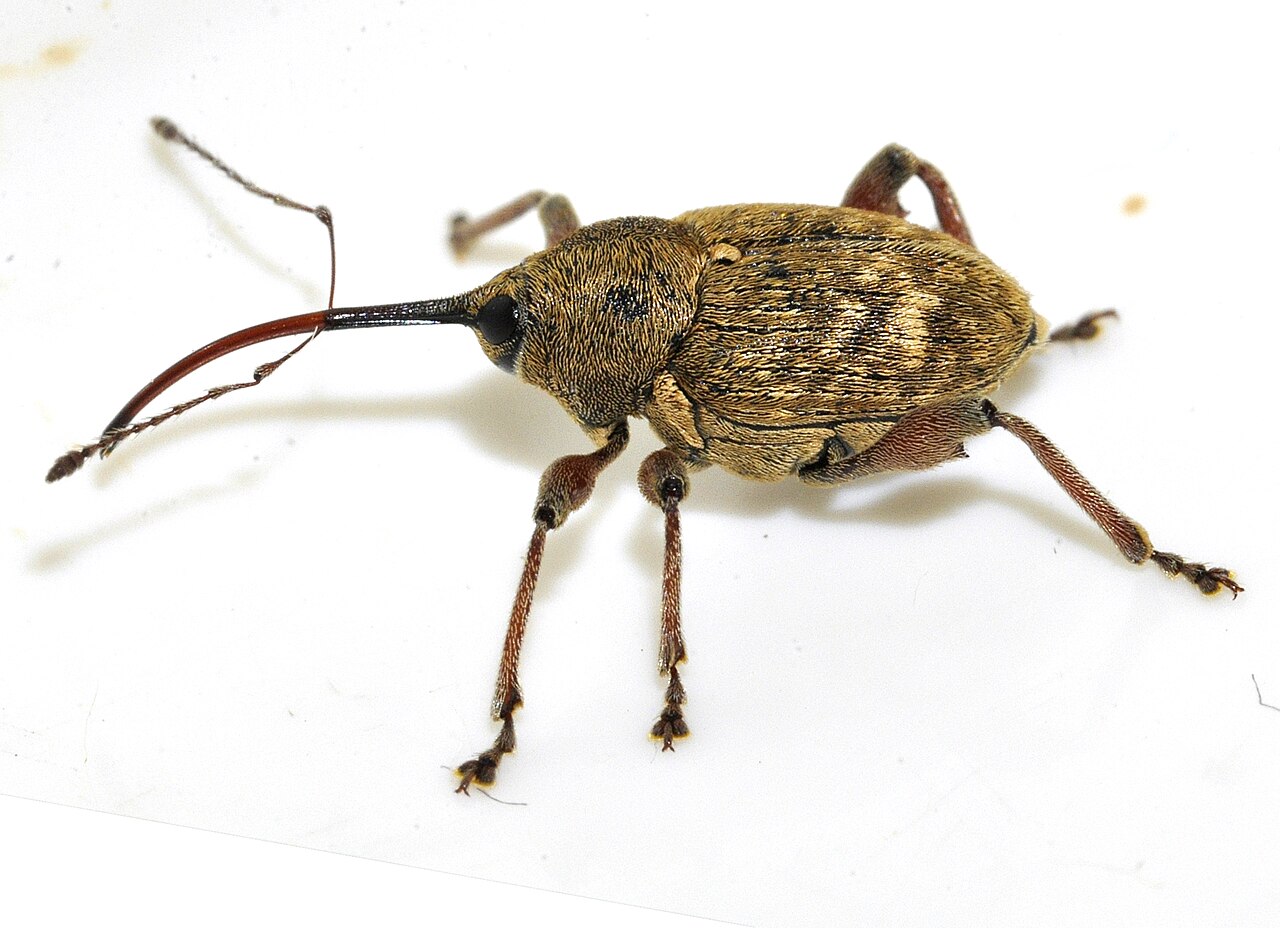
Thinner shells and slower shell hardening are associated with greater susceptibility to the hazelnut weevil (Curculio nucum) — cultivars like Negret and Pauetet with thin shells require careful monitoring of this pest. Control agents, dosages, and timing depend on registration in Croatia and the product label — check with the advisory service.
Practical recommendations and common mistakes
- Do not plant a single-cultivar orchard. Even if a cultivar is supposedly highly productive, yield is absent without a compatible pollinizer. This is the most common combined mistake.
- "A pollinizer on paper" is not enough. Check flowering overlap at the specific location; shifts in flowering in warmer/cooler micro-locations change compatibility.
- Negret and suckers + vigor. Account for the ongoing cost of sucker removal and poor vigor on own roots — seriously consider grafted saplings on C. colurna.
- Fe-chlorosis on calcareous soils. Negret is susceptible; analyze soil before planting and, if necessary, plan for rootstock/iron nutrition.
- Fertile de Coutard and rain. Late ripening means harvest during the rainy period — plan for drying and processing, and consider an earlier supplementary cultivar.
- Segorbe as the "workhorse" of pollination. If main cultivars are large-nut and in demand on the market, Segorbe is a good complement as it provides pollen (late flowering) and its own industrial crop.
- Check availability before planning. Spanish cultivars are not always easily available in Croatia — align the cultivar plan with actual nursery supply.
- Figures as orientation. Kernel percentage, nut weight, and resistance vary with clone, rootstock, and location — always request certified planting material and local data.
Gallery
Sources
This article is an AI-generated summary derived from a hazelnut literature collection (RAG corpus) and public sources. The main sources used include:
- Miljković, I. et al. — Chemical composition of hazelnuts from the 2020 season. (Master’s thesis, Faculty of Agriculture, University of Zagreb, repository) — descriptions of cultivars Negret, Pauetet, Segorbe, and randmani; note that Segorbe is stated to be “originating from France”.
- Mitar (2016.) / cultivar overview — Segorbe listed as a Spanish cultivar (kernel fill up to 45 %) — source of discrepancy regarding origin.
- Pavlović, M. (2010.); Hazelnut Cultivation (book) — morphology and pollinizers of cultivars Negret, Fertile de Coutard (Rodni kutard), Pauetet; pollinizer proportions (SP ≤ 43 %, FR 20–30 %).
- Miljković, I. (2018.) — Growth and cropping of hazelnut cultivars on rootstocks (Pomologia Croatica) — https://doi.org/10.33128/pc.21.3-4.2 — vigour and cropping of Fertile de Coutard and advantages of C. colurna rootstock (drought resistance, higher vigour/cropping) in Istria.
- Vuković, D. et al. (2018.), Agricultural Institute Osijek — Rootstocks for hazelnut grafting — C. colurna does not produce suckers, develops a large root system, suitable for poorer soils.
- Hazelnut Cultivation Guide (savjetodavna.hr / MPS, 2024.) — grafted seedlings on C. colurna (more expensive, but sucker-free); certified planting material; sucker removal 2–3 times per year.
- Bernik, R.; Stajnko, D. (2006.) — Comparison of morphological and physical properties of fruits of three hazelnut cultivars (Corylus avellana L.) — mass and dimensions of Fertile de Coutard nuts.
- Frutas-Hortalizas — Hazelnut: Types and varieties — https://www.frutas-hortalizas.com/Fruits/Types-varieties-Hazelnut.html
- Last Results in the Evaluation of 'Negret' Hazelnut Cultivar Grafted on Non-Suckering Rootstocks in Spain (ISHS / Acta Hort.) — https://www.actahort.org/books/1052/1052_18.htm
- Agronomical and Physiological Behavior of Spanish Hazelnut Selection "Negret-N9" Grafted on Non-suckering Rootstocks (Frontiers / PMC) — https://pmc.ncbi.nlm.nih.gov/articles/PMC8845479/ — Negret described as “medium-to-low vigour”, chlorosis and suckers on own roots in Tarragona; grafting onto non-suckering rootstocks.
- Advances in Hazelnut (Corylus avellana L.) Rootstocks Worldwide (MDPI Horticulturae) — https://www.mdpi.com/2311-7524/7/9/267 — review of rootstocks, including C. colurna.
- Rasadnik Žižek — Grafted hazelnut (Corylus colurna) — https://rasadnikzizek.hr/kategorija-proizvoda/sadnice-lijeske/ — availability of grafted seedlings in HR (Rimski, Istarski dugi, etc.).
- Colurna.net — Price list / hazelnut seedlings on C. colurna — https://colurna.net/cjenik-ljesnjak/ — domestic and Italian assortment of grafted seedlings.
- OSU Extension — Growing Hazelnuts in the Pacific Northwest: Pollination and Nut Development (EM 9074) — https://extension.oregonstate.edu/catalog/pub/em-9074-growing-hazelnuts-pacific-northwest-pollination-nut-development
- Effect/Influence of pollen source on nut and kernel characteristics of hazelnut (ScienceDirect) — https://www.sciencedirect.com/science/article/abs/pii/S0304423814002362
- Related article on Lijeskopedija: Barcelona, Ennis and Hall's Giant — primary profile of the Fertile de Coutard / Barcelona cultivar.
Dosages, products, timing, and cultivar figures are informative and depend on the cultivar, location, and current regulations — consult with advisory services and official sources before application.