Nursery Production and Certification of Planting Material
Content generated by artificial intelligence — verify before application
This article was automatically compiled from a collection of hazelnut literature using artificial intelligence and may contain errors or outdated information. It serves as a starting point for further research, not as professional advice. Dosages, products, and timing are informative and depend on the cultivar, location, and applicable regulations — always consult with an advisory service and official sources before application.
Planting hazelnuts is a long-term investment: an orchard remains in production for 30, 40, and more years. A mistake in selecting planting material — wrong cultivar, latent viral or bacterial infection, poor cultivar purity — cannot be corrected later; it persists throughout the orchard’s lifespan and directly reduces yield and income. Therefore, the quality, health status, and origin of the sapling are not administrative formalities, but the foundation of a successful orchard. This article explains how nursery production of hazelnut saplings is organized, what categories of planting material exist, what health status and cultivar purity mean, and how certification and plant passports function in practice within the European and Croatian systems.
What this article covers, and what it does not
This article is the regulatory source of truth: it describes the prescribed system — categories of planting material, certification, plant passports, health thresholds, division of responsibilities, and morphological quality requirements. For a practical buyer’s guide (how to choose a nursery, what to look for on roots and buds upon pickup, a checklist, and handling the sapling before planting), see the separate article How to obtain high-quality hazelnut saplings and what to check. This content is intentionally not repeated here.
Why controlled planting material is important
Infected seed and planting material are one of the most important pathways for the long-distance spread of harmful organisms. By purchasing cheap, uncontrolled saplings "from a neighbor," a producer can introduce bacterial blight (Xanthomonas arboricola pv. corylina), viral diseases, or fungal pathogens such as root rot agents into their orchard. The problem is often noticed only after several years, when it is already too late.
Croatian technological guidelines (HCPHS / HAPIH — Plant Protection Center and Ministry of Agriculture) clearly direct producers that when establishing new orchards, filling gaps, or replacing existing trees, they must use only declared planting material produced in registered nurseries in the Republic of Croatia, the EU, or third countries, in accordance with regulations on seed, planting material, and plant health. This is not just a recommendation: declared material from a registered nursery is a prerequisite for orchard registration and obtaining subsidies (annual and establishment subsidies).
That this is a large and growing market is evidenced by the numbers. Hazelnut areas in Croatia have grown sharply in recent years: according to Eurostat data, the planted area increased from approximately 2,776 ha (2012) to approximately 8,230 ha (2022) — nearly threefold in one decade. An older snapshot from the Agricultural Payments Agency (APPRRR) recorded 4,069.77 ha (2017), with about 2.26 million trees, and Croatia was then ranked around 11th in the world in hazelnut production (approx. 1,250 t, FAO). All this dynamic in orchard establishment drives high demand for saplings — in one production period, more than 1.25 million hazelnut saplings were produced in Croatia. All this material must pass through a defined quality control system.
| Year | Hazelnut area (ha) | Source |
|---|---|---|
| 2012. | ~2,776 | Eurostat |
| 2017. | ~3,840 (Eurostat); 4,069.77 (APPRRR) | Eurostat / APPRRR |
| 2018. | ~4,810 | Eurostat |
| 2019. | ~5,530 | Eurostat |
| 2020. | ~6,540 | Eurostat |
| 2021. | ~6,710 | Eurostat |
| 2022. | ~8,230 | Eurostat |
Figures are indicative
Areas differ depending on the source and methodology (Eurostat, APPRRR, DZS) because they do not cover the same scope (e.g., young vs. bearing orchards, reported vs. recorded areas). For the latest data, check APPRRR and the Croatian Bureau of Statistics.
Who can produce and place saplings on the market
Saplings and reproductive planting material may only be produced and placed on the market by a registered supplier (nursery), now referred to in the system as a specialized entity. The entity must meet requirements regarding plant health, hygiene, and record-keeping, and is entered in the official register, holding an official registration number.
A practical example from the corpus: mother nurseries of registered producers (e.g., PP Orahovica with grafted cultivars Rimski lješnjak, Istarski duguljasti, Tonda di Giffoni, and Tonda Gentile Romana) produce up to 100,000 saplings annually, and issue complete documentation required by the buyer for orchard registration and subsidies with each sapling.
Who issues what — division of responsibilities
In practice, the roles of the agency, ministry, inspection, and the nursery itself are often confused. The table below delineates who does what in the Croatian (and EU) system following the plant health reform of 2019:
| Body / Entity | What it issues or does |
|---|---|
| Ministry of Agriculture (Service for Plant Health and Agricultural Reproductive Material) | Maintains the official register of specialized entities, makes decisions on registration, assigns the registration number, and authorizes the entity to issue plant passports |
| Specialized Entity (Nursery) | Issues the plant passport and/or certificate for its own material, thereby guaranteeing health compliance; maintains records of critical control points |
| Phytosanitary Inspection (State Inspectorate — DIRH, Sector for Agriculture Control and Phytosanitary Supervision) | Conducts inspection supervision over entities (at least once every five years, and more frequently if necessary), verifies registration in the register and compliance with conditions for issuing passports |
| HAPIH — Plant Protection Center (formerly HCPHS) | Technical supervision over higher categories, laboratory diagnosis of samples, implementation of the special nursery supervision program, and technical support and technological guidelines |
Common misconception: the agency does NOT issue the plant passport
Since the end of 2019, the nursery (specialized entity) itself guarantees the health compliance of its material with the plant passport and/or certificate — control of regulated non-quarantine pests (RNQP) on planting stock has come under its responsibility. The Ministry authorizes it for this and maintains the register, the inspection (DIRH) conducts post-market surveillance, and HAPIH-CPL performs technical supervision and diagnosis. The nursery prints and issues the passport document itself, not the agency or the inspection.
Categories of planting material
The EU and Croatian systems (Regulation on placing reproductive planting material and saplings intended for fruit production on the market) recognize four categories. They differ in origin, number of propagation generations, and level of control. The principle is pyramidal: from a small number of top-tier verified mother plants to larger quantities of material for the market.
| Category | Code | Origin / Description | Level of Control |
|---|---|---|---|
| Pre-basic | PB (pre-basic) | Top of the pyramid; produced while maintaining cultivar authenticity and prevention of harmful organisms; mother material under conditions ensuring freedom from infection | Technical supervision |
| Basic | B (basic) | Derived from pre-basic mother plants; may be propagated in several generations to meet volume needs | Technical supervision |
| Certified | C (certified) | Produced in a nursery from certified reproductive material from basic mother plants; one-year-old rooted plants after one–two propagation phases | Technical supervision |
| Standard (CAC) | CAC (Conformitas Agraria Communitatis) | Minimum standard; must have cultivar authenticity and purity and meet specific requirements for bearing/species | Critical point control (producer) |
Pre-basic, basic, and certified material
These are "higher categories." Pre-basic material is the starting point — produced in accordance with generally accepted methods for maintaining cultivar authenticity (including the most important pomological traits) while preventing the occurrence of harmful organisms. According to the EPPO scheme, mother material for propagation is produced from pre-basic mother material under conditions ensuring freedom from infection — plants are grown in pots with sterilized substrate, isolated from the soil, and during the process, care must be taken to retain original pomological traits and incorporate checks for potential mutations.
Certified saplings are produced in a nursery from certified reproductive material from basic mother plants. If grafted certified saplings are produced, the scion is grafted onto officially confirmed vegetatively propagated rootstocks that are at least of the same category, or onto rootstocks produced from officially confirmed certified seed. Regulations also require spatial separation: the soil where certified plants are produced must be separated from surfaces with CAC plants by a clean strip (orientatively at least 2 m) without vegetation cover.
CAC category — what actually dominates the market
In practice for hazelnuts, the largest share of trade falls on the CAC category. CAC material and saplings must have appropriate authenticity and purity characteristic of the genus, species, and cultivar, be of satisfactory vegetative development and free from damage that would reduce quality, and the reproductive material used in production must derive from selected mother plants.
The key difference in control: the CAC category is no longer under technical supervision, but exclusively under the producer's own control (with critical point control). Technical supervision is retained for certified, basic, and pre-basic categories, while critical point control is conducted over all categories, including CAC. From the example in the corpus: PP Orahovica saplings are of CAC category, produced in accordance with EU quality standards, with appropriate cultivar authenticity and purity, subject to annual inspection to ensure they are healthy and derived from controlled mother trees.
Health status of planting material
The health status is the second pillar of certification (alongside varietal purity). The European framework divides harmful organisms into quarantine pests (QP) and regulated non-quarantine pests (RNQP).
For hazelnut, the RNQP threshold = 0 % is particularly important for key organisms: they must not be present on hazelnut planting material. This applies, for example, to bacterial blight Xanthomonas arboricola pv. corylina (Xac), Pseudomonas avellanae (causal agent of hazelnut dieback), and root and stem rots such as Armillaria mellea and Verticillium spp.
| Harmful organism (RNQP) | Allowed threshold on hazelnut planting material |
|---|---|
| Xanthomonas arboricola pv. corylina (bacterial blight) | 0 % |
| Pseudomonas avellanae (hazelnut dieback) | 0 % |
| Armillaria mellea (honey fungus, root rot) | 0 % |
| Verticillium albo-atrum / V. dahliae | 0 % |
Thresholds are informative
The specific list of regulated organisms and thresholds depends on current regulations and annexes to the rules and may change. Check the current list with the plant protection service (HAPIH-CZB) before production or import.
How health status is controlled
Control is carried out equally for all categories (pre-basic, basic, certified, and CAC):
- Visual inspections are conducted at least once a year (the competent institute conducts at least two inspections during the growing season to verify health status and varietal purity).
- In case of suspected presence of regulated organisms, sampling and laboratory testing are performed (diagnostics are carried out by HAPIH-CZB).
Additionally, throughout the entire certification scheme, the origin of every plant must be known, so that in case of health or authenticity issues, a backward trace can be followed. The use of propagation material is verified by an official person or authorized organization based on field inspections and records and documents presented by the nursery.
Requirements for nursery soil
The soil in which the nursery is established and the associated protective belt must meet the conditions of plant health protection regulations. For genera where nematodes are vectors of viruses, official soil sampling for nematodes is prescribed (genera Longidorus and Xiphinema). The supplier is obliged to promptly report to the agency the cadastral municipality, as well as the number and size of the plot, so that sampling can be carried out by the end of the production cycle. In case of a positive result, production of seedlings on that plot is rejected.
That control is not theoretical is demonstrated by the special nursery monitoring program "Harmful organisms in nurseries", which was conducted in Croatia for the first time in 2023, and continued in 2024 and 2025: hazelnut samples were taken to test for Xac, and the program is jointly implemented by HAPIH — Plant Protection Center and the State Inspectorate (DIRH), Sector for Agriculture Control and Plant Quarantine. The goal is to verify whether the new system in which the nursery operator guarantees the health correctness of their material functions in practice.
Varietal purity and authenticity
Varietal purity (authenticity) ensures that each delivered seedling is indeed the declared cultivar, with all its pomological traits (flowering time, compatible pollinizers, fruit quality, vigor). This is crucial because hazelnut requires careful planning of pollinizers — a wrong cultivar disrupts the intended pollination scheme and reduces fertilization.
Varietal purity is ensured at several levels:
- Maintenance of cultivar mother plants and keeping records of own mother plants from the List of Fruit Tree Cultivars.
- Vegetative propagation, which is the only guarantee of transferring varietal characteristics (as opposed to generative, seed-based propagation, which yields uneven offspring).
- Traceability of material: records of the origin of reproductive material (invoices and delivery notes for purchased foreign material), planting, grafting, and digging dates, propagation procedures, and packaging and transport.
At the EU-wide certification level, the two main pillars are precisely the absence of listed diseases and viruses and controlled varietal authenticity.
Vegetative development and seedling quality
In addition to health and varietal purity, the seedling must also meet minimum morphological quality standards. According to the Regulation on Basic Requirements for Seedling Quality, Packaging, Sealing, Labeling, and Storage Conditions of Seedling Material (NN 56/99), the following minimums apply to hazelnut seedlings:
| Seedling Type | Requirement | Value (informative) |
|---|---|---|
| One-year-old | Number of well-developed roots | at least 3 |
| One-year-old | Minimum root length | 25 cm |
| One-year-old | Minimum height of hazelnut seedling | 1 m |
| One-year-old | Minimum diameter | 10 mm |
| One-year-old (grafted) | Coverage of graft union | min. 40 % of rootstock surface |
| Two-year-old | Primary branches | 3–4 well-distributed |
| Two-year-old | Trunk | smooth and straight, without mechanical damage |
| Two-year-old | Root system | well-developed |
| Two-year-old | Minimum diameter | 12 mm |
| Two-year-old (grafted) | Coverage of graft union | min. 80 % of rootstock surface |
Correction of a common mistake: 40 cm applies to WALNUT, not hazelnut
Some literature mentions that the minimum height of a hazelnut seedling is 40 cm. This is incorrect and results from confusion with the value for walnut. In seedling quality standards (both Croatian NN 56/99 and Serbian regulations), the minimum height for a one-year-old walnut seedling is specified as at least 40 cm, while most fruit trees require 1 m, and some (peach, cherry, pear on quince, apple on semi-vigorous rootstocks) require 70 cm. Croatian sources (e.g., Business Plan for Hazelnut Seedling Production, Poljinos 2019) explicitly state that one-year-old hazelnut seedlings according to NN 56/99 must have a minimum height of 1 m, three roots of length ≥ 25 cm, and a diameter ≥ 10 mm. Therefore, for hazelnut, 1 m applies, not 40 cm.
Generally: CAC material must be of satisfactory vegetative development without signs of damage that could affect quality or usability.
Values are informative
The numbers cited come from regulation NN 56/99 and illustrate the order of magnitude. Current morphological requirements may vary depending on the applicable regulation, propagation method (own root vs. grafted), and cultivar — check the current regulation before production or purchase.
Propagation methods in the nursery
Propagation technology directly affects the category and quality of the seedling:
- Root suckers (own root): dominant method — accounts for over 95 % of hazelnut seedling production structure. Cheaper, faster, but carries the risk of sucker transmission and does not allow rootstock selection.
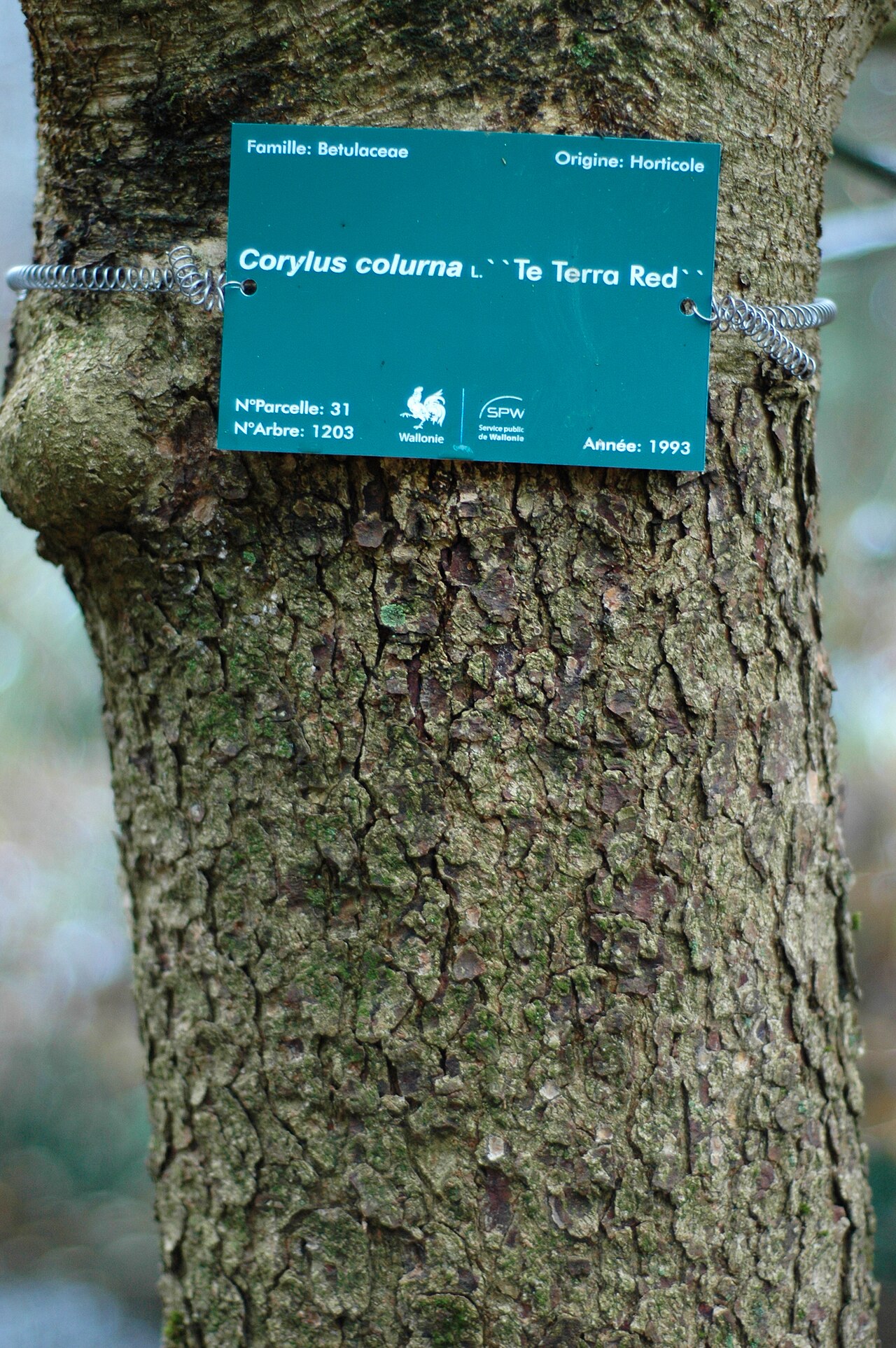
- Grafted seedlings: scion of a selected cultivar is joined to a rootstock of Corylus colurna L. (Turkish hazel, weak sucker production) or Corylus avellana L. Nursery operators are reluctant to choose this due to lack of technology knowledge, a three-year cycle, and higher production cost/risk. In return, they provide a tree-like form without sucker problems.
Seedling prices and production economics
Seedling prices depend on seedling age, root type, cultivar, and whether it is organic production material (for which demand has risen significantly). The most sought-after are organic two-year-old seedlings. The following values are indicative — they come from the corpus of data from the period 2019–2021 and have been converted to euros at a fixed conversion rate of 1 EUR = 7.53450 HRK (Croatia adopted the euro on January 1, 2023). Current market prices may be significantly higher due to inflation and demand.
| Seedling Type | Price (HRK, with VAT, original) | Converted (≈ EUR) | Note |
|---|---|---|---|
| Organic two-year-old, own root | ~25 HRK | ~3.3 € | most sought-after category |
| Organic two-year-old, grafted (cleft-grafted) | ~50 HRK | ~6.6 € | higher price, tree-like form |
| Orchard seedling (OOG example, 2021) | ~17 HRK | ~2.3 € | purchased from a registered nursery |
On the seedling producer side, the 2019 business plan cites a production cost of about 16.79 HRK/seedling (≈ 2.2 €) and a minimum average selling price of about 21.32 HRK/seedling (≈ 2.8 €), with a profitability threshold of about 21,346 seedlings per year (with actual production of 28,000 achieved). These figures are illustrative and depend on farm size, assortment, and market conditions.
Prices are informative and outdated
The amounts cited reflect the situation before the introduction of the euro and before the stronger inflation wave of 2022–2023. For current prices, request quotes from registered nurseries; the conversion to euros serves only for a rough comparison of order of magnitude.
Certification and plant passport — how it looks in practice
Certification (which can also be a label) accompanies material leaving the certification scheme and bears the indication of the certification body, producer, and certification status of the plant. Higher-category material may only be placed on the market after control confirms that it meets basic quality and phytosanitary status conditions; only then is the certificate issued.
The plant passport is an official label (tag) prescribed by Regulation (EU) 2016/2031 that accompanies plants intended for planting in trade within the EU and guarantees traceability and plant health. The standardized content of the passport has four fields:
| Field | Content |
|---|---|
| A | Botanical (scientific) name of the plant species — e.g., Corylus avellana |
| B | ISO code of the Member State + registration number of the entity (e.g., HR-xxxxx) |
| C | Unique traceability code (batch/lot number) |
| D | ISO code of the country of origin/production |
The plant passport may only be issued by a specialized entity registered in the registry and specifically authorized by the Ministry for its issuance. Since late 2019, the nursery operator guarantees the health correctness of their material with the passport and/or certificate, making the maintenance of records and critical control points (CCP) a central obligation. The CCP records must contain data on:
- location and number of plants (location and quantity in production),
- growing period (planting, grafting, and digging dates),
- propagation procedures (vegetative/generative, grafting methods used),
- packaging, storage, and transport,
- agrotechnical measures (protection and other operations),
- origin of reproductive material (invoices and delivery notes for purchased material),
- sampling and analyses for harmful organisms.
For export, an additional rule applies: certified fruit tree material must also meet the phytosanitary regulations of the importing country (often accompanied by a phytosanitary certificate for third countries, issued in accordance with the IPPC Convention).
Practical recommendations and common mistakes
Recommendations for producers purchasing saplings:
- Purchase only from registered nurseries (specialized entities) and request a declaration, plant passport, and certificate/label — these are prerequisites for orchard registration and subsidies.
- Verify that the cultivar and category (CAC or certified) are listed and that a traceability code exists.
- For organic orchards, request the appropriate documentation (e.g., GMO-free form), as indicated by the nurseries themselves.
- Inspect the root and trunk: healthy, branched roots, straight trunk, without wounds and necrosis (potential entry points for Xac and fungal pathogens). See the detailed checklist in the article How to source quality hazelnut saplings.
- For orchards where suckering is to be avoided, consider grafted saplings on C. colurna, bearing in mind the higher cost.
Common mistakes:
- Purchasing cheap, undeclared saplings of unknown origin — the most common route for introducing bacterial blight and viruses into the orchard.
- Confusing morphological minimums (e.g., the belief that 40 cm is sufficient for hazelnut — it is 1 m; 40 cm applies to walnut).
- Neglecting the cultivar pollinizer scheme due to unreliable cultivar purity.
- Planting in infested soil without prior testing (nematodes as virus vectors, Armillaria).
- Lack of own records and traceability by the nursery — this prevents the issuance of passports and identification of the problem source.
Gallery
Sources
This text is an AI-generated summary created from an internal literature collection on hazelnut (RAG corpus) and public sources. Citations (doses, figures, thresholds, dimensions, prices) are informative; before application, verify current regulations and consult the advisory service. Main sources used:
- Regulation on the placing on the market of reproductive planting material and saplings intended for fruit production (NN 9/17 and subsequent amendments, e.g., NN 39/2020) — Ministry of Agriculture of the Republic of Croatia — https://narodne-novine.nn.hr/clanci/sluzbeni/2020_04_39_828.html
- Regulation on basic requirements for the quality of planting material (NN 56/99) — Ministry of Agriculture of the Republic of Croatia
- Regulation on the phytosanitary register and plant passports (NN 56/2012) — Narodne novine — https://narodne-novine.nn.hr/clanci/sluzbeni/2012_05_56_1398.html
- Entry into the register of specialized entities and issuance of plant passports — Ministry of Agriculture / Advisory Service — https://savjetodavna.mps.hr/2021/04/21/upis-u-registar-specijaliziranih-subjekata-i-izdavanje-biljnih-putovnica/
- New rules for issuing plant passports — HAPIH — https://www.hapih.hr/nova-pravila-za-izdavanje-biljnih-putovnica/
- Activities and departments — HAPIH, Plant Protection Center — https://www.hapih.hr/czb/djelatnosti-odjeli/
- State Inspectorate of the Republic of Croatia — Sector for Agriculture Supervision and Phytosanitary Control — https://inspektorat.gov.hr/o-drzavnom-inspektoratu-9/ustrojstvo-77/9-sektor-za-nadzor-poljoprivrede-i-fitosanitarni-nadzor/pravni-izvori-fitosanitarna-inspekcija/341
- Business plan for hazelnut sapling production (Poljinos, 2019.) — https://www.poljinos.hr/wp-content/uploads/2022/05/PP-za-proizvodnju-sadnica-lijeske1.pdf
- Technological and economic characteristics of hazelnut cultivation (2018.) — DOI: https://doi.org/10.46584/lm.v36i2.1141
- Economic analysis of hazelnut production (2023.) — area data (Eurostat, 2012.–2022.)
- EPPO Standards for fruit tree certification (PM 4 series), Croatian translation — European and Mediterranean Plant Protection Organization
- Harmful organisms recorded in fruit crop nurseries 2023.–2024. (Plant Protection Gazette, 3/2025.); Proceedings of the 67th Plant Protection Seminar (2025.) — HAPIH-CZB and DIRH
- NURSERY PRODUCTION (textbook, Pomology, 2015.) — quality standards for planting material (walnut 40 cm, hazelnut/peach 70 cm — comparative standard)
- State and importance of hazelnut cultivation in the Republic of Croatia (2018.) — technological guidelines HCPHS / Ministry of Agriculture
- PP Orahovica — Hazelnut cultivation and hazelnut saplings (description of nursery production, CAC saplings)
- EFSA — Plant passports — https://www.efsa.europa.eu/en/plh4l/plant-passports
- European Commission (Food Safety) — Plant health rules — https://food.ec.europa.eu/plants/plant-health-and-biosecurity/plant-health-rules_en
- Regulation (EU) 2016/2031 on protective measures against organisms harmful to plants (plant passport)