Viral and phytoplasma diseases of hazelnut
Content generated by artificial intelligence — verify before application
This article was automatically compiled from a collection of hazelnut literature using artificial intelligence and may contain errors or outdated data. It serves as a starting point for further research, not as professional advice. Dosages, products, and timing are informative and depend on the cultivar, location, and applicable regulations — always consult with an advisory service and official sources before application.
Unlike fungal and bacterial diseases, viral and phytoplasma infections of hazelnut (Corylus avellana) cannot be cured by spraying. They are systemic — the pathogen permeates the entire plant and remains there permanently. Therefore, the entire defense strategy relies on prevention: planting healthy, pathogen-tested (virus-free) planting material, removing infected trees, and maintaining tool hygiene. This article explains the hazelnut viral complex (primarily mosaic), the issue of phytoplasmas, and why healthy planting material is the most important — and often the only effective — protection measure.
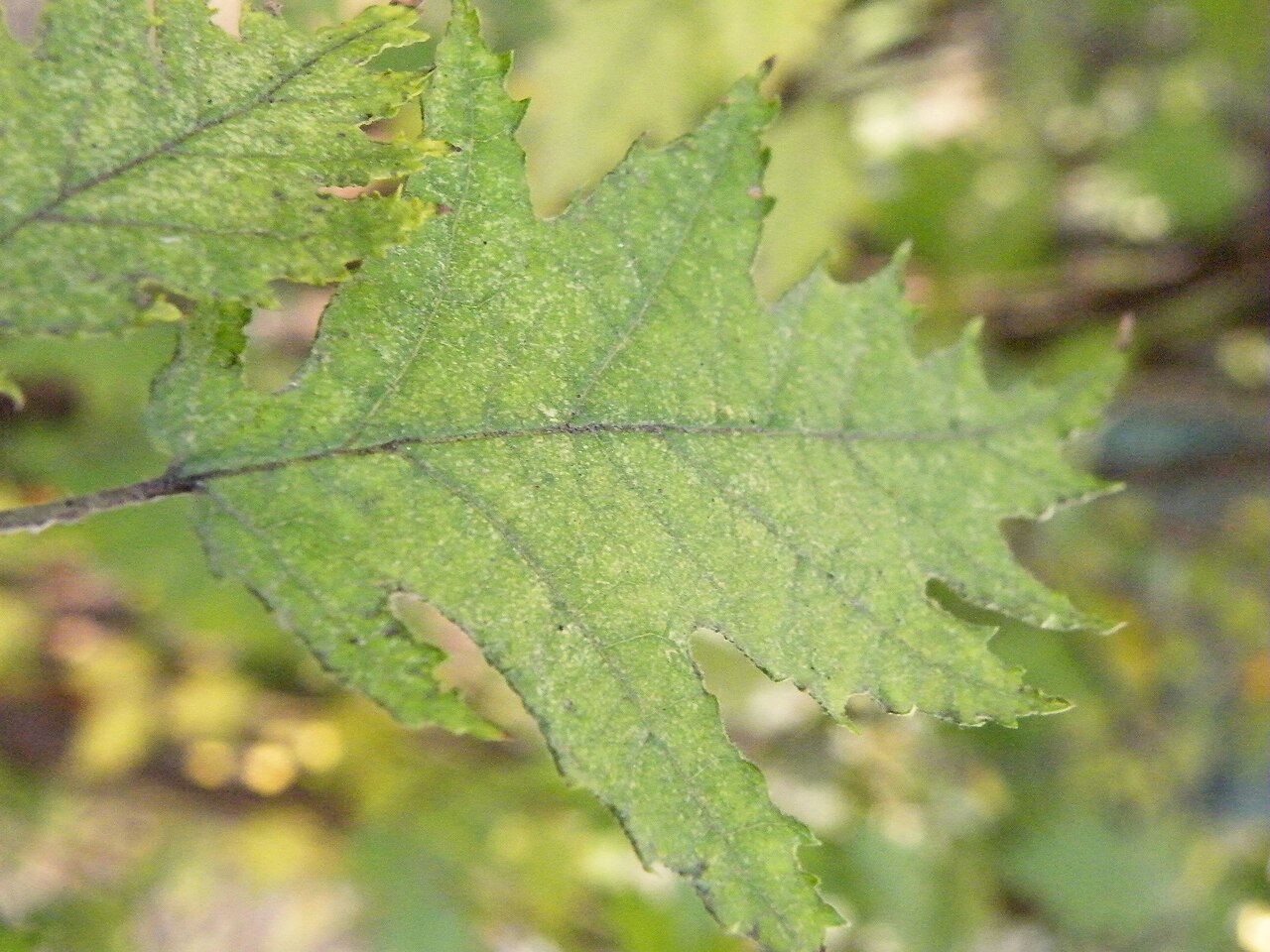
Why viruses and phytoplasmas are a special problem
Viruses and phytoplasmas differ from other disease agents in several key characteristics that directly determine the protection strategy:
- No curative treatment. There is no registered product that can cure an infected tree. Once infected, a plant remains infected for its entire life.
- Latency (hidden progression). A plant can be infected without showing any symptoms at all. This "silent" material is the most dangerous source of spread because it is unknowingly propagated and sold further.
- Transmission through propagation. The most important route for the spread of hazelnut viruses is vegetative propagation — taking cuttings, layering (polloni), and grafting from an infected mother plant. This multiplies the infection along with the seedlings.
- Gradual weakening. The consequences are rarely dramatic in a single season, but they accumulate: reduced vigor, fewer nuts, and yield decline over several years.
This is why, in the planting material certification system, the focus is on pre-basic (initial) material tested for viruses and phytoplasmas — the problem is solved at the source, in the mother plantations and nurseries, rather than in the production orchard.
Hazelnut viral complex
Viral diseases of hazelnut are often listed together in literature as the "viral complex" because they are less studied than fungal and bacterial diseases, and symptoms can overlap with nutrient deficiencies or pest damage. The following are mentioned in literature for hazelnut:
- Apple mosaic virus (Apple mosaic virus, ApMV) — by far the most important and widespread virosis of hazelnut;
- Prunus necrotic ringspot virus (Prunus necrotic ringspot virus, PNRSV) — listed among pathogens covered by the EPPO certification scheme for hazelnut;
- descriptive names such as "hazelnut line mosaic" and "viral hazelnut dieback" are also mentioned, but they are less documented.
Apple mosaic virus (ApMV) — the most important virosis
ApMV belongs to the family Bromoviridae, genus Ilarvirus. Although it was named after the apple — the host on which it was first described — the virus has a very wide host range and attacks a large number of woody plants, including hazelnut. Among all hazelnut viroses, ApMV is the only regulated pathogen and the most widespread; it has been recorded in Bulgaria, Turkey, the USA, Italy, Poland, Spain, and other important growing regions. In Europe, it has been monitored on hazelnut since the beginning of the 19th century.
Symptoms
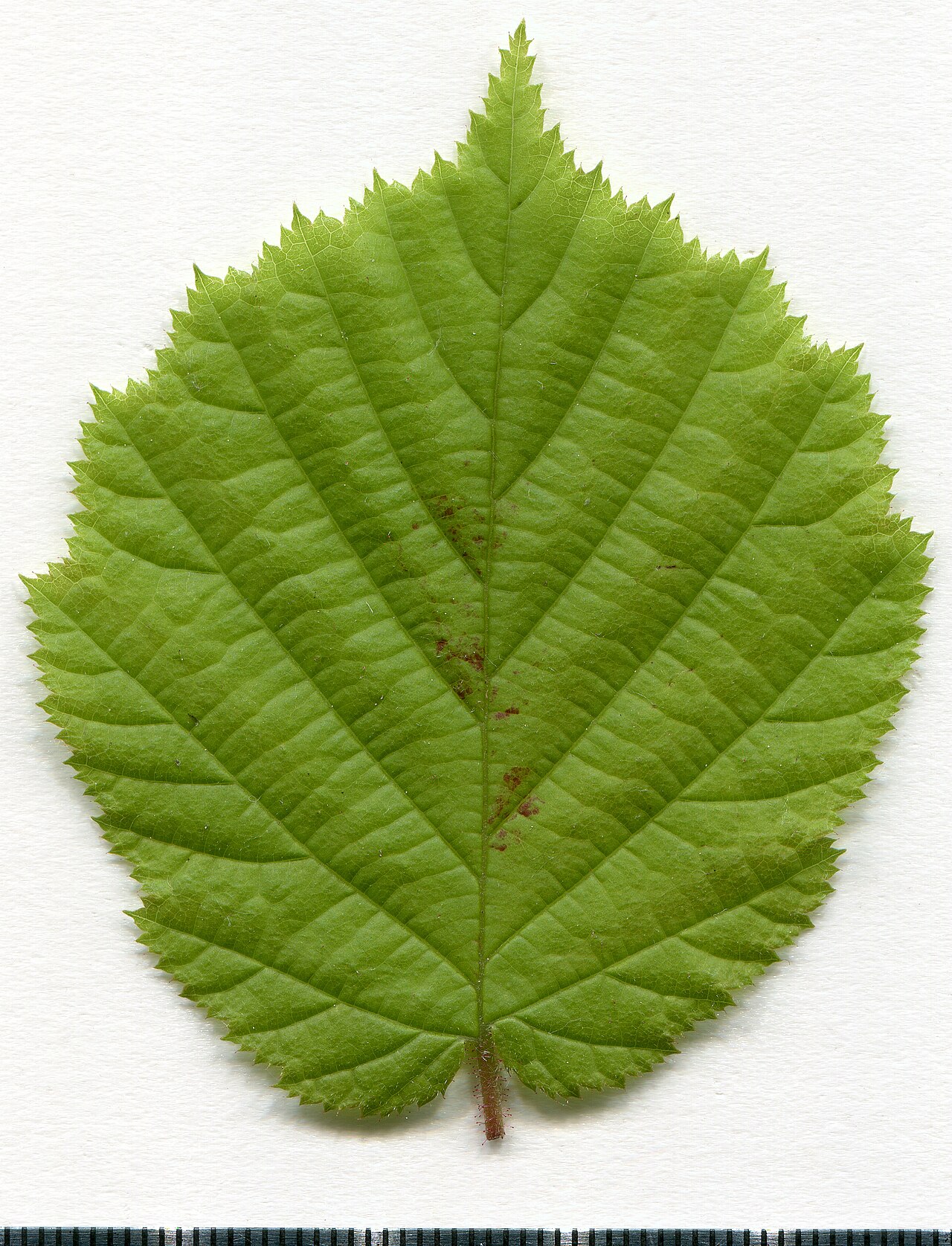
Symptoms appear primarily on leaves, are highly variable, and are easier to notice early in the season:
- yellow (chlorotic) patterns, rings and lines of irregular shape;
- yellow speckling (mottling) and a pattern resembling an oak leaf;
- wide vein banding along the main leaf veins, sometimes a net-like structure;
- general yellowing of leaves; infected leaves often fall very early in autumn.
Several complicating factors characterize diagnosis:
- Summer masking. As temperatures rise during the summer, yellow zones on the leaf may necrotize (turn brown and die), and symptoms become partially masked. Therefore, inspection is best performed in spring and early summer.
- Mosaic distribution. Symptoms may appear only on some leaves, on specific branches, or on the entire tree.
- Asymptomatic plants. A tree can be infected without any visible symptoms. Due to similarity with manganese (Mn), zinc (Zn), iron (Fe), and magnesium (Mg) deficiencies, as well as damage from aphids, mosaic is easily confused with other disorders. Reliable confirmation requires laboratory testing (e.g., serological ELISA test or molecular methods).
Economic consequences
Consequences range from mild weakening of vitality and productivity to measurable yield losses:
| Indicator | Value (informative, from literature) |
|---|---|
| Typical effect | reduced vigor of young plants, fewer nuts |
| Infection frequency (field studies, Turkey) | average around 13–14 % of trees |
| Yield loss (field studies) | approximately 20–35 %, average ~28 % |
| Nut size and quality | in some studies, no significant change; number of nuts decreases |
Important: The percentages cited come from individual field research (primarily from the Black Sea coast of Turkey and northeastern Spain) and are informative. The actual effect depends on the cultivar, virus strain, orchard age, and location.
Transmission
Understanding transmission routes is the foundation of defense:
- Vegetative propagation — main route. Infection is transmitted through grafting, cuttings, and layering taken from an infected mother plant, as well as via root grafts between adjacent trees. This is why healthy mother material is crucial.
- Mechanical transmission. In some literature (especially Turkish), it is noted that the virus spreads in orchards mechanically, via sap, through contaminated tools during pruning and other operations.
- Seed transmission. For ApMV on hazelnut, seed transmission (and pollen) has been proven, which is important for generative propagation of rootstocks.
- Vectors. Reliable natural vectors for ApMV on hazelnut are unknown; it is believed that in practice, the virus spreads almost exclusively through the propagation of infected material. This is also good news — without an active vector, spread is slow and under the producer's control.
Hazelnut phytoplasmas
Phytoplasmas are a special group of pathogens — tiny bacteria without cell walls that live in the phloem conducting vessels of the plant. Like viruses, they are systemic, incurable by spraying, and transmitted through infected planting material.
For hazelnut, the EPPO certification scheme explicitly lists the phytoplasma with the designation HML phytoplasma (Hazelnut maculatura linearis phytoplasma). This means that pre-basic hazelnut mother material, to be accepted into the scheme, must be tested and free from three pathogens:
- ApMV (Apple mosaic ilarvirus),
- PNRSV (Prunus necrotic ringspot ilarvirus),
- HML phytoplasma.
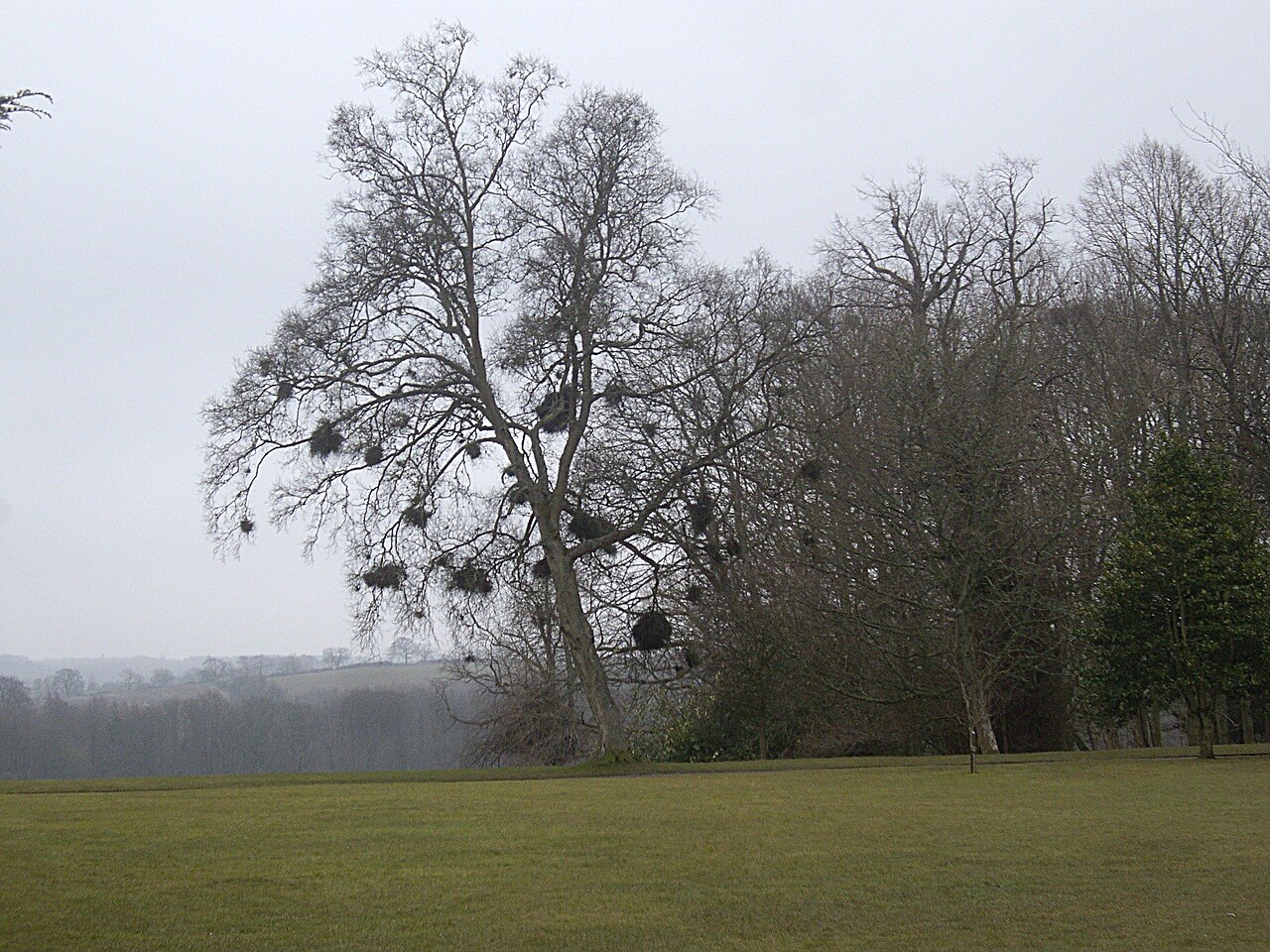
Generally, phytoplasma infections of woody fruit species cause non-specific symptoms such as yellowing, small leaves, "witches' brooms" (clusters of thin shoots), deformations, and gradual decline. Phytoplasmas are typically transmitted by insects from the cicada group that feed on phloem, as well as by infected planting material. Control, like that for viruses, relies on healthy (tested) material and removal of infected plants; no chemical curative exists.
Note: Hazelnut phytoplasmas are less researched than ApMV. If phytoplasma is suspected (atypical yellowing, broominess, stunting without an obvious cause), contact an advisory service and send samples for laboratory diagnostics.
Healthy (virus-free) planting material — the foundation of defense
Since there is no direct curative treatment, the production and planting of healthy, pathogen-tested planting material is the preventive and primary measure for controlling viroses and phytoplasmas. The experience of fruit growing confirms this: after the Netherlands intensified research on plant viruses in the 1950s and began certification of virus-free rootstocks in 1974, by 1976 most produced fruit seedlings were virus-free — accompanied by measurable increases in yield and fruit quality. The same principle applies to hazelnut.
What "virus-free" (pathogen-tested) material means
According to Croatian regulations and EPPO standards, material tested for viruses (virus-free) includes material that:
- originates from virus-free material, obtained vegetatively through a known (limited) number of production cycles;
- for which it has been established under professional supervision during the growing season that it shows no symptoms of virus or virus-like organism infection;
- produced and maintained under conditions that prevent re-infection.
The modern technical term is "pathogen-tested," as schemes cover viruses, viroids, and phytoplasmas.
Categories of reproductive planting material
The certification chain in Croatia (Regulation on the placing on the market of reproductive planting material and seedlings intended for fruit production, NN 09/17) tracks material from source to seedling:
| Category | What it guarantees |
|---|---|
| Pre-basic (initial) material | starting material, tested and free from prescribed pathogens (ApMV, PNRSV, HML phytoplasma); maintains cultivar authenticity |
| Basic material | obtained from pre-basic material through a known number of phases, intended for the production of certified material |
| Certified material | seedlings for establishing production orchards, under professional supervision |
| CAC (conformitas agraria communitatis) | material that meets basic health requirements within the EU |
Only seedlings whose category has been confirmed in the certification process may be placed on the Croatian market. For export, certified material must additionally meet the phytosanitary regulations of the importing country, especially for pathogens that are also quarantine pests.
How virus-free hazelnut material is produced
For some fruit species, viruses are removed from infected cultivars through thermotherapy (heat treatment) or meristem culture. For hazelnut, according to the EPPO standard, there has been insufficient experience with thermotherapy, so the production of pre-basic material has so far largely relied on selection (selection) of healthy, pathogen-tested plants rather than their "curing." Recent research (e.g., Italian work on Sicilian/Nebrodi cultivars) shows that it is possible to obtain virus-free hazelnut plants by combining in vitro propagation, heat treatments, and sanitation from ApMV — this opens the way for the production of certified material even for cultivars that were previously infected.
Practical recommendations for growers
Concrete steps for growers to keep viruses and phytoplasmas under control:
- Purchase only certified, pathogen-tested planting material from registered nurseries, accompanied by documentation on category and health status. This is the most important measure. Avoid seedlings of unknown origin from retail chains or unverified online offers when establishing a serious production orchard.
- Do not take cuttings or layerings from trees showing mosaic or other suspicious symptoms. Mother trees with symptoms must be excluded from reproduction.
- Regularly inspect the orchard, especially in spring and early summer when mosaic symptoms are most visible (summer heat later masks them). Inspect 5–10% of the trees and pay attention to yellow rings, lines, and oak-leaf patterns.
- Remove infected trees along with the root system and haul them out of the orchard (preventing transmission via root grafting). Leave the site empty if necessary or replant with a healthy seedling.
- Disinfect tools during pruning and other operations, as ApMV can also be transmitted mechanically. Literature cites tool disinfection solutions between trees (for informational purposes): 3% sodium hypochlorite or 2% sodium hydroxide + 2% formalin. Practice cleaning secateurs/saws when moving from suspicious to healthy trees.
- Spatial isolation of new orchards from old, potentially infected ones, reduces risk.
- Strengthen plant vitality through balanced fertilization, irrigation, and protection from other stresses — strong trees tolerate latent infections better, although this does not eliminate the pathogen.
- If phytoplasma is suspected or symptoms are unclear, send samples for laboratory diagnosis rather than guessing — mosaic is easily confused with nutrient deficiency.
Common mistakes
- Attempting to "treat" virosis by spraying. Fungicides and bactericides do not work on viruses and phytoplasmas; the only measure is prevention and removal.
- Propagation from own, unverified trees to save money — the most common way of unintentionally multiplying infection.
- Ignoring asymptomatic (latently infected) plants, which are silent reservoirs of the pathogen.
- Confusing mosaic with nutrient deficiency (Fe, Mn, Zn, Mg) and vice versa, without laboratory confirmation.
Gallery
Sources
This article is an AI summary generated from an internal literature collection on hazelnut (RAG corpus) and public internet sources. Main sources used:
- EPPO certification scheme for hazelnut (Corylus avellana), OEPP/EPPO — testing of foundation material for ApMV, PNRSV, and HML phytoplasma.
- Regulation on placing reproductive planting material and seedlings intended for fruit production on the market (NN 09/17), Ministry of Agriculture of the Republic of Croatia — categories and definition of virus-free/pathogen-tested material.
- Handbook for Hazelnut Protection (2020) — apple mosaic virus as the most widespread virosis, symptoms, measures (planting healthy material, spatial isolation, removal of infected plants with roots).
- Hazelnut Cultivation (pdfcoffee, 2009) and Hazelnut Diseases and Pests (repository, 2020) — description of mosaic symptoms and importance of healthy planting material.
- Fındık Mozaik Hastalığı (Apple mosaic ilarvirus, ApMV) and related Turkish sources — typical symptoms (chlorotic rings, oak-leaf pattern, vein clearing), transmission via vegetative material, tool disinfection (3% NaOCl; 2% NaOH + 2% formalin).
- NURSERY PRODUCTION (textbook, 2015) — history and logic of certification of virus-free planting material.
- Aramburu & Rovira (2000), Incidence and natural spread of apple mosaic ilarvirus in hazel in north-east Spain, Plant Pathology — incidence and yield losses. https://bsppjournals.onlinelibrary.wiley.com/doi/10.1046/j.1365-3059.2000.00477.x
- Incidence and natural spread of Apple mosaic virus on hazelnut in the west Black Sea coast of Turkey — infection rate and yield loss. https://www.researchgate.net/publication/277825704
- Seed transmission of apple mosaic virus in hazelnut, ISHS. https://ishs.org/ishs-article/193_22/
- Hazelnut (Corylus avellana) — Mosaic, Pacific Northwest Pest Management Handbooks. https://pnwhandbooks.org/plantdisease/host-disease/hazelnut-corylus-avellana-mosaic
- Is It Possible to Produce Certified Hazelnut Plant Material in Sicily? (PMC) — sanitation of cultivars and production of virus-free plants from ApMV. https://pmc.ncbi.nlm.nih.gov/articles/PMC8716929/
- Pathogen-Tested Planting Material (PMC) — EPPO schemes, concept of "pathogen-tested", thermotherapy against viruses and phytoplasmas. https://pmc.ncbi.nlm.nih.gov/articles/PMC7099661/