Bush or tree: choosing the hazelnut training system
Content generated by artificial intelligence — verify before application
This article was automatically compiled from a collection of hazelnut literature using artificial intelligence and may contain errors or outdated information. It serves as a starting point for further research, not as professional advice. Dosages, products, and timing are informative and depend on the cultivar, location, and applicable regulations — always consult with advisory services and official sources before application.
The choice of training system is one of those decisions made once, at the beginning, yet its consequences are felt throughout the entire life of the orchard — and a hazelnut orchard can remain in full production for thirty or forty years. Whether the hazelnut grows as a branched bush with multiple leaders, as a vase-shaped shrub without a true trunk, or as a single-trunk tree, directly determines how you will prune, how you will harvest, how much time and money you will spend on removing suckers, and how much light will penetrate the interior of the canopy. This article compares the main hazelnut training systems, explains their agronomic and economic consequences, and provides a practical framework for selection based on cultivar, terrain, and planned mechanization.
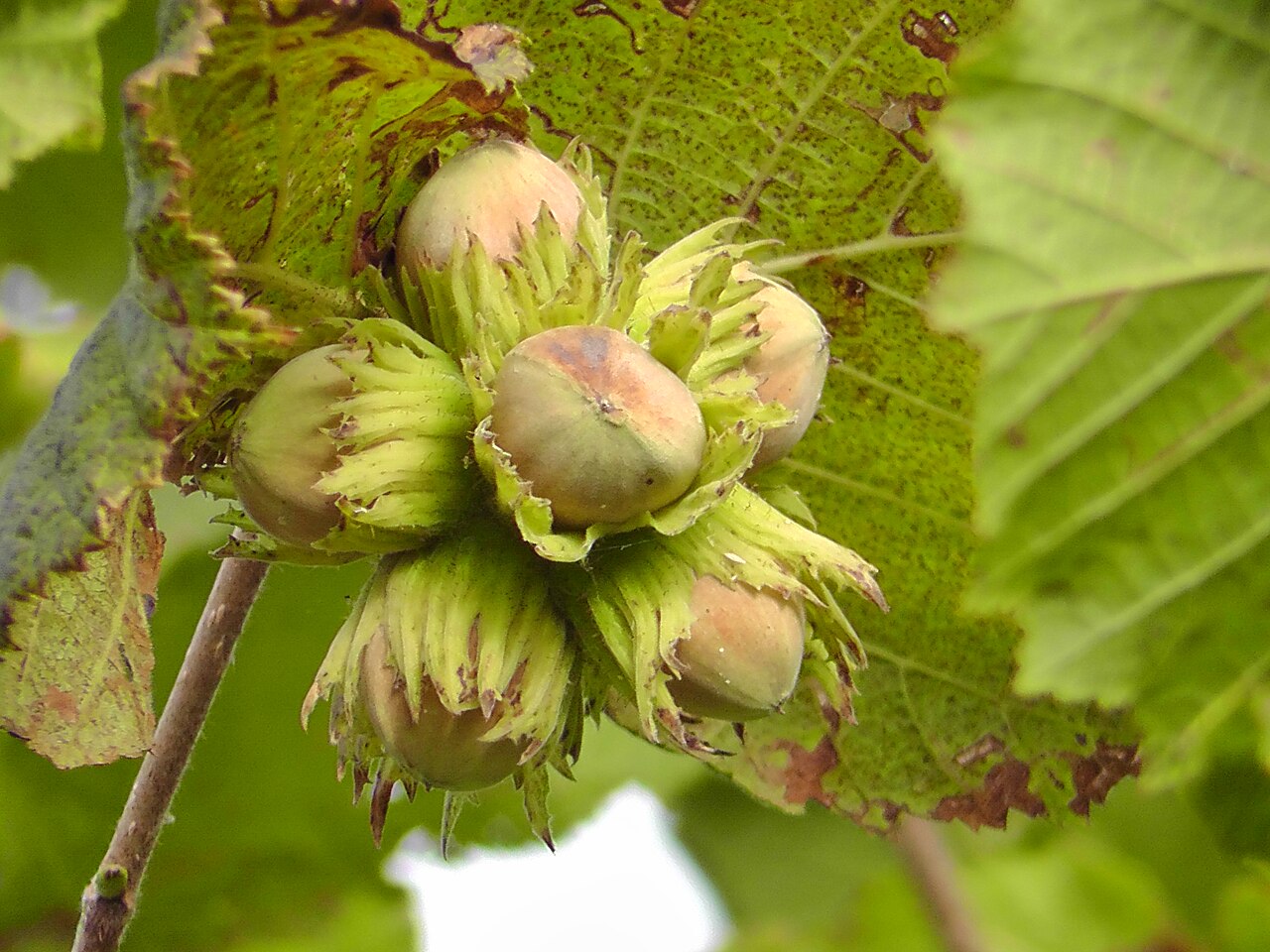
Why the training system is so important
Hazelnut (Corylus avellana L.) is naturally a shrub: from the crown, numerous root suckers constantly emerge, filling and expanding the bush. It is precisely this tendency to produce suckers that makes the choice of training system in hazelnut not just an aesthetic or traditional issue, but a permanent maintenance obligation that repeats every year.
Classical horticultural literature sets several requirements that a good training system must meet, regardless of whether we choose a bush or a tree:
- a sturdy skeleton (framework) that bears the crop and withstands load;
- a large productive (leafy) surface for maximum yield;
- good light utilization within the space defined by planting density;
- possibility of mechanization, especially mechanical harvesting and protection;
- low-cost and simple shaping — without expensive armatures and with minimal manual labor.
Well-lit hazelnut branches produce two to three times higher yields than those in the shade, making canopy illumination the red thread of every decision regarding the training system.
Overview of training systems
In modern hazelnut production, four basic training systems are most commonly cited, which can be grouped into two categories:
| Group | System | Trunk | Main Characteristics |
|---|---|---|---|
| Trunkless | Natural bush | none | Multiple leaders from the crown; closest to the plant's nature; most suckers |
| Trunkless | Vase-shaped shrub | low or practically no trunk (often 20–60 cm) | Modified bush; 3–4 primary branches angled away from the axis; open, "hollow" center |
| With trunk | Vase (improved vase) | trunk 30–70 cm (sometimes up to 80 cm) | Single trunk, canopy in the shape of an open vase; no central leader |
| With trunk | Pyramid | trunk 30–70 cm | Single trunk with a prominent central leader and tiered branch arrangement |
In Croatian practice, the modified vase-shaped shrub is by far the most widespread, while in newer orchards, the single-trunk tree with denser planting is increasingly appearing, precisely for easier mechanical harvesting.
Multi-leader bush (natural bush)
The natural bush follows the plant's natural tendency: it retains multiple leaders (trunks) emerging from the base. The bush can be shaped as a simple bush grown from a single seedling or as a composite bush formed from two, three, or four seedlings planted at a closer distance to each other (so-called bunch planting). In this case, seedlings are placed in an equilateral triangle or square to form a loose bush, open in the center to allow light entry.
The shrub-like form has historically been considered easier to maintain, and since the plant could spread over a larger area, it provided high yield per plant. The drawback is that the bush produces many suckers that compete with the main branches for water and nutrients, reduce airflow through the canopy (thereby increasing disease problems), and can ultimately significantly reduce yield. For this reason, the natural bush is today justified mainly in extensive orchards and homesteads, not in intensive, mechanized production.
Vase-shaped shrub (modified bush)
The vase-shaped shrub is a sort of compromise between the natural bush and the vase, and in practice, it has proven to be the training system that best satisfies the needs of hazelnut. According to literature, it best aligns the plant's natural requirements with good and regular productivity.
Key features of the vase-shaped shrub:
- formed in the first four years after planting, usually from root suckers;
- consists of 3 to 4 primary branches regularly angled away from the central axis of the bush (in the three-branch form, they form an angle of about 120°);
- on the primary branches, secondary skeletal branches are formed at intervals of about 50 cm;
- the center of the bush is kept open (the vase is "hollow") for the most favorable illumination of the interior and edges;
- no prominent central leader; the trunk is very low or practically non-existent (in the low-trunk version, about 60 cm).
Such a structure ensures natural conditions for growth, shaping, and rejuvenation of the bush, as well as differentiation of fruit buds — with very good illumination, which is crucial for productivity.
Single-trunk tree (vase and pyramid with trunk)
In training with a trunk, the hazelnut is guided along a single upright axis, and the canopy is formed at a trunk height of 30 to 70 cm (in some Italian and Spanish recommendations, up to 80 cm). The shaping process proceeds roughly as follows:
- after planting, the seedling is pruned to one or two buds;
- when shoots grow to about 10 cm, the most vigorous, upright shoot is selected, and vegetative buds are removed from the others;
- in the second year, before the start of vegetation, this upright shoot is shortened to a slightly greater height than the desired trunk height;
- in subsequent years, lateral (skeletal) branches are grown, and the tips of lateral branches and the leader are kept free.
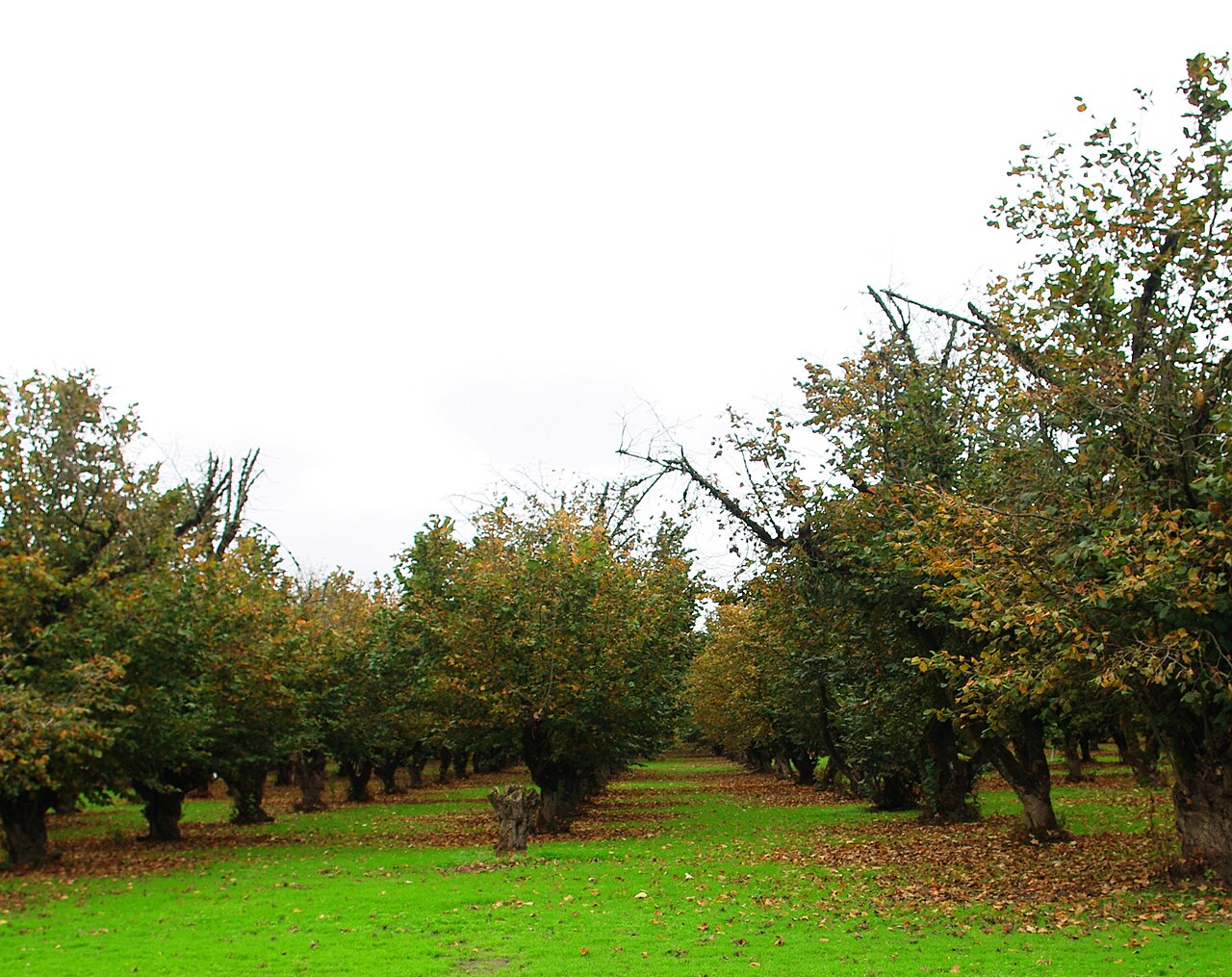
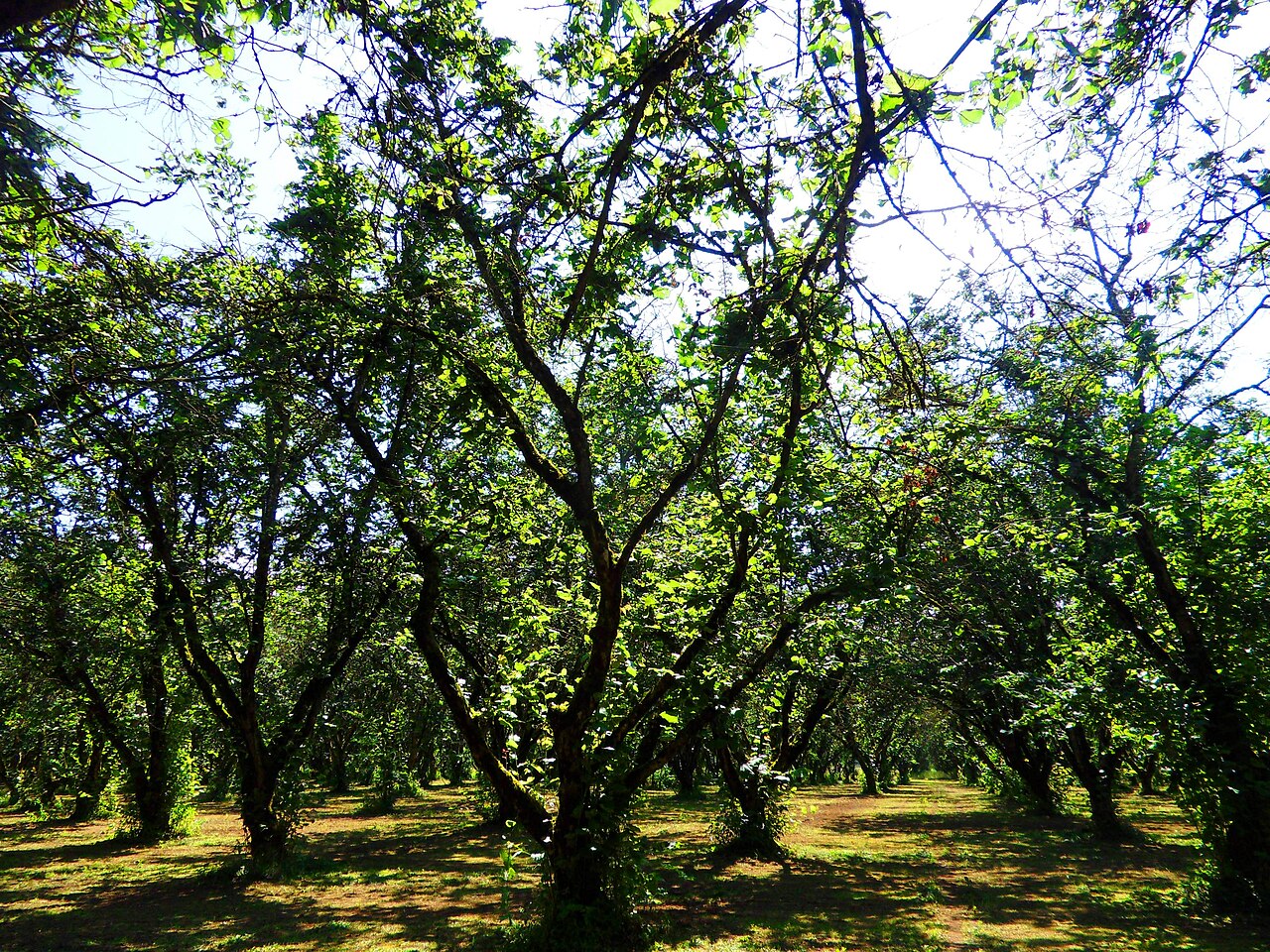
Many researchers and practitioners believe that the physiological basis for regular and abundant productivity is most pronounced in training with a trunk and an improved vase-shaped canopy. The main advantage of the tree is that it allows for denser spacing and, viewed per unit area, higher total yield — with significantly eased mechanical harvesting and protection. In classical regions (Italy, Turkey, Spain), multi-trunk, shrub-like architecture prevails, while countries like the USA (Oregon), France, and Chile are increasingly moving to single-trunk trees for easier orchard management and mechanized harvesting.
Direct comparison: bush, vase-shaped shrub, and tree
| Characteristic | Bush (multiple leaders) | Vase-shaped shrub | Single-trunk tree |
|---|---|---|---|
| Trunk | none | low / practically none | clear trunk 30–70 (80) cm |
| Number of bearing axes | multiple leaders | 3–4 primary branches | one axis + skeletal branches |
| Root suckers | very many | many (depending on cultivar) | fewer (especially on grafted seedlings) |
| Canopy illumination | can be poor (dense) | very good (open center) | very good |
| Productivity per plant | high | high and regular | slightly lower per plant |
| Productivity per hectare | lower (wider spacing) | good | highest (denser spacing) |
| Suitability for mechanical harvesting | poor | moderate to good | best |
| Pruning complexity | simple, but lots of sucker removal | simple | more complex shaping at the beginning |
| Shaping cost | low | low | higher (more manual labor during establishment) |
| Typical application | homesteads, extensive orchards | standard in HR intensive orchards | modern intensive orchards, mechanical harvesting |
Note on numbers. All values (trunk heights, branch intervals, densities) are informative and depend on the cultivar, location, soil, and selected mechanization. Verify them before application.
Consequences for pruning
The training system determines the character of pruning throughout the life of the orchard.
- Bush. Pruning is generally simple and boils down to maintaining a loose, open structure so that light enters the center. The biggest burden is not the pruning of branches itself, but the permanent removal of root suckers that the bush constantly produces.
- Vase-shaped shrub. In the first year, pruning follows the training system; by the second year, pruning focuses on secondary branches. With each subsequent pruning, water sprouts (vigorous upright shoots) are removed and the canopy is thinned to maintain good illumination. The goal is a sturdy skeleton, an open center, and evenly distributed productive surface.
- Tree. Most effort is invested at the beginning, in forming a single trunk and selecting skeletal branches. Later, pruning maintains one axis, removes competing branches, and keeps the tips of the leader and lateral branches free. A well-thinned, open canopy pays off directly: illuminated branches produce two to three times more than those in the shade.
Hazelnut pruning should generally be performed during dormancy (winter), thereby preventing unnecessary depletion of nutrients on shoots that are anyway removed, and promoting flowering and productivity.
Consequences for harvesting and mechanization
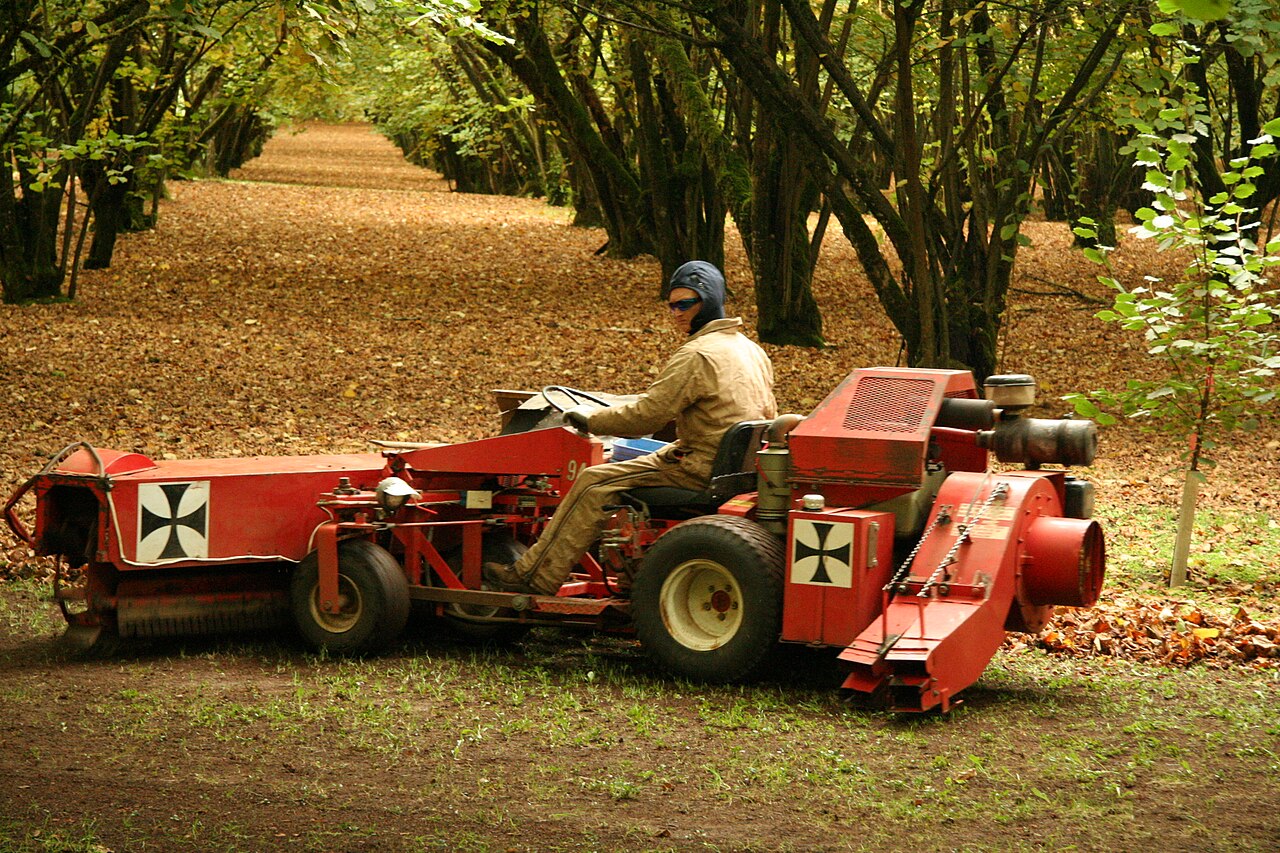
Mechanized harvesting is today decisive because manual fruit collection is slow and expensive, and the time window for quality harvesting is short. Harvester machines significantly reduce costs and increase efficiency, but they place demands on the training system and orchard preparation:
- Tree is most suitable for mechanical harvesting — a single trunk and open V-canopy facilitate passage and harvester operation, and allow more light into the row. It is no coincidence that hazelnuts in Oregon are grown predominantly as trees precisely for mechanized harvesting.
- Vase-shaped shrub is moderate in this regard: with a low trunk and a clean zone at ground level, it can be harvested mechanically, but numerous suckers and low branches can interfere.
- Multi-leader bush is least adapted for mechanical harvesting because dense leaders and an abundance of suckers obstruct passage and fruit collection from the ground.
Regardless of the form, additional rules apply for mechanical harvesting: the soil must be flat and prepared (gullies and wheel tracks hinder the harvester), conditions that cause premature leaf drop (potassium deficiency, water stress, frost, severe aphid attack) should be avoided, and cultivars are planted in rows, not mixed — mixed planting of cultivars with different ripening times significantly complicates mechanical harvesting.
Consequences for Root Suckers (Suckers)
Root suckers represent the most significant permanent difference between the bush and tree forms in daily operations. European hazelnut (Corylus avellana) has a high capacity for sucker production, and their numbers vary greatly among cultivars (cultivars are even classified according to their tendency to produce shoots). The continuous production of new, herbaceous shoots at the base is a consequence of its natural shrub-like growth habit.
Why sucker control is important: suckers compete with main branches for water and nutrients, thicken the base, and reduce air circulation, leading to increased disease problems — all of which result in a significant drop in yield.
Practical guidelines from the literature:
- Suckers should be removed two to three times per year;
- In the first years of bush formation, they are removed manually with shears, cut off at the base;
- Sucker control can be combined with maintaining a herbicide (clean) strip in the row, which usually occupies about 30% of the inter-row width and is kept clean from early spring to autumn;
- Chemical/organic suppression methods are also being researched (e.g., organic acids — formic, acetic, oxalic, tartaric — and other agents in quantities of approximately ~100 ml per shoot in trials), but application and approval must be verified according to current regulations and product labels.
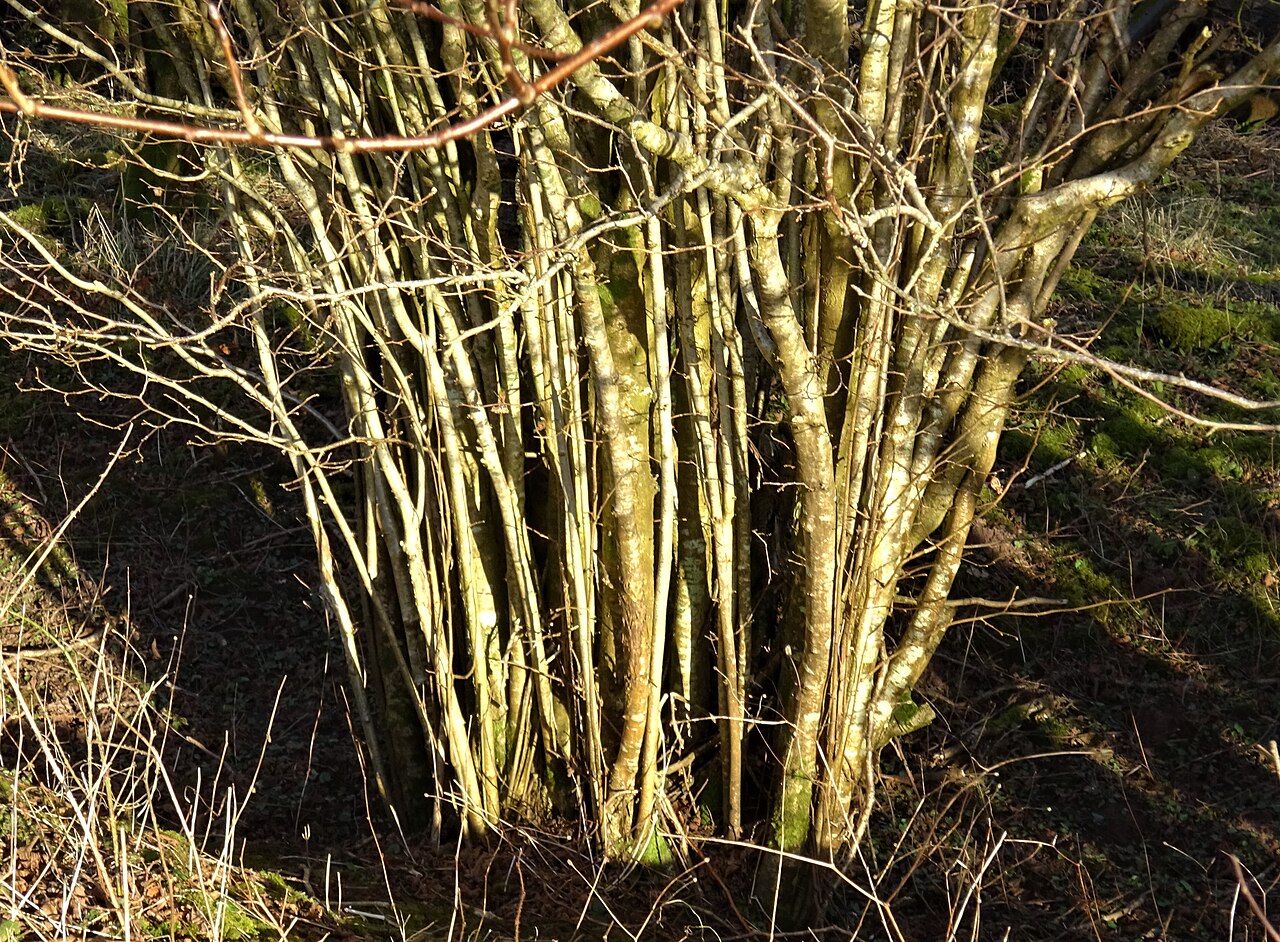
Tip to reduce suckers: A bushy vase shape formed from 3–4 grafted seedlings on Turkish hazelnut (Corylus colurna) produces significantly fewer root suckers than hazelnut on its own roots, making such an orchard easier to manage. Figures and performance depend on nursery stock and cultivar.
How to Choose: A Practical Framework
When deciding between bush, vase, or tree forms, consider the following questions:
- Will you harvest mechanically? If yes, lean towards the tree form or a well-managed bushy vase with a low, clean trunk and flat ground.
- What is the cultivar? Vigorous, robust cultivars require more space and an open canopy; cultivars prone to abundant sucker production increase the maintenance cost of the bush form.
- Grafted or on own roots? Seedlings grafted on Turkish hazelnut drastically reduce the sucker problem.
- How much labor do you have? A bush on own roots means permanent, repeated removal of suckers; a tree requires more work in the first years and less later on.
- What is the terrain? On sloped terrain, spacings are reduced; flat, prepared ground is a prerequisite for mechanical harvesting.
Common Mistakes
- Neglecting suckers. The most common and costly mistake — suckers "consume" the crop and aerate the canopy worse than any disease.
- Overly dense, closed canopy. Without an open center and thinning, light does not penetrate, and fruitfulness and quality decline.
- Mixed planting of cultivars in the same row. This complicates mechanical harvesting and uniform ripening.
- Uneven ground and wheel tracks. These prevent quality mechanical harvesting and increase losses and fruit contamination (including the risk of aflatoxins).
- Incorrect choice of form for the target production. A natural bush in an intensive, mechanized orchard rarely pays off — it is more suitable for homesteads.
Summary
Hazelnut is naturally a shrub, but modern production increasingly moves towards open, well-lit forms that enable mechanical harvesting and control suckers. The bushy vase remains a proven standard in Croatia because it combines the natural requirements of the plant with regular fruitfulness and relatively simple pruning. The single-trunk tree is gaining importance where denser planting and mechanized harvesting are priorities, as it provides higher yield per hectare and a cleaner zone for machinery operation. The natural bush with multiple leaders retains its place in extensive orchards and on homesteads. Regardless of the choice, two constants determine success: good canopy illumination and consistent control of root suckers.
Gallery
Sources
This article is an AI summary compiled from an internal collection of hazelnut literature (RAG corpus) and publicly available sources. Main sources used:
- Guide to Hazelnut Cultivation — Ministry of Agriculture, Advisory Service (savjetodavna.mps.hr), 2024. (RAG corpus)
- Economic Comparison of Different Hazelnut Training Systems — Josip Juraj Strossmayer University of Osijek, 2015. (RAG corpus)
- Mechanization in Hazelnut Production and Processing (Minas-Zrno), 2021. (RAG corpus)
- Technology of Harvest, Drying, and Storage of Hazelnuts: Literature Review, 2022. (RAG corpus)
- Environmental Impact Assessments for Establishing Permanent Hazelnut Orchards (Grubišno Polje 2020; Vojnić/Agro Utinja 2021) (RAG corpus)
- Master's thesis on the suppression of hazelnut root suckers using organic acids, 2024. (RAG corpus)
- Investment/economic analyses of hazelnut production (2018–2023) (RAG corpus)
- Hazelnut Cultivation in Bush Form and Hazelnut Pruning — AgroPortal.hr
- Hazelnut Planting — AgroPortal.hr
- Hazelnut — Vrtlarica.com
- From Planting to Hazelnut Harvest — Advisory Service MPS
- How to Naturally Maintain High-Yielding Hazelnut — Agroklub.com
- Pruning practices in European hazelnut: from plant shape and planting layout to mechanical pruning and precision agriculture — ISHS
- Influence of the Plant Training System on Yield and Nut Traits of European Hazelnut (cv. Nocchione) — ResearchGate
- The Cutting Edge: Mechanical Harvest of Hybrid Hazelnuts — University of Wisconsin Extension, Crops and Soils