Life Cycle, Alternate Bearing, and Seasonal Yield Dynamics
Content generated by artificial intelligence — verify before application
This article was automatically compiled from a collection of hazelnut literature using artificial intelligence and may contain errors or outdated information. It serves as a starting point for further research, not as professional advice. Dosages, products, and timing are informative and depend on the cultivar, location, and applicable regulations — always consult with an advisory service and official sources before application.
Hazelnut (Corylus avellana L.) is one of the most unusual fruit species in our climate because it blooms in the middle of winter, and almost a year and a half passes from the first catkins to mature hazelnuts. To understand why one orchard of one variety "breaks branches" with yield in one year and barely produces anything the next, we must track the plant's annual dynamics: when buds are initiated, when it blooms and is pollinated, how the fruit grows and the kernel fills, and how the hazelnut replenishes its reserves for the next season during autumn. It is precisely in this intertwining of two consecutive vegetations that the key to understanding alternate (alternating) bearing and mitigating it through agrotechnics lies.
Basic Biology: Why Hazelnut is a "Different" Fruit
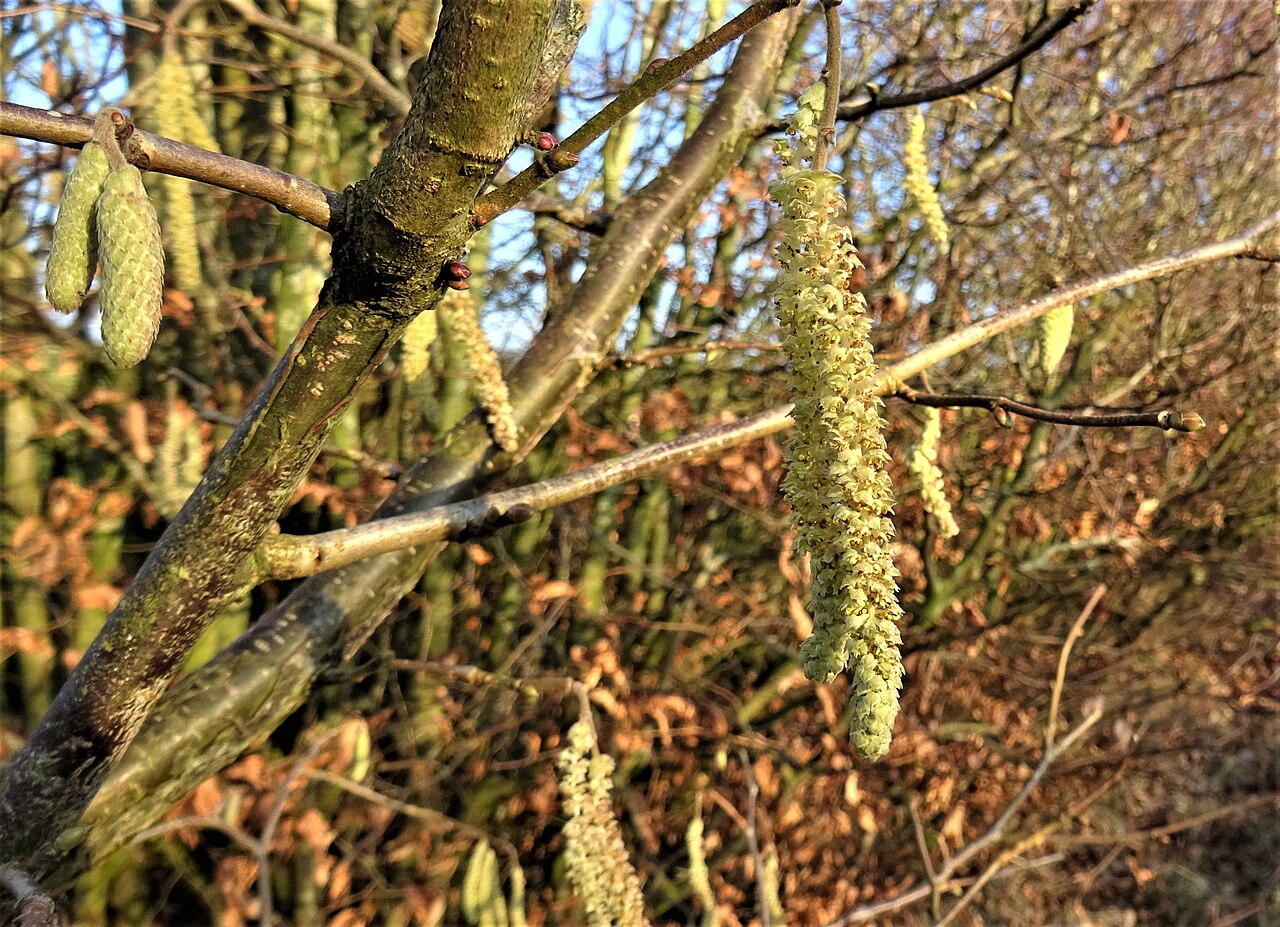
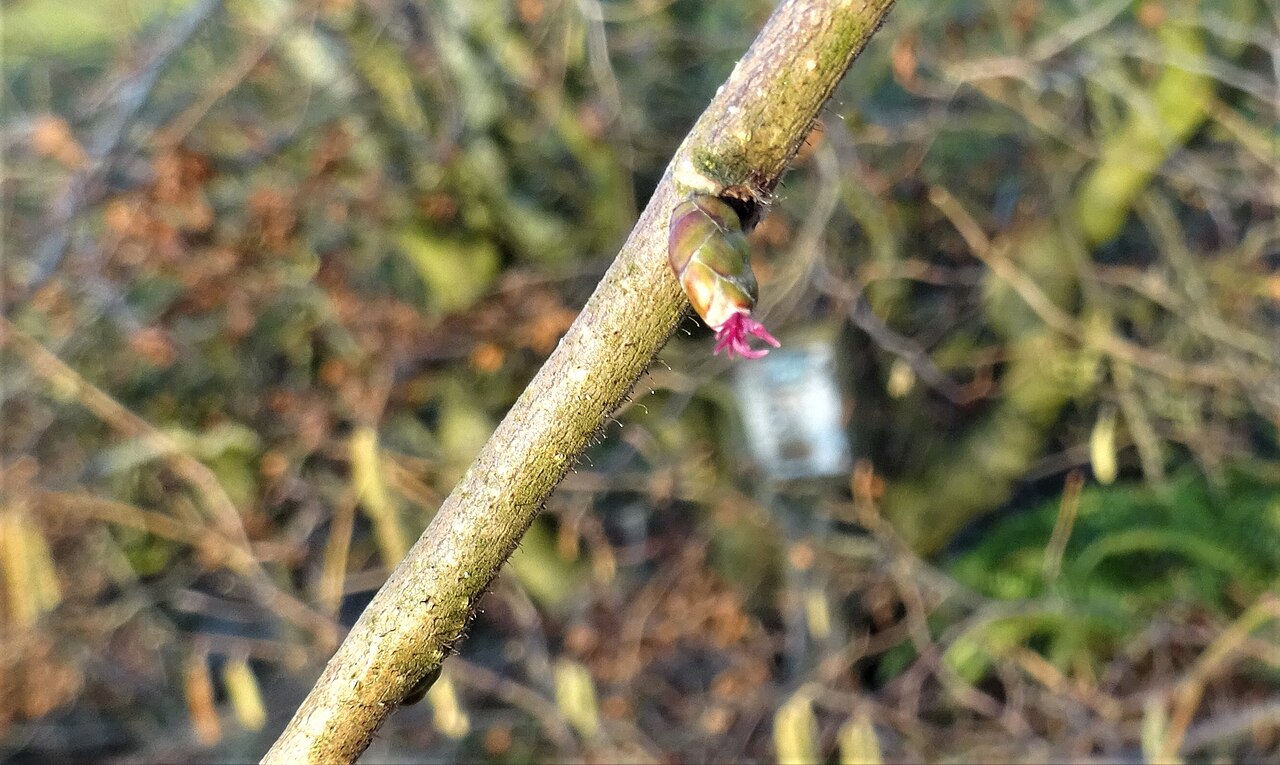
Hazelnut is a monoecious but cross-pollinating plant (due to pronounced self-incompatibility and mismatch between male and female flowering phases) that bears both male and female flowers on the same branch. Male flowers are grouped in catkins (inflorescences) on shoots from the previous vegetation; a mature tree produces up to about 1 kg of catkins, and each catkin bears 130–260 flowers depending on catkin length. Female flowers are hidden in mixed buds and are recognizable by the red stigmas protruding from the bud.
Several facts make the hazelnut cycle unique:
- Winter blooming. Depending on climate and year, hazelnut blooms from December to March. The male and female phases rarely coincide completely — protandry (earlier male phase) is more common in warmer areas, while protogyny occurs in colder ones.
- Delayed fertilization. Although wind pollination occurs in February or March, fertilization does not happen immediately. Pollen grains germinate on the stigma, and their growth then rests until the ovary develops completely. Fertilization can take several months, up to May, when temperatures become favorable for the process to continue.
- Shallow root system and long lifespan. The root develops shallowly, in a layer of about 30 cm, so the plant reacts quickly to drought and soil injuries. The orchard lifespan is 70–100 years, with bearing starting in the third to fourth year and full bearing around the seventh to eighth year.
- Tendency to form root suckers. Hazelnut naturally tends toward a shrub form because it constantly sends up suckers from adventitious buds on the roots, which directly affects cultivation methods and the maintenance of bearing.
Buds: The Foundation of the Entire Cycle
Buds are undeveloped shoot tips and are divided into:
| Bud Type | Group | Develops into |
|---|---|---|
| Woody (vegetative) bud | vegetative | shoot, leaf |
| Leaf / transitional bud | vegetative | leaf, shoot extension |
| Dormant (adventitious) bud | vegetative | reserve shoots, suckers |
| Flowering (mixed) bud | generative | female flower → fruit after fertilization |
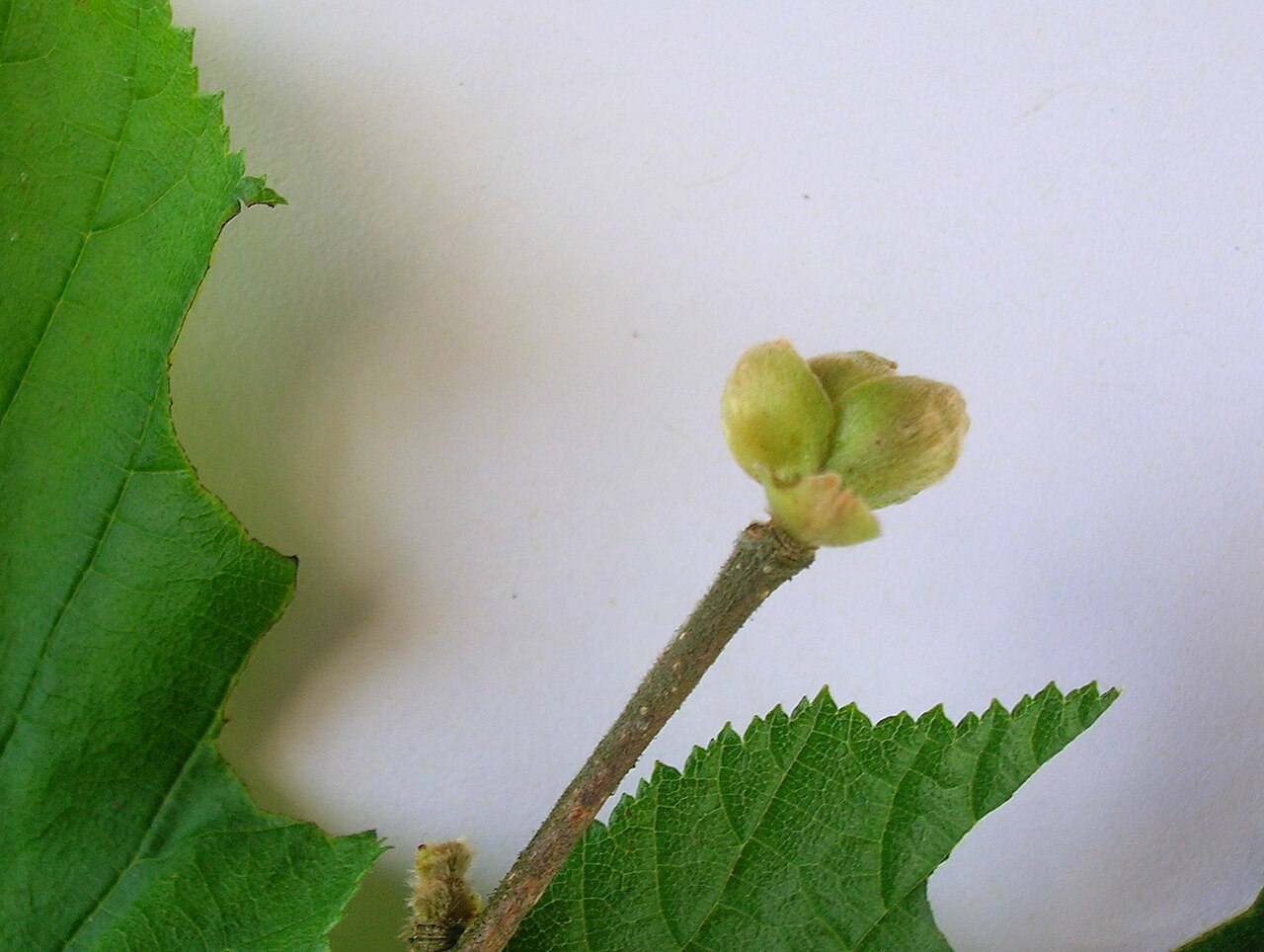
A bud consists of a bud scale and scales; if the bud scale fails, the scales take over its role. This division is important because the bearing potential of the following year is "written" into the number and quality of flowering buds that are initiated during the current season.
Annual (actually 18-month) Dynamics
What appears to the producer as one "season" is actually an overlap of two vegetations. According to the standardized BBCH scale for hazelnut, the entire cycle — from the emergence of male catkins and the induction of flowering buds to fruit ripening — lasts at least 18 months. In other words, the fruit you harvest in September is the result of buds initiated the previous summer.
The BBCH scale divides development into main phases:
| BBCH Phase | Name | What Happens |
|---|---|---|
| 0 | Bud development / dormancy | winter dormancy, bud swelling |
| 1 | Leaf development | leafing out after blooming |
| 3 | Shoot elongation | growth of young shoots, formation of new nodes |
| 5 | Appearance of male catkins | elongation and shedding of catkins |
| 6 | Blooming (male and female) | wind pollination (winter) |
| 7 | Fruit development | growth of the fruit wall and kernel filling |
| 8 | Fruit ripening | shell consolidation, completion of the kernel |
| 9 | Dormancy / senescence | leaf drop, entry into dormancy |
Winter (December–March): Blooming and Pollination
While the rest of the trees are in full dormancy, hazelnut releases pollen from its anthers, which the wind carries to the red stigmas of female flowers. Pollen shedding lasts 2–25 days depending on weather, while the total blooming of the orchard can last up to 60 days. Since hazelnut is self-incompatible, at least two to three pollinizer cultivars with synchronized blooming times are necessary in the orchard. After pollination, there is a period of pollen tube dormancy and delayed fertilization.
Spring (April–May): Leafing out, Fertilization, Start of Fruit Growth
The budding of vegetative buds and the start of vegetation follow only after blooming. The leaf is the main "engine" of the entire cycle — the carrier of photosynthesis, transpiration, respiration, and hormone synthesis. Fruit wall (young fruit) growth begins in April, and actual fertilization occurs in the second half of May. Only then does intense fruit development begin.
Summer (June–August): Fruit Growth and Kernel Filling
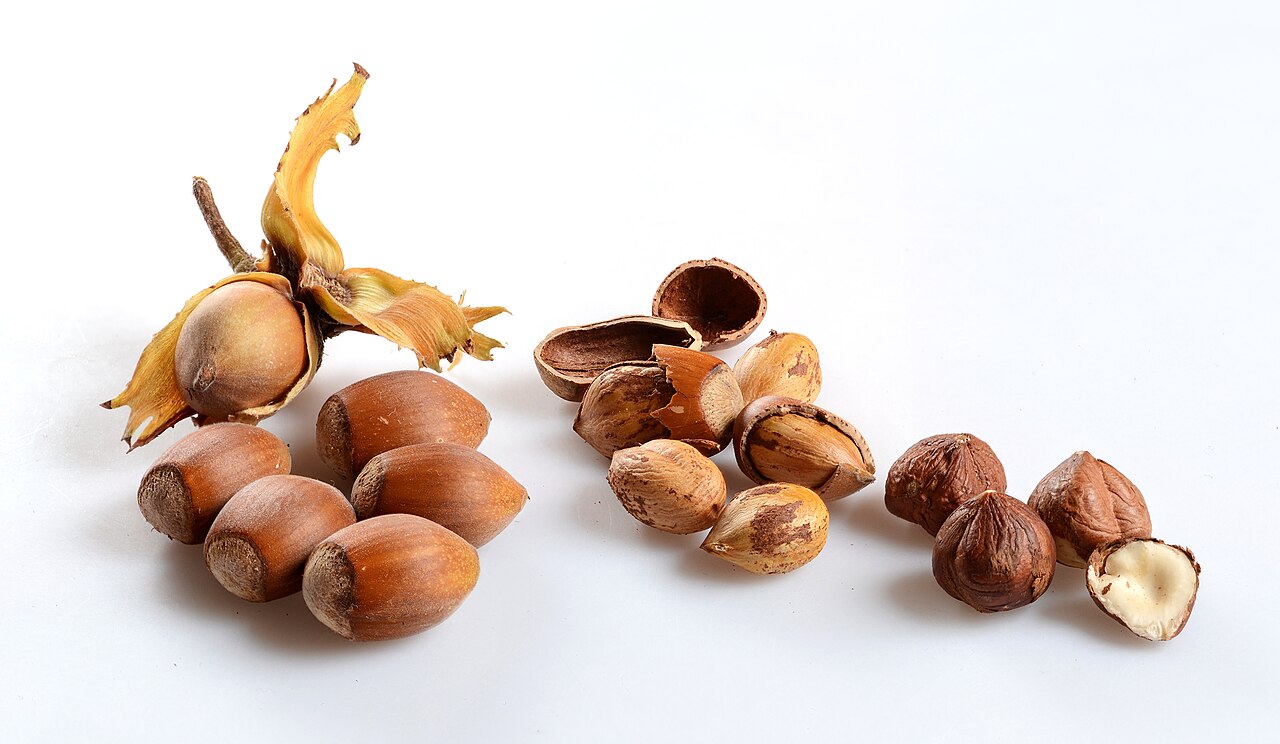
This is the most phenologically critical period for yield and quality. The fruit consists of the husk (cupule), shell, and kernel. After fertilization, fruits grow intensively and reach final shell dimensions within approximately one month; growth follows a sigmoid curve in three phases:
| Growth Phase | Duration (approx.) | Dominant Process |
|---|---|---|
| 1st phase | 4–5 weeks after fertilization | rapid increase in fruit dimensions, tissues rich in water, little dry matter |
| 2nd phase | 5–12 weeks | consolidation of shell structure and consistency, start of seed development |
| 3rd phase | up to ~14 weeks | kernel filling and completion, gradual increase in dry matter until harvest |
In June, fruits grow rapidly and seed growth begins within them; tissues are then rich in water. The increase in dry matter occurs gradually from late June until harvest. In the field, this phase is usually described as the range BBCH 72–75 ("intensive growth and kernel filling within the mesocarp"), which is also the phenophase in which advisory services classify orchards as being in a "critical period" for protection.
Water is crucial in this phase: hazelnut requires 700–800 mm of annual precipitation, well-distributed, especially during the fruit formation and growth phase from April to August. In extremely dry summers, the kernel remains small and underdeveloped, which directly lowers the kernel recovery rate (kernel yield). On the other hand, modern intensive orchards increasingly introduce irrigation specifically to bridge summer drought stress during kernel filling.
Practical benchmark: in full bearing, one tree yields about 8–12 kg of fruit, of which about 50% is shell; orchard yields range approximately from 2.2 to 3.6 t/ha, and in well-managed intensive orchards, even more. (Values are informative and depend heavily on cultivar, planting density, and agrotechnics.)
Late Summer and Autumn (August–October): Harvest and Reserve Filling
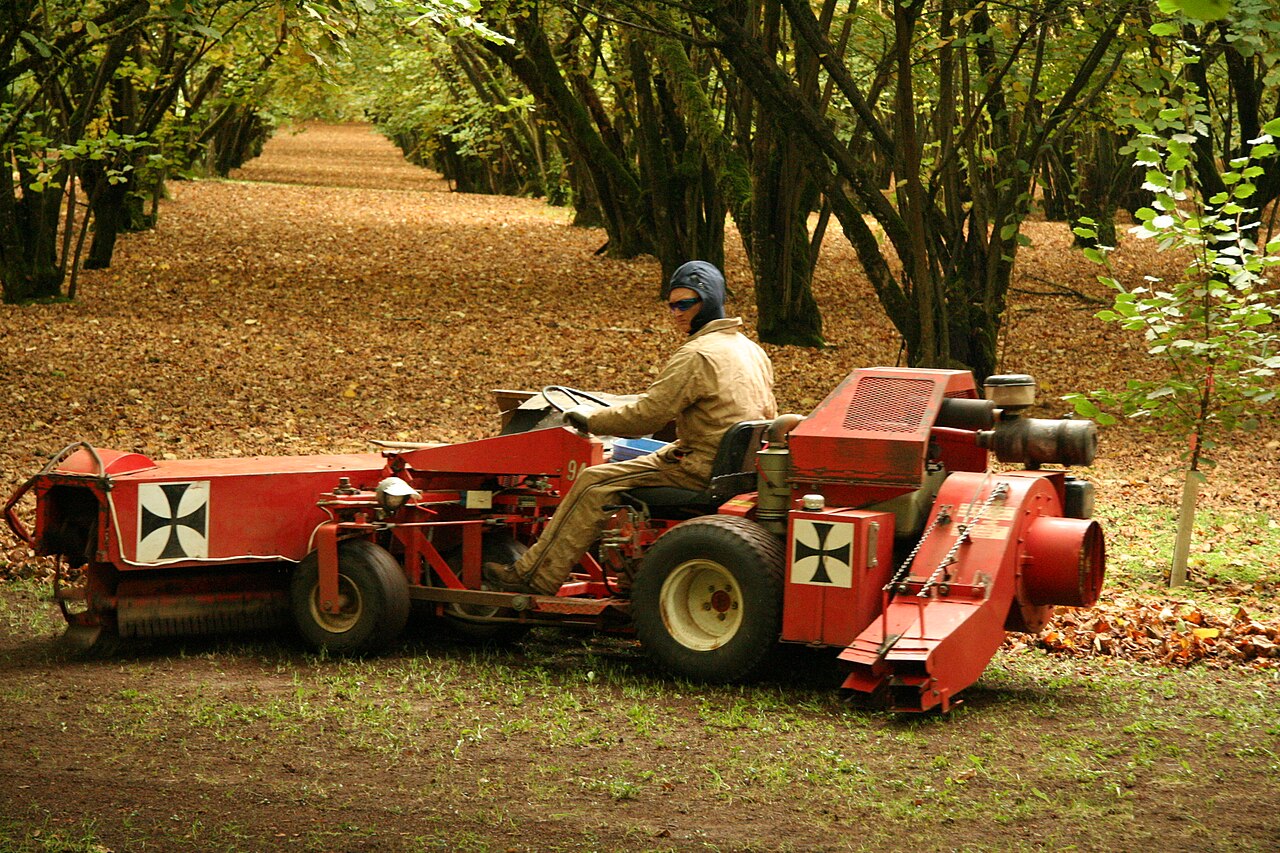
It is characteristic of hazelnut that not all fruits on the tree ripen simultaneously. Full physiological maturity occurs when the husk easily separates from the fruit and when fruits begin to fall en masse to the ground; they are then harvested, usually by shaking and collecting from previously laid tarps or mechanically from the ground. Harvest lasts from August to mid-October, depending on the cultivar and region. Prematurely harvested fruits lose quality — kernels are shriveled and tough.
After harvest, while the leaves are still active, hazelnut enters the reserve accumulation phase. The leaf continues to photosynthesize and accumulate nutrients, and the plant moves carbohydrates and nitrogen into permanent organs (roots, trunk, branches). These reserves are the "capital" from which next spring's leafing out, growth, and fruit development will start — even before new leaves begin to provide sufficient assimilates. Therefore, autumn measures (balanced fertilization, foliar application of micronutrients such as boron if needed, and autumn cultivation/pruning) are aimed precisely at ensuring the plant enters dormancy well-supplied.
In this context, the specificity of autumn foliar fertilization of hazelnut should be understood: since fertilization is delayed until spring, it is crucial to ensure good and long-lasting pollen viability, in which boron (B), molybdenum (Mo), and phosphorus (P) play an important role. (Specific formulations and concentrations, e.g., solutions with Fe-, Mn-, Zn-EDTA, B, and MgO, are informative and should be adjusted based on leaf and soil analysis and product labels.)
Winter (November–February): Dormancy
With leaf drop, the plant enters dormancy. In the buds, the bearing potential of the next year is already "waiting," and during winter, the actual blooming of the next generation of catkins also takes place — so the cycle never really stops, but overlaps.
Phenophase Calendar and Key Operations (Orientational)
| Period | Phenophase | Main Operations |
|---|---|---|
| December–March | Blooming, pollination | ensure pollinizers; dormancy; planning |
| April–May | Leafing out, fertilization, fruit wall growth | spring nitrogen fertilization, leaf protection during growth |
| June | Rapid fruit growth, start of kernel filling | irrigation as needed, protection from diseases/pests (critical period) |
| July–August | Kernel filling (BBCH 72–75+) | maintain moisture, protect kernel (filbert weevil, bugs) |
| August–October | Ripening, harvest | harvest at full maturity, drying, processing |
| October–November | Reserve accumulation, leaf drop | autumn fertilization/foliar application, autumn pruning, soil cultivation |
| November–February | Dormancy | pruning during dormancy, preparation for the season |
Timings are approximate and shift depending on cultivar, altitude, and year.
Alternative (Alternate) Bearing
For hazelnut, as for many nut species, alternate bearing is characteristic — a year of heavy crop is almost invariably followed by a year of light crop. This is not merely an interesting phenomenon but a serious production and economic problem, as it complicates yield planning, fertilizer demand, and revenue forecasting.
How pronounced is the problem?
The phenomenon is well-documented. In long-term data series from Turkish production regions, the proportion of years in which alternate bearing was recorded ranged from 71% to 93%, and the intensity (bienniality index) was higher in eastern regions (around 0.20–0.31) than in western ones (around 0.16). In other words, the "on-off" pattern is the rule, not the exception.
Why does it occur? Two main mechanisms
- Hormonal influence of seeds on bud induction. Seeds developing in a heavy-crop year hormonally suppress the induction of flower buds that would otherwise produce the crop in the following year. Many fruits → fewer set fruit buds → poor next year.
- Competition for assimilates (photosynthates). Fruits are the primary "sink" for assimilates. When there are many fruits, vegetative growth and the development of summer and autumn shoots are reduced, thereby decreasing the number of nodes and shoots on which flowers could form the following spring. Fewer new shoots → less fruiting wood.
Both mechanisms link alternate bearing directly to what we described in seasonal dynamics: the current year's crop "steals" resources and space from future fruiting buds.
What exacerbates and what mitigates alternation
- Genotype. The phenomenon is highly dependent on the cultivar — some cultivars alternate strongly, others less so.
- Poor growing conditions. Alternation is more pronounced under conditions that limit photosynthetic capacity (drought, poor nutrition, dense shaded canopy). Dry farming (without irrigation) is recognized as a factor that intensifies alternation.
- Agrotechnics. Alternate bearing can be significantly mitigated, and in some cultivars almost eliminated, through a combination of pruning, fertilization, controlled irrigation, and the selection of vigorous, less prone clones/cultivars.
Crop Load and How to Balance It
"Load" is the balance between the amount of crop the plant can bear while simultaneously maintaining vegetative growth and setting fruiting buds for the following year. The goal of good cultivation is not maximum yield in a single year, but stable yield over a series of years.
Practical levers for managing load and mitigating alternation:
- Regular pruning. The goal is a light, airy canopy where sunlight and air circulation can freely enter (hazelnut is a heliophile), while encouraging growth of short, moderately vigorous fruiting wood. Autumn/winter pruning also regulates the onset of spring vegetative growth and flowering. This "thins" excessive fruiting potential in a heavy-crop year and promotes new growth for the next.
- Balanced nutrition. Since alternation makes nitrogen demand difficult to predict, fertilization should be guided by leaf and soil analysis. Over-fertilizing with nitrogen in a heavy-crop year does not solve the problem; the key is to feed the plant so that after a heavy crop, it can replenish reserves and shoots.
- Irrigation. Ensuring water availability during the kernel-filling stage (June–August) prevents small kernels and reduces stress that intensifies alternation.
- Cultivar and pollinizer selection. Cultivars differ in their tendency to alternate; additionally, sufficient pollinizers with synchronized flowering ensure uniform fertilization.
- Healthy canopy and buds. Pests such as the hazelnut bud mite attack buds specifically (swelling, reddish discoloration, early drop), thereby directly reducing the number of fruiting and vegetative shoots — and thus future load. Bud protection is part of yield management.
Common Mistakes
- Pushing for maximum yield in a "heavy" year without thinning — programs a poor next year.
- Neglecting water during kernel filling — small kernels, low milling percentage, intensified alternation.
- Uniform "gut-feeling" fertilization instead of based on leaf/soil analysis, especially for nitrogen whose demand fluctuates with crop load.
- Early harvest — shriveled, tough kernels and quality loss.
- Neglected, dense canopy — poor light penetration reduces photosynthesis, intensifies alternation, and hinders pollination (leaves obstruct pollen movement).
- Ignoring bud damage (mites) — direct loss of future fruiting wood.
Summary for the Grower
Hazelnut operates in an 18-month, overlapping cycle: winter flowering → delayed spring fertilization → summer fruit growth and kernel filling (critical period for water and protection) → autumn harvest and reserve filling → winter dormancy, while already carrying buds for the next year. Alternate bearing results from the fact that a heavy crop hormonally and resource-wise suppresses the setting of fruiting buds and the growth of new shoots. It cannot be completely eliminated, but it can be significantly mitigated through pruning, balanced nutrition, irrigation, cultivar selection, and bud protection — with the goal of stable load and uniform yield over a series of years.
Sources
This article is an AI summary compiled from an internal literature collection on hazelnut (RAG corpus) and public sources. Main sources used:
From RAG Corpus (Hazelnut Literature Collection):
- ECONOMICS AND ESTABLISHMENT OF HAZELNUT ORCHARDS ON BALOG FAMILY FARM (2021) — description of fruit development in three phases and the role of leaves in physiology (according to Miljković, 2018).
- State and Trends in Hazelnut Production and Consumption (2017) — classification of buds (vegetative/generative), flower and catkin structure. DOI: https://doi.org/10.31727/gzb.42.3.9
- Recommendation for Permanent Hazelnut Orchard Owners (Osijek-Baranja County, 2025) — kernel-filling phenophase BBCH 72–75 and "critical period" for protection.
- Annual Hazelnut Treatment Plan — Gospodarski list (2026) — fruit development and hazelnut weevil attack on kernels.
- Establishment of Permanent Hazelnut and Plum Orchard (Environmental Impact Assessment, Grubišno Polje) (2020) — water needs (700–800 mm) and the impact of drought/rainfall on kernels. https://bbz.hr/doc/uprava/elaborat_zastite_okolisa_visegodisnji_nasadi_lijeske_i_sljive.pdf
- Autumn Foliar Fertilization of Woody Crops (2026) — delayed fertilization, the role of boron/molybdenum/phosphorus for pollen viability.
- PDF HAZELNUT CULTIVATION (pdfcoffee) (2009) — flowering December–March, protandry/protogyny, autosterility; alternate bearing and nitrogen demand.
- Economic Comparison of Different Systems (2015) — lifespan, root depth, yields per tree and hectare.
- Hazelnut Pruning and Pruning Hazelnuts in Autumn — the role of pruning in regulating flowering and yield, creation of root suckers.
- Diseases and Pests of Hazelnut (2020) — hazelnut bud mite and damage to buds.
Public (Web) Sources:
- Development of a uniform phenology scale (BBCH) in hazelnuts — ScienceDirect: https://www.sciencedirect.com/science/article/pii/S0304423821009444
- Phenological growth stages of 'Barcelona' hazelnut using an extended BBCH scale — ScienceDirect: https://www.sciencedirect.com/science/article/abs/pii/S0304423822000280
- Consolidated BBCH scale for hazelnut phenotyping — ISHS: https://ishs.org/ishs-article/1379_23/
- Alternate bearing in Mediterranean fruit trees (hormonal and resource mechanisms) — Nitrogen (2025): https://doi.org/10.3390/nitrogen6010002
- Alternate bearing in hazelnut (intensity in production regions) — Frontiers in Plant Science (2021): https://doi.org/10.3389/fpls.2021.665471
- Girdling of fruit-bearing branches of Corylus avellana (impact on seed mass) — ScienceDirect: https://www.sciencedirect.com/science/article/abs/pii/S0304423819303632
- Biennial bearing — Wikipedia: https://en.wikipedia.org/wiki/Biennial_bearing