Seed Propagation and Rootstock Production
Content generated by artificial intelligence — verify before application
This article was automatically compiled from a collection of hazelnut literature using artificial intelligence and may contain errors or outdated information. It serves as a starting point for further research, not as professional advice. Dosages, products, and timing are informative and depend on the cultivar, location, and current regulations — always consult with an advisory service and official sources before application.
Seed (generative) propagation of hazelnut is rarely used for establishing direct bearing orchards because seedlings do not faithfully inherit the traits of parent cultivars. However, it remains indispensable for two key purposes: in breeding, where crossing and sowing seeds create new cultivars adapted to specific climatic and market conditions, and in nursery rootstock production (seed orchards) onto which commercial cultivars are later grafted. This article explains the entire journey from seed to usable rootstock: seed preparation and storage, stratification, sowing, germination, and growing the seedling to a stage suitable for grafting.
Why Generative Propagation (and When Not to Use It)
Hazelnut can be propagated in several ways — by seed, root suckers, cuttings, layering (pollard), budding, and grafting. Seed propagation, or generative propagation, is primarily conducted in research institutions and nurseries in two situations:
- Creating new cultivars (breeding) — seed resulting from controlled or open pollination carries a new combination of inherited traits, so seedlings are evaluated and selected.
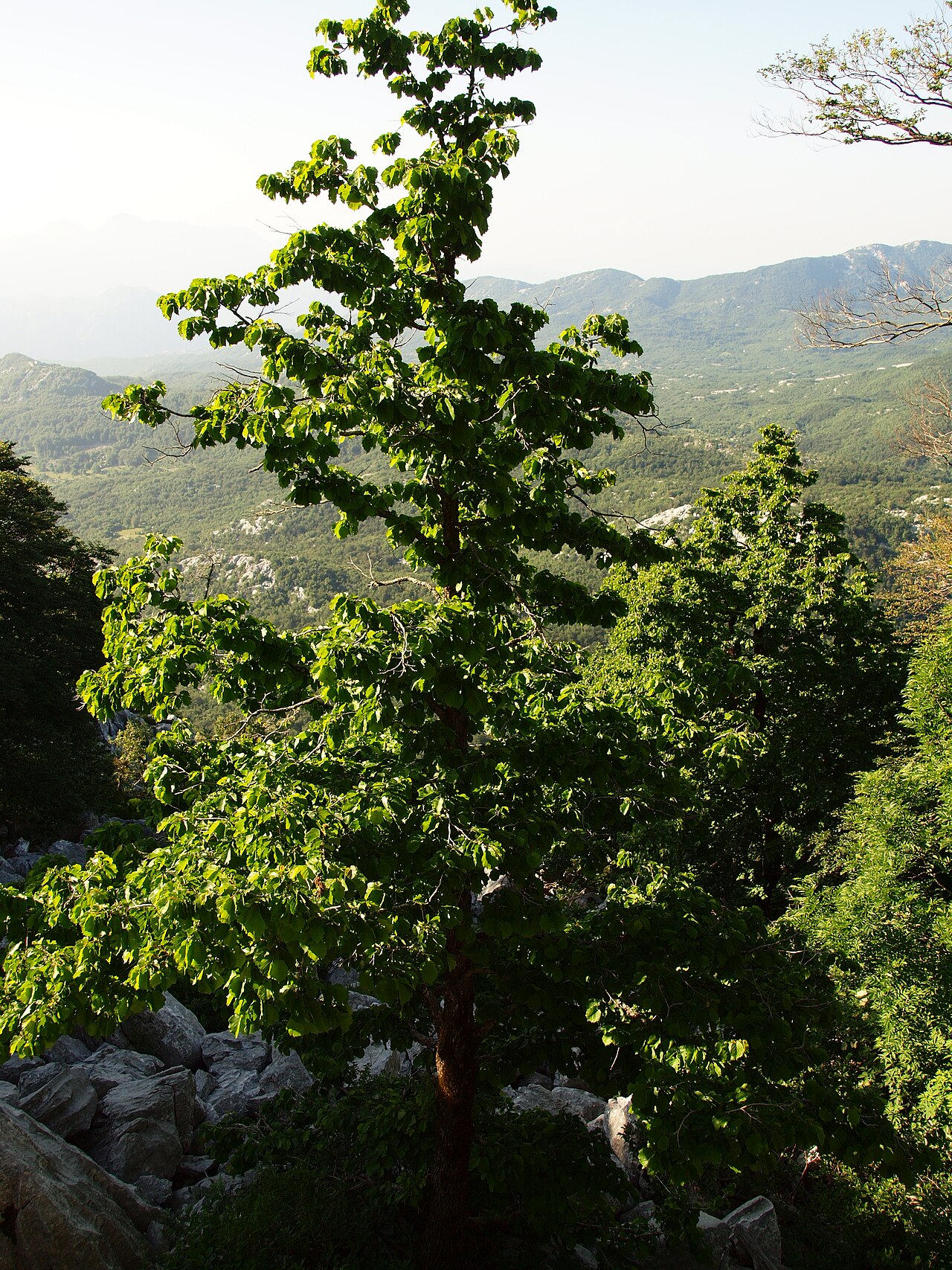
- Producing rootstocks for grafting — seedlings serve as the rootstock (most commonly Turkish hazelnut, Corylus colurna L.) onto which commercial cultivars of common hazelnut (Corylus avellana L.) are grafted.
Do not establish a bearing orchard from seed
Generatively produced seedlings do not inherit parental traits; due to segregation, they produce plants with inferior characteristics. Literature states that only approximately 1 out of 1000 seedlings grown from seed retains the characteristics of the mother plant. For a bearing orchard, use certified vegetatively propagated seedlings of known cultivars.
Due to its low cost, vegetative propagation via root suckers dominates practice — according to corpus data, seedlings propagated from suckers account for over 95% of the hazelnut seedling production structure in the market. The generative path is, therefore, a "professional tool": for nurseries and breeders, not for growers establishing a commercial orchard.
Rootstock Selection: Why Turkish Hazelnut
Leading producing countries grow hazelnut on its own roots (from suckers, cuttings). When rootstock material without root suckers is desired — which significantly facilitates maintenance and mechanization in intensive orchards — Turkish hazelnut (Corylus colurna L.) is becoming increasingly important as a rootstock.
Advantages of Turkish hazelnut as a rootstock:
- Does not produce root suckers (suckers) — significantly reduces orchard maintenance costs.
- Drought tolerance thanks to its deep, spindle-shaped root system — suitable for non-irrigated sites.
- Disease resistance and good compatibility with all common hazelnut cultivars.
- Produces trees that do not lodge (fall over) in wind due to deep rooting.
Limitation: Propagation of Turkish hazelnut itself relies on seed (generative) because it is difficult to root vegetatively, and graft acceptance and rooting success have technical limitations. This is precisely why the production of high-quality Turkish hazelnut seedlings is the foundation of modern hazelnut nursery management.
Planting spacing depends on rootstock
For planting on Turkish hazelnut rootstock without irrigation, literature cites a spacing of approximately 6 × 4 m, while for own-root production, 5 × 4 m. These values are informative and depend on the cultivar, vigor, soil, and training system.
Seed: Harvest, Processing, and Storage
Seed quality directly determines germination rate and uniformity of seedlings. The process with the fruit/seed before stratification:
- Extraction and cleaning — extract seed from the fruit, thoroughly separate it from the pulp (involucre), and wash with ordinary (not hot) water; do not treat with steam.
- Grading — separate into large, medium, and small sizes using sieves of different mesh sizes to ensure uniform germination and emergence.
- Drying — air dry in the shade in a thin layer until seed moisture reaches 14–16 %.
- Storage — keep in canvas bags in a dry, ventilated room at a temperature of 0–5 °C until the start of stratification. According to some authors, seed can maintain viability for up to 4 years.
Germination Test Before Sowing
Before sowing, it is worthwhile to determine germination percentage and germination energy. Three approaches are used in practice:
- Visual method — inspection of external appearance; healthy seed is fresh, shiny white, and moist on the cross-section. Fastest but least reliable.
- Staining (e.g., tetrazolium test) — determines embryo viability.
- Germination test — most reliable but takes the longest.
How much seed is needed
For Turkish hazelnut, the number of seeds per kilogram ranged between 549 and 1049 pieces, of which only 172 to 489 seeds were viable (capable of germination). When planning seed quantity, account for this large proportion of non-viable seeds and relatively low germination rates (see below).
Seed Stratification
Hazelnut seed is in dormancy and requires a period of cold and moist stratification to germinate, which mimics winter conditions (vernalization). There are two basic sowing times, which determine whether artificial stratification is needed:
| Sowing Time | Stratification | Note |
|---|---|---|
| Autumn sowing | Natural, outdoors | Seed undergoes dormancy in the soil during winter; yields the best results. |
| Spring sowing | Mandatory artificial (cold-moist) | Seed must be stratified before sowing to break dormancy. |
Cold-Moist Stratification Procedure
- Medium: moist sand (or peat/perlite), without drying out. Literature cites a seed : medium ratio of approximately 1 : 3.
- Temperature: cooler room/chamber at approximately 0–5 °C (often cited as 4 °C).
- Duration: for Turkish hazelnut, a minimum of 120 days is recommended; research cites a range of 97–135 days of cold-moist stratification, followed by an additional ~52 days to initiate germination.
- Moisture: regularly check and moisten the medium; if the sand dries out completely, the seed remains dormant and will not germinate.
Alternative protocol (warm then cold)
For long-stored seed, a pre-treatment is sometimes applied: soaking in warm water for about 48 hours, followed by a ~2 week warm phase, then 3–4 months of cold stratification. Protocols vary among sources — align them with the seed's origin and age.
Expected Germination
Germination of hazelnut seed, especially Turkish hazelnut, is relatively low and varies significantly depending on sowing time and protocol:
| Procedure | Germination (informative) |
|---|---|
| Autumn sowing (natural conditions) | approx. 64 % |
| Stratification for 120 days, then spring sowing | approx. 14.2 % |
| Typical nursery range | 40–75 % |
The large difference favoring autumn sowing is the main reason why nurseries producing Turkish hazelnut rootstocks often prefer autumn sowing of fresh, well-processed seed.
Sowing and Germination
Autumn Sowing (Recommended for Rootstocks)
Freshly processed seed is sown in autumn directly into beds or containers, avoiding artificial stratification and achieving the highest germination rates. The seed overwinters in the soil and emerges in spring.
Spring Sowing (After Stratification)
After completing cold stratification:
- Remove bags/containers from the cooler and sow seed in a well-draining substrate at a depth of approx. 2.5 cm (1 inch).
- Move containers to a warm, bright, partially shaded location (cold frame / germination chamber).
- Maintain a temperature of approx. 25 °C during the day and 20 °C at night (alternatively, 15–21 °C is cited); keep the substrate consistently moist but not waterlogged.
- Check moisture at least once daily as the germination chamber dries out quickly.
- Emergence is expected in approximately 30 days (depending on the source, germination takes 4–6 weeks).
Do not allow drying out
Even minimal complete drying of the medium interrupts germination — the seed returns to dormancy. Consistent moisture is more important than occasional heavy watering.
After emergence, leave the germination chamber in the same place for about a week and increase air circulation around the young seedlings. After the last spring frost, move the seedlings to partial shade and continue growing in light shade until they strengthen.
Growing Rootstocks to Grafting Stage
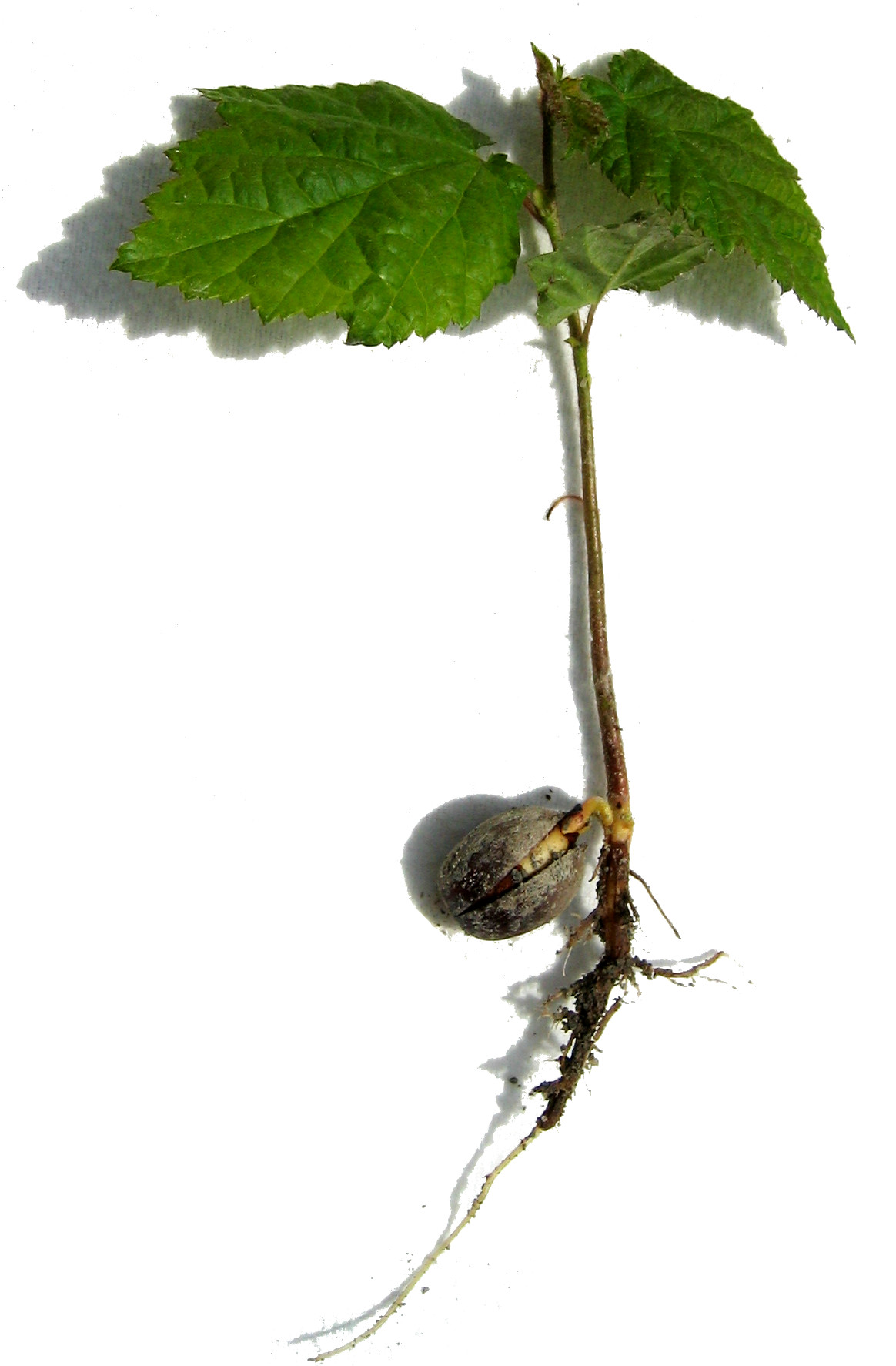
The goal is to obtain a seedling of sufficient height and root collar thickness for grafting within one to two growing seasons.
| Seedling Age | Approximate Height | Grafting Readiness |
|---|---|---|
| 1 year | up to ~20 cm | too weak for grafting |
| 2 years | ~50 cm | developed root collar — suitable for grafting |
During rootstock production, it is important to:
- Water and nutrients — regular irrigation (especially in the first year) and fertilization to achieve uniform vigor.
- Soil care — maintain loose, aerated, and clean soil; Turkish hazelnut requires deep, porous, and fertile soil. Low winter temperatures and freeze-thaw cycles naturally loosen the soil.
- Health status — monitor and control pests and diseases (e.g., Mycomya coryli, Cryptosporiopsis coryli, Chondrostereum purpureum, Nectria galligena, Phyllactinia guttata), especially in the production of mother/pre-basic material grown in isolated, sterilized conditions separate from the soil.
From Seedling to Grafted Seedling
When the seedling reaches the required root collar thickness, it is grafted with a commercial common hazelnut cultivar:
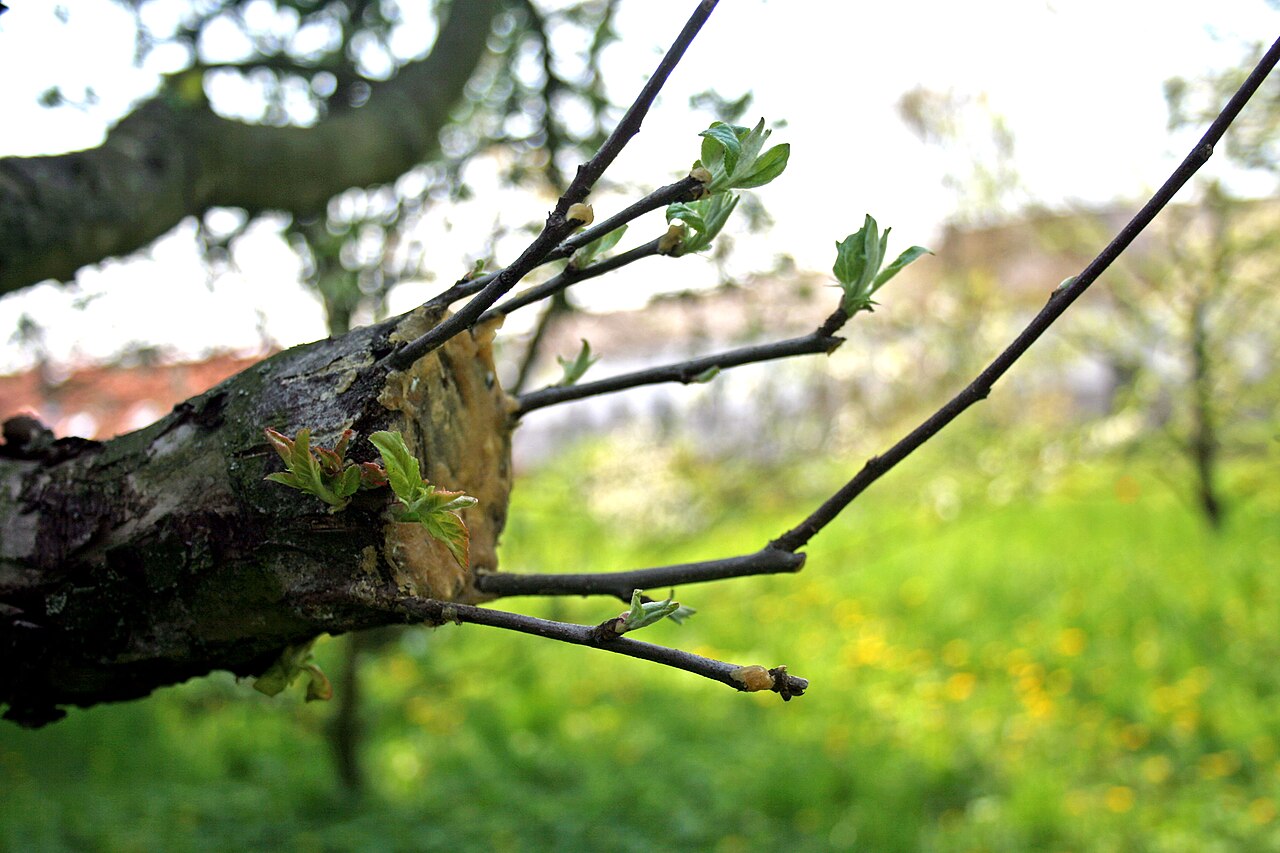
- Techniques: whip grafting, and in some regions (e.g., Spain) chip budding in spring or summer, with proper bud storage and active rootstock growth.
- Hot-callusing (heating the callus): local heating of the scion-rootstock union yields very high acceptance rates (over 90 %) and is suitable for mass nursery production.
- Key success factors: quality rootstock, precise cuts, and timely sealing of the cut surface.
Micropropagation as a supplement
Micropropagation (tissue culture) is also being explored for mass multiplication of Turkish hazelnut rootstock. In experiments, growth regulators such as BAP (~5 mg/L), IBA (~0.01 mg/L), and GA₃ (~0.1 mg/L) were used; shoots with an average length of about 4.1 cm were achieved. Values are laboratory-based and informative.
Practical recommendations and common mistakes
- Do not establish a nut-bearing orchard from seed. Use seed only for rootstocks and breeding; for the orchard, use certified scions of known, cross-pollinating cultivars.
- Choose autumn sowing of fresh seed whenever possible — it yields significantly higher germination rates than artificial stratification and spring sowing.
- Do not allow the medium to dry out during stratification and germination; this is the most common cause of failure.
- Plan for low germination rates. A large proportion of Corylus colurna (Turkish hazel) seed is non-viable — sow sufficient quantities and grade seed by size to ensure uniform emergence.
- Respect the duration of stratification (at least ~120 days for Corylus colurna); a cold period that is too short results in poor and uneven germination.
- For rootstock material without shoots, use Corylus colurna (Turkish hazel), but account for its technical limitations (poorer rooting, more difficult grafting).
- Health control in the nursery — keep mother and pre-basic material in isolated, sterilized conditions, separate from the soil.
Gallery
Sources
This article is an AI-generated summary derived from an internal literature collection on hazelnut (RAG corpus) and supplemented with public web sources. Numerical data (stratification duration, germination rates, seed storage humidity and temperature, seedling dimensions, growth regulator dosages) are informative and depend on seed origin, cultivar, location, and applied protocol — consult advisory services and official sources before application.
Main sources used:
- TREE — Nursery Production Manual (2020.) — internal corpus
- Influence of growing medium and plant growth regulators on micropropagation of Corylus colurna L. (2025.) — internal corpus
- Business Plan for Hazelnut Seedling Production (Poljinos, 2019.) — https://www.poljinos.hr/wp-content/uploads/2022/05/PP-za-proizvodnju-sadnica-lijeske1.pdf
- Economic Analysis of Hazelnut Production (2023.) — internal corpus
- Hazelnut — from planting to harvest, cultivation tips — internal corpus / Vrtlarica.hr
- EPPO standards for hazelnut (2009.) — internal corpus
- Šeho et al. (2016.); Ninić-Todorović et al. (2012.); Aygun et al. (2009.) — cited in corpus (germination and stratification of Corylus avellana)
- Advances in Hazelnut (Corylus avellana L.) Rootstocks Worldwide — https://www.mdpi.com/2311-7524/7/9/267
- Advances in Nursery Production of Hazelnut Plants in Serbia (Frontiers in Plant Science, 2021.) — https://www.frontiersin.org/journals/plant-science/articles/10.3389/fpls.2021.785015/full
- Effect of some pretreatments on seed germination of Turkish hazel (Corylus colurna L.) — https://ishs.org/ishs-article/845_27/
- Effects of seed moisture content, stratification and sowing date on the germination of Corylus avellana seeds (Springer) — https://link.springer.com/article/10.1007/s11676-018-0852-x
- Corylus colurna — Wikipedia — https://en.wikipedia.org/wiki/Corylus_colurna