Glossary of Terms and Abbreviations in Hazelnut Cultivation (BBCH, GDD, Kernel Yield, ETc, VPD, ARKOD)
Content Generated by Artificial Intelligence — Verify Before Application
This article was automatically compiled from a collection of hazelnut literature using artificial intelligence and may contain errors or outdated information. It serves as a starting point for further research, not as professional advice. Dosages, products, and timing are informative and depend on the cultivar, location, and current regulations — always consult with an advisory service and official sources before application.
Professional literature on hazelnut (Corylus avellana L.) cultivation is full of abbreviations and terms that appear in almost every article: from kernel yield and BBCH stages to heat and chill units, irrigation coefficients, and administrative systems like ARKOD. This glossary explains these key concepts in one place, briefly and practically, to help you navigate the rest of the knowledge base and scientific papers more easily. The definitions are intended as a starting point — for each term, we explain why it is important for the producer and, where available, link it to the parent article that covers the topic in greater depth.
How to Use This Glossary
Terms are grouped thematically (fruit quality, phenology and heat, chill and dormancy, water and irrigation, orchard structure, administration). Within each group, a term is explained with a definition, measurement unit (if applicable), and a brief note on practical application. Numerical values (e.g., kernel yield ranges, Kc values) are informative and taken from literature — actual values for your orchard depend on the cultivar, location, soil, and year, and should be confirmed by measurement or consultation with an advisory service.
Fruit Quality and Yield
Kernel Yield (Kernel Percentage / Shelling Percentage)
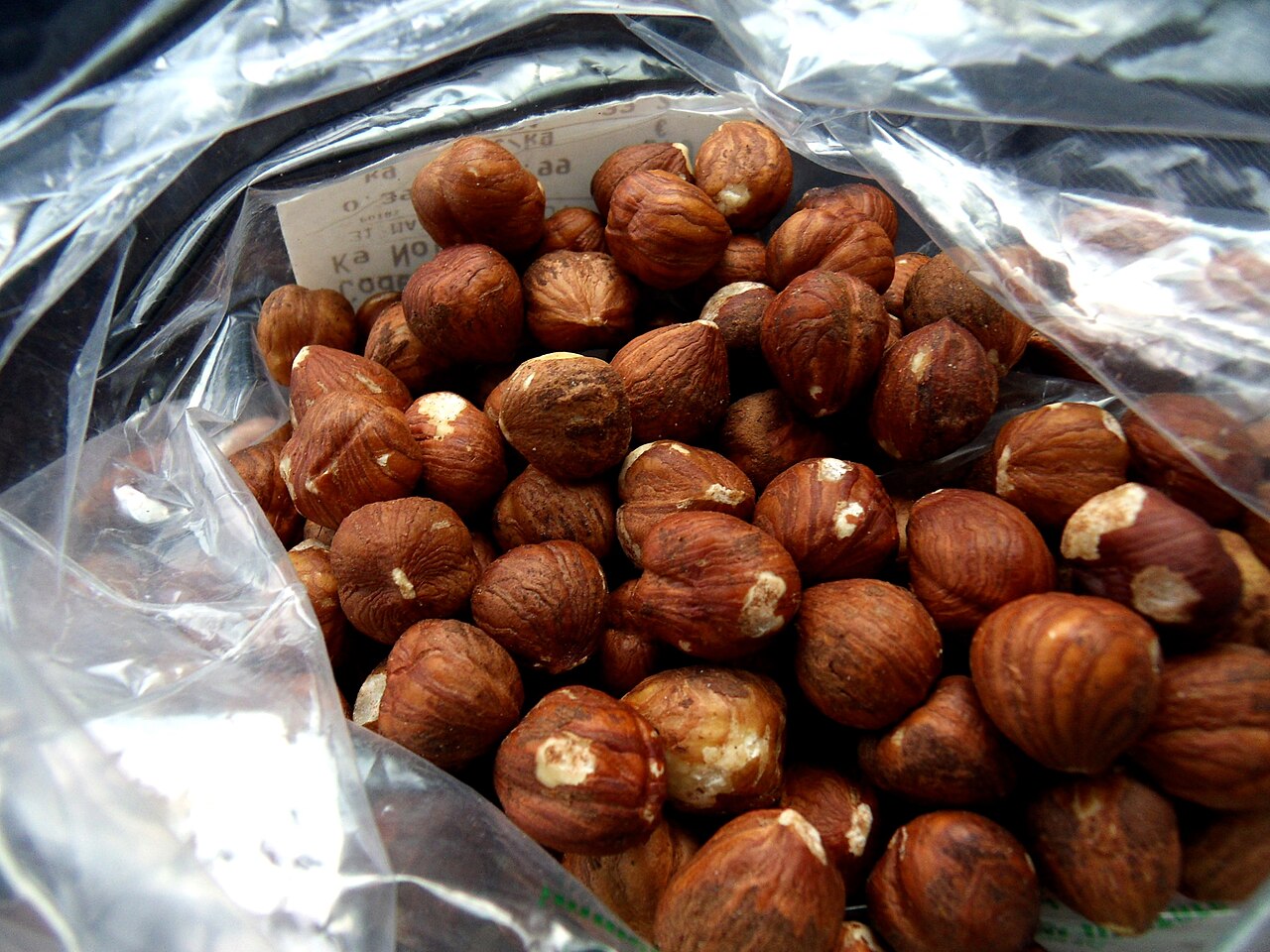
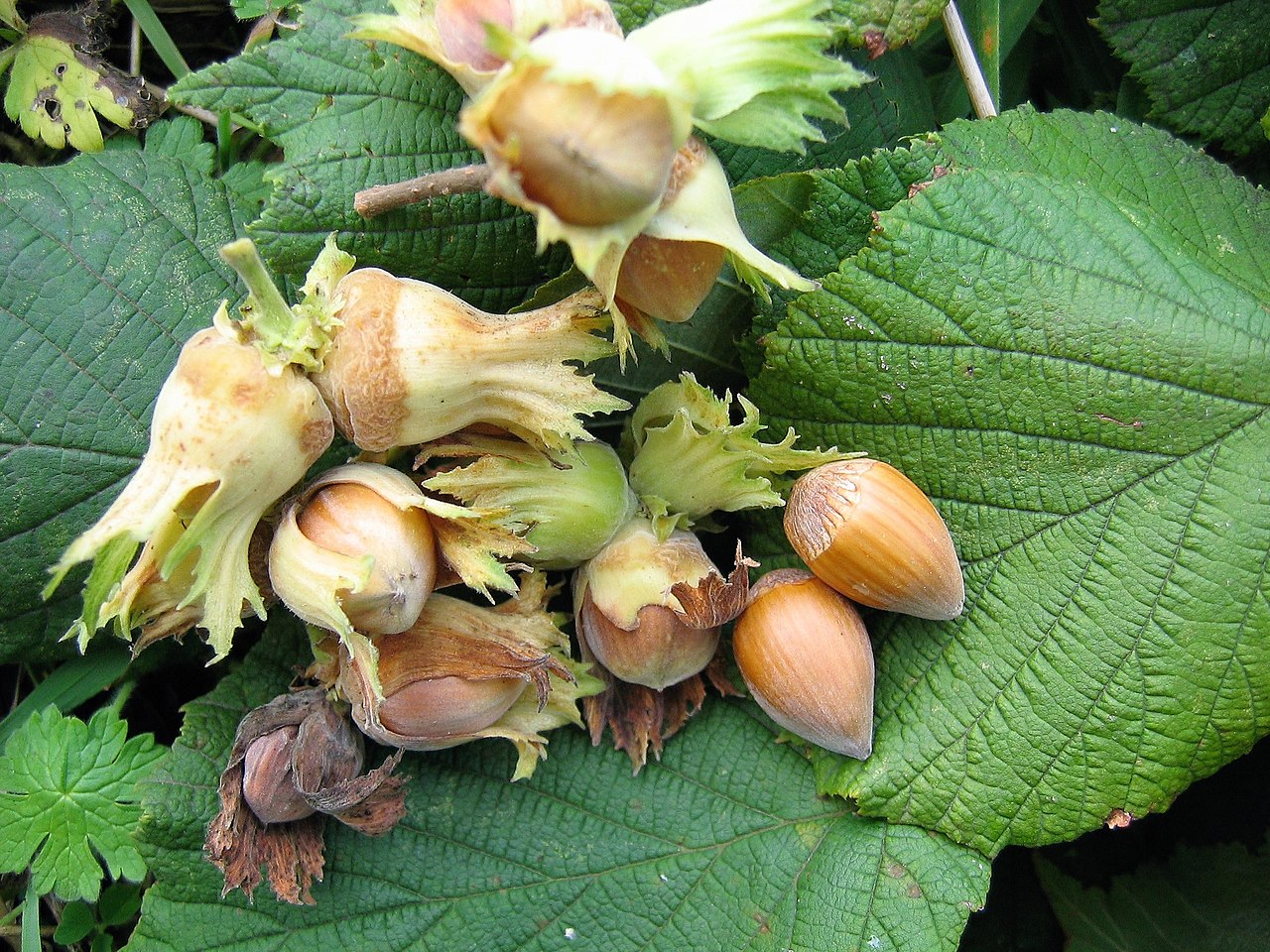
Kernel yield is the ratio of kernel mass to the total fruit mass (in the husk), expressed as a percentage. It is one of the main indicators of hazelnut quality and market value — the higher the kernel yield, the more usable kernel we obtain from the same mass of harvested crop.
- The highest quality cultivars have a kernel yield in the range of 43–50 % (Miljković, 2018.).
- In Croatian trials, the average kernel yield of individual cultivars ranged approximately 42.4–43.6 %: highest for the Istarski duguljasti cultivar (around 43.5 %), similar for Hale's (around 43.4 %), and lowest for Rimski (around 42.4 %). According to research by P. Vujević, the kernel yield for Rimski is also cited in a wider range of 39–46 %, depending on the year.
- In the USA, hazelnuts with a kernel yield above 50 % achieve a "premium" price (Mehlenbacher and Olsen, 1997.).
Orientational ranking of kernel yield from literature (Modić et al., 1975.; 5 = most desirable):
| Rating | Kernel Yield |
|---|---|
| 5 (best) | > 49 % |
| 4 | 46–49 % |
| 3 | 43–46 % |
| 2 | 40–43 % |
| 1 (worst) | < 40 % |
Practical: Kernel yield depends on cultivar, year, pollination, and kernel plumpness. Empty and shriveled kernels reduce kernel yield, so regular cropping and good pollination directly affect profitability. Average annual yields cited in literature are around 2,500 kg/ha.
Parent article: Fruit quality and assortment (overview of cultivars and harvest/drying).
Phenology and Heat Units
BBCH (BBCH Scale)
BBCH is an international decimal system for coding phenological (developmental) stages of plants. The abbreviation stands for Biologische Bundesanstalt, Bundessortenamt und CHemische Industrie. The entire development cycle is divided into 10 main stages, numbered 0–9, each further detailed with secondary stages (two-digit codes for flowering and fruit development, and three-digit codes).
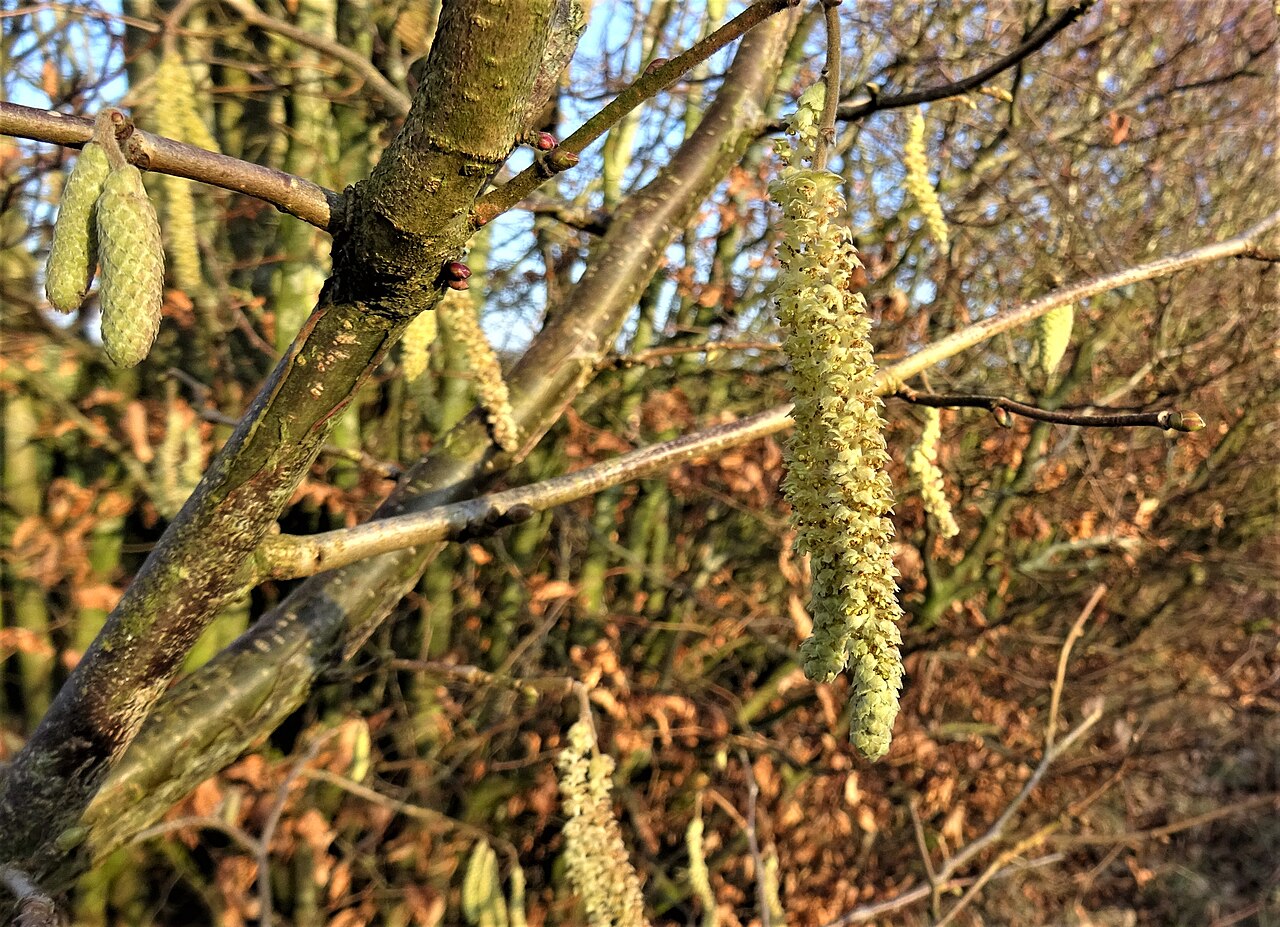
An adapted BBCH scale has been proposed for hazelnut (e.g., for the reference cultivar Barcelona; Paradinas et al., 2022.; Taghavi et al., 2022.). It covers eight of the ten main stages:
| Main Stage | Description |
|---|---|
| 0 | Bud development (dormancy, swelling) |
| 1 | Leaf development |
| 3 | Shoot elongation |
| 5 | Appearance of male catkins (aments) |
| 6 | Flowering (male and female) |
| 7 | Fruit development |
| 8 | Fruit ripening |
| 9 | Leaf senescence / harvest |
Practical: BBCH is a "common language" for determining the correct timing for protection, fertilization, or harvest. When a product label or advice says "apply at BBCH stage 6x," it means during flowering. Recording BBCH stages year after year helps predict work schedules for your location.
Parent article: Hazelnut phenology and phenological calendar.
GDD / Heat Units (Growing Degree Days, sums of effective temperatures)
GDD is a cumulative measure of accumulated heat that helps predict the onset of developmental stages. It is calculated as the sum of daily differences between the average daily temperature and the base temperature (the threshold below which the plant practically does not grow). Combined with BBCH, it allows prediction of the dates of appearance of specific phenophases based on past and expected weather conditions.
- The term base temperature (English: base temperature) is the lower threshold — the value depends on the species and model.
- A related term is VPG (vertical phenology gradient), which describes the shift of phenophases with altitude (e.g., a delay of a few days for every 100 m of elevation).
Practical: GDD is useful for "early warning" — when a certain heat sum is accumulated, a specific stage (e.g., flowering or ripening) is near. This helps in planning pest protection, whose development is also linked to heat.
Parent article: Climate, heat, and phenological forecasting.
Chill and Winter Dormancy
CH — Chill Hours (chill hours) and CU — Chill Units (chill units)
Deciduous fruit trees, including hazelnut, require a certain amount of winter chill to break dormancy and normally begin flowering and leafing out in spring. This requirement is expressed in two ways:
- Chill hours (CH, chill hours) — the simplest model: it sums the number of hours when the temperature is within a specific range. For hazelnut, the range 0–7 °C is often used (Mehlenbacher, 1991.). There are also simple "below 7.2 °C" (45 °F) models.
- Chill units (CU, chill units) — more advanced models (e.g., Richardson/Utah) value hours differently depending on temperature: optimal temperatures contribute fully, while excessively high temperatures (e.g., > 16 °C) may contribute negatively (canceling out accumulated chill). There is also the Dynamic model with the unit chill portions.
Example conversion of hourly temperature to chill units (adapted from literature for hazelnut; values are illustrative):
| Hourly Temperature (°C) | Chill Unit |
|---|---|
| < 1.5 | 0 |
| 1.5 – 2.5 | 0.5 |
| 2.5 – 9.2 | 1.0 |
| 9.2 – 12.5 | 0.5 |
| 12.5 – 16.0 | 0 |
| 16.0 – 18.0 | −0.5 |
| > 18.0 | −1.0 |
Practical: In mild winters (increasingly common with climate change), simple chill hour models can be misleading because they do not penalize warm hours. When selecting a cultivar for warmer sites, pay attention to the chill requirement to avoid uneven or delayed spring growth.
Parent article: Winter dormancy, chill requirement, and frost resistance.
Water, Irrigation, and Physiology
ETc and Kc (Crop Evapotranspiration and Crop Coefficient)
Hazelnut water demand is based on evapotranspiration — the sum of evaporation from the soil and transpiration from the plant. The basic equation is:
ETc = ETo × Kc
- ETo (Reference Evapotranspiration) — the climatic "demand" for water for a reference grassy surface; calculated from meteorological data (e.g., Penman-Monteith method) and usually obtained from an agrometeorological station.
- ETc (Crop Evapotranspiration) — the actual water demand of a mature hazelnut orchard in good condition.
- Kc (Crop Coefficient) — a dimensionless multiplier that distinguishes hazelnut from reference grass. It changes throughout the season (beginning, development, mid-season, end) and depends on cultivar, tree size, canopy density (leaf area!), and microclimate.
Example monthly Kc values for hazelnut from a Spanish trial (Mas de Bover, IRTA); informative:
| Month | Kc |
|---|---|
| March | 0.30 |
| April | 0.40 |
| May | 0.60 |
| June | 0.65 |
| July | 0.85 |
| August | 0.75 |
| September | 0.63 |
Related terms:
- Kcb (Basal Crop Coefficient) — the part of Kc that represents mainly transpiration (soil surface is dry). It is related to vegetation amount. For bare soil in orchards, Kcmin ≈ 0.05 is used.
- Ks (Stress Coefficient) — ranges from 0 to 1; reduces ET when soil water is insufficient (water stress).
- Ke / Kr (Reduction Coefficients) — take into account the proportion of the area actually covered by the crop (e.g., a young orchard does not cover the entire planting spacing).
Practical: Standard Kc values are a good starting point, but they should be "calibrated" by measuring soil moisture or leaf/stem water potential. If irrigation systematically overestimates or underestimates actual demand, the coefficient should be adjusted to the location.
Parent article: Irrigation and water regime of the orchard.
VPD (Vapour Pressure Deficit)
VPD is a measure of air "dryness" — the difference between the amount of moisture the air can hold at a given temperature and the amount it actually contains. Higher VPD means the air "pulls" more water from the plant (stronger transpiration and stress), while lower VPD means moister air. VPD is important because it directly affects stomatal opening, transpiration, and water demand, and is used in irrigation and greenhouse models.
Practical: At high temperatures and dry winds (high VPD), water needs increase even when ETo appears moderate; windbreaks can mitigate this effect.
LAI (Leaf Area Index)
LAI is the ratio of total leaf area to the ground area covered by the plant (dimensionless). The denser and more developed the canopy, the higher the LAI. It is related to transpiration and the crop coefficient — for example, the condition of "full cover" in irrigation models is often set at LAI > 3.
Practical: LAI increases as the orchard matures; a young orchard has a low LAI and lower water demand per hectare than an orchard in full production.
Source–Sink
A concept from plant physiology: "sources" (source) are organs that produce or release assimilates/nutrients (e.g., mature leaves), while "sinks" (sink) are organs that consume or store them (growing fruits, roots, buds). The balance of sources and sinks explains why, for example, too many fruits with insufficient leaf area result in poorer kernel filling (lower kernel yield) or why strong vegetative competition can weaken cropping.
Practical: Pruning, thinning, and fertilization actually manage the source-sink relationship — the goal is to have enough leaf mass ("sources") to quality-fill the fruits ("sinks").
Cultivar Selection and Crop Requirements (Summary)
Based on literature for Croatian conditions, remember the following approximate figures related to the concepts mentioned above:
| Indicator | Approximate Value | Note |
|---|---|---|
| Kernel Recovery of Quality Cultivars | 43–50 % | depends on cultivar and year |
| Average Yield | ~2,500 kg/ha | at full production |
| Optimal Soil pH | 5.5–7.5 | good humus supply |
| Optimal Precipitation | ~700 mm/year | with irrigation as needed |
| Number of Nuts per Cluster | 4–6 | cultivar trait |
These values are informative and derived from a collection of literature; verify them for your specific cultivar and location.
Administration and Tools (Croatia / EU)
ARKOD
ARKOD is the Croatian national system for recording agricultural land use (register of agricultural parcels). ARKOD graphically maps and records the agricultural areas you use — this is a prerequisite for applying for subsidies and serves as the single reference layer for "where and how much" is grown.
Practical tip: Before establishing an orchard and before applying for subsidies, check that the parcel is correctly registered in ARKOD (crop, area, usage).
AGRONET
AGRONET is the web application of the Agency for Payments in Agriculture, Fisheries and Rural Development (APPRRR) through which farmers submit subsidy applications, maintain records, and access their data (including ARKOD).
Practical tip: Deadlines for submitting the single application and making amendments are strict; follow official APPRRR notifications.
AL-method (ammonium-lactate)
The AL-method is the standard laboratory method for chemical soil analysis used to determine plant-available phosphorus (P₂O₅) and potassium (K₂O) via ammonium lactate extraction. AL-analysis results form the basis for fertilization recommendations.
Practical tip: Soil analysis before planting (and periodically thereafter) using the AL-method, combined with leaf analysis, is the foundation of rational and economical fertilization. Always adjust fertilizer doses based on analysis results, not on flat-rate assumptions.
Source article: fertilization, soil and leaf analysis.
Quick Reference Table of Abbreviations
| Abbreviation / Term | Full Name | Brief Description |
|---|---|---|
| Kernel Recovery | kernel recovery | % kernel in total nut mass (quality/price) |
| BBCH | Biol. Bundesanstalt… scale | code for phenological stages 0–9 |
| GDD | Growing Degree Days | accumulated heat, phase forecasting |
| Base Temp. | base temperature | growth threshold for GDD |
| CH | chill hours | hours of cold (e.g., 0–7 °C) |
| CU | chill units | chill units (Utah/Dynamic model) |
| ETo | reference evapotranspiration | climatic water requirement |
| ETc | crop evapotranspiration | ETo × Kc = orchard requirement |
| Kc / Kcb | crop coefficient / basal | multiplier to convert ETo → ETc |
| Ks | stress coefficient | ET reduction under water deficit |
| VPD | vapor pressure deficit | "dryness" of air, affects transpiration |
| LAI | leaf area index | canopy density (m² leaf / m² soil) |
| Source–Sink | source–sink | production vs. consumption of assimilates |
| AL-method | ammonium-lactate | soil P and K analysis for fertilization |
| ARKOD | parcel register (HR) | agricultural land record |
| AGRONET | APPRRR application | submitting subsidy applications |
Common Mistakes and Recommendations
- Confusing kernel recovery with yield. Kernel recovery is quality (percentage of kernel), while yield is quantity (kg/ha). High yield with low kernel recovery may be less profitable than moderate yield with high kernel recovery.
- Relying solely on chill hours in mild winters. Simple CH models do not penalize warm hours; for warmer locations, CU / Dynamic models are more reliable.
- Using "textbook" Kc values without calibration. Kc depends on cultivar, orchard age, and canopy — verify by measuring soil moisture.
- Neglecting administration. Incorrect ARKOD registration or missed deadlines in AGRONET can block subsidies regardless of the agronomic quality of the orchard.
- Fertilizing "by eye". Without soil AL-analysis and recommendations, it is easy to over- or under-dose nutrients.
Sources
This article is an AI summary compiled from an internal literature collection on hazelnuts (RAG corpus) and public sources. Main sources used:
- Miljković, I. et al. — Technological and Economic Characteristics of Hazelnut Cultivation (2018.) — kernel recovery, yields, fruit quality. https://doi.org/10.46584/lm.v36i2.1141
- Ministry of Agriculture of the Republic of Croatia — Hazelnut Cultivation: Guide for Growers (2024.) — cultivars, kernel recovery, ecological requirements.
- Environmental Impact Assessment – Multi-year hazelnut and plum orchards, Grubišno Polje (2020.) — comparison of kernel recovery by cultivar. https://bbz.hr/doc/uprava/elaborat_zastite_okolisa_visegodisnji_nasadi_lijeske_i_sljive.pdf
- Business Plan for Hazelnut Seedling Production (2019.) — cultivar selection and kernel recovery.
- Technology of Harvest, Drying, and Storage of Hazelnuts: Literature Review (2022.) — kernel recovery ranking, quality parameters.
- Paradinas A. et al. (2022.) — Phenological growth stages of 'Barcelona' hazelnut described using an extended BBCH scale, Scientia Horticulturae 296. https://doi.org/10.1016/j.scienta.2022.110902
- Taghavi T. et al. (2022.) — Development of a uniform phenology scale (BBCH) in hazelnuts, Scientia Horticulturae 296. https://doi.org/10.1016/j.scienta.2021.110837
- Phenological growth stages of 'Barcelona' hazelnut — description of BBCH scale structure. https://www.sciencedirect.com/science/article/abs/pii/S0304423822000280
- Development of a uniform phenology scale (BBCH) in hazelnuts (ScienceDirect). https://www.sciencedirect.com/science/article/pii/S0304423821009444
- Chilling requirement — Wikipedia (CH/CU models, Utah, Dynamic). https://en.wikipedia.org/wiki/Chilling_requirement
- Chilling-Hour Requirements of Fruit Crops — Mississippi State University Extension. https://extension.msstate.edu/publications/chilling-hour-requirements-fruit-crops
- About Degree Days — Cornell NEWA (definition of GDD, base temperature). https://newa.cornell.edu/about-degree-days
- Assessment of the Midseason Crop Coefficient (Water, 2023.) — Kc/Kcb, LAI > 3. https://doi.org/10.3390/w15091683
- Efecto del volumen de suelo húmedo en riego localizado (ITEA, 2015.) — monthly Kc values for hazelnut. https://www.aida-itea.org/aida-itea/files/itea/revistas/2015/111-2/109-126%20ITEA%20111-2.pdf
- Development of an MSE Multi-Peril Risk Management Concept – Azerbaijan (2022.) — conversion of temperatures to chill units.
- APPRRR — official information on ARKOD and AGRONET systems. https://www.apprrr.hr/
Note: Numerical data (kernel recovery, Kc, chill units) are informative and depend on cultivar, location, year, and current regulations — consult advisory services and official sources before application.