Pesticide Application Techniques and Sprayer Calibration
Content generated by artificial intelligence — verify before application
This article was automatically compiled from a collection of hazelnut literature using artificial intelligence and may contain errors or outdated information. It serves as a starting point for further research, not as professional advice. Dosages, products, and timing are informative and depend on the cultivar, location, and applicable regulations — always consult with an advisory service and official sources before application.
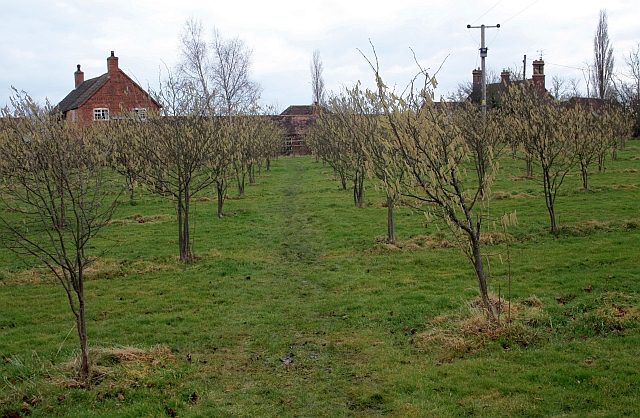
The best plant protection product yields poor results if it does not reach the target effectively. In hazelnut orchards, where canopies quickly become large and dense, and harvesting is conducted from the ground, the success of treatment depends not only on the choice of the product but primarily on spraying technique: proper timing, uniform coverage of the entire canopy, correctly calibrated sprayer, minimal drift outside the target area, and consistent adherence to pre-harvest intervals and safe application rules. This article links these elements into a practical procedure for producers, with informative figures from hazelnut literature and recognized guidelines for orchards.
Why Application Technique Determines Efficacy
The success of a single treatment is influenced by a number of factors: product type, dosage, and timing, the biology of the target organism, weather conditions, and — often underestimated — the quality of the spraying execution itself. Hazelnut protection literature emphasizes that the efficacy of an applied treatment depends on equipment calibration and that the condition of the device should be checked before every treatment: are there cracks and leaks, and are nozzles (spray tips), filters, and pressure regulators in proper working order? The goal is to apply the product evenly and precisely, at the appropriate speed and pressure.
In other words, two questions are key:
- How much product and water reach the hectare (this is resolved by calibration).
- Where it reaches — on the target surface in the canopy, not into the air or onto the soil (this is resolved by spraying technique and drift reduction).
Spraying Technique and Timing
Timing According to Phenophase and Pest Threshold
Treatments are not performed according to a calendar "just in case," but rather according to hazelnut phenophase, the biology of the target organism, and the pest threshold. From the hazelnut corpus, the following approximate periods stand out:
| Period / Phenophase | Typical Purpose | Note |
|---|---|---|
| Late autumn (after most leaves have fallen) | Copper fungicide — canker, bacterial diseases | One of three recommended times for copper |
| Late winter / bud swell (after flowering) | Copper fungicide, winter treatment against overwintering pests | Dormancy reduces risk for bees and leaves |
| Development of first leaves and flowering | Fungicides against fruit rot, leaf spot, monilinia | Preventive, before infection |
| Second half / end of May (with sufficient moisture) | Copper fungicide + organic fungicides | Third time for copper; moisture favors infection |
| June onwards, as needed | Leaf spots, powdery mildew, bugs, aphids | According to monitoring and pheromone traps |
The pest threshold for some pests is stated quantitatively — for example, an infestation level of 10–15 % as a guide for intervention, with a warning that uncontrolled attacks can lead to yield losses of up to 70 %. These values are informative and depend on the pest, cultivar, and location.
Interval Between Treatments
In preventive fungicide programs, repeated spraying usually follows at intervals of about 10–12 days, or according to disease development and the amount of new precipitation that washes away the protective layer. The number of permitted applications per season is prescribed by the label of each product (e.g., labels "2x", "3x", "8x" in tables of permitted products).
Conditions for Quality Execution
- Time of day: Spray during calm, cooler periods (early morning or evening), with low wind speed and without direct strong sunlight that accelerates droplet evaporation.
- Machine travel speed: Slower passes improve penetration and coverage of the inner parts of the canopy; driving too fast leaves "shadows" without deposit. On the other hand, driving too slowly wastes too much product and can increase drift. A balance must be found and this speed maintained throughout the treatment.
- Stable pressure: Changes in pressure alter flow rate and droplet size, so any change should be followed by a re-check.
Canopy Coverage
Poor coverage — especially on larger, denser bushes — is the main cause of weak product performance. The goal is maximum deposit on all parts of the canopy, including the inner and upper sections, not just the outer edge.
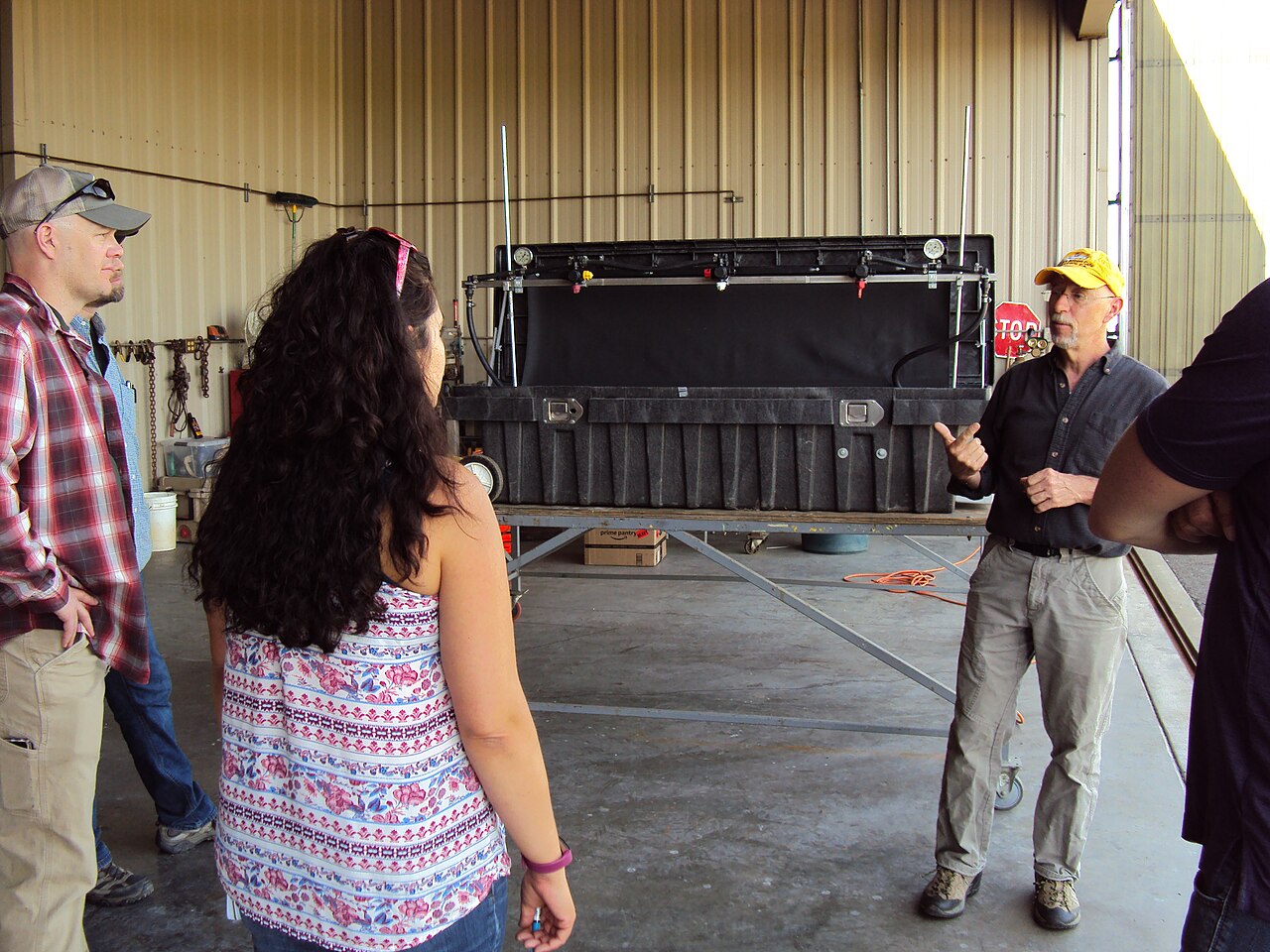
Measuring Coverage with Water-Sensitive Paper
Coverage verification is best objectified using yellow water-sensitive paper. In demonstrations of protecting commercial hazelnut orchards with large canopy volumes, nozzle settings and machine speed were combined with control of spray distribution using these papers. Procedure:
- Place papers at multiple heights and depths in the canopy (outer edge, middle, top, opposite side).
- Perform a test pass and read the droplet traces.
- Look for dense, uniform traces without gaps and without merging (excessive amount).
The target figure from orchard guidelines for most insecticides and fungicides is approximately 85 medium droplets per cm² and 10–15 % coverage on 80 % of target surfaces. These figures are informative; the water-sensitive paper primarily serves to identify where coverage is lacking so that air direction, nozzle position, and speed can be adjusted accordingly.
Adjustments That Improve Coverage
- Directing air flow (deflectors) towards the height and shape of the canopy — close the jet that blows above the canopy "into the void."
- Position and number of active nozzles adjusted to the bush profile; lower nozzles for the lower part, upper nozzles for the top.
- Fan speed sufficient to carry droplets through the canopy, but not so strong that it ejects them from the other side (loss and drift).
- Droplet size: finer droplets cover better but drift more easily; coarser droplets drift less but cover poorly. A compromise is chosen based on conditions.
Sprayer Calibration
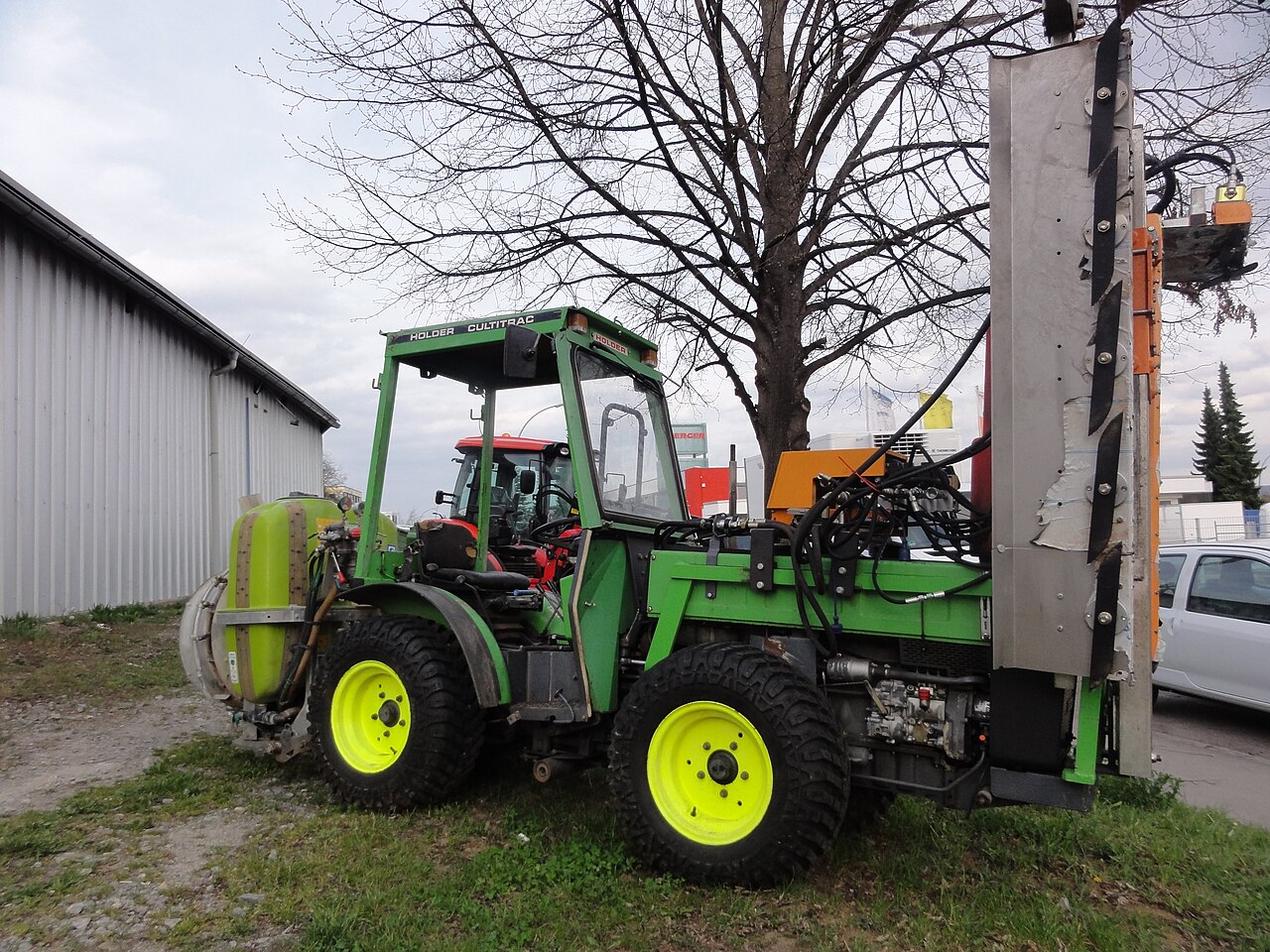
Calibration is the process of measuring and adjusting the actual amount of spray applied per unit area. Without it, the dosage on the label remains just a number on paper. Calibration should be repeated with every change in speed, pressure, nozzles, or planned water volume.
Three Variables That Determine the Rate
The spraying rate (l/ha) links three measurable variables:
- Nozzle flow rate (l/min) — measured by catching water from each nozzle for 1 minute and calculating the average per nozzle and the total flow for both sides.
- Travel speed (km/h) — actually measured in the field, not from the tachometer.
- Row spacing (m) — the width covered by one pass.
From this, liters per hectare are calculated, and the amount of product in the tank is obtained from the expression:
Product per tank = (Tank volume × dosage per ha) / spraying rate per ha
The same logic is cited in manuals: the measured rate is compared with the recommended one, and if the actual rate deviates by ±5 % or more from the target, calibration is repeated by adjusting speed, pressure, or nozzles.
Step-by-Step Calibration Procedure
- Inspection and cleaning — check for leaks, filters, manometer, and correctness of all nozzles; replace worn ones.
- Measure actual speed on a known section at the working RPM.
- Measure flow of each nozzle for 1 minute at working pressure; equalize and replace nozzles that deviate.
- Calculate rate (l/ha) from flow, speed, and row spacing.
- Compare with target and adjust pressure / speed / nozzles until deviation falls below ±5 %.
- Check coverage with water-sensitive paper and adjust air direction if necessary.
- Calculate and weigh product per tank and document settings.
Informative Water Volumes and Pressure
| Parameter | Approximate Value | Source / Note |
|---|---|---|
| Water volume (sprayer, dense canopy) | ~1500 l/ha | from hazelnut orchard recommendations; depends on canopy volume |
| Water volume (atomizer, Turkish data) | ~100 l/dekar (≈1000 l/ha) | converted from dekar |
| Water volume (classic sprayer) | ~200 l/dekar (≈2000 l/ha) | higher consumption than atomizer |
| Pressure for antidrift / air-induction nozzles | ≥ 30 psi (≈2 bar) | lower pressure disrupts the atomization of these nozzles |
Figures are informative and start from canopy volume (TRV approach — the larger and denser the canopy, the more water). The product label and local practice take precedence.
Precise Calibration and New Technology
For controlling root suckers with a tractor-mounted sprayer, a constant amount of herbicide per plant is often applied, ignoring actual differences in the number of suckers. A newer, environmentally friendly approach (developed in the EU PANTHEON project, Horizon 2020) calibrates the dosage according to the actual number of suckers per plant — an example of how precision agriculture reduces consumption in large hazelnut orchards.
Drift Reduction
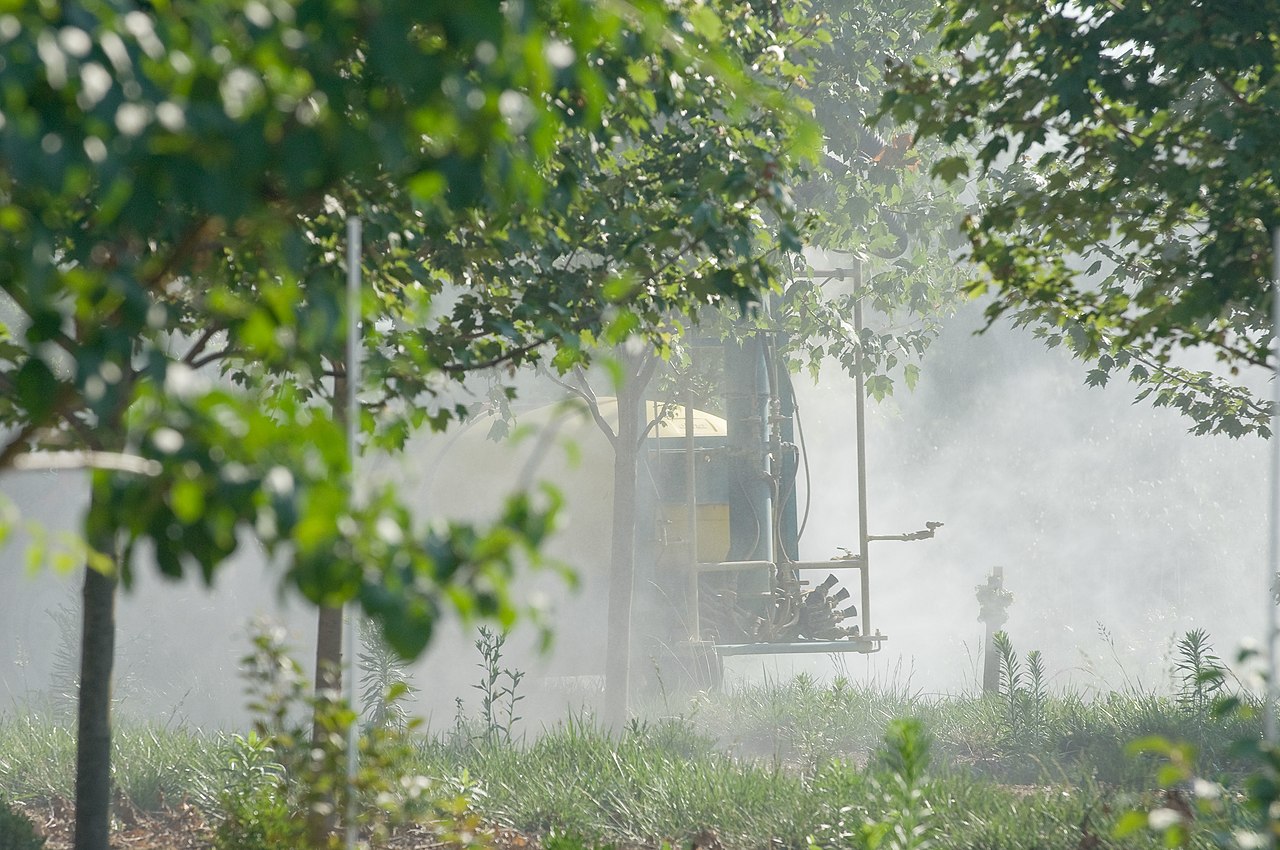
Drift is the portion of spray that does not reach the target but is carried by the wind outside the orchard. This is simultaneously a loss of money, a risk to the environment, and a potential violation of regulations (protection of neighboring crops, water, and residential zones).
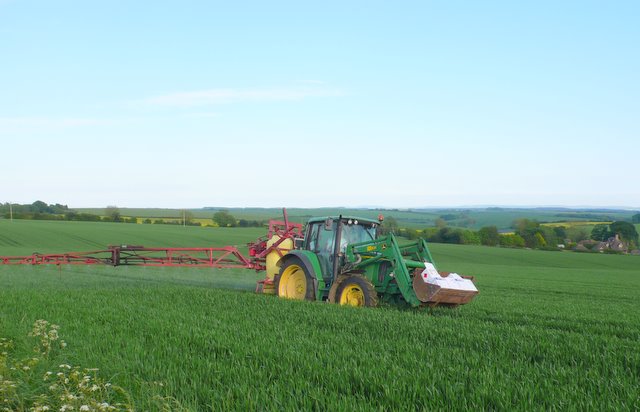
Practical measures to reduce drift:
- Monitor wind: place wind indicator ribbons in the canopy and do not spray in strong or changing winds; work in calm, cooler parts of the day.
- Antidrift nozzles (air-induction) that create coarse droplets resistant to drift; pay attention to the minimum pressure required for them.
- Close air that "misses" the target — turn off jets above and beside the canopy, especially on outer rows.
- Adjust speed — too weak air flow and too high driving speed increase the output of droplets outside the target.
- Strip spraying instead of full surface area for herbicides: the dose per hectare of the orchard is then lower (often approximately 1/3 of the registered dose for full surface area), with less product in circulation.
- Buffer zones towards water bodies, neighboring plots, and sensitive areas, in accordance with regulations and the label.
Withdrawal Periods and Safe Application
The withdrawal period is the minimum number of days that must elapse between the last application and harvest. For hazelnuts, withdrawal periods vary significantly by product — ranging from "no withdrawal period" for some microbiological products to 60 days for certain fungicides. The following table provides an informative overview of approved products listed in the literature (source: Šubić, 2019):
| Product | Purpose | Application (informative) | Withdrawal Period |
|---|---|---|---|
| Bordeaux mixture WP | Fruit rot, bacterial canker | 0.5% (2x) | 15 days |
| Neoram WG | Canker | 0.25–0.45% | 20 days |
| Champion 50 WG | Fungal and bacterial diseases | 2–3 kg/ha (3x) | 21 days |
| Cuprablau-Z WP | Bacterial spot, canker | 2 kg/ha (2x) | K = OVP* |
| Cosavet DF | Powdery mildew | 0.2% (4x) | 5 days |
| Microthiol Special Disperss | Powdery mildew, hazelnut eriophyid mite | 3–5 kg/ha (8x) | 5 days |
| Signum DF | Leaf spot | 1 kg/ha (2x) | 28 days |
| Systhane 20 EW | Leaf spot, nut drying | 0.375 l/ha (3x) | 60 days |
| FitoBacillus / Fruttifolia | Defense activators | 2–5 l/ha | None |
*K = OVP: withdrawal period ensured by the timing of application because the product is approved for a limited number of applications (e.g., in autumn after harvest and leaf fall, and after winter pruning during bud swelling).
For copper fungicides, an additional restriction applies to the total quantity: no more than 6–8 kg/ha of pure active ingredient copper should be applied per year on the same area. For herbicides/desiccants, the withdrawal period in hazelnuts is, for example, 21 days (the same as for walnuts and almonds).
Verify all dosages and withdrawal periods on the label
The values provided are informative and taken from literature; the product label and valid approval decisions (in Croatia, the FIS database / Ministry of Agriculture) are authoritative. Approvals change, so a product that was once permitted may now be withdrawn.
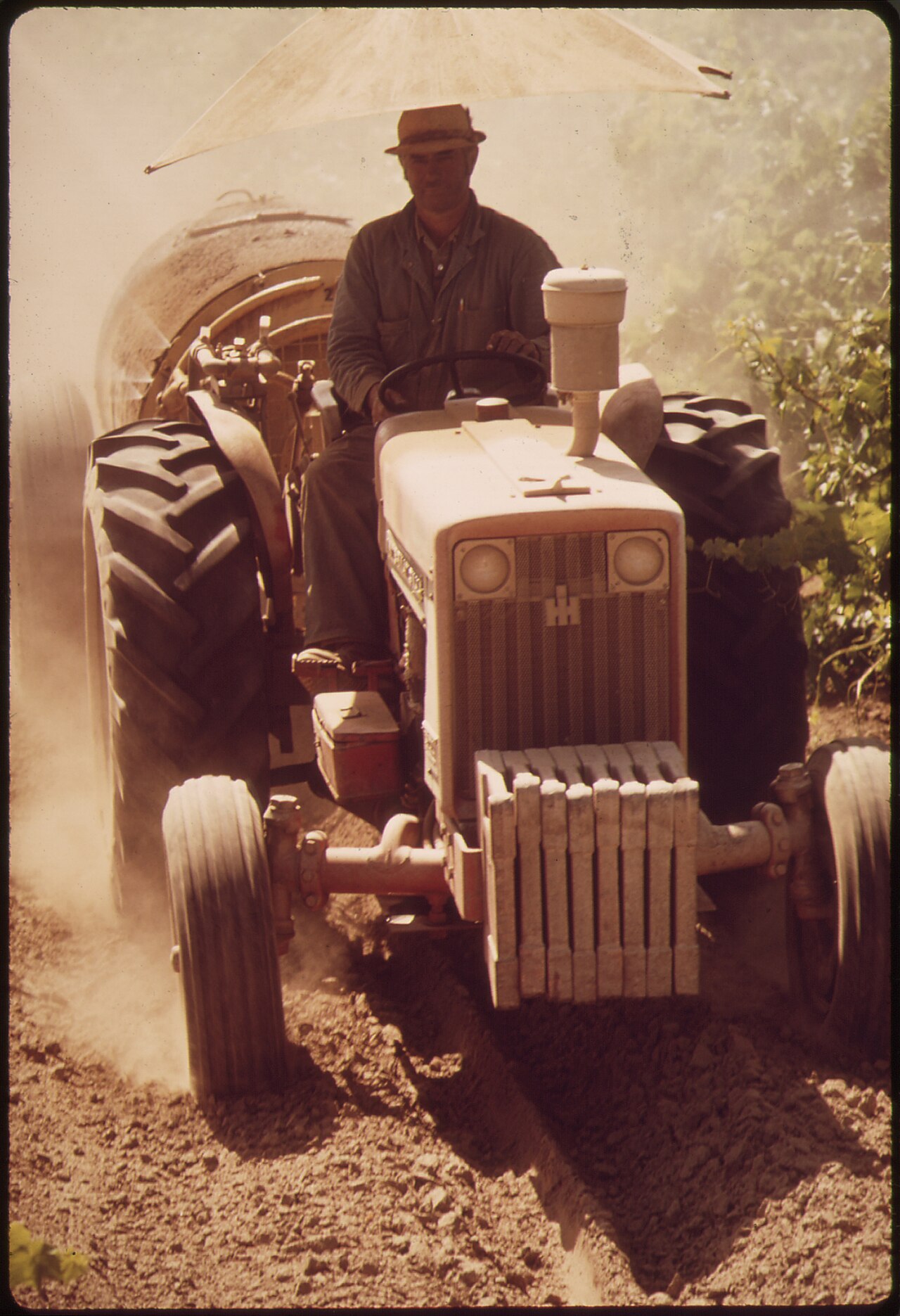
Rules for Safe Application
- Plant protection products (PPPs) must be applied strictly in accordance with the instructions on the label (dosage, number of applications, withdrawal period, bee protection, buffer zones).
- Wear required personal protective equipment (PPE) when preparing solutions and spraying.
- Maintain a record of PPP use and properly dispose of packaging waste.
- Comply with regulations on the sustainable use of pesticides (regular technical inspection of application equipment, operator competence).
- Protect pollinizers: avoid treatment during the flowering of neighboring crops and during bee flight periods.
Practical Recommendations and Common Mistakes
Recommendations
- Calibrate before the season and again whenever settings change; do not rely on last year's figures.
- Adjust water volume to the canopy volume (young orchards require less, mature dense canopies require more).
- Always perform a water-sensitive paper test before the first treatment of the season.
- Rotate active ingredients/mechanisms of action to prevent resistance.
Common Mistakes
- Spraying only the outer edge of the canopy — the interior remains unprotected.
- Driving too fast "to finish sooner" — results in poor deposit and coverage.
- Worn nozzles not replaced — flow rate can increase by 10–20% without being noticed.
- Spraying in the wind — visible drift and risk of damage to neighboring crops.
- Ignoring withdrawal periods and the number of permitted applications on the label.
- Measuring speed using the tachometer instead of actual field measurement.
Gallery
Sources
This article is an AI summary from a collection of hazelnut literature (internal RAG corpus) and public sources. Numerical data, dosages, and withdrawal periods are informative and subject to verification. Main sources used:
- Šubić, M. (2019.) — Diseases and Pests (Hazelnut) of Hazelnut — tables of approved fungicides, dosages, and withdrawal periods (Repository).
- Handbook for Hazelnut Protection (2020.) — equipment calibration, dosage and application timing, pest thresholds (PDF, corpus).
- Hazelnut Protection in Organic Production — copper and sulfur fungicides, timing and withdrawal periods (corpus).
- Validžić, T. et al. — What are the critical periods for hazelnut orchard protection? / Brown marmorated stink bug and bacterial canker of hazelnut — copper timing, control of spray distribution using water-sensitive papers — savjetodavna.mps.hr
- Calibration of Equipment for Applying Plant Protection Products for Fruit Trees (Syngenta) — measuring nozzle flow and averages per nozzle (corpus).
- Zirai mücadele alet ve makinalarının kalibrasyonu (2017.) — expression for product quantity per tank and the ±5% deviation rule (corpus).
- PANTHEON Project (Horizon 2020, grant 774571) — precise dosage calibration based on the number of shoots in hazelnut orchards.
- Herbicide and Desiccant (Belchim Crop Protection) — 21-day withdrawal period for hazelnut, strip spraying (~1/3 dosage) (corpus).
- Six Steps to Calibrate and Optimize Airblast Sprayers / Sprayers101 — meta-coverage (~85 drops/cm², 10–15%), water-sensitive papers, wind indicators — sprayers101.com
- Oregon State University Extension — Pest Management Guide for Hazelnuts — extension.oregonstate.edu
- Ohio State University Extension — Calibration of Orchard and Vineyard Sprayers (FABE-537) — ohioline.osu.edu
- Act on the Sustainable Use of Pesticides (NN 46/2022) — narodne-novine.nn.hr
Recommended equipment
🔎 backpack sprayer — Amazon →Affiliate links — we may earn a small commission at no extra cost to you.