Semi-mechanized harvest: backpack blowers/vacuums and shakers for small and medium orchards
Content generated by artificial intelligence — verify before application
This article was automatically compiled from a collection of hazelnut literature using artificial intelligence and may contain errors or outdated data. It serves as a starting point for further research, not as professional advice. Dosages, products, and timing are informative and depend on the cultivar, location, and applicable regulations — always consult with advisory services and official sources before application.
For most new Croatian hazelnut producers on areas of 1 to 3 hectares, harvest is the largest single labor cost of the year and the most common point where the orchard's economic calculation breaks or succeeds. Manual harvest is too slow and expensive, while a full mechanical setup (self-propelled harvester or tractor-mounted shaker + collector) is often financially unviable until the orchard reaches full production on a larger area. Between these two extremes lies semi-mechanized harvest — backpack and push/pull vacuums/blowers and lighter portable shakers — which represents the most relevant practical choice for small and medium orchards. This article explains how this equipment works, what output (kg/h) you can expect, how much it costs, what the losses are, and how to organize the harvest.
Why semi-mechanization, not manual or full mechanical harvest
In practice, hazelnuts are almost never harvested by picking the nuts directly from the shrub — the nut is harvested from the ground after it falls naturally from the husk when ripe. This is a key fact that shapes the entire harvest logic: the work consists of (1) dropping the nuts onto the ground and (2) collecting the nuts from the ground. Semi-mechanization accelerates precisely this second, slowest part.
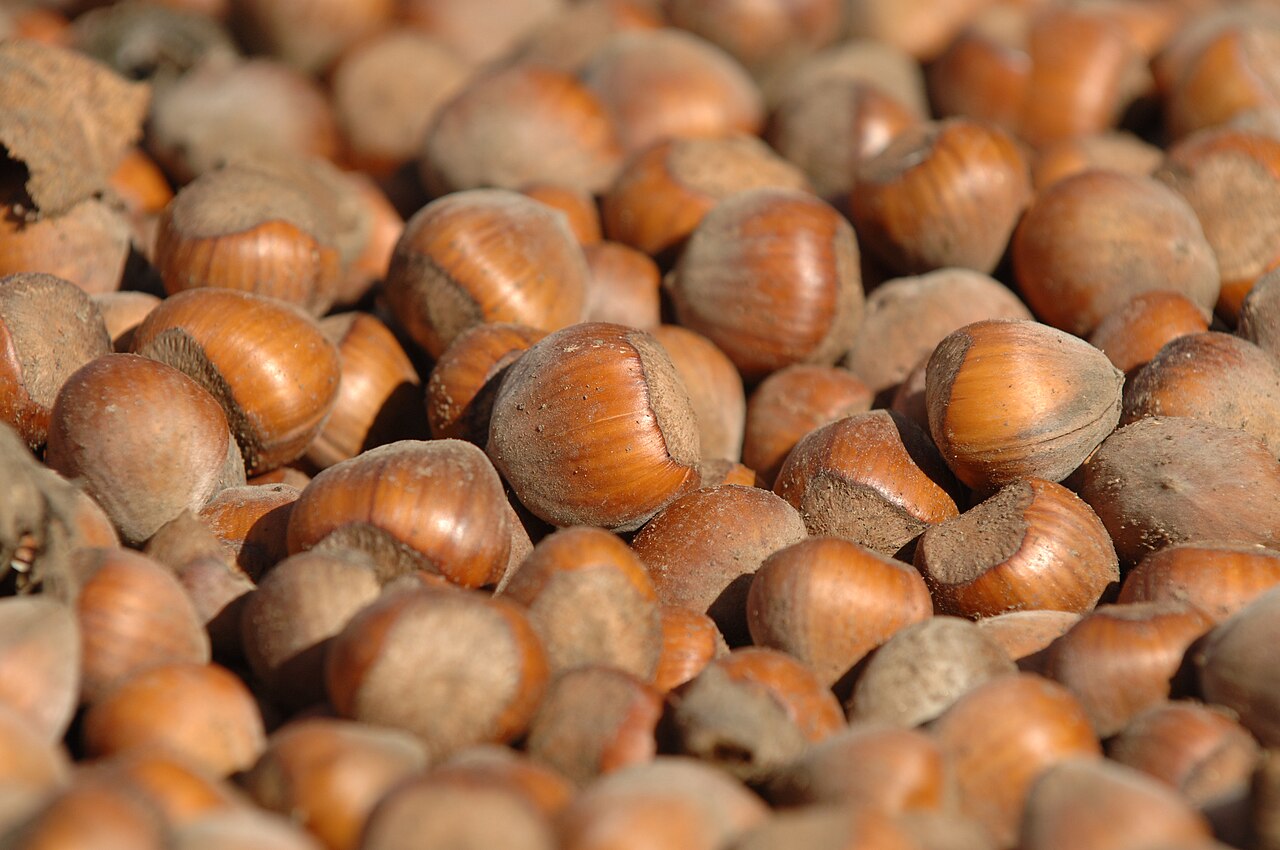
From our literature corpus, the range of outputs is clear:
| Harvest Method | Typical Output | Note |
|---|---|---|
| Manual harvest (basket, bending) | approx. 20–50 kg per worker per day | slow, expensive; applicable to homesteads and very small areas |
| Semi-mechanized (backpack/pulled vacuum) | tens to ~100 kg/h | one worker, low investment |
| Full mechanical (harvester / shaker+collector) | approx. 100 kg/h up to 500–1000+ kg/h | large investment, viable only on > 3 ha in full production |
The numbers speak for themselves. According to literature reviews, machine output can be around 100 kg/h (Miljković, 2018.) or even 120–500 kg/h (Modic, 1985.), while one worker collects only about 50 kg in a whole day manually (Bulatović, 1985.). Another source cites an even lower norm — about 20 kg per worker for eight hours, estimating that manual harvest burdens total income by 15–20 %.
At the same time, harvest costs in some calculations reach about 50 % of total production costs. Therefore, for an orchard of 1–3 ha, the goal is clear: get out of fully manual harvest, but without investing in a harvester worth tens of thousands of euros that will not be amortized.
Rule of thumb for selection
- up to ~1 ha: backpack vacuum + good soil preparation
- 1–3 ha: pulled (push/pull) vacuum and/or portable shaker, possibly harvester service for peak days
- > 3 ha in full production: seriously consider owning a harvester or permanent service
Backpack (backpack) vacuums
A backpack vacuum is a motorized blower/vacuum that the worker carries on their back and uses a hose to suck nuts from a prepared, raked row. This is the entry level of mechanization with the lowest investment and greatest flexibility — it passes under the canopy, around the trunk, and on terrain where wheeled machinery cannot go.
The most well-known representative on the market is the Italian Cifarelli (V1200 series). Characteristic data from public sources:
| Parameter | Value (Cifarelli V1200E) |
|---|---|
| Engine | two-stroke, ~77 cm³, approx. 5 HP (≈3.6 kW) |
| Weight | approx. 16.5 kg |
| Collection container | approx. 20 l |
| Suction pipe diameter | 75 mm (V1200E), 100 mm (wider EN version) |
| Purpose | hazelnut, walnut, almond, chestnut, acorn, olive |
The container is emptied via a lever while the machine is on the back, so there is no constant removal. The wider suction pipe (100 mm) provides higher flow but requires more power and a cleaner row. The approximate price of a new backpack vacuum is in the range of around 1,000–1,500 € and more, depending on the model and version (e.g., professional versions for chestnut/acorn are around 1,250 €).
Advantages of the backpack vacuum
- lowest investment among motorized equipment
- goes everywhere, independent of a tractor
- equally useful for collecting "leftover" nuts after the passage of larger machinery
Limitations
- physically demanding work (weight on back, noise, vibrations, two-stroke exhaust fumes)
- lower output than pulled machines
- very sensitive to soil cleanliness — in weedy or uneven rows, output drops, and too much debris is sucked up
Pulled and push/pull vacuums and collectors
The next step is small wheeled collectors that are pushed in front of themselves or pulled behind a small vehicle (mower, ATV, golf cart, small tractor). They lift nuts mechanically (brushes/wheels on wheels) or by suction, and deposit them into a basket.
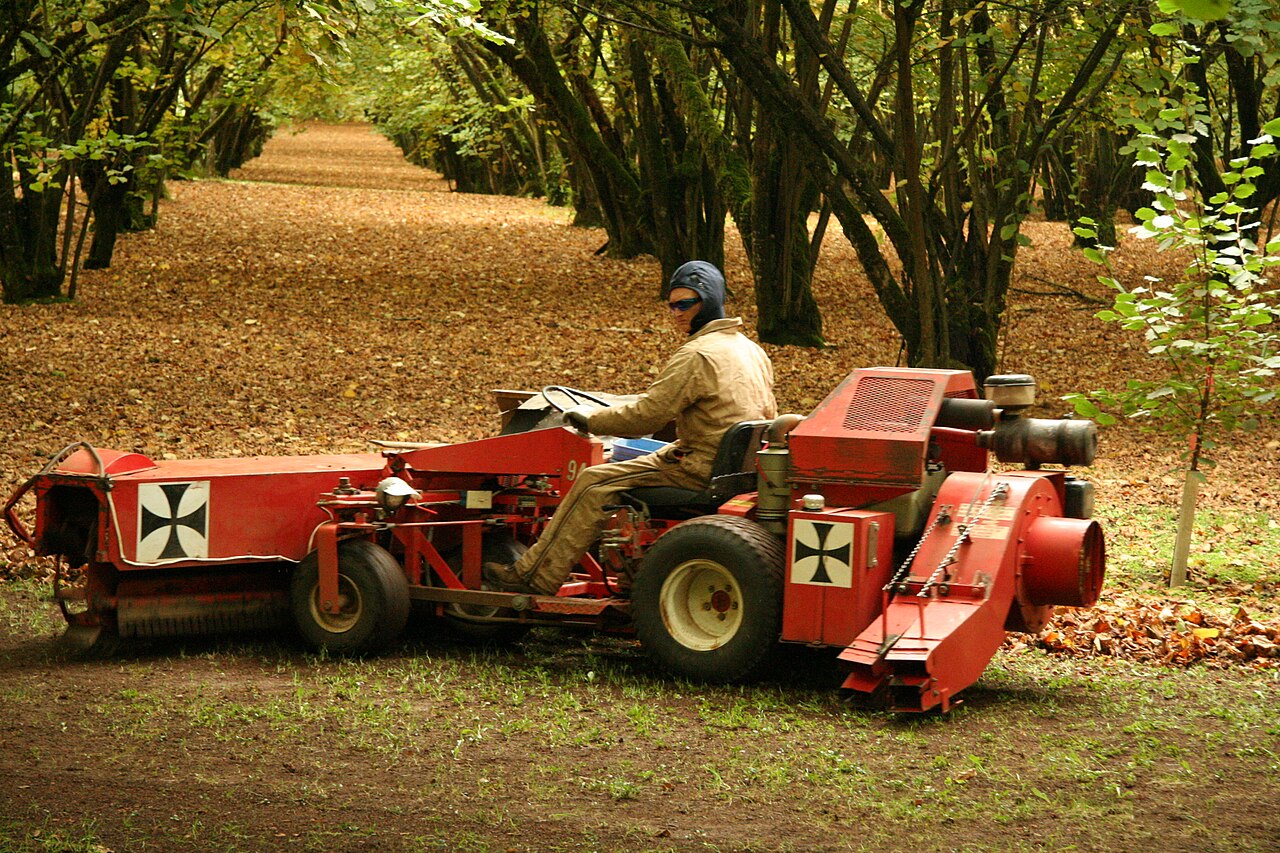
Types and examples from reviewed sources:
- Push/pull type "Bag-A-Nut": sweep widths e.g., 18", 21", or 36". The 36" model cleans a strip ~90 cm wide per pass and fills two interchangeable baskets (total ~38 l / 10 gallons). The approximate price of the 36" pulled model is around 730 USD — a very low investment. It operates mechanically (no engine), nuts fall directly into the basket, without bending or manual raking.
- Small self-propelled collectors (e.g., R06 type): engine ~25 HP, basket ~180 l, working width ~700 mm, row output ~4 h/ha, rated for orchards up to ~5 ha. Ideal for small and medium production.
- Suction extractors with 1–2 hoses operated by two people (e.g., EU 1000/2000, Chianchia) — a compromise towards full mechanization, small enough for small and medium tractors and access to hard-to-reach places.
This level of equipment provides significantly higher output than the backpack vacuum with still moderate investment, and does not require a large tractor.
Portable and lighter shakers
The other side of semi-mechanization is dropping nuts onto the ground. The most efficient way to harvest hazelnuts, according to the corpus, is using specially designed shakers — and the best results are given by tractor-mounted shakers that selectively, branch by branch, shake off the nuts. But for small orchards, there are lighter options:
- Manual/portable branch shaking (including light motorized shakers) — lower output than tractor shakers, but significantly better and safer than the worst practice: shaking with wooden sticks, which breaks and damages branches, twigs, and leaves, and should be avoided.
- Shaking onto a spread cloth/net under the canopy — nuts are shaken off and then collected from the cloth; since nuts do not ripen simultaneously, multiple passes are needed.
Selectivity is key
Shaking must be selective, branch by branch. Too rough shaking removes unripe nuts (poorer taste, lower kernel yield) and injures the bearing wood. Prematurely harvested nuts have poorer quality; early dropped ripe nuts do not lose quality by lying on clean, dry ground.
Technically, even lighter shakers involve serious mechanics (belt drives, eccentrics, bearings), so they must be maintained regularly — check belts, bolted connections, and lubricate before each working day.
Output, prices, and losses — overview for 1–3 ha
| Equipment | Investment (approximate) | Output | Operator |
|---|---|---|---|
| Backpack vacuum (Cifarelli V1200 etc.) | ~1,000–1,500 €+ | tens of kg/h | one worker |
| Pulled mechanical collector (e.g., 36") | ~700 € / 730 USD | significantly higher than backpack | mower/ATV/small tractor |
| Small self-propelled collector (R06 type) | higher mid-range | ~4 h/ha (one pass) | own engine |
| Harvester service | per hour/per ha | ~100 kg/h and more | service provider |
Prices are informative and depend on the model, supplier, exchange rate, and year — check with the supplier.
On losses. The main loss in ground harvest is not the equipment itself, but soil condition and timeliness. Typical sources of loss and kernel defects:
- Nuts lying too long on wet/weedy ground: risk of mold and — most seriously — aflatoxin contamination. Therefore, harvest frequently and ensure clean, dry ground.
- Sucking up too much debris (leaves, twigs, soil) on poorly prepared rows — reduces output and burdens processing.
- Hollow/damaged nuts from the hazelnut weevil (Curculio nucum) — with tractor harvest, the vacuum more easily blows out hollow nuts; with the backpack vacuum, this separation is done later during grading.
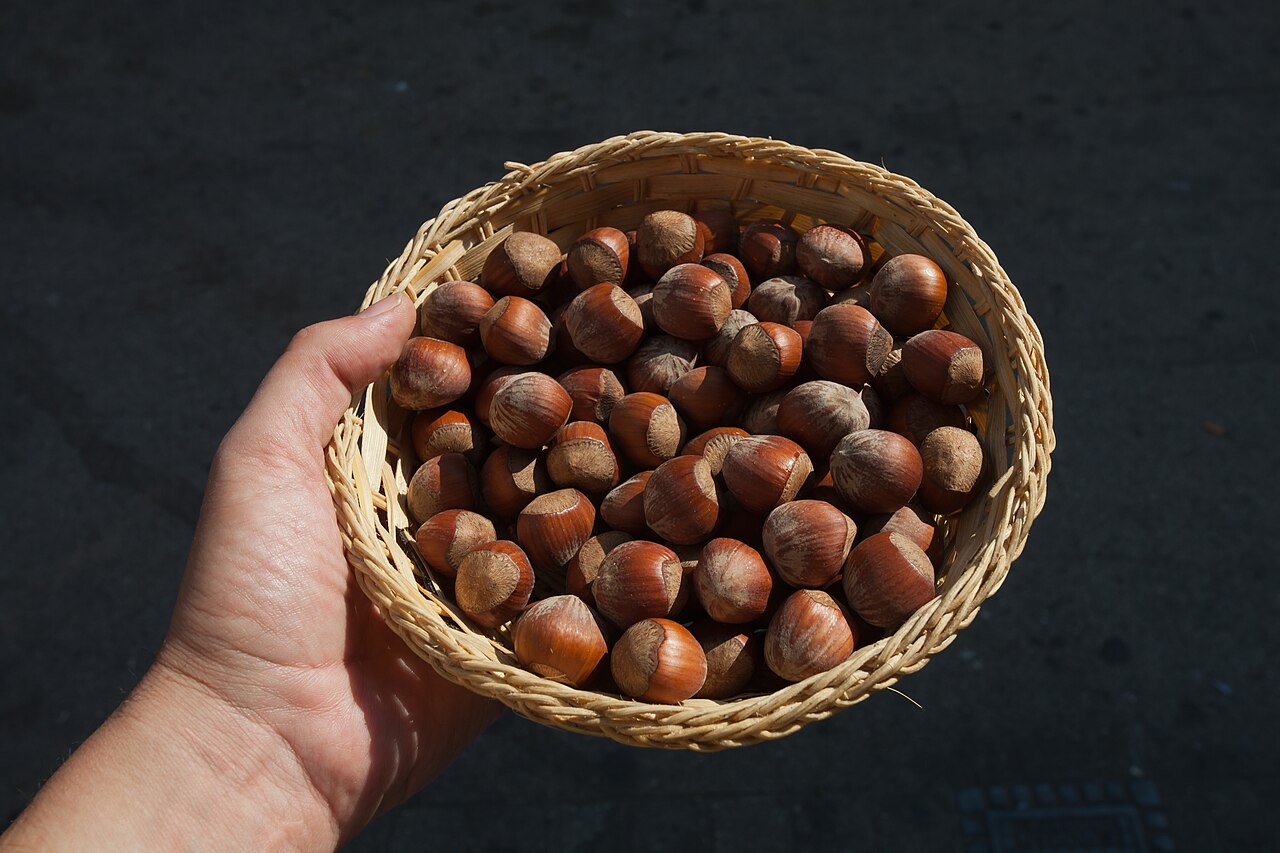
Some nuts always end up on the ground and some always remain — this is inherent to hazelnut harvest because nuts do not ripen simultaneously. The goal of semi-mechanization is not zero losses, but fast and cheap collection with acceptable cleanliness.
Harvest organization step by step
Hazelnut harvest in Croatia typically lasts from late August to mid-September (depending on cultivar and location slightly wider, from mid-July to October), in 2 or more passes every 2–3 weeks because nuts do not ripen simultaneously. The indicator of ripeness is the drying husk and the nut that falls easily.
Practical workflow for an orchard of 1–3 ha:
- Soil preparation before harvest. Mow/mulch grass and, where possible, level the ground. For stronger preparation before mechanized harvest, literature mentions breaking the surface layer with a rotary tiller and leveling with a roller. Many perform turf desiccation ~one month before harvest for a clean, dry surface (check permitted products and regulations — informative).
- Grouping cultivars by ripening time. This reduces the number of passes and costs.
- Raking nuts into rows. Rake nuts from half of the inter-row space towards the center/edge of the row so that the vacuum or collector works more efficiently; for earlier rows, special brushes are sometimes used.
- Shaking nuts with a portable/tractor shaker (selectively) if you do not wait for all to fall naturally.
- Collecting with a backpack or pulled vacuum; in dry and warm weather.
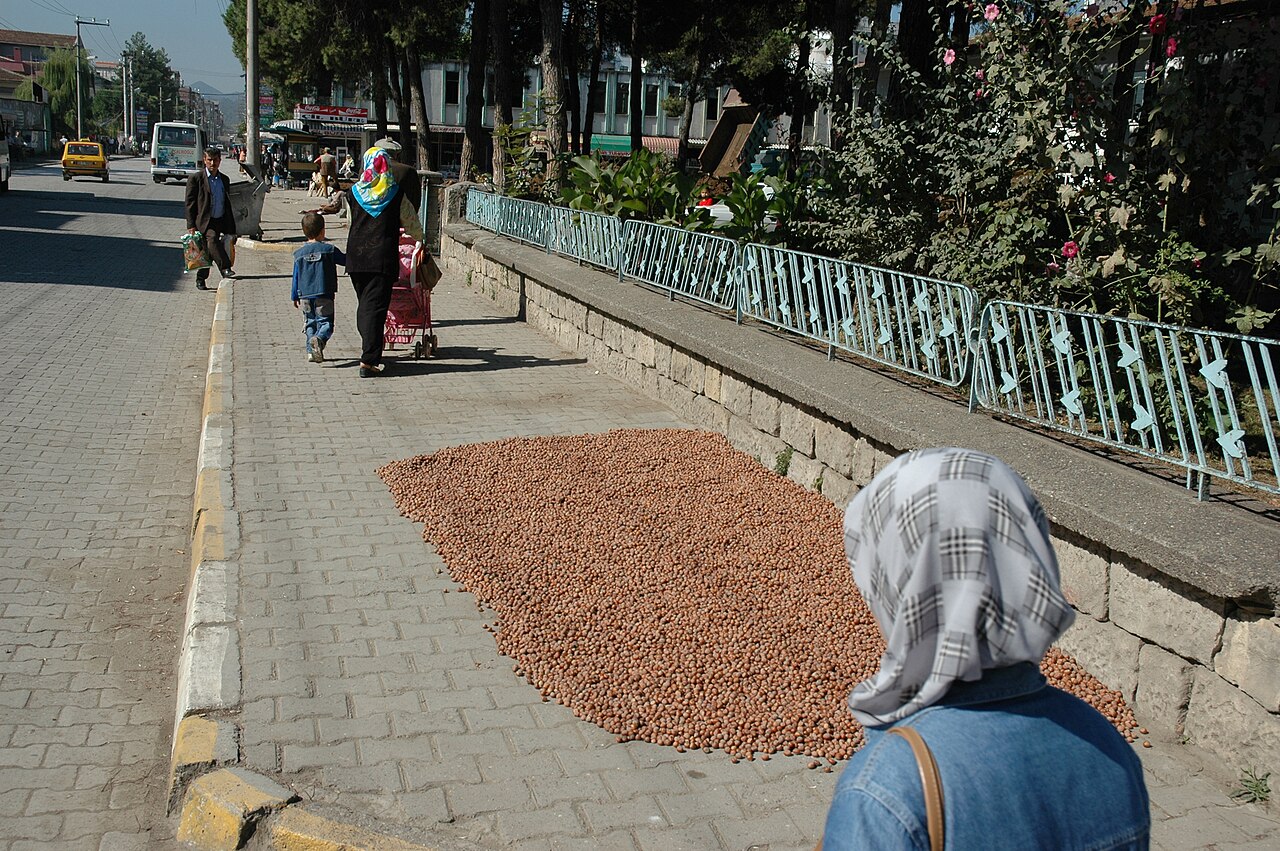
- Immediate drying. Drying is mandatory — without it, mold and spoilage are threatened. Approximate targets from literature: shell moisture ~7 %, kernel moisture ~4 %, drying temperature up to ~50 °C; storage at ~10 °C and relative humidity ~70 % (informative, depends on conditions).
Common Mistakes
- Harvesting on weedy or uneven soil. This is the biggest killer of vacuum harvester performance. Soil preparation is not optional but a prerequisite.
- Waiting for "one big pass." Hazelnuts require multiple passes; waiting increases losses and the risk of aflatoxin contamination.
- Shaking with a stick or too roughly. This damages the fruiting wood and knocks off immature nuts.
- Skipping or delaying drying. Wet nuts mold quickly.
- Buying a harvester too early. On 1–3 ha, a harvester often sits idle. For peak days, consider renting a service (harvester rental/service) — a common practice among small family farms, while retaining a backpack/towed vacuum for other tasks.
- Neglecting maintenance of shakers/vacuums. Check belts, connections, and lubricate before every working day.
Conclusion
For most new Croatian producers on 1–3 ha, semi-mechanized harvesting is the "golden mean": a backpack vacuum (~€1,000–1,500) as an entry-level option, a towed/small self-propelled collector (from a few hundred euros upwards) for higher efficiency, and a lighter or borrowed shaker for nut removal. With good soil preparation, cultivar grouping, multiple timely passes, and mandatory drying, this combination delivers an order-of-magnitude higher efficiency than manual harvesting, with a far lower investment than a full harvester package — which you should reserve for the moment when the orchard reaches full production on a larger area.
Gallery
Sources
This text is an AI summary from an internal hazelnut literature collection (RAG corpus) and public internet sources. Main sources used:
- Harvesting, Drying, and Storage Technology for Hazelnuts: Literature Review — JCEA (hr) — https://jcea.agr.hr/articles/772314_Tehnologija_berbe_su_enja_i_skladi_tenja_lje_njaka_Pregled_literature_hr.pdf
- Mechanization in Hazelnut Production and Processing at Minas-zrno 1 — final/thesis paper (RAG corpus)
- Economics and Establishment of a Hazelnut Orchard at Balog Family Farm — final paper (RAG corpus)
- Hazelnut Cultivation: Grower’s Guide (RAG corpus, 2024.)
- Hazelnut Cultivation — Harvesting, Drying, and Storage (RAG corpus; statements by S. Jerkić)
- Technology and Economic Efficiency of Organic Hazelnut Production at Hobolić Alen Family Farm (RAG corpus)
- Small Walnut Collection Machine R06 — Pletikosa/Pak (RAG corpus) — description of small collectors
- Cifarelli — V1200E / V1200PK vacuum harvesters — https://www.cifarellispa.com/en/applications/nuts/ and https://www.cifarellispa.com/en/product/vacuum-v1200e/
- Bag-A-Nut — towed and push hazelnut harvesters (18"/21"/36") — https://baganut.com/ and https://baganut.com/product/36-pull-behind-hazelnut-harvester/
- ProduceTech — EU 1000/2000 vacuum nut harvester — https://producetech.com/en/products/eu-1000-2000-vacuum-harvester-for-nuts/
- AgriExpo — Hasatsan H230 hazelnut harvester (capacity 100–330 kg/h) — https://www.agriexpo.online/agricultural-manufacturer/hazelnut-harvester-machine-727.html
- Hazelnut Hub — Innovations in Hazelnut Harvesting — https://hazelnuthub.com/hazelnut-harvesting-innovations/
All dosages, prices, capacities, and deadlines are provided for informational purposes and depend on cultivar, location, equipment model, and current regulations — consult advisory services and official sources (e.g., FIS — https://fis.mps.hr/fis/javna-trazilica-szb for plant protection products) before application.
Recommended equipment
🔎 nut gatherer roller — Amazon →Affiliate links — we may earn a small commission at no extra cost to you.
Handheld Nut Roller Collector
For gathering nuts from the ground on small areas.
| Use Case | Option Type | What to Check Before Purchase |
|---|---|---|
| Small area collection | Manual roller device | Wheel traction and debris clearance |
| Uneven terrain | Heavy duty rollers | Frame strength and wheel size |
| Large orchards | Mechanical sweepers | Professional machinery for efficiency |