Turkish hazelnut cultivars: Tombul, Çakıldak, Palaz, and Foşa
Content generated by artificial intelligence — verify before application
This article was automatically compiled from a collection of hazelnut literature using artificial intelligence and may contain errors or outdated data. It serves as a starting point for further research, not as professional advice. Dosages, products, and timing are informative and depend on the cultivar, location, and current regulations — always consult with an advisory service and official sources before application.
Turkey is by far the world’s largest hazelnut producer, accounting for approximately half of the global total. Consequently, Turkish cultivars shape the reference market and set the quality standards for kernels against which all others are measured. The four names most frequently mentioned in the Eastern Black Sea cultivation belt (provinces of Giresun, Ordu, Trabzon, Zonguldak, Samsun) are Tombul, Çakıldak (Turkish: Çakıldak), Palaz, and Foşa (Turkish: Foşa). These are not exotic rarities but the workhorses of Turkish hazelnut cultivation: together, they form the backbone of the global supply of kernels for the confectionery and food industries. This article summarizes their pomological characteristics, kernel recovery rate (percentage of kernel in the nut), their membership in the Black Sea geographical group, and their role in the global supply, based on hazelnut literature and public sources. This topic directly builds upon the article about S-alleles and the self-incompatibility system, as well as the overview of the global hazelnut market.
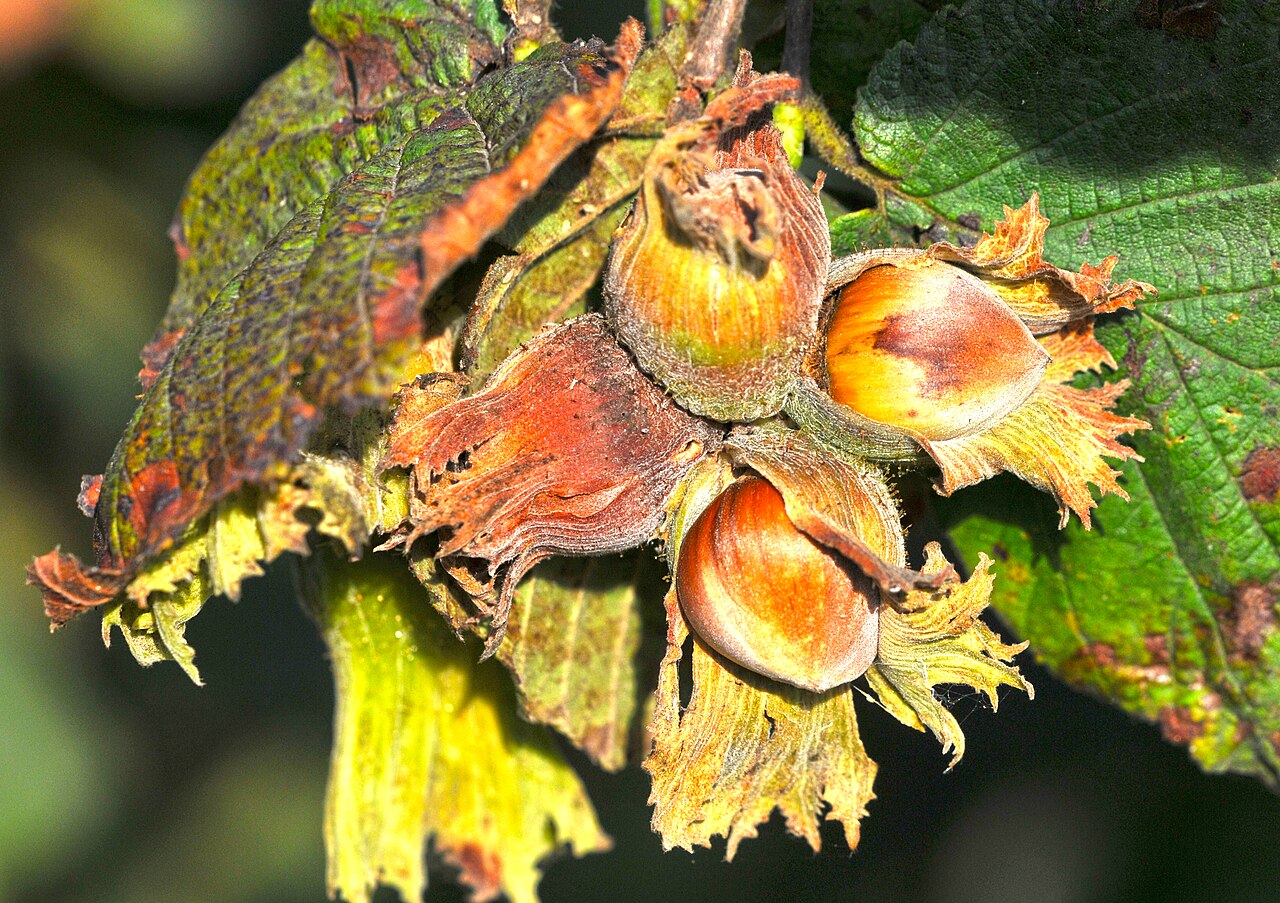
Quick overview — comparative table
Values are indicative; they vary among sources and depend heavily on the clone, altitude, slope exposure, year, and agronomic practices.
| Property | Tombul | Çakıldak | Palaz | Foşa |
|---|---|---|---|---|
| Main region | Giresun (and Trabzon) | Ordu, Giresun | Ordu, Giresun, Samsun | Zonguldak (western belt) |
| Nut shape | Round (spherical) | Round to flattened | Round/flattened | Round, smaller |
| Nut weight | ~1.5–2.3 g | ~2.3–2.4 g | ~2.1–2.4 g | ~1.8 g |
| Kernel weight | ~0.9–1.3 g | ~1.3–1.35 g | ~1.1–1.3 g | ~0.96 g |
| Kernel recovery | ~50–59 % | ~54–57 % | ~53–55 % | ~54 % |
| Shell thickness | Thin (~0.9–1.0 mm) | ~0.95–0.96 mm | ~1.0 mm | ~0.94 mm |
| Blanching ability | Very high (~96–99 %) | High | Moderate (~95 %) | Lower (~73 %) |
| Oil content | ~63–72 % | High | High | High |
| Vigor | Weak | Medium | Medium | Medium |
| Susceptibility to alternate bearing | Pronounced | Moderate | Moderate | Moderate |
| Market status | Premium, reference cultivar | Industrial | Industrial | Regional/Industrial |
Why Turkish cultivars are the reference
The global hazelnut kernel market values several properties: high kernel recovery (more kernels per kilogram of in-shell nuts means more sellable product), round and uniform kernels without fibers or fused doubles, good blanching (easy removal of the brown pericarp after roasting), and good taste and aroma. Turkish cultivars have been optimized through long-term selection specifically for these confectionery industry requirements (chocolate creams, coatings, roasting), so buyers worldwide compare other cultivars to the "Turkish profile."
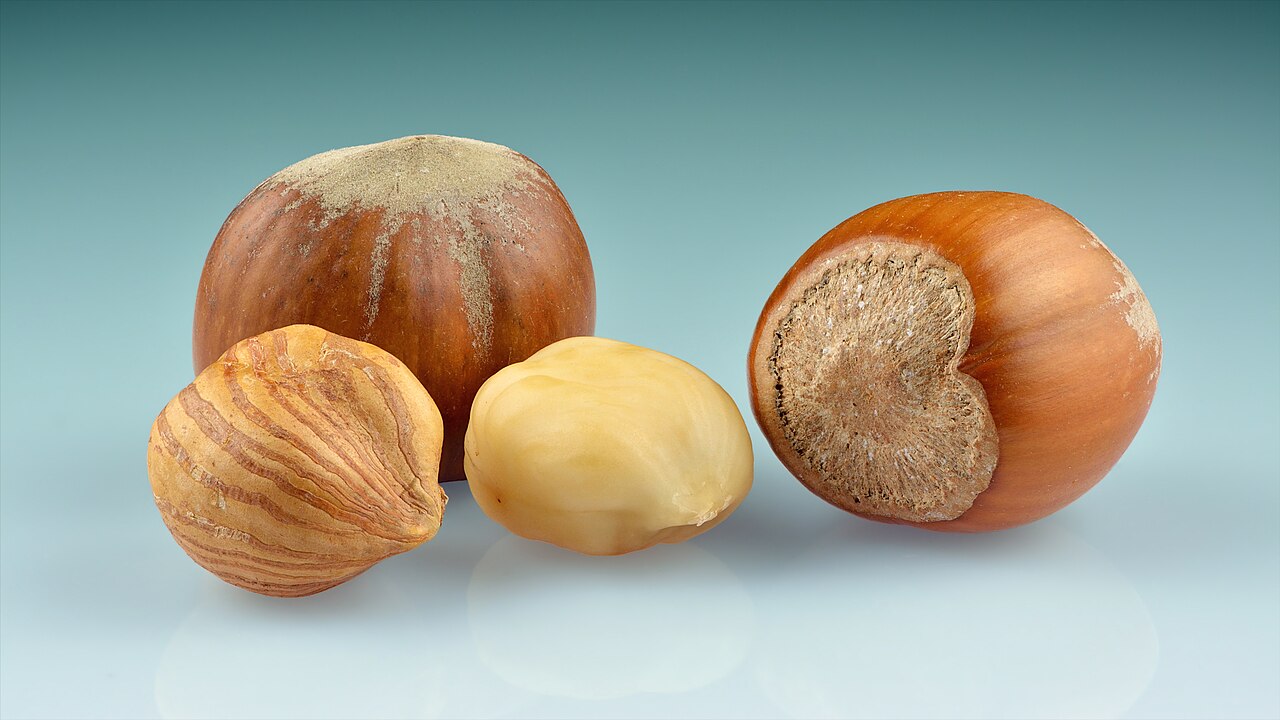
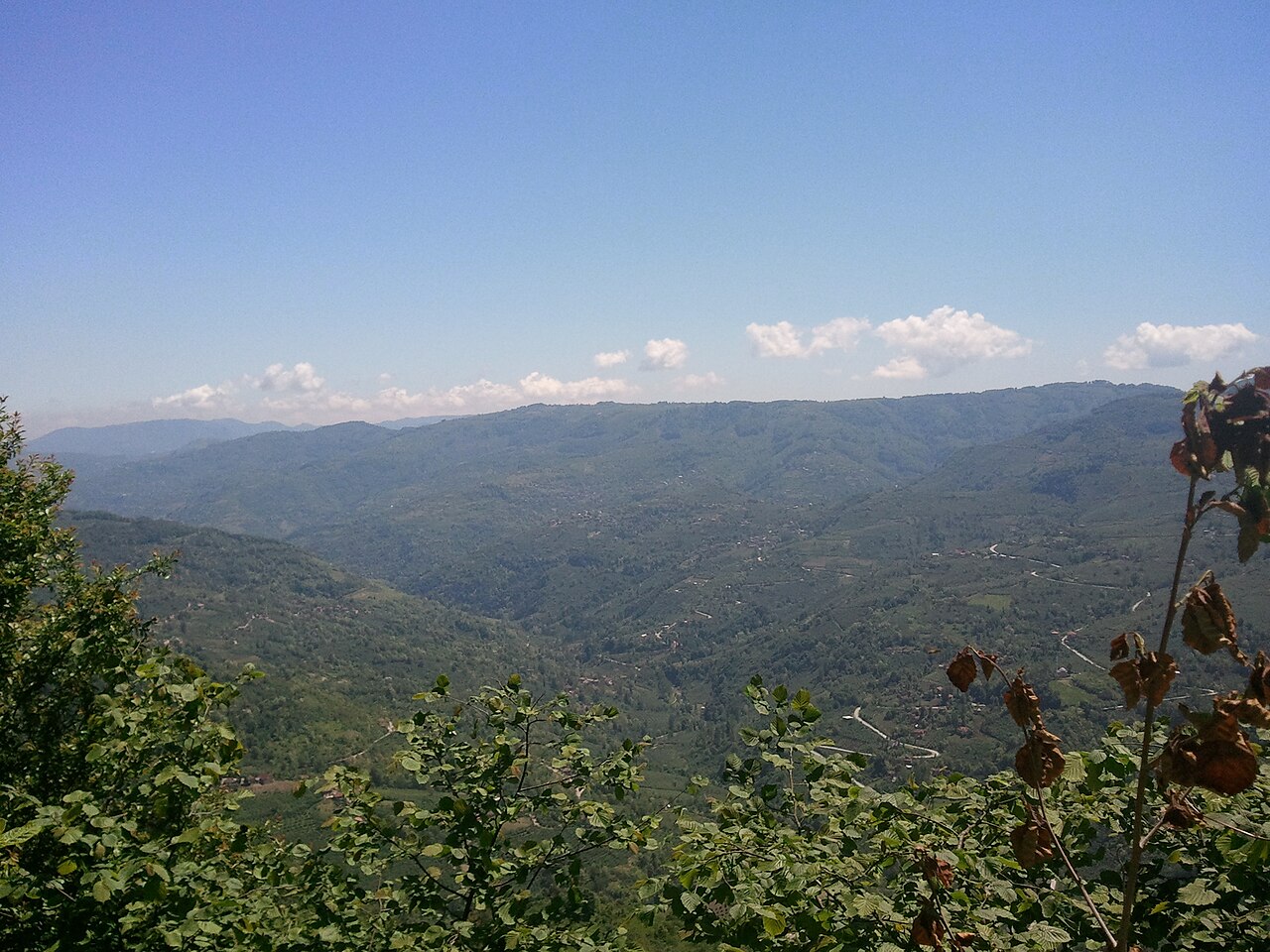
Geographically, almost all Turkish production is concentrated along the eastern coast of the Black Sea, in a humid and moderately warm climate with slopes that provide good drainage. Due to this origin, Turkish cultivars form the core of the so-called Black Sea geographical group of germplasm — more on this in a separate chapter below.
Tombul — premium reference
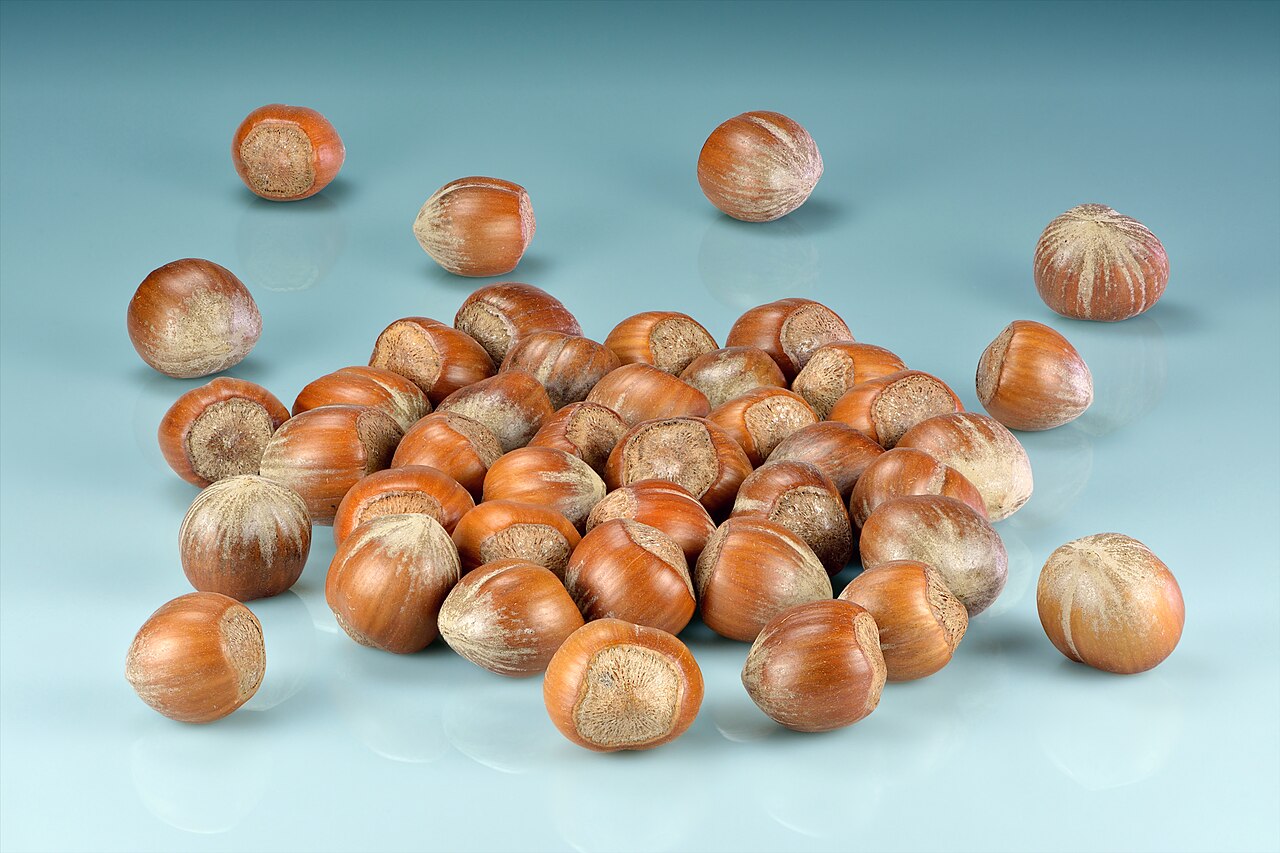
Tombul is the main and most valued Turkish cultivar, particularly widespread in Giresun province (to a lesser extent in Trabzon). The name tombul in Turkish means "full, rounded," which accurately describes the nut: round, medium-sized, and completely filling the shell.
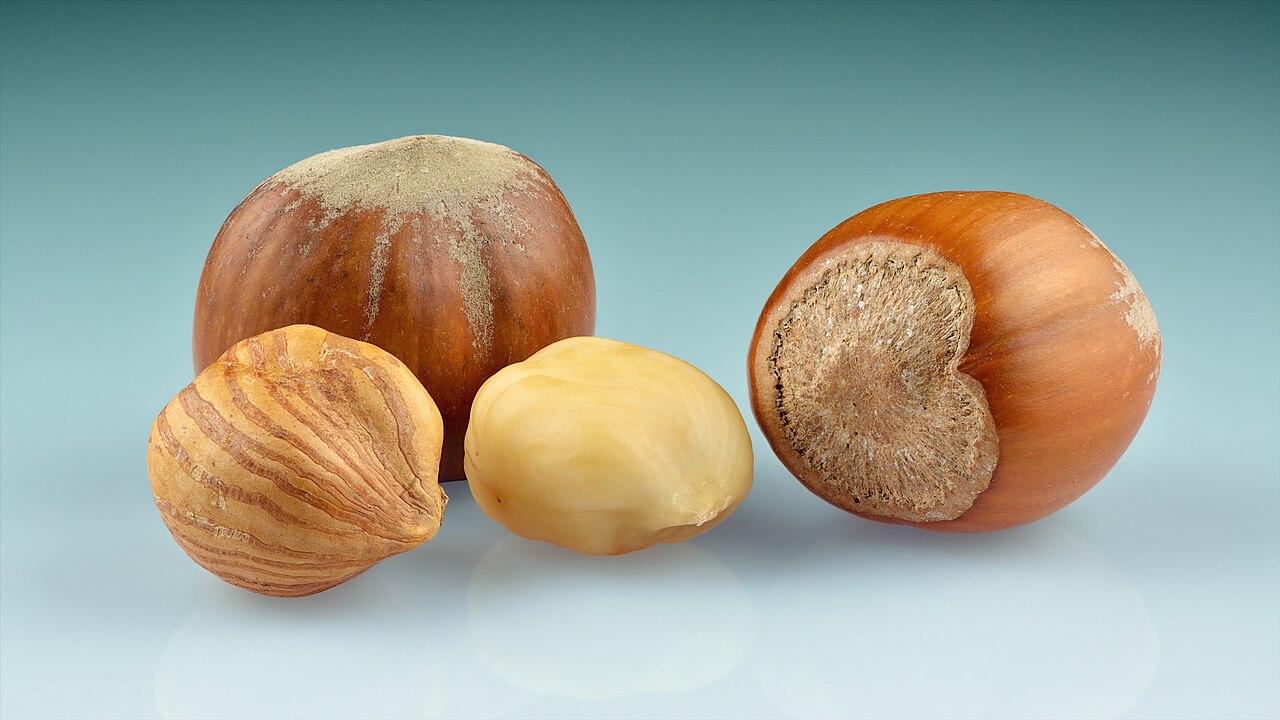
Pomology. The fruit is spheroid in shape, with a thin, shiny, brown, and easily breakable shell (thickness around 0.9–1.0 mm). The kernel is white, shiny, crisp, fiber-free, with a small central cavity; the pericarp is thin and easily removed. The kernel diameter ranges around 13 mm. The involucre almost completely covers the nut and is approximately twice as long as the nut, which complicates mechanical harvesting — this is one of the known disadvantages of the cultivar.
Kernel recovery and composition. Tombul achieves excellent kernel recovery; literature reports values from ~50 % to nearly 59 % depending on the clone and location (e.g., ~52.4 % in one measurement, up to ~59.2 % in selected clones). Oil content is very high, ranging from ~63–72 %, and blanching ability is exceptionally high (~96–99 %). These traits make it one of the most sought-after "Levantine" hazelnuts on the international market — suitable for snacking and for industrial processing.
Weaknesses. The cultivar has weak vigor, exhibits a pronounced susceptibility to alternate (periodic) bearing (heavy crop one year followed by a lighter crop the next), and is sensitive to attack by the large bud mite (Phytoptus / Phytocoptella avellanae, "large bud"). With good care and balanced fertilization, it yields regular high yields; yields exceeding 2.9–3.2 kg per shrub have been recorded in certain years.
Çakıldak — industrial workhorse
Çakıldak is a widely represented, robust industrial cultivar in the provinces of Ordu and Giresun.
Pomology. The nut is larger than average (weight ~2.3–2.4 g), round to slightly flattened, with a shell thickness of about 0.95–0.96 mm. The kernel is large (weight ~1.3–1.35 g, diameter ~14–15 mm).
Kernel recovery. It belongs among cultivars with very good kernel recovery — literature reports ~54–57 % (e.g., kernel proportion ~56.8 %), with a high proportion of "full" (healthy, well-filled) kernels; individual measurements yield a good kernel proportion of ~82–92 %. This makes it a reliable choice for mass processing. Clone selection within Çakıldak has shown high heritability for key traits — e.g., ~0.89 for nut thickness and ~0.87 for kernel proportion — meaning that selecting superior clones can permanently improve yield and quality.
Practical. Çakıldak is less "elite" than Tombul in terms of kernel fineness, but offers large nuts and stable kernel recovery, thus filling the industrial segment of the supply.
Palaz — reliable large cultivar
Palaz is another important industrial cultivar of the Black Sea belt (Ordu, Giresun, Samsun).
Pomology. The nut is round to flattened, large (weight ~2.1–2.4 g, in some measurements up to 2.33 g — often the largest of the four described cultivars), with a shell thickness of about 1.0 mm and a large kernel (~1.1–1.3 g).
Kernel recovery and quality. Kernel recovery ranges around ~53–55 %. Blanching ability is slightly lower than Tombul’s (~95 %), and the proportion of full kernels varies (measurements from ~72 % to over 80 % depending on conditions). Mechanical properties of the nut (energy and hardness required to break the shell) are higher in Palaz than in Çakıldak, which is relevant for adjusting cracking machines.
Pollination. Palaz has shown itself to be self-incompatible in compatibility studies, while Tombul is partially self-compatible. Good pollinizers for Palaz include the cultivars Yerli fındık, Kalınkara, and Çakıldak; for Tombul, good pollinizers are Palaz, Hanım fındığı, and Kalınkara. This is practically important when planning the orchard (see the chapter on S-alleles).
Foşa — regional Western Black Sea cultivar
Foşa is a cultivar from the western part of the Black Sea belt, particularly Zonguldak province, where it is classically tested together with Tombul, Palaz, Mincane, and Yuvarlak Badem.
Pomology. The nut is smaller (weight ~1.79 g), round, with a kernel weighing about 0.96 g and a shell thickness of ~0.94 mm.
Kernel recovery and limitation. Kernel recovery is solid (~53.9 %), but blanching ability is extremely low — in one measurement, it was only ~73 %, significantly below Tombul (~98 %) and Palaz (~95 %). Since the industry highly values easy blanching, this limits Foşa’s position in the premium segment and places it more in a regional/industrial role.
Black Sea Geographic Group and S-Alleles
What is the Black Sea group
Genetic studies (SSR and other molecular markers) classify European hazel (Corylus avellana) into several germplasm geographic groups. Turkish cultivars — including Tombul, Çakıldak, Palaz, and Foça — belong to the Black Sea group, to which phenotypically similar cultivars from Georgia and Azerbaijan also belong. Long-term clonal propagation of valued cultivars throughout the region has created exceptional within-cultivar genetic diversity (multiple subtypes/clones of the same "name"), which is why the same cultivar at different locations can exhibit significantly different traits. This also explains the wide ranges of figures found in the literature.
Sporophytic self-incompatibility and S-alleles
Hazel has a sporophytic self-incompatibility system controlled by a single genetic locus (S-locus) with a large number of alleles (~33 S-alleles described to date, S1–S33). If a pollinizer with a receptive stigma shares S-allele(s) with the mother cultivar, fertilization does not occur. The practical consequence is simple: the pollinizer must have at least one S-allele different from the main cultivar and must release pollen at the time when the female flowers of the main cultivar are receptive (flowering synchrony). Therefore, when planning orchards of Turkish cultivars, several proven compatible pollinizers are always combined.
Are the S-alleles of Turkish cultivars known? Unlike many old European cultivars, the S-alleles of leading Turkish cultivars have been identified — through direct determination of alleles expressed in pollen (Mehlenbacher et al., 2005, on material from the Giresun collection). The following alleles expressed in pollen have been identified:
| Cultivar | Allele expressed in pollen (known) |
|---|---|
| Tombul | S12 |
| Palaz | S2 (together with Yuvarlak Badem) |
| Çakıldak | S24 |
| Foça | S8 (together with Mincane and Sivri) |
| Kalınkara, İncekara, Uzunmusa | S21 |
| Yassı Badem | S5 |
Important caveat. The alleles listed are those expressed in pollen; hazel is diploid and carries two S-alleles per cultivar, and the second (recessive or non-expressed in pollen) allele for certain Turkish cultivars is not always reliably published. Therefore, the S-alleles in the table serve as a guideline, not as a complete S-genotype. In practice, compatibility is most reliably determined through direct pollination tests (pollen tube growth in the stigma under a fluorescence microscope), on which the pollinizer recommendations below are based. Do not draw conclusions about compatibility based on a single published allele alone.
Proven pollinizer pairs
Turkish compatibility research (Okay et al., 1994; Beyhan et al., 1997; and recommendations from Findik Araştırma Enstitüsü / Karadeniz et al., 2009) provides concrete, field-verified recommendations. A key finding is that Palaz is self-incompatible, while Tombul is partially self-compatible (but pollinizers are strongly recommended for Tombul as well due to higher and more uniform fertilization).
| Main Cultivar | Proven/Recommended Pollinizers |
|---|---|
| Tombul | Palaz, Hanım fındığı, Kalınkara (best compatibility); also Çakıldak, Sivri, İncekara |
| Palaz | Yerli fındık, Kalınkara, Çakıldak (best compatibility); also Tombul, Mincane, İncekara |
| Çakıldak | Tombul, Palaz, İncekara, Sivri, Mincane |
| Foça | Tombul, Palaz, Mincane, Uzunmusa |
It is noted that Sivri and Kalınkara serve primarily as pollinizers (lower kernel quality, but abundant and well-distributed pollen), so they are often planted as dedicated pollinizers in orchards of main cultivars. Since flowering shifts from year to year depending on weather conditions, security is provided by a combination of 2–3 pollinizers with extended pollen release periods, rather than a single pollinizer matched to the average.
Consolidated Cultivar Table
Summary of key traits for orchard planning (values are indicative; see discussions by cultivar above):
| Cultivar | Purpose | Kernel Ratio | Nut Size | Blanching | Known S-allele (pollen) | Main Pollinizers |
|---|---|---|---|---|---|---|
| Tombul | premium / reference, snacking + processing | ~50–59 % (typ. 51–55 %) | medium (~1.5–2.3 g) | very high (~96–99 %) | S12 | Palaz, Hanım fındığı, Kalınkara |
| Çakıldak | industrial, mass processing | ~54–57 % | large (~2.3–2.4 g) | high | S24 | Tombul, Palaz, İncekara |
| Palaz | industrial, large nut | ~53–55 % | large/largest (~2.1–2.4 g) | moderate (~95 %) | S2 | Yerli fındık, Kalınkara, Çakıldak |
| Foça | regional/industrial | ~54 % | smaller (~1.8 g) | low (~73 %) | S8 | Tombul, Palaz, Mincane, Uzunmusa |
Notes on harvest time: Tombul and Palaz leaf out early, making them more sensitive to late spring frost; Çakıldak leaves out later and is therefore more resistant to late frost, which is one of the reasons for the expansion of its cultivation. Harvest in the eastern Black Sea belt traditionally runs from late August in lower elevations to September at higher altitudes.
Role of Turkish Cultivars in the Global Supply
Turkey is the world's largest hazelnut producer by a large margin. Croatian and international sources state that Turkey produces approximately half to two-thirds of the world's quantity — specifically ~56% is mentioned (FAOSTAT 2018), 60–70% annually (Vujević et al., 2017), and newer market reviews for 2024 estimate around 708,000 tons, which is ~61% of total world production, with second-ranked Italy at around 100,000 tons. Turkey also holds 70–80% of global export volumes, thus dictating prices and standards.
Almost all this production is concentrated along the eastern coast of the Black Sea — it is estimated that about 60–65% falls on the eastern Black Sea region, and the province of Ordu alone accounts for about one-third of Turkey's harvest; key provinces alongside it are Giresun, Trabzon, Samsun, and Zonguldak. In trade, quality is divided into two main categories:
- Giresun quality — hazelnuts from the Giresun area (typically Tombul): high oil content, thin shell, excellent blanching; achieve a premium price.
- Levant quality — a collective term for hazelnuts from all other (non-Giresun) areas; slightly lower, but still high quality, forming the backbone of the industrial supply.
Therefore, Turkish cultivars — especially Tombul as the "Giresun" benchmark and Çakıldak/Palaz as industrial volume — constitute the reference profile against which all other world cultivars are measured (Italian tonde, Spanish Negret, American Barcelona/Jefferson). For a Croatian producer, this has a double meaning: on one hand, Turkish hazelnut sets the standard for kernel quality that should be aimed for, and on the other hand, Turkish volume and price determine the purchase price on which Croatian production relies (the Croatian confectionery industry largely imports Turkish and Italian hazelnuts).
Practical Recommendations
- Tombul is the quality benchmark, not necessarily the cultivar for your orchard. Its superior profile is tied to the Giresun terroir and intensive care; outside of that, expect lower kernel ratio and stronger alternate bearing. If you do plant Turkish cultivars, plan them as part of the cultivar mix, not as a monoculture of a single cultivar.
- Never plant just one cultivar. Palaz is self-incompatible, and even for the partially self-compatible Tombul, pollinizers significantly increase and uniformize fertilization. Plan for 2–3 compatible pollinizers with staggered flowering (e.g., for Palaz: Yerli fındık + Kalınkara + Çakıldak).
- Use proven pairs, not just S-alleles. The S-alleles in the table (Tombul S12, Palaz S2, Çakıldak S24, Foça S8) are useful as a guideline, but only one allele per cultivar is known; rely on field-verified pollinizer pairs and, ideally, on flowering phenograms at your own location.
- For frost-prone sites, prefer late-leafing cultivars. Çakıldak leaves out later and is more resistant to late spring frost than the early-leafing Tombul and Palaz.
- Align choice with purpose. For premium/snacking and easy blanching, aim for Tombul-type; for industrial volume of large nuts, Çakıldak and Palaz; Foça, due to poor blanching (~73%), remains a regional/industrial cultivar, not a premium one.
- Mechanical harvest and involucre. Tombul's long involucre (almost twice the length of the nut) complicates mechanical harvest — take this into account when choosing harvest technology.
- Seek certified, clonally defined planting material. Within-cultivar diversity of Turkish cultivars is high (many clones of the same name), so kernel ratio and quality vary significantly; clonal selection (e.g., in Çakıldak) has shown high heritability of key traits.
Common Mistakes
- Planting Palaz (or any Turkish cultivar) without a pollinizer. Palaz is self-incompatible; without a compatible pollinizer with synchronized flowering, no crop is produced.
- Relying on a single pollinizer matched to a "book" average. Dihagammy and flowering start shift with year and location; security is provided by 2–3 pollinizers with staggered flowering.
- Concluding compatibility based on a single published S-allele. For Turkish cultivars, only one allele in pollen is reliably known; the full S-genotype (two alleles) is not always published — use field-verified pairs.
- Expecting "Giresun-quality" Tombul outside its terroir and without intensive care (balanced fertilization, control of big bud, irrigation). Realistically expect lower kernel ratio and more pronounced alternate bearing.
- Assessing Foça as a premium cultivar. Its poor blanching (~73%) limits it to a regional/industrial role, regardless of decent kernel ratio.
- Confusing size and quality. Palaz is often the largest, but size does not guarantee the best kernel ratio or blanching — Tombul with smaller nuts yields superior kernel quality.
- Planting early-leafing cultivars (Tombul, Palaz) in frost pockets. Choose sites with good air drainage; for colder locations, prefer the late-leafing Çakıldak.
Gallery
Sources
This article is an AI summary compiled from an internal hazelnut literature collection (RAG corpus) and public internet sources. The main sources used are:
From the RAG corpus (hazelnut literature collection):
- Incompatibility Alleles Expressed in Pollen of Turkish Hazelnut Cultivars (Mehlenbacher et al., 2005) — identification of S-alleles expressed in pollen: Palaz and Yuvarlak Badem S2, Foša/Mincane/Sivri S8, Tombul S12, İncekara/Kalınkara/Uzunmusa S21, Yassı Badem S5, Çakildak S24.
- The Investigation of Compatibility Relationships of Tombul and Palaz Cultivars (Beyhan, Beyhan, Odabaş, 1997; DOI: 10.17660/ActaHortic.1997.445.23) — Palaz is self-incompatible, Tombul is partially self-compatible; best pollinizers for Tombul (Palaz, Hanım fındığı, Kalınkara) and for Palaz (Yerli fındık, Kalınkara, Çakildak).
- Selection of Pollinators for Tombul Hazelnut (Okay, Okay, Ayfer, 1994; DOI: 10.17660/ActaHortic.1994.351.21) — pollination experiments of Tombul with Sivri, Foša, Kalınkara, Mincane, Palaz; pollen tube growth under a fluorescent microscope.
- Recommended pollinizers by cultivar (Karadeniz et al., 2009; Findik Araştırma Enstitüsü / Fiskobirlik) — pollinizer tables for Tombul, Palaz, Çakildak, Foša, Mincane, Sivri, Kalınkara.
- ORDU'NUN PERŞEMBE İLÇESİNDE … TOMBUL FINDIK … FARKLI RAKIM VE YÖNEYLER (2010) — Tombul 56.76% kernel ratio / 0.93 mm shell thickness / 98.16% whitening; Palaz 2.33 g / 54.07% / 95.44%; Foša 1.79 g / 53.86% / 73.12%; Mincane and Yuvarlak Badem compared.
- FINDIKTA … OCAK YAŞI (Kırca et al., 2010) — Tombul kernel ratio 46.66% (90 years) to 55.09% (50 years); literature values 49.9–51.9%; shell thickness 0.89–1.15 mm.
- Yield, cluster drop and nut traits of three Turkish hazelnut cultivars (2005) — Tombul has the highest kernel proportion (~53.8%), yield up to ~3190 g/bush; Tombul has the lowest proportion of empty kernels.
- Performance of the local and standard hazelnut (2001) — Tombul 52.78% kernel, 1.06 mm shell, 96% whitening vs. Palaz 99%; Hanımfındığı 59.59% kernel.
- Kurutma yöntemlerinin fındığın fiziksel … özellikleri (2019) — sound kernel proportion (SİO): Palaz 92.65–95.33%, Tombul 82–88%, historical data (İslam 2000): Tombul 94.33%, Palaz 90.75%, Çakildak 80.75%.
- Fındık iç oranı / depolama (2022) — kernel ratio: Tombul 54.84%, Palaz 53.05%, Çakildak 55.48%.
- Alım Noktalarına Gelen Fındık … Giresun Örneği (2023) — Giresun samples kernel ratio >50%, up to 58.27%; typical Tombul 50–52%.
- Çakıldak fındık çeşidi — bilimsel çalışmalar (2010) — Çakildak is resistant to early/late frosts, main pollinizers are Tombul and Foša; area under Çakildak in Ordu (~91,188 ha).
- Analysis of Anticancer Taxanes in Turkish hazelnut genotypes (2024) — Tombul, Palaz, Çakildak as standard most-grown cultivars; Tombul and Palaz leaf early (sensitive to frost), Çakildak leaves late (more resistant); Sivri and Kalınkara as pollinizers.
- Comparison of Fruit Quality … Çakıldak, Palaz and Tombul … Ordu Province (2024; DOI: 10.30910/turkjans.1451726) — quality comparison at different altitudes in Ordu.
- Kemijski sastav lješnjaka iz sezone 2020. (Master's thesis, PBF University of Zagreb, 2022) — Turkey ~56% of world production, Italy 16%, Black Sea coast as main area; ~20 commercially significant cultivars.
- Tehnologija berbe, sušenja i skladištenja lješnjaka: pregled literature (2022) — kernel ratio as the main determinant of quality and price; >49% most desirable class; >50% "premium" price (Mehlenbacher and Olsen, 1997); sphericity and thin shell are desirable.
- Prerada lješnjaka u poduzeću (2025) and Ekonomska analiza proizvodnje lješnjaka (2023) — Turkey 60–70% of world volume (~850,000 t total), ~705,000 ha and ~600,000 t; ~60% in the Eastern Black Sea region (Ordu, Giresun, Trabzon); Croatian confectionery industry imports from Turkey and Italy.
Public internet sources:
- Hazelnut production in Turkey — Wikipedia — Giresun vs. Levant quality, main cultivars, concentration along the Black Sea coast.
- 2024 Top 5 Hazelnut Producing Countries — Hazelnut Hub — Turkey ~708,000 t / ~61% of world production in 2024, Italy ~101,000 t.
- Turkey: Hazelnut capital of the world — Capital Press — concentration of production along the coast, Ordu share.
- Unraveling Genetic Diversity Amongst European Hazelnut Varieties in Turkey — Frontiers in Plant Science (2021) — genetic closeness of Tombul, Çakildak, Palaz, Mincane; Black Sea germplasm.
- Genetic Characterization of Hazelnut Cultivars from Turkey Using Molecular Markers — ResearchGate — molecular characterization of Turkish cultivars.
- Turkish Hazelnuts vs. Californian and Georgian Varieties — Aladdin — profile of Turkish hazelnut for the confectionery industry.