Chocolate and Confectionery Products from Hazelnuts (Gianduja, Praline, Nougat)
Content generated by artificial intelligence — verify before application
This article was automatically compiled from a collection of hazelnut literature with the assistance of artificial intelligence and may contain errors or outdated information. It serves as a starting point for further research, not as professional advice. Dosages, products, and timelines are informative and depend on the cultivar, location, and applicable regulations — always verify with advisory services and official sources before application.
The confectionery industry is historically and currently the largest consumer of hazelnuts — the kernel is "most used in the confectionery industry for the production of chocolate, creams, and other sweets." For this reason, chocolate products represent the most valuable market segment for the producer: while raw kernels are sold as a commodity, gianduja, praline, nougat, and chocolate-coated caramelized kernels are sold as finished products with significantly higher added value. This article explains basic formulations, key processes (grinding into paste, conching, tempering), equipment suitable for small-scale operations (family farms/OPGs), and regulatory and labeling aspects that must be understood before the product reaches the market.
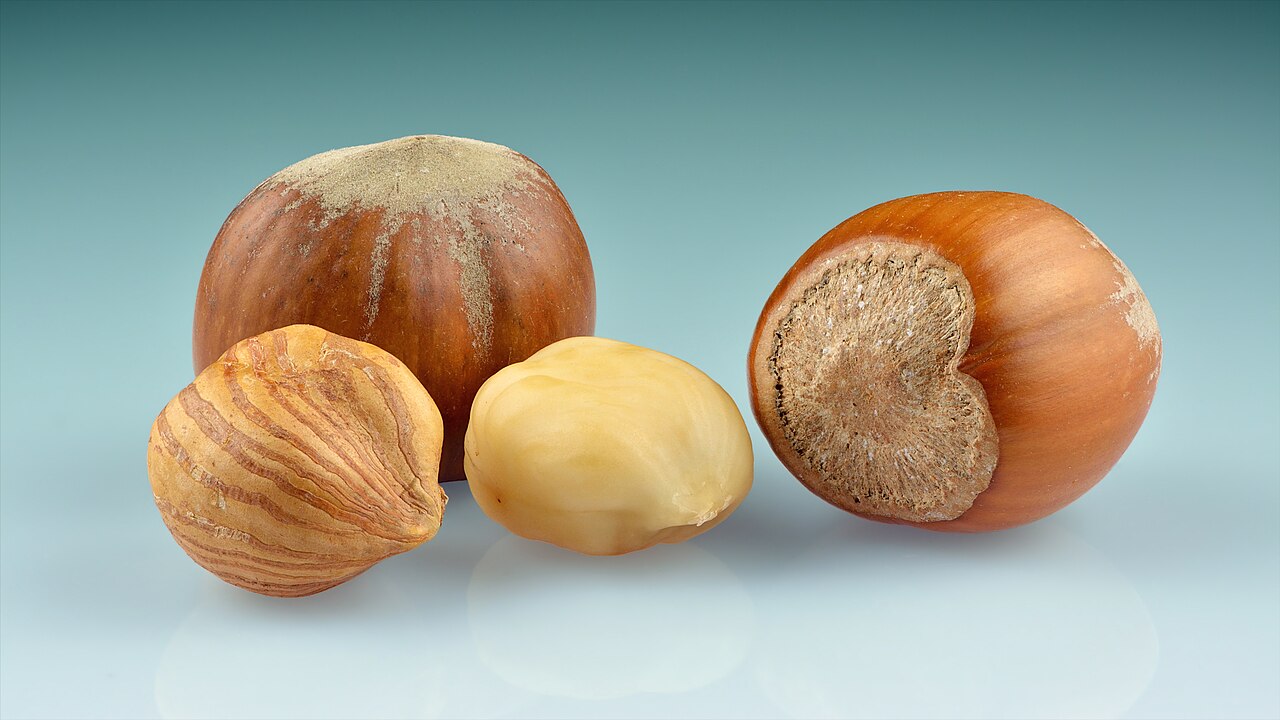
Why Chocolate and Hazelnuts
The combination of cocoa and hazelnuts is not coincidental. Traditional Italian chocolate "gianduia" originated in Turin more than 215 years ago, when local confectioners replaced part of the cocoa with hazelnuts — partly out of necessity (Napoleon's Continental Blockade restricted cocoa availability) and partly because hazelnut "softens the strong taste of cocoa, which is thus sweetened." From this motivation grew an entire industry: Ferrero's Nutella is nothing more than a variation of gianduja cream, and hazelnut is an integral component of products from brands such as Caffarel, Loacker, Perugina, Novita, and others.
For the Croatian producer, the message is clear: processing requires "conditions for facility setup, investment in machinery, marketing, sales, and extensive administration" and is "arduous work," but it allows for "processing and selling everything, mostly at the doorstep." The practice of Croatian OPGs (small family farms) shows that a combination of "finely crafted paste from roasted hazelnuts with cocoa, chocolate, agave syrup, etc." along with caramelized and toasted kernels with various flavors performs very well with customers.
Cultivars for Confectionery Processing
Not all cultivars are equally suitable for chocolate. In literature, hazelnut cultivars are divided into table, combined, and industrial (confectionery) types. For the coastal area, top industrial cultivars Tonda Gentile delle Langhe, Tonda Gentile Romana, and Tonda di Giffoni are recommended, while for continental Croatia, due to cold tolerance, Istarska Duguljasta, Rimska, and Haleška hazelnuts are recommended.
Favorable traits for confectionery processing include:
- Round, uniform nut (easier blanching and even roasting);
- High oil content (52–78 %, typically around 60–66 %) — yields a smooth, creamy paste;
- Pellicle (brown skin) that detaches easily during roasting. Cultivars where the pellicle remains adhered give a bitter taste and darker paste color, which is a disadvantage.
Raw Material Preparation: The Foundation of Quality
All chocolate products begin with the same steps on the kernel:
- Roasting (toasting) — develops aroma, reduces moisture, and facilitates skin removal. Typically carried out at lower temperatures for a longer time for uniformity.
- Blanching / Skin Removal — removes the bitter skin after roasting.
- Grinding into Paste — the kernel "must be ground for a long time to release the oil" and achieve a smooth texture. Grinding is crucial: it reduces particles until they fall below the threshold that the palate perceives as grittiness.
The sensory goal for fine chocolate is that particle size falls below approximately 20–30 µm; for comparison, in studied Croatian cream spreads, cocoa shell particles measured around 71 µm, which is still perceptible on the tongue. The finer the grinding, the smoother the product and the higher the premium perception.
Gianduja
Gianduja is a smooth mass of finely ground hazelnuts, sugar, and chocolate (cocoa + cocoa butter). It is the basis for countless products — from bars and praline fillings to creamy spreads.
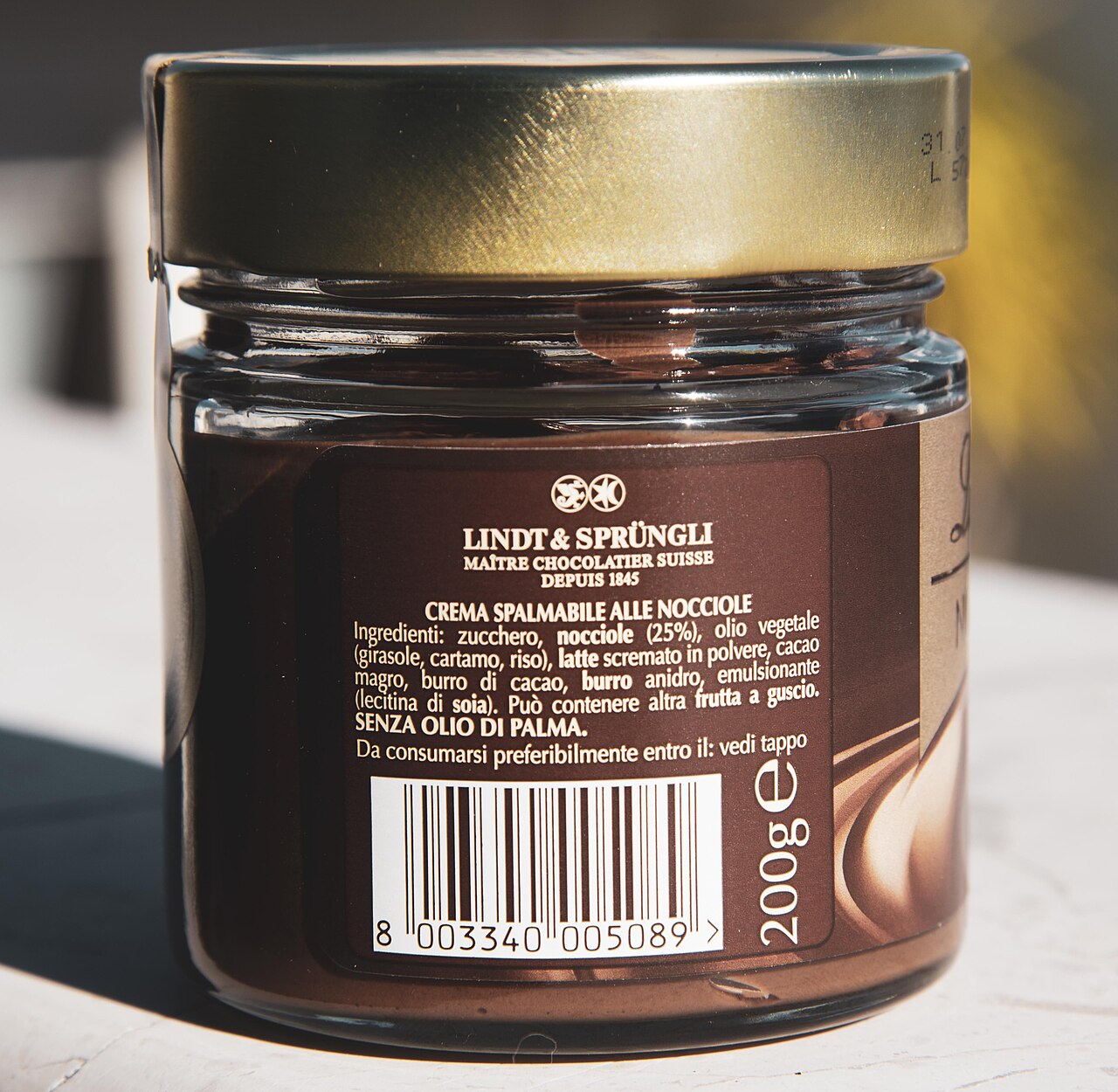
Basic Formulation (Informative)
| Ingredient | Typical Proportion | Note |
|---|---|---|
| Hazelnut Paste | 20–40 % (sometimes more) | Higher proportion = more intense flavor, softer mass |
| Sugar (Powdered) | 30–50 % | Affects sweetness and firmness |
| Chocolate / Cocoa Portion | Remainder up to 100 % | Dark, milk, or just cocoa butter |
| (Milk Content) | Up to ~5 %, in milk gianduja >10 % | For a softer, creamier profile |
The ranges mentioned are informative and depend on the recipe, cultivar, and target flavor. A practical rule: the more hazelnut paste and milk ingredients, the softer and creamier the mass; more sugar and dark chocolate yields a firmer mass suitable for cutting (e.g., gianduiotto).
Production Process
- Roast and peel the kernel, grind it into a fine paste (oil is released).
- Add powdered sugar and cocoa/chocolate along with melted cocoa butter.
- Conching (see below) — fine grinding and homogenization; develops aroma and texture over several hours to several days.
- Refining to a smooth, creamy texture.
- If necessary, temper if the mass is molded or used for coating.
Praline
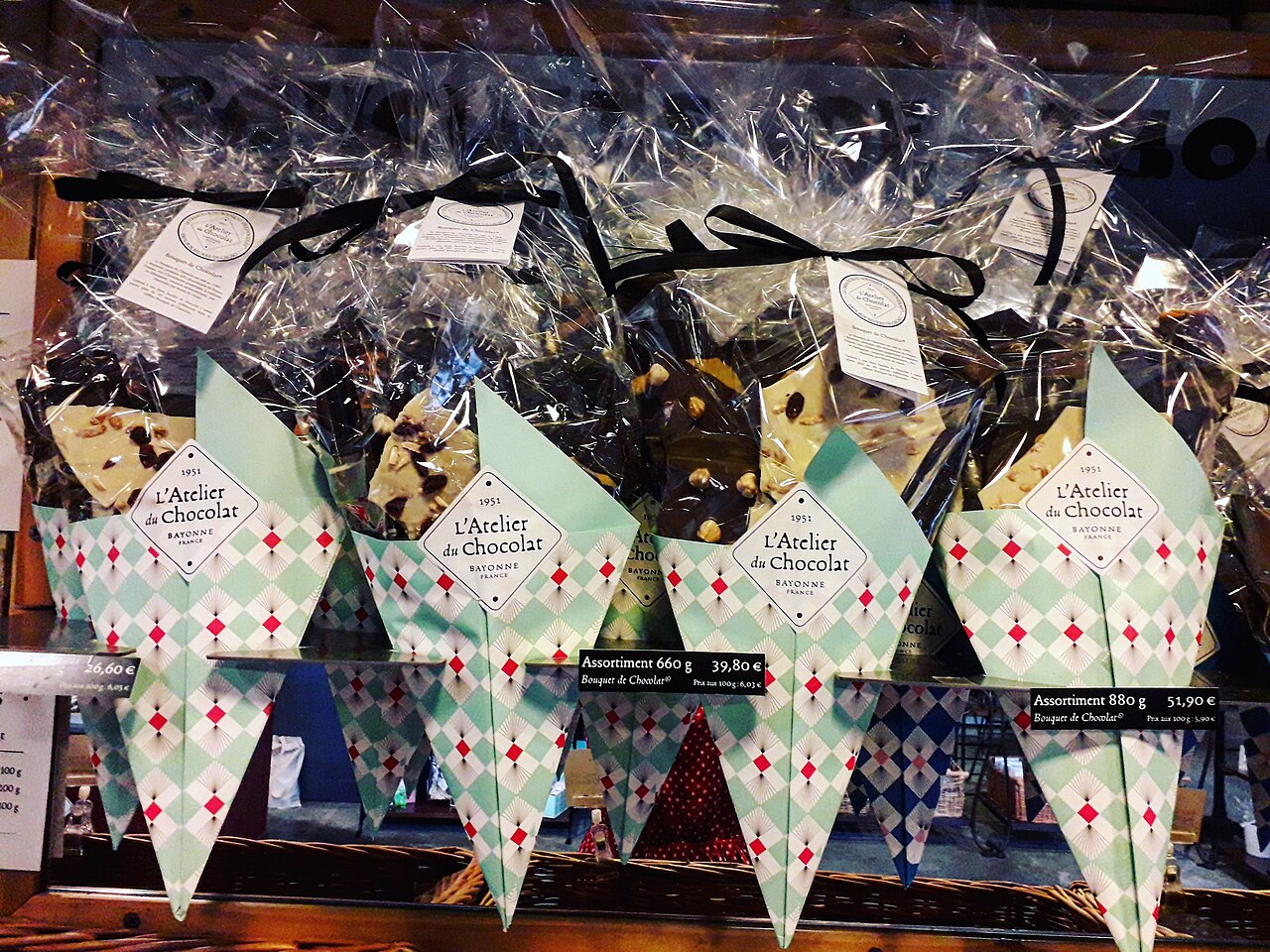
Praline (praliné) in the European context often refers to a filled chocolate bonbon, but technically praliné is a paste of caramelized and ground kernel. The main difference from gianduja: in praline, the kernel is roasted more intensely and sugar is caramelized before grinding, giving a more pronounced, "roasted," and caramel flavor.
Typical praline production process:
- Caramelize sugar with the kernel (common roasting/coating with hot sugar).
- Cool, break, and grind into a paste (smooth or with pieces).
- If necessary, mix with chocolate for the filling.
On the Croatian market, there are already "pralines with hazelnut butter" and various chocolates and pralines with organic hazelnuts, which confirms the market potential of this segment for small producers.
Nougat
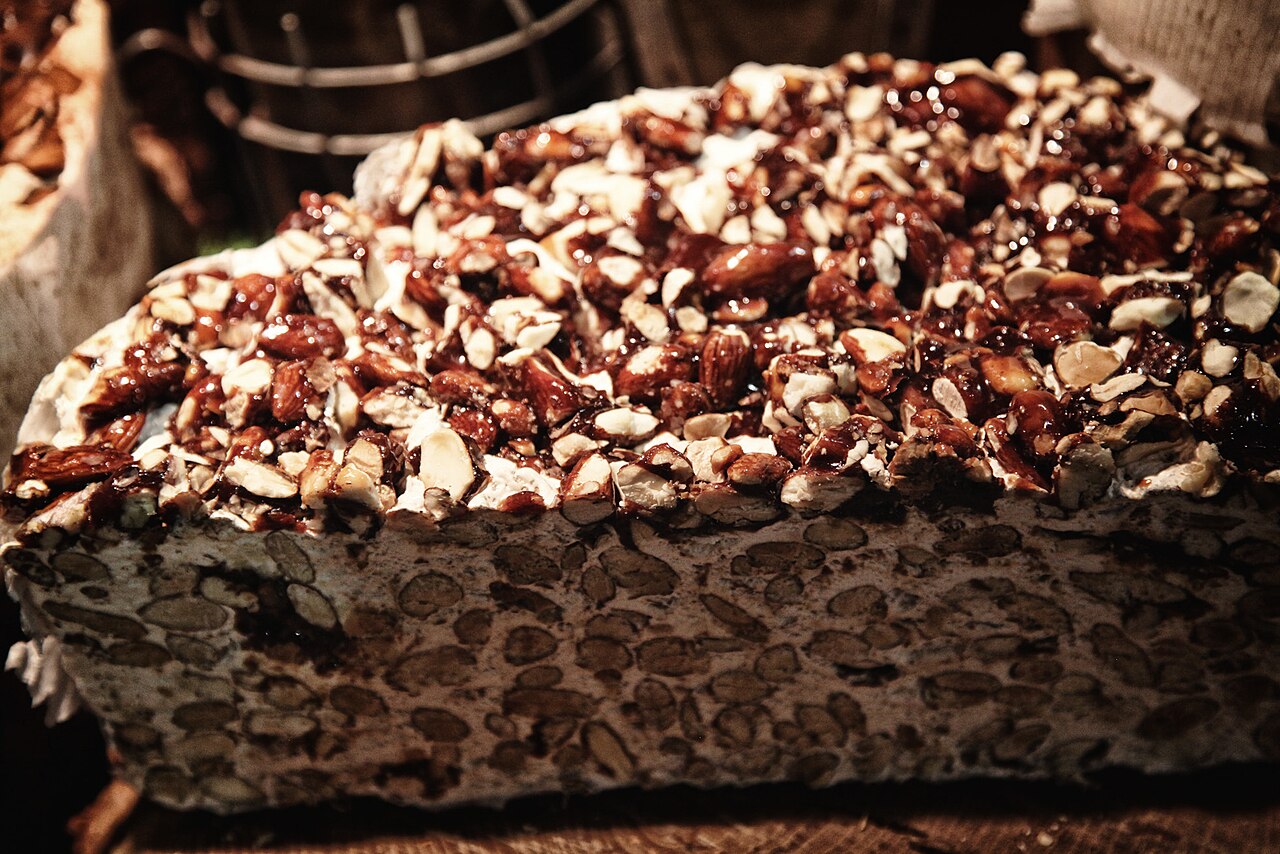
Nougat is a family of products made from sugar/honey syrup into which nuts are mixed:
- White (Montélimar) nougat — whipped egg whites, honey and/or sugar syrup, with whole roasted hazelnuts (and almonds); chewy to hard, depending on the drying of the mass.
- Dark (Torrone / Turkish) nougat — more caramelized syrup, hard and brittle.
Key points for nougat:
- The syrup is cooked to a precise temperature (sugar phase determines the final texture — soft to hard); therefore, a thermometer is mandatory.
- Honey gives the characteristic aroma and helps the texture.
- The kernel must be well dried and warm when mixed in so that the mass does not harden suddenly and moisture does not soften the product.
Caramelized, Salted, and Chocolate-Coated Kernels
This is the easiest entry product for OPGs as it does not require a full chocolate line.
Caramelizing (Sugar Coating)
From Croatian practice (company "Pantera", sugar coating machine by MIA FOOD, capacity 20 kg/h):
| Parameter | Value (Informative) |
|---|---|
| Drum Temperature | 210–240 °C |
| Kernel Batch | 10 kg (machine volume) |
| Process Duration | About 20 minutes |
| Line Capacity | ~20 kg/h |
Process: water is poured into a heated rotating drum, then the kernel (raw or pre-roasted — "roasted is tastier for eating"), and at a certain moment sugar, which crystallizes through further rotation and adheres to the kernel. The end moment is determined by visual control.
Croatian OPGs produce "three types of caramelized" as well as toasted kernels "with chili and sea salt flavor," "with onion and pepper flavor," and "with Mediterranean herbs" — proof that flavor variations open up new customers.
Salted Kernels and Chocolate-Coated Kernels
- Salted/Spiced Toasted Kernels — roasting + coating with oil/salt/spices; minimal equipment, quick market entry.
- Chocolate-Coated Kernels (Panned/Dragée) — kernels are gradually coated in layers of tempered chocolate in a rotating kettle (panning), then optionally given a shine or dusted with cocoa powder. This is done using panning / coating machines which are also produced in compact versions for small plants (e.g., small drums with capacities of a few kg).
Conching and Tempering — Two Processes That Separate Amateurs from Professionals
Conching
Conching is the long mixing, heating, and aeration of chocolate mass that finely reduces particle size, reduces moisture and volatile acids, and develops flavor and texture. It lasts from several hours to several days.
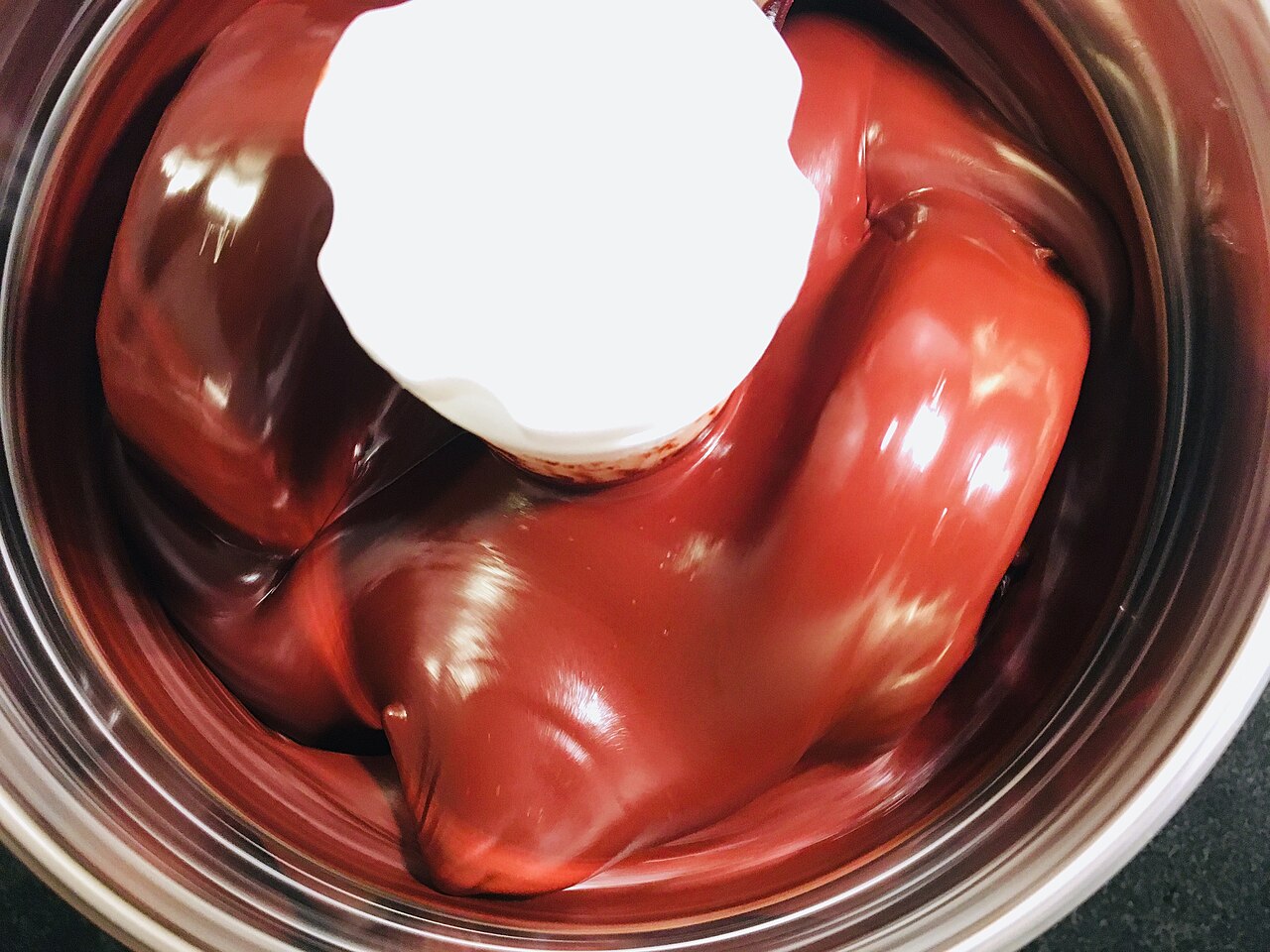
In small plants, conching and fine grinding are often performed by a ball mill or stone mill (melanger). From Croatian research on hazelnut cream products, a laboratory ball mill operated as follows (informative):
| Parameter | Value |
|---|---|
| Mass/Bath Temperature | 50–60 °C |
| Mixing Speed | 60–70 rpm |
| Ball Mass (Stainless Steel) | 3 kg (lab scale) |
| Duration | 3–3.5 h |
The mill was constructed as a vessel with a double wall connected to a water bath for constant temperature — crucial because chocolate must not overheat nor cool down and harden during processing.
Tempering
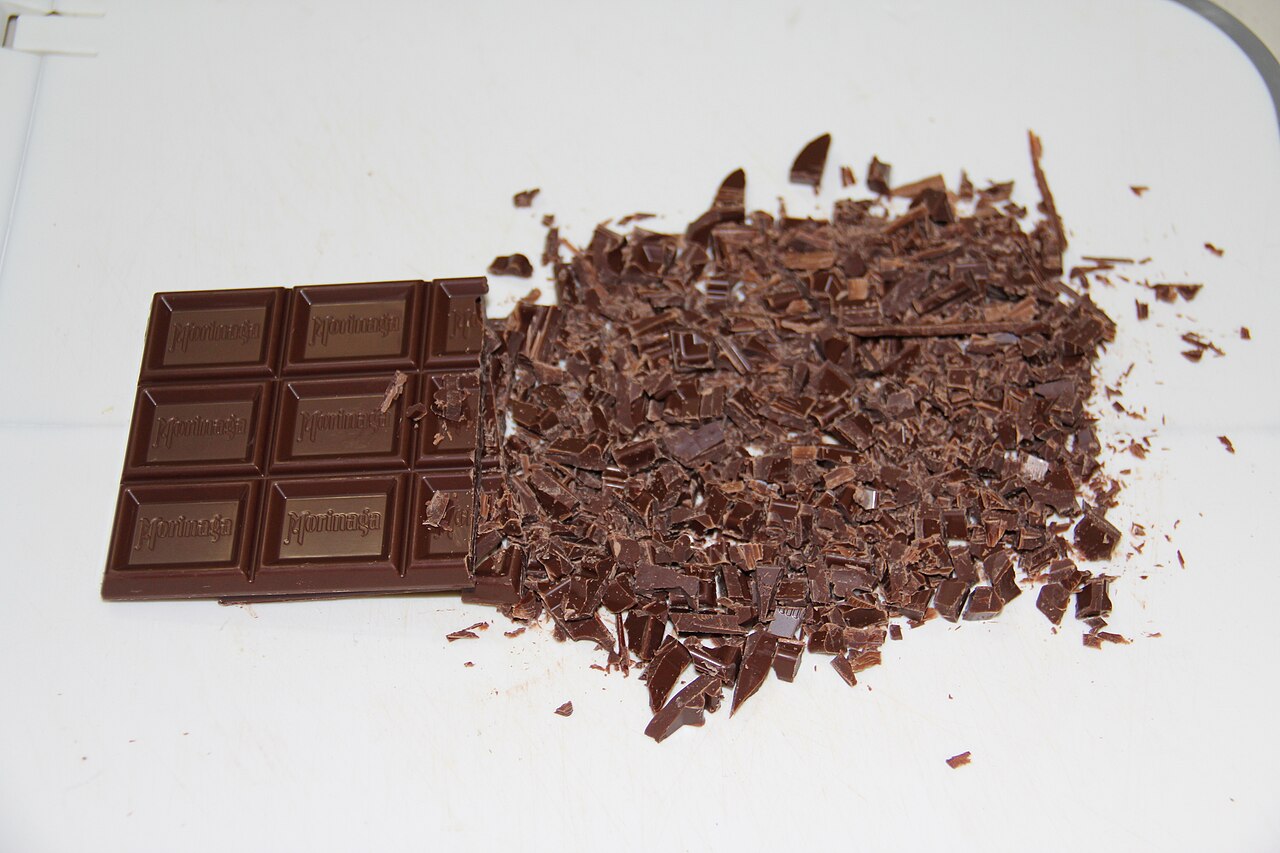
Tempering is the directed crystallization of cocoa butter into the stable form V (beta crystals). Only form V gives shine, firm snap, and smooth melting in the mouth, and prevents bloom. Without tempering, chocolate looks dull, crumbles, and melts on touch.
Typical temperature curve (informative; depends on chocolate and environmental conditions):
| Chocolate Type | Melting | Cooling (Seed Crystals) | Working Temperature |
|---|---|---|---|
| Dark | ~45–46 °C | ~28–29 °C | ~31–32 °C |
| Milk | ~45 °C | ~27–28 °C | ~29–30 °C |
| White | ~40–45 °C | ~26–27 °C | ~28–29 °C |
The working window of 31–32 °C for dark chocolate is not arbitrary: this is precisely the temperature range in which beta-V crystals form and persist, while unstable forms melt. A deviation of just 1 °C pushes the mass into incorrect crystal forms, so precision (thermometer, tempering machine) is decisive. For small batches, benchtop tempering machines are used (e.g., compact devices that melt and temper in one unit).
Equipment for Small-Scale Operations (OPG) — Estimated Investment Sequence
Equipment is acquired gradually, based on the product launched first:
- Roaster / Dryer — for controlling roasting and kernel moisture.
- Blancher / Pellicle Removal Machine (or manual).
- Caramelizing/Sugar-Coating Machine — e.g., capacity ~20 kg/h for entering the market with caramelized kernels.
- Paste Mill (Ball Mill / Stone Melanger) — for gianduja, pralines, and spreads; also serves as a conche.
- Tempering Machine — for molding, enrobing, and pralines.
- Panning / Coating Pan — for chocolate-coated kernels.
- Molds, Cooling Tunnel/Chamber, Packaging and Labeling Equipment.
Most small machines (crushers, presses, mills) in the literature are driven by electric motors of 1.5 kW and are intended for "personal needs of small fruit growers," not for serial production — which serves as a good benchmark for sizing the initial investment.
Regulatory and Labeling Aspects
Before entering the market, the product must meet legal definitions and labeling rules. Key points (informational — always verify current EU and Croatian regulations and consult advisory services):
- Protected Name "Gianduja." In the EU, the names "gianduja" / "chocolate with gianduja hazelnuts" may only be used for a mass that meets the compositional thresholds derived from the Cocoa and Chocolate Products Directive (2000/36/EC) and Codex standards: the chocolate portion must contain at least 32 % dry cocoa solids (of which ≥8 % is cocoa butter) and 20–40 % finely ground hazelnuts; for milk gianduja, >10 % milk solids and 15–40 % hazelnuts. If the product does not meet these thresholds, it cannot be called "gianduja."
- Allergen Labeling. Hazelnut is a tree nut — a legally defined allergen that must be emphasized on the label (e.g., bolded). Beware of cross-contamination: if other tree nuts, gluten, eggs, milk, or soy are processed in the same facility, a statement such as "may contain traces of…" is required. Studies on chocolate show that almond and hazelnut allergens can be detected even in trace amounts (levels in the range of 1–25 ppm), making control a real obligation.
- Mandatory Labeling Elements: product name, ingredient list in descending order, allergens, net quantity, shelf life and storage conditions, manufacturer/OPG details, batch (lot) number, and a nutritional table (energy, fats and saturated fats, carbohydrates and sugars, proteins, salt).
- Emulsifier and Labeling: if lecithin (often soy-derived) is added, it must be listed as both an ingredient and a potential allergen.
- Ecological ("Organic") Products may carry the organic label only with certification; on the Croatian market, there are already certified organic pralines, chocolates, and hazelnut spreads.
Practical Recommendations and Common Mistakes
- Grind Thoroughly. The most common mistake of small producers is a grainy paste. Grind long enough and fine enough (target below ~20–30 µm) — graininess is noticeable and negatively impacts quality perception.
- Maintain Temperature. Without constant temperature control (double-walled vessel, water bath), the mass may burn or harden; tempering is compromised by deviations of just ±1 °C.
- Kernel Freshness and Moisture. High oil content means susceptibility to rancidity — use fresh, well-dried kernels and packaging that protects against air and light.
- Do Not Skip Tempering for molded/enrobed products — otherwise, you will get bloom and poor snap.
- Standardize the Recipe (weighing to the gram) so batches are reproducible — customers expect the same taste every time.
- Label Before Selling, Not After. Allergens and the nutritional table are not optional; resolve them before launch.
- Start Simple. Caramelized and spiced kernels, along with simple pralines/spreads, require the least equipment and offer a quick return, while gianduja and molded pralines come as the next step.
Gallery
Sources
This article is an AI summary compiled from an internal literature collection on hazelnuts (RAG corpus) and public sources. Figures, dosages, and temperatures are informational and should be verified with current regulations and advisory services. Main sources used:
- Allegrini et al. (2022). Multipurpose plant species and circular economy: Corylus avellana L. as a study case. (RAG corpus — history and market of gianduja)
- Technology and Economics of Organic Hazelnut Production / Organic Production and Organic Hazelnut Products in Croatia (final thesis, 2022) — cultivars for the confectionery industry, organic pralines and chocolates on the HR market (RAG corpus)
- Processing of Hazelnuts at Pantera Company (2025) — line and caramelizing/sugar-coating parameters (RAG corpus)
- Šarić, D. (2024). Innovative Cream Products as Part of Circular Hazelnut Processing (Faculty of Food Technology Osijek) — ball mill, paste processing parameters (RAG corpus)
- Influence of Casein Addition on Properties of Nutritionally Enhanced Cream Spreads (2021) — laboratory ball mill, particle size, temperature (RAG corpus)
- Determination of Almond and Hazelnut Allergens in Chocolate Samples by ELISA Method (2022) — allergens and labeling (RAG corpus)
- State and Trends in Production and Consumption / Technological and Economic Characteristics of Hazelnut Cultivation — kernel composition (oil 52–78 %) and confectionery application (RAG corpus)
- Gianduja (chocolate) — Wikipedia — EU/Codex compositional thresholds and history — https://en.wikipedia.org/wiki/Gianduja_(chocolate)
- Valrhona, L'École du Grand Chocolat — Giandujas — https://www.valrhona.com/en/l-ecole-valrhona/discover-l-ecole-valrhona/chocolate-terminology/giandujas
- Hill Country Chocolate — Uncovering the Secrets of Chocolate Praliné and Gianduja — https://www.hillcountrychocolate.com/blogs/news/uncovering-the-secrets-of-chocolate-praline-and-gianduja
- Chocolate Tempering: A Perspective (PMC) — crystal form V, tempering — https://pmc.ncbi.nlm.nih.gov/articles/PMC12063059/
- Mae Innovation — Tempering Chocolate: Technique & Temperatures — https://mae-innovation.com/en/tempering-chocolate-a-complete-guide-to-mastering-it-like-a-pro/
- Kadzama / Mangharam (ChocoMan) — compact panning / coating machines for small-scale operations — https://kadzama.com/c/equipment/coating-machine/
Recommended equipment
🔎 nut roaster — Amazon →Affiliate links — we may earn a small commission at no extra cost to you.
Handheld Nut Cracker
For processing small batches of nut kernels.
| Use Case | Option Type | What to Check Before Purchase |
|---|---|---|
| Small quantity processing | Manual lever cracker | Crushing mechanism and shell separation |
| Kernel preservation | Adjustable pressure tool | Ease of cleaning and durability |
| High volume needs | Electric cracking machine | Professional equipment for speed |