Water in the field: irrigation sources and drainage before planting
Content generated by artificial intelligence — verify before application
This article was automatically compiled from a collection of hazelnut literature using artificial intelligence and may contain errors or outdated data. It serves as a starting point for further research, not as professional advice. Dosages, products, and timing are informative and depend on the cultivar, location, and current regulations — always consult advisory services and official sources before application.
Water is a double-faced aspect of every hazelnut plot: when there is insufficient water during the growing season, yield and kernel quality decline; when there is too much water and it stagnates in the root zone, the roots suffocate, bushes become stunted, and eventually fail. Therefore, water assessment in the field must be carried out before planting — and from two perspectives simultaneously: how much water can be supplied (source and quality of irrigation water) and how much excess water can be drained (risk of water retention and need for drainage). This article combines both aspects of this issue, with an emphasis on concrete figures from Croatian and international literature and on practical steps to take while the plot is still empty.
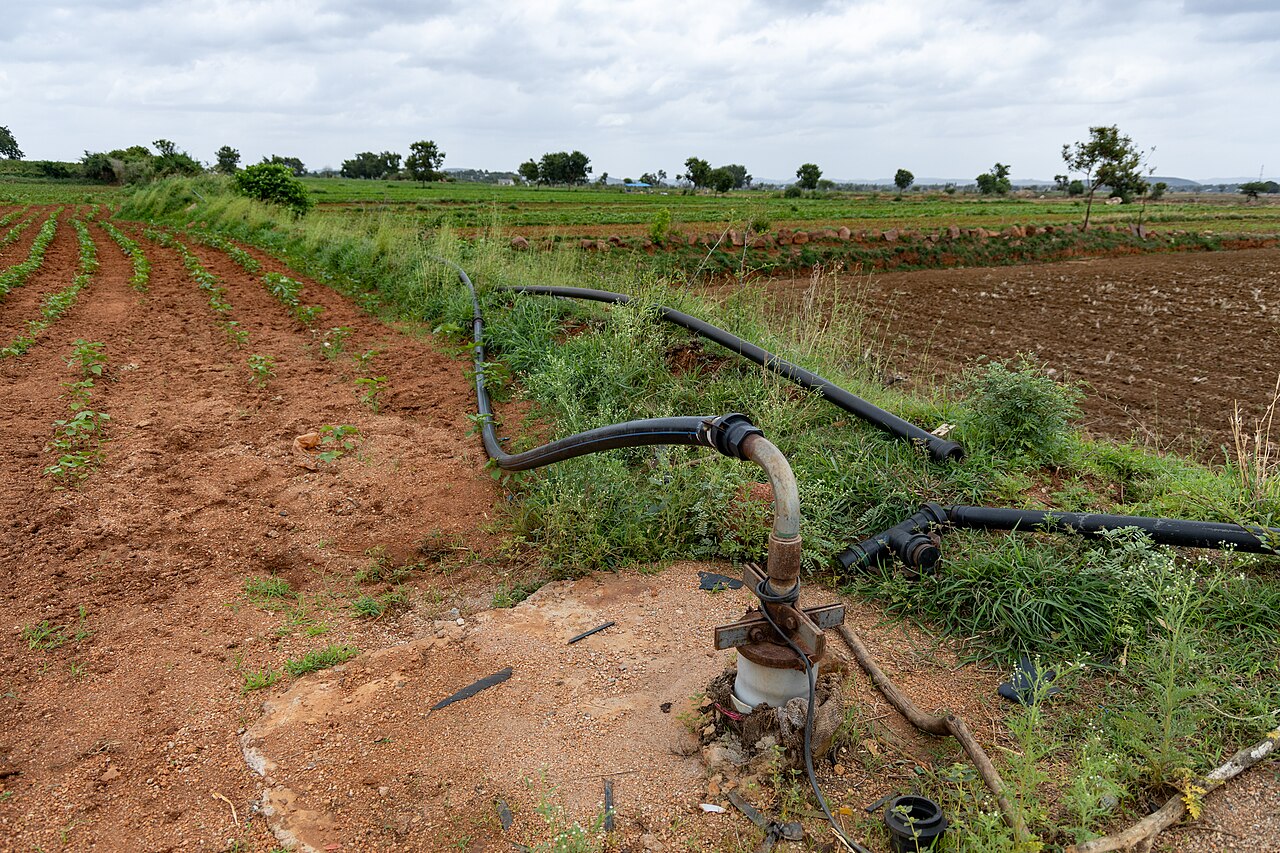
Why water decisions are made before planting
Hazelnut is a permanent orchard — its productive lifespan is measured in decades. Drainage, terrain leveling, filling depressions, and bringing in water sources are tasks that are difficult or impossible to carry out after planting without damaging the roots and the orchard structure. The "drip irrigation" system is usually installed on the first wire of the trellis and it is logical to plan it together with the orchard structure in the first year, while young plants are being irrigated and provided with wind protection.
Practically, this means that water exploration work and drainage assessment are carried out in the same phase as soil analysis — before trenching and planting. Mistakes at this stage become a permanent limitation for the entire orchard.
How much water does hazelnut need
Hazelnut has high soil moisture requirements because it relatively shallowly spreads its root system and cannot effectively utilize moisture from deeper layers. Soil moisture is needed throughout the growing season, approximately from mid-April to mid-September, with the highest needs during the period of fruit growth and filling. In practice, irrigation in June positively affects fruit growth and size, while irrigation in August affects kernel mass.
The following approximate water requirement values (precipitation + irrigation) are repeated in the literature:
| Indicator | Approximate Value | Note |
|---|---|---|
| Total annual precipitation (optimum) | 800–1,200 mm | with proper distribution throughout the year |
| Needs during vegetation (April–September) | 350–400 mm | period of highest needs |
| April–July period | approx. 280 mm (≈ 70 mm/month) | fruit set and growth |
| Minimum daily need (example from a study) | approx. 3 mm/day | basis for well dimensioning |
These values are informative and depend on the cultivar, soil, local climate, and year. The key message is: even in continental Croatia, where annual precipitation often exceeds 400 mm, the distribution of precipitation does not match plant needs — in July and August, evapotranspiration is high and precipitation is insufficient, making irrigation necessary for stable and high yields.
Estimation of annual water need (examples from studies)
Different Croatian environmental protection studies provide very different figures because they depend on area, soil, and calculation method. A few illustrative examples (informative):
| Location / Project | Area | Estimated Annual Need |
|---|---|---|
| Sisak (full production) | 5.2 ha | ≈ 5,200 m³ (average); up to 10,400 m³ (max.) |
| Sunja, Donji Hrastovac | orchard | ≈ 5,000 m³/year |
| Vojnić | ≈ 40 ha | up to 3,880 m³/year (planned) |
| Nova Kapela | orchard | up to 900 m³/year |
The large range (from hundreds to tens of thousands of m³) shows that the figure should not be copied from another project — it is always the result of a local calculation based on area, climate, and soil. In calculations, a significantly smaller amount is taken for a young orchard than for an orchard in full production (in the Sisak example, approx. 1,040 m³ for a young orchard vs. 5,200 m³ in full production).
Gallery
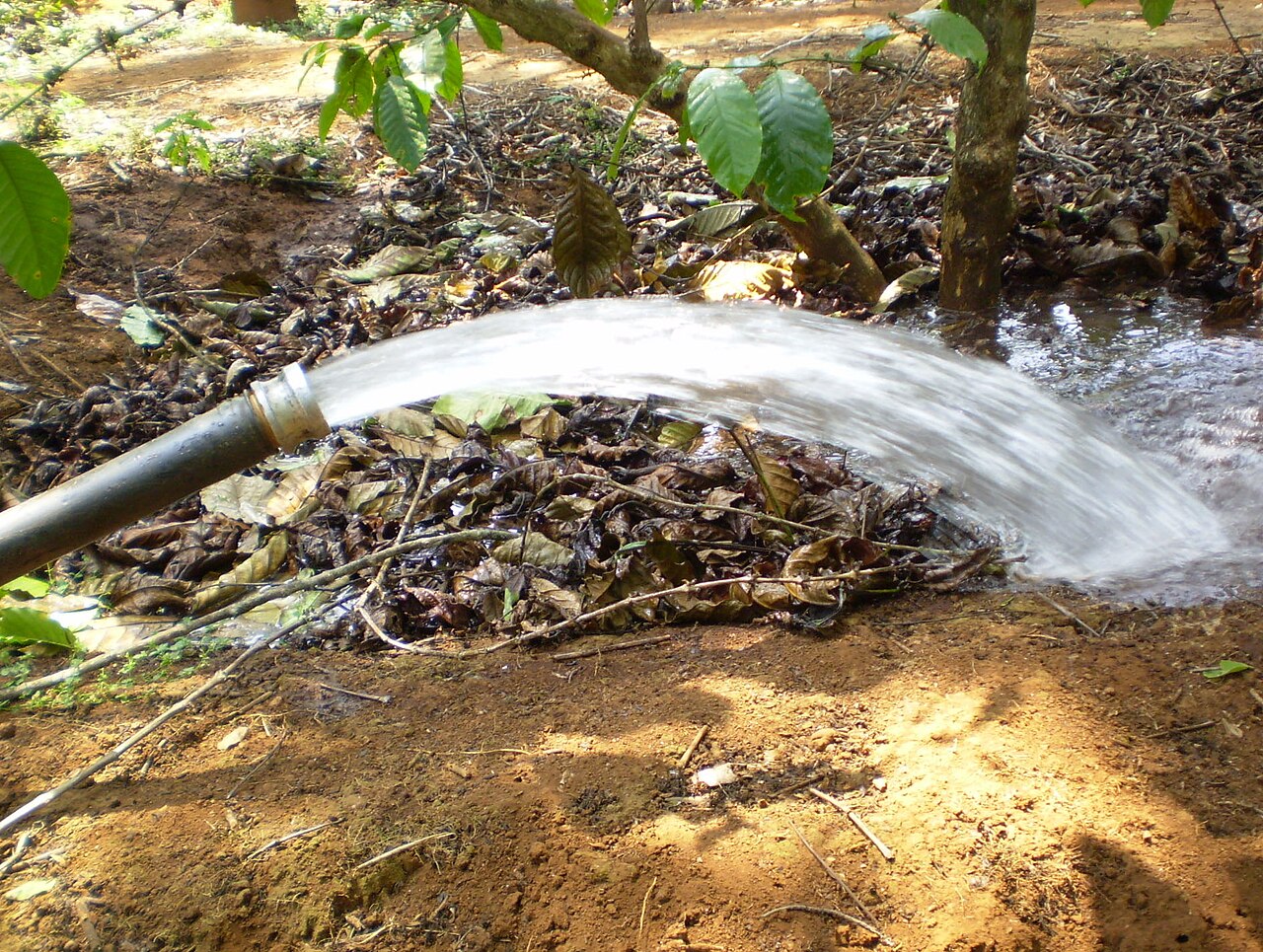
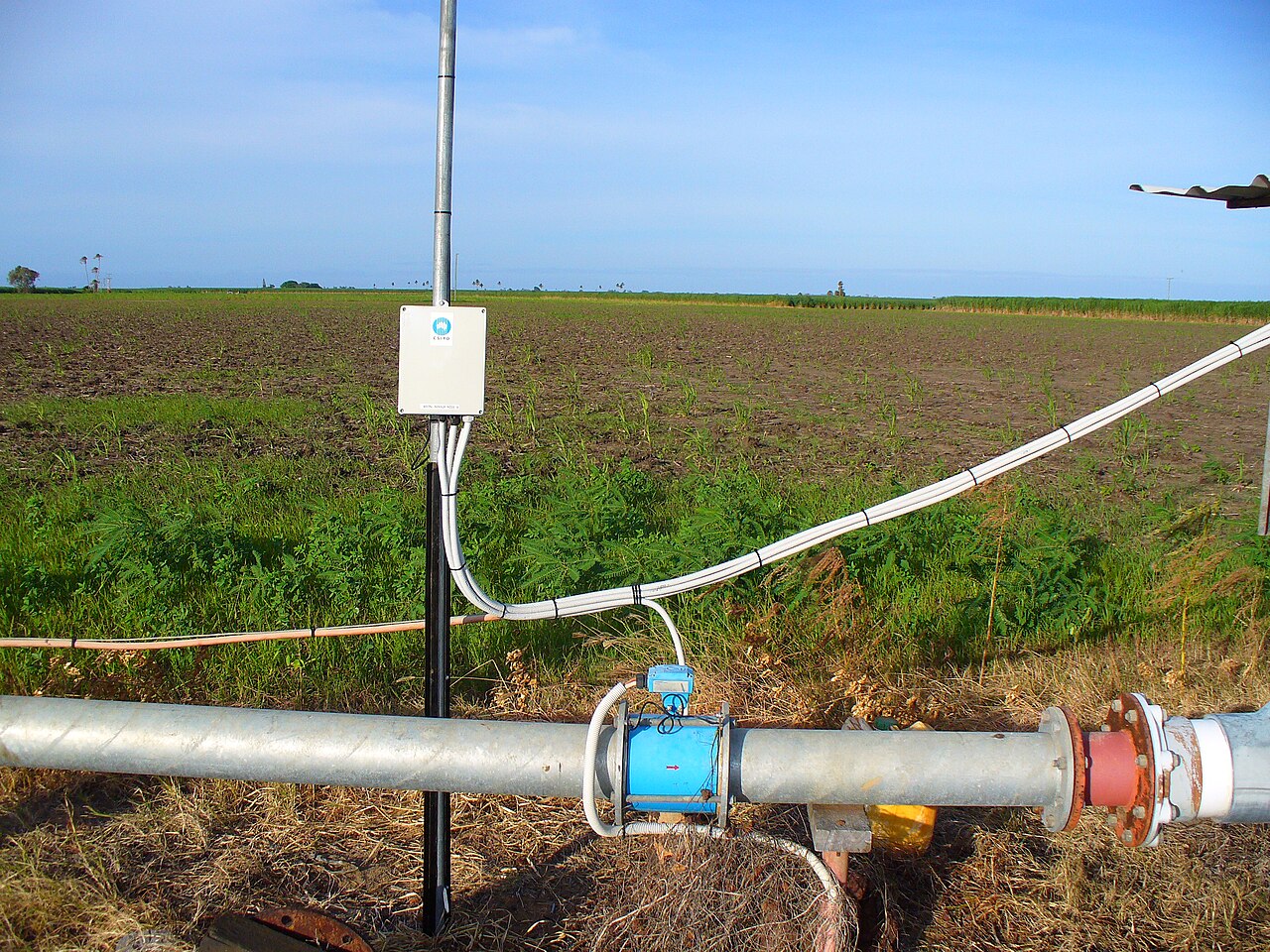
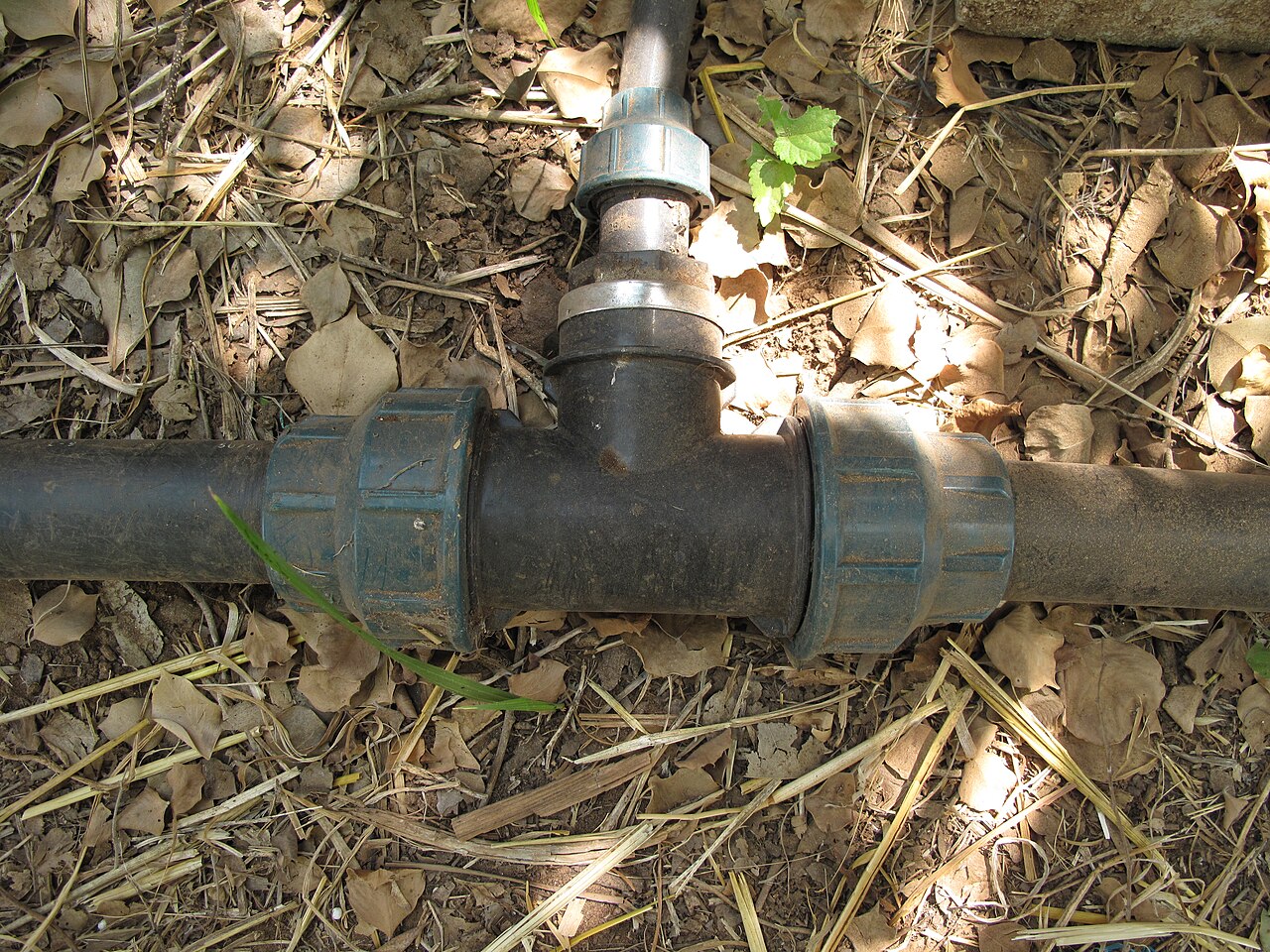
Water sources for irrigation
In reviewed Croatian practice, three main water sources appear, usually in combination:
- Groundwater from a well (borehole) — the most common solution. Water is pumped using a submersible pump. In one example from Glina, a drilling depth of approx. 35 m was foreseen, and to meet the minimum need of 3 mm/day, the required well flow rate was 12.8 m³/h with a lift height of approx. 80 m. Pumping groundwater regularly requires water rights permits.
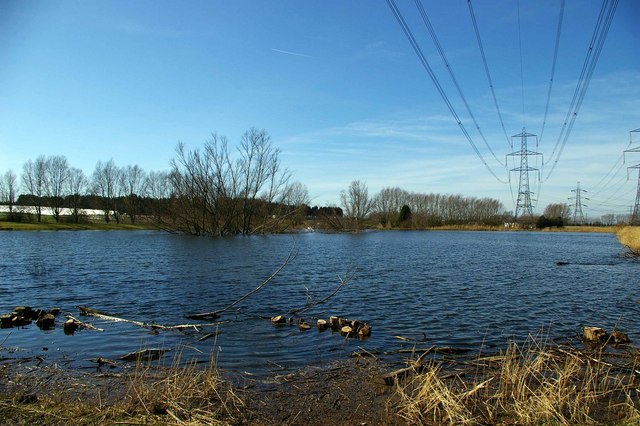
- Reservoir (open or closed) and rainwater collection — water is collected in a reservoir filled by precipitation, and supplemented with groundwater from a well when needed. The reservoir also balances the difference between the time water arrives (rain, well) and the time the plant needs it.
- Water delivery by tankers — a solution for smaller orchards or until a permanent source is built; the least secure and most expensive per m³.
For wells and reservoirs, one must also account for distance and elevation difference to the orchard. In one example from Baranja, the well was approx. 2,600 m from the orchard with an elevation difference of approx. 120 m, so the system was designed in three parts: well, reservoir, and irrigation distribution. Large elevation differences and distance mean higher energy costs for pumping and distribution, which enter the economic calculation of the location.
Checklist for water source assessment
- Is there a sufficiently productive well/source on or near the plot? Are hydrogeological exploration works needed?
- What is the actual flow rate of the source (m³/h) during the dry period, when water is most needed and sources are weakest?
- What is the distance and elevation difference from the source to the orchard (pumping and distribution costs)?
- Is a reservoir needed to balance water supply and demand?
- What permits are required for the intervention (water rights permit for pumping groundwater, consents)? Check this with competent water and advisory bodies.
Water quality for irrigation
Water quantity is not enough if the quality is poor. Poor water quality salinizes the soil over time, clogs emitters, and damages the plant. Although reviewed Croatian sources primarily emphasize quantity and water source, good practice (and from international protocols) is to perform a water analysis before planting, just as with soil analysis. When determining fertilizer doses through fertigation, both soil analysis and source water analysis are taken into account.
Parameters commonly checked (approximate, according to available agronomic practice):
| Parameter | Why it is important |
|---|---|
| Salinity / Electrical Conductivity (EC) | high salinity salinizes the root zone over time and reduces growth |
| Water pH | affects nutrient solubility and the operation of the fertigation system |
| Sand content / suspended particles | clogs emitters; for wells with high sand content, hydrocyclone filters are recommended |
| Organic load (reservoirs, lakes, watercourses) | requires sand filters with automatic backwashing and safety filters |
Practical consequence for the project: the filtration system is chosen according to the water source. For water from reservoirs, lakes, and open watercourses, sand (grit) filters with automatic backwashing are recommended, and for well water with higher sand content, hydrocyclone filters are recommended — in both cases with safety filters. Incorrectly chosen filter or unfiltered water are the main causes of emitter clogging in "drip irrigation" systems.
Irrigation system: why "drip"
In all reviewed Croatian studies, localized "drip irrigation" dominates, and for good reason. Advantages consistently cited:
- low water and energy consumption — only a narrow zone around the plant and within the row is moistened, while the inter-row space remains dry;
- higher yields and better fruit quality;
- precise dosing of water according to development phase and possibility of fertigation (fertilization through water);
- automatic operation and control; relatively low operating and maintenance costs;
- applicable to all soils, slopes, and plot shapes.
Irrigation frequency depends on soil type and is usually every 1–3 days during vegetation; some studies plan applications once or twice a week. Modern systems are connected to soil moisture sensors and weather stations, so the central unit turns irrigation on and off based on measured values — thereby saving water and energy. All these are informative values; the final schedule must be adapted to location, cultivar, and soil.
Reservoir size — rough orientation
To apply 1 inch (≈ 25 mm) of water to 1 acre (≈ 0.4 ha) in one application, approx. 27,000 US gallons (≈ 100 m³) are needed. In a dry year, irrigation is repeated multiple times during critical periods, so the reservoir must be large enough to cover multiple applications. Use this figure only as a rough check of magnitude, not as a design calculation.
Water retention risk and drainage requirements
The other side of the coin is equally important: hazelnut does not tolerate excess water in the root zone. Several warnings are clearly repeated in the literature:
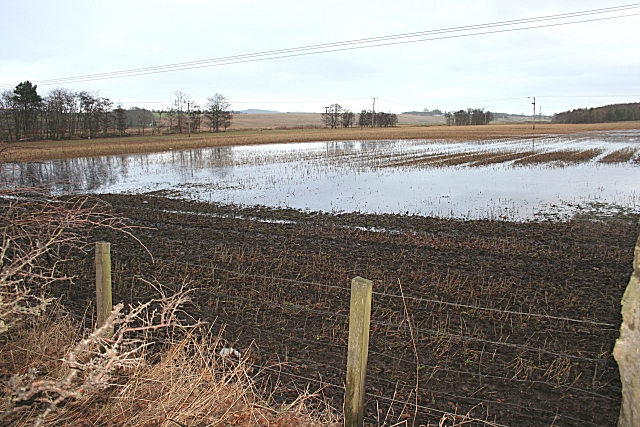
- hazelnut does not like dry, cold, and compacted soil, and yields small and irregular crops on cold, heavy soils;
- it tolerates poorly pseudogley soils with shallow impermeable layers, especially in micro-depressions where surface water stagnates;
- where water stagnates, root asphyxiation (suffocation) occurs, bushes become stunted, and over time they die off;
- it cannot tolerate high groundwater levels and cannot tolerate swampy soils.
Therefore, for intensive cultivation, deeper, well-drained soils are chosen that can accumulate larger quantities of physiologically active moisture within the profile, with an optimal water and air regime (typically chernozem, alluvium, or gley soil). If hazelnut is planted on shallower soils, moisture must be ensured through irrigation—but this is only viable if the soil is not prone to water retention.
How to identify problematic terrain before planting
| Sign on the terrain | What it indicates | Procedure |
|---|---|---|
| Micro-depressions where water stands after rain | Surface water stagnation | Leveling / filling depressions before planting |
| Shallow impermeable layer (pseudogley) | Impeded vertical drainage | Deep trenching, drainage if necessary |
| High groundwater level | Root suffocation | Often unsuitable for hazelnut; mandatory assessment before planting |
| Heavy, compacted soil | Poor aeration and compaction | Trenching, avoid compaction by machinery, sow grass between rows |
Land improvement and drainage measures
Land preparation before planting regularly includes work that directly reduces the risk of water retention:
- Land leveling and filling depressions — heavy machinery (excavators) are used to level boundaries, fill depressions, and make the terrain more homogeneous, thereby eliminating areas where water could stagnate.
- Deep trenching (up to ≈ 60 cm) — loosens the soil, increases aeration and the capacity to absorb winter moisture, and improves vertical permeability; carried out when soil moisture is favorable (from summer to winter).
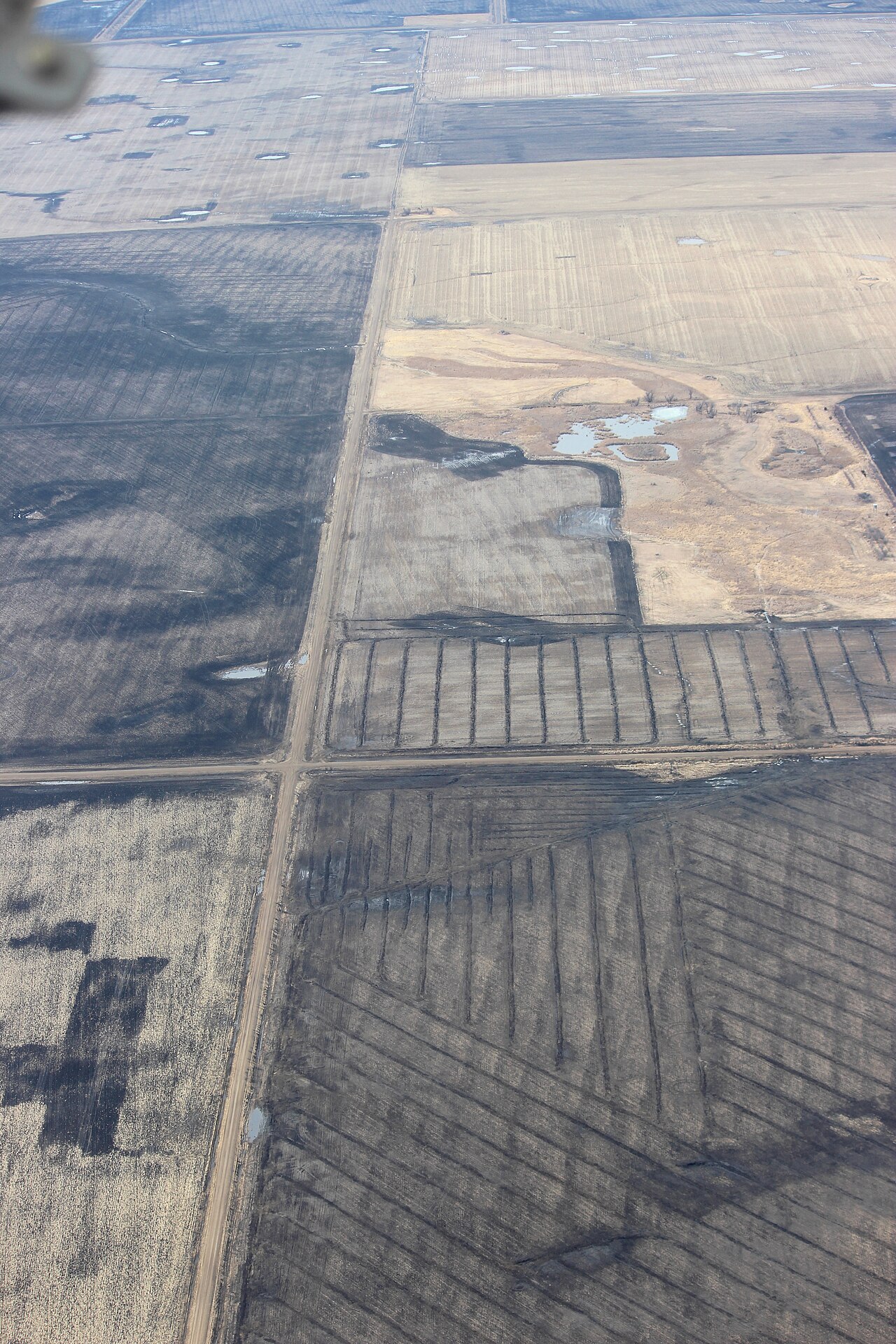
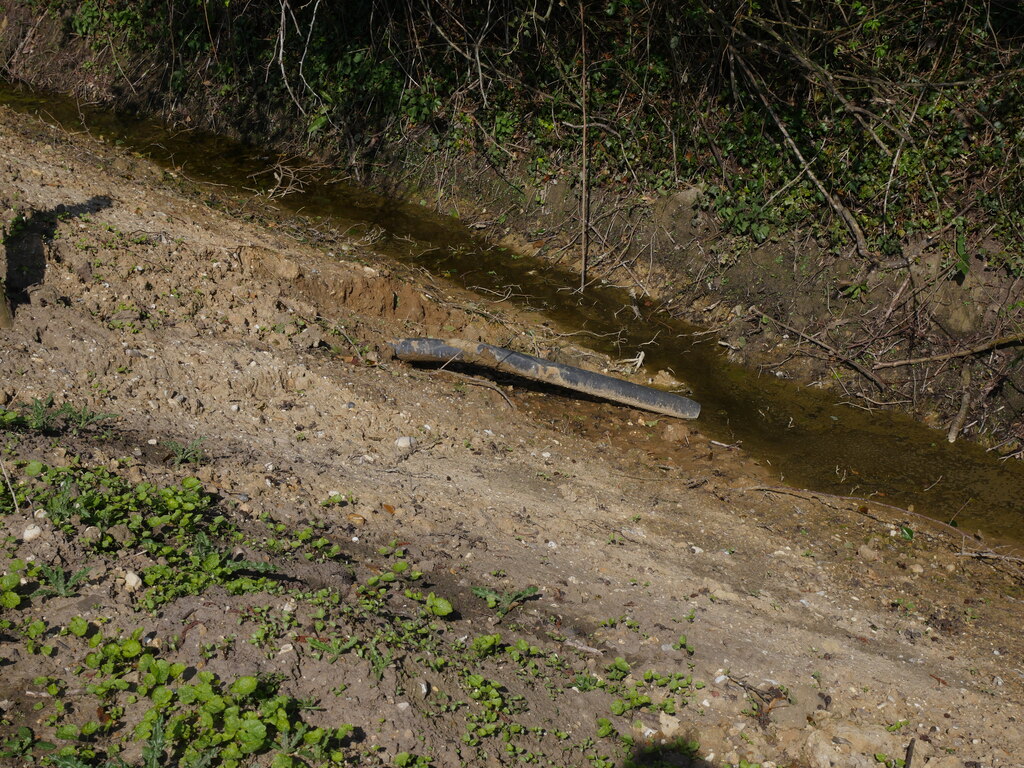
- Drainage (subsurface and surface) — for terrains with excess precipitation, high groundwater, or a tendency to become waterlogged. Surface drainage removes water from the surface via channels, while subsurface drainage uses perforated (drainage) pipes laid in trenches filled with gravel or coarse aggregate (so-called French drainage) that remove excess water and lower the groundwater level.
- Sowing grass between rows with clover-grass or grass-clover mixtures — helps maintain the orchard, reduces compaction of heavy soils during machinery passage, and improves structure (and thus the water-air regime).
All these interventions must be carried out while the plot is empty. Laying drainage pipes or leveling in an established orchard is practically impossible without damaging the roots.
Combining both sides: water balance on the plot
The best terrain for hazelnut is one where both sides of the balance are easily managed: an available and abundant source of quality water for irrigation during dry months and good natural or achievable drainage that prevents stagnation. A plot that is permanently wet is usually a poor choice even if the water source is excellent; similarly, a plot with excellent drainage but no water source limits yield in dry years.
Practical order of assessment before planting:
- Soil analysis — type, depth, permeability, impermeable layers, groundwater level.
- Drainage assessment — are there depressions, pseudogley, waterlogged areas; is drainage needed and what kind.
- Water source assessment — yield, quality, distance, and elevation difference; permits.
- Water requirement calculation — based on area, climate, and soil (approximately 350–400 mm during vegetation with irrigation supplementation).
- System design — "drip by drip" with appropriate filtration according to the source, preferably with moisture sensors and a weather station.
- Land improvement — leveling, trenching, drainage, and laying the distribution network, all before planting.
Practical recommendations and common mistakes
- Do not copy water figures from other projects. Annual requirements vary from hundreds to tens of thousands of m³ depending on area and location — always request a local calculation.
- Measure source yield during dry periods, not in spring when water is abundant; the source must cover needs precisely when there is no rainfall.
- Analyze water, not just soil. Salinity and suspended particles damage both soil and irrigation systems long-term; choose filters according to the source.
- Avoid micro-depressions and pseudogley. These are areas where hazelnut loses yield and dies due to root suffocation; resolve with leveling and/or drainage before planting.
- Do not plant on high groundwater. This is one of the few restrictions that is difficult to correct later.
- Plan drainage and distribution together with orchard construction, in the first phase, while the terrain is empty.
- Account for energy for pumping. Large distance and elevation difference of the source permanently increase production costs.
Sources
This article is an AI summary compiled from a collection of hazelnut literature (internal RAG corpus) and public sources. Values are informative; dosages, quantities, and timelines depend on the cultivar, location, and applicable regulations — consult advisory services and official sources before application. Main sources used:
- Environmental Protection Study — groundwater abstraction and irrigation of hazelnut orchard, Donji Hrastovac, Municipality of Sunja (2021)
- Environmental Protection Study — establishment of permanent hazelnut orchard ≈ 40 ha, Municipality of Vojnić (2021)
- Environmental Protection Study — water abstraction for hazelnut orchard, Glina, Sisak-Moslavina County (2022)
- Environmental Protection Study — groundwater abstraction, Dragodinac (2021)
- Environmental Protection Study — water abstraction, Nova Kapela (2021)
- Environmental Protection Study — groundwater abstraction, Zmajevac I, Kneževi Vinogradi (2021)
- Establishment of permanent hazelnut orchard — environmental protection study (BBZ) — bbz.hr
- "Technology and economics of organic hazelnut cultivation" (2021) — Šoškić, Krpina (cited)
- "Mechanization in hazelnut production and processing" (MINAS-ZRNO, 2021)
- "Economic analysis of hazelnut production" (2023)
- Hazelnut — Vrtlarica.hr (cultivation and irrigation)
- "Hazelnut cultivation" (pdfcoffee) — drainage and soil selection
- Netafim — Hazelnut Irrigation & Fertigation Guidelines — netafim.com
- Irritec — Drip Irrigation for Hazelnut Trees (filtration according to water source) — irritec.com
- Xinhua Jia — Irrigation for Hazelnut — midwesthazelnuts.org
- Province of British Columbia — Hazelnut orchard planning — gov.bc.ca
- Grimo Nut Nursery — Hazelnut Farming for Profit (accumulation size) — grimonut.com
- Types of drainage (surface and subsurface, French drainage) — general civil engineering sources
Recommended equipment
🔎 soil ph test kit — Amazon →Affiliate links — we may earn a small commission at no extra cost to you.
Handheld Soil pH Meter
For rapid field checks, but always confirm with laboratory analysis.
| Use Case | Option Type | What to Check Before Purchase |
|---|---|---|
| Quick field screening | Portable digital meter | Calibration stability and probe durability |
| Routine monitoring | Analog or digital | Temperature compensation features |
| Verification needed | Professional lab test | Sample preparation and reporting standards |