Istrian Long Hazelnut
Content generated by artificial intelligence — verify before application
This article was automatically compiled from a collection of hazelnut literature with the aid of artificial intelligence and may contain errors or outdated data. It serves as a starting point for further research, not as professional advice. Dosages, products, and timing are informative and depend on the cultivar, location, and current regulations — always consult with an advisory service and official sources before application.
Istrian Long (synonyms: Istarski dugi, Istarski krupni, Istarski debeloplodni; Slovenian: Istrska dolgoplodna leska) is the most significant and widespread autochthonous Croatian hazelnut (Corylus avellana L.) cultivar. It is an old Istrian population that was once primarily cultivated on the western coast of the Istrian peninsula, but is now spread throughout almost all of Croatia — from the coastal region to the continental part (especially around Bjelovar). According to some literature, it is considered a population rather than a single cultivar, as it encompasses a larger number of related types. This profile summarizes fruit and kernel morphology, yield and quality, pollinizers, and cultivation area and conditions, based on a collection of hazelnut literature (RAG corpus) and public sources.
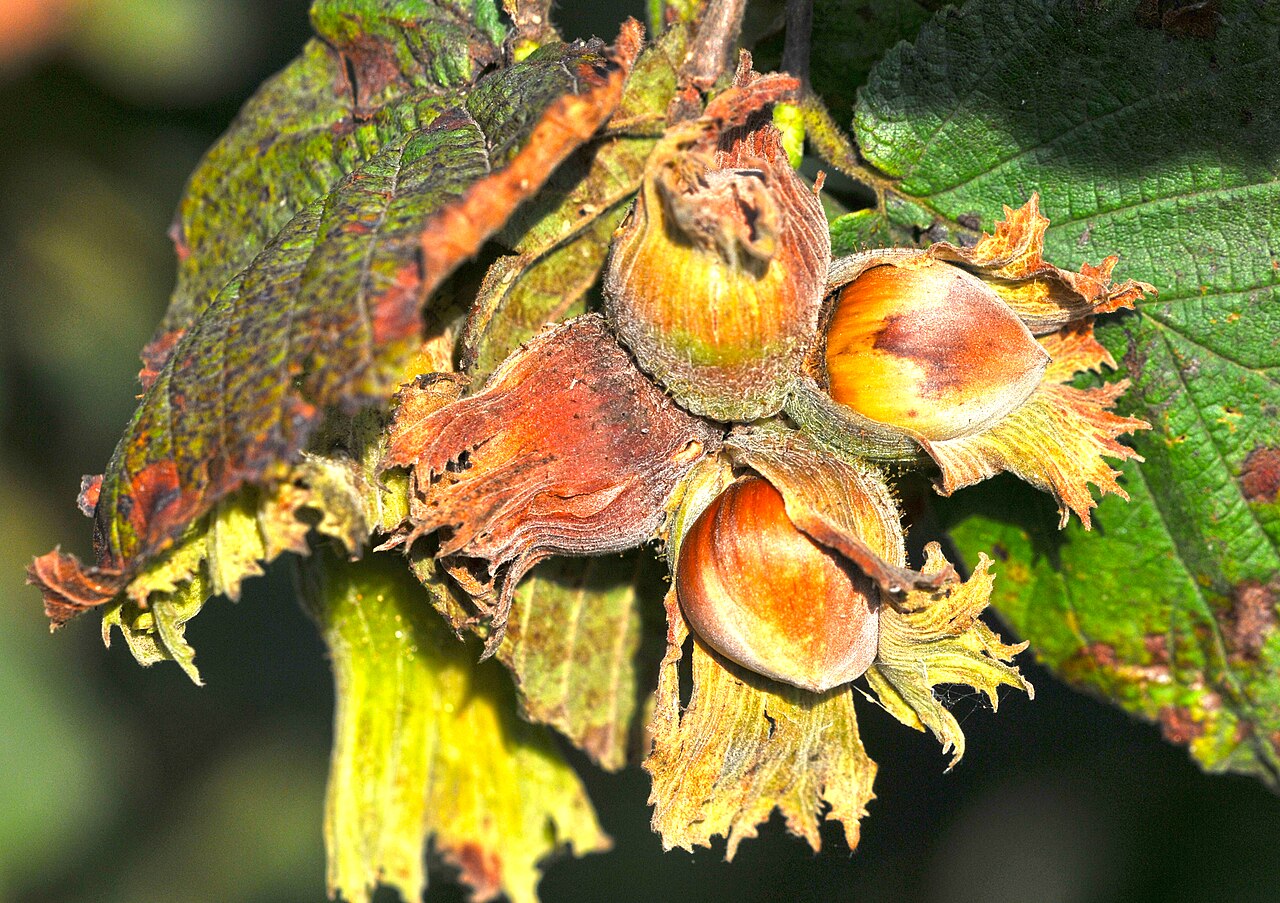
Origin, Status, and Distribution
Istrian Long is an autochthonous Istrian cultivar/population that has adapted well to the continental part of Croatia. According to literature data, it is the most prevalent hazelnut cultivar in Croatia, reportedly present on approximately 80 % of all orchards. This dominance stems from a favorable combination of biological and economic traits: early, regular, and abundant bearing, good quality and aromaticity of the nuts, good storability, and relatively good adaptability to various ecological conditions.
| Trait | Value |
|---|---|
| Botanical species | Corylus avellana L. |
| Status | Autochthonous Croatian cultivar / old Istrian population |
| Synonyms | Istarski dugi, Istarski krupni, Istarski debeloplodni; Istrska dolgoplodna leska (SLO) |
| Origin | Western coast of Istria (Croatia) |
| Distribution | Almost all of Croatia; ~80 % of orchards (literature data) |
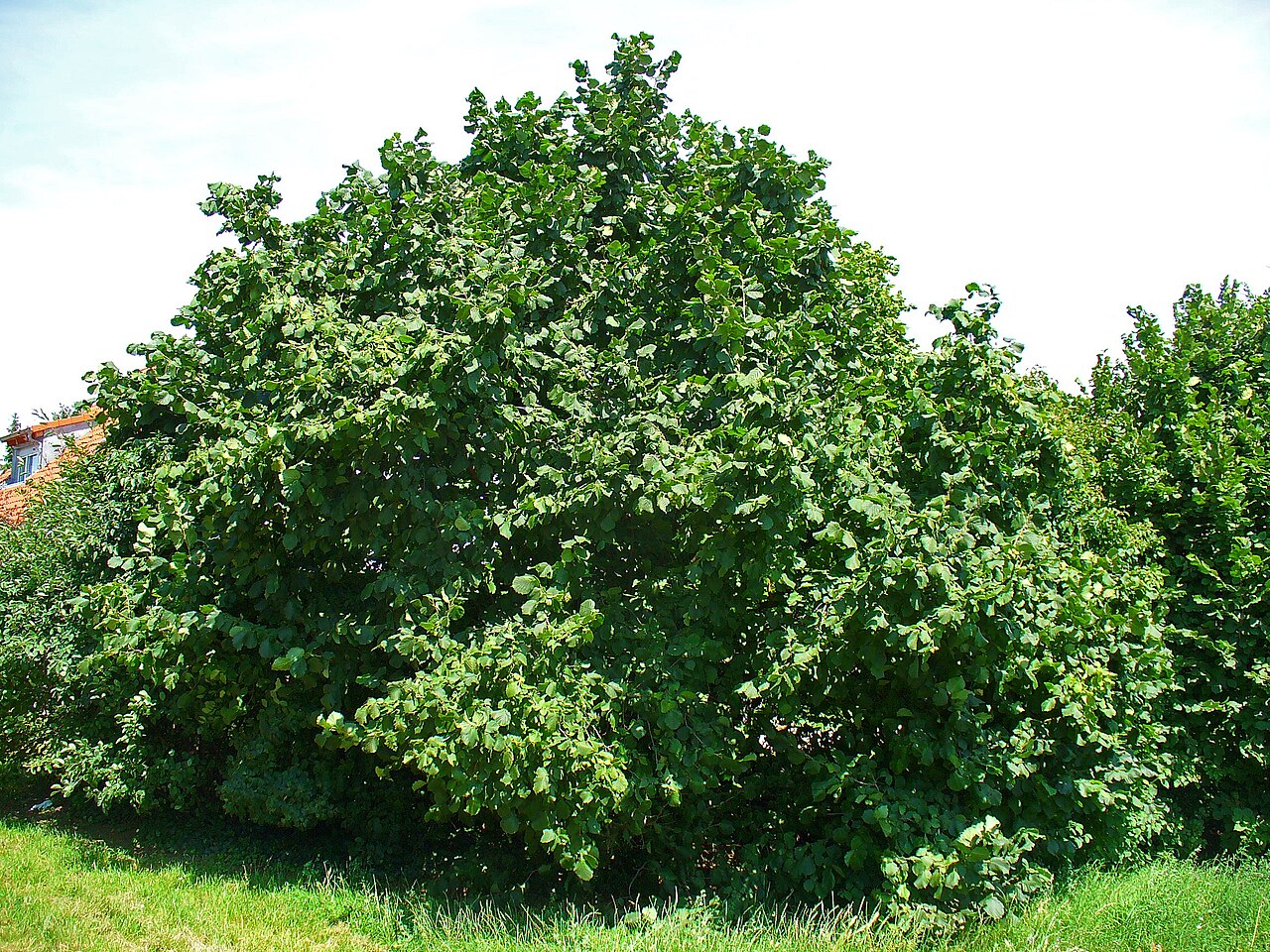
| Habit | Bush with a more horizontal, spreading growth; spherical canopy |
| Flowering time | Medium-early |
| Ripening | Medium (first half of September) |
Note on nomenclature. Since this is a population with multiple types, differences in nut size and shape, as well as in bearing, may occur between individual clones of the same name in orchards and nurseries. This is important when purchasing planting material and interpreting figures from various sources.
Habit and Vegetative Traits
Istrian Long is described as a cultivar of moderate to average vigor, with a bush of more horizontal, spreading growth and crinkled leaves. The branches grow more outward than upward, which has a direct practical consequence: when planning row spacing, enough space must be left for unobstructed passage of tractors and machinery, without breaking or damaging shoots.
- Canopy: spherical, well-branched skeleton with a large bearing surface.
- Leaf: large, irregularly round-shaped, without a pronounced tip.
- Suckering: abundantly produces shoots from the crown (requires regular removal of suckers).
- Start of vegetation: late compared to the Rimski cultivar, so the flowering period is slightly shifted; the later start of vegetation somewhat reduces the risk of late spring frosts (but does not eliminate it).
Fruit and Husk Morphology
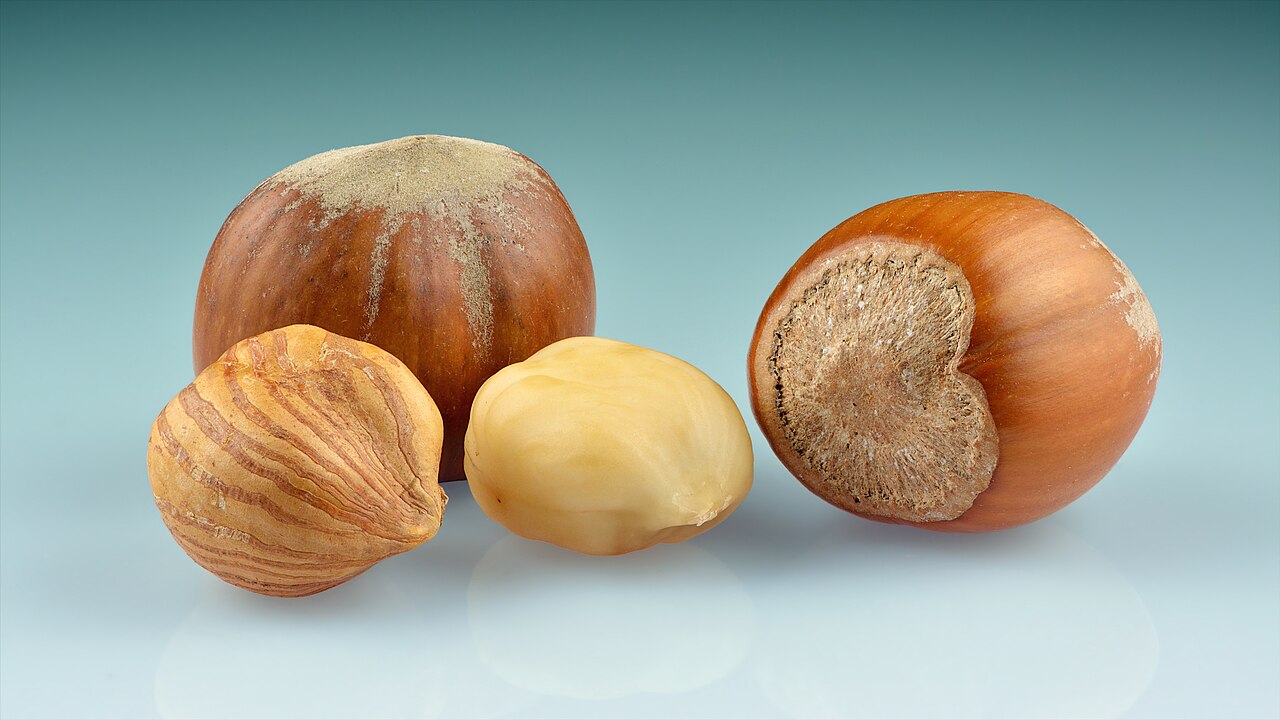
The fruit of Istrian Long is its most recognizable trait. It is large, oval-long in shape, regularly arched, flattened at the tip, with considerable variation in shape and size (consistent with the population character of the cultivar).
- Shell: fairly thick and hard, light to dark brown in color, with darker longitudinal stripes; the tip is covered with gray hairs that sometimes extend to the middle of the nut. The suture is weakly pronounced.
- Husk (involucrum): longer than the nut, with a serrated tip, narrowed and bent so that the nut remains hidden. It consists of two leaves.
- Cluster (infrutescence): most commonly 3–5 nuts, but there can be up to 10 (some sources mention an average of 2–3 nuts per type).
Typical biophysical measurements of the fruit and kernel from literature (informative, depending on type, location, and year):
| Parameter | Fruit | Kernel |
|---|---|---|
| Mass | ~3.44 g | ~1.49 g |
| Length | ~26.2 mm | ~19.8 mm |
| Width | ~20.1 mm | ~13.8 mm |
| Shell thickness | ~1.43 mm | — |
The kernel skin (pellicle) is thin, smooth, and easily separates from the kernel, which is an advantage in processing and consumption (easy removal of the skin). The kernel is large, elongated, with a pronounced tip.
Yield, Kernel Percentage, and Kernel Quality
Istrian Long comes into bearing early and bears regularly and abundantly — this is its key economic advantage. During multi-year trials, it has shown stability and regular bearing.
Kernel percentage (ratio of kernel to nut) is rated as good, but not outstanding:
- Typically up to 43 % (precisely measured ~43.5 %).
- Some sources and types mention a range of 40–44 %, and in exceptional cases (selected type "Istarski dugi") up to ~49 %.
The kernel is described as very aromatic, tasty, and with good organoleptic properties; its specific aroma makes this cultivar one of the most desirable table cultivars. The nuts also store well (good storability).
Chemical composition of the kernel (informative, according to literature):
| Component | Content |
|---|---|
| Crude fats (oil) | ~64.4 g/100 g (literature ranges for HR cultivars ~61.6–67.6 g/100 g) |
| Proteins | ~16.6 % (other sources also mention ~10–13 g/100 g) |
| Invert sugar | ~3.3 % |
| Oleic acid (share in oil fraction) | ~78 % (lowest among comparable HR cultivars) |
The high oil content with dominant oleic acid makes the kernel suitable for oil extraction and confectionery processing.
Harvest and Suitability for Mechanization
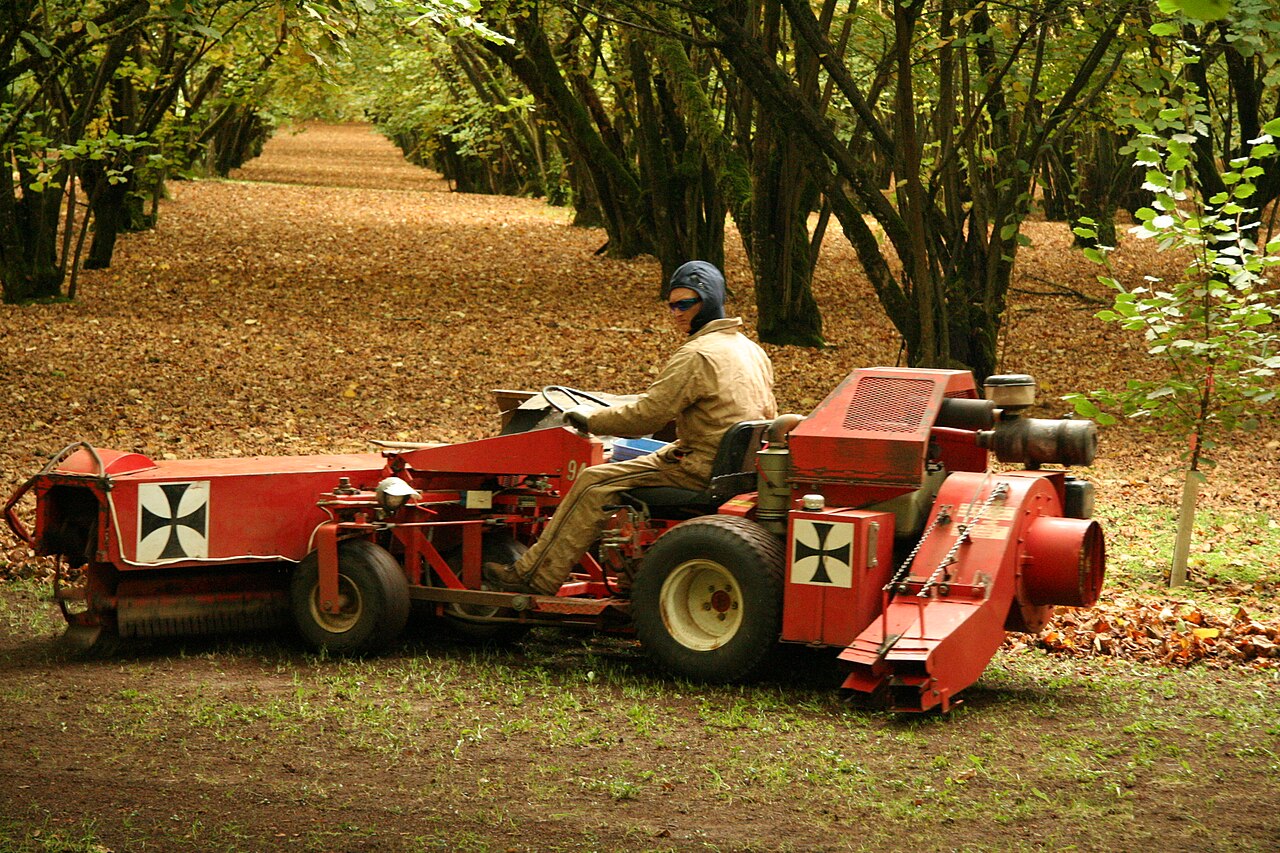
The main disadvantage of the cultivar is related to the shape of the husk. Since the husk is longer than the nut and narrowed at the tip, ripe nuts do not fall out of the husk on their own, but (according to some sources) fall off together with the husk. This complicates mechanical harvesting and cleaning of the nuts:
- For effective mechanical harvesting, it is often necessary to install an attachment on the collector machine that further separates the nut from the husk.
- Large long nuts that do not fall out of the husk are not suitable for chocolates with whole round hazelnuts, but are excellent for sweets that use a ground form.
- Interestingly, in one comparative morphological and physical study, Istrska dolgoplodna leska (Istrian Long) proved to be the most favorable for mechanical shell cracking (based on measured breaking forces and energies), so one must distinguish between the problem of collecting with the husk (a disadvantage) and the problem of cracking the shell during processing (here, an advantage).
Ripening occurs in the first half of September; compared to the Rimski cultivar, the difference in full maturity is approximately 7–10 days (Istrian ripens later).
Pollination and Recommended Pollinizers
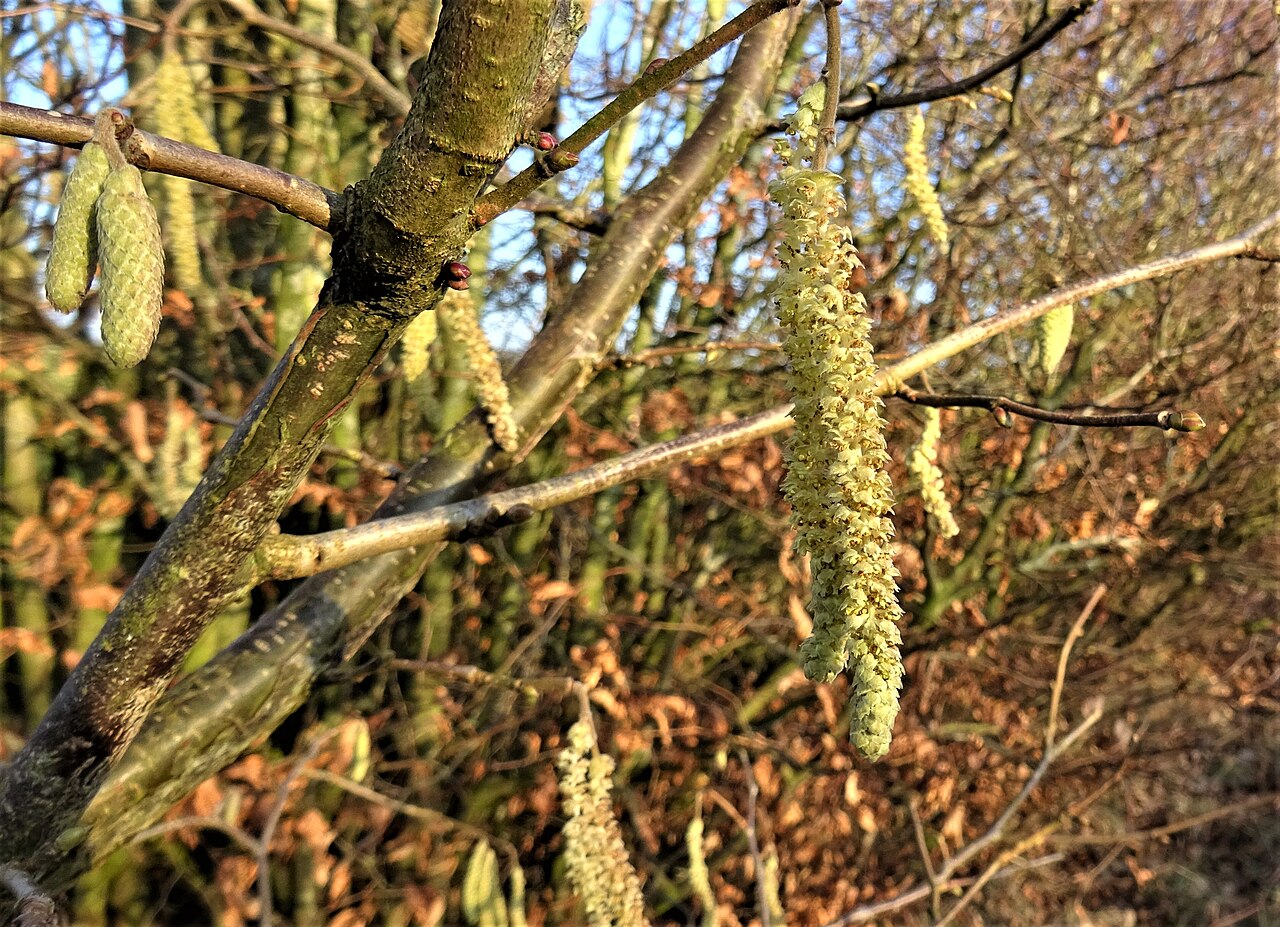
Hazelnut is a monoecious but cross-pollinated plant (protandry/protogyny and cultivar incompatibility make self-pollination unreliable), so ensuring good pollinizers is crucial for bearing. For Istrian Long, the literature is divided:
- Some sources list the cultivar as self-fertile / autofertile, which is attributed to the existence of a larger number of types within the population and the possibility of successful cross-pollination (inter-pollination) between these types.
- Other sources and trials show that the cultivar behaves as autosterile (weakly autofertile), so it must have pollinizers provided.
Practical conclusion: regardless of claims about self-fertility, always plan separate pollinizer cultivars to ensure regular and high yields.
| Recommended Pollinizers | Note |
|---|---|
| Rimski | Most frequently recommended; flowering times match well, combination yields regular and high yields every year |
| Halski div / Haleški (Halški džin) | Good pollinizer; flowering times match |
| Ludolf, Daviana (Davijana) | Listed as good pollinizers |
| Lambert, Gunsleben, Cosford, Apolda, Barcelona | Mentioned as possible pollinizers |
Watch out for intersterility
According to Modic, Istrian Long is intersterile with cultivars Cosford and Sodlinger — although Cosford is sometimes listed as a possible pollinizer, due to the mentioned intersterility, it is not recommended to rely on it as the main pollinizer. Always check recent recommendations on flowering synchronization and compatibility for your location with the advisory service.
Since Istrian Long flowers medium-early and starts vegetation later than Rimski, the combination Istrian Long × Rimski has proven to be a particularly well-matched pair in practice. The general recommendation for hazelnut orchards is to ensure 15–20 % pollinizer trees, distributed with 2–3 cultivars of different flowering times, to cover the entire receptivity of female flowers (informative; adjust specific share and placement to location and cultivar assortment).
Growing Area and Conditions
The Istrian Long shows relatively good adaptability to various ecological conditions — from the Mediterranean western Istria to continental orchards — which is one of the reasons for its widespread cultivation.
- Resistance: it tolerates low temperatures well and is resistant to the hazel eriophyid mite (Phytoptus avellanae).
- Sensitivity: sensitive to drought — in dry areas and during dry periods, irrigation is almost essential for stable yield and kernel quality.
- Climate/precipitation: literature on successful cultivation cites approximately ~750 mm of annual precipitation with supplementary irrigation (informational).
- Later start of vegetation reduces exposure to late spring frosts, but this risk should be considered when selecting a site (avoid frost pockets and enclosed depressions).
When planning the orchard, take into account its wide, spreading growth habit: leave sufficient spacing between rows for mechanization. The training form can be bush or tree (in tree form, usually on the Turkey hazel rootstock, C. colurna, which does not produce suckers). Spacing ranges approximately from ~4.5–5.5 m between rows and ~3.5–5 m within the row, depending on the training form, vigor, and mechanization (informational — adjust to your project and location).
Advantages and Limitations (Summary)
| Advantages | Limitations |
|---|---|
| Early, regular, and abundant cropping | Fruit does not drop naturally from the husk → difficult machine harvesting |
| Very aromatic, tasty kernel (premium consumption cultivar) | Hulling percentage only good (up to ~43%), not the highest |
| Good adaptability (coastal and continental regions) | Sensitive to drought (irrigation required) |
| Resistant to low temperatures and hazel eriophyid mite | Thick shell |
| Easy pellicle removal, good storability | Uncertain pollination status (plan pollinizers) |
| Suitable for machine shell cracking in processing | Wide, spreading growth → requires more space |
Practical Recommendations and Common Mistakes
- Do not rely on self-fertility. Always plan 2–3 pollinizer cultivars with synchronized flowering (Rimski is a proven choice); avoid intersterile combinations (Cosford, Sodlinger).
- Plan for irrigation — drought directly reduces the yield and kernel quality of this cultivar.
- Adapt mechanization — for machine harvesting, account for an attachment that separates the nut from the husk; otherwise, part of the harvest will be manual.
- Account for wide growth when determining row spacing; leave room for a tractor.
- Regularly remove suckers from the crown (especially in bush training).
- Market positioning: due to the elongated nut, target the consumption market, ground products, pastes, and oil, rather than products requiring whole round hazelnuts.
- Check the type of planting material — for population cultivars, types differ; obtain certified, labeled seedlings of verified origin.
Sources
This article is an AI summary compiled from an internal literature collection on hazelnuts (RAG corpus) supplemented by public web sources. Numerical data (hulling percentage, weights, chemical composition, precipitation, spacing) are informational and depend on the cultivar type, location, year, and agrotechnics — verify with advisory services and official sources before application.
Main sources used:
- Vujević, P. et al. — Technological and Economic Characteristics of Hazelnut Cultivation (2018). https://doi.org/10.46584/lm.v36i2.1141
- Ministry of Agriculture of the Republic of Croatia — Business Plan for Hazelnut Seedling Production (Poljinos, 2019). https://www.poljinos.hr/wp-content/uploads/2022/05/PP-za-proizvodnju-sadnica-lijeske1.pdf
- State and Trends in Hazelnut Production and Consumption (2017). https://doi.org/10.31727/gzb.42.3.9
- Comparison of Morphological and Physical Properties of Hazelnut Cultivars (2006) — discriminant analysis for machine shell cracking.
- Potential of Hazelnut Shell as a Rich Source of Polyphenols (2024) — data on the prevalence of the “Istarski” cultivar (~80 % of plantations).
- Environmental impact assessments for hazelnut orchards (Vojnić 2021, Sunja/Donji Hrastovac 2021) — cultivar description and assortment selection.
- Hazelnut Cultivation (pdfcoffee/UZGOJ LIJESKE, 2009.) — pollinizers and intersterility (Modic).
- Pomological traits and proximate chemical composition of Hazelnut (Corylus avellana L.) varieties grown in Croatia. https://academicjournals.org/journal/AJAR/article-abstract/FB1491640148
- Rasadnik Nesa — Istarski Long (Istarski Long-shaped, Istarski Large). https://rasadniknesa.com/en/product/istarski-dugi-istarski-duguljasti-istarski-krupni/
- Agronom.hr — Hazelnut Istarski Long-shaped. https://agronom.hr/proizvod/lijeska-istarski-duguljasti/
- Agroklub — Good hazelnut yield depends on good pollination. https://www.agroklub.com/vocarstvo/dobar-urod-lijeske-ovisi-o-dobrom-oprasivanju/21835/
- Sadike oreh leska kostanj (SLO) — Istrska dolgoplodna leska. https://sadike-oreh-leska-kostanj.si/en/product/istrska-dolgoplodna-leska/