Break-Even Cost Per Kilogram for Your Own Hazelnut Orchard
Research-grounded draft (sources cited) — adapt to local context
Article adapted to the United States (Oregon), based on Croatian/EU research literature (see Sources). Figures come from the cited studies and are indicative for the United States (Oregon): verify local equivalents with USDA, FSA, state Departments of Agriculture (e.g. Oregon), OSU Extension, Oregon Hazelnut Commission.
The break-even cost per kilogram (also known as unit cost or break-even point) is the single most important number every hazelnut grower must know by heart. It is the amount in USD that it truly costs you to produce one kilogram of in-shell hazelnuts — from fertilization and protection, through harvesting and drying, to orchard and machinery amortization. Only when you know this figure do you know whether the purchase price offered to you covers costs, how much remains for living expenses and investments, and below what price it makes no sense to sell. This guide walks you step-by-step through building that price, with a working example in USD and a sensitivity analysis on yield — because yield, more than anything else, determines whether one kilogram costs you two dollars or four.
What is Break-Even Cost and Why It Is Crucial
Break-even cost is the ratio of total production costs to the achieved quantity (yield):
Break-Even Cost (USD/kg) = Total Costs (USD/ha) ÷ Yield (kg/ha)
In other words, you divide everything you spent on the hectare by what you harvested from that hectare. From domestic literature, we have a concrete example: in one economic analysis of hazelnut production, the break-even cost was calculated at €2.15/kg with a yield of 1,200 kg/ha, while the purchase (net) price after deducting transport costs was €1.99/kg. The result was slim: the financial result for that year remained positive only thanks to an ecological production subsidy, because the sales revenue alone was below the break-even cost [1].
This perfectly illustrates the point: if the purchase price drops below your break-even cost, you lose money on every kilogram — and you might not notice until you draw the line at the end of the year. Therefore, break-even cost is not an academic exercise, but a tool for three daily decisions:
- Negotiating purchase prices — you know your lower threshold.
- Assessing orchard profitability — before planting and during business operations.
- Managing costs — you see which item eats most of the margin (almost always harvesting).
Fixed and Variable Costs — The Foundation of Calculation
We divide all costs into two groups. The difference is important because they behave completely differently when you change the production volume or yield.
| Cost Type | Definition | Examples for Hazelnuts |
|---|---|---|
| Variable | Change with the level of production and volume of work | Fertilizers, plant protection products, harvesting, drying, bags, fuel, seasonal labor, cleaning |
| Fixed | Do not change (significantly) with annual yield | Amortization of orchard and machinery, loan interest, land rent/lease, insurance, general (administrative) costs |
A key insight from economic theory, confirmed by foreign manuals: fixed cost per kilogram falls as yield rises. If you double the yield, the fixed cost per kilogram is halved. This is why full bearing (around the seventh year) is the economic turning point — the same fixed costs are distributed over many more kilograms.
In domestic and Turkish literature, variable costs typically make up 80–85% of total costs of hazelnut production, and within that, harvesting is by far the largest single item. In one Turkish study, the share of variable costs was 83.48%, and within that, labor (especially harvesting) was 61.29%. This means that the greatest savings and the greatest risks lie precisely in the organization of harvesting.
Typical Cost Items for Hazelnuts
From domestic calculations (recalculated and grouped), typical annual items for a bearing orchard per hectare are:
| Item | Group | Note |
|---|---|---|
| Harvesting (manual or combine) | Variable | Largest item — often 30–40% of variable costs |
| Plant Protection | Variable | Depends on disease/pest pressure and system (eco/conventional) |
| Fertilization (mineral + organic) | Variable | According to soil analysis |
| Pruning and branch removal | Variable | Labor-intensive |
| Drying | Variable | Depends on fruit moisture content |
| Bags, packaging, other materials | Variable | Smaller items |
| Own machinery costs (fuel, service) | Variable/Mixed | Part behaves as fixed |
| Amortization of orchard and equipment | Fixed | Spread over the orchard's life (20+ years) |
| Loan interest | Fixed | If the orchard is financed by a loan |
| Land rent, insurance, administration | Fixed | Independent of yield |
Dosages, deadlines, and amounts are informative
All amounts and cost structures mentioned are taken from literature (HR/TR/EN, various years) and serve as a framework. Actual costs for fertilization, protection, and harvesting depend on variety, location, cultivation system, and valid regulations/labels. Check current calculations (e.g., Catalog of Calculations) and advisory services.
Step-by-Step: How to Build Your Break-Even Cost
You will get the most reliable result with your own numbers, but the procedure is always the same.
1. List ALL variable costs per hectare (annual). Sum fertilization, protection, pruning, harvesting, drying, bags, fuel, seasonal labor, and other items. This is your Total Variable Cost (TVC).
2. List ALL fixed costs per hectare (annual). Amortization is crucial here. If establishing the orchard cost, for example, €12,000/ha (seedlings, soil preparation, irrigation system, fence), and you estimate the orchard's life at 20 years, the annual amortization of the orchard is about €600/ha. Add machinery amortization, interest, rent, insurance, and administration. This is Total Fixed Cost (TFC).
3. Add them up: Total Cost (TC) = TVC + TFC.
4. Estimate realistic annual yield (kg/ha). Be conservative — use the average of several years, not the best year.
5. Divide:
Break-Even Cost = TC ÷ yield
6. Calculate two thresholds (break-even):
- Variable Cost Coverage Threshold = TVC ÷ yield. Below this price, you lose money even "out of pocket" during the season — the short-term survival limit.
- Total Cost Coverage Threshold = TC ÷ yield. This is the true break-even cost — below it, you fail in the long term because you do not cover amortization and interest.
This dual view (variable vs. total threshold) is standard in agro-economics and recommended by foreign manuals (FAO, university extensions).
Working Example in USD
Let us compile a complete calculation for one hectare of a bearing orchard. The figures are illustrative, aligned with ranges from domestic literature and converted to USD (historical EUR converted approximately at 1.10 USD/EUR for estimation purposes; note that specific US/Oregon equivalents should be verified).
Assumptions
| Parameter | Value |
|---|---|
| Yield (realistic, in bearing) | 2,000 kg/ha |
| Layout | 400–500 trees/ha |
| System | Conventional, partially mechanized harvesting |
Variable Costs (USD/ha)
| Item | Amount (USD/ha) |
|---|---|
| Harvesting | 836 |
| Plant Protection | 473 |
| Fertilization (mineral + organic) | 418 |
| Pruning | 264 |
| Drying + Cleaning | 198 |
| Bags / Packaging | 17 |
| Fuel and other materials | 143 |
| Own machinery costs | 363 |
| Total Variable Cost (TVC) | 2,712 |
Fixed Costs (USD/ha)
| Item | Amount (USD/ha) |
|---|---|
| Orchard Amortization (€12,000 ÷ 20 yrs) | 660 |
| Machinery Amortization | 385 |
| Loan Interest | 198 |
| Land Rent / Insurance / Administration | 297 |
| Total Fixed Cost (TFC) | 1,540 |
Result
| Indicator | Calculation | Result |
|---|---|---|
| Total Cost (TC) | 2,712 + 1,540 | 4,252 USD/ha |
| Variable Cost Threshold | 2,712 ÷ 2,000 | 1.36 USD/kg |
| Break-Even Cost (Total Cost) | 4,252 ÷ 2,000 | ≈ 2.13 USD/kg |
In this example, your break-even cost is approximately 2.13 USD/kg. This means:
- Below 1.36 USD/kg, you lose money within the season — do not sell (except in extreme liquidity need).
- Between 1.36 and 2.13 USD/kg, you cover variable costs, but "eat into" amortization and interest — short-term sustainable, long-term not.
- Above 2.13 USD/kg, you begin to generate real profit.
For comparison, a domestic economic analysis with a yield of only 1,200 kg/ha calculated a break-even cost of €2.15/kg (approx. 2.37 USD/kg) — higher precisely because the same fixed costs are divided by fewer kilograms [1].
Sensitivity to Yield — The Most Important Lever
Yield is the variable that most strongly changes the break-even cost. Let us take the same total cost from the example (4,252 USD/ha) and look at what happens at different yields. (In reality, the variable part of harvesting costs rises slightly with yield, but fixed costs remain the same — here, for clarity, we keep TC constant to isolate the effect of yield.)
| Yield (kg/ha) | Break-Even Cost (USD/kg) | Comment |
|---|---|---|
| 800 | ≈ 5.32 | Young/poor orchard — almost unprofitable |
| 1,200 | ≈ 3.54 | Poor year or poor layout |
| 1,600 | ≈ 2.66 | Average |
| 2,000 | ≈ 2.13 | Solid yield |
| 2,500 | ≈ 1.70 | Good orchard |
| 3,000 | ≈ 1.42 | Very good orchard |
| 4,000 | ≈ 1.06 | Top-tier, full bearing |
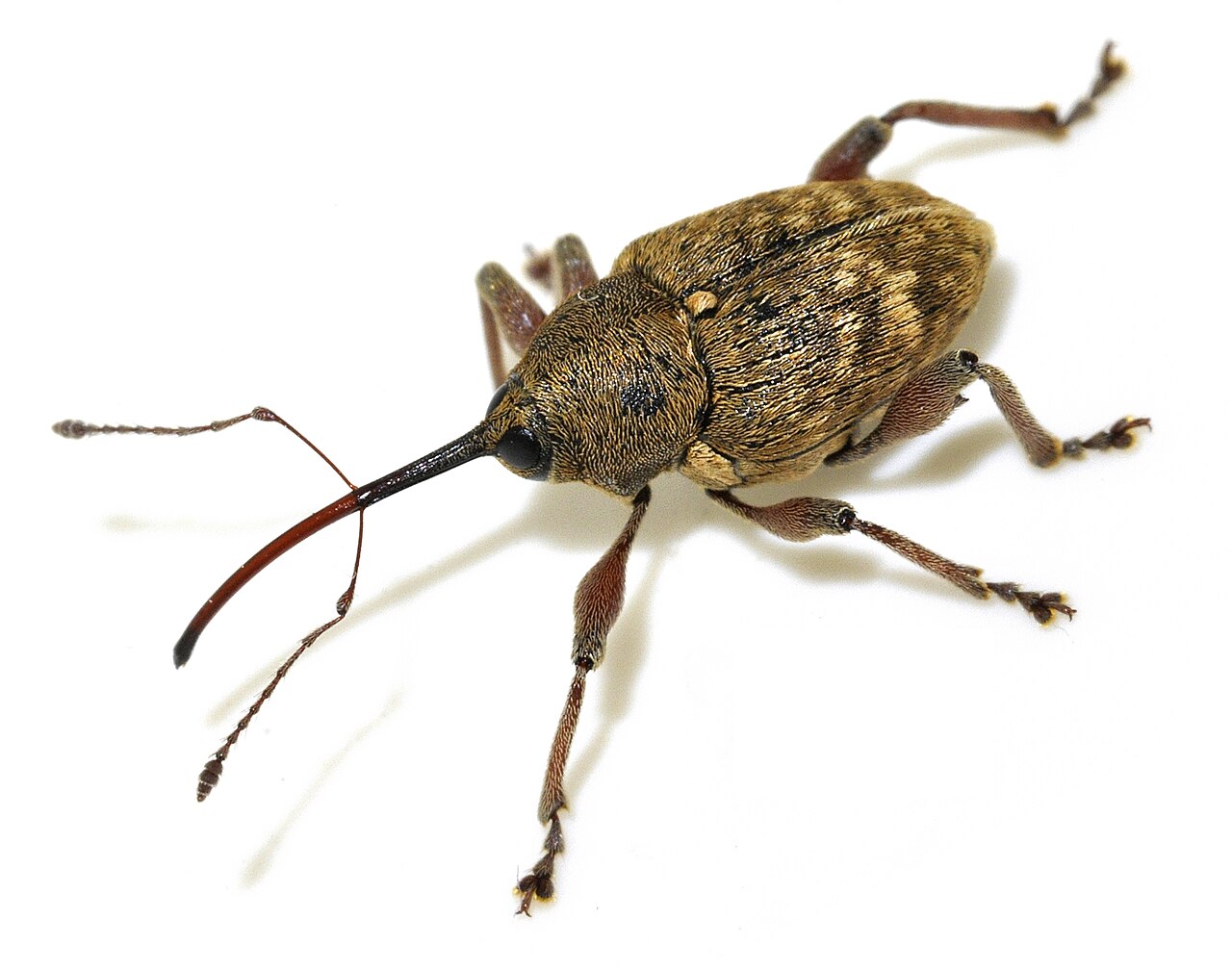
The lesson is dramatic: at 800 kg/ha, a kilogram costs you nearly 5.32 USD, while at 4,000 kg/ha, less than 1.06 USD. The difference is not in how much you spend, but how much you harvest. Domestic literature states that orchards in full bearing (around the seventh year) can yield up to 3.5–4 tons/ha, while averages in practice (e.g., PP Orahovica) are 1,800–2,000 kg/ha. Therefore, all agronomic measures that increase and stabilize yield — pollinators, irrigation, fertilization according to soil analysis, regular pruning, suppression of pests like the hazelnut weevil — are simultaneously the best economic investments: every additional ton lowers the break-even cost.
What About Purchase Prices?
Purchase prices in literature vary greatly across years and locations:
- Historically (HR, earlier period): 10–14 kn/kg uncleaned hazelnuts (≈ 1.3–1.9 EUR/kg).
- Domestic analysis for 2021: €2.39/kg gross, or €1.99/kg net after deducting transport and meeting standards [1].
- World prices (FAOSTAT, per ton): ranging from ~1,100 EUR/t (Azerbaijan) to ~3,800–4,900 EUR/t (Italy, Iran) — i.e., approximately 1.1 to 4.9 EUR/kg depending on country and year.
The hazelnut market is extremely sensitive to the Turkish harvest — frost or hail in Turkey (which holds the largest share of world production) can raise the world price by 60% in one year. For the Croatian grower, this is an opportunity, but also a reminder that market price cannot be relied upon as fixed.
Watch Out for "Hidden" Deductions by Buyers
Break-even cost only makes sense if you compare it with the net purchase price — the one that actually lands in your account. Buyers regularly charge the supplier for a number of costs that lower the effective price:
| Cost | Typical Amount (from purchase conditions) |
|---|---|
| Entry analysis (quality control) | ≈ 11.6 EUR/sample + VAT |
| Cleaning (impurities > 3%) | ≈ 0.02 EUR/kg + VAT |
| Drying (depending on fruit moisture) | 0.01 EUR/kg (6–8% moisture) to 0.09 EUR/kg (> 30%) + VAT |
| Transport to buyer | Varies (in one analysis ≈ 0.40 EUR/kg) [1] |
Practical conclusion: the drier the fruit at delivery, the smaller the drying deduction. Growers in dry years consciously avoid the dryer because the fruit already arrives with low moisture (8–9%), thereby reducing input costs. In negotiations, always ask that prices be compared on the same basis (moisture, yield, impurities).
Practical Recommendations and Common Mistakes
Recommendations:
- Calculate break-even cost every year, with your own numbers. Averaging costs over several years gives a more reliable threshold than one season.
- Use a conservative yield in calculations (average, not record year) so a bad season does not surprise you.
- Monitor harvesting as the main cost lever. Mechanized harvesting makes sense once area and yield justify the investment.
- Include subsidies separately. ECO support for hazelnuts (e.g., ≈ 750 EUR/ha for transition, ≈ 626 EUR/ha for maintenance, with min. layout 300 plants/ha) can be the difference between profit and loss — but this is revenue, not a reduction in break-even cost. Calculate both scenarios: with and without subsidies [1].
- For negotiations, remember ONE number: your break-even cost (total cost per kg). In the example, this is ≈ 2.13 USD/kg. This is your floor — anything below means you are subsidizing the buyer.
Common Mistakes:
- Omitting amortization and interest. Many count only "out-of-pocket" costs (fertilizer, protection, harvesting) and think they are in the black, while actually not covering the orchard investment. This artificially understates the break-even cost.
- Comparing gross purchase price with cost. Always use net price after all deductions (drying, cleaning, transport, analysis).
- Optimistic yield. Calculating with 4 t/ha "because it is possible" gives a falsely low break-even cost and bad decisions.
- Ignoring yield and moisture when comparing offers from different buyers.
- Looking at only one year. Prices and yields vary year to year due to climate and market; plan on the average.
Summary: One Number for Negotiation
If you remember only one thing from this guide: calculate break-even cost = total cost per hectare ÷ realistic yield per hectare and take that figure as your lower threshold when negotiating purchase prices. In the working example, this was ≈ 2.13 USD/kg at 2,000 kg/ha. Your number will depend primarily on yield — every ton more lowers the break-even cost and widens your negotiating room. Anything below the break-even cost means you are producing at a loss, even if it seems at first glance that you are earning.
Sources
- Ekonomska analiza proizvodnje lješnjaka (2023)
- KATALOG KALKULACIJA POLJOPRIVREDNE PROIZVODNJE 2019. GODINA (2019)
- STRATEGIA NAZIONALE ORTOFRUTTA 2018-2022: IMPORTI FORFETTARI E VALORI MASSIMI PER TALUNE TIPOLOGIE DI SPESE AMMISSIBILI NEI PROGRAMMI OPERATIVI (2017)
- TARIMSAL ÜRÜNLER İÇİN MALİYET HESAPLAMA METODOLOJİSİ VE VERİ TABANI REHBERİ (1995)
- Poslovni plan za proizvodnju sadnica lijeske (2019)
- Ažuriranje kalkulacija za mjeru 11 Ekološki uzgoj (2022)
- PODIZANJE NOVIH NASADA VOĆNJAKA (TEHNOLOŠKO-EKONOMSKE SMJERNICE) (2006)