Scale insects and mites (Eulecanium coryli, Tetranychus urticae)
Content generated by artificial intelligence — verify before application
This article was automatically compiled from a collection of hazelnut literature using artificial intelligence and may contain errors or outdated information. It serves as a starting point for further research, not as professional advice. Dosages, products, and timing are informative and depend on the cultivar, location, and current regulations — always consult with an advisory service and official sources before application.
Alongside the well-known hazelnut bud mite (Phytoptus avellanae) and hazelnut blight, two groups of sucking pests occasionally appear in hazelnut orchards, which producers often overlook until damage becomes visible: scale insects — most commonly the hazelnut scale Eulecanium coryli (synonyms Eulecanium tiliae, closely related to Parthenolecanium corni) — and mites from the "red spider" group, primarily the common red spider mite or spider mite (Tetranychus urticae). Both groups feed by sucking plant sap, both are typically secondary pests whose populations "bloom" when the balance of beneficial fauna is disrupted (e.g., after broad-spectrum insecticide applications), and both require a completely different approach than that for the bud mite. This article consolidates their biology, symptoms, damage, monitoring, and control using acaricides and other measures in hazelnut orchards.
Two groups, two worlds — why we must not confuse them
In literature and in the field, all "mites" and "insects" are often lumped together, but these are biologically very different pests that require different solutions. The table provides a quick orientation.
| Feature | Hazelnut scale (Eulecanium coryli) | Common red spider mite (Tetranychus urticae) | (for comparison) Hazelnut bud mite (Phytoptus avellanae) |
|---|---|---|---|
| Group | Scale insects (Hemiptera, Coccidae) | Red spider mites (Acari, Tetranychidae) | Bud mites (Acari, Eriophyidae) |
| Adult size | up to ≈ 4–6 mm (scale cover) | ≈ 0.4–0.7 mm | ≈ 0.2–0.3 mm |
| Visibility to naked eye | yes (brown "scales" on branches) | yes, barely (small dots on underside) | no (only with magnifying glass 20–30×) |
| Feeding site | bark of branches and twigs, shoots | underside of leaves | inside buds |
| Main symptom | honeydew + sooty mold, weakening of branches | marbled/bronzed leaves, webbing | swollen ("large") buds |
| Number of legs (mites) | — (insect) | 4 pairs | 2 pairs |
| Critical period | spring (nymph migration) + winter treatment | summer heat and drought | bud swelling (early spring) |
| Control | mineral/paraffin oils, spirotetramat; beneficial parasites | acaricides against Tetranychidae, predatory mites | sulfur preparations, fenazaquin (limited) |
Key warning from Croatian advisory practice: acaricides registered against "red spiders" (Tetranychidae) are NOT sufficiently effective on bud mites, and vice versa — sulfur preparations that help against bud mites hold back the red spider mite poorly. Therefore, correct pest determination before treatment is not an academic luxury but a condition for success.
Scale (waxy) insects — Eulecanium coryli
Identification
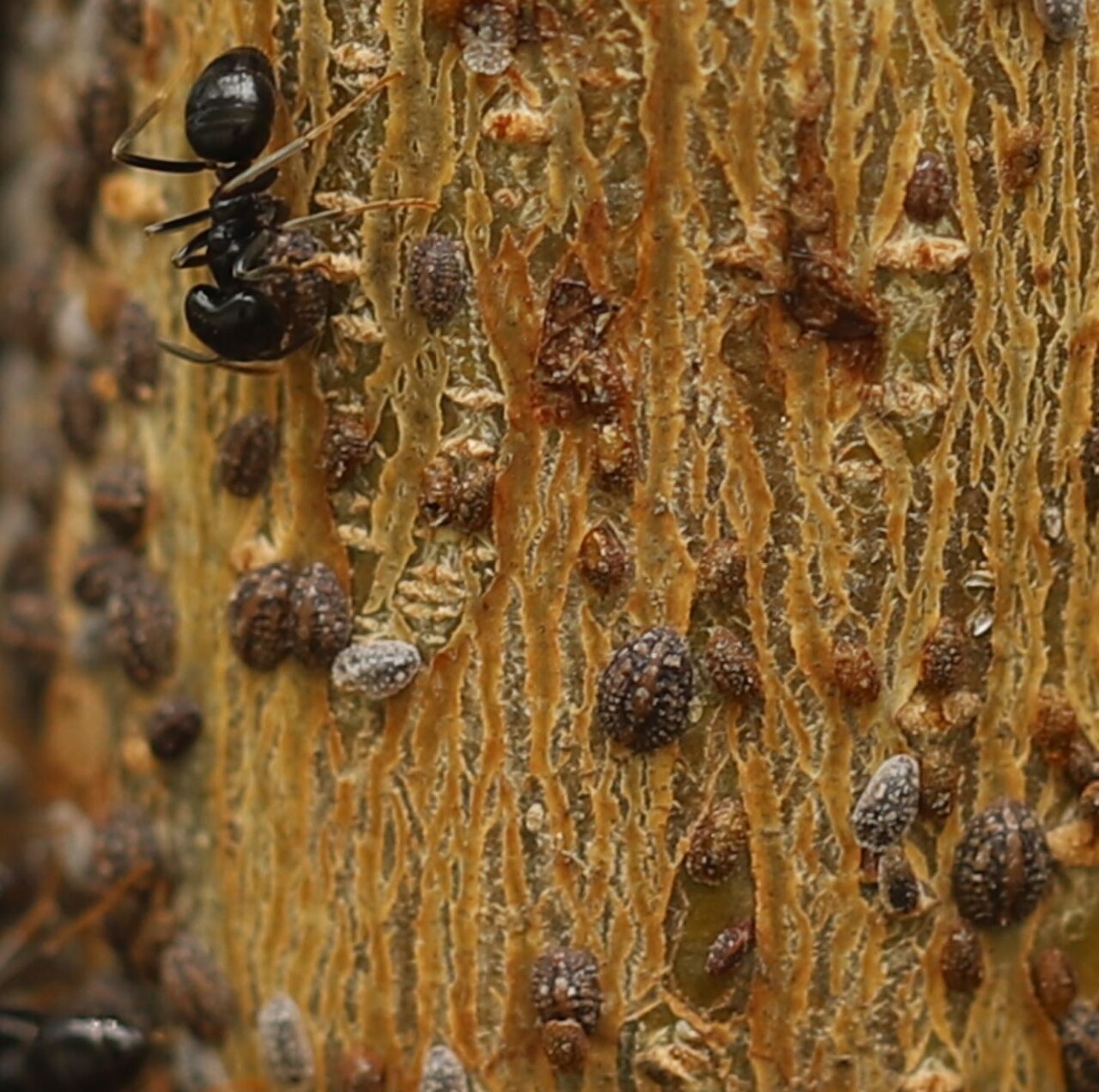
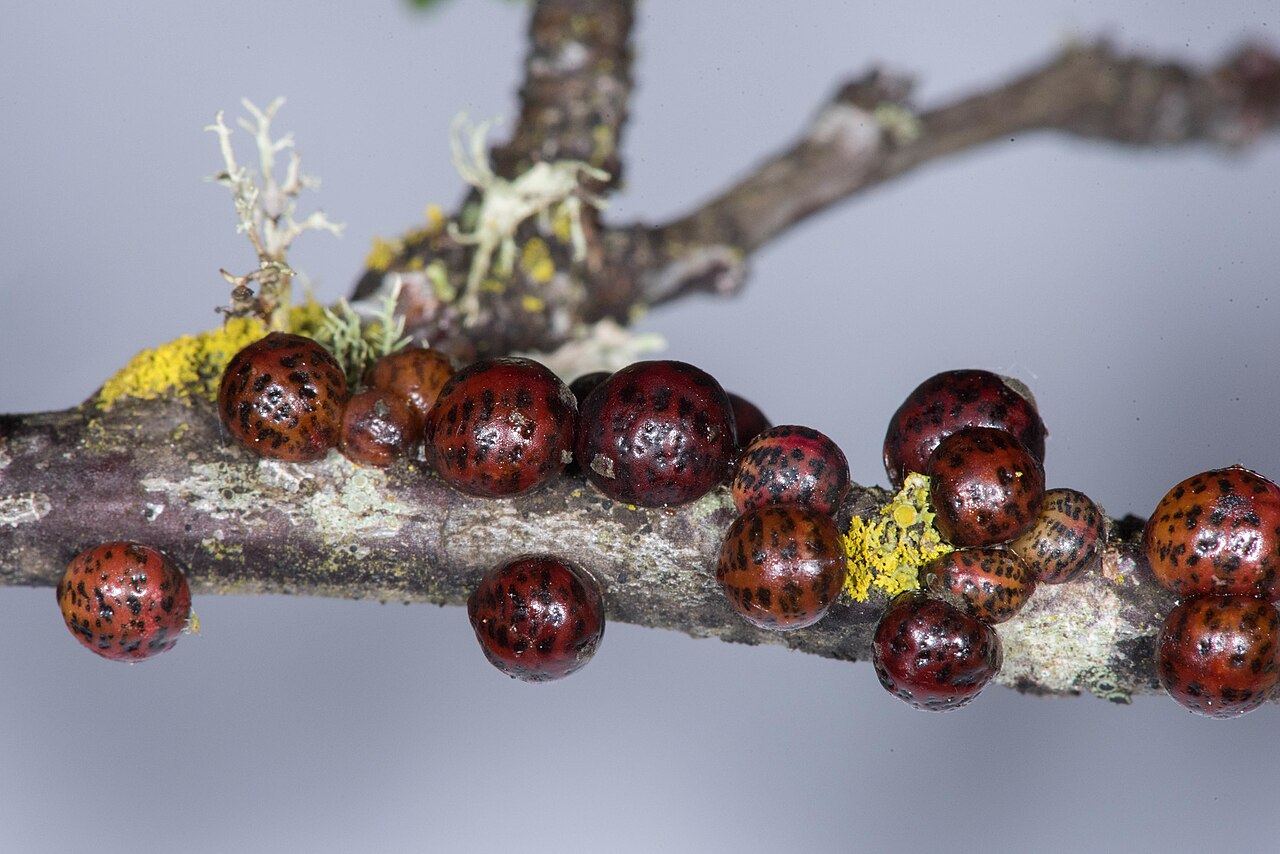
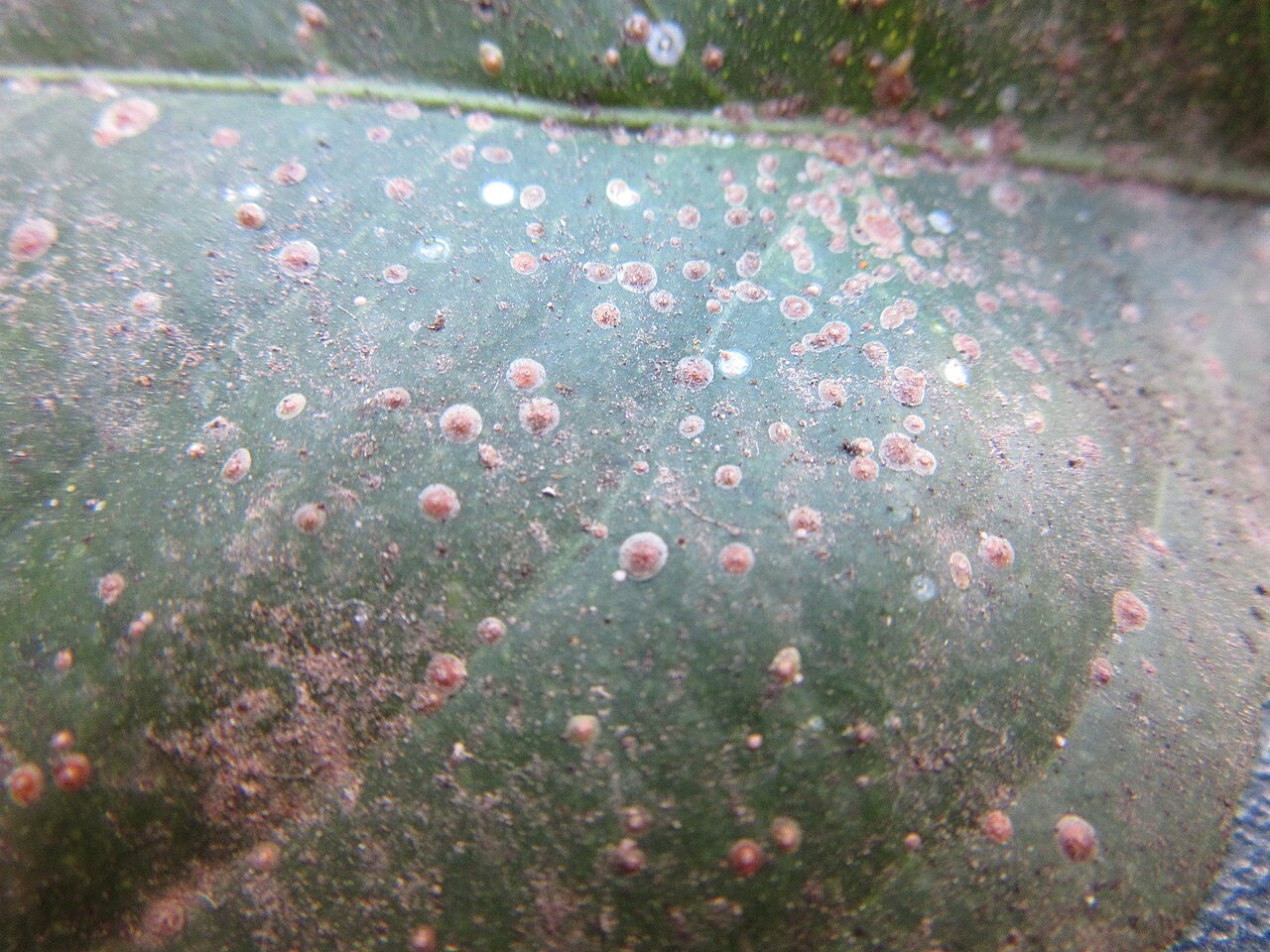
Scale insects got their name from the hard, waxy scale cover (test) that covers the body and under which the animal lives immobile. On hazelnut, they are recognized by reddish-brown, hemispherical (helmet-shaped) scales arranged along branches, twigs, and shoots. The adult fertilized female grows to approximately 4–6 mm, resembling a small wart or bump on the bark. Eulecanium coryli is a polyphagous species — besides hazelnut, it attacks plum, peach, grapevine, and a number of other fruit trees and ornamental trees; its density is highest in some areas precisely in plum-growing regions.
Nomenclature and related species
In Croatian literature, Eulecanium persicae is also mentioned on hazelnut, and the very close and common fruit waxy insect Parthenolecanium corni (older name Eulecanium corni) is frequent. In the orchard, a "genus" Eulecanium is often found without precise species identification; for practical control, the approach is the same.
Biology and life cycle
| Stage / occurrence | Description |
|---|---|
| Number of generations | usually 1 per year |
| Overwintering | nymph (larva) 2nd instar on cracked bark of branches and twigs, at the base of the trunk and on shoots |
| Spring activity | with rising temperature, larvae become active, move to one-year-old shoots and begin sucking sap from the bark |
| Maturation | as nymphs grow, legs atrophy; the animal permanently attaches to the feeding site, molts, and turns into an immobile adult female under the scale cover |
| Period of greatest damage | approximately from mid-March to mid-May |
| Reproduction | the female under the scale lays a large number of eggs from which mobile 1st instar larvae ("crawlers") hatch — the only easily mobile and most vulnerable stage |
Mobile first-instar larvae are key for timing control: while under the hard waxy scale cover, adult insects are almost invulnerable to contact products, so treatment targets the migrating, unprotected larvae.
Damage
- Direct damage by sucking sap — weakening of shoots and branches; in severe attacks, drying of twigs and reduced fruit size and weaker kernel filling (similar to aphids).
- Honeydew and sooty mold — insects excrete abundant honeydew on which sooty mold fungi (fumagine) develop. The black coating covers leaves, reducing photosynthesis and gas exchange, dirties fruits, and indirectly reduces yield and quality.
- Indirect damage — honeydew attracts ants (which protect insects from predators) and ruins market appearance.
On hazelnut, the scale insect is considered a secondary pest: the intensity of occurrence varies greatly from year to year, so control is recommended only if severe, visually visible damage occurs. It is often sufficient to keep it in check with a winter oil treatment aimed at other pests.
Monitoring and threshold
- Winter inspection (dormant vegetation): take several twigs about ≈ 20 cm long and check the abundance of adult scale insects (Eulecanium, Diaspidiotus) on the bark, counting winter eggs of aphids and red spider mites. This plans the need and intensity of early spring treatment.
- Spring: monitor the emergence of mobile larvae (with a loupe, or "double-sided tape" strips on branches) — this is a signal for treatment if the infestation is strong.
- Natural enemies: many scale insects are controlled by parasitic wasps (e.g., Blastothrix sericea on lecanium scale insects). Outbreaks often follow broad-spectrum insecticides that destroy parasites. The benefit of parasites is monitored by looking for emergence holes on dried female scales.
Control
| Measure | Product / approach | Timing note |
|---|---|---|
| Winter/early spring treatment | mineral (paraffin) oils — "red oil", "white oil" at ≈ 2–3 % concentration | in dormancy / bud swelling phase; oil suffocates overwintering nymphs and eggs. In the corpus, for the bud burst phase, red oil 2–3 % with Nordox 75 WG (0.2 %) + white oil 2 % is mentioned |
| Vegetative treatment against mobile larvae | systemic spirotetramat (e.g., Movento) — recommended in advisory bulletins for aphids and scale insects on hazelnut | target the emergence of "crawlers"; ineffective against adults under the scale |
| Classic contact/systemic insecticides | in foreign literature, dimethoate (≈ 0.03 %) and others are mentioned for nymphs, applied in June | many older preparations are banned in the EU/HR — check current registration in the FIS database |
| Biological / cultural measures | preserve parasitic wasps; avoid excessive nitrogen fertilization and over-irrigation (promotes insect multiplication); pruning and burning severely infested twigs | long-term preventive foundation |
Practical rule for scale insects
The cheapest and most effective measure is usually a winter oil treatment of well-covered branches — this same operation also reduces eggs of aphids and red spider mites. Save vegetative insecticides for truly severe attacks to avoid killing parasites.
Common red spider mite — Tetranychus urticae
Identification
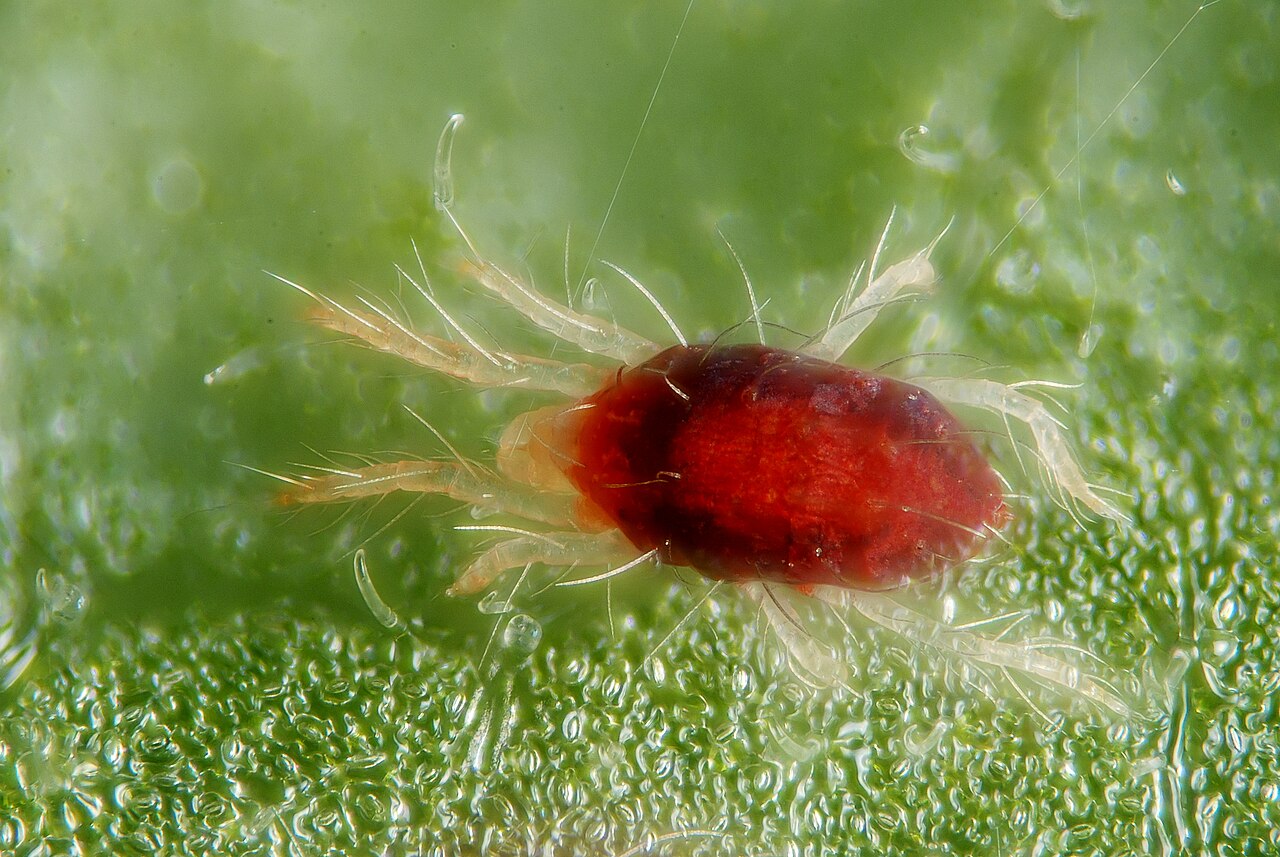
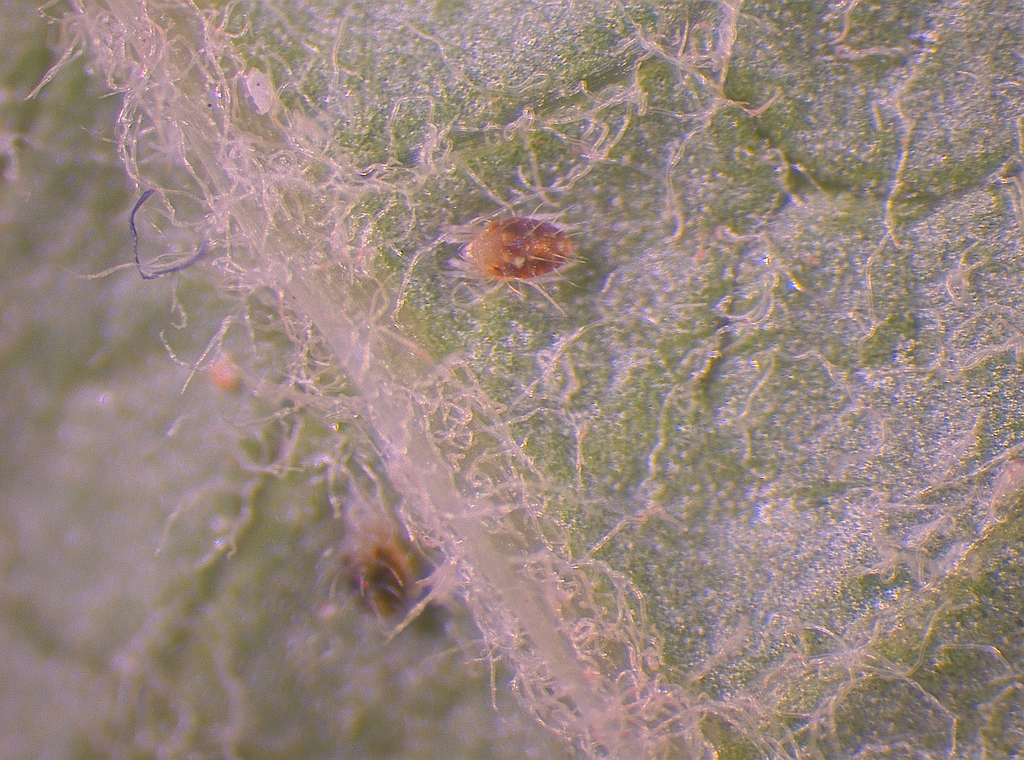
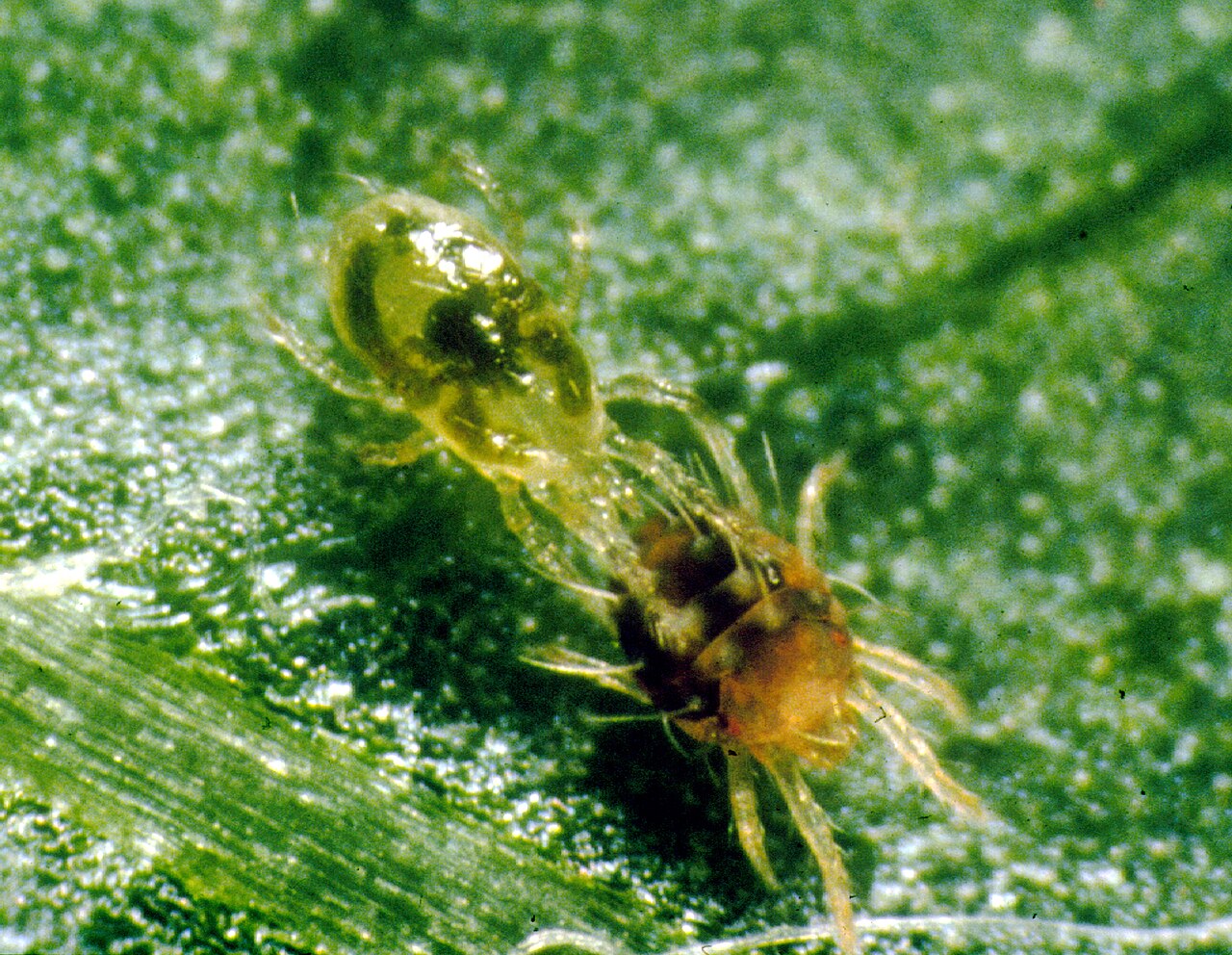
The common red spider mite (nettle mite, English two-spotted spider mite) is a true mite from the family Tetranychidae, meaning it belongs to the class Arachnida and has four pairs of legs. It is small, ≈ 0.4–0.7 mm, and is barely visible to the naked eye as a moving dot on the underside of leaves. Adults are yellowish-green to orange-red, with two darker spots on the sides of their body (hence "two-spotted"). Under heavy infestation, fine webbing can be seen on the underside and between leaves. In hazelnut orchards, it is usually found during summer heat.
Red spider mite vs. European red mite
Alongside Tetranychus urticae, the European red mite (Panonychus ulmi) also occurs in orchards, overwintering as red winter eggs on branches (counted during winter inspections). Their biology differs, but symptoms and control approaches are similar.
Biology and life cycle
- Multiple generations per year — development is very rapid at high temperatures; hot and dry summers strongly favor it, causing populations to "explode" during droughts.
- Overwintering: fertilized females (in T. urticae often reddish) retreat to shelter — under bark, in fallen leaves, weeds; Panonychus ulmi overwinters as eggs on branches.
- Feeding: pierces cells on the underside of the leaf and sucks out the contents; damaged cells lose chlorophyll.
- Weeds as reservoirs: as a polyphage, it overwinters and reproduces on nettles and other weeds in and around the orchard, from where it colonizes hazelnut.
Damage
- Mottled / bronzed leaves — initially small light spots (stings) on the upper leaf surface, then the leaf becomes "mottled," turns yellow, acquires a reddish-bronze color, dries out, and may drop prematurely.
- Reduced photosynthesis and tree condition — under heavy, early attack, fruit fill is poorer and growth is weakened.
- Webbing — under very high populations, webbing covers shoot tips.
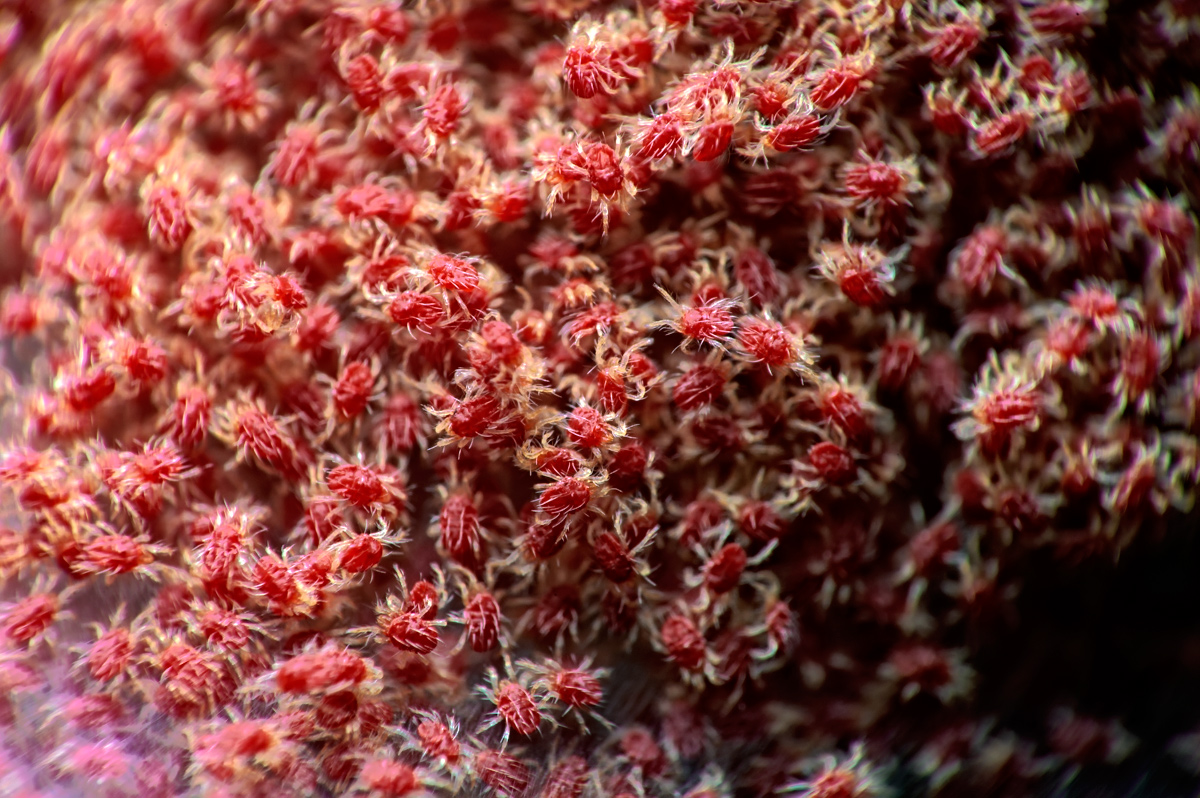
On hazelnut, the red spider mite is mostly an occasional, secondary pest associated with hot and dry periods and with orchards treated with broad-spectrum insecticides (which destroy predatory mites). It rarely reaches thresholds requiring specific treatment, but in dry years and in young orchards, it can be significant.
Monitoring and thresholds
- Inspect leaf undersides with a magnifying glass during summer, especially during dry periods and on orchard edges near weeds.
- Action thresholds borrowed from other crops are indicative (there is no specific threshold for hazelnut in the corpus). For comparison, in hops, the threshold for releasing predatory mites is ≈ 1 mite per 10 leaves; in some crops, mobile stages are counted per leaf/plate. For hazelnut, such figures serve only as a rough guide.
- Beneficial organisms: the key natural enemy is the predatory mite Phytoseiulus persimilis (and other phytoseiids), effective even at moderately low predator:prey ratios (≈ 1:20). Preserving predators is often the most important "treatment."
Control
| Measure | Approach | Note |
|---|---|---|
| Conservation biological control | preservation of predatory mites (Phytoseiulus, Amblyseius/Typhlodromus) and other predators; avoid broad-spectrum insecticides | most important long-term measure; red spider mite outbreaks are often a result of "wiped out" predators |
| Augmentation | release of predatory mites P. persimilis upon reaching threshold, with additional releases if needed | routine in greenhouses/intensive crops; in orchards based on assessment |
| Agronomic practices | weed control (nettles etc. — reservoirs), avoid drought stress, moderate nitrogen fertilization | reduces source and favorable conditions |
| Acaricides | under heavy attack, acaricides registered against Tetranychidae; examples from the corpus with mite activity include preparations based on fenpyroximate (Ortus 5 SC, e.g., 0.1 %) etc. | must check current registration for hazelnut in the FIS database; rotate active ingredients due to rapid resistance of red spider mite |
| Mineral oils | summer/winter oils reduce eggs and mobile stages | part of integrated approach, milder on predators |
Acaricide resistance
Tetranychus urticae notoriously develops resistance to acaricides rapidly due to its short life cycle and many generations. Do not repeat the same acaricide; alternate active ingredients (different groups/mechanisms of action) and use them only when the threshold is truly exceeded, relying on predatory mites.
Place in the hazelnut protection calendar
Scale insects and red spider mites fit into the general protection program, with the majority of their control "achieved incidentally" through proper winter and early spring treatments.
| Period / Phenophase | Main target | Benefit for scale insects / red spider mite |
|---|---|---|
| Dormancy – bud swelling | bacterial diseases, aphid eggs; for hazelnut: sulfur preparations against bud mite at 15–20 °C | mineral/red oil (2–3 %) suppresses overwintering scale insect nymphs and red spider mite eggs |
| Before/after flowering | aphids, first fungal diseases | spirotetramat against aphids and scale insects (if needed) |
| May – July | hazelnut weevil, phytophagous bugs, fruit rot | inspect for mobile scale insect nymphs; summer inspection of leaf undersides for red spider mite on dry days |
| Summer heat and drought | — | peak risk for red spider mite; acaricide / predator release if needed |
Permissions are informative
All listed concentrations, preparations, and timings are informative and taken from literature collections and advisory notices; they depend on cultivar, location, phenophase, and current registration. Registrations of products (especially acaricides and older insecticides) often change or are withdrawn — before each application, check the FIS database (fis.mps.hr) and consult the advisory service.
Common mistakes and practical recommendations
- Confusing mites. Red spider mite (Tetranychidae, 4 pairs of legs, on leaves, in summer) and bud mite (Eriophyidae, 2 pairs of legs, in buds, early spring) require different products. An acaricide for "red spiders" will not solve a large bud, and sulfur will not stop the summer red spider mite.
- Late treatment of scale insects. Treating adults under the scale is a waste of time and product — target mobile nymphs (spring migration) or overwintering nymphs with oil in winter.
- "Sterilizing" the orchard. Broad-spectrum insecticides against other pests kill parasitic wasps and predatory mites, causing scale insects and red spider mite to outbreak more severely than before. Choose more selective solutions and treat only at thresholds.
- Drought and nitrogen. Drought stress favors red spider mite, while abundant nitrogen fertilization and excessive irrigation promote scale insects. Balanced agronomy is preventive.
- Ignoring weeds. Nettles and other weeds are reservoirs for red spider mite — maintaining inter-row space reduces pressure.
- Repeating the same acaricide. Leads directly to red spider mite resistance — rotation of active ingredients is mandatory.
- No monitoring, no decision. Winter inspection of twigs (20 cm) and summer inspection of leaf undersides with a magnifying glass are the basis for timely and economical protection.
Gallery
Sources
This article is an AI-generated summary compiled from an internal hazelnut literature collection (RAG corpus) and public sources. The corpus is multilingual (Croatian, Serbian, English, German); figures, dosages, and timelines are provided as informational and are subject to verification in official sources and the FIS database.
Main sources used from the hazelnut literature collection:
- Most Significant Hazelnut Pests (Glasnik zaštite bilja, 2011.) — https://doi.org/10.31727/gzb
- Hazelnut Diseases and Pests (Repozitorij, 2020.) — description of the scale insect Eulecanium persicae on hazelnut shoots and an orientation protection program (example source: https://www.corylus-hr.com/)
- Control of Harmful Organisms in Hazelnut Orchards (advisory literature, 2009.) — red spider mite Tetranychus urticae during summer heat, acaricides, and sulfur preparations
- What are the critical periods for hazelnut orchard protection? (advisory notice) — winter inspection of branches (20 cm) for scale insects (Eulecanium, Diaspidiotus) and the red fruit mite (Panonychus)
- V4 — Notices and Advisories for Hazelnut Market Producers, Ministry of Agriculture, Forestry and Fisheries / advisory service (savjetodavna.mps.hr) — control of leaf and scale insects with spirotetramat (Movento); indirect effect of sulfur fungicides on mites
- Hazelnut Pests / Schädlinge der Haselnuss (electronic plant protection edition, 2024.) — biology of the fruit scale insect Eulecanium/Parthenolecanium corni
- Hazelnut Mite: How to Identify and Control It? (Agroklub.com, 2022.) — differentiation of mites and acaricide measures
Main public (web) sources for supplementation and currency:
- Pacific Northwest Pest Management Handbooks — Hazelnut-Scale insect — https://pnwhandbooks.org/insect/nut/hazelnut/hazelnut-scale-insect
- Biology and control of Eulecanium (Lecanium) coryli (CABI) — https://www.cabi.org/isc/abstract/19730506261
- Studies of the Lecanium Scale, Eulecanium coryli, and its Parasite Blastothrix sericea (The Canadian Entomologist) — https://www.cambridge.org/core/journals/canadian-entomologist/article/abs/studies-of-the-lecanium-scale-eulecanium-coryli-l-and-its-parasite-blastothrix-sericea-dalm-in-british-columbia1/D8D1748203B1A698E93E6B5B15F43BCD
- General Biology and Current Management Approaches of Soft Scale Pests (Coccidae) (PMC) — https://www.ncbi.nlm.nih.gov/pmc/articles/PMC4725186
- RHS — Scale Insects: Identification and Control — https://www.rhs.org.uk/biodiversity/scale-insects
- Eulecanium coryli: Systematics, Habitat, Life cycle — https://antropocene.it/en/2023/01/31/eulecanium-coryli-2/
- UC IPM — Spider Mites (monitoring access and thresholds) — https://ipm.ucanr.edu/agriculture/strawberry/spider-mites/
- Tetranychus urticae (CABI Compendium) — https://www.cabidigitallibrary.org/doi/10.1079/cabicompendium.53366
- Augmentation and conservation biological control of Tetranychus urticae (ScienceDirect) — https://www.sciencedirect.com/science/article/pii/S1049964422001451
- Acaricide Resistance Monitoring … Tetranychus urticae Management (PMC) — https://www.ncbi.nlm.nih.gov/pmc/articles/PMC12112526/
Recommended equipment
🔎 pheromone insect trap orchard — Amazon →Affiliate links — we may earn a small commission at no extra cost to you.