When to harvest hazelnuts: ripening and optimal harvest timing
Content generated by artificial intelligence — verify before application
This article was automatically compiled from a collection of hazelnut literature using artificial intelligence and may contain errors or outdated information. It serves as a starting point for further research, not as professional advice. Dosages, products, and timelines are informative and depend on the cultivar, location, and applicable regulations — always consult with advisory services and official sources before application.
Harvest is one of the most critical moments in the entire year of hazelnut (Corylus avellana L.) cultivation. A fruit that has grown and ripened for months can lose part of its value within a few days if harvested too early, too late, or at the wrong time. The optimal harvest date is not a fixed date on the calendar, but a point that the producer must recognize based on ripening indicators on the nut itself and monitor day by day. This article explains how to recognize hazelnut ripeness (shedding from the husk, color change, kernel moisture), how to track maturation over time, and what impact harvest timing has on yield, quality, and losses.
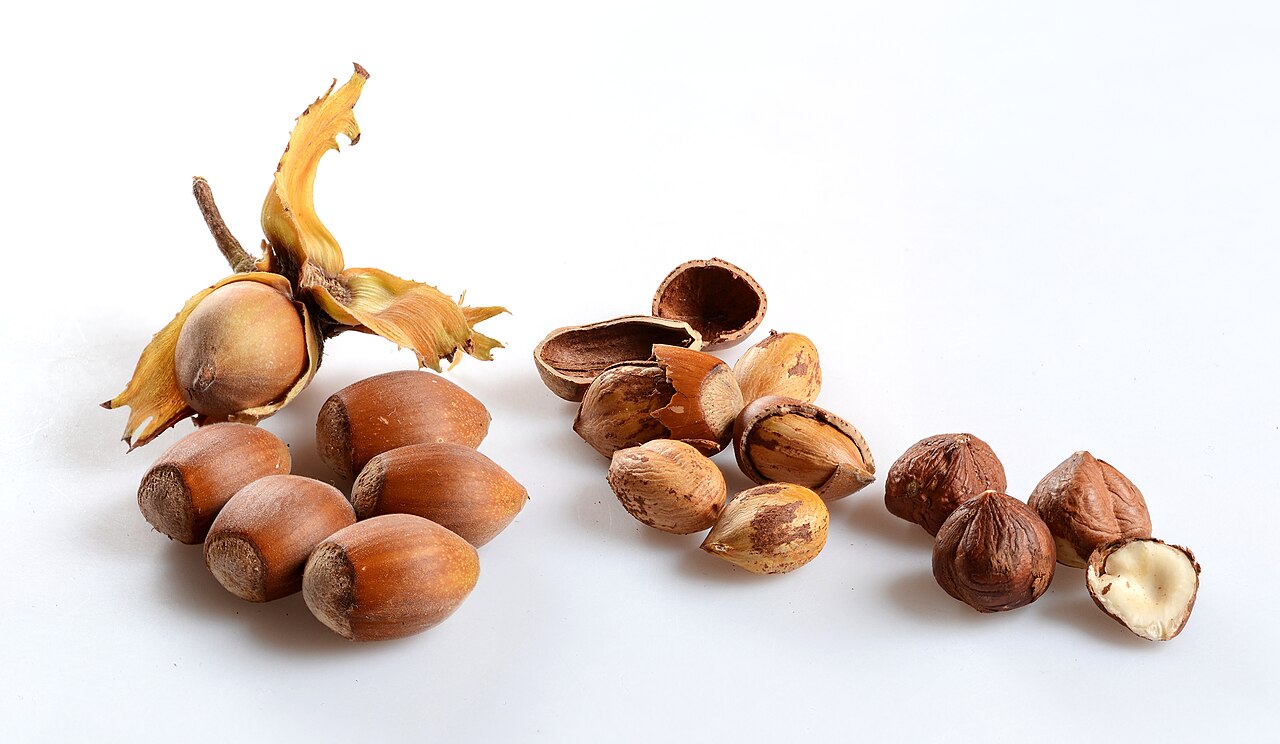
When are hazelnuts harvested? General calendar
In Croatian and regional conditions, hazelnut harvest takes place in a wide window — from late July until early October, depending on the cultivar, location, and year. Different sources cite slightly different boundaries (e.g., "from late August to early October"), but all agree that it is late summer and early autumn, with the most common, main ("full") harvest falling in late August and throughout September.
| Period | What happens | Note |
|---|---|---|
| mid-July – early August | early harvest for the earliest cultivars and warmer sites | rarely optimal; risk of early harvest |
| late August – mid-September | main (full) harvest for most cultivars | most common optimal window |
| second half of September – early October | maturation of later cultivars and higher sites | risk of rain and animal damage |
This calendar serves only as a guide. The date is not an indicator of ripeness — for the same cultivar, the timing changes from year to year with the course of vegetation, and within the same orchard, early and late cultivars can differ by several weeks. Therefore, the decision to harvest is always based on the condition of the nut itself, not the calendar.
Ripening indicators: how to recognize that the nut is ripe
Hazelnut ripeness is assessed by combining several signs. The most reliable is the shedding of the nut from the husk (cupule), but it should be read together with color and, where possible, kernel moisture.
1. Shedding from the husk (cupule)
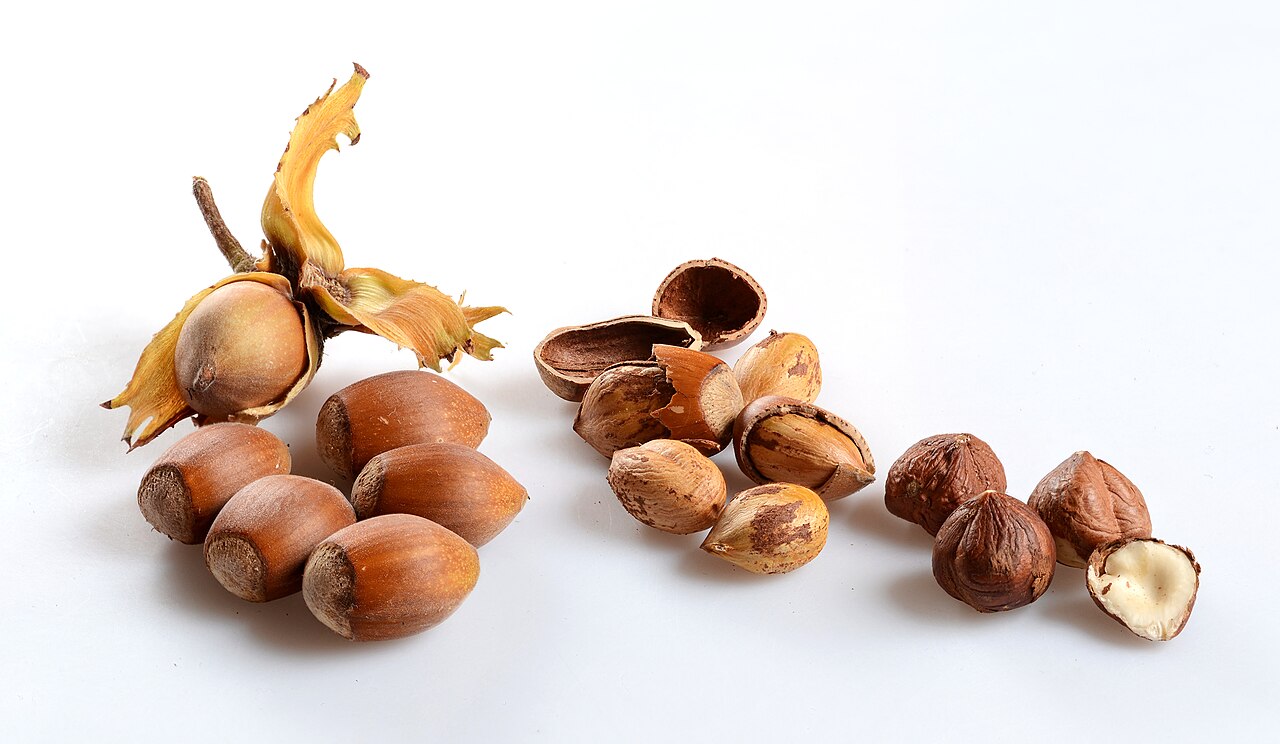
The primary and most practical indicator of physiological ripeness is that the nut begins to easily separate from the husk (cupule, "wrapper") and fall to the ground. A ripe nut falls out of the husk on its own or with a light shake of the branch. Physiological ripeness essentially occurs when the nuts separate very easily from the husk and fall to the ground.
It is important to know that not all nuts on the same tree ripen simultaneously. Maturation is stretched, most commonly over an interval of three to four weeks. In the first wave, according to experiential data, up to 70–80 % of ripe nuts fall to the ground, while the rest are collected in a second, and even a third, pass. Therefore, harvest is often carried out "in two stages" — for example, at the end of August and again in September.
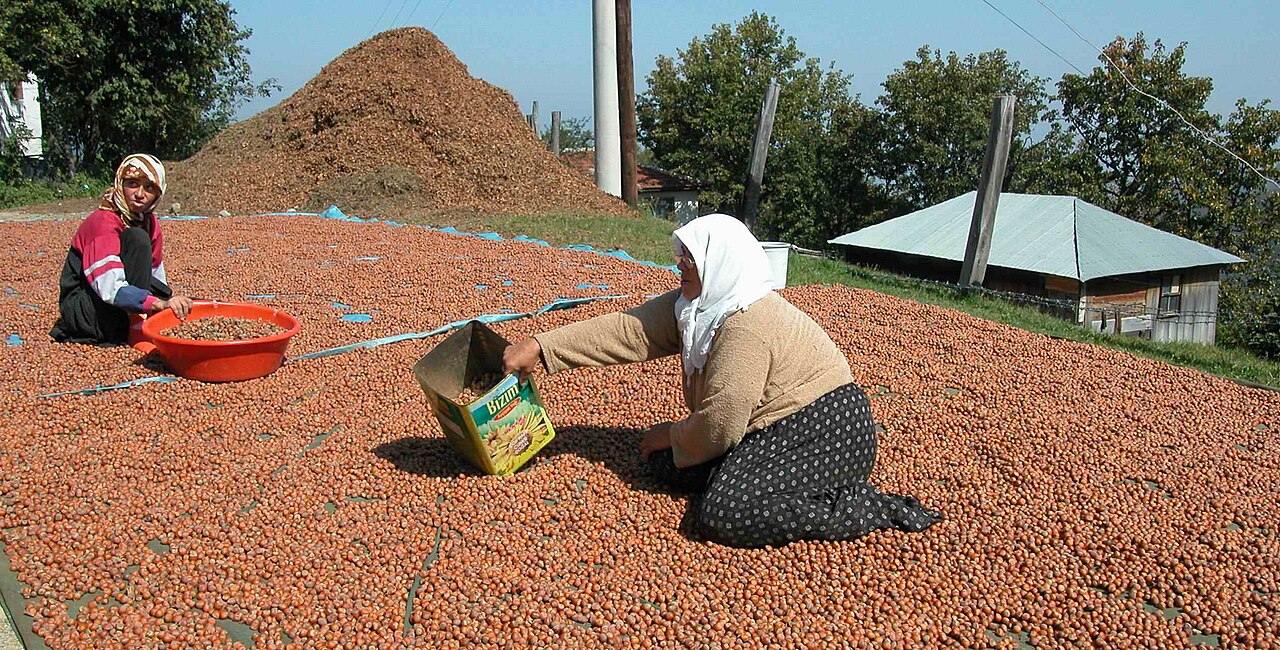
It should also be noted that there are cultivar-specific characteristics: with some cultivars, the nuts are difficult to release from the husk (the cupule is longer than the nut or tightly encloses the nut). A classic example in Croatia is the autochthonous cultivar 'Istarski duguljasti', where the nuts often do not fall out on their own and are harvested directly from the tree. With such cultivars, shedding is not a reliable sole indicator, and more weight should be given to the color and moisture of the kernel.
2. Color change
The second visible sign is the color change of the nut from green to yellowish-brown (yellow-brown, dark brown). Fully ripe nuts take on a characteristic yellowish-brown shell color. The husk (cupule) often changes color as well, turning from green to yellowish-brown.
Color is a useful, but not self-sufficient, indicator — it is best observed together with shedding. When the nuts are yellowish-brown and begin to fall out of the husk, it is full ripeness.
3. Kernel and nut moisture
Moisture is an objective, measurable indicator of ripeness and is crucial for the decision to harvest and subsequent drying. During maturation, the water content in the nut decreases.
- Physiological ripeness occurs when the seed (kernel), inside the shell, contains less than about 25 % moisture; at this point, the nuts separate very easily and fall.
- At the time of harvest, the nuts (in the shell) usually contain about 30–35 % water, so they must be dried.
- The goal of drying is to reduce moisture to a level safe for storage: traditionally, around 10 % moisture in the nut is cited (Krpina, 2004.), while newer reviews recommend 7–10 % moisture in the shell (hull) and about 4–6 % moisture in the kernel.
- During sorting and storage, moisture below 13 % is often cited as the upper limit.
| Stage | Moisture (approximate) | Source/Note |
|---|---|---|
| physiological ripeness, nut begins to fall | < ~25 % (kernel) | informative; depends on cultivar |
| at the time of harvest (nut in shell) | ~30–35 % | frequently cited |
| after drying, safe for storage | ~7–10 % (shell), ~4–6 % (kernel) | literature review, 2022. |
| limit for sorting/storage | < 13 % | cited in literature |
Quick field moisture test
A simple way to monitor is to weigh a small, fixed quantity (e.g., 1 kg) of harvested nuts and track weight loss during drying. As moisture drops, mass decreases, and when the weight stabilizes, drying is usually complete. For a more precise decision, use a moisture meter. The figures are informative and depend on the cultivar, equipment, and conditions.
4. Other signs
- Nut firmness: a ripe nut feels firm and "full" when lightly pressed; a soft or spongy nut is not ripe.
- "Rattling" kernel: with some cultivars, ripeness is recognized by the kernel beginning to rattle inside the shell, indicating the separation of the kernel from the attachment point (hilum) in the shell.
- Size and oil: the kernel reaches full size approximately six weeks after pollination (around early August), and during maturation, the oil content increases, improving the aroma.
Tracking maturation: how to monitor the orchard
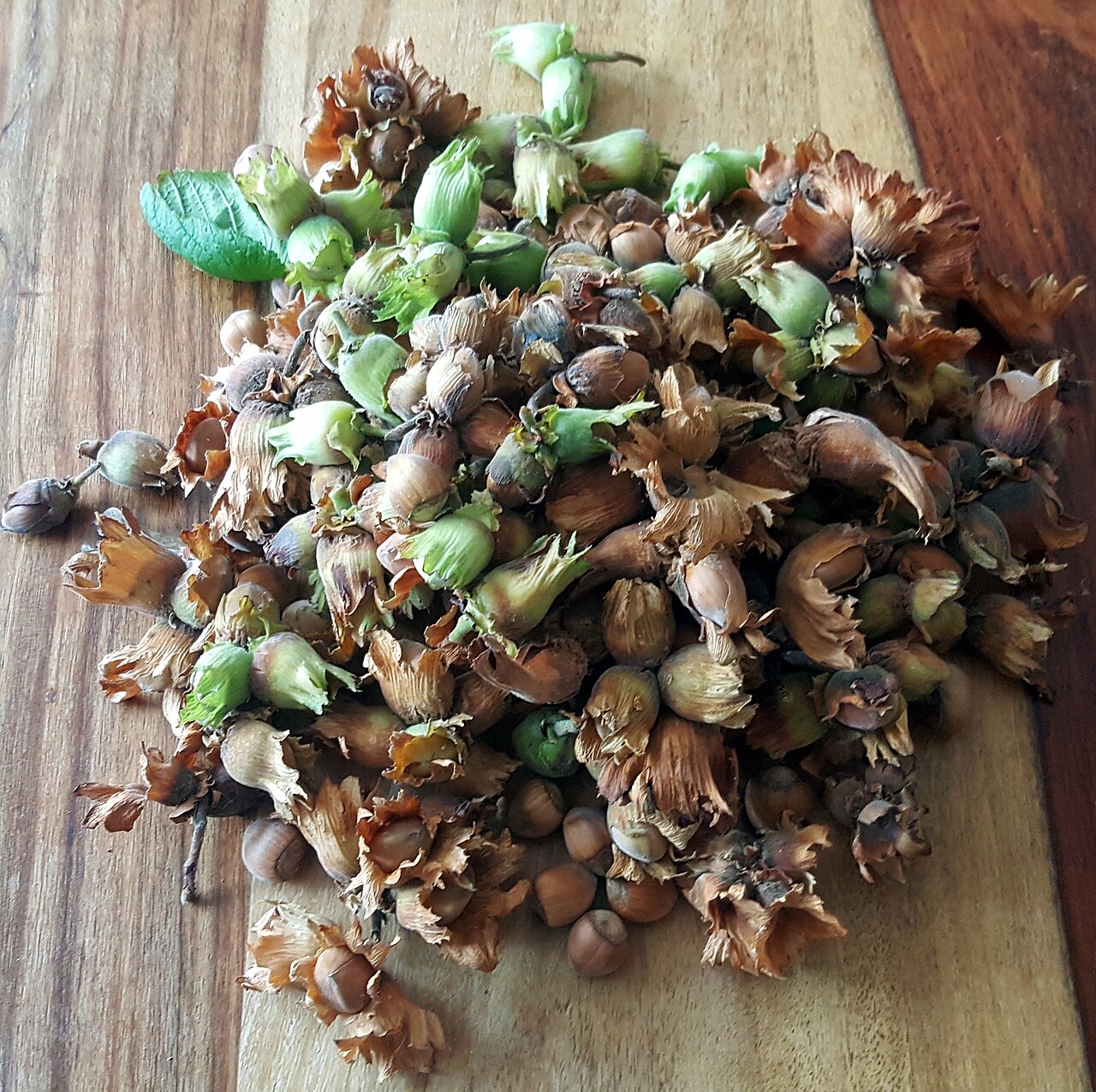
Since ripeness is not a one-time event but a process, maturation should be actively monitored:
- Orchard visits every few days in the second half of summer — monitor the color of the cupule and look for the first fallen nuts under the canopies.
- Sampling nuts from several trees (early and late cultivars separately) and checking color, firmness, and, if possible, moisture.
- Monitoring the weather forecast — it is desirable to harvest before rainy periods and in dry, warm weather, as rains before harvest and prolonged lying of nuts on wet soil increase the risk of mold and mycotoxins (aflatoxins).
- Planning multiple passes (waves) of harvest rather than one, because nuts do not ripen simultaneously.
- Keeping records by cultivars and years — dates of first shedding and full harvest from previous years help in prediction.
Preparing the soil and orchard before harvest
Before harvest (especially mechanized), it is necessary to mow the grass under and around the bushes, rake fallen nuts from the middle of the row, and level the surface soil layer if necessary so that machines can collect the nuts more easily. Ensure sufficient packaging as well as space and equipment for drying and storage. For manual harvest, a tarp, foil, or cloth can be laid under the tree onto which the nuts fall when shaken.
Impact of harvest timing on yield, quality, and losses
Choosing the right moment directly affects the final result. Mistakes in both directions — too early and too late — are costly.
Early harvest
If harvested before full ripeness:
- the kernel remains smaller, and the taste is poorer;
- during drying, the kernels wrinkle and become tough, which lowers quality and market value;
- lower oil content and weaker aroma, because oil (and the desirable oleic acid that determines aroma) is formed precisely in the final stage of maturation;
- with cultivars whose nuts do not otherwise fall easily (e.g., 'Istarski duguljasti'), early harvest from the tree is a common cause of wrinkled kernels.
Nuts harvested at full ripeness have the best quality: largest kernel, best taste, and highest oil content.
Late harvest and losses

If harvest is delayed or nuts lie on the ground for too long:
- nuts are exposed to pests for longer; birds, rodents, and on the ground wild boars can eat a significant portion of the crop;
- the risk of attack by the brown marmorated stink bug (Halyomorpha halys) increases, which opens the way for fungal infections in the nut by piercing;
- precipitation before harvest and wet soil favor the development of mold and contamination with mycotoxins (aflatoxins), along with the development of rancidity;
- prolonged lying and poor collection increase mechanical losses and decline in quality.
In Croatia and the region, a lack of knowledge in commercial practice is cited as one of the main causes of high post-harvest losses. Therefore, the correct timing and quick collection, followed immediately by drying, make the difference between first-class and devalued goods.
Approximate yield figures
Harvest timing and quality affect how much valuable product is obtained at the end. For context, a few approximate data from literature (informative, highly dependent on cultivar, orchard age, and technology):
| Indicator | Value | Note |
|---|---|---|
| Start of bearing | 3rd–4th year | small crop |
| Full bearing | 7th–8th year | |
| Crop per tree in full bearing | 8–12 kg | ~50 % waste on shell |
| Yield (in shell) | ~2.2–3.6 t/ha | depends on cultivation and density |
| Intensive orchard (in shell) | ~2,000–2,500 kg/ha | equivalent to ~1,000 kg/ha cleaned |
| Kernel recovery rate | ~37–55 % (avg. ~45 %) | depends on cultivar |
| ## Practical recommendations and common mistakes |
Recommendations:
- Harvest when the nuts are yellowish-brown and begin to fall easily from the husk — this is the most reliable combination of indicators.
- Plan for two to three passes through the orchard, as maturation takes 3–4 weeks.
- Harvest during dry weather and before rain; do not allow nuts to lie on wet soil for long periods.
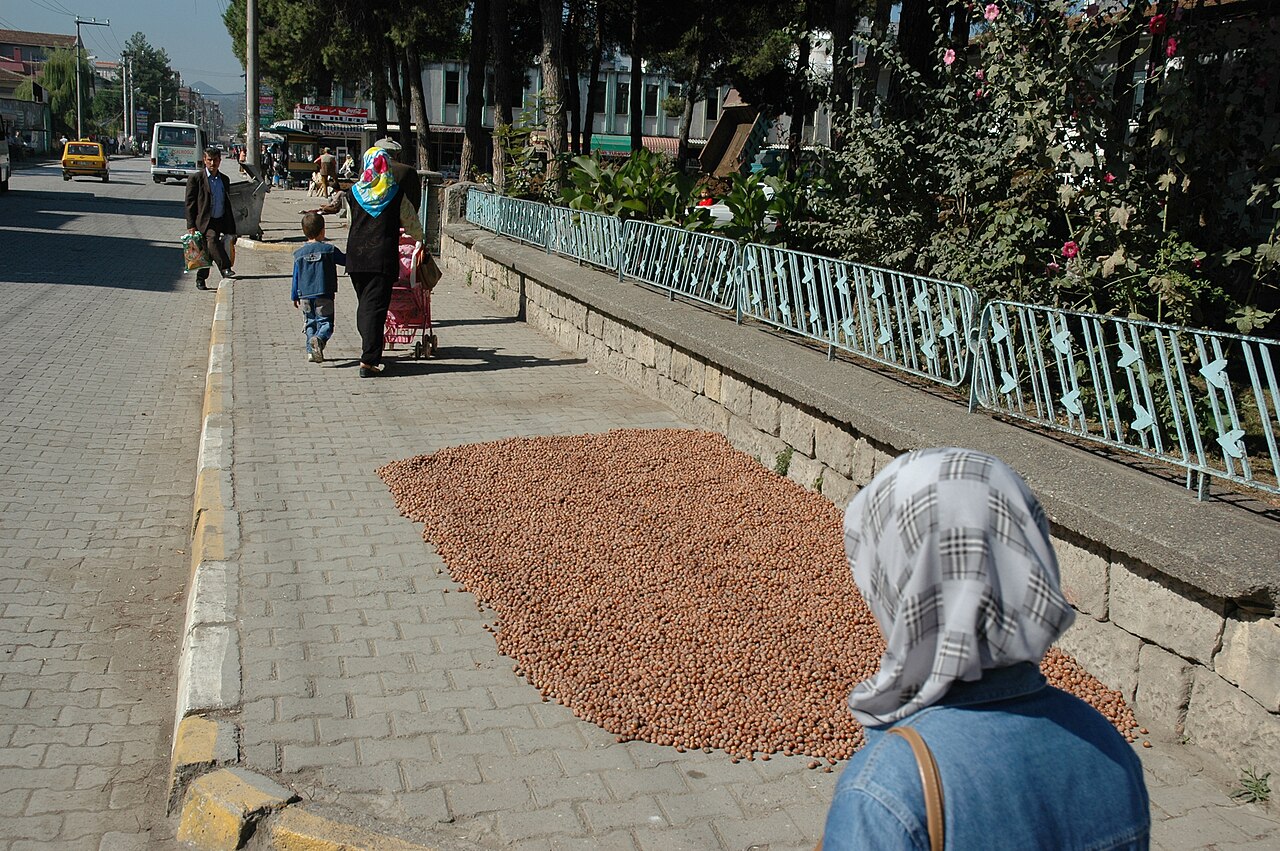
- Dry the nuts immediately after harvest in a thin layer; drying causes the husks to split and the nut to be released. Dry at a maximum of 40 °C (Krpina), or never above 50 °C according to newer recommendations, to avoid rancidity.
- Reduce moisture to a safe level for storage (approximately 7–10 % in the shell) and store at relative air humidity below 70 % and low temperature (around 10 °C).
- For cultivars that release nuts with difficulty (e.g., 'Istarski duguljasti'), rely on the color and moisture of the kernel, rather than waiting for the nut to fall off on its own.
Common mistakes:
- Harvesting "according to the calendar" instead of based on nut condition.
- Premature harvesting due to fear of wildlife damage — results in shriveled, tough kernels.
- A single harvest pass for the entire orchard — some nuts are harvested unripe, others overripe.
- Delayed harvesting and prolonged lying on the ground — losses from pests, mold, and mycotoxins.
- Drying at excessively high temperatures — leads to rancidity and quality decline.
Summary
The optimal harvest time for hazelnuts is identified by nut shedding from the husk, yellowish-brown color, and decrease in kernel moisture (physiological maturity at approximately < 25 % moisture in the kernel, while the nut in the shell has ~30–35 % water at harvest). Maturation is spread over 3–4 weeks, so harvesting is done in multiple passes, during dry weather and before rain. Premature harvesting yields smaller, shriveled, and tougher kernels with weaker aroma, while delayed harvesting increases losses from pests, mold, and mycotoxins. The correct timing, followed by quick collection and drying, is crucial for yield, kernel quality, and market value.
Cultivar-specific harvest calendar: maturation order of main HR cultivars
Early and late cultivars within the same orchard do not mature simultaneously, so the harvest timing also depends on the cultivar mix. It is useful to arrange cultivars by relative maturation order (from earlier to later) and anchor this order to the approximate harvest window from the previous table (early harvest late July – early August; main harvest late August – mid-September; late cultivars second half of September – early October). Here, we are discussing relative shifts of a few days to two or three weeks, not fixed dates.
These are relative shifts, not fixed dates
The order below shows who usually matures earlier and who later, not a calendar date. The absolute timing for each cultivar changes from year to year (vegetation progress, heat, precipitation) and depends on location and altitude. Research in continental Croatia (Vujević et al., 2008, 2015) showed that the onset and duration of phenological phases are not exclusively cultivar traits, but depend on location and meteorological conditions of the year. Therefore, even for a well-known cultivar, the decision to harvest is still based on nut condition (color, shedding, moisture), and this order serves only for planning harvest passes.
Relative order (early → late)
| Group | Cultivars (examples) | Relative position | Harvest note |
|---|---|---|---|
| Earlier domestic cultivars | Istarski duguljasti / Lamberti (Crvenolisni Lambert), Haleški | maturation in the main window (late August – September) | "middle maturation period"; nut does not fall off on its own in Istarski |
| Medium | Rimski (Rimski okrugli) | within ~7–10 days difference from Istarski | nuts fall off the husk on their own (suitable for machine harvesting) |
| Later (industrial/Italian and American) | Tonda di Giffoni, Tonda Gentile Romana, Barcelona, Ennis | later, towards end of September / early October | mostly coastal areas; more sensitive to low temperatures |
Domestic cultivars (Istarski, Rimski, Haleški). In Croatia, the two most prevalent cultivars — Istarski duguljasti (approx. 60 % of area) and Rimski (approx. 26 %) — differ in full maturity by approximately 7–10 days. Literature cites this difference in both directions (one source states Istarski/Lamberti matures 7–10 days earlier than Rimski, another that Istarski matures later), which further confirms that this is a relative, locally variable shift, not a fixed rule. The practical consequence is more important than the direction: the two main cultivars in the same orchard should not be harvested on the same day, but in two separate passes, monitoring each separately.
For harvesting itself, the cultivar difference in shedding from the husk is key: in Rimski, nuts fall off the husk on their own at maturity, which is suitable for mechanical harvesting, while in Istarski duguljasti, the husk remains longer than the nut and narrows at the tip, so the nut does not fall off on its own — it is often harvested manually from the tree, or the machine requires an attachment for separating the nut from the husk. For Istarski, one must not wait for spontaneous shedding as a sign of maturity; rely on kernel color and moisture (see above), otherwise premature harvesting and shriveled kernels are a risk.
Later and industrial cultivars. Italian cultivars (Tonda di Giffoni, Tonda Gentile delle Langhe, Tonda Gentile Romana) as well as Barcelona and Ennis are planted primarily in coastal areas in our conditions because they are more sensitive to low temperatures. In cultivar comparisons, Barcelona serves as the reference ("anchor") cultivar, and some cultivars mature at the same time or a few days (e.g., ~3 days) later than Barcelona. Tonda Gentile Romana and other "Tonda" cultivars as well as Ennis are regularly among the later cultivars in phenological reviews. For an orchard, this means that if these are grown alongside domestic cultivars, their harvest should be planned as a separate, later wave, usually towards the end of September and into October.
How to use this in practice
- Keep records by cultivar. Record the date of first shedding and full harvest for each cultivar; after a few years, you will have a reliable local order for your orchard, more valuable than any general table.
- Plan passes by group, not for the whole orchard. Harvest early cultivars (Istarski, Haleški) and late cultivars (Rimski and especially Italian/Barcelona/Ennis) in separate passes.
- For cultivars that do not release nuts (Istarski duguljasti), monitor maturity by kernel color and moisture, not by shedding.
- Cultivar order is an orientation for work organization (packaging, dryer, labor), but always confirm the final decision based on nut condition in the field.
Gallery
Sources
This text is an AI summary created from an internal literature collection on hazelnut (RAG corpus) and supplemented with public web sources. Main sources used:
- Krpina, I. (2004.) Voćarstvo — reference data on hazelnut harvesting and drying (moisture 30–35 %, drying up to 40 °C, ~10 %).
- Tehnologija berbe, sušenja i skladištenja lješnjaka: Pregled literature (2022.) — maturity indicators (color, shedding, "rattling"), moisture (shell 7–10 %, kernel 4–6 %), drying ≤ 50 °C, storage.
- Ministry of Agriculture — Advisory Service: Od sadnje do berbe lijeske (2017.) — https://savjetodavna.mps.hr/2017/10/24/od-sadnje-do-berbe-lijeske/
- Agroklub: Za bolje i veće prinose, obavite pravovremenu berbu lješnjaka (2020.) — https://www.agroklub.com/vocarstvo/za-bolje-i-vece-prinose-obavite-pravovremenu-berbu-ljesnjaka/62586/
- Agroklub: Berba, sušenje i čuvanje lješnjaka — https://www.agroklub.com/vocarstvo/berba-susenje-i-cuvanje-ljesnjaka/53125/
- Vrtlarica.hr: Lijeska / Lješnjak — sadnja i uzgoj — https://www.vrtlarica.hr/sadnja-uzgoj-lijeske/
- Ekonomska analiza proizvodnje lješnjaka (2023.) — harvest timing, recovery rate, yield.
- Traktorski priključak za branje lješnjaka (2020.) — physiological maturity and kernel moisture (< 25 %), harvest waves (70–80 % in the first wave).
- Šoškić, M. (2006.); Bulatović (1985.); Brzica (2002.) — cited in the aforementioned literature.
- Stanje i tendencije proizvodnje i potrošnje lješnjaka (2017., doi:10.31727/gzb.42.3.9) — difference in full maturity between Istarski and Rimski (~7–10 days), shedding from husk and machine harvesting.
- Vrtodušić et al.: Tehnologija berbe, sušenja i skladištenja lješnjaka: Pregled literature (2022.) — cultivar difference in shedding from husk, manual harvesting of 'Istarski duguljasti'.
- Poslovni plan za proizvodnju sadnica lijeske (Poljinos, 2019.) — description of Istarski duguljasti and Rimski cultivars (maturation period, husk, recovery rate).
- Tehnološka i ekonomska obilježja uzgoja lijeske (2018., doi:10.46584/lm.v36i2.1141) — flowering and shedding of Rimski nuts, matching with Istarski and Haleški.
- Vujević et al. (2014.) Period cvatnje sorti lijeske i pojava dihogamije u agroekološkim uvjetima kontinentalne Hrvatske — phenology of domestic cultivars; phenological phases depend on location and year.
- Stanje i važnost uzgoja lijeske u Republici Hrvatskoj (2018.) — cultivar shares (Istarski ~60 %, Rimski ~26 %); phenological phases are not exclusively cultivar traits.
- Nove sorte lijeske (Gospodarski list) — maturation relative to reference cultivar 'Barcelona' (same time or ~3 days later).
- Phenology, Yield and Nut Traits Evaluation of Twelve European Hazelnut Cultivars (2024., doi:10.3390/f15050833) — late cultivars (Tonda Gentile Romana, Merveille de Bollwiller, Ennis) in phenological review.
- Vrtlarica.hr / Vrtlarica.com: Lješnjak — most prevalent HR cultivars and Italian industrial cultivars in the coastal region.
- ISHS: Influence of Harvesting Period on Hazelnut Quality — https://ishs.org/ishs-article/556_82/
- Hazelnut Hub: Best Time to Harvest Hazelnuts — https://hazelnuthub.com/the-best-time-to-harvest-hazelnuts/
- Hazelnut Growers' Association of New Zealand: Drying nuts after harvest — https://hazelnut-growers.org.nz/resources/orchard-management/drying-nuts-after-harvest/
Recommended equipment
🔎 nut gatherer roller — Amazon →Affiliate links — we may earn a small commission at no extra cost to you.
Handheld Nut Roller Collector
For gathering nuts from the ground on small areas.
| Use Case | Option Type | What to Check Before Purchase |
|---|---|---|
| Small area collection | Manual roller device | Wheel traction and debris clearance |
| Uneven terrain | Heavy duty rollers | Frame strength and wheel size |
| Large orchards | Mechanical sweepers | Professional machinery for efficiency |