Frost Damage and Protection of Blossoms and Buds
Content generated by artificial intelligence — verify before application
This article was automatically compiled from a collection of hazelnut literature using artificial intelligence and may contain errors or outdated information. It serves as a starting point for further research, not as professional advice. Dosages, products, and timing are informative and depend on the cultivar, location, and current regulations — always consult an advisory service and official sources before application.
Frost is one of the most important abiotic factors limiting the cultivation of hazelnut (Corylus avellana L.) and directly affects crop security. Unlike most fruit species, hazelnut blooms extremely early — sometimes as early as December, and typically from January to March — so its most sensitive organs (catkins, female flowers, and buds) develop precisely during the period when winter and late spring frosts are most likely. Therefore, assessing frost risk and selecting appropriate protection measures are among the key decisions made even before establishing an orchard, not just after damage occurs. In this article, we provide an overview of the sensitivity of specific organs, critical temperatures by phenological stage, and active and passive protection measures.
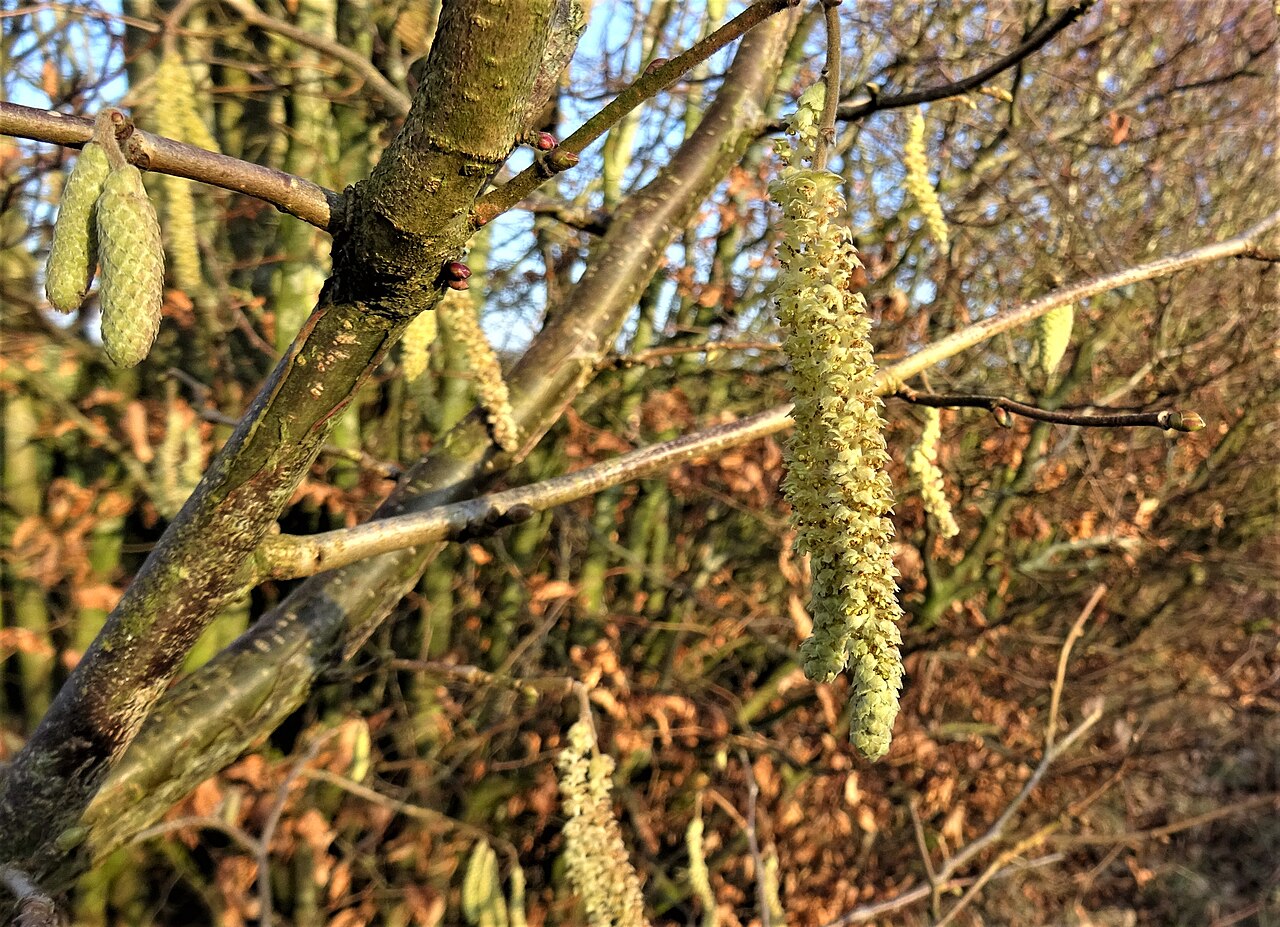
Why hazelnut is a special case
Hazelnut is a monoecious and cross-pollinating species: on the same plant, there are male catkins (inflorescences) and small female flowers. Flowering is very early, and pollination occurs via wind (anemophily) while the rest of the plant is dormant. This means that the most vulnerable phases coincide with periods when fluctuations between warm and cold weather are most pronounced.
The woody biomass of hazelnut is relatively cold-resistant. Literature cites that the critical absolute minimum temperature for hazelnut is around -26 °C during deep winter dormancy, and with gradual cooling, many cultivars can withstand -25 °C, and even -30 °C for short periods. Under domestic conditions, cultivars begin to suffer frost damage in the range of -20 °C to -25 °C. The problem, therefore, is not so much the hardiness of the shrub or tree, but the extreme sensitivity of the generative organs during flowering.
It is important to understand that cold resistance is not a fixed number. It depends on a series of factors, making it practically impossible to determine the critical threshold precisely for all situations. The severity of damage is influenced primarily by:
- the phenological stage at which the cold occurs (closed vs. open flowers),
- the rate of temperature drop to the critical value,
- the duration of low temperatures (even mild frost lasting hours can cause damage),
- the condition of the plant (poorly nourished trees are more sensitive),
- the cultivar and its origin.
Sensitivity of organs by phenological stage
The most important rule is: the more developed the organ is and the closer it is to or in the middle of flowering, the more sensitive it is. Closed, unopened flower buds tolerate significantly lower temperatures than open ones.
Catkins (Male Inflorescences)
Catkins go through several states, from completely closed to the phase of pollen release, and lose resistance rapidly as they develop:
- closed catkins: withstand approximately -16 °C to -18 °C,
- at full development (before opening): approximately -8 °C to -10 °C,
- open catkins during flowering: sensitive already to -7 °C to -8 °C, and damage occurs after just a few hours,
- at the moment of pollen release (shedding): most sensitive, only -5 °C to -7 °C.
At the peak of male flowering, a temperature of just -5 °C to -6 °C can significantly reduce yield by destroying the pollen needed for pollination. Although catkins are not organs from which the fruit develops, without vital pollen, there is no fertilization or crop, so their destruction is a direct loss.
Female Flowers
Female flowers (recognizable by the red stigmas protruding from the bud) are relatively resistant while closed and sensitive during flowering:
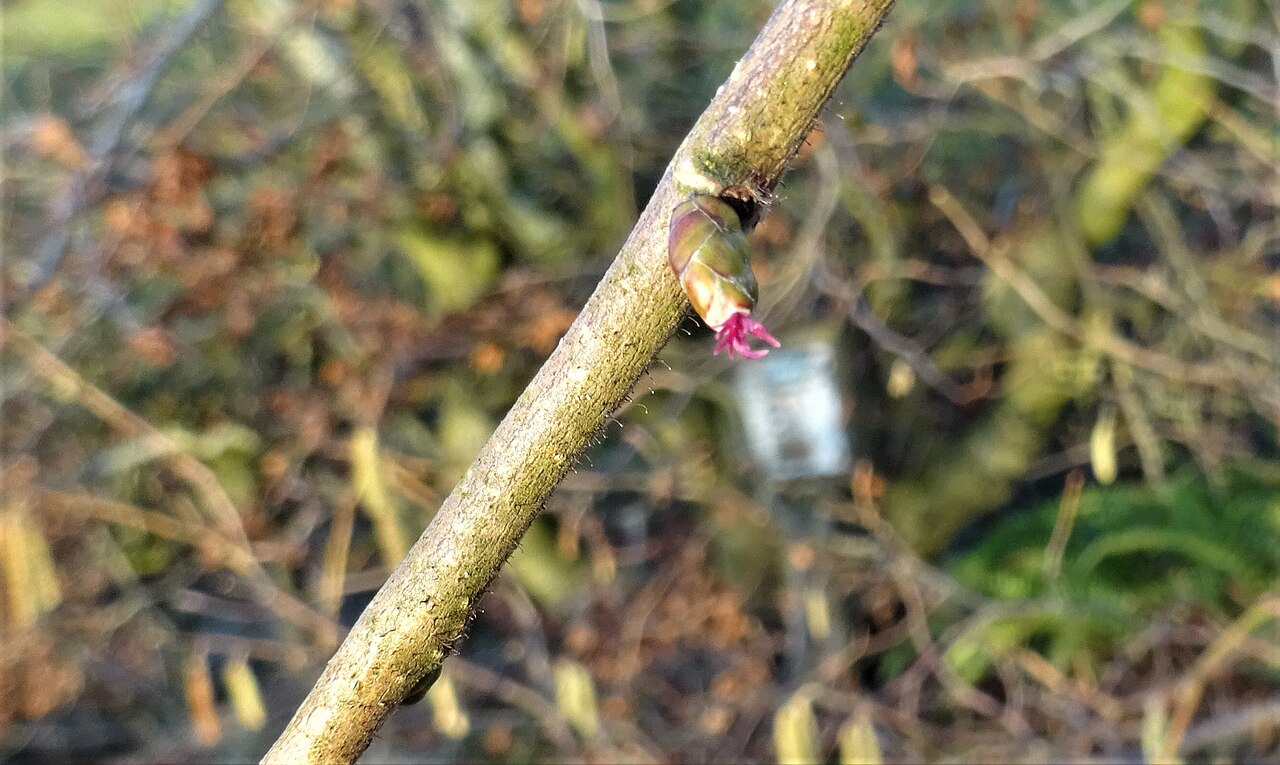
- before flowering (closed): withstand approximately -13 °C to -16 °C (some sources cite frost damage to female inflorescences around -15 °C),
- during flowering: sensitive to -7 °C to -8 °C.
Some sources also state that hazelnut flowers on average withstand up to about -14 °C (some cultivars -18 °C), but that temperatures between -9 °C and -11 °C negatively affect flowering, pollination, and fertilization. On poorly nourished trees, the resistance limit drops dramatically — damage to female inflorescences has been recorded even at -2 °C to -4 °C, highlighting the importance of good condition and fertilization.
Buds and Young Shoots
After the onset of vegetation, sensitivity increases further:
- vegetative (leaf) buds in dormancy: resistant, up to approximately -25 °C,
- leaf buds at the beginning of vegetation: sensitive to -3 °C to -5 °C,
- young shoots and leaves after leafing: frosts of -4 °C to -6 °C can severely damage them and reduce the crop.
Interestingly, in some cultivars (e.g., Tonda gentile delle Langhe), vegetative buds can be even more sensitive than female flower buds, showing that cultivars differ and generalizations should be taken with caution.
Table — Approximate critical temperatures by organ and stage
| Organ / Stage | Approximate Critical Temperature |
|---|---|
| One-year-old shoots (dormancy) | approx. -30 °C |
| Vegetative buds (dormancy) | approx. -25 °C |
| Absolute minimum for the plant (dormancy) | approx. -26 °C |
| Catkins — closed | -16 °C to -18 °C |
| Catkins — fully developed, before opening | -8 °C to -10 °C |
| Catkins — open during flowering | -7 °C to -8 °C |
| Catkins — pollen release | -5 °C to -7 °C |
| Female flowers — before flowering (closed) | -13 °C to -16 °C |
| Female flowers — during flowering | -7 °C to -8 °C |
| Female flowers — on poorly nourished trees | even -2 °C to -4 °C |
| Leaf buds at the beginning of vegetation | -3 °C to -5 °C |
| Young shoots after leafing | -4 °C to -6 °C |
Values are informative, collected from multiple sources with different cultivars and methodologies (e.g., Romisondo 1978, Miljković 1991, Stritzke 1962, Šobek 1957, Germain and Leglise 1973) and may vary depending on the cultivar, plant condition, and duration of cold. Use them for risk assessment, not as an absolute guarantee.
Recognizing (diagnosing) frost damage
Damage is most reliably assessed by cutting organs and inspecting the interior:
- catkins: damaged catkins darken, shrivel, dry out, and do not release pollen; a cross-section shows browned tissue,
- female flowers: healthy stigmas are light to bright red and firm; frost-damaged ones turn black or brown and become watery,
- buds and shoots: with a longitudinal cut, healthy tissue is light and green, while damaged tissue is brown to black.
Assessment is best performed 1 to 3 days after the frost, when symptoms are clearly developed. Given that hazelnut produces a large number of flowers, even partial damage does not necessarily mean a complete crop failure — therefore, it is important to assess the percentage of damaged organs, not just confirm the presence of damage.
Passive protection measures
Passive measures are those implemented in advance, before the occurrence of frost, and are usually the cheapest and most effective because they prevent the problem at the source. For hazelnut, which blooms very early, passive measures are often the only realistic defense.
Site Selection (Location)
The most important decision. When selecting a site for an orchard, all climatic temperature characteristics should be considered, especially:
- avoid frost pockets and enclosed depressions where cold air flows and accumulates,
- choose slightly sloping terrain (slopes) from which cold air drains downhill,
- ensure free air circulation (open "exits" for cold air, without dense barriers at the bottom of the slope that create "lakes" of cold air),
- hazelnut is a strong heliophyte and prefers sunny locations (ideally around 1250 sunny hours during vegetation), but early sun exposure of frozen organs can increase damage, so eastern exposures carry additional risk after radiative frosts.
When assessing risk, three circumstances accompanying severe cooling should be taken into account: the speed of temperature drop to the critical level, the duration of low temperatures, and the phenological stage of the hazelnut at that moment.
Cultivar Selection
Since cultivars differ in the timing and duration of flowering as well as in resistance, cultivar selection is a powerful tool:
- on risky sites, give preference to late-flowering and more resistant cultivars,
- pay attention to pollinizer compatibility — if frost destroys the catkins of the main cultivar, it is good to have pollinizers with shifted and long flowering periods,
- consider multiple cultivars with different flowering times to spread the risk.
Agrotechnics and Plant Condition
- Balanced fertilization: poorly nourished trees are significantly more sensitive (female flowers suffer even at -2 °C to -4 °C), so good nutrition indirectly increases resistance. Avoid excessive late-summer nitrogen fertilization that prolongs vegetation and delays wood hardening.
- Maintaining ground cover: compact, moist, and clean soil accumulates daytime heat better and releases it at night, slightly raising the temperature near the ground; high weeds and loose, dry surface worsen radiative frost.
- Avoid late pruning that promotes vigorous growth of sensitive young shoots.
Active Protection Measures
Active measures are applied immediately before and during frost events, require equipment, energy, and monitoring, and are more costly. They make sense in valuable, intensive orchards and where passive measures are insufficient. A prerequisite is reliable temperature monitoring (thermometers, automatic stations, alarms) and knowledge of the forecast, including the dew point temperature, which determines how much the air will cool.
Irrigation (Frost Protection Sprinklers / Overhead Irrigation)
One of the most well-known and effective methods. It is based on the physical phenomenon that latent heat is released during the freezing of water (heat of crystallization): water that freezes transfers heat to plant tissue and maintains the temperature on the surface of organs around 0 °C, i.e., above the lethal threshold, as long as the ice coating remains wet.
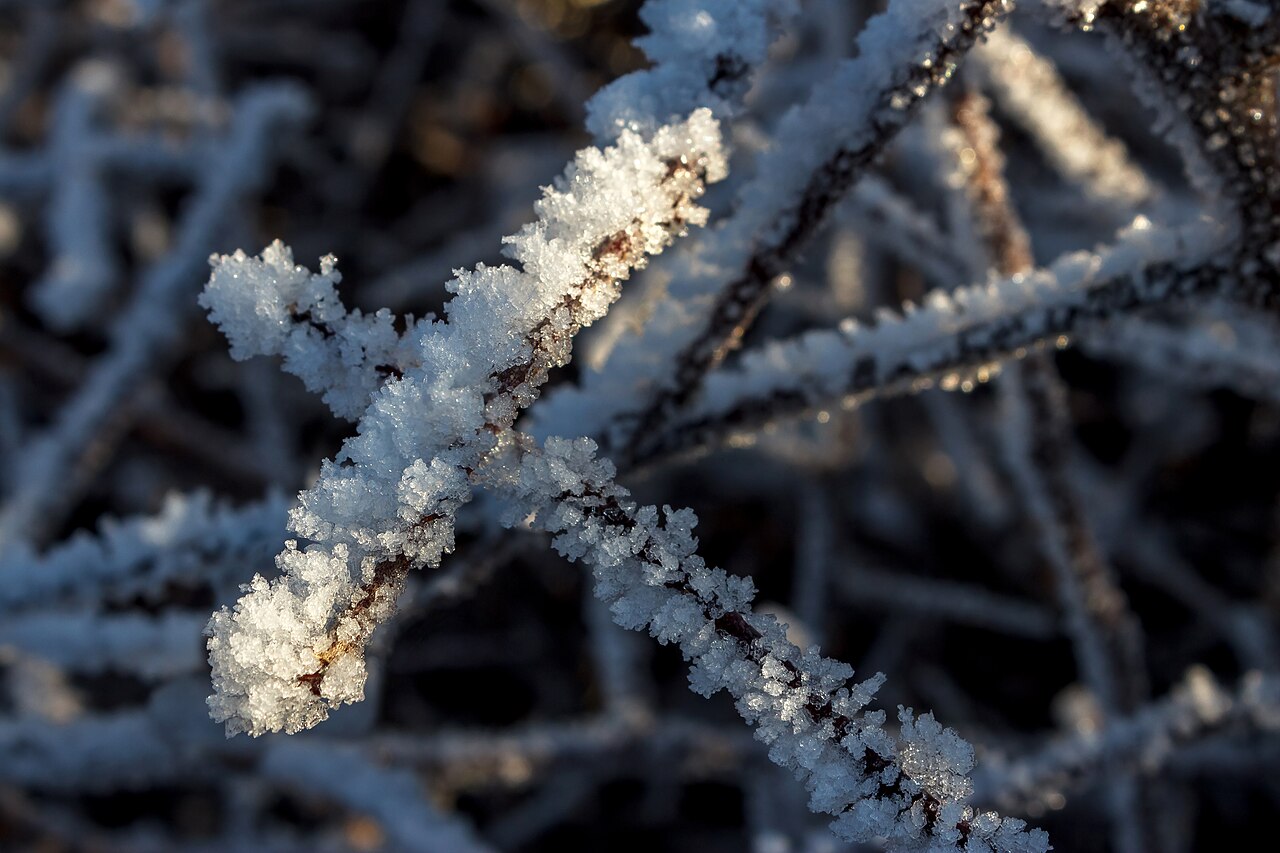
Key principles:
- Start: Sprinkling should be turned on before the temperature drops to zero (typically around +1 °C to +2 °C, depending on the dew point), and should start earlier if the air is dry (low dew point).
- Continuity is crucial: The system must run without interruption until the ice begins to melt naturally and the temperature rises above zero. An interruption or insufficient water volume is more dangerous than inaction because evaporation cools the tissue.
- Water volume: A steady, uniform supply is required; in stronger frosts and wind, needs increase, so the method requires a plentiful and reliable water source and a well-sized system.
- Risks: The weight of accumulated ice can break branches (in hazelnuts, especially brittle scions and thin shoots), and prolonged operation can also lead to soil waterlogging.
Irrigation is very effective for radiative frosts with calm air, but less reliable in advective frosts (invasion of cold air masses with wind).
Wind Machines (Frost Protection Fans)
Large wind machines mix air and break down the temperature inversion — drawing warmer air from higher layers down to the ground. They are effective only during radiative frosts with strong inversion (calm, clear night), and are useless or harmful during advective frosts. They typically raise the temperature at ground level by a few degrees within their range.
Heating (Heaters, Frost Protection Candles)
Direct addition of heat using fuel oil/gas heaters or paraffin frost protection candles. Effective, but expensive and labor-intensive, with high fuel consumption and the need for manual ignition at many locations. Often combined with wind machines for better heat distribution.
Smoking (Smudging)
Creating smoke and fog to reduce heat loss by radiation. A traditional and inexpensive method, but with weak and unreliable effectiveness (usually raises temperature by less than 1 °C), and today often legally restricted due to air pollution. It is considered obsolete and only an auxiliary measure.
Table — Comparison of Active Measures
| Method | Principle | Best for | Approximate Effect | Main Disadvantages |
|---|---|---|---|---|
| Irrigation (Sprinkling) | Latent heat of water freezing | Radiative frost, calm air | Keeps tissue around 0 °C | High water demand, risk of breakage from ice, must run continuously |
| Wind Machines | Breaking inversion, mixing air | Radiative frost with strong inversion | A few °C | No effect during advection, high initial investment |
| Heaters / Candles | Direct heating | Various situations | Locally a few °C | Expensive, labor-intensive, fuel consumption |
| Smoking | Reduction of radiative heat loss | Weak radiative frost | < 1 °C | Unreliable, pollution, often restricted by regulations |
Effect figures are indicative and depend on the intensity and type of frost, air humidity (dew point), wind, and system performance. Before investing in equipment, consult advisory services and check applicable regulations (e.g., restrictions on smoking, permits for water extraction).
Practical Recommendations and Common Mistakes
Recommendations
- Address risk primarily passively — proper site and cultivar selection is the cheapest and most durable "frost protection."
- Install temperature measurement at orchard level (multiple points, including the bottom of the slope) and monitor the dew point forecast during flowering.
- Active measures make sense only in valuable orchards and when they can be implemented correctly and completely (especially irrigation).
- Maintain good tree condition and nutrition — this indirectly increases flower resistance.
- After frost, perform diagnostic cross-sections and assess the percentage of damage before making any decisions on pruning or additional investments.
Common Mistakes
- Planting in a frost hollow due to lower land prices — the most expensive long-term mistake.
- Starting irrigation too late or interrupting it before the ice melts — worse than inaction.
- Using wind machines during advective frost (windy cold mass) — no effect.
- Relying solely on smoking as the main measure — too weak for serious frost.
- Excessive late nitrogen fertilization that prolongs vegetation and reduces resistance to early autumn and late spring frosts.
- Assessing damage "by eye" without cutting open organs, leading to incorrect decisions.
Gallery
Sources
This article is an AI summary compiled from an internal literature collection on hazelnuts (RAG corpus) and publicly available sources. Main sources used:
- Impact of low temperatures on hazelnut freezing (final/thesis, 2021.) — RAG corpus (critical temperatures by organ; Romisondo 1978., Miljković 1991., Stritzke 1962., Šobek 1957., Germain and Leglise 1973.)
- Technological and economic characteristics of hazelnut cultivation (2018.) — https://doi.org/10.46584/lm.v36i2.1141
- Establishing new orchard plantations (technological-economic guidelines, 2006.) — RAG corpus (critical temperatures and late spring frosts)
- Environmental Impact Assessment — establishment of permanent hazelnut and plum plantation — https://bbz.hr/doc/uprava/elaborat_zastite_okolisa_visegodisnji_nasadi_lijeske_i_sljive.pdf
- Hazelnut — Vrtlarica.hr — https://www.vrtlarica.hr/sadnja-uzgoj-lijeske/
- Recommendations for owners of permanent hazelnut plantations, Ministry of Agriculture / Advisory Service — https://savjetodavna.mps.hr/2023/12/06/preporuka-vlasnicima-trajnih-nasada-lijeske-zimska-zastita/
- Protect plants from frost by sprinkling — Agroklub — https://www.agroklub.com/vocarstvo/zastitite-biljke-od-mraza-kisenjem/28607/
- Frost, Critical Temperatures, and Frost Protection — Penn State Extension — https://extension.psu.edu/frost-critical-temperatures-and-frost-protection
- Critical Temperatures for Frost Damage on Fruit Trees — Utah State University Extension — https://extension.usu.edu/productionhort/files/CriticalTemperaturesFrostDamageFruitTrees.pdf
- Frost resistance of hazelnut varieties in the Central Black Sea region — https://www.bio-conferences.org/articles/bioconf/pdf/2021/06/bioconf_biphv2021_01006.pdf
Note: Some figures come from literature of different ages and methodologies and refer to different cultivars; treat them as indicative values for risk assessment, not as absolute thresholds.