Blanching, Peeling, and Sorting of Kernels
Content generated by artificial intelligence — verify before application
This article was automatically compiled from a collection of hazelnut literature using artificial intelligence and may contain errors or outdated data. It serves as a starting point for further research, not as professional advice. Dosages, products, and timing are informative and depend on the cultivar, location, and applicable regulations — always consult with advisory services and official sources before application.
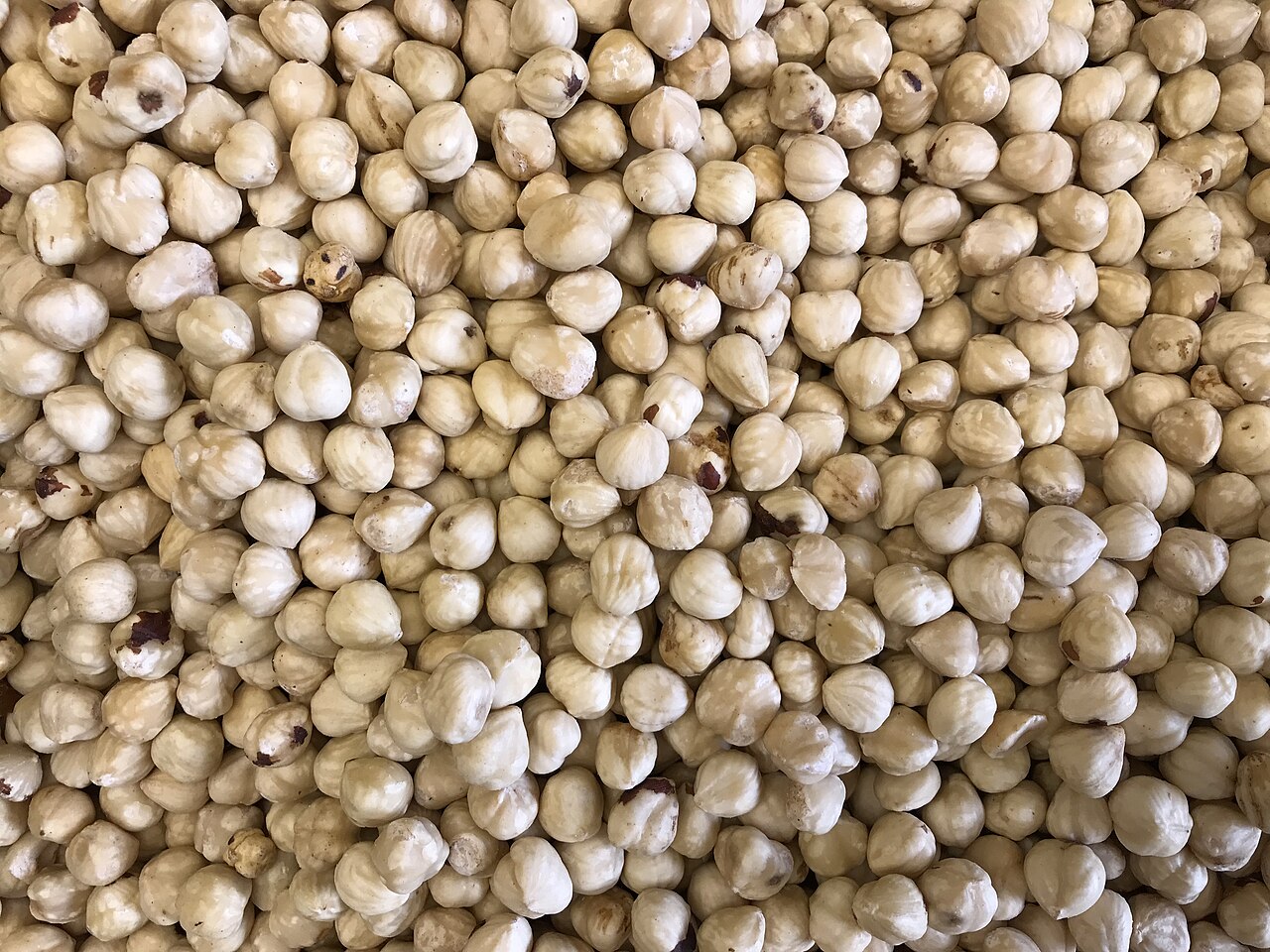
After the hazelnuts are harvested, dried, calibrated, and shelled, a series of operations transforms the raw kernel into a value-added product: pellicle removal (blanching), peeling, and optical sorting by color and defects. These phases have the greatest impact on the final kernel price, as customers in the confectionery and chocolate industries pay a premium for clean, uniform kernels without skin and without defects. In this article, we explain how these operations work, what figures you can expect, how they affect yield (recovery rate) and quality, and what the most common mistakes are for small and medium-sized processors.
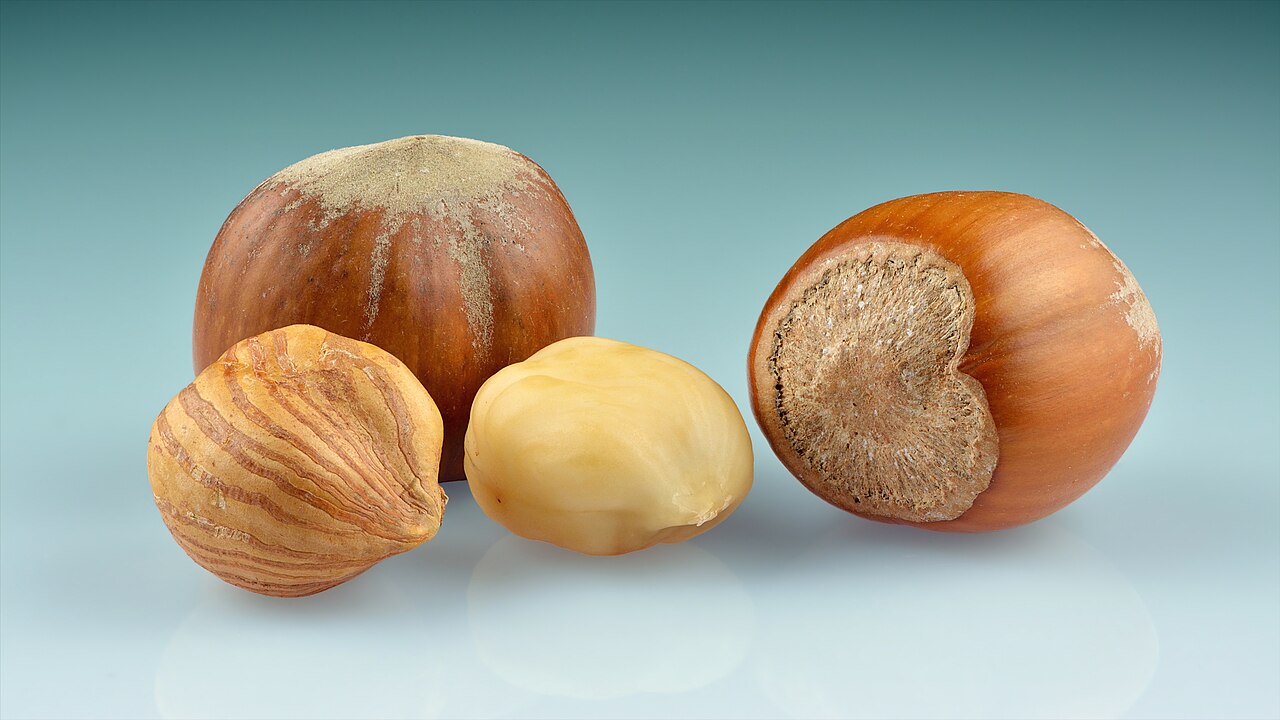
From fruit to naked kernel: where these operations fit in the process
The technological sequence for hazelnut processing typically looks like this:
- Drying — shell moisture drops to about 7%, and kernel moisture to approximately 4–6% (air temperature for drying is usually up to about 50 °C). Proper drying is a prerequisite for all subsequent steps.
- Calibration (size grading) — hazelnuts are sieved by diameter. Calibration is important because it facilitates the separation of the kernel from the shell; otherwise, breakage may occur on parts of the cracking machine. A calibration line consists of a hopper, conveyor belt, vacuum cleaner for impurities, centrifugal blower, settling chamber, calibration roller, and control panel.
- Cracking / Shelling (removal of shell) — machines crush the shell on rotating plates with special serrations through which the hazelnut passes; then the kernel is separated from shell fragments by blowing and sieving.
- Pellicle removal (blanching) and peeling — removal of the brown skin (pellicle) that covers the kernel.
- Optical (color) sorting — removal of discolored, moldy, defective kernels, and foreign bodies.
- Packaging or further processing (roasting, grinding, paste, caramelization).
Phases 4 and 5 are the subject of this text. Along with cracking, they are crucial for the "output" of clean kernels and for their market class.
Pellicle: what it is and why it matters (or helps)
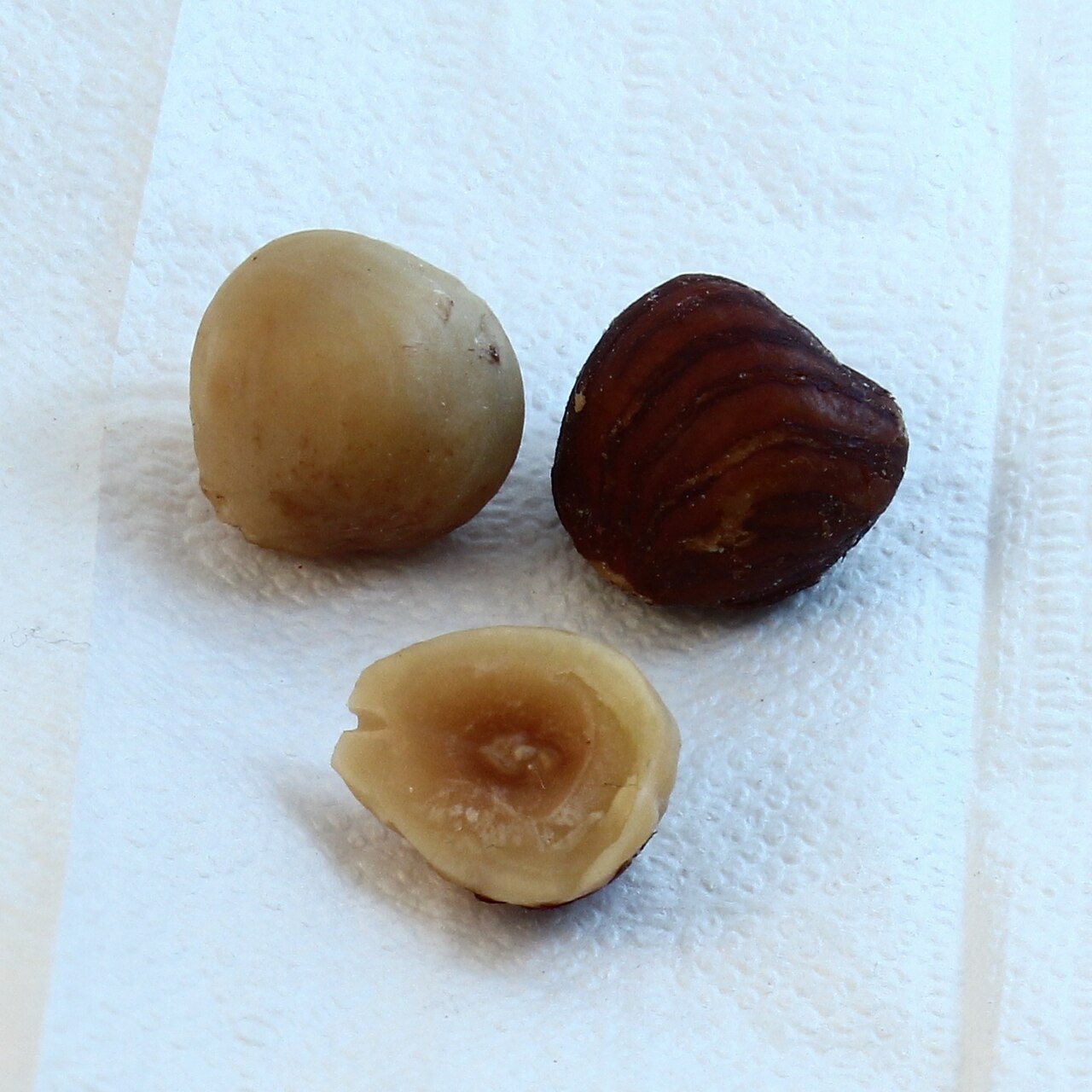
The pellicle is a thin, brown skin that adheres to the kernel under the shell. Literature describes that, depending on the cultivar, "the pellicle detaches easily or remains partially adhered to the kernel, which is a negative trait."
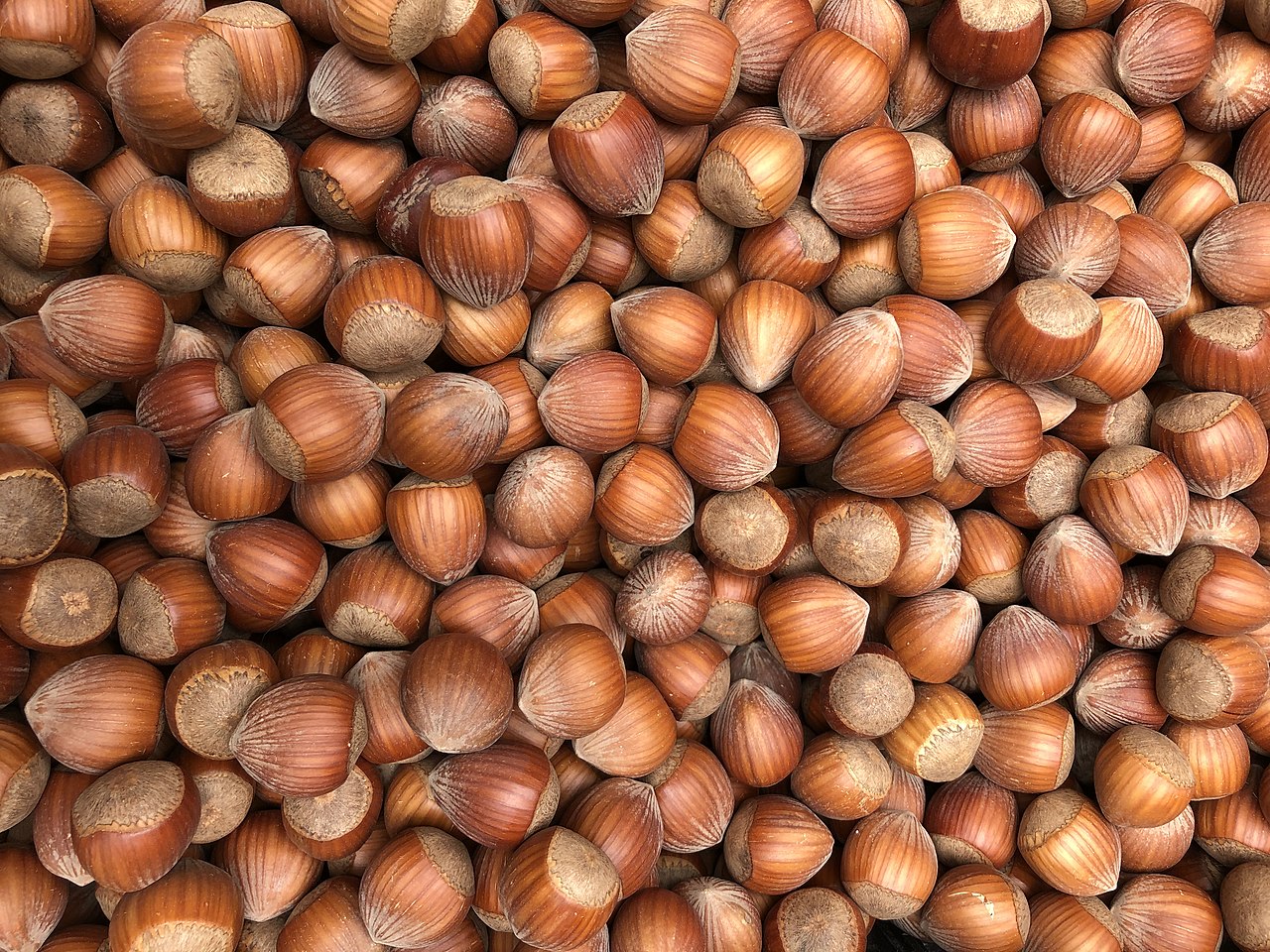
The pellicle has a dual nature:
- Positive: It is rich in polyphenols (antioxidants) and, while intact, the skin covering the kernel "protects against fat oxidation and consequently preserves kernel quality and storability." Therefore, unpeeled kernel (natural) stores longer than peeled kernels.
- Negative: The pellicle is astringent and bitter, visually spoils the product, and is undesirable in confectionery and chocolate. Therefore, customers demand blanched (peeled) kernels.
Practical consequence: peeled kernels achieve a higher price but have a shorter shelf life and are more sensitive to rancidity. Therefore, peeling is usually done as close to the time of delivery or further processing as possible, not months in advance.
Ease of pellicle removal is genetically determined. Literature highlights that the indigenous cultivar
Istarski duguljasti(Slovenian:Istrska dolgoplodna leska) "has an exceptionally good possibility of pellicle removal by blanching." When planning orchards intended for processing, this is an important criterion for cultivar selection, just as yield and ease of mechanical cracking are.
Blanching and Peeling: Methods
"Blanching" in hazelnut practice is used as a term for the process by which the pellicle is loosened and removed. There are several technological approaches; the choice depends on the cultivar, desired quality, capacity, and kernel purpose.
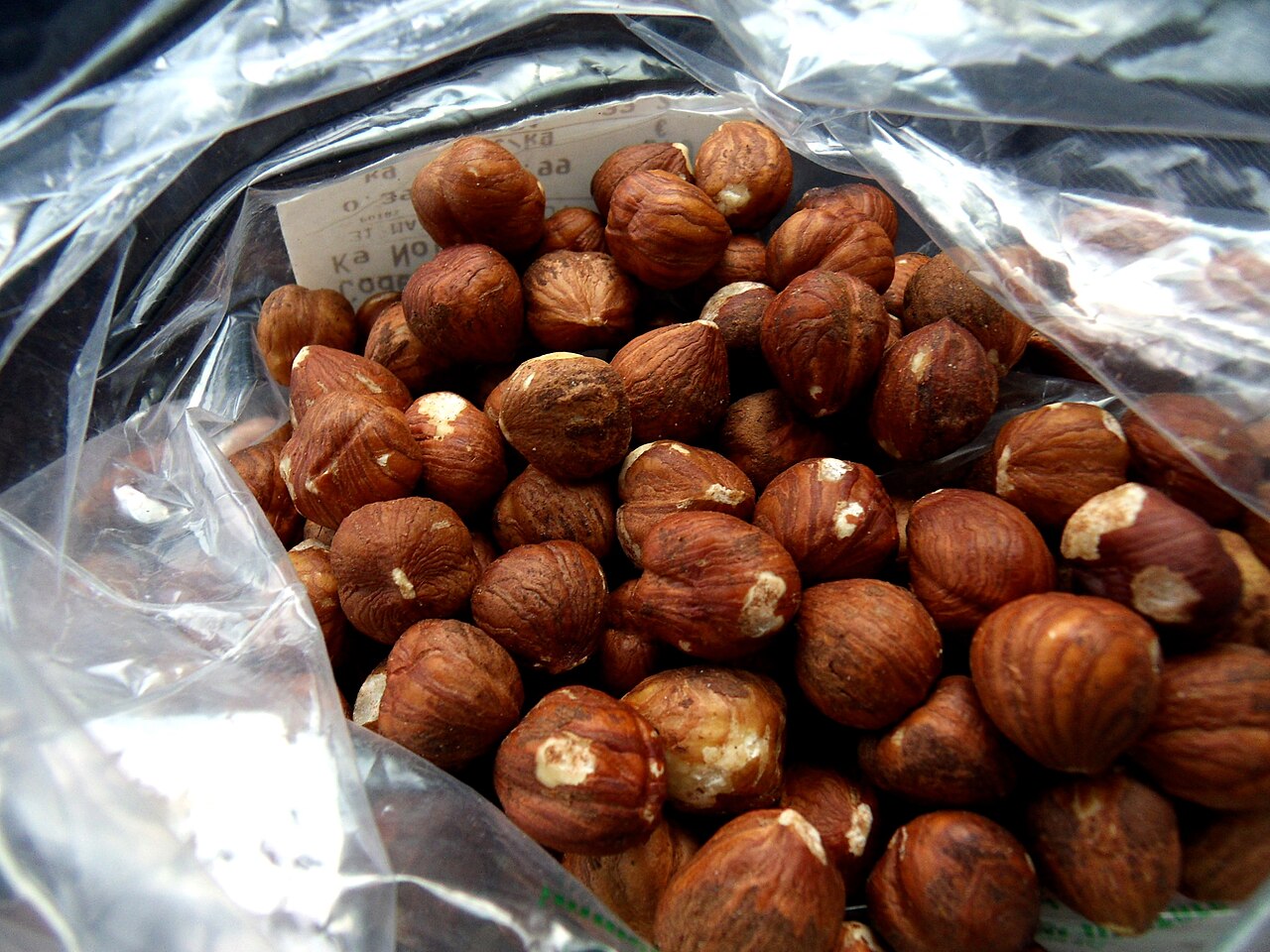
1. Thermal Blanching (dry, by roasting/heating)
The most common and oldest method. The kernel is heated (often roasting performs a double role — developing aroma and simultaneously loosening the skin), followed by mechanical friction that removes the pellicle. High temperatures "loosen the skin, so it detaches easily from the kernel."
| Approach | Typical Temperature* | Duration* | Note |
|---|---|---|---|
| Blanching/Heating (thermal skin loosening) | ~120–160 °C | several to approx. 20 min | often combined with light roasting |
| Roasting (with skin removal) | ~140–160 °C | 15–30 min | develops aroma; watch for rancidity and burning |
| Thermal immersion (American cultivars, lit.) | ~96–99 °C (immersion), 171–182 °C (air) | 8–10 min / 1–3 min | data from patent literature |
* Figures are informative and strongly depend on the cultivar, kernel moisture, machine type, and desired degree of roasting. They should always be adjusted with trial batches.
After heating, kernels pass through a blancher/peeler with rubber rollers or brushes that remove the loosened skin by friction, and a suction system or blower carries away the pellicle flakes.
2. Mechanical (dry) peeling by abrasion and air
Modern lines use thermal blanchers that heat the kernel and mechanical peelers that remove the skin by friction (abrasion) or air stream. The advantage is the absence of water (no drying after the process) and preservation of kernel integrity.
3. Chemical (alkaline) peeling
Alkaline (NaOH) peeling is also used in industrial processing. From scientific literature: a concentration range of NaOH from 20 to 60 g/kg, temperature from 55 to 85 °C, and time from 30 to 120 s were tested. Favorable conditions are cited as approximately 58.5 g NaOH/kg solution, ~95 °C, and ~2.9 min, with peeling efficiency over 98%. This method requires rinsing, neutralization, subsequent drying, and disposal of alkaline waste — rarely profitable for small family farms and subject to food safety and wastewater regulations.
4. Infrared (IR) dry peeling
Newer research describes laboratory systems for dry peeling by infrared radiation, where IR quickly heats the surface and skin, allowing it to detach more easily with less thermal damage to the kernel. It is also mentioned as a technique that can improve oxidative stability and shelf life of kernels. The technology is promising but still mostly at the level of equipment for larger plants.
Impact on Yield and Quality
Yield (recovery rate) is the ratio of usable part (kernel) to the whole fruit, expressed in percentages; "in order for the economic profitability of processing to be higher, efforts are made towards the highest possible yield." For our varieties, kernel yield is often around 40% of the fruit mass in shell (example from practice: ~2.3 t in shell yielded ~900 kg kernels, corresponding to a yield of about 40%).
Yield is "consumed" at several points in the line, and blanching and peeling are among the most sensitive:
- Breakage and damage during cracking. The shell removal operation "leads to damaged and broken kernels and those with hidden damage." The share of damage depends on "mechanical force, rotational speed of the crusher, shell thickness, and shape of the hazelnut, number of size classes, and calibration efficiency." Poorly calibrated raw material = more breakage = lower overall kernel yield.
- Mass loss during peeling. By removing the pellicle, the kernel loses a few percentage points of mass (the skin itself). This is normal, but aggressive peeling also removes part of the kernel and creates broken pieces of lower grade.
- Mechanical damage to the skin. Even when the kernel remains "natural," skin damage "should be prevented because it protects against fat oxidation"; injuries accelerate rancidity and reduce storability.
| Operation | Main impact on yield | Main impact on quality |
|---|---|---|
| Drying | indirect (preparation for cracking) | prevents mold/aflatoxin, crispness |
| Calibration | increases (less breakage) | uniformity of class |
| Cracking | decreases (kernel breakage) | hidden damage, cracked kernels |
| Blanching/peeling | slightly decreases (skin loss + breakage) | removes astringency; risk of burning and rancidity |
| Optical sorting | "reduces" class yield, but raises value | removes defects and foreign bodies |
Key message: optical sorting intentionally removes part of the mass (defective kernels) — this is not a loss but an improvement in class. The real losses in yield are uncontrolled breakage and burning.
Optical sorting by color and defects
Manual (visual) sorting, as cited in the literature, "is slow and expensive and detects only visible changes, but not fat oxidation or internal kernel damage." Therefore, modern processing uses optical (color) sorting — automatic machines that image every kernel in the flow and eject defective ones with an air jet.
Types of optical sorters
| Technology | What it detects |
|---|---|
| Cameras (RGB, visible light) | Color deviations, dark and spotted kernels, mold, husks/wood |
| NIR (near-infrared) | Internal defects, foreign bodies that resemble kernels in color |
| X-ray | Stones, metal, dense foreign bodies (for the highest safety requirements) |
Advanced systems perform a 360° inspection of each kernel, capturing small, localized defects such as spots and insect holes. Sorting "removes dark, discolored, shriveled, and rotten kernels as well as foreign bodies such as husks, wood, and twigs."
Which defects does the sorter look for
- Kernel color change. Diseases such as Diaporthe and Septoria species are associated with internal kernel color change; necrosis of the kernel tip (black spots) and dark spots are linked to other microorganisms.
- Brown spots in the kernel cavity — a serious disorder that "devalues the final product," and is only noticed when the kernel is split in half. It is widespread globally (USA, Turkey, Italy); in Spain, it affects between 13 and 30 % of fruits, and in the
negretcultivar in higher areas of Catalonia, up to 97 %. Such internal defects are difficult to remove with standard cameras, making NIR and X-ray systems and half-separation methods essential. - Shriveled, rancid, rotten, and moldy kernels — "not permitted" in quality production.
- Foreign bodies — husk remnants, wood, stones.
Quality standards as a benchmark
What exactly constitutes a "defect" is defined by trade standards. An older but instructive example is the Oregon standards (Filberts/Hazelnuts), which classify under "damage" e.g.: dark spots that significantly impair appearance, adhering husk/valve covering more than 5 % of the surface, shriveling (shrunk, wrinkled, leathery kernel), and discoloration by blackening. For the EU/HR market, UNECE standards for hazelnut kernels and national regulations are authoritative — these should be checked before declaring the grade.
Practical recommendations and common mistakes
Recommendations
- Choose the cultivar according to purpose. For processing and blanching, cultivars with good pellicle removal and high yield are preferred (e.g.,
Istarski duguljastihas excellent blanching properties according to literature, and is also favorable for mechanical cracking). - Calibrate well before cracking. Uniform size = less breakage = higher whole kernel yield and fewer "hidden" defects.
- Optimize blanching temperature and time with trial batches for each cultivar and harvest; the goal is >95 % skin removal with minimal scorching and breakage.
- Peel as close to sale/processing as possible. Shelled kernels go rancid faster; if storing supplies, keep "natural" kernels and blanch on order.
- Invest in sorting (own or contract). Optical sorting turns mixed goods into a higher-grade product and significantly reduces the risk of complaints and aflatoxin incidents.
- Package in protective packaging. The choice of packaging affects "shelf life" because internal conditions (gases, humidity, light) depend on the material.
Common mistakes
- Scorching during blanching/roasting — bitter taste, dark kernels, loss of grade, and accelerated rancidity.
- Aggressive peeling — unnecessary breakage and mass loss; better to use gentler friction in multiple passes.
- Relying solely on manual sorting — internal defects (brown spots, oxidation) are missed, which are only visible on cross-section.
- Long-term storage of shelled kernels — rancidity; "natural" kernels are more stable.
- Neglecting moisture before cracking and blanching — high moisture means mold and lower yield; too low moisture means brittleness and breakage.
Gallery
Sources
This article is an AI summary compiled from a collection of hazelnut literature (internal RAG corpus) and public sources. Figures (temperatures, concentrations, yields) are informative and depend on cultivar, location, equipment, and applicable regulations. Main sources used:
- Vrtodušić et al. (2022): Technology of hazelnut harvesting, drying and storage: Literature review, Journal of Central European Agriculture — https://jcea.agr.hr/articles/772314_Tehnologija_berbe_su_enja_i_skladi_tenja_lje_njaka_Pregled_literature_hr.pdf (RAG corpus, high trust)
- Comparison of morphological and physical properties of fruits of three hazelnut cultivars (Corylus avellana L.) — mechanical cracking and suitability of the
Istrska dolgoplodna leskacultivar (RAG corpus) - Hazelnut fruit disorders (Gospodarski list, 2019) — brown spots in the kernel cavity (RAG corpus)
- Quality control of raw hazelnuts by rapid and non-invasive fingerprinting of volatile compound release (2021) — color defects, mold, microorganisms (RAG corpus)
- Classification of hazelnut kernels with deep learning / review of machine vision methods (J. Food Engineering, 2015) — limitations of manual sorting (RAG corpus + https://doi.org/10.1016/j.jfoodeng.2015.03.015)
- Potential of hazelnut husk as a rich source of polyphenols (2024) — definition of yield and utilization (RAG corpus)
- Hazelnut processing at Pantera company (2025) and How to make good money with hazelnuts (2024) — examples of processing lines, yield ~40 %, caramelization (RAG corpus)
- Oregon Grade Standards — Filberts (Hazelnuts) in Shell (1975) — definitions of damage and defects (RAG corpus / archived standard)
- Atlas Hazelnuts — Overview of Hazelnut Processing Equipment: Sorting, Cracking, Blanching & Grading — https://atlashazelnuts.com/academy/hazelnut-processing-equipment-overview.html
- Bühler / TOMRA / Multiscan — overview of optical sorters (cameras, NIR, X-ray): https://www.buhlergroup.com/global/en/process-technologies/Optical-Sorting/nut-sorting.html , https://www.tomra.com/food/categories/nuts-and-dried-fruit/hazelnuts , https://multiscan.eu/en/multiscan-s30h-for-hazelnut-quality-sorting/
- Increasing the Oxidation Stability and Shelf-Life Quality of Hazelnuts Using a New Peeling Technique (NCBI PMC) and Design, fabrication and evaluation of a laboratory dry-peeling system for hazelnut using infrared radiation (LWT) — IR and alternative peeling methods: https://www.ncbi.nlm.nih.gov/pmc/articles/PMC12226203/ , https://www.sciencedirect.com/science/article/abs/pii/S0023643818300045
- Data on alkaline (NaOH) peeling from scientific literature on hazelnut processing (chemical peeling, ~95 °C, >98 % efficiency)
For official grades and labeling, check current UNECE standards for hazelnut kernels and Croatian/EU regulations, and consult with advisory services.
Recommended equipment
🔎 nut roaster — Amazon →Affiliate links — we may earn a small commission at no extra cost to you.
Handheld Nut Cracker
For processing small batches of nut kernels.
| Use Case | Option Type | What to Check Before Purchase |
|---|---|---|
| Small quantity processing | Manual lever cracker | Crushing mechanism and shell separation |
| Kernel preservation | Adjustable pressure tool | Ease of cleaning and durability |
| High volume needs | Electric cracking machine | Professional equipment for speed |