Powdery Mildew and Leaf Spots of Hazelnut (Erysiphe corylacearum)
Content generated by artificial intelligence — verify before application
This article was automatically compiled from a collection of hazelnut literature using artificial intelligence and may contain errors or outdated information. It serves as a starting point for further research, not as professional advice. Dosages, products, and application timings are informative and depend on the cultivar, location, and current regulations — always consult with an advisory service and official sources before application.
Leaf diseases of hazelnut (Corylus avellana) are often underestimated because they rarely destroy the nut directly, as does the filbert weevil or kernel rot. However, the leaf is the tree’s "factory": any premature loss of leaf mass reduces photosynthesis, exhausts the shrub, weakens the growth of bearing wood, and reduces productivity in the following year. Two groups of fungal leaf diseases occur on hazelnut: powdery mildews (English: powdery mildew) and leaf spots (English: leaf spot, anthracnose). For a long time, the only powdery mildew affecting hazelnut was that caused by Phyllactinia guttata (syn. P. corylea) — a disease that is "routinely not controlled." In recent years, however, a new, more aggressive powdery mildew caused by the Asian species Erysiphe corylacearum has been spreading across Europe, potentially significantly reducing yield and quality. This article explains how to identify these diseases, how they spread, and which control measures — both agrotechnical and fungicidal — are effective under Croatian conditions.
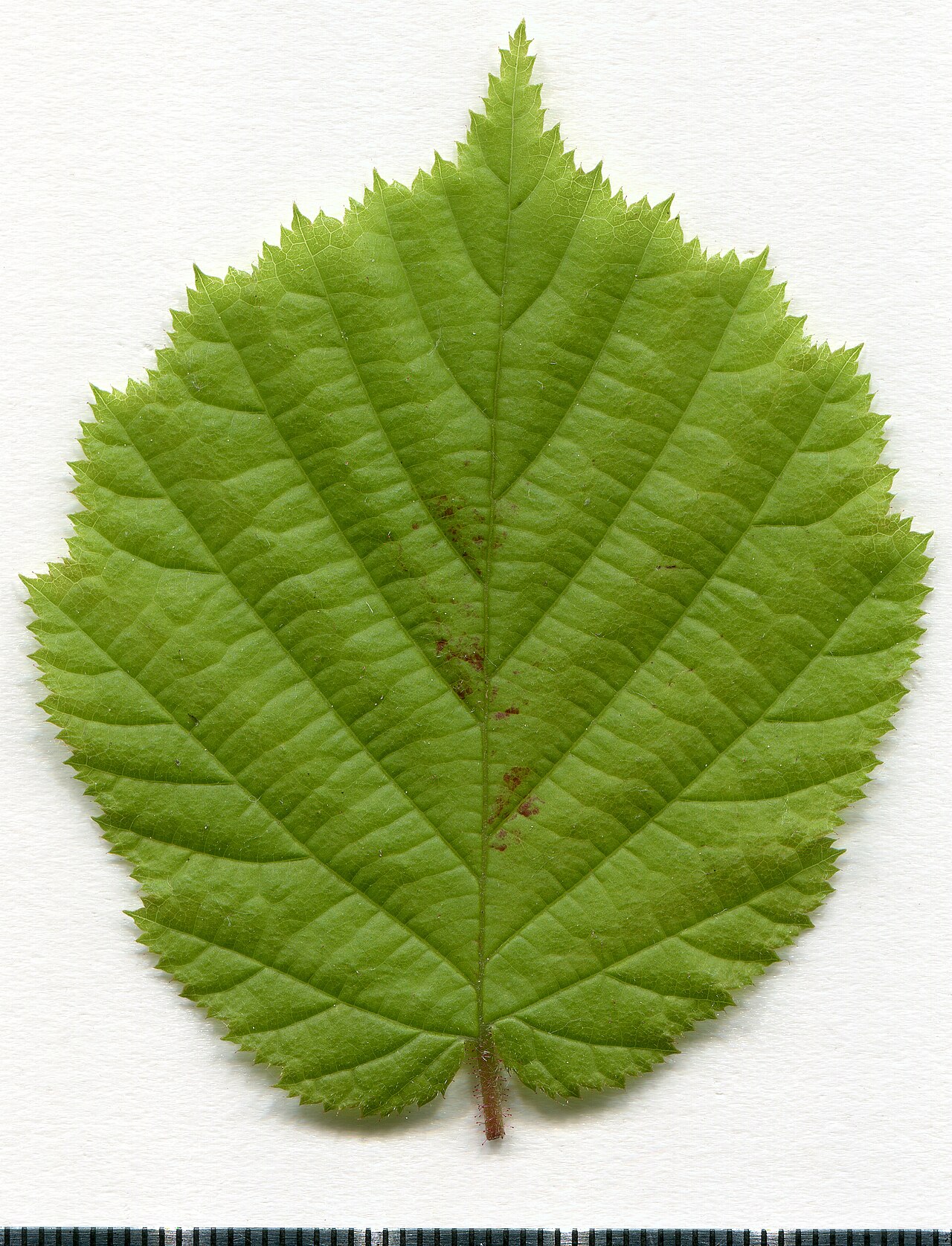
Quick Overview: Three Leaf Diseases
| Disease | Pathogen | Main Symptom | Time of Appearance | Economic Significance |
|---|---|---|---|---|
| Classic Powdery Mildew | Phyllactinia guttata (syn. Phyllactinia corylea) | powdery coating on the underside of the leaf, yellow spots on the upper side | August–October | usually low; higher in fertilized, humid orchards |
| New (Asian) Powdery Mildew | Erysiphe corylacearum | white powdery spots on the upper side of the leaf and on the bracts of the nut | from summer onwards | high — can reduce yield and quality |
| Leaf Spot / Bud Blight | Gloeosporium coryli (syn. Labrella coryli), and other fungi | round spots up to 2 cm with a ring-like zone, defoliation | July–Autumn, after rainy periods | moderate; severe in wet years |
Field Rule
Look at which side of the leaf the coating is on. A powdery coating predominantly on the underside (lower side) indicates classic Phyllactinia powdery mildew. White powdery spots prominent on the upper side (adaxial surface), along with bronze-purple discoloration and attack on the nut bracts, are suspicious for the new Erysiphe corylacearum. Round brown spots with a lightened ring are not powdery mildew but leaf spot.
Classic Hazelnut Powdery Mildew — Phyllactinia guttata
Significance
Phyllactinia guttata (in older literature Phyllactinia corylea) is traditionally the "most common fungal disease of hazelnut" and also the one least attended to. Damage is usually negligible when the disease appears late in the season. Only if it appears early, or in heavily fertilized and humid orchards, can leaf loss justify the cost of protection. Powdery mildew is more common in Mediterranean than in continental climates.
Symptoms
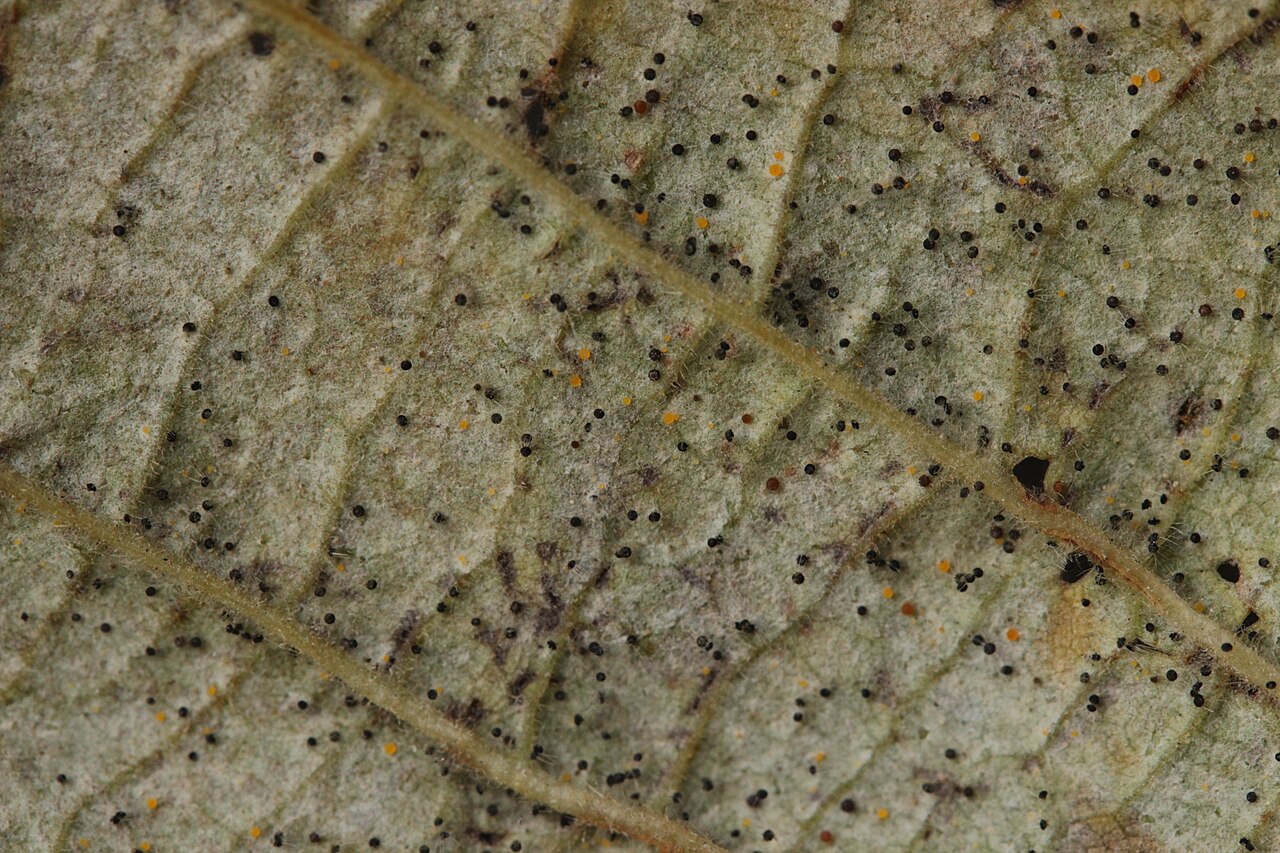
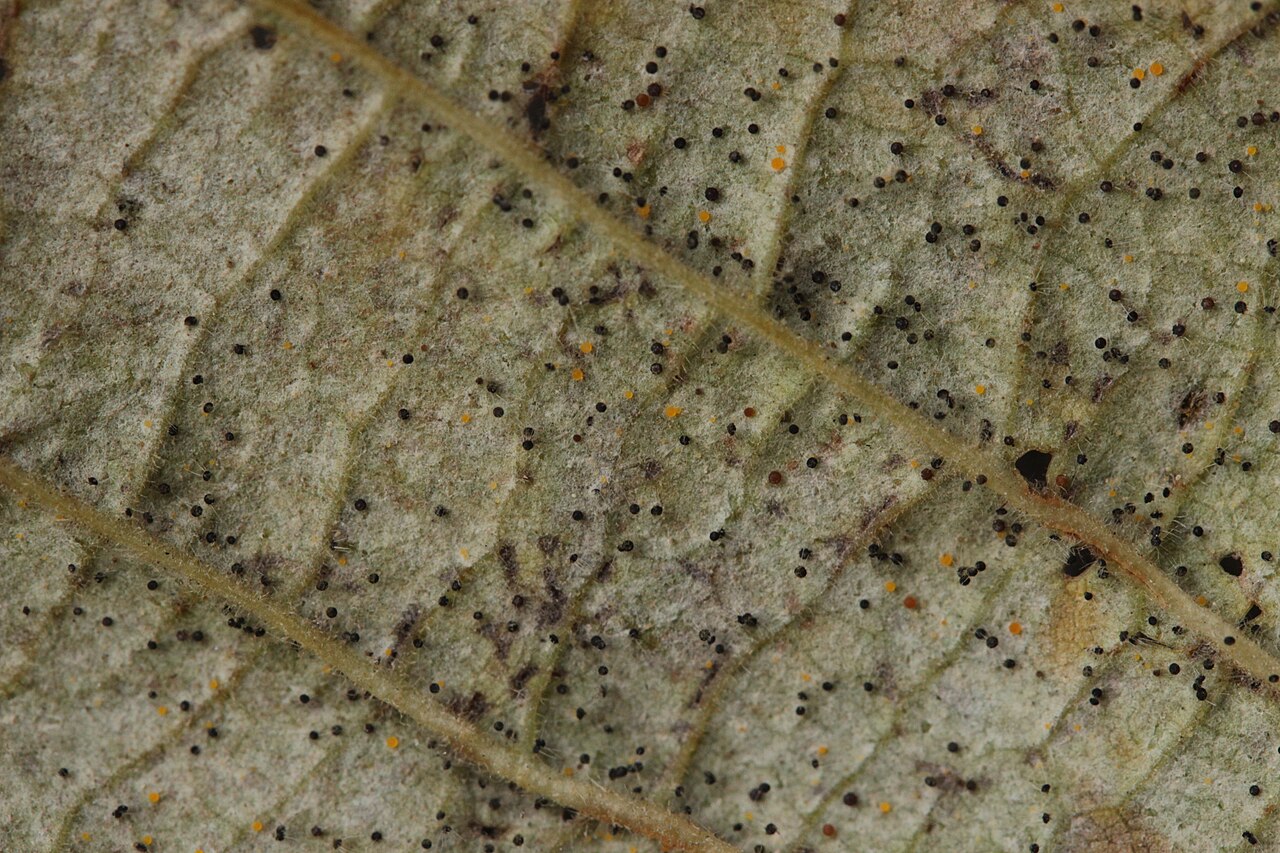
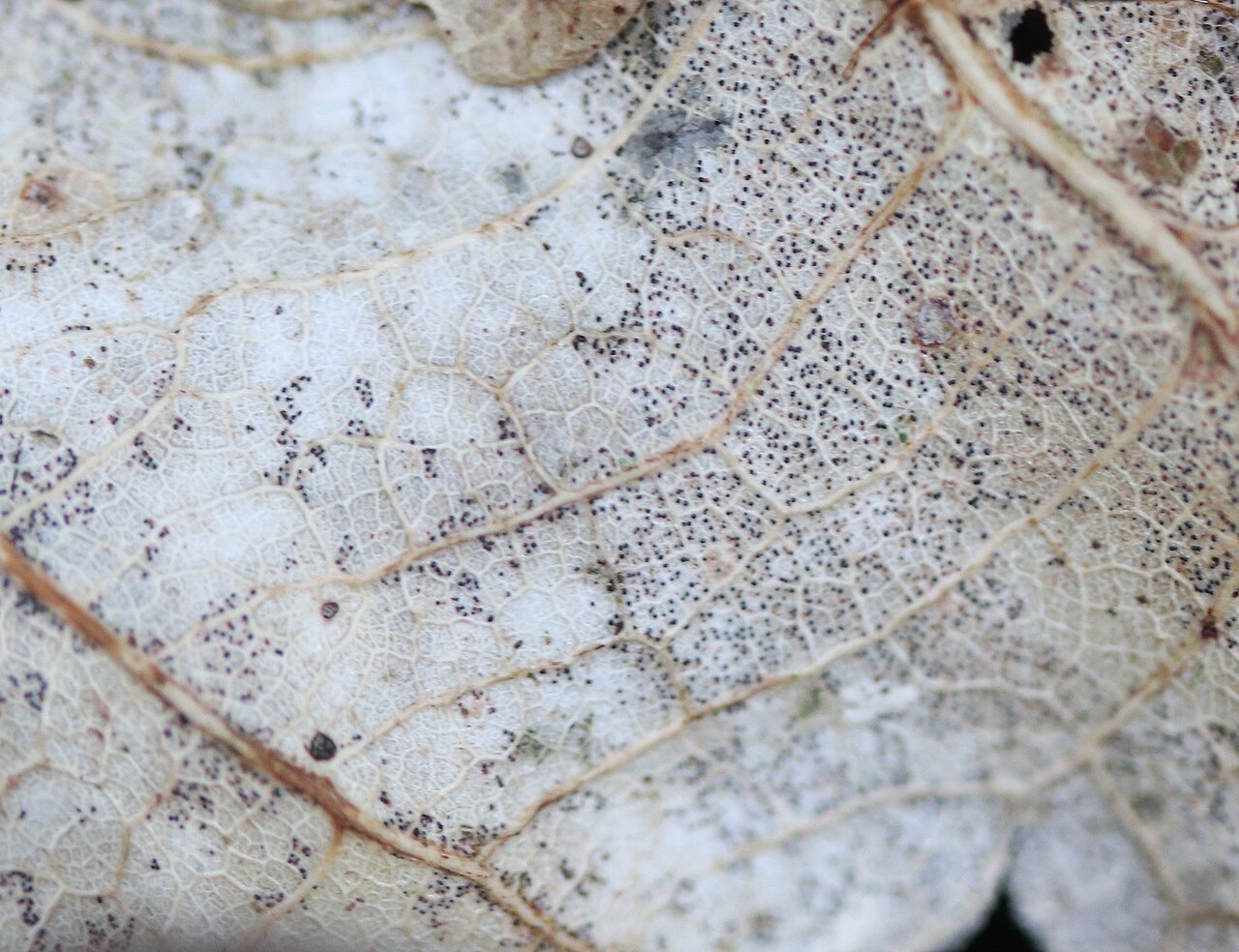
- Underside of the leaf: loose powdery (greyish-white) coating formed by mycelium and conidia (oidia). Initially, the coating is poorly developed and barely noticeable, but later it spreads, thickens, and can cover the entire underside.
- Upper side of the leaf: dirty-white zones and powdery spots; tissue in these areas may necrotize.
- Progression: during September, the underside turns yellow, later darkens, and the leaf falls. Severe defoliation exhausts the shrub and reduces growth and productivity in the following year.
Spread
- Symptoms most commonly appear from mid-August to October; earlier in wet years (relative humidity 70–80 %).
- Favored by high relative humidity and vigorous, soft growth — hence the link with excessive nitrogen fertilization.
- The fungus overwinters in fallen leaves and spreads intensively from them in the following year.
New (Asian) Powdery Mildew — Erysiphe corylacearum
Why it is important
Erysiphe corylacearum is a species originating from Asia that has spread through Turkey, Georgia, and Iran, and in recent years has been recorded for the first time in a number of European countries — Italy (Piedmont, 2020–2024), Hungary, Romania, and others. Unlike the mild Phyllactinia powdery mildew, this species is described as an emerging, more dangerous disease that can significantly reduce hazelnut yield and quality. Therefore, it is relevant for Croatian producers, even if it has not yet been laboratory-confirmed in some areas at the time of writing — it is worth monitoring and knowing how to recognize.
Status and Regulations
The occurrence and movement of E. corylacearum in Europe are monitored by phytosanitary services (e.g., EPPO). If you notice symptoms described below — especially white powdery spots on the upper side of the leaf and on the nut bracts — it is recommended to report this to an advisory/phytosanitary service for confirmation and recording. Check the list of registered products and their permitted uses in the FIS database (fis.mps.hr) as registrations change.
Symptoms (how it differs from Phyllactinia)
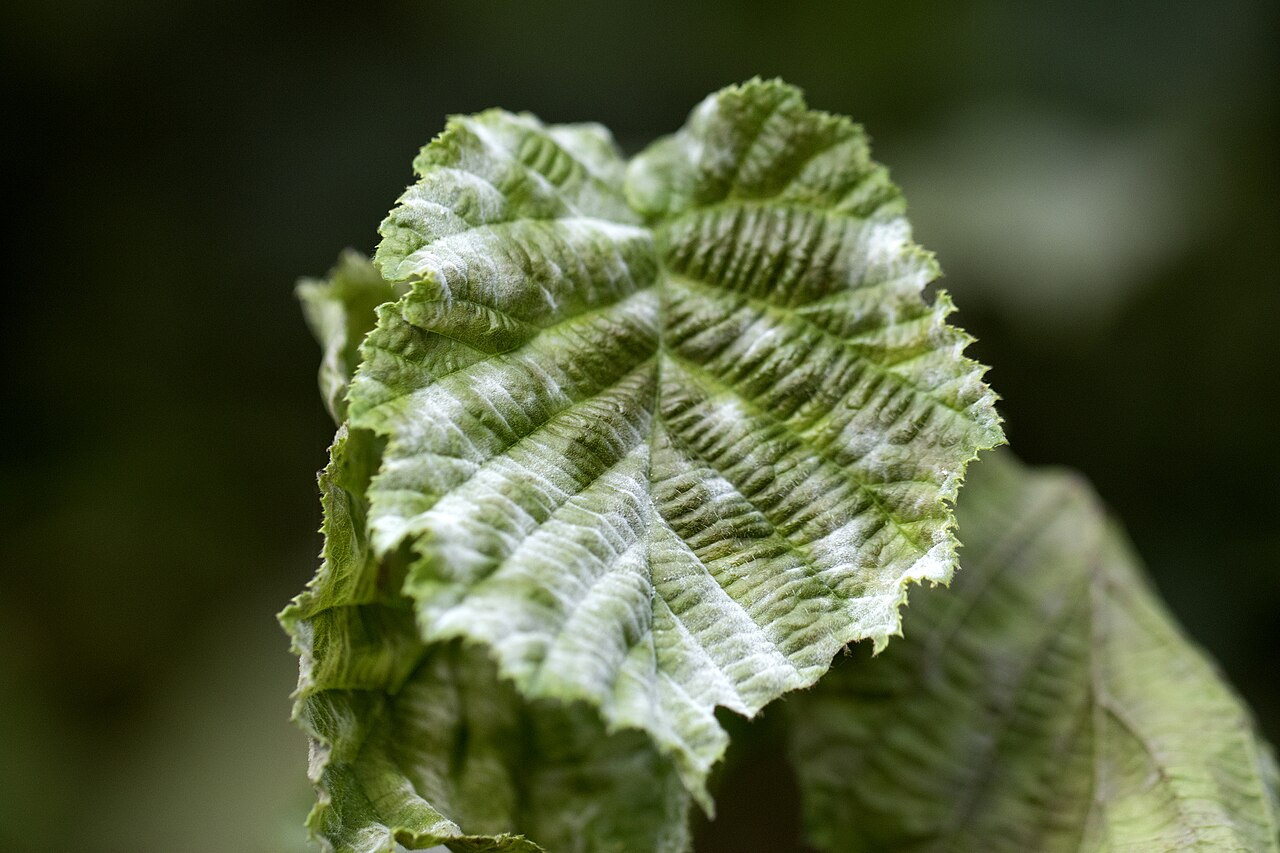
According to recent Italian research, symptoms of E. corylacearum are:
- on the upper (adaxial) side of the leaf, circular, powdery white spots approximately 0.5–1 cm in diameter and pale-yellow areas;
- white to greyish mycelial coating and on the nut bracts (bracteoles);
- in late infection stages, spots spread and merge, and the leaf color turns purple-bronze.
Key difference: classic Phyllactinia produces a coating predominantly on the underside, while Erysiphe is more prominent on the upper side of the leaf and affects the nut bracts, which is more directly linked to yield loss.
Spread
- Like all true powdery mildews, it spreads via wind-blown conidia; development is favored by warm, dry to moderately humid weather and dense, poorly ventilated canopies.
- Overwinters on infected plant debris and, depending on conditions, on fruiting bodies (cleistothecia/hazmathecia).
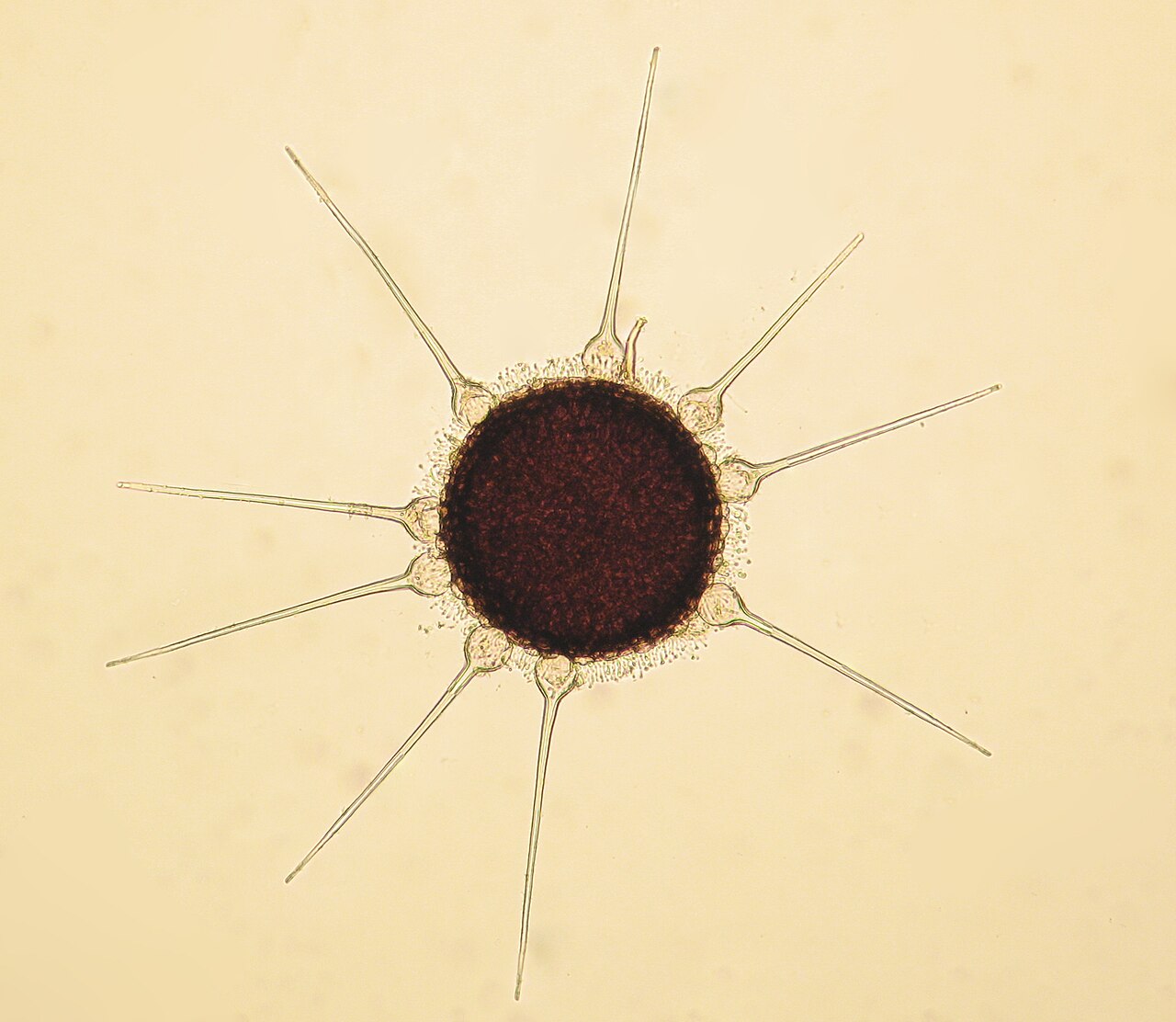
- Vigorous vegetative growth (too much nitrogen), a dense canopy, and proximity to infected orchards increase the risk.
Leaf Spot and Bud Blight — Gloeosporium coryli and other fungi
Pathogens
The most commonly described leaf spot of hazelnut in domestic literature is leaf spot and bud blight caused by Gloeosporium coryli (Roberge ex Desm.) Sacc., in some sources also listed as Labrella coryli. The collective term "leaf spots" also includes a number of other fungi (e.g., Cylindrosporium, Phyllosticta/Cylindrosporella coryli, Septoria, Piggotia coryli, Sphaceloma/Elsinoë coryli = anthracnose), all of which produce similar round spots. In commercial orchards, most of these are secondary; an exception is Sphaceloma coryli, which caused heavy losses in southern Italy.
Symptoms
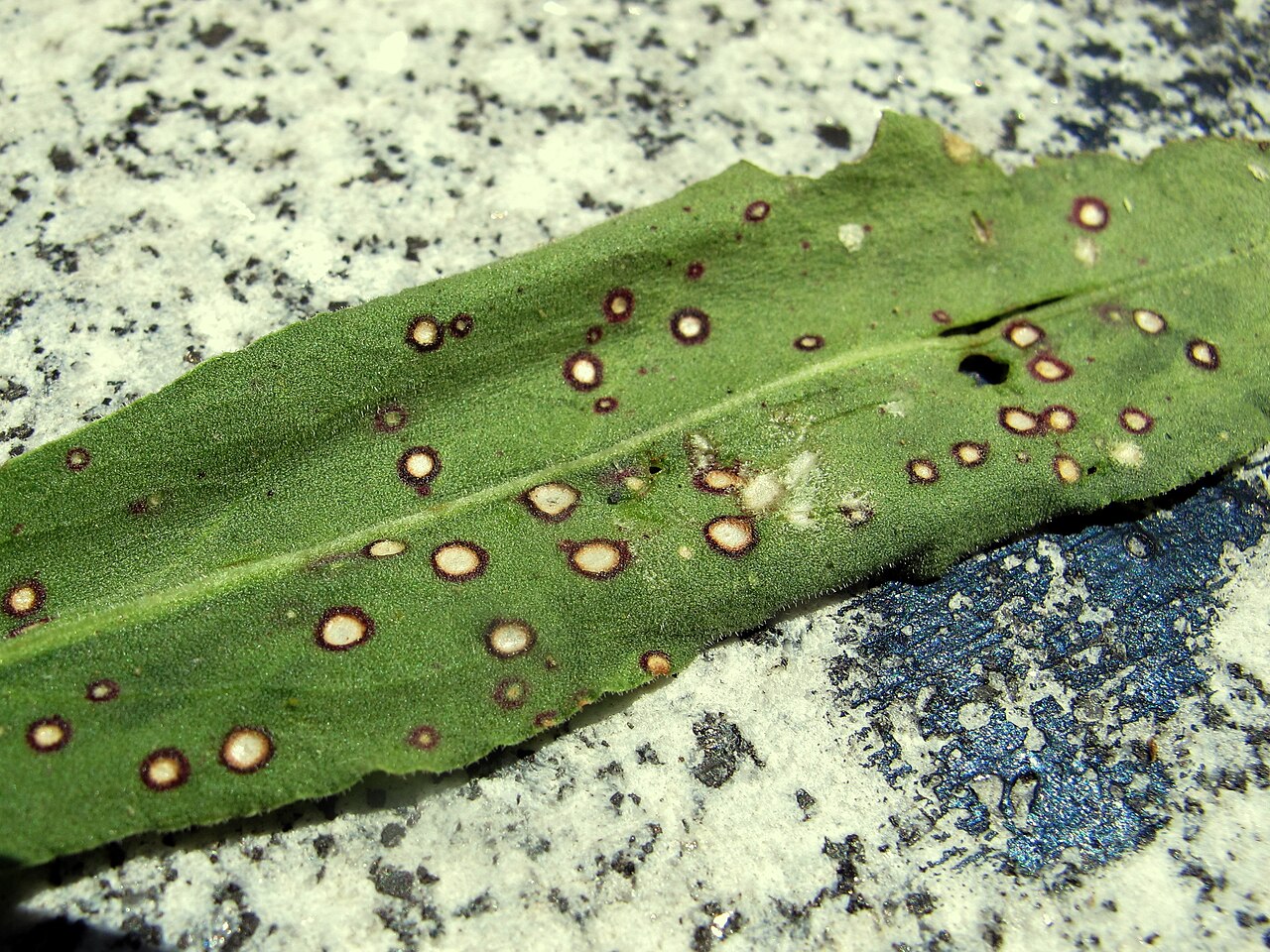
- on leaves, late summer and early autumn (and in wet years, already in July), round spots up to ~2 cm in size develop;
- characteristic appearance: a lightened (lighter) ring-like zone surrounded by a darker margin; often chlorotic spots;
- spots multiply, merge, and cover a large part of the leaf blade → tissue necrosis → leaf drop (defoliation);
- fruiting bodies (acervuli) — small black dots visible to the naked eye — develop in the spots;
- flower buds and, less frequently, shoots can also be infected; in early spring, buds change color and fall off, and stunted shoots may develop from infected buds.
Spread
- The disease erupts after prolonged cold and rainy periods during the growing season; each subsequent rain favors the spread of infection.
- Conidia from acervuli are dispersed by rain (splash) and insects to new leaves and buds.
- The fungus overwinters in fallen leaves and infected buds; overwintering spores become active in early spring and carry out primary infection. The greatest risk is in autumn after harvest, when protection is no longer applied.
Caution: not every spot is fungal
Necrotic spots of irregular shape on the leaf, nut, and twigs, along with shoot drying and dark canker-like lesions with bacterial exudate, indicate bacteriosis (Xanthomonas arboricola pv. corylina), not fungal leaf spot. See the article on bacterial blight and canker. Differentiation is important because bacterioses are controlled differently (copper, hygiene), and fungicides for leaf spot are ineffective against them.
Powdery Mildew Control
1. Agronomic and Preventive Measures (Always First)
- Sanitation: Collect and remove (plow under or burn) fallen, infected leaves, as the pathogens overwinter in them. This is the most effective measure against both powdery mildews and leaf spots.
- Balanced fertilization: Avoid excessive nitrogen — vigorous, soft growth favors powdery mildew. Align fertilization with soil and leaf analysis results.
- Crown ventilation: Prune to open up the bush/crown so that leaves dry faster (less moisture = less powdery mildew and leaf spots).
- Monitoring: Regular orchard inspections, especially near already infected areas; early detection of E. corylacearum.
2. Common Powdery Mildew (Phyllactinia)
It is generally not controlled, especially when it appears late in the season towards the end of summer. Intervention is justified only in heavily fertilized orchards and during humid, hot summers, when there is a threat of reduced growth of fruiting wood.
Caution with sulfur on hazelnut
Sulfur-based fungicides can be phytotoxic to hazelnut leaves (leaf burn). Therefore, they should be applied at concentrations significantly lower than recommended for other crops and in multiple smaller applications, rather than a single full dose. Avoid application during heat and strong sunlight.
3. New Powdery Mildew (Erysiphe corylacearum)
Experience is still developing, but scientific literature and field observations indicate:
- Prevention with sulfur and the agronomic measures described above (removal of infected residues, balanced fertilization and irrigation, ventilation) form the foundation.
- Curative options are limited. In trials, systemic fungicides from typical "powdery mildew" groups — triazoles/DMIs (e.g., difenoconazole) and strobilurins/QoIs (e.g., azoxystrobin) were effective; the combination of azoxystrobin + difenoconazole showed in one Italian trial ~92 % efficacy on leaves and ~74 % on fruit bracts. These data refer to specific trials and products and do not automatically imply registration for hazelnut in Croatia.
- Biocontrol agents (e.g., based on Bacillus spp.) and "environmentally friendly" products are also being investigated.
Registration is mandatory
Before any application, check in the FIS database (fis.mps.hr) whether the product is registered for hazelnut and for powdery mildew. Many effective products for other crops are not permitted on hazelnut. Adhere to the label for doses, number of applications, and pre-harvest intervals (PHI).
Approximate doses of sulfur and related products (informational)
The following values are derived from hazelnut protection literature (mostly ecologically permitted products) and are strictly informational — check current registration and label:
| Product (example) | Target | Approximate dose/concentration | Number of applications | PHI |
|---|---|---|---|---|
| Cosavet DF (sulfur) | powdery mildew | 0.2 % (≈200 g / 100 L water) | up to 4× | 5 days |
| Microthiol Special Disperss (sulfur) | powdery mildew, hazelnut eriophyid mite | 3–5 kg/ha | up to 8× | 5 days |
| Chromosul DF / Chromosul 80 (sulfur) | powdery mildew, hazelnut eriophyid mite | 3–5 kg/ha (or ~0.3 %) | — | OVP* |
* OVP = PHI limited by time of application. Values are informational; the label and FIS database are authoritative.
Killing two birds with one stone
Sulfur fungicides applied against powdery mildew also indirectly affect the hazelnut eriophyid mite (Phytoptus avellanae) and thrips, for which there are no registered acaricides in our region. Therefore, early spring sulfur treatments (at bud swell, daily temperatures ~15–20 °C) offer a double benefit.
Leaf Spot Control
Agronomic Practices
- Removal and destruction of fallen leaves (pathogen overwintering) — the single most important measure.
- Pruning of infected shoots and buds; in case of severe attack, clean back to healthy wood. For Fomopsis/black spot, literature recommends pruning 5 cm below the lesion on shoots and 10 cm on scaffold branches, before sap flow begins, with tool disinfection.
- Ventilation and balanced fertilization (as for powdery mildew).
- More resistant/tolerant cultivars where available.
Fungicidal Control
Leaf spots are controlled preventively during the growing season, during the period when leaf and fruit tissue is sensitive and humid conditions favor infection (approximately late April, May, June, and as needed after rainy periods). In wet years, treatments are repeated at intervals of ~10–13 days, monitoring precipitation.
| Product (example) | Target | Approximate dose/concentration | Number / PHI |
|---|---|---|---|
| Signum DF (boscalid + pyraclostrobin) | leaf scab, fruit rot | 1 kg/ha | 2× / 28 days |
| Stoper (combined fungicide) | leaf spots, fruit rot | 0.3 % (≈300 ml / 100 L) | according to label |
| Mancozeb | leaf spots, fruit rot | 0.25 % (≈250 g / 100 L) | according to label |
| Combined fungicide (vegetation) | leaf diseases (leaf scab) | 0.5–0.6 % (500–600 g / 100 L) | according to label |
| Copper products (e.g., Bordeaux mixture, Champion, Cuprablau-Z, Neoram) | fungal and bacterial diseases, bark canker | e.g., 0.5 %; 2–3 kg/ha; 0.25–0.45 % | 2–3× / 15–21 days |
All values are informational and depend on the product, cultivar, location, and registration status.
Synergy with other treatments
May/June treatments against leaf spots and fruit rot often overlap in timing with key protections against hazelnut weevil and stink bugs. Combined fungicides (e.g., Signum) and copper can be coordinated with insecticide treatments, reducing the number of passes through the orchard. Always check compatibility (tank mix) and PHIs of all products in the tank.
Approximate Leaf Protection Calendar
| Phenological stage / period | Target | Typical measure |
|---|---|---|
| Dormancy / winter pruning | sanitation, inoculum reduction | removal of fallen leaves, pruning of infected branches, pruning wound disinfection |
| Bud swell (T ~15–20 °C) | hazelnut eriophyid mite, early protection | sulfur fungicide (also indirectly affects mites) |
| Late April – June | leaf spots, fruit rot | preventive fungicide (e.g., Signum/Stoper/Mancozeb), repeat as needed for moisture |
| Summer (hot, humid) | powdery mildews | sulfur at reduced concentrations, multiple applications; monitoring E. corylacearum |
| Post-harvest / autumn | leaf spots, overwintering inoculum | leaf removal, copper application after leaf drop |
Practical Recommendations and Common Mistakes
- Do not confuse diseases. Powdery white coating = powdery mildew; round spots with a ring = leaf spots; irregular necroses with exudate and branch drying = bacteriosis. Incorrect diagnosis leads to incorrect (and useless) treatment.
- Do not overdo nitrogen. Excessive nitrogen fertilization is "fertilizer" for powdery mildew — vigorous, soft leaves are more susceptible.
- Sulfur on hazelnut — be careful. Lower concentrations, more frequent applications, not during heat. Otherwise, leaf burn is a risk, which looks like "the medicine burns worse than the disease."
- Do not forget autumn. The majority of leaf spot and powdery mildew inoculum overwinters in fallen leaves; those who remove them start the next year with lower disease pressure.
- Monitor the new powdery mildew. E. corylacearum is spreading across Europe; early recognition (white spots on the upper leaf surface and on fruit bracts, bronze discoloration) and reporting to authorities are key for timely response.
- Check registration (FIS). Many "logical" fungicide choices are not permitted on hazelnut. The product, dose, number of applications, and PHI are determined by the label and FIS database, not by literature.
Gallery
Sources
This article is an AI summary compiled from an internal hazelnut literature collection (RAG corpus) and supplemented with public web sources. The content is a verifiable starting point, not an official directive; doses and products must always be aligned with current registration (FIS) and advisory services.
Main sources used from the corpus:
- Diseases and Pests of Hazelnut — Repository (PDF, 2020.) — description of powdery mildew (Phyllactinia guttata), leaf spots, and an orientation protection plan.
- Leaf Spot and Bud Drying in Hazelnut (Gloeosporium coryli) — Master's thesis, Josip Juraj Strossmayer University of Osijek (2021.).
- Hazelnut Protection in Organic Production (2026.) — table of permitted sulfur and copper products (Cosavet, Chromosul, Microthiol, Bordeaux mixture, Neoram, Champion, Cuprablau-Z) with doses and PHIs.
- Annual Hazelnut Treatment Plan — Gospodarski list (2026.) — Signum DF (leaf scab), sulfur against powdery mildew, ecological products.
- Protect Your Hazelnut Orchards After Heavy Rains — Chromos Agro (2025.) — leaf spot and bud drying (Labrella/Gloeosporium coryli), Chromosul 80, Fond 12 E.
- Control of Harmful Organisms in Hazelnut Orchards / HAZELNUT PROTECTION (2009./2012.) — note on sulfur phytotoxicity and powdery mildew control.
- Notice to Hazelnut Producers / Notice to Commercial Hazelnut Producers — Ministry of Agriculture — Signum for leaf scab, sulfur, and monitoring.
- Economic Analysis of Hazelnut Production (2023) and HAZELNUT — From Planting to Harvest — link between powdery mildew, nitrogen fertilization, and moisture.
Main public (web) sources:
- Matić et al. (2024.) Powdery mildew caused by Erysiphe corylacearum: An emerging problem on hazelnut in Italy, PLOS ONE — https://journals.plos.org/plosone/article?id=10.1371/journal.pone.0301941 (and PMC: https://pmc.ncbi.nlm.nih.gov/articles/PMC11132447/)
- EPPO Reporting Service — Erysiphe corylacearum, an emerging pathogen of hazelnut — https://gd.eppo.int/reporting/article-6981
- PNW Pest Management Handbooks — Hazelnut (Corylus avellana) — Powdery Mildew — https://pnwhandbooks.org/plantdisease/host-disease/hazelnut-corylus-avellana-powdery-mildew
- PNW Pest Management Handbooks — Hazelnut (Corylus avellana) — Leaf Spots — https://pnwhandbooks.org/plantdisease/host-disease/hazelnut-corylus-avellana-leaf-spots
- APS — Diseases of European Hazelnut — https://www.apsnet.org/edcenter/resources/commonnames/Pages/Hazelnut.aspx
- Sphaceloma coryli: A Reemerging Pathogen Causing Heavy Losses on Hazelnut in Southern Italy, Plant Disease — https://apsjournals.apsnet.org/doi/10.1094/PDIS-06-15-0664-RE
- FIS — Phytosanitary Information System (registered plant protection products in Croatia) — https://fis.mps.hr/