Roasting Hazelnuts and Aroma Development
Content generated by artificial intelligence — verify before application
This article was automatically compiled from a collection of hazelnut literature using artificial intelligence and may contain errors or outdated data. It serves as a starting point for further research, not as professional advice. Dosages, products, and timing are informative and depend on the cultivar, location, and applicable regulations — always consult an advisory service and official sources before application.
Roasting (roasting, baking) is one of the key operations in hazelnut processing because it transforms the relatively neutral raw kernel into a product with a recognizable golden-brown color, crisp texture, and full, "roasted" flavor for which hazelnuts are known. During heating, drying, non-enzymatic browning (primarily the Maillard reaction and caramelization), and partial oxidation of lipids and phenols occur simultaneously — a combination that creates hundreds of new volatile aroma compounds, but also changes the product's shelf life. The producer's goal is to find the temperature and time window in which aroma and color develop maximally, without overdoing it and triggering premature spoilage. Below are the systematized roasting parameters, the chemistry behind aroma and color, and the impact on shelf life and oxidation, along with practical recommendations and common mistakes.
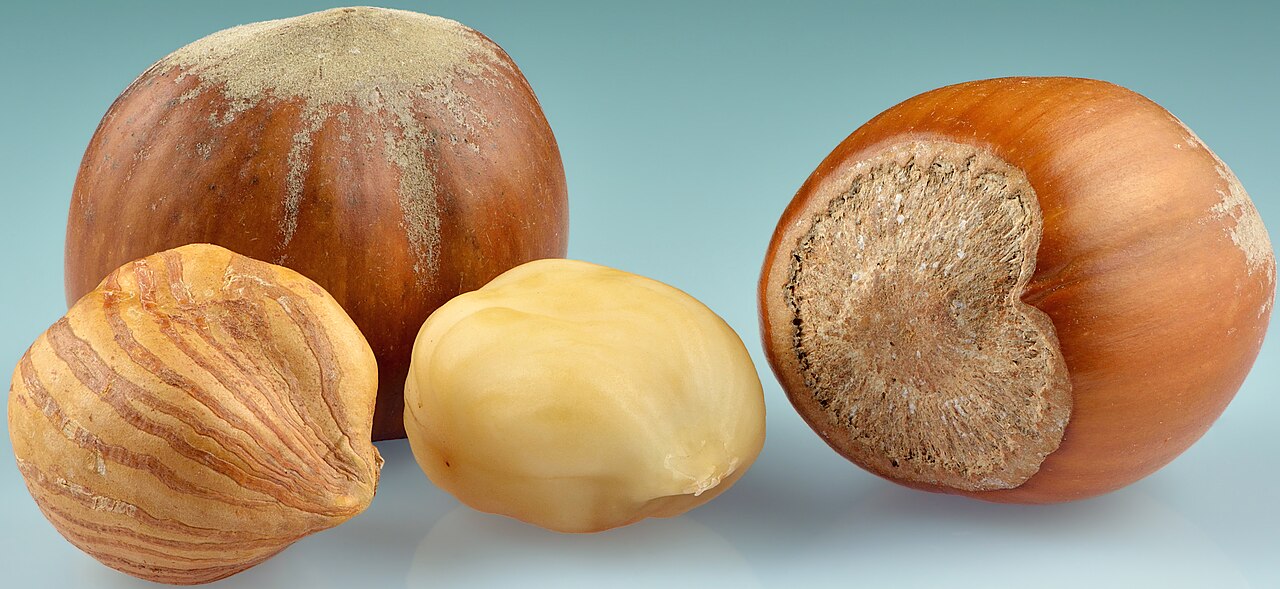
What is roasting and why is it performed
Roasting hazelnuts has several parallel objectives:
- Flavor and aroma development — creation of characteristic "roasted" notes (sweet, nutty, toasted) thanks to the Maillard reaction and caramelization.
- Color development — gradual browning of the kernel and the skin (testa).
- Drying and texture — removal of residual moisture provides crispness instead of a rubbery, "raw" texture.
- Easier skin removal (blanching/peeling) — heat facilitates the separation of the brown skin, which carries bitterness and dark particles.
- Microbiological and technological preparation — for further processing into paste, spreads, flour, pralines, and chocolate products.
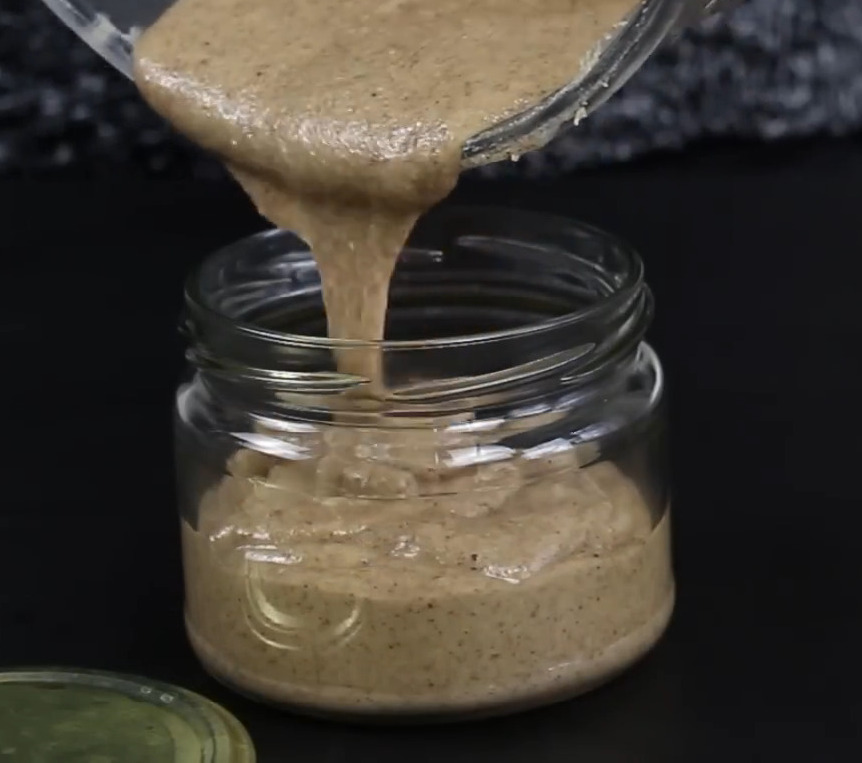
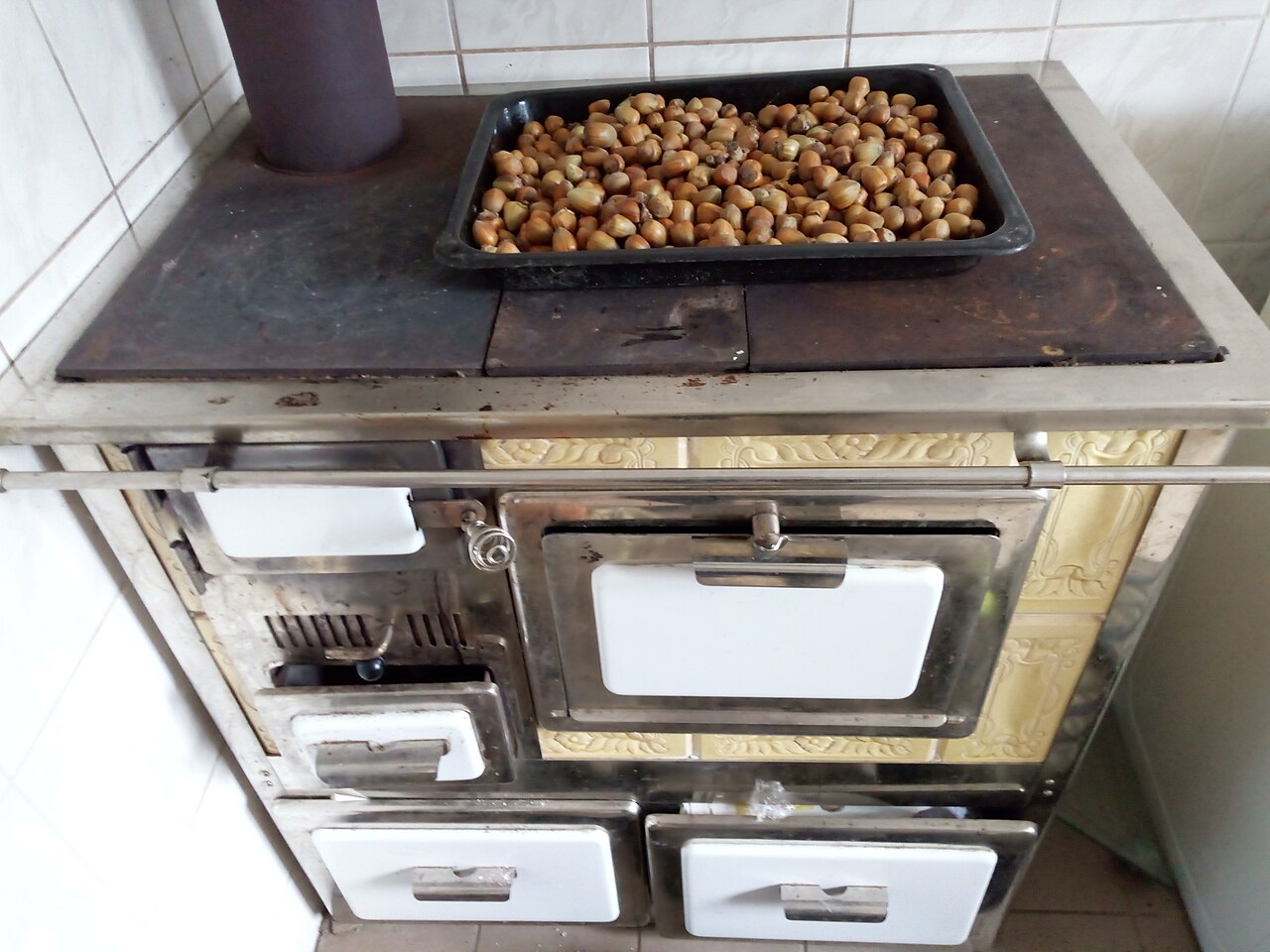
Changes in flavor, texture, and color during roasting are primarily the result of drying and non-enzymatic browning, which includes the Maillard reaction, caramelization, chemical oxidation of phenols, and other related reactions. The main purpose of roasting is to improve the flavor, color, and crisp, crunchy texture of the product.
Roasting parameters: temperature and time
Temperature and time are the two most important and interrelated parameters. Generally, an inverse relationship applies: the higher the temperature, the shorter the time required for the same degree of roasting. Conventional roasting of nuts typically occurs in the range of 100 to 180 °C for 10 to 60 minutes, depending on the product's intended use. Industrial hazelnut roasting is often cited at around 145 °C for approximately 15 minutes, while for home/craft use, around 175 °C for 10–15 minutes is mentioned as the "golden mean."
In the hazelnut literature corpus, the following parameters from actual studies and practices are recorded, among others:
| Application / Source | Temperature | Time | Note |
|---|---|---|---|
| Traditional amaretti (Vrsar, storytellers) | 180 °C | 10–15 min | "more important to dry than to bake at high temperature" |
| Chocolate spread, technological study | 175 °C | 25 min | experimental condition for paste |
| Aroma/oxidation study (Iran) | 130–170 °C | — | both temperature and storage time affect acidity and peroxide value |
| General industrial range | 100–180 °C | 10–60 min | depends on intended use |
| Equivalent "mild" regimes (web literature) | 110 °C / 130 °C / 150 °C | 150 / 50 / 35 min | different combinations for similar degree of roasting |
Figures are informative
The stated values depend on the cultivar, size, and initial moisture content of the kernel, type of oven (convection, drum, microwave, fluidized bed), and desired roasting intensity. They should always be calibrated in your own facility according to the goal (lightly toasted vs. dark roasted) and aligned with the intended use (fresh nut, paste, spread, praline).
Initial kernel moisture
The optimal moisture content of the kernel before and during roasting is cited at around 3–5 %. At this moisture level, the Maillard reaction proceeds optimally, yielding a more aromatic and evenly roasted product. A kernel that is too moist "steams" before it browns, while one that is too dry burns more quickly. Therefore, good post-harvest drying technology (e.g., drying in shell to ~7 % moisture, kernel to ~4 %, at drying temperatures around 40–50 °C) directly determines the success of subsequent roasting.
Regime limits — what happens at the edges
- Too low (below ~160 °C) — the kernel dries and becomes hard and brittle before developing a deep roasted aroma; the result is a "flat" flavor.
- Optimal (~160–180 °C) — the heat is sufficient to trigger the Maillard reaction, and there remains a sufficiently wide time window for an even result.
- Too high (above ~190 °C) — the outer layer burns before the interior is cooked; bitter, sharp, and burnt notes develop, and the degradation of antioxidants accelerates.
Maillard reactions and browning chemistry
The Maillard reaction is a set of reactions between reducing sugars and free amino acids (and other compounds with amino groups) triggered by heat. During hazelnut roasting, it is the main "engine" that creates new aroma and color compounds. Alongside the Maillard reaction, the following occur:
- Caramelization — thermal degradation of sugars, contributing to sweet and toasted notes and color.
- Lipid oxidation — partial oxidation of fatty acids; in moderate amounts, it contributes to the aroma profile, but in excess, it leads to rancidity.
- Oxidation of phenols and maderization — further contribute to darkening.
Studies show that the Maillard reaction, along with lipid degradation (which increases the proportion of free fatty acids), can lead to the formation of larger quantities of pigments and aromas that consumers appreciate more. There is a well-documented correlation between the content of Maillard products and the development of browning.
Volatile aroma compounds
Roasting produces a complex palette of volatile compounds. The main groups include ketones, alcohols, aldehydes, esters, sulfur derivatives, lactones, and acids, along with heterocyclic compounds: furans, pyrazines, pyrroles, thiophenes, pyridines, thiazoles, and oxazoles.
- Pyrazines (especially alkyl-pyrazines) are the key carriers of the recognizable "roasted," nutty, and toasted note.
- Typical chemical markers of roasting include 5-methylfurfural, furfuryl alcohol, furfural, pyrrole and its derivatives, pyridine, and a series of pyrazines.
- Roasting phases: the early phase carries more "green"/raw notes, while the late phase of roasting is dominated by aldehydes, furans, furfurals, pyrazines, and pyrroles — i.e., only in the later phase does the profile become distinctly "roasted."
Practical consequence: insufficient roasting yields a poorly developed, raw profile, while too long/too intense roasting pushes the profile towards burnt and bitter notes. The targeted sensory profile is achieved by fine-tuning precisely within this window.
Color development
Color is the easiest to measure and most commonly used indicator of the degree of roasting in practice. As reactions progress, the kernel and skin become darker and "redder." In color measurements (CIE Lab*):
- L* (lightness) decreases — the product darkens.
- a* (red) increases — samples take on a reddish tone; an increase in a* during (warm) storage also indicates the continuation of Maillard reactions.
- b* (yellow) is usually high in pastes (predominantly yellow color), with changes over time.
In the literature, color change is modeled mathematically — e.g., the influence of microwave power, air temperature, and roasting time on L*, a*, texture, and moisture content is described by second-order polynomial models. This shows that roasting can be optimized and controlled instrumentally, not just "by eye." Color is, however, a practical but indirect indicator — the same color can be achieved by different combinations of temperature and time, with different aromatic and oxidative consequences.
Color as a control point
Define the target color range (e.g., L* value) as a working standard for each product line and cultivar. Measuring color (with a colorimeter or calibrated reference samples) provides a repeatable, objective criterion instead of subjective operator assessment.
Impact on Shelf Life and Oxidation
Roasting is a double-edged sword for shelf life. On one hand, it removes moisture and inactivates enzymes, while Maillard reaction products exert a certain anti-oxidative effect. On the other hand, roasting reduces the oxidative stability of the fat because:
- the hazelnut kernel is very rich in oil (approximately 52–78 %, depending on the source/cultivar, typically ~56–68 %), with a high proportion of unsaturated linoleic acid, which is prone to oxidation;
- heat degrades tocopherols (natural antioxidants) in the surface oil — losses of approximately 38 % for α-tocopherol, ~40 % for β, and even ~70 % for γ have been recorded — which can prematurely trigger lipid oxidation in the roasted nut;
- processes that increase porosity (e.g., more aggressive roasting) facilitate oxygen access and shorten shelf life.
Studies show that both roasting temperature and storage time jointly affect acidity (free fatty acids) and the peroxide value — the more intense the roasting conditions and the longer the storage, the greater the risk of oxidation. The lower activation energy for the peroxide value in roasted compared to raw hazelnuts confirms that roasted nuts oxidize faster.
The positive side: the content of remaining tocopherols contributes to extending shelf life, so milder roasting regimes (which preserve more antioxidants) and good post-roasting protection favor stability.
Oxidation and Quality Indicators
| Indicator | What it measures | Direction during spoilage |
|---|---|---|
| Peroxide value (PV) | primary oxidation products | increases |
| Free fatty acids (FFA)/acidity | hydrolytic breakdown of oil | increases |
| Sensory (rancidity) | secondary volatile oxides (hexanal, etc.) | appearance of off-notes |
| Color (a*, L*) | browning/tonal change | a* increases, L* decreases |
Rancidity is the main factor in poor quality of shelled nuts, while sweetness, oiliness, and a "roasted" flavor are desirable attributes. Due to the negative correlation between linoleic acid content and oxidation indicators, linoleic acid content is proposed as an indicator of the degree of oil oxidation, while certain volatile compounds (hexanal, 2-octenal, 2-decenal, 3-octen-2-one) serve as biomarkers for rancidity.
Storage of Roasted Products
To preserve the aroma developed during roasting, storage management (temperature, oxygen, light, moisture) is crucial:
- Low temperature helps: storage at 4 °C has been shown to be better than 10 °C for preserving the anti-oxidative capacity of roasted hazelnuts.
- Reducing oxygen and light — literature recommendation: packaging roasted hazelnuts in impermeable (polypropylene/aluminum/polyethylene) bags under vacuum, with a shelf life of up to six months at 4 °C.
- Modified/protective atmosphere — for fresh nuts, storage in an atmosphere of 100 % N₂ at 4 °C has proven most favorable (less color change, no unpleasant odor); as an alternative, up to ~8 days in normal atmosphere at 4 °C.
Roast closer to consumption
Since roasting reduces oxidative stability, it is ideal to roast as close to the time of sale/further processing as possible and to avoid long-term storage of large quantities of roasted, unprotected product.
Safety Note: Acrylamide
With some nuts, acrylamide can form at very high roasting temperatures. According to available literature, acrylamide formation is not pronounced in hazelnuts (unlike, for example, almonds at excessive temperatures), but as a general principle of good practice, it is advisable to avoid unnecessarily high temperatures and prolonged roasting. For products intended for the market, check applicable EU/HR regulations and guidelines on process contaminants, and consult advisory services.
Practical Recommendations
- Standardize raw material — uniform kernel size/grade and initial moisture (target ~3–5 %) for even roasting.
- Calibrate regime by cultivar — domestic cultivars (e.g., Istarski duguljasti, Tonda Romana) differ in composition, skin removal capability, and aroma; the same regime does not yield the same result across all cultivars.
- Two-stage roasting for larger volumes — mild pre-drying followed by final roasting yields a more uniform result and fewer burnt edges than a single aggressive roasting step.
- Control target color instrumentally (L*/a*) as a repeatable criterion for completion.
- Cool immediately after roasting — the kernel retains heat and "continues to cook"; rapid cooling stops reactions and prevents over-roasting.
- Protect the finished product — vacuum/inert atmosphere, opaque packaging, cold and dry storage (target ~4 °C for longer shelf lives).
- Roast in batches closer to demand rather than creating large stocks of roasted nuts.
Common Mistakes
- Excessively high temperature "to go faster" — burnt edges, bitterness, accelerated oxidation, and significant loss of tocopherols.
- Roasting too moist kernels — "steaming," poor development of aroma and color, unevenness.
- Estimating only "by eye" — lack of an objective criterion (color/temperature/time) yields inconsistent batches.
- Poor storage after roasting — exposure to heat, light, and oxygen quickly destroys aroma and leads to rancidity.
- Ignoring cultivar differences — applying a single universal regime to all cultivars.
Gallery
Sources
This article is an AI-generated summary created from an internal hazelnut literature collection (RAG corpus) and supplemented with public sources. Figures and recommendations are informative and should be verified with advisory services and official sources before application.
Main sources used from the RAG corpus:
- Vrtodušić et al. — Technology of hazelnut harvest, drying, and storage: Literature review (JCEA, 2022) — https://jcea.agr.hr/articles/772314_Tehnologija_berbe_su_enja_i_skladi_tenja_lje_njaka_Pregled_literature_hr.pdf
- Technology of hazelnut harvest, drying, and storage (DOI: 10.5513/JCEA01/23.2.3493) — moisture, drying temperature, oxidation, aroma/flavor
- PDF HAZELNUT CULTIVATION (pdfcoffee, 2009; Massantini et al., 2009) — storage, atmosphere (N₂/CO₂), skin removal during roasting
- Marica Mugnaini — Theses (2020) — Maillard reaction, pigments, and aroma in hazelnuts
- Maillard Reaction Products: Occurrence, Mitigation Strategies and Their Physiological Relevance — V. Fogliano (PhD, 2014) — correlation of Maillard products and browning
- Technological quality parameters in chocolate spread: hazelnut roasting process (2025) — 175 °C / 25 min
- Potential of hazelnut shell as a rich source of polyphenols (2024) — anti-oxidative capacity of kernel/shell (FRAP)
- Effect of antioxidants on stabilization (GZB, 2023; DOI: 10.31727/gzb.46.5.5) — peroxide value, free fatty acids
- IFSTRJ roasting study (2023/2025) — impact of roasting temperature (130–170 °C) and storage on acidity and peroxide value
- Roasting quality modeling (microwaves/temperature/time → L*, a*, texture, moisture)
Main public (web) sources:
- Maillard reaction and caramelization during hazelnut roasting: A multiresponse kinetic study — https://www.sciencedirect.com/science/article/abs/pii/S0308814616320088
- Corylus avellana L. Aroma Blueprint: Potent Odorants Signatures in the Volatilome of High Quality Hazelnuts — https://pmc.ncbi.nlm.nih.gov/articles/PMC8929135/
- Volatile profiling of high quality hazelnuts (Corylus avellana L.): Chemical indices of roasting — https://www.sciencedirect.com/science/article/abs/pii/S0308814612018183
- Integration of Destructive and Non-Destructive Analytical Determinations for Evaluating Quality of Fresh and Roasted Hazelnuts — https://pmc.ncbi.nlm.nih.gov/articles/PMC11904111/
- Estimation of oxidative indices in the raw and roasted hazelnuts by accelerated shelf-life testing — https://pmc.ncbi.nlm.nih.gov/articles/PMC7271305/
- Influence of roasting conditions on health-related compounds in different nuts — https://www.sciencedirect.com/science/article/abs/pii/S0308814615001867
- The Science Behind Hazelnut Roasting — https://www.numberanalytics.com/blog/the-science-behind-hazelnut-roasting
Recommended equipment
🔎 nut roaster — Amazon →Affiliate links — we may earn a small commission at no extra cost to you.
Handheld Nut Cracker
For processing small batches of nut kernels.
| Use Case | Option Type | What to Check Before Purchase |
|---|---|---|
| Small quantity processing | Manual lever cracker | Crushing mechanism and shell separation |
| Kernel preservation | Adjustable pressure tool | Ease of cleaning and durability |
| High volume needs | Electric cracking machine | Professional equipment for speed |