Mechanized and Topping Pruning in Large Orchards
Content generated by artificial intelligence — verify before application
This article was automatically compiled from a collection of hazelnut literature with the aid of artificial intelligence and may contain errors or outdated information. It serves as a starting point for further research, not as professional advice. Dosages, products, and timing are informative and depend on the cultivar, location, and applicable regulations — always consult with an advisory service and official sources before application.
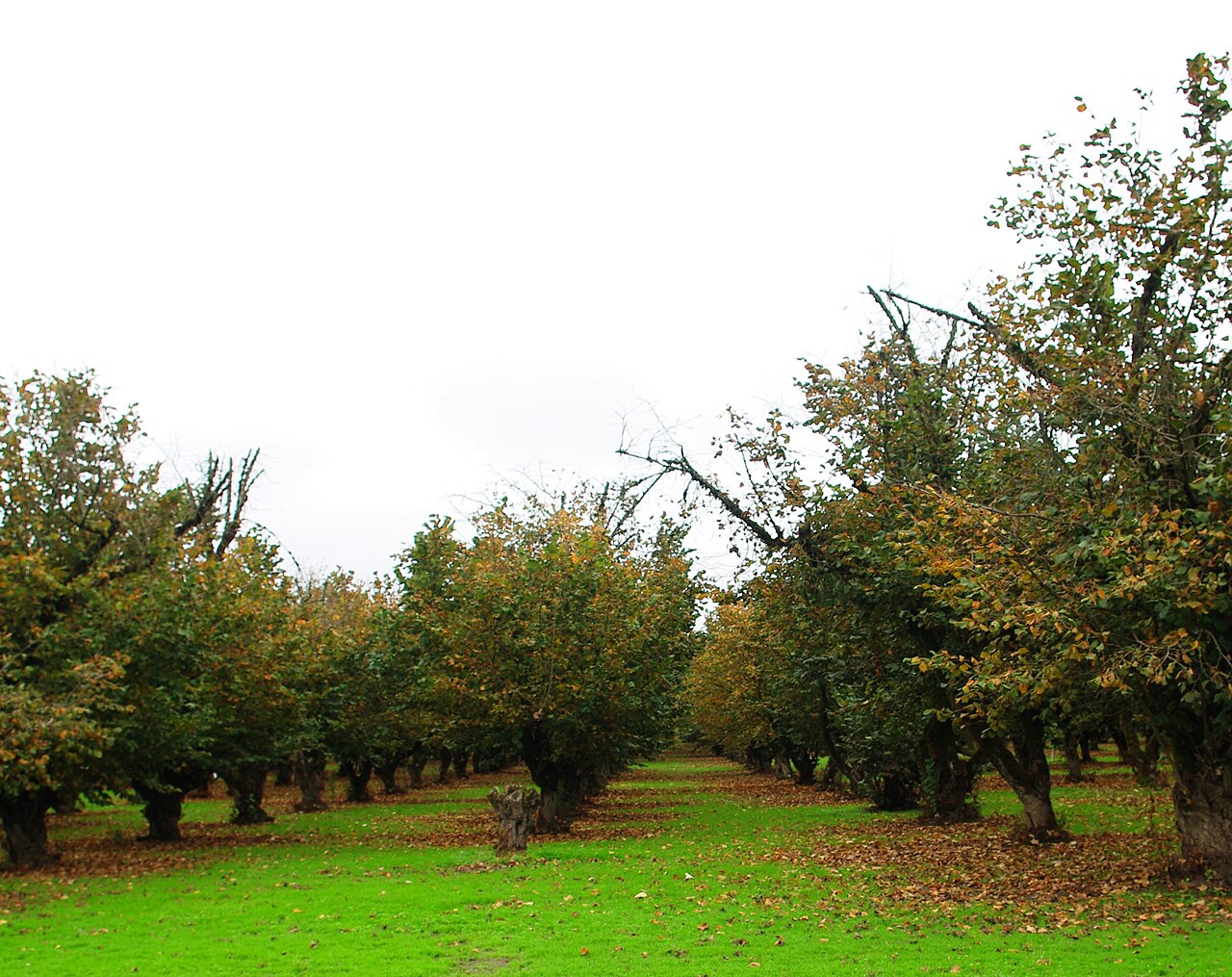
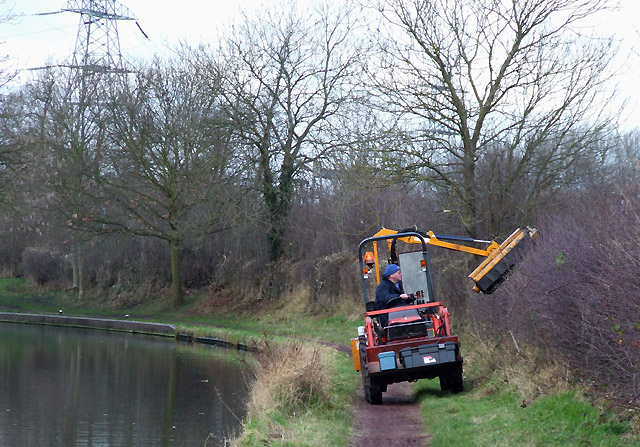
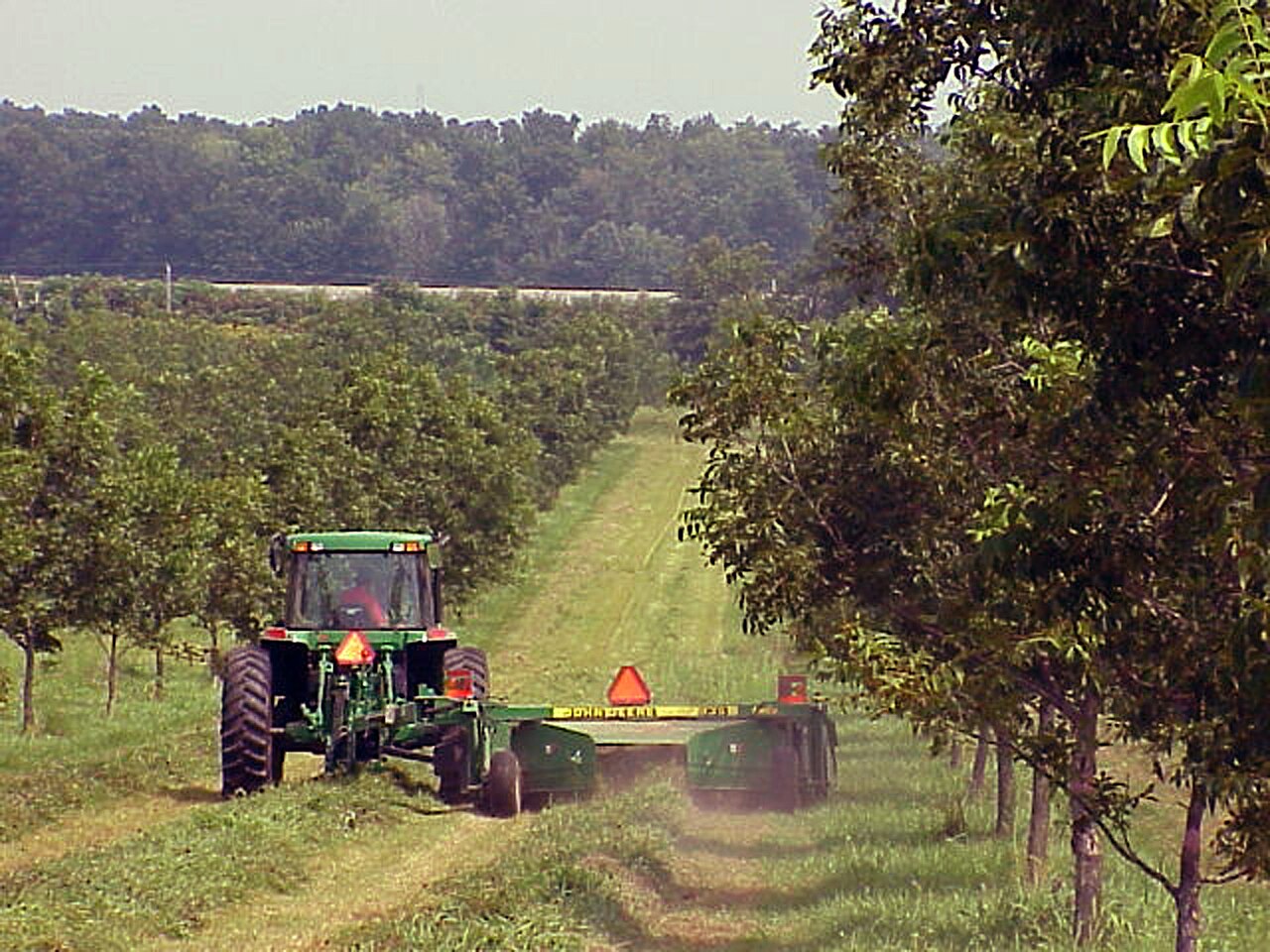
In intensive and large hazelnut (Corylus avellana) orchards, manual pruning of every bush every year has become a production bottleneck — it is slow, expensive, and dependent on increasingly scarce labor. Consequently, more and more orchards are turning to mechanized pruning: using tractor-mounted attachments with rotary blades or saws to trim the side faces of the row (hedging) and/or the top of the canopy (topping) in a single pass. The goal is not to replace every instance of skilled pruning, but to maintain the row profile — width, height, and ventilation — to ensure machinery access, light penetration, and crop quality with minimal human labor input. This article explains when, with what equipment, and how to perform mechanized and topping pruning, as well as typical errors and limitations.
Why mechanized pruning in large orchards
The logic is primarily economic and logistical. Literature from the corpus explicitly states that in large orchards, "costs are reduced with minimal human labor input" and that, for example, "removing 50% of the bearing area from 20% of the trees requires significantly less time than removing 5–8% of the bearing area from all trees every year" (source: Hazelnut Pruning, 2026). The same source emphasizes that this is justified only in large orchards, while for smaller orchards (up to approximately 10 ha), it still recommends classic, regular tree-by-tree pomological pruning.
Mechanized pruning practically addresses several interconnected problems:
- Maintaining row profile — prevents adjacent rows from closing in and the inter-row space from narrowing below the working width of mowing, protection, and harvesting machinery.
- Ventilation and lighting — hazelnut is a heliophilic (light-loving) species and "bears best if every nut 'sees' the sun" (source: Cultivation of Hazelnut — Leska). By opening the side faces and top, light penetrates to the interior and lower bearing shoots.
- Preparation for mechanical harvest — for sweepers that vacuum nuts from the ground, the lowest branches must be sufficiently distant from the soil, and "hazelnut collection machines cannot reach every spot under the bushes," so pruning is required to open access for the machine (source: core 0a45eef1, 2016).
- Disease reduction — better air circulation in thinned canopies reduces the pressure of fungal diseases (web sources for nut crops).
Hedging and Topping: Definitions
In literature on nut crops, two basic mechanized interventions are distinguished, which are often combined:
| Intervention | What it does | Cutting Surface | Main Goal |
|---|---|---|---|
| Hedging | Shortens lateral branches along the row, using a vertical or slightly angled surface | Left and right sides of the row | Maintains row width, opens inter-row space for machinery and light |
| Topping | Removes the top of the canopy at a set height | Horizontal upper surface | Maintains row height, limits vigor, facilitates protection and access |
Experiments on the Tonda Romana cultivar ('Tonda Gentile Romana') used a tractor-mounted hedger with two treatment variants: (1) two side cuts + one top cut (2× hedging + 1× topping) and (2) only two side cuts (2× hedging). This shows that interventions are applied modularly — side without top, or both together — depending on whether the main problem is row width or height (source: Mechanical pruning of European hazelnut, eJHS 2021).
Difference from classic pruning
Mechanized pruning is a planar cut — the machine cuts everything it encounters on the specified surface, without distinguishing branches. Classic (selective) pruning chooses individual shoots. Therefore, mechanized pruning is typically not exhaustive and requires manual supplementation (see below).
Tools and Machinery
Below are the types of attachments used for maintaining profile; the choice depends on branch diameter, desired cut quality, and terrain slope.
| Tool / Machine | Working Principle | Typical Use | Note |
|---|---|---|---|
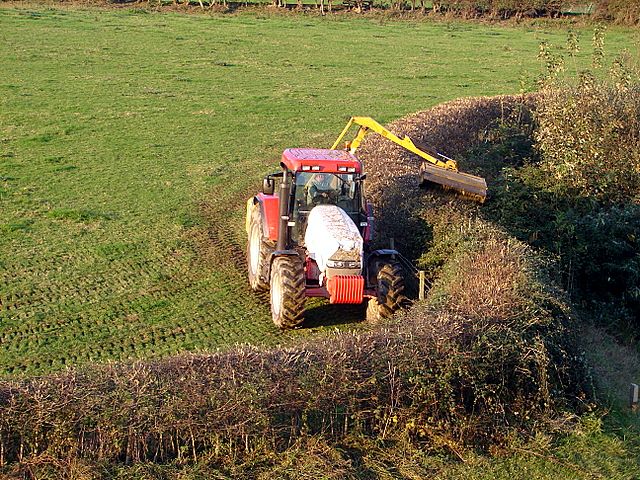
| Rotary hedger with circular saws (disk-saw hedger) | Series of circular saws on a vertical or horizontal beam | Hedging and topping of thicker branches | Cleaner cut on thicker material; higher tractor power requirement |
| Rotary/flail hedger | Rotating blades/flails | Thinner one-year and two-year shoots | Faster, but cut is rougher |
| Topping beam (horizontal) | Saw/blades on a horizontal beam, adjustable height | Removing the top at a set row height | Height must be aligned with the training system |
| Mulcher / Biomass chipper | Chipping pruned biomass on the ground | Disposal of pruned biomass | The corpus describes "mechanical collection of pruned biomass" as a separate pass (source: Establishment of a Permanent Hazelnut Orchard, 2020) |
Practical notes from the corpus regarding machinery in hazelnut orchards:
- Stability and safety — attachments for work near trunks should have a low center of gravity "to prevent tipping during operation and turning on hilly terrain"; moving parts must be enclosed in housings, and contact surfaces towards the tree should be lined with rubber to prevent plant damage (source: Tractor Attachment for Hazelnut Harvesting, 2020).
- Machine size relative to layout — smaller orchards and bush-like forms may require "smaller machines to fit under the canopy" (source: core 0a45eef1, 2016).
- Maintenance of blades/saws — check blade sharpness, bolted connections, and lubrication before work; dull tools tear and shred branches instead of cutting them (analogous to machinery maintenance described in the corpus, 197862993, 2017).
Timing (When to Prune)
The timing of the intervention is chosen based on the goal (winter shortening for vigorous growth vs. summer thinning to curb vigor) and phenological stage.
| Timing | Phenological Stage | What is done | Effect |
|---|---|---|---|
| Dormancy (Winter) | Leafless, before bud break | Main mechanized pruning: hedging and topping | Best visibility of structure; promotes strong spring growth |
| Late Dormancy / Pre-bud Break | Before budding | Profile correction | Caution: hazelnut flowers very early (winter) — avoid removing bearing catkins unless necessary |
| Summer (Green Pruning) | Full leaf | Lighter side maintenance and thinning, removal of shoots | Curbs vigor; "branches are not shortened, but thinned" unless shaping is required (source: Hazelnut — Vrtlarica, 2026) |
| After Harvest | September–October, after fruit drop | Preparing the row for the next season | The corpus places harvest in September and October (source: Establishment of a Permanent Hazelnut Orchard, 2020) |
The corpus and web sources also provide indicative figures for the main pruning season of nut crops: winter pruning (approximately December–February) for vigorous growth, along with summer pruning for shoots and dry wood. Timings are informative and depend on the cultivar, local climate, and year.
Caution with Early Flowering Hazelnut
Hazelnut flowers in the middle of winter, and catkins (male flowers) and small female flowers are the bearers of the next crop. Aggressive winter topping can remove part of the bearing potential. The height and intensity of the top cut should be aligned so that a disproportionate share of bearing wood is not removed.
Intensity, Cycle, and Frequency
A key rule from the literature: do not remove too much live canopy at once. Web sources for hazelnut and nut crops state that in mature orchards, no more than 25–30% of the live canopy should be removed annually, and for consistent bearing, a rotational approach is recommended — pruning approximately one-fifth of the orchard each year, as nuts form on one-year-old wood.
Profile maintenance approaches:
- Annual light hedging/topping — each year, a thin layer of growth is removed from both side faces and/or the top, keeping the row permanently within the specified frame.
- Rotational (e.g., every 3rd year) heavier cut — a stronger intervention on a portion of the orchard each year, so that the entire orchard is covered over the cycle; mitigates yield drop because the entire orchard is never "at rest" simultaneously.
The corpus for the bush-like form provides specific figures for selective pruning used as a supplement to mechanized work: leave a maximum of ~9 shoots on a bearing bush, shorten lateral shoots on scaffold branches to 3–4 buds, and shorten the tips of leading shoots by 1/3 to 1/2 (source: Pruning Hazelnut in Autumn). For rejuvenating old bushes (after ~10 years), the corpus mentions cutting "almost to the ground," but with a warning that not all orchards should be rejuvenated simultaneously because there is almost no crop in the year of rejuvenation (source: Hazelnut — Vrtlarica, 2026).
Yield after heavy pruning
According to the corpus, after heavy pruning, yield is reduced in the first year, but "increases significantly in the second and subsequent years" (source: Hazelnut Pruning, 2026). Plan mechanized planar cuts knowing that they bring a temporary drop in yield on affected plants.
Alignment with Planting Spacing and Mechanical Harvest
Mechanized pruning only makes sense if the orchard was designed for machines from the start. From the corpus:
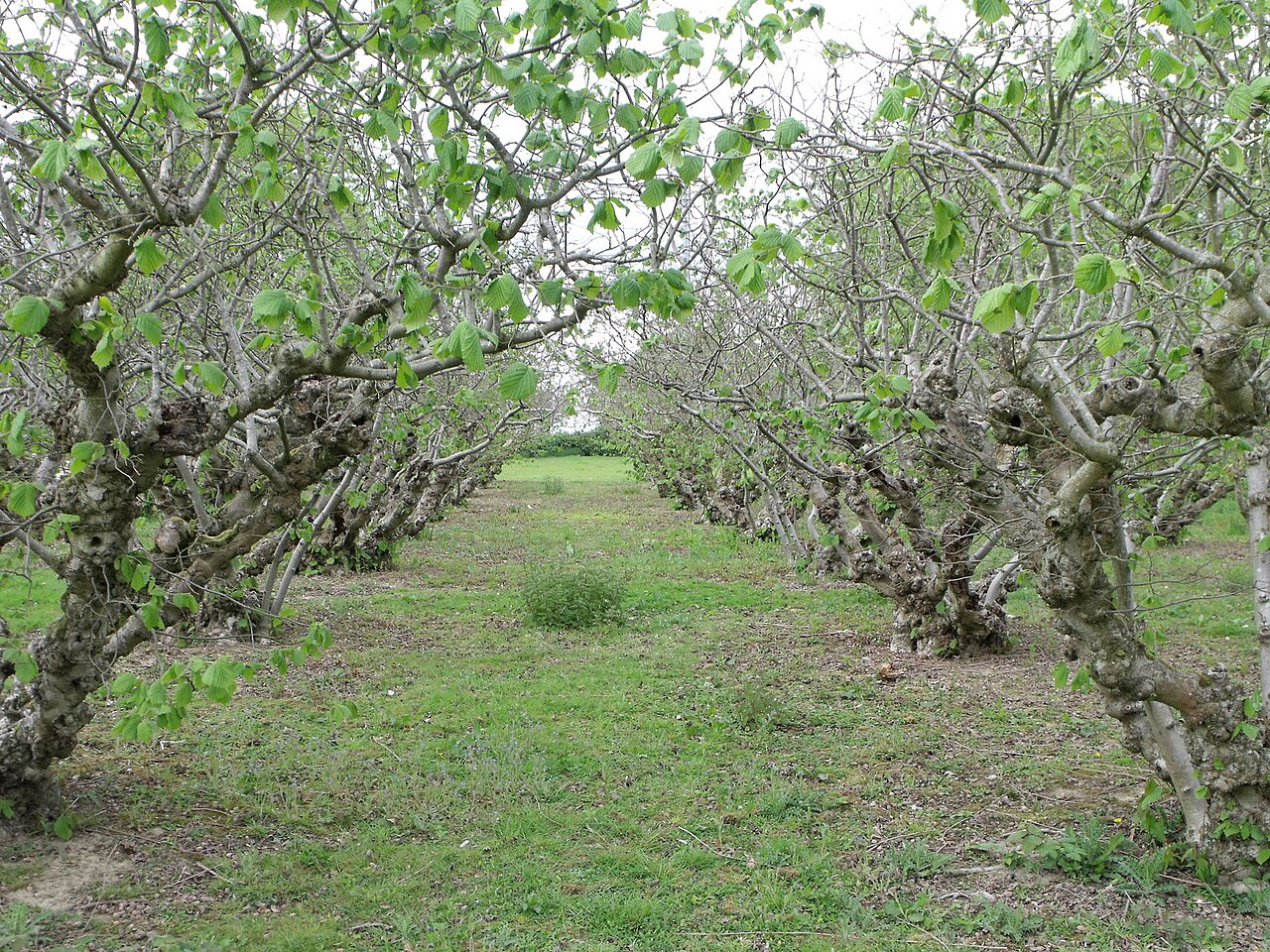
- Spacing for plantation, mechanized cultivation: on the order of 4–5 m × 5–6 m (source: Cultivation of Hazelnut — Leska). Typical Croatian orchards are cited as 5 × 4 m (~500 plants/ha) (sources: Technological and Economic Characteristics of Hazelnut Cultivation, 2018; Zmajevac Elaborate, 2021).
- Unified rows by cultivar — planting one cultivar per row "facilitates mechanical harvest and the entire production technology"; mixing cultivars within a row later complicates harvesting (source: EcoMission Elaborate, 2021; Technological and Economic Characteristics, 2018).
- Flat and clean ground in the row — for vacuum sweepers, the surface must be clean and flat; rills and wheel tracks reduce effectiveness (sources: Technological and Economic Characteristics, 2018; Establishment of a Permanent Hazelnut Orchard, 2020). The soil is rolled with a roller before harvest if necessary (source: Hazelnut Cultivation — Agricultural Forum, 2007).
- Protective strip in the row — a strip under the trees with a width of ~30% of the inter-row space is kept clear of weeds (mechanically or with permitted herbicides), while the inter-row space is grassed and mowed with mulchers 3–4 times a year (sources: Grubišno Polje Elaborate; EZO Donja Pištana, 2023).
| Parameter | Indicative Value | Source (Corpus) |
|---|---|---|
| Spacing for mechanized cultivation | 4–5 × 5–6 m | Cultivation of Hazelnut — Leska |
| Density (5 × 4 m) | ~500 plants/ha | Technological and Economic Characteristics, 2018 |
| Height of structure/posts for machine passage | ~70 cm above ground | Zmajevac Elaborate, 2021 |
| Protective strip in the row | ~30% of inter-row width | Grubišno Polje Elaborate |
| Inter-row mowing | 3–4× annually | EZO Donja Pištana, 2023 |
| ## Managing Pruned Biomass |
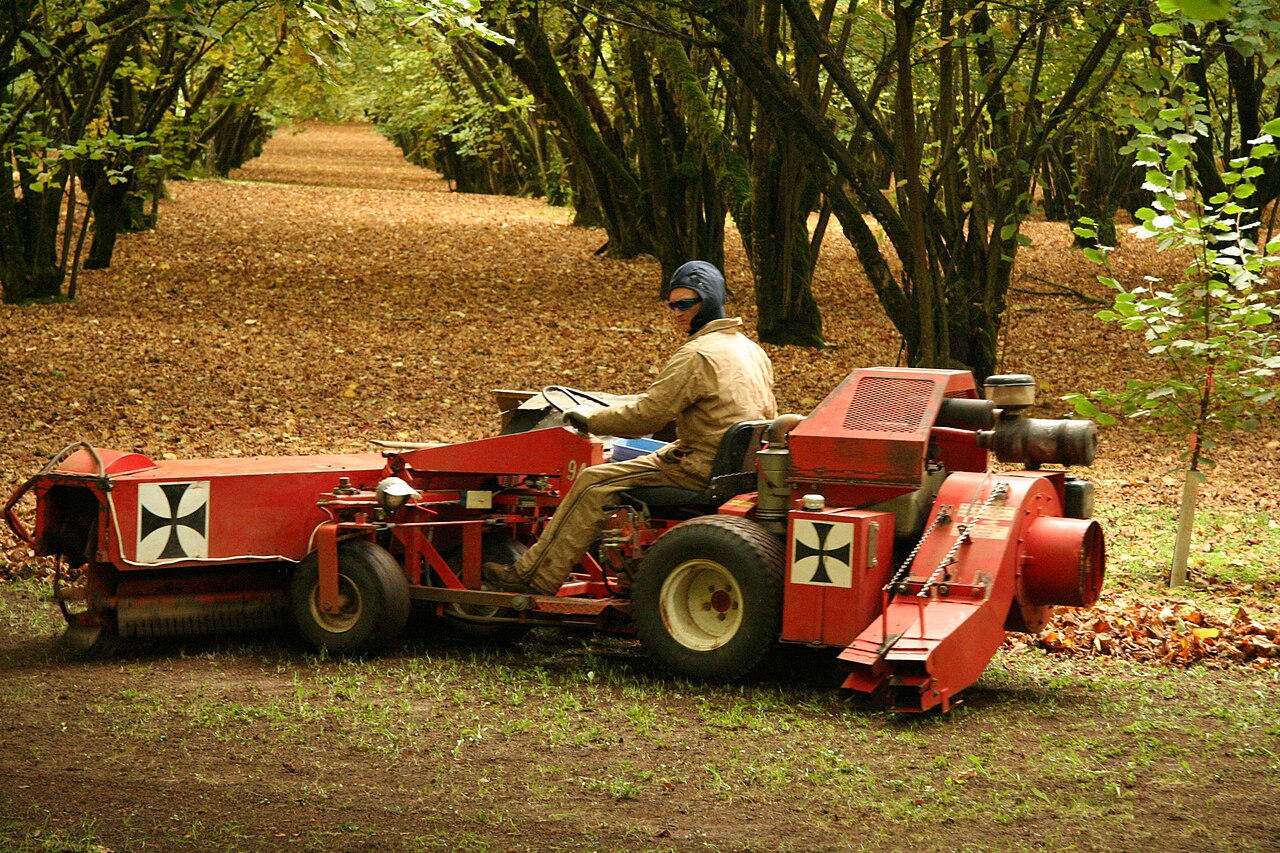
After mechanical pruning, a significant mass of branches remains that must be removed before harvest because it interferes with the operation of vacuum harvesters. The corpus describes a separate process for "mechanical collection of pruned biomass," i.e., mulching branches on the soil (source: Establishment of a Permanent Hazelnut Orchard, 2020). Chipped biomass can be returned to the inter-row space as organic matter or removed; in either case, the area under the canopy must remain clear for harvesting.
Practical Recommendations
- Start light and do it annually. Thin annual pruning of lateral surfaces maintains the orchard structure better than infrequent, aggressive interventions. Do not exceed ~25–30 % of live canopy per year.
- Rotate heavy interventions across the orchard (e.g., 1/5 of the orchard per year) to avoid a simultaneous drop in yield across the entire area.
- Supplement with manual work. Mechanical pruning is broad and non-selective — plan for manual correction of dead wood, root suckers (suckers, water sprouts), and opening up the center.
- Align topping height with bearing wood and early hazelnut flowering to avoid removing too much bearing potential.
- Keep tools sharp. Dull saws/blades tear branches and leave entry points for diseases; line contact parts with rubber to prevent tree damage.
- Consider terrain and safety. On slopes, use a stable low-center-of-gravity attachment and adjust speed accordingly.
Common Mistakes
- Mechanizing too small an orchard. For orchards up to ~10 ha, regular selective mechanized pruning usually yields better results than broad hedging (source: Hazelnut Pruning, 2026).
- Mixed cultivars in a row — this prevents uniform harvesting and complicates mechanical operations (source: Technological and Economic Characteristics, 2018).
- Uneven ground and remnants of mowing/pruning under the canopy — reduce the efficiency of vacuum harvesters.
- Excessive single-pass pruning — unnecessary yield drop and plant stress; results only appear in the 2nd–3rd year.
- Neglecting root suckers — mechanical lateral pruning does not address them; they require a separate (summer) intervention.
- Pruning without tracking pesticide registration if pruning is combined with treatments — adhere to the label and current regulations.
Gallery
Sources
This article is an AI summary from a hazelnut literature collection (RAG corpus) and public internet sources. Figures, dosages, and timelines are informative and depend on cultivar, location, and current regulations and pesticide registrations — consult advisory services and official sources before application.
Main sources used from the RAG corpus:
- Hazelnut Pruning (2026) — economics of pruning in large orchards; rotational/heavy pruning
- Hazelnut Cultivation — Leska (Corylus avellana) — spacing for mechanized cultivation, heliophilicity
- Establishment of a Permanent Hazelnut and Plum Orchard (2020) — mechanical pruning, biomass collection, mechanical harvesting — https://bbz.hr/doc/uprava/elaborat_zastite_okolisa_visegodisnji_nasadi_lijeske_i_sljive.pdf
- core 0a45eef1 (2016) / 197862993 (2017) — machine access under bushes, dimensions and maintenance of mechanization — https://doi.org/10.18485/bibliotekar.2025.67.2.6
- Tractor Attachment for Hazelnut Harvesting (2020) — safety and attachment construction
- Technological and Economic Characteristics of Hazelnut Cultivation (2018) — stand density, unified rows, flat terrain — https://doi.org/10.46584/lm.v36i2.1141
- Hazelnut Pruning in Autumn — figures for selective pruning (shoots, buds, tip shortening)
- Hazelnut — Vrtlarica (2026) — summer pruning, rejuvenation — https://www.vrtlarica.com/ljesnjak/
- Environmental Protection Study Zmajevac (2021), Grubišno Polje, EcoMission (2021), Donja Pištana (2023) — orchard design, protective belt, inter-row mowing
Public internet sources (supplement and currency):
- Mechanical pruning of European hazelnut: effects on yield and quality (eJHS, 2021) — hedging/topping trial on Tonda Romana cultivar — https://www.cabidigitallibrary.org/doi/10.17660/eJHS.2021/86.2.9
- Training and Pruning Basics for Hazelnut Trees — West Coast Nut — https://wcngg.com/2020/07/10/training-and-pruning-basics-for-hazelnut-trees/
- Mechanical Topping and Hedging Services — West Hills Farm Services — https://westhillsfarmservices.com/topping-and-hedging/
- The Secret to Stronger Orchards: How Topping & Hedging Unlock Higher Yields — https://www.theagcenternews.com/post/the-secret-to-stronger-orchards-how-topping-hedging-unlock-higher-yields
- Hazelnut Pruning — Gospodarski list — https://gospodarski.hr/casopis/izdanja-2020-casopis/broj-4-od-01-03-2020/rezidba-lijeske/
Recommended equipment
🔎 bypass pruning shears — Amazon →Affiliate links — we may earn a small commission at no extra cost to you.
Bypass Pruning Shears
Designed for manual pruning of young shoots and thin branches.
| Use Case | Option Type | What to Check Before Purchase |
|---|---|---|
| Precision cutting | Standard bypass design | Blade sharpness and spring tension |
| Ergonomic handling | Adjustable grip size | Handle comfort and leverage ratio |
| Heavy duty tasks | Loppers or saws | Professional tool selection for thick wood |