Active protection against late spring frost: fans, sprinklers, and smoke screens
Content generated by artificial intelligence — verify before application
This article was automatically compiled from a collection of hazelnut literature using artificial intelligence and may contain errors or outdated information. It serves as a starting point for further research, not as professional advice. Dosages, products, and timing are informative and depend on the cultivar, location, and current regulations — always consult an advisory service and official sources before application.
Late spring frost is one of the greatest threats to hazelnut yields in continental Croatia. Female flowers open very early (often already in February and March), and during the period when the orchard wakes up and begins to grow shoots and new branches, even a short episode of sub-zero temperatures can destroy fertilized ovaries and the entire crop for that year. While passive measures (site selection, avoiding frost pockets, late-blooming cultivars, soil management) reduce the likelihood of damage, active protection comes into play on those nights when temperatures drop below the critical threshold. This article focuses specifically on active measures: antifreeze fans (wind machines), micro-sprinklers, heaters, and smoke/thermal screens — with an emphasis on their range, consumption, and cost-effectiveness depending on frost frequency.
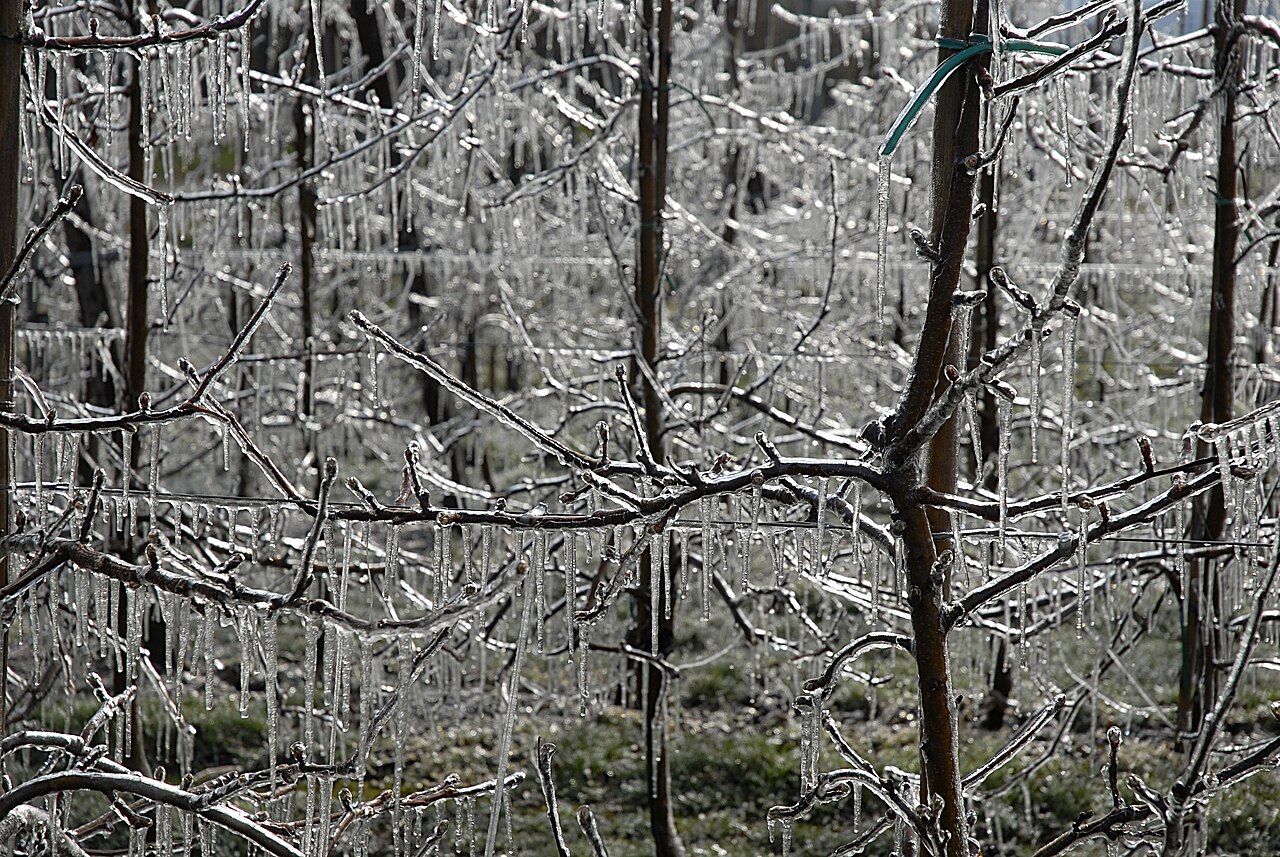
Two types of frost and why the difference is key
Before choosing a measure, it is necessary to understand how frost forms, as this determines which method can even work.
- Radiation frost (opposite of advection) occurs on clear, calm nights without wind. The soil and plants radiate heat towards the sky, colder and heavier air collects near the ground, and a warmer layer remains above it — a phenomenon known as temperature inversion. This is the typical "night frost" of continental Croatia, and most active measures work against it.
- Advection frost occurs with the intrusion of a cold air mass, accompanied by wind, and without inversion. Fans and smoke screens are almost useless against it, and sprinklers are also difficult to implement effectively.
This difference is crucial: antifreeze fans and smoke screens depend on the presence of an inversion — they "bring down" warm air from the inversion layer towards the canopy. If there is no inversion, there is nothing to move.
Inversion strength determines effectiveness
Inversion strength is measured as the temperature difference between canopy level (approx. 1.5 m) and level above the orchard (approx. 10 m). The greater the difference, the more heat is "stored" above the orchard.
| Inversion Strength (10 m − 1.5 m) | Practical Rating | Fan Effect |
|---|---|---|
| < 2 °C | Weak inversion | Weak / uneconomical |
| 2–4 °C | Moderate | Useful |
| > 4 °C (even 6–8 °C) | Strong inversion | Very effective |
According to the manual Principles of Frost Protection, after turning on the fans, the temperature in the canopy approximately equalizes with the average temperature at 1.5 m and 10 m, i.e., it rises by approximately one-third (up to half) of the inversion strength. In other words: with an inversion of 4 °C, it is realistic to expect a temperature increase in the flower zone of approximately 1.3–2 °C.
Antifreeze fans (wind machines)
An antifreeze fan (wind machine) is a large propeller on a pole 10–11 m high that rotates and mixes warm air from the inversion layer with cold air near the ground. This increases the downward flux of sensible heat towards the canopy.
Range and power (indicative data, FAO Y7223E)
| Parameter | Typical Value |
|---|---|
| Covered orchard per machine | 4–5 ha (radius ~120–125 m); manufacturers also cite 4–7 ha |
| Required power | ~75 kW for 4–5 ha (≈ 15–19 kW per hectare) |
| Propeller diameter | 3–6 m |
| Pole height | 10–11 m |
| Propeller speed | ~590–600 rpm |
| Temperature increase | ~1/3 of inversion strength (e.g., ~1–2 °C) |
A mobile version is the so-called Frostbuster / Frostguard — a tractor-pulled or self-propelled unit that blows warm air (burner on butane/gas, outlet air 80–100 °C). The mobile unit physically tours the orchard, so it is crucial that it returns to the starting point within at most ~10 minutes, otherwise the first rows will cool down before the next pass. It is suitable for small and irregular plots where a fixed wind machine is not economical.
Practical notes for fans
- Start early — while the temperature at 1.5 m is still above the critical damage threshold and before it drops significantly below the temperature at 10 m. Late starting means the inversion is already "collapsing" around the canopy.
- Efficiency drops sharply with weak inversion (< 2 °C) and with wind — in advection frost, they are practically useless.
- Horizontal (helicopter) type that pulls air vertically downwards generally works worse in orchards because turbulence around the canopy reduces the effective surface area.
- They are often combined with sprinklers: cheaper sprinklers are turned on first, and fans are added when "one more degree" is needed.
Micro-sprinklers and over-canopy sprinkling (ice protection)
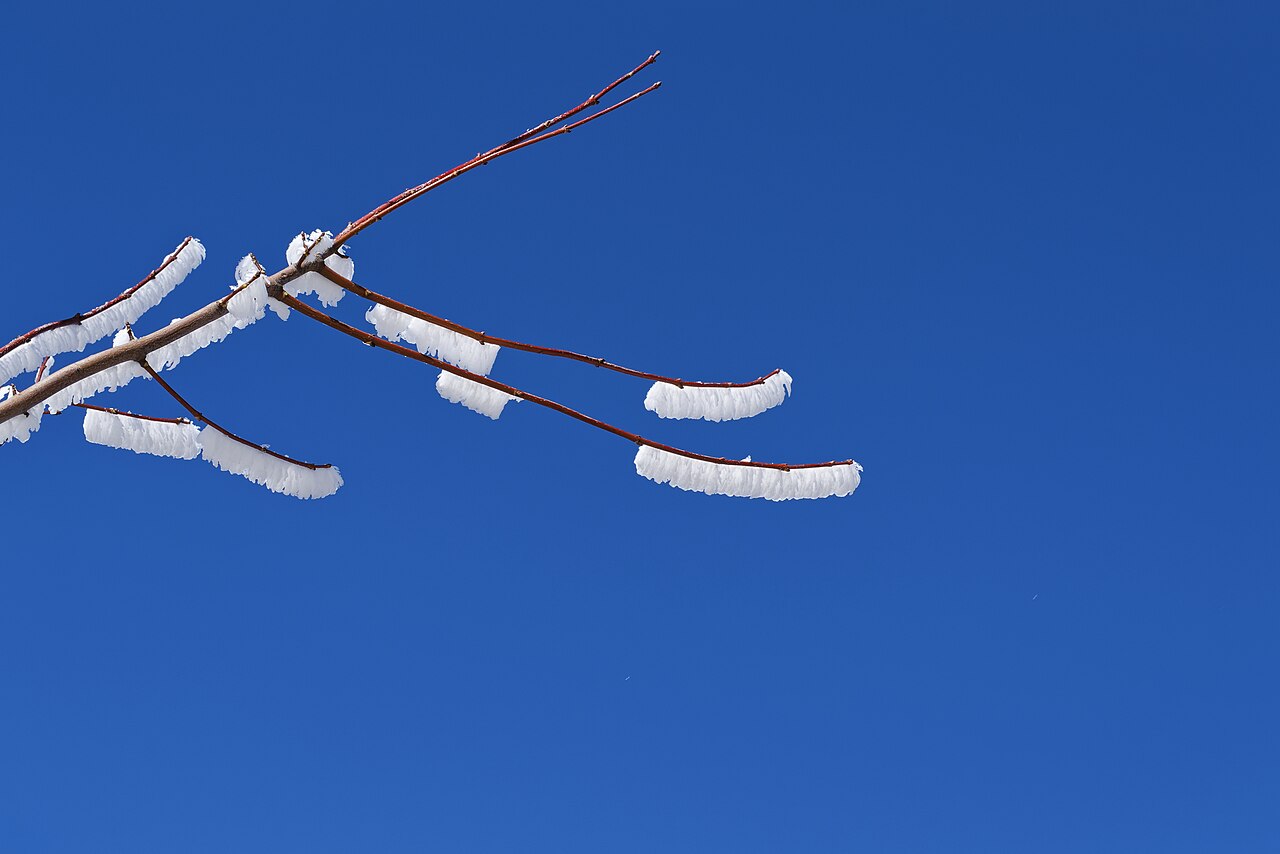
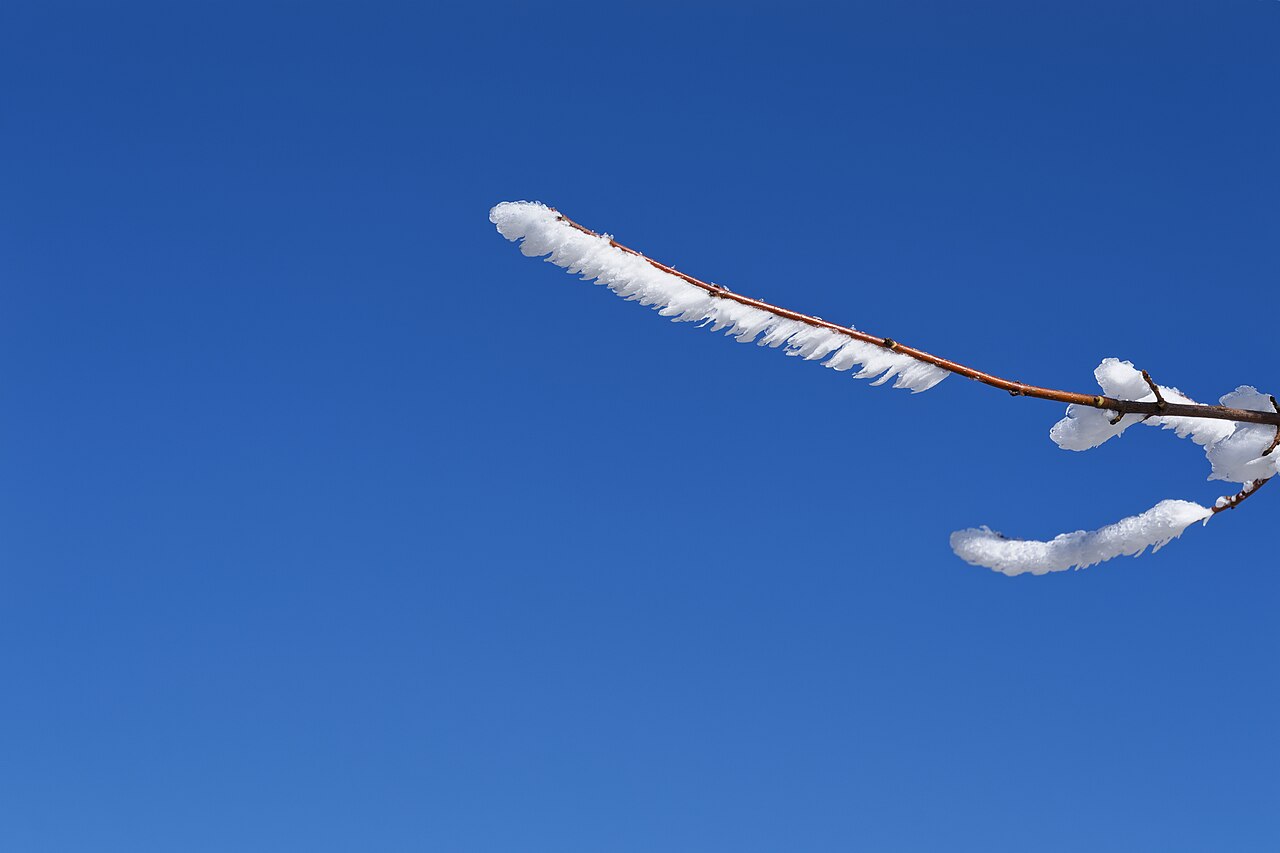
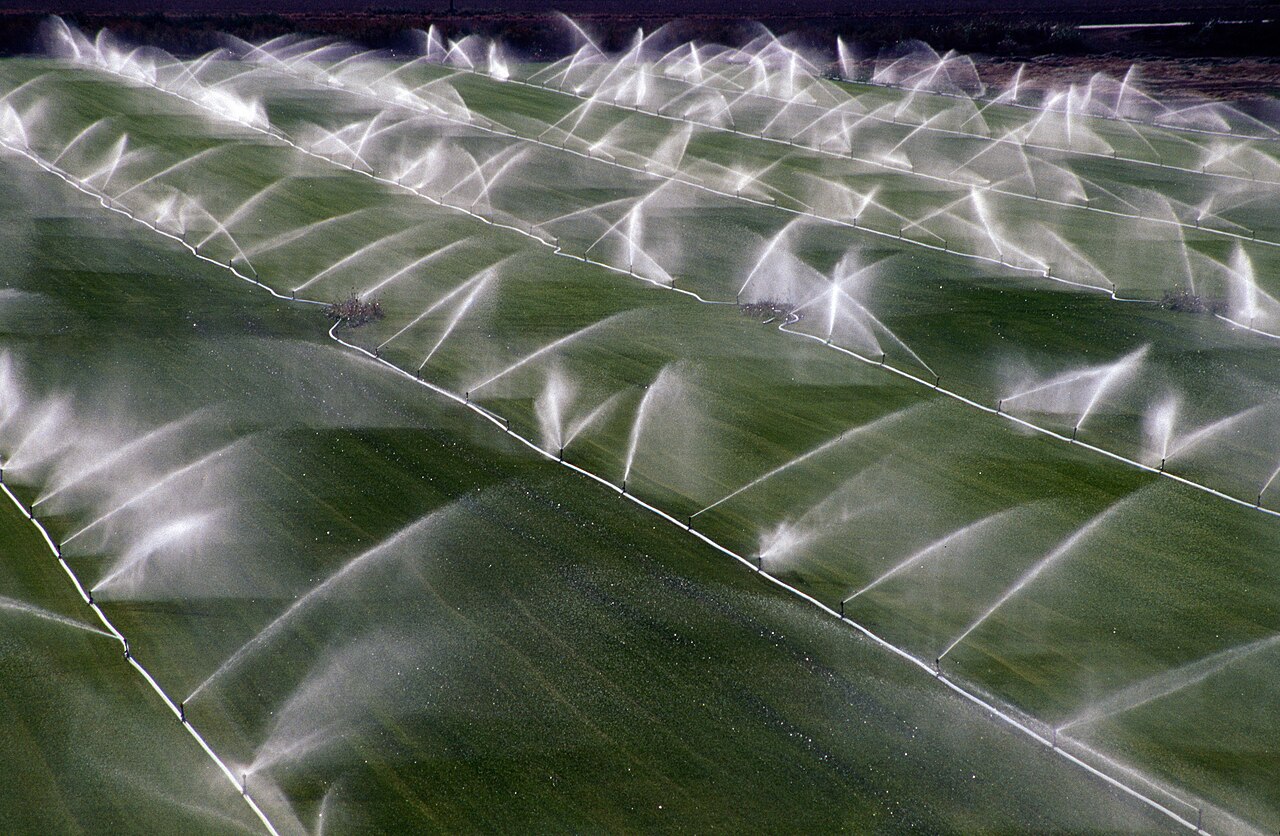
Sprinkling is the most powerful physical active method, based on an apparently paradoxical phenomenon: we protect the plant by intentionally freezing it.
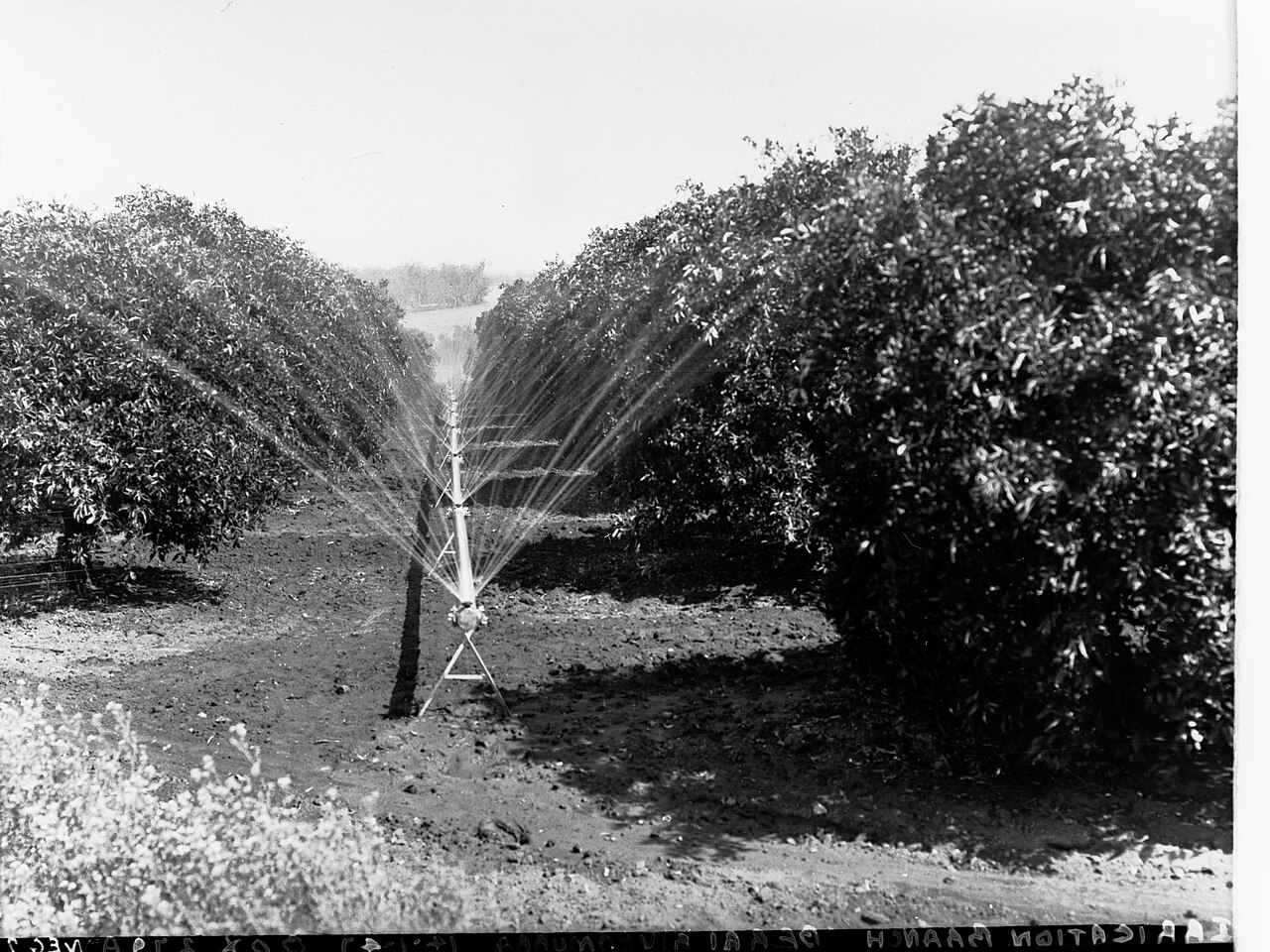
Physical principle — heat release during freezing
When water changes from liquid to solid state (ice), it releases latent heat of freezing of about 335 kJ (80 kcal) per kilogram of water. For comparison, cooling releases only ~4.2 kJ (1 kcal) per kilogram of water per degree Celsius. As long as new water is applied continuously to the plant that freezes, the mixture of water and ice on the bud remains at a temperature of about 0 °C (does not drop below −0.5 °C) — which is above the critical threshold for flowers. Tissue covered in ice thus remains undamaged.
Water supply must NOT be interrupted
The most dangerous moment is the interruption of the water supply. As soon as spraying stops, evaporation and further freezing of remaining water begin to remove heat, and the temperature of the ice and tissue drops below the air temperature. Sprinkling must be started before reaching the critical temperature and continued without interruption until the ice begins to melt, i.e., until the temperature rises and freezing stops.
The system has been working for decades — it was widely applied in Europe after the great frost in May 1957, and in South Tyrol (Italy) about 20,000 ha of orchards are covered by sprinklers that protect the yield even at −7 to −8 °C.
Water quantities (indicative, FAO Y7223E)
The required amount of water increases with falling temperature and with wind. Water must be applied evenly and in short rotation intervals (e.g., rotation every ~30 s), so that no part remains without a fresh layer for too long.
| Conditions | Over-canopy sprinkling |
|---|---|
| −1.7 °C, no wind | ~2.0 mm/h (≈ 20,000 l/ha/h) |
| −5 °C, no wind | ~3.8 mm/h (≈ 38,000 l/ha/h) |
| −5 °C, wind 0.9–1.4 m/s | ~4.6 mm/h (≈ 46,000 l/ha/h) |
| Under-canopy / micro-sprinkling | ~1.3–3.0 mm/h |
Conversion: 1 mm/h irrigation ≈ 10,000 liters per hectare per hour. Over-canopy sprinkling in stronger frost thus easily requires 30,000–46,000 l/ha/h throughout the night — which is the main limitation of the method.
Over-canopy vs. under-canopy (micro) sprinkling
- Over-canopy (over-tree): provides the highest level of protection because ice surrounds the buds and flowers themselves. But it requires huge amounts of water and — critically for hazelnut — branches must withstand the weight of accumulated ice. Young and irregularly formed canopies can break under load.
- Under-canopy / micro-sprinkling (under-tree): micro-sprinklers use significantly less water and there is no risk of breakage under ice. Protection is lower (the ground layer is heated and warm, moist air is raised), but in practice it is often a reasonable compromise for orchards up to ~2 m high and high planting density. Modern sprinklers (e.g., low-trajectory "wobbler" type) use less water than classic impact sprinklers.
- Surface (runoff) irrigation is used in some parts of the world; here water must not freeze because ice on the surface prevents heat transfer from the warm water underneath. Recirculation of cooled water is counterproductive.
Practical notes for sprinkling
- A large and reliable water source is needed as well as good soil drainage (tens of thousands of liters per hectare flow throughout the night).
- Design the system so that water falls on the trees, and not between the rows — this reduces consumption and increases cost-effectiveness.
- Over-canopy sprinkling is only applicable to plants with sufficiently sturdy structure to carry ice.
- Cyclic (on/off) dosing can reduce water consumption by up to ~1/3, but requires precise management and temperature monitoring.
Heaters
Heaters (stoves, "smudge pots", gas burners) directly heat the air in the orchard and promote convection and upward radiation of heat. They are effective even without inversion, but are among the most expensive to operate.
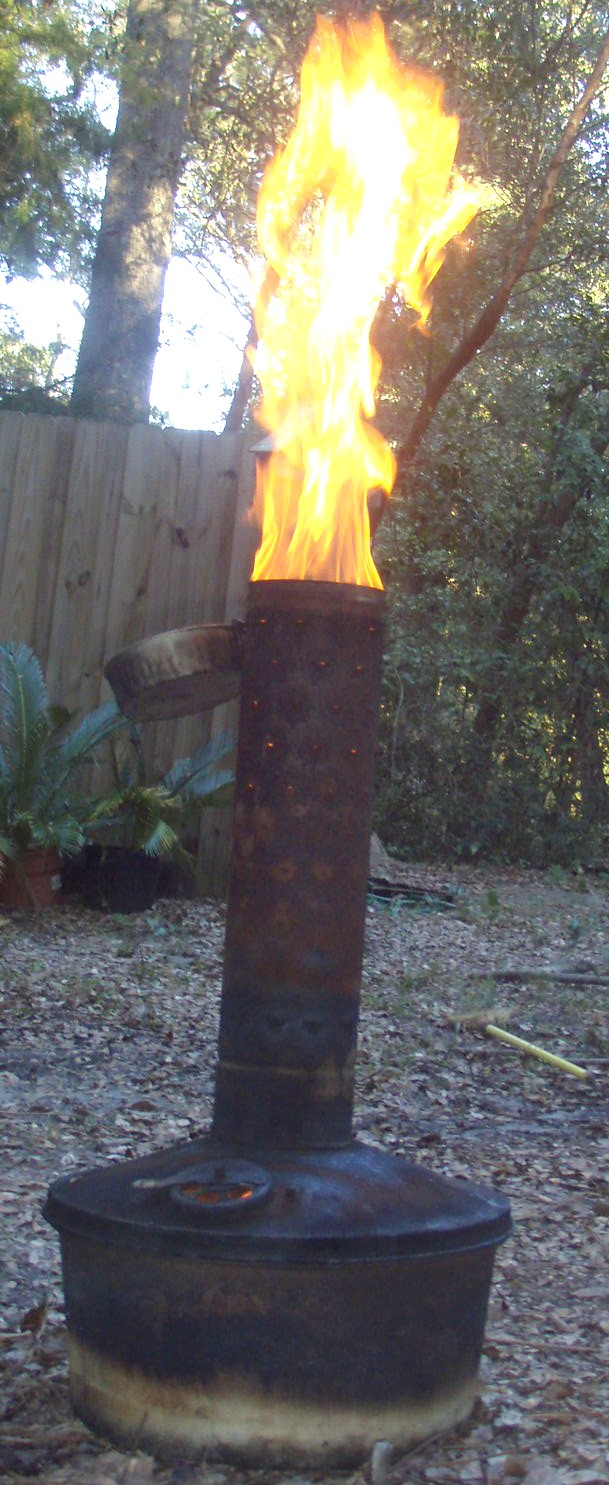
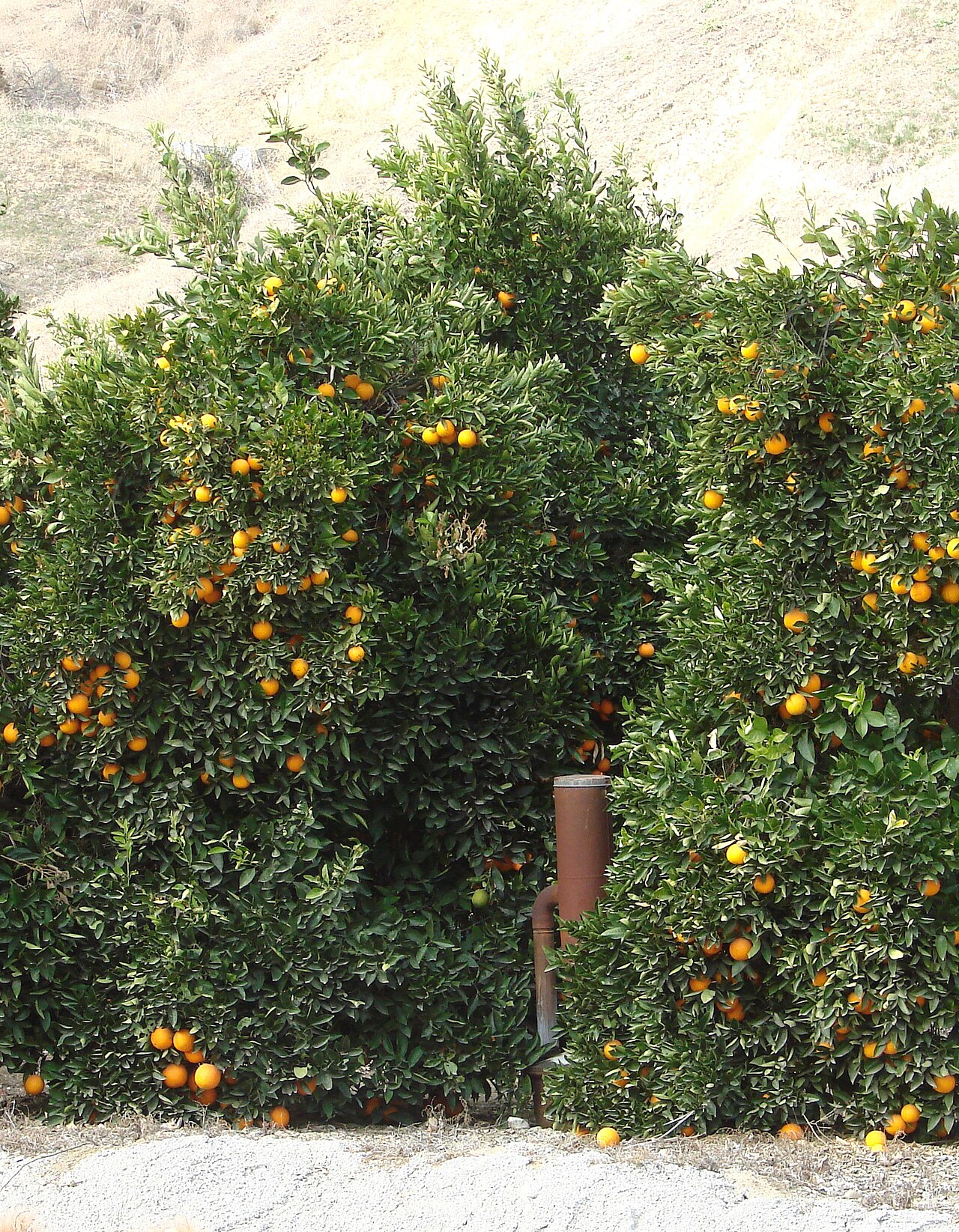
| Parameter (FAO Y7223E, costs from 2000.) | Value |
|---|---|
| Required number — oil return-flue | ~99 heaters/ha |
| Required number — gas (propane) | ~153 heaters/ha |
| Required thermal power | ~140–280 W/m² (5–10 GJ/ha/h) |
| Operating cost | ~93–104 USD/h (oil/gas) |
Main disadvantages: high operating cost, large need for labor (lighting/extinguishing hundreds of units) and pollution (smoke, soot). Today they are often used as a supplement to fans on the edges of the orchard or in the coldest pockets.
Smoke and thermal screens, candles (paraffin/antifreeze)
"Smoke screens" (burning straw, wet material) is a traditional, cheap measure whose real effectiveness is very limited and often overestimated:
- Smoke does not stop radiative heat loss as popularly believed (smoke particles are too small to block long-wave radiation), so the thermal effect of the smoke itself is weak.
- The real contribution comes from the heat of combustion — so scattered small fires / paraffin candles ("bougies", antifrost candles) distributed throughout the orchard are more effective than one large smoke source.
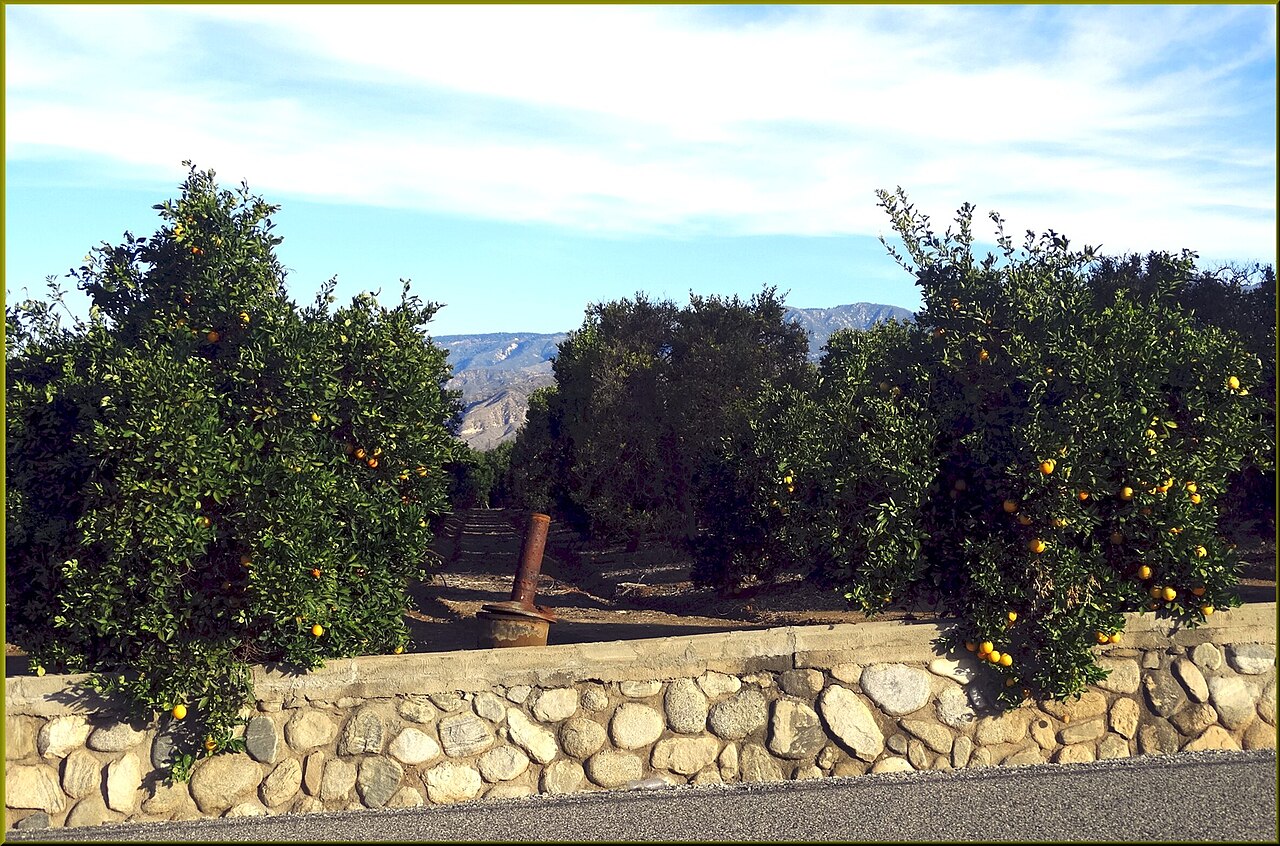
- In many countries, lighting fires and creating smoke is legally restricted due to air pollution and traffic safety — always check local regulations and fire safety rules before application.
Paraffin antifreeze candles are practical for small plots and edge corrections, but become expensive and labor-intensive on larger areas and provide only a few degrees of protection with the consumption of a large number of units.
Comparison of Methods and Cost-Effectiveness
The following table summarizes the main trade-offs. Absolute figures are indicative (FAO costs from 2000, USD/ha) and serve for order-of-magnitude comparison, not as current prices.
| Method | Protection Level | Depends on Inversion? | Investment | Operating Cost | Main Limitation |
|---|---|---|---|---|---|
| Over-canopy Sprinkling | Highest (down to −7/−8 °C) | No | Medium–High (~2,200–3,500) | Very Low (~4 USD/h) | Huge water demand; risk of branch breakage from ice |
| Under-canopy / Micro-sprinkling | Medium | No | Medium | Very Low | Lower protection; requires water and drainage |
| Antifrost Fan | Medium (~1/3 of inversion) | Yes | Medium–High | Low (electricity/fuel) | Useless without inversion and in wind |
| Mobile Frostbuster | Medium | Yes | Lower (one machine) | Medium (fuel + labor) | Must circulate < 10 min per round |
| Heaters | Medium–High | No (works even without inversion) | Low–Medium | Very High (~93–104 USD/h) | Expensive and labor-intensive; pollution |
| Smoke Screens / Candles | Low | Partially | Low | Medium (labor) | Weak and unreliable effect; legal regulations |
Efficiency Threshold — When It Pays Off
The key question is not just "how much does it cost," but how often frost occurs and how severe it is. The FAO analysis (Y7223E) provides a clear practical guideline:
- Sprinkling, considering the combination of investment and protection provided, is more cost-effective than the cheapest fan unless frost rarely exceeds 2 °C below the critical threshold — in which case, a cheaper fan may suffice.
- According to one comparison, sprinkling provides up to 3× greater protection than a fan with an internal combustion engine for a similar annual cost (e.g., ~6 °C protection vs. ~2 °C).
- Fans with internal combustion engines can be more cost-effective than electric ones because they lack constant standby (connection) costs.
- Heaters are rarely used alone today due to high operating costs; they are economical only as a supplement at the edges or in combination.
Practical rule of thumb for cost-effectiveness:
- Rare, mild frost (1–2 °C, few nights per year): Passive measures + possibly mobile Frostbuster or candles at the edges.
- Moderate to frequent radiative frost with strong inversion: Fixed antifrost fans (4–5 ha per machine) often offer the best price-to-performance ratio.
- Frequent and/or severe frost, water available: Sprinkling (micro/under-canopy for safety, over-canopy for maximum protection with sturdy canopies).
- Combination (e.g., sprinkling + fans) for higher-value orchards and extreme nights.
Common Mistakes
- Turning on too late — fans and sprinklers must be started before the temperature drops to critical levels, not when damage has already occurred.
- Stopping sprinkling before freezing is complete — the surest way to cause greater damage than with no protection at all.
- Using fans without inversion / in wind — fuel cost with no effect.
- Over-canopy sprinkling on weak, young canopies — branch breakage under ice weight.
- Relying solely on smoke — weak and unreliable effect, plus potential legal and fire safety issues.
- Over-sizing or under-sizing — insufficient water flow or fan power does not achieve the desired temperature rise; always design according to the worst realistic scenario for the location.
- Lack of monitoring — without reliable thermometers at canopy height (and preferably at 10 m), you cannot know when to start, stop, or whether an inversion exists.
Conclusion
There is no single best solution — the choice of active protection depends on the type of frost (radiative vs. advective), inversion strength, water availability, plot size and shape, and how frequent and severe frost nights are. For most continental hazelnut orchards with predominantly radiative frost and strong inversion, fixed antifrost fans offer a good investment-to-performance ratio, while sprinkling remains the most powerful option where water is abundant and canopies are sufficiently sturdy. All active measures make sense only with solid passive foundations and reliable temperature measurement — and, most importantly, with timely activation.
Gallery
Sources
This article is an AI summary generated from an internal hazelnut literature collection (RAG corpus) and publicly available sources. Main sources used:
- FAO — Frost Protection: Fundamentals, Practice and Economics (Y7223E), ch. 2 and economics — https://www.fao.org/4/y7223e/y7223e0d.htm and https://www.fao.org/4/y7223e/y7223e08.htm
- Tehnološka navodila za zaščito pred spomladansko pozebo v sadjarstvu (2018, KGZ Nova Gorica, SI) — internal corpus
- Principles of Frost Protection (2000) — internal corpus (approved_for_eval)
- Frost Protection in Orchards and Vineyards (USDA-ARS, 2008) — https://www.ars.usda.gov/ARSUserFiles/21563/Frost%20Protection%20in%20Orchards%20and%20Vineyards-2008.pdf
- Frost Protection Guide / Guide to Frost Protection for Plants (Senninger) — internal corpus
- Meyvecilikte Meteorolojik Değişikliklere Karşı Alınabilecek Önlemler (2025, TR) — internal corpus (Frostbuster description)
- Bollettino di produzione integrata e biologica, Reggio Emilia, N° 11/2025 (IT) — internal corpus (antibrina techniques)
- Best Management Practices — Irrigation Management (Ontario, 2004) — internal corpus (ice encapsulation)
- East-Fruit — How to protect your orchards and vineyards from frosts? — https://east-fruit.com/en/horticultural-business/technologies/how-to-protect-your-orchards-and-vineyards-from-frosts-protection-methods-effectiveness-cost-and-availability/
- Rutgers NJAES E363 — Active Frost Protection Methods for Your Orchard — https://njaes.rutgers.edu/e363/
All mentioned quantities, dosages, and costs are informative and depend on cultivar, location, climate, and applicable regulations. Before investing and applying, always consult with a professional advisory service.