Cover Crops, Mowing, and Mulching in the Inter-row Space
Content generated by artificial intelligence — verify before application
This article was automatically compiled from a collection of hazelnut literature with the assistance of artificial intelligence and may contain errors or outdated data. It serves as a starting point for further research, not as professional advice. Dosages, products, and timing are informative and depend on the cultivar, location, and applicable regulations — always verify with advisory services and official sources before application.
The inter-row space in a hazelnut orchard is not an "empty corridor" between the rows — it is a working surface over which machinery drives for years, a surface where fallen nuts lie at the end of mechanical harvesting, and simultaneously the largest reservoir of organic matter and soil biological activity in the entire orchard. The way you manage this space — whether you keep it grassed, which species you sow, how often you mow, and how you use the chopped biomass — directly affects terrain bearing capacity, moisture conservation, soil health, and ultimately, the cleanliness and efficiency of the harvest. This article consolidates practices from Croatian and international hazelnut literature into a practical guide for selecting cover crops, organizing mowing, and proper mulching.
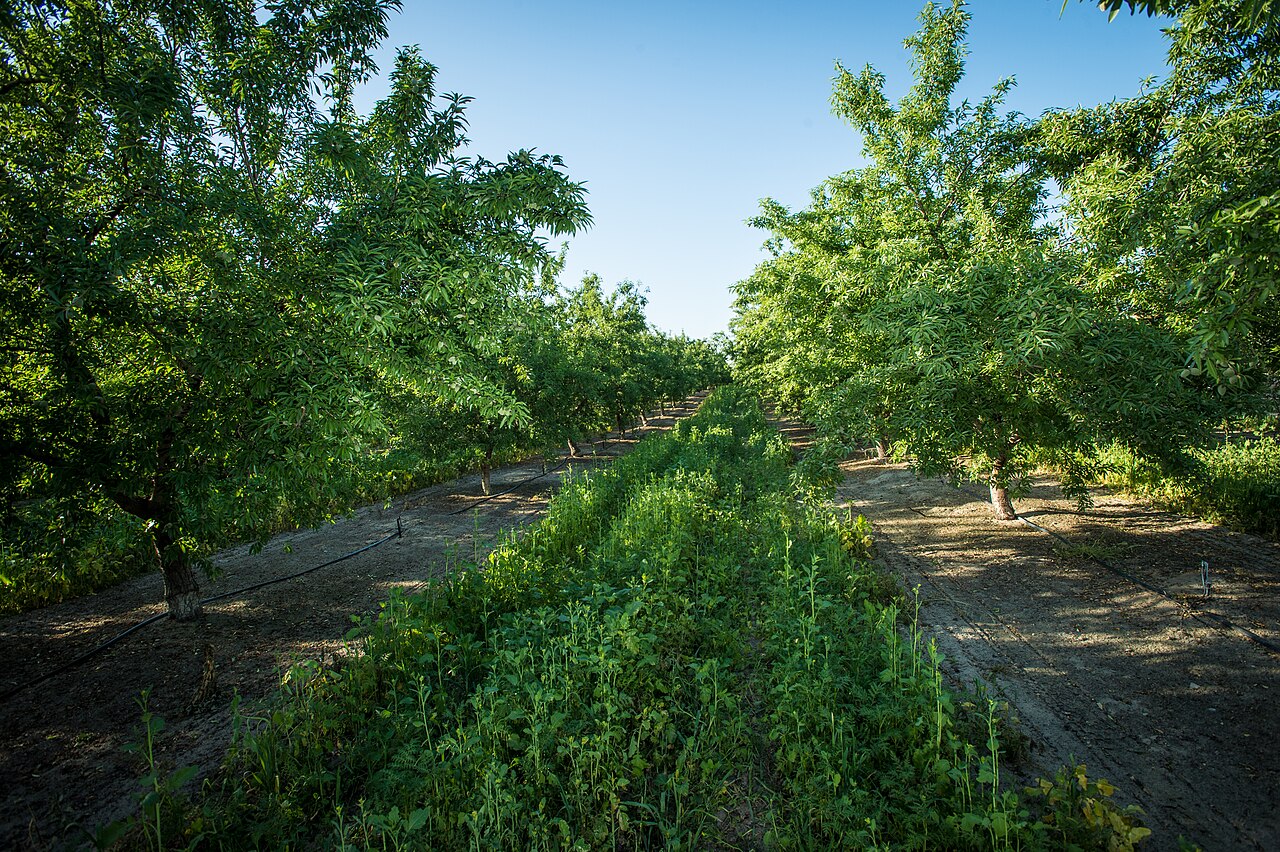
Why a grassed inter-row space instead of bare cultivation
In young orchards (the first two to three years), inter-row soil cultivation and hoeing around seedlings are still common, suppressing weeds while the shrub forms. However, as the orchard matures, the practice shifts towards permanent grassing of the inter-row space, and cultivation is increasingly avoided.
Experience from consortium orchards shows a clear rule: from the third year onwards, tilling the inter-row space should be avoided for two reasons:
- to prevent subsequent soil compaction (hardening) that would impede water drainage and absorption;
- to prepare the soil for harvest — the surface must be as flat and firm as possible because nuts are collected mechanically from the ground.
A bare, frequently tilled surface may look "clean" in the short term, but in the long term it loses structure, absorbs water poorly, is prone to erosion on slopes, and — crucially for hazelnuts — becomes impassable and muddy after rain, precisely during the autumn harvest. A grassed cover, on the other hand, holds the soil together, increases infiltration, and allows earlier entry into the orchard after precipitation.
What grassing provides to the soil
Literature on cover crops and living cover in hazelnut orchards repeatedly cites the following effects:
- Higher organic matter and organic carbon in the soil. In trials with living cover in hazelnut orchards, an increase in total organic carbon (TOC) of more than 30% in the 20–40 cm layer was recorded at certain intervals, along with increases in total nitrogen and phosphorus and soil enzyme activity (invertase, urease, alkaline phosphatase).
- Better structure and aggregation of particles, less compaction, and greater aggregate stability — which directly supports terrain bearing capacity.
- Nitrogen fixation in legumes (clovers, vetches) and "catching" of nutrients by roots in grasses, reducing nitrate leaching.
- Increased microbial and faunal activity — including an increase in the abundance and mass of earthworms where mulch is left.
- Weed suppression through shading and competition, and in some species, allelopathic effects.
- Erosion prevention, especially on sloped terrain, where roots physically bind soil particles.
It is important to know the drawbacks as well: establishment costs (seed, sowing), and competition for water and nutrients during dry periods, as well as the potential increased risk of late spring frosts over low, wet grass. Therefore, species selection and mowing regimes are not cosmetic but agrotechnical decisions.
Selecting cover crops for the hazelnut inter-row space
For permanent grass in the hazelnut inter-row space, Croatian practice recommends clover-grass or grass-clover mixes, or special grass blends selected according to the following properties:
- resistance to trampling (frequent machinery passage, and later, nut passage during harvest);
- slower, denser growth (less mowing, thicker, tighter structure);
- low evapotranspiration coefficient (consume less water, less competition with hazelnuts).
Low, dense, trampling-resistant grass is simultaneously the best substrate for mechanical harvesting because it provides a flat, clean, and load-bearing surface.
For temporary/seasonal cover crops (e.g., in young orchards, for soil improvement, or as green manure), the following are considered:
| Group | Species Examples | Main Benefit |
|---|---|---|
| Legumes | red/white clover, crimson clover, vetch (Vicia sativa) | nitrogen fixation, weed suppression |
| Grasses | perennial ryegrass (Lolium perenne), red fescue (Festuca rubra — creeping), winter oats, rye, triticale | soil structure, nitrogen "catching", trampling resistance |
| Other / Special | phacelia, Vulpia myuros (soft fescue) | rapid coverage, pollinator forage, low competition |
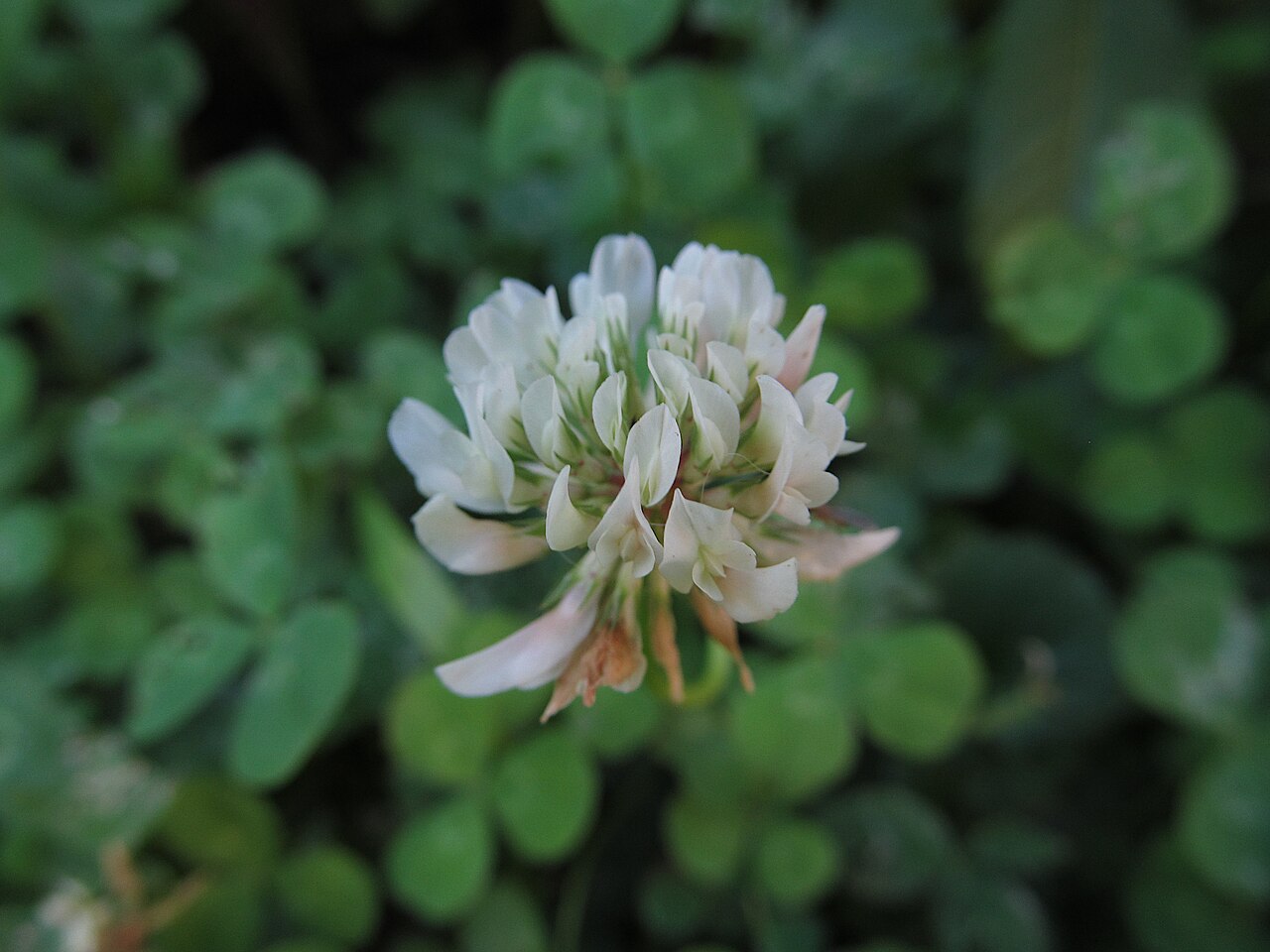
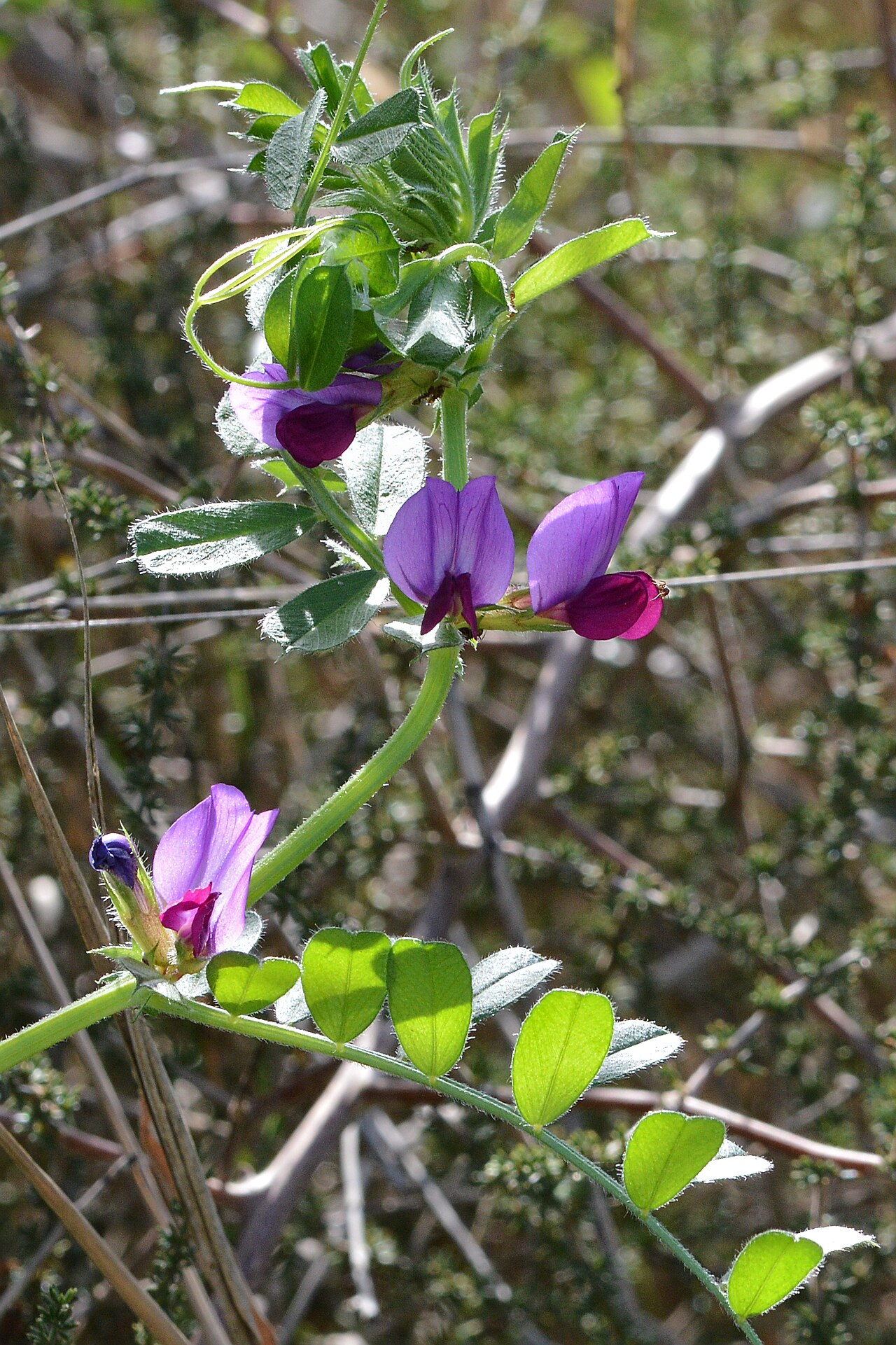
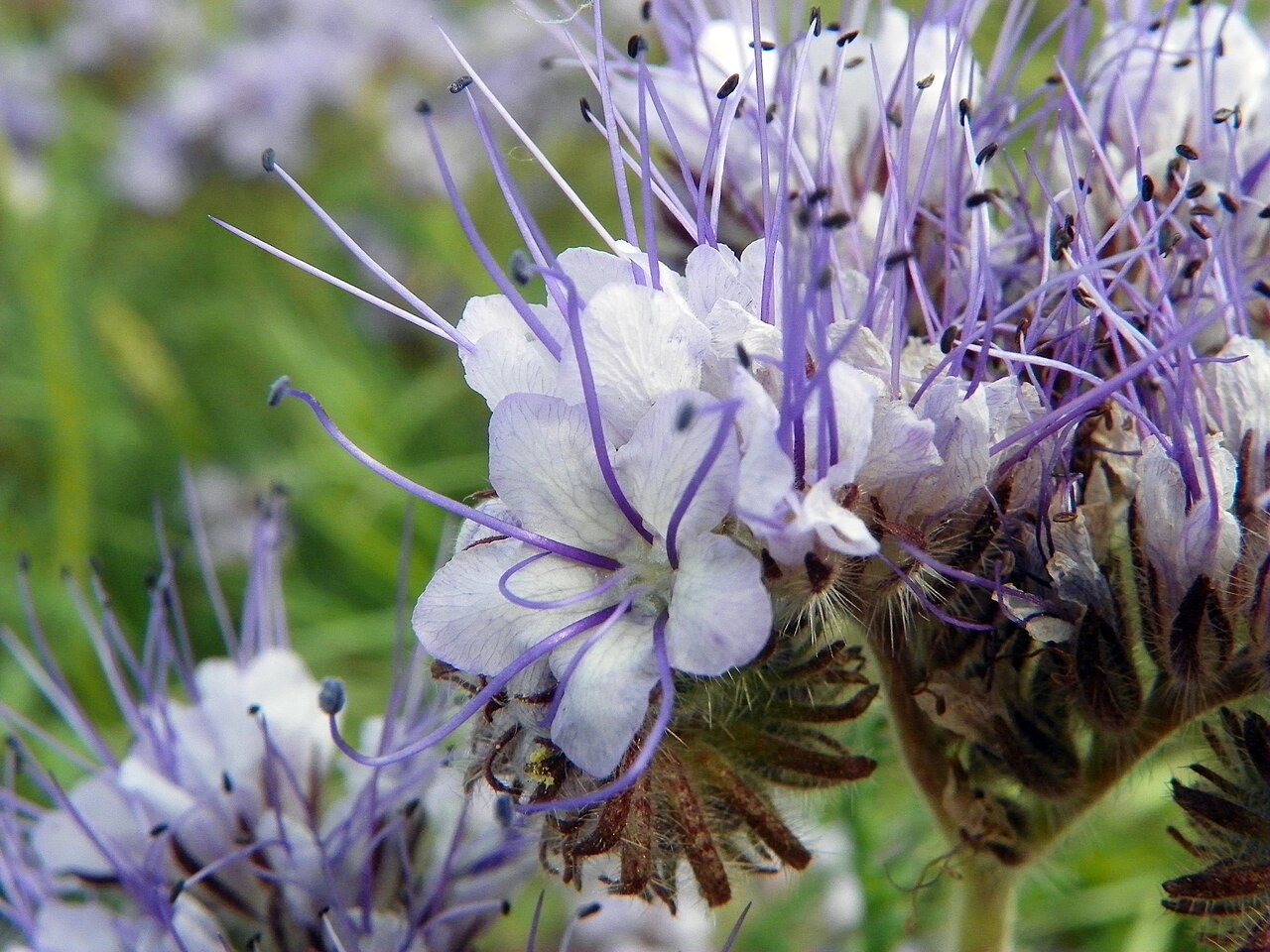
From international practice (e.g., Willamette Valley, Oregon), a useful guideline is to combine triticale, oats, clovers, vetches, creeping (red) fescue, annual ryegrass, phacelia, etc., in hazelnut alleys, and increasingly native mixes of grasses and wildflowers which, once established, require only one mowing per year and minimal intervention.
Note on species and mixes
The listed species and ratios are indicative; choose a specific mix based on soil type, climate (especially rainfall amount and distribution), slope, and whether the orchard is in an organic or conventional system. Verify sowing rates and mix composition with seed suppliers and advisory services.
Living cover or dead mulch?
In reduced tillage systems, the emphasis is on organic mulch as an important soil biocomponent. Mulch (soil cover) can be:
- living mulch (living cover) — a crop growing in the inter-row space that is mowed periodically;
- dead mulch — chopped plant biomass (mowed grass, chopped branches from pruning, straw, hazelnut shells) spread over the surface.
The choice between them depends on the climatic conditions of the growing area. In wetter regions, living cover functions well; in drier regions, the emphasis shifts to dead mulch, which protects moisture and reduces competition.
Mowing the inter-row space
Mowing is the most common and operationally most important maintenance measure for grass. It is performed with a mulcher (chipper/mulcher) that mechanically chops the mowed biomass and leaves it on the surface, making mowing and mulching a single operation.
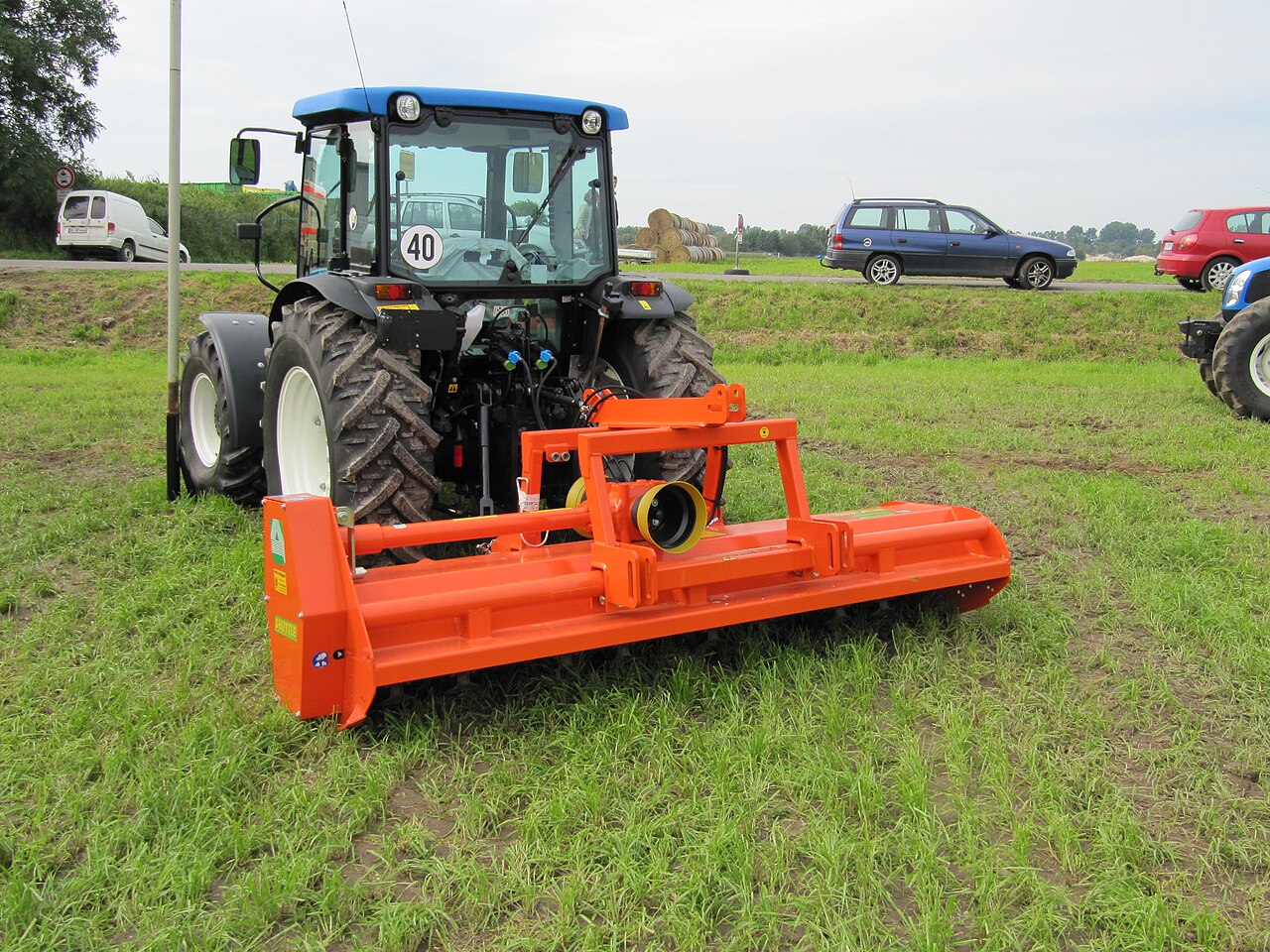
From Croatian studies and calculations, a practical standard emerges:
| Parameter | Indicative Value | Note |
|---|---|---|
| Number of mowings per year | 3–4 | for a well-maintained grass |
| Grass height for mowing | grass is mowed when it grows to 12–15 cm | do not let it overgrow |
| Final (end) mowing | a few weeks before harvest | for a clean, load-bearing surface |
In more intensive systems with living cover, international practice may involve a higher number of mowings (up to 6–7 mowings per year is cited), which is simultaneously the main cost of such a system. Native/wild mixes, conversely, can be reduced to one mowing per year. Your regime lies somewhere in between — determine it based on grass growth dynamics and the number of passes you can afford.
Functions of mulching with a mulcher
- Chopping plant residues and returning them to the soil as organic matter.
- Preventing erosion on sloped terrain and improving moisture retention (the chopped cover reduces evaporation from the surface).
- Maintaining a low, clean structure for uninterrupted harvesting.
- Suppressing weeds and volunteer shoots before seeding.
Mulcher maintenance
The mulcher is a working machine that carries a large part of the season. Before use, routinely check: belt tension, bearing lubrication of the rotor, roller, and drive shaft, universal joint condition, working elements (knives/hammers), screw connections, and oil level in the reducer. Dull knives "pull" instead of cutting and leave an uneven, slower-drying cover.
Final mowing and cleanliness before harvest
Since hazelnuts are most often harvested mechanically from the ground, the cleanliness and low height of the inter-row space are crucial for harvest efficiency. Therefore, final mulching is performed a few weeks before harvest to achieve a clean, flat surface. On such a surface, nuts have lower moisture content (they do not lie in tall, wet grass), thereby increasing harvest efficiency and reducing losses and subsequent drying costs.
Practical points for the pre-harvest period:
- mow the grass low and evenly before harvest;
- remove larger residues (pruning branches) from the row so they do not interfere with collectors;
- maintain a flat micro-topography of the inter-row space throughout the year (avoid deep cultivation that creates furrows) — this is why tilling is abandoned from the third year onwards.
Mulching for Moisture Conservation and Soil Health
Beyond being a "by-product" of mowing, mulch is applied intentionally — as a cover that conserves moisture, feeds the soil, and suppresses weeds, especially in the row (around the bushes) where mowing does not occur and weed competition is most harmful to young plants.
The effect of mulch on moisture is well documented. In a Turkish trial with organic mulch in a hazelnut orchard, it was shown that increasing mulch thickness reduces water loss through evaporation and decreases the germination and biomass of weed species (Lolium perenne, Agropyron repens) — tested thicknesses were 0, 3, 5, and 8 cm, with a greater effect the thicker the layer.
Mulch Sources Available in Hazelnut Orchards
| Mulch Source | Note |
|---|---|
| Mowed grass from the alley | Free "dead mulch," increases the number and biomass of earthworms |
| Chopped branches from pruning | Return carbon and nutrients; chop with a mulcher/shredder |
| Hazelnut shells | Own processing by-product; slow decomposition, good permanent cover |
| Straw, hay | Available, but watch out for weed seed introduction |
Using hazelnut shells as mulch is a good example of cascading (circular) use of by-products: what remains after shelling and peeling is returned to the orchard as a cover that conserves moisture and slowly releases organic matter.
Orientatively, the annual yield of dry plant biomass in hazelnut orchards is estimated at around 4–5 t/ha, which is returned via mineralization as a source of nutrients — illustrating how much organic matter the inter-row space actually "produces" for the soil each year.
Soil Bearing Capacity: How Grass Cover and Mulching Help
Soil bearing capacity (passability) in hazelnut orchards is particularly important because harvest takes place in autumn, often in a wet period, with heavy machinery. A grass-covered, traffic-resistant inter-row space:
- reduces compaction of heavy soils during machinery passage (root network and cover distribute the load);
- absorbs and drains water faster, so the surface dries sooner and becomes passable;
- allows earlier entry into the orchard after rain — mixtures with developed roots consume moisture and maintain structure, allowing earlier access.
Conversely, bare, tilled, or heavily compacted surfaces become muddy and slippery after rain, and deep tillage creates a loose, poorly bearing layer that compacts quickly under wheels. This is why Croatian and Italian practices abandon tilling from the third year and switch to permanent grass sward with mowing using a mulcher.
Practical Recommendations and Common Mistakes
Recommendations:
- In young orchards, cultivate/till selectively (especially the row), and establish permanent grass sward in the inter-row space as soon as possible.
- Choose a mixture based on three criteria: traffic resistance, slow/dense growth, low water consumption.
- Plan for 3–4 mowings per year, mow at 12–15 cm, and time the last (final) mowing a few weeks before harvest.
- Leave mowed biomass as mulch; return chopped pruning branches and shells to the orchard.
- In dry areas, focus on dead mulch (thicker layer = less evaporation).
- On slopes, maintain a constant plant cover to prevent erosion.
Common Mistakes:
- Retaining intensive inter-row cultivation (tilling) for too long — compacts soil and ruins bearing capacity for harvest.
- Letting the grass sward grow too long and mowing rarely and high — creates a thick, slow-drying cover and wetter nuts.
- Sowing random grass mixtures unsuitable for traffic or with high evapotranspiration — competition for water.
- Neglecting the final mowing before harvest — dirtier crop, higher losses and drying costs.
- Dull mulcher blades and poorly maintained equipment — uneven cover and poor chopping.
- In dry years, allowing the living cover to "drink" all moisture — then mow lower/more frequently or switch to dead mulch.
Gallery
Sources
This article is an AI summary compiled from an internal literature collection on hazelnut (RAG corpus) and public sources. Main sources used:
- Environmental Impact Assessment — Establishment of a permanent hazelnut and plum orchard, "Grubišno Polje" (MUNDO MELIUS d.o.o., 2020) — layout, maintenance of inter-row space.
- Environmental Impact Assessment (assessment of the need for an impact assessment), 2021 — mowing with mulchers 3–4×/year, grass height 12–15 cm, final mulching before harvest.
- Update of calculations for measure 11 "Ecological Production" (2022) — maintenance of grass sward, mowing with mulchers, traffic-resistant mixtures.
- Assessment — Groundwater extraction, hazelnut orchard Glina (2022) — inter-row grassing with clover-grass mixtures to prevent compaction.
- "Our Land and Italian Hazelnuts Together" (BiH) — avoiding tilling from the third year for bearing capacity and harvest preparation.
- Cascading Use of Hazelnut and Aronia By-products (2025) — organic mulch in reduced tillage; shell as soil cover.
- Effects of Living Cover on the Soil Microbial Communities and Ecosystem Functions of Hazelnut Orchards (2020/2021) — increase in soil organic carbon, nitrogen, and enzymatic activity.
- "Organik malç olarak fındık bahçesinin..." (Turkish research, 2012) — effect of mulch thickness (0/3/5/8 cm) on water loss and weeds.
- HAZELNUT GROWING GUIDE, Ministry of Agriculture / advisory (2024) — general cultivation and soil guidelines.
- Cover Crops for Sustainable Cropping Systems: A Review (2022) — benefits of cover crops for soil health.
- OSU Extension — Growing Hazelnuts in the Pacific Northwest: Orchard Floor Management — https://extension.oregonstate.edu/catalog/pub/em-9079-growing-hazelnuts-pacific-northwest-orchard-floor-management
- USDA Forest Service — Orchard Management using Cover Crops to Improve Soil Health — https://research.fs.usda.gov/treesearch/download/57902.pdf
- West Coast Nut — Hazelnut Grower All In on Cover Crops — https://www.wcngg.com/2026/06/16/hazelnut-grower-all-in-on-cover-crops/
- Tualatin SWCD — Cover Cropping to Reduce Bare Ground in Hazelnut Orchards — https://tualatinswcd.org/cover-cropping-to-reduce-bare-ground-in-hazelnut-orchards/
- Agroklub — Proper selection of cover crops is important for soil protection — https://www.agroklub.com/ratarstvo/pravilan-odabir-pokrovnog-usjeva-vazan-je-za-zastitu-tla/63036/
- Gospodarski list — Significance of cover crops / Sowing cover crops — https://gospodarski.hr/rubrike/pokrovni-usjevi/