Irrigation Schedule Based on Phenophases and Soil Moisture
Content generated by artificial intelligence — verify before application
This article was automatically compiled from a collection of hazelnut literature using artificial intelligence and may contain errors or outdated data. It serves as a starting point for further research, not as professional advice. Dosages, products, and timing are informative and depend on the cultivar, location, and current regulations — always consult with an advisory service and official sources before application.
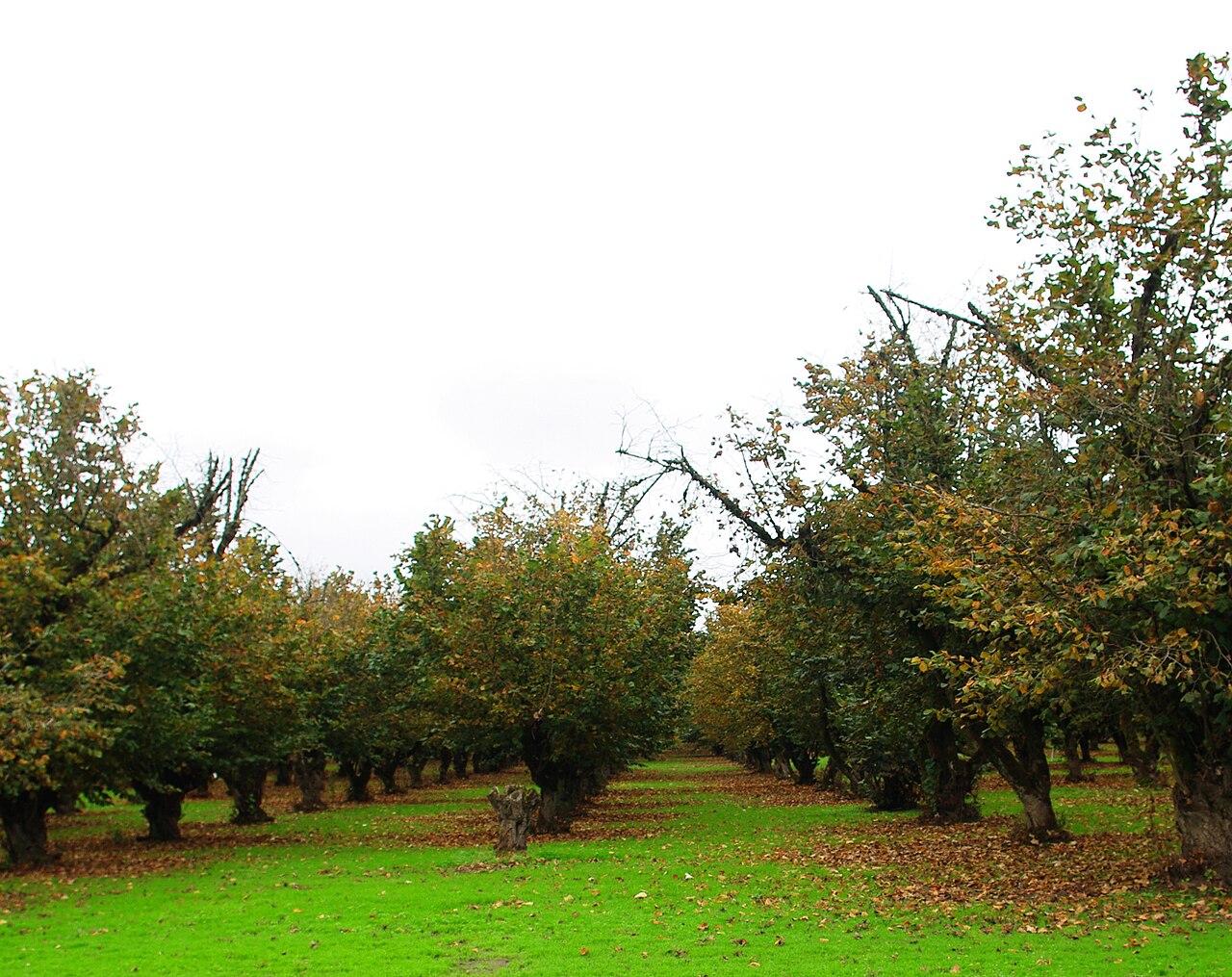
Irrigation for hazelnut (Corylus avellana L.) is no longer a reserve for dry years, but a regular agrotechnical measure in every modern intensive orchard. Hazelnut has a relatively shallow root system and cannot extract moisture from deeper soil layers, while simultaneously being very sensitive to water deficits precisely during the period that determines yield and kernel quality. The goal of this article is to show how to align how much and when to irrigate based on three pillars: phenophases (development stages), evapotranspiration (water loss through evaporation and transpiration), and direct measurement of soil moisture during the season.
Why a schedule, not "by feel"
Traditional irrigation "when I see it's dry" is late — by the time the leaf is wilted or the surface soil has cracked, the plant has already experienced the deficit. The modern approach is built on three complementary tools:
- Phenological calendar — different stages have different drought sensitivity and different water requirements.
- Water balance / evapotranspiration — estimating how much water the plant and soil have lost, to replenish that deficit.
- Soil moisture measurement — a field control check that corrects the estimate and prevents both drought stress and over-irrigation.
The best results are achieved by combining all three: phenophases indicate when it is critical, the water balance provides the initial dosage estimate, and moisture sensors confirm or adjust that estimate.
Annual water requirement for hazelnut
Literature generally agrees that hazelnut requires 800–1200 mm of precipitation throughout the year, of which 350–400 mm during the vegetation period (approximately April–September). For the period April–July, approximately 280 mm (roughly 70 mm per month) is often cited.
| Period | Approximate Water Requirement | Note |
|---|---|---|
| Whole year | 800–1200 mm | optimal range from multiple sources |
| Vegetation (IV.–IX.) | 350–400 mm | most critical period |
| April–July | ~280 mm (~70 mm/mo.) | intensive shoot and fruit growth |
| Some sources (dry conditions, V.–VIII.) | 950–1000 mm distributed | upper limit, for very dry areas |
The key is not the total figure but the distribution. The same precipitation distributed throughout the season yields a healthy orchard; the same precipitation falling in a few spring showers leaves the plant in drought just as the kernel is filling.
From precipitation to irrigation need
Irrigation only replenishes what nature does not deliver. An example from Croatian practice (Sisak area): although average precipitation exceeds 400 mm, due to increased evapotranspiration in July and August and insufficient precipitation during that period, the net irrigation requirement during vegetation was estimated at approximately 100 mm. For an orchard of 5.2 ha in full production, this amounted to an average of 5,200 m³ of water annually.
| Scenario (Sisak, 5.2 ha) | Required Water (m³/year) |
|---|---|
| Maximum (dry year) | 10,400 |
| Average | 5,200 |
| Minimum (wet year) | 1,560 |
| Young orchard | 1,040 |
Other studies from the corpus cite annual consumption of 900 m³ (Nova Kapela), 3,880 m³ (Vojnić, IV.–VIII.), and 5,200 m³ (Glina). Differences arise from orchard size, soil, and climate — confirming that each orchard needs its own calculation, not a copied figure.
Phenophases and water sensitivity
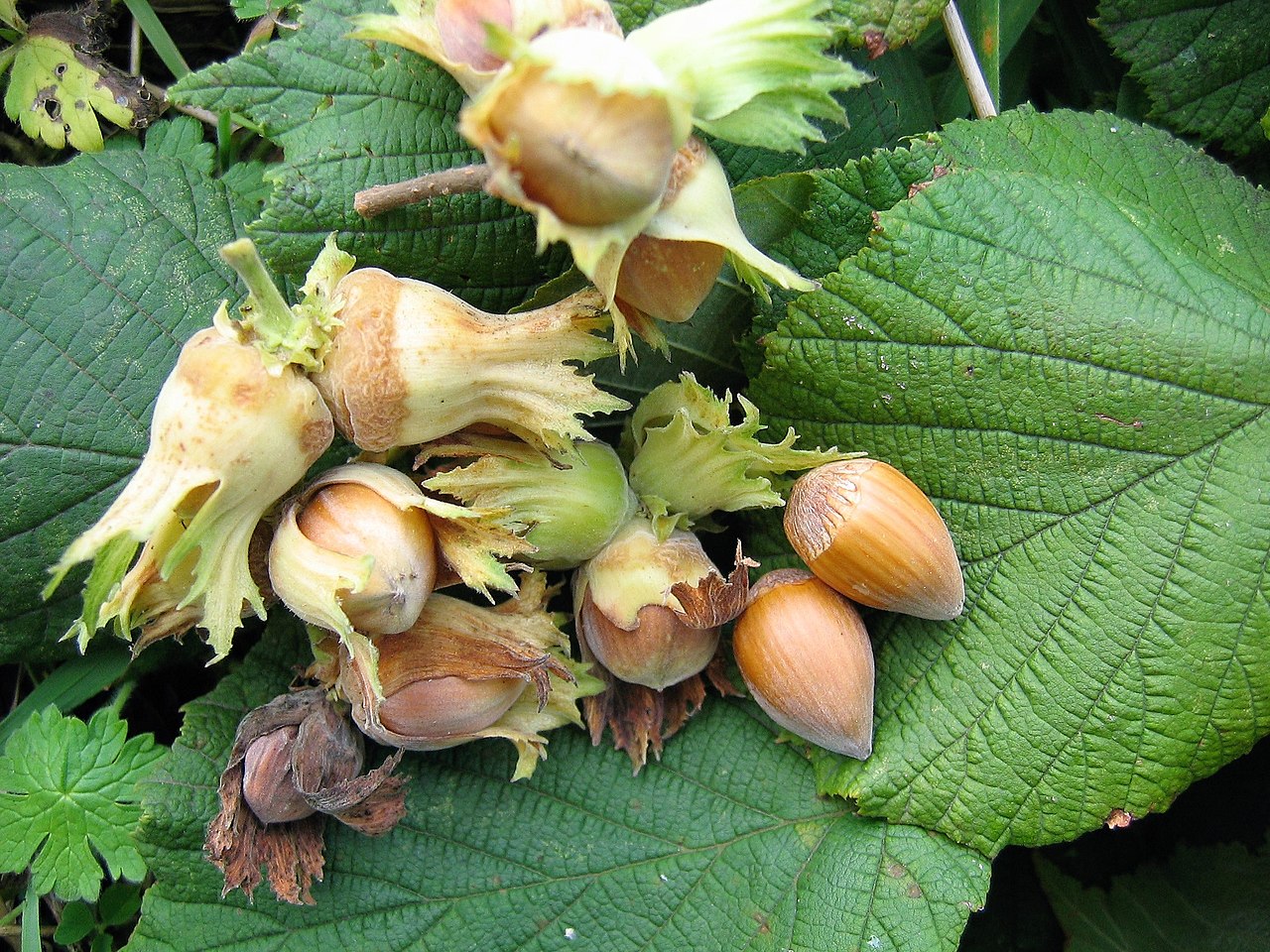
Water requirement is not the same in all phenophases. The greatest caution is required during the period from intensive shoot growth to kernel filling and ripening. The calendar below combines the foliar-phenological division from the corpus with general irrigation principles (timing is for continental Croatia and shifts with cultivar and location).
| Stage (approx.) | Period | Drought Sensitivity | Water Guideline |
|---|---|---|---|
| Vegetation break, bud burst | mid IV. – early V. | moderate | maintain moisture, do not allow early stress |
| Intensive vegetation and pollination (~45 days) | V. – VI. | high | regular irrigation; positively affects growth and fruit size |
| Fruit set and filling (~30 days) | VI. – VII. | very high — critical | uninterrupted; deficit reduces fruit number and size |
| Kernel filling (BBCH ~75–79) | VII. – late VIII. | very high — critical | irrigation in August increases kernel mass |
| Ripening and harvest | IX. – early X. | low | reduce/stop; precipitation and irrigation during harvest are harmful |
| Post-harvest, before leaf fall | X. | low | one irrigation if needed for regeneration |
The critical months in the hazelnut life cycle are June, July, and August — this is when main fruit growth and kernel filling occur, and a water deficit in this period affects both quality and yield of the following year. From practice: irrigation in June affects fruit growth and size, while in August it affects kernel weight. Conversely, under some Italian conditions, lack of water can cause fruits to drop by up to 62 % — showing how risky it is to miss critical phases.
Young orchard advantage
In the first and second years, the soil under the sapling must not dry out. Irrigation immediately after planting (approximately ~10 l per sapling, some sources 30–50 l per tree with 6–7 irrigations per season) is crucial for establishment and preventing stunted growth. Figures are informative and depend on soil, sapling size, and weather.
Evapotranspiration and water balance
Evapotranspiration (ET) sums evaporation from the soil and transpiration from the leaf and represents the "consumption" of water by the orchard. The water balance method (ET-based scheduling) works as follows:
- From meteorological data (or a local agrometeorological station), obtain the reference evapotranspiration ETo.
- ETo is multiplied by the crop coefficient (Kc) which depends on species and development stage: ETc = ETo × Kc. Kc is low at the start of the season (mostly soil evaporation), rises to full leaf cover, and declines towards the end of the season.
- Water balance: irrigation need = ETc − effective precipitation − soil moisture reserve.
- The dose is delivered in increments so as not to exceed the allowable moisture deficit (MAD).
The principle is universal (FAO 56), but specific Kc values specifically for hazelnut cannot be reliably cited from the available corpus — obtain them from local trials or advisory services. Until you have them, the water balance serves as a first estimate, with fine adjustment made by soil moisture measurement.
A useful reference figure from literature: for hazelnut, a region with a hydrometric coefficient of around 1.25 (ratio of precipitation to heat) is considered favorable. A lower coefficient (hot and dry) means a higher irrigation need.
Soil moisture measurement — field control
Soil moisture measurement is the most reliable "control instrument" for the schedule. In Croatian studies, it is explicitly recommended that water quantity be adjusted according to plant requirements and the evapotranspiration coefficient, and determined by soil moisture meters — tensiometers or digital meters (watermark sensors).

What to measure and with what
| Device | Measures | Practical Use |
|---|---|---|
| Tensiometer | tension (suction potential) of water, in centibars (cbar/kPa) | classic for sandy-loam soils; directly shows how much "pull" the plant exerts on water |
| Watermark / electrical resistance sensor | moisture via resistance of a gypsum block | more robust over a wider moisture range; easy to log |
| Capacitive / FDR sensors | volumetric water content (%) | continuous monitoring by depth, connection to automation |
How to read centibars
High values in centibars indicate dry soil (higher tension). From Croatian agrometeorological practice: when the reading in the plow layer (approx. 20 cm) reaches 180–200 cbar and remains high even after light to moderate rain, it is a significant water deficit. This is already late — irrigation should have started much earlier.
Approximate thresholds (informative; adjust to soil and cultivar):
| Reading (cbar) | Soil State | Action |
|---|---|---|
| 0–10 | saturated / post-irrigation | do not irrigate; danger of waterlogging |
| 10–30 | sufficiently moist | monitor |
| 30–60 | approaching threshold | prepare irrigation, especially in critical phase |
| 60–100 | drought stress beginning | irrigate |
| >100 (up to 180–200) | significant deficit | urgent irrigation; plant is already suffering |
Sensor placement
Place sensors in the main root mass zone (hazelnut is shallow-rooted) and at at least two depths (e.g., ~20 and ~40 cm) to see if water reaches deeper roots. Measure in the wet zone of the drip line, and place a control sensor outside it. The physical properties of the soil (retention capacity, porosity) are best determined by analyzing undisturbed samples from depths 0–30 and 30–60 cm.
System and method of water delivery
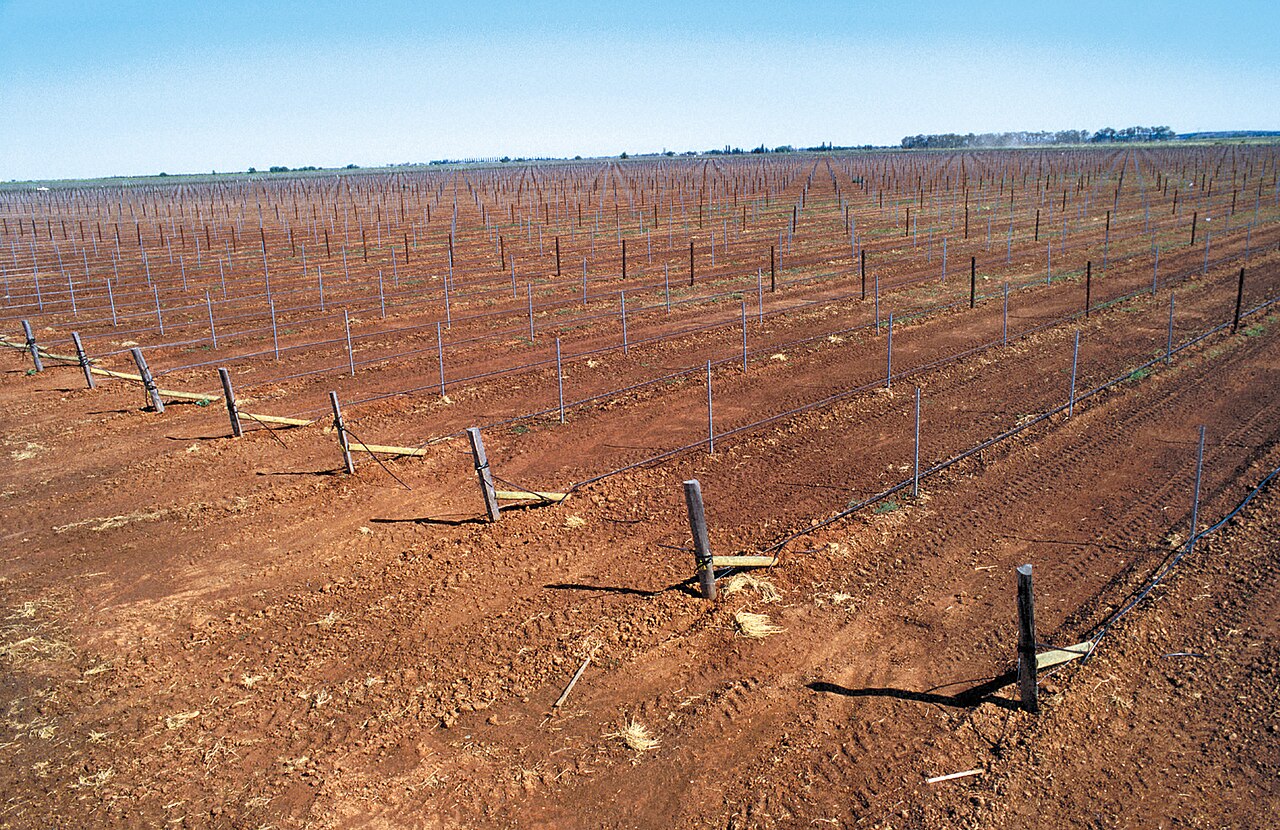
In Croatian practice, localized "drip-to-drip" irrigation is used almost exclusively, above-ground on the first wire. Advantages: low water and energy consumption, only the zone near the plant is moistened (inter-row remains dry, easier harvest and less weed growth in the row), precise dosing, and possibility of automation.
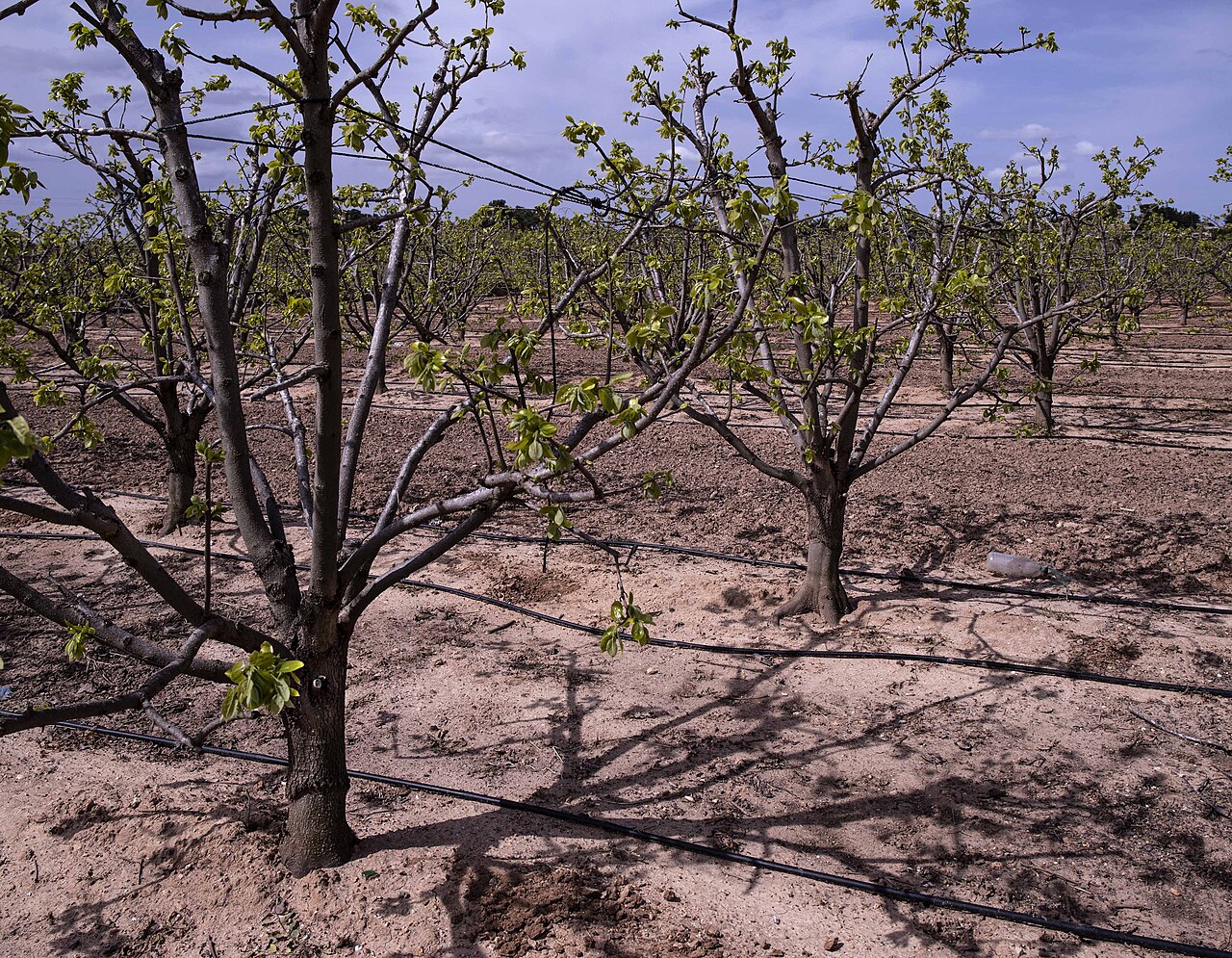
Frequency and increments from the corpus (informative):
- Irrigation frequency depends on soil — approximately every 1–3 days with drip on lighter soils.
- Elsewhere, increments of 1–2 times per week are cited (e.g., Nova Kapela, ~0.03 l/s average; period IV.–VIII.).
- Sizing example (Glina): the system operates in 5 shifts with a maximum flow of 12.8 m³/h to achieve ~3 mm daily.
- Traditional minimum: ensure at least 2–3 irrigations during vegetation where irrigation is not daily — better than nothing, but far from optimum for full yield.
Lighter, sandy soils require more frequent and smaller increments; heavier, clay soils require less frequent and larger increments (with care to avoid water retention). Furrow irrigation is avoided due to difficult harvest and uneven moisture.
Example of a Practical Seasonal Schedule
The following framework combines phenophases, ET estimates, and moisture thresholds (all informational; adjust to local data):
| Month | Phenophase | Goal | Trigger / Threshold | Typical Irrigation Event |
|---|---|---|---|---|
| IV. | Vegetative growth start | Initial moisture | Sensor 30–40 cbar | Smaller, as needed |
| V. | Intensive growth, fruit set | No stress | Maintain <40 cbar | Regular, 2–3×/week or daily on light soils |
| VI. | Nut filling (critical) | Maximum supply | Maintain <30–40 cbar | Largest events of the season |
| VII. | Kernel filling (critical) | No interruption | Maintain <40 cbar | High volumes |
| VIII. | Kernel filling/kernel weight (critical) | Kernel mass | Maintain <40 cbar; ET highest | High volumes |
| IX. | Ripening/harvest | Dry the soil | Reduce/stop | Minimal or none |
| X. | Post-harvest | Regeneration | As needed | Possibly one irrigation event |
Practical Recommendations and Common Mistakes
- Do not wait for visible stress. When leaves wilt or the soil cracks, the deficit has already occurred. Rely on sensors and phenophases, not impressions.
- Do not interrupt irrigation in June–August. These are the phases that determine the number, size, and mass of the kernel — and next year’s yield.
- Do not irrigate during harvest. Rainfall and irrigation from early September to mid-October are harmful (quality, drying, diseases).
- Watch out for overwatering. Hazelnut requires moisture, but excess water also has a negative effect; adhere to the upper thresholds and do not keep the soil permanently saturated.
- Two tools are better than one. The ET balance provides the plan, the sensor corrects it. A calendar alone without measurement easily misses the actual soil state.
- Young orchards are a priority. In the first two years, the soil under the sapling must not dry out.
- Lighter soils = more frequent events. Shallow root system + light soil means low moisture reserve; better small amounts and more frequently.
- Keep records. Record readings, irrigation events, and rainfall; from this, you will derive realistic Kc values and thresholds for your orchard.
Sources
This article is an AI summary from an internal collection of hazelnut literature (RAG corpus) and public sources. Dosages, timings, and thresholds are informational and depend on cultivar, soil, climate, and current regulations — consult an advisory service before application. Main sources used:
- Environmental Protection Study — hazelnut orchard and groundwater abstraction, Donji Hrastovac, Municipality of Sunja (2021) — recommendation for soil moisture meters (tensiometers, watermark), frequency 1–3 days, critical phases VI.–VIII.
- Environmental Protection Study — hazelnut orchard ~40 ha, Municipality of Vojnić / AGRO UTINJA (2021) — consumption up to 3,880 m³/year, period IV.–VIII., "drip by drip" system.
- Study — water abstraction for hazelnut orchard, Glina (2022) — need 350–400 mm, net ~100 mm, 5,200 m³, ~3 mm/day, 5 shifts, 12.8 m³/h.
- Study — water abstraction, Nova Kapela (2021) — ~900 m³/year, events 1–2×/week, ~0.03 l/s.
- Study — groundwater abstraction, Dragodinac (2021) — significance of localized irrigation, shallow root system, moisture in all phases.
- "Hazelnut" / "Hazelnut" — Vrtlarica.com — annual 800–1200 mm, vegetation 350–400 mm, effect of June and August. https://www.vrtlarica.com/ljesnjak/
- "Hazelnut plant" — Moj Vrt — water and moisture needs throughout the year, sensitivity to drought.
- Agrimatco — Expert Advice: Hazelnut — foliar-phenological division of the season (5 phases).
- "Guide to Foliar Fertilization of Hazelnut 2021" — gnojidba.info. https://gnojidba.info/wp-content/uploads/2022/06/Vodic-za-folijarnu-gnojidbu-lijeske-2021.pdf
- "Technology and Economic Efficiency of Organic Cultivation" and "Investment Study — Hazelnut-based Products (2019)" — water requirements 800–1200 / 350–400 / 280 mm; role of water in the plant.
- "Impact of Low Temperatures on Frost Damage" (2021) — hydrothermal coefficient ~1.25; 2–3 irrigations during vegetation.
- "Protection of Hazelnut" / "Cultivation of Hazelnut — Agromeliorative Fertilization" — irrigation V.–VIII., fruit loss up to 62% due to drought.
- Ministry of Agriculture — Advisory Service: Recommendations and agrometeorological conditions for permanent hazelnut orchards (soil moisture 180–200 cbar, soil temperature at 10 cm up to 34.1 °C). https://savjetodavna.mps.hr/2025/07/17/preporuka-vlasnicima-trajnih-nasada-lijeske-14/
- FAO Irrigation and Drainage Paper No. 56 — Crop Evapotranspiration (ETo, Kc, ETc, double coefficient). https://www.fao.org/4/x0490e/x0490e0b.htm
- UMN Extension — Evapotranspiration-based irrigation scheduling (water-balance method). https://extension.umn.edu/irrigation/evapotranspiration-based-irrigation-scheduling-or-water-balance-method
Recommended equipment
🔎 drip irrigation kit — Amazon →Affiliate links — we may earn a small commission at no extra cost to you.
Drip Irrigation Kit
Suitable for small to medium orchards or gardens.
| Use Case | Option Type | What to Check Before Purchase |
|---|---|---|
| Small plots | Basic drip lines | Emitter spacing and flow rate |
| Medium orchards | Complete kit with filters | Pressure regulation and filtration quality |
| Large scale systems | Professional installation | Hydraulic calculation and zoning |