Hazelnut bud mite (Phytoptus avellanae)
Content generated by artificial intelligence — verify before application
This article was automatically compiled from a collection of hazelnut literature using artificial intelligence and may contain errors or outdated information. It serves as a starting point for further research, not as professional advice. Dosages, products, and timing are informative and depend on the cultivar, location, and applicable regulations — always consult with an advisory service and official sources before application.
Hazelnut bud mite (Phytoptus avellanae, synonym Eriophyes avellanae; English filbert bud mite or hazelnut big bud mite) is one of the most common and economically significant animal-origin pests in hazelnut orchards. In many orchards, it attacks nearly one-third of all buds annually, meaning producers must regularly implement control measures. The pest is extremely small and invisible to the naked eye, but the symptoms — swollen, thickened buds — are so characteristic that they are easy to identify in the orchard. This article consolidates a description of the pest, its life cycle, symptoms and damage, and strategies for control using acaricides, sulfur-based preparations, and pruning, with a look at the so-called „Cecidophyopsis complex“ which is now linked to the appearance of hazelnut big buds.
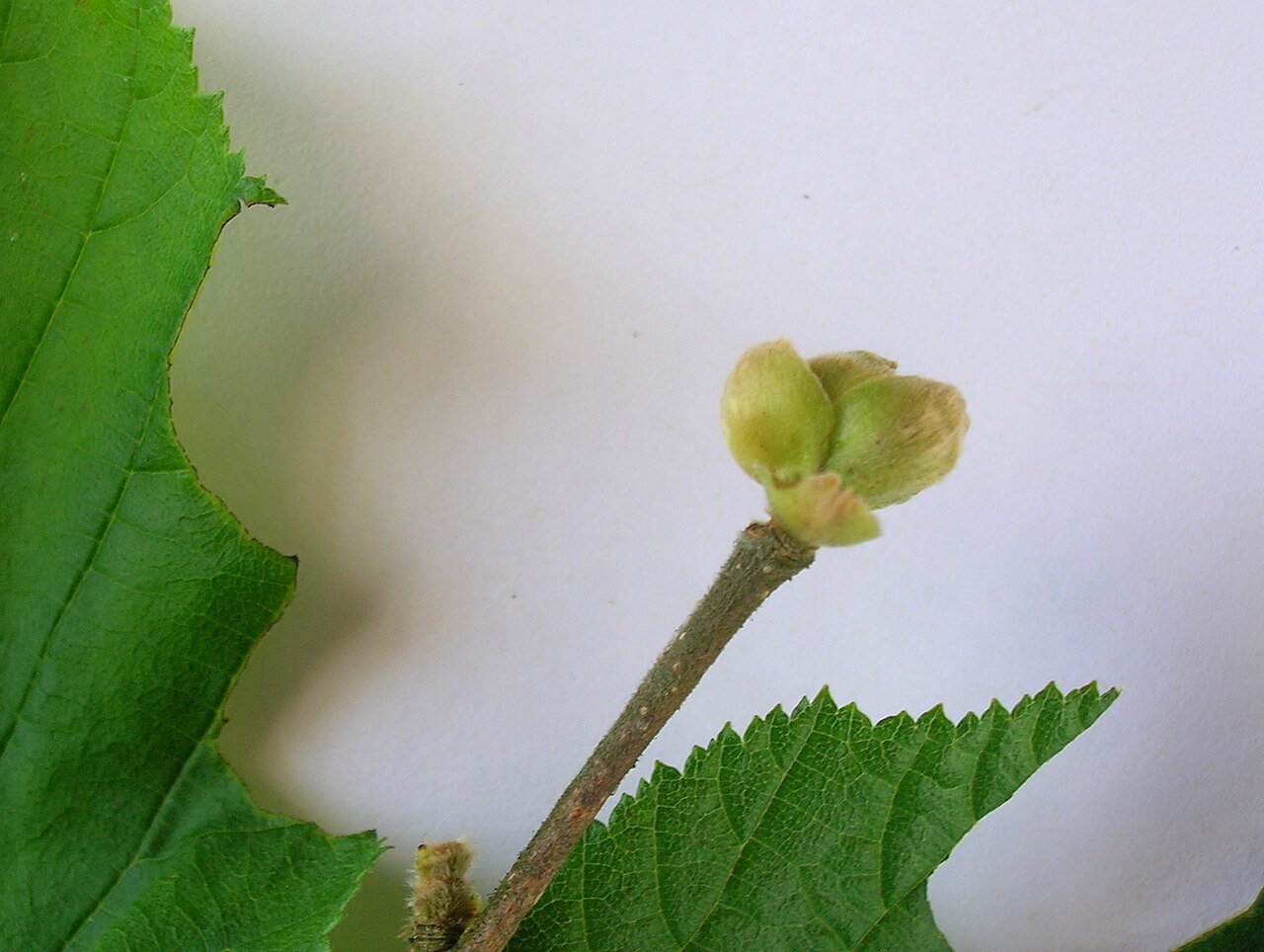
What is the hazelnut bud mite?
The hazelnut bud mite belongs to the family Eriophyidae — a group of extremely small phytophagous mites that cause deformations, galls, and warts on plants. In terms of characteristics, it differs significantly from mites in the „red spider“ group (Tetranychidae):
| Characteristic | Hazelnut bud mite (Phytoptus avellanae) |
|---|---|
| Size | approx. 0.2 mm — visible only with a magnifying glass (lens) of 20–30 times or a microscope |
| Color | white to almost transparent |
| Body shape | elongated, worm-like |
| Number of legs | only two pairs (unlike four pairs in „red spiders“) |
| Mouthparts | for piercing and sucking plant juices |
| Habitat | inside hazelnut buds |
| Host range | monophagous — species from the Betulaceae family, primarily Corylus avellana, but also C. colurna, C. maxima, C. americana |
The mite is widespread in almost all areas of Europe where hazelnuts are grown, and has been recorded in the USA, Turkey, Georgia, and Serbia. In Croatia, it is a very common pest in Istria, as well as in most other regions. Besides in production orchards, severe infestations are also observed on ornamental hazelnuts; for example, in Zagreb, on the ornamental cultivar Corylus avellana 'Contorta', it was recorded during winter that in spring, up to 50% of buds did not leaf out, resulting in shrubs with a sparse canopy and poor appearance.
Symptoms and identification
Although the mite itself is difficult to spot due to its small size, the damage in the orchard is clearly visible because the mite causes swelling and deformation of the buds in which it lives.
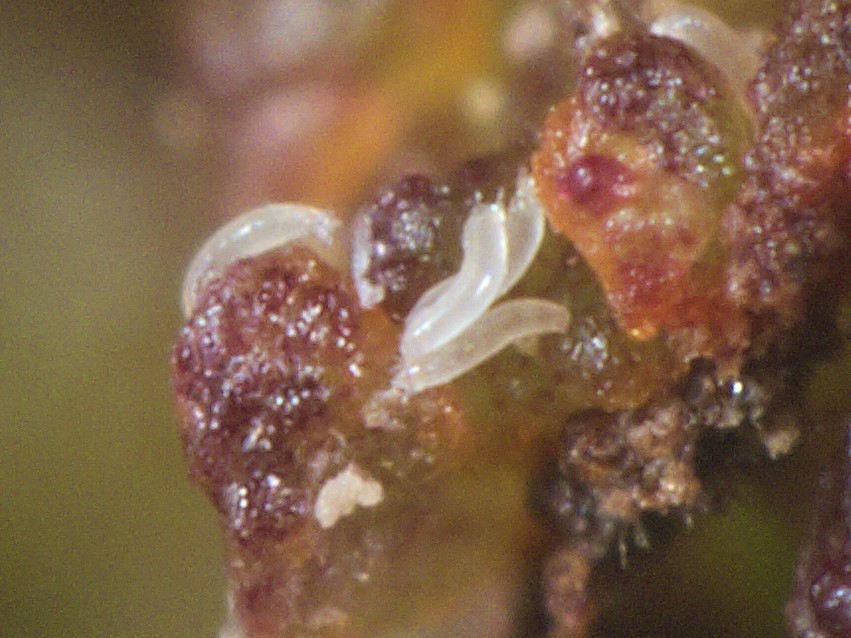
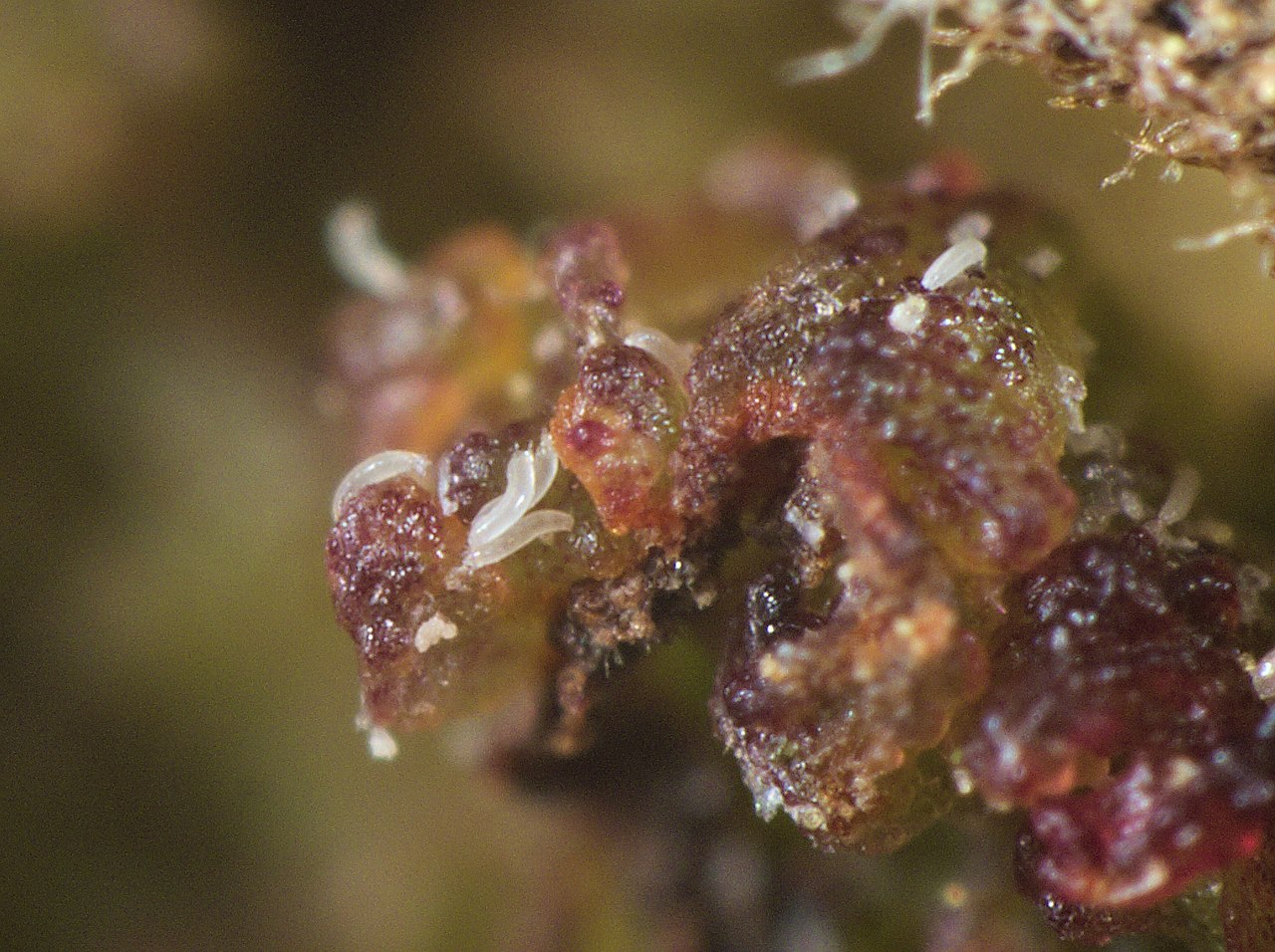
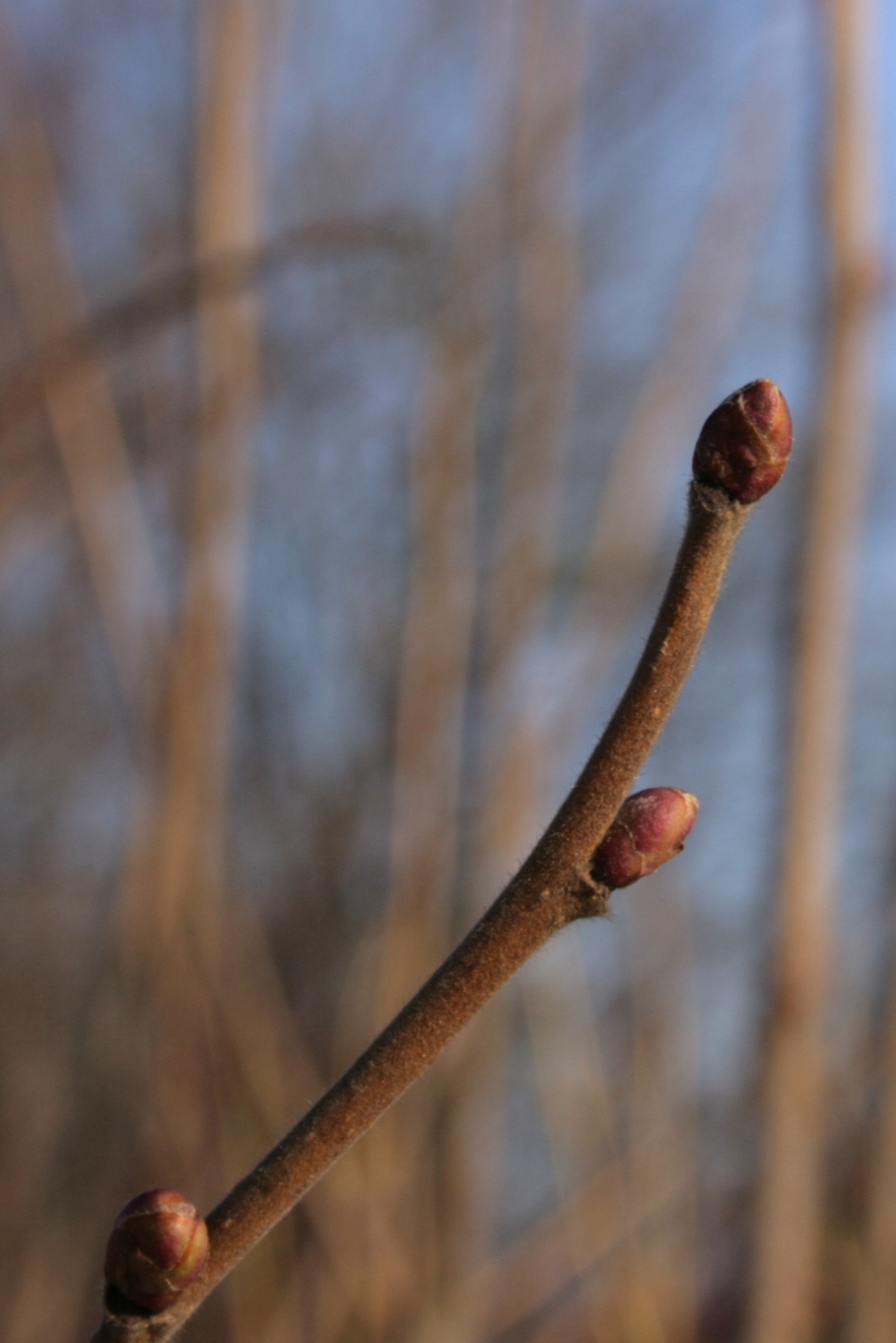
Main symptoms:
- Swollen, thickened buds — infested buds are much larger than healthy ones (so-called „big buds“). In a cross-section of a swollen, deformed bud, a very large number of mites can be found with the help of a magnifying glass.
- Buds do not open or develop deformed, stunted, pale-yellowish leaves that eventually dry out.
- Change in bud color — during autumn and winter, a dark, reddish color is observed on infested buds.
- Early drop — buds infested in autumn drop early the following year, allowing the mites to spread to new buds.
- Reduced growth of shoots, twigs, and leaves where the crop for the next year is formed.
Symptoms are more pronounced during humid and cooler spring days. The best time for inspection and identification (as well as for the decision threshold for control) is late winter / early spring, when swollen buds are clearly distinguishable from healthy, spindle-shaped buds.
Life cycle
Understanding the cycle is crucial for control, as the mite spends most of its life protected inside the bud, where it is almost inaccessible to plant protection products.
| Stage | Period | What happens |
|---|---|---|
| Overwintering | winter | Adult (fertilized) females overwinter inside swollen buds |
| Activation | late winter / early spring | At the end of winter and beginning of spring, mites begin to feed intensively by sucking juices and reproduce |
| Reproduction | spring | Living in the bud for a little over a month, the mite can reach up to 1000 new offspring |
| Egg laying | early March – April | Mass egg laying inside buds |
| Migration | spring (when 5–10 leaves are developed) | Mites move from infested buds to new buds; migration is most intense when the hazelnut has 5–10 developed leaves, i.e., when 3–5 new buds form on the new summer shoot |
| Population peak | late summer | Highest abundance and greatest damage |
The mite has multiple generations (cohorts) during the season — it can reach up to six generations annually. It is precisely the phase of migration from old to new buds that is the only moment in the cycle when the mite is exposed on the plant surface and when control is effective.
Damage and economic significance
Damage occurs directly through bud death and indirectly through the loss of new shoots, which slows plant growth and reduces fruitfulness in subsequent years (as the crop for the next season forms on healthy shoots).
- In sensitive cultivars and older orchards, bud damage can reach up to 20–30 %.
- In many Croatian orchards, the mite regularly attacks nearly one-third of all buds.
- Data from Georgia indicate that production losses in extreme cases can reach up to 90 %.
Yield depends directly on the intensity of infestation: the higher the percentage of infested buds, the less growth of shoots and twigs, and thus the weaker the crop the following year.
Cecidophyopsis complex and „two forms“ of mite
The appearance of hazelnut big buds was long attributed exclusively to the species Phytoptus avellanae. Current research shows that this is a complex of species and that several eriophyid mites contribute to the appearance of „big buds“ (English big bud mites).
It was already noticed earlier that the hazelnut bud mite comes in two forms:
- Form that causes galls/warts — lives and feeds inside buds, causing their deformation (swollen „big buds“).
- „Vagrant“ form — does not cause visible bud deformation although present in them, and feeds on vegetative and generative organs of the hazelnut.
Recent research in Turkey, Georgia, and Serbia has confirmed significant morphological differences and differences in the life cycle between these two forms, so it is now considered that these are actually two different species of pest mites. In international literature, „big bud mite“ on hazelnut usually encompasses two species:
- Phytoptus avellanae — considered the main species responsible for the formation of big buds and production losses;
- Cecidophyopsis vermiformis — often present together with P. avellanae, and is primarily linked to the „vagrant“ form.
For the producer, the practical message is that both species are controlled with a similar approach (targeting the migration phase), but exact identification requires microscopic or molecular analysis and is not necessary for making the decision to treat.
Monitoring and decision threshold for control
The decision to control is based on bud inspection:
- When: inspection in February (end of vegetative dormancy), when swollen buds are clearly distinguishable from healthy ones.
- Sampling: one sample consists of 100 buds; a representative number of trees in the orchard is inspected.
- Decision threshold (damage threshold): control is recommended when about 10 % infested buds are identified.
Winter inspection of the orchard (taking twigs about 20 cm long) can also be used to monitor the abundance of other pests (aphids, red spider mite, scale insects), making it a good opportunity for a comprehensive assessment of the orchard condition.
Control
Controlling hazelnut bud mites is not straightforward because:
- the mite spends the majority of its life protected inside the bud, where acaricides hardly reach it, and
- in Croatia, there are no (sufficient) registered effective acaricides specifically intended for this pest.
Therefore, effective control relies on proper timing (migration phase), the indirect effect of sulfur-based products, and mechanical measures (pruning).
Timing — the most important factor
Since the mite is only accessible while it migrates from old to new buds, spraying must target this specific period. According to the literature:
- it is optimal to treat during the phase of mass migration of mites from infested to new buds, at air temperatures higher than 15 °C;
- this period practically corresponds to the phase when 3–5 new buds form on the one-year-old shoot (the hazelnut has 5–10 developed leaves);
- in developed countries, the basic approach is to apply an acaricide when mites colonize new buds (approximately in July), as application at the end of winter or early spring is already too late for the mite itself;
- research in New Zealand shows that the greatest effect was achieved by spraying at approximately 62 % accumulated emergence (emergence) of mites from overwintering large buds — i.e., slightly before the peak of migration.
Dual role of early spring spraying
Early spring spraying with sulfur-based products (during bud swelling and opening) is part of standard early spring hazelnut protection (together with copper-based products against bacterial diseases). For the mite itself, however, the decisive phase is migration — the best results are achieved when this period is caught, not just the earliest possible date.
Sulfur-based products (indirect acaricidal effect)
Sulfur fungicides have a proven side (secondary) effect on hazelnut bud mites and are practically the foundation of hazelnut mite control in Croatia. The advantages of sulfur are low toxicity to mammals, a milder effect on beneficial fauna, and approval for organic production.
In Croatia, three sulfur-based products are traditionally cited for hazelnut mite control: KUMULUS DF, CHROMOSUL 80, and MICROTHIOL SPECIAL DISPERSS (Cosavet, Thiovit Jet, Kalinosul, Kossan, etc. are also mentioned in the literature).
| Product (active ingredient) | Dose / concentration (informative) | Note |
|---|---|---|
| CHROMOSUL 80 (sulfur) | 0.5 % (500 g / 100 L water); on warmer days up to 0.5–0.6 % | Often combined with a copper-based product in early protection |
| MICROTHIOL SPECIAL DISPERSS (sulfur) | approx. 3–5 kg/ha | Registered for hazelnut mite; pre-harvest interval limited by application timing (early spring) |
| KUMULUS DF (sulfur) | according to label | Sulfur fungicide with side effect on mites |
| Increased sulfur concentration | up to 2 % at temperatures of 15–20 °C | Warmer days increase the efficacy of sulfur |
A common combination in early spring protection is CUPRABLAU Z 0.5 % + CHROMOSUL 80 0.5 % (copper against bacterial diseases + sulfur with side effect on the mite), and both products are approved for organic production. On warmer days (15–20 °C), higher concentrations of sulfur fungicides (approx. 2 %) are effective.
Doses are informative and depend on the cultivar, location, product formulation, and current registration/label. Before application, always check the current status of the product in the FIS database (Phytosanitary Information System, fis.mps.hr) and follow the instructions on the label.
Acaricides
Most acaricides registered in fruit growing against mites from the "red spider mites" group (Tetranychidae) are not sufficiently effective against hazelnut bud mites. In the literature, active substances/products with a pronounced effect on bud mites are cited, e.g., fenazaquin, and (historically) Ortus SC, Demitan SC, and Acarstin 600 SC — but their availability and registration are variable (fenazaquin, for example, has been restricted in horticulture in recent years to ornamental species). Endosulfan-based products, once used, have been withdrawn from use.
In international trials, sulfur (80 % WP) proved almost as effective as endosulfan (approx. 83 % reduction), with the advantage of lower toxicity — further confirming sulfur as the primary tool for this pest.
Check registration
The list of approved acaricides and sulfur-based products, as well as their application on hazelnut, changes frequently. The mentioned product names and active substances are informative; before each application, check the current registration in the FIS system and with the advisory service.
Pruning and mechanical measures
Pruning and mechanical removal of infested buds directly reduce the source of infestation, especially in smaller orchards and ornamental hazelnuts:
- Removing and destroying deformed (swollen) buds is recommended in smaller orchards — this removes a large number of mites before migration.
- Winter pruning by removing and burning heavily infested twigs with large buds reduces the population for the next season.
- Removed plant material should be taken out of the orchard and destroyed, not left in the rows.
Biological and low-risk control (in research)
Recent research is investigating the application of entomopathogenic (arthropod-pathogenic) fungi as low-risk measures against hazelnut mite. Results are currently in the phase of laboratory and field trials and are not yet a standard recommendation for practice, but they indicate a possible direction for the development of sustainable control measures.
Practical recommendations and common mistakes
Recommendations:
- Regularly inspect buds in February; make decisions based on the threshold (~10 % infested buds in a sample of 100 buds).
- Target the migration phase (3–5 new buds on the summer shoot, 5–10 leaves, temperature >15 °C) — this is the "window" when the mite is accessible.
- Use sulfur-based products for indirect effect; on warmer days, consider higher concentrations according to the label.
- In small and ornamental orchards, manually remove and destroy swollen buds and infested twigs during winter pruning.
- At planting, choose healthy, certified planting material and, where possible, less sensitive cultivars.
Common mistakes:
- Spraying too late or too early — treating only "early in spring" without monitoring the migration phase often misses the moment when the mite is exposed.
- Relying on acaricides for red spider mites — these are usually not effective against hazelnut bud mites.
- Neglecting pruning — chemical measures without removing the source of infestation (swollen buds) yield poorer results.
- Ignoring weather conditions — sulfur works less effectively at low temperatures; warmer days (15–20 °C) increase the effect.
- Leaving pruned material in the orchard — infested buds remain a source of mites.
Sources
This article is an AI summary compiled from an internal literature collection on hazelnut (RAG corpus) and publicly available sources. The content is informative and subject to verification. Main sources used:
From RAG corpus (hazelnut literature):
- Control of harmful organisms in hazelnut orchards — expert review (high reliability).
- What are the critical periods for hazelnut orchard protection? — advisory overview of critical phenophases and products.
- Now is the time for the first spring hazelnut protection — Chromos Agro, early spring protection.
- Current hazelnut protection — Chromos Agro d.o.o.
- Hazelnut mite – a very important hazelnut pest — description of cycle, migration, and symptoms.
- Hazelnut mite — Gospodarski list (gospodarski.hr).
- Hazelnut mite — AgroPortal.hr.
- Notice to traders/hazelnut producers — Ministry of Agriculture, Forestry and Fisheries (Advisory Service).
- Most important hazelnut pests / Hazelnut diseases and pests — overview papers (decision threshold, generations).
- Phytophagous mites of woody plant species in urban greenery of Zagreb (Matošević) — occurrence on ornamental hazelnut.
- Annual hazelnut treatment plan — Gospodarski list (tables of approved products).
- FIS — Phytosanitary Information System, database of registered products: fis.mps.hr.
Public (web) sources:
- Pacific Northwest Pest Management Handbooks — Hazelnut-Filbert bud mite: pnwhandbooks.org
- Timing of sulphur spray application for control of hazelnut big bud mites (Phytoptus avellanae and Cecidophyopsis vermiformis) — New Zealand Plant Protection: journal.nzpps.org
- Suggestions for the management of hazelnut big bud mites in New Zealand: hazelnut-growers.org.nz
- Efficiency of pesticides against big bud mites [Phytoptus avellanae and Cecidophyopsis vermiformis] on hazelnut — Acta Horticulturae: actahort.org
- Can Pest Management and Cultivar Affect Phytoptus avellanae Infestations on Hazelnut? — Insects (MDPI): mdpi.com
- Phytoptus avellanae Nalepa — Hazelnut big bud mite (diagnostic protocol): plantbiosecuritydiagnostics.net.au
- Laboratory and Field Bioassays of Arthropod Pathogenic Fungi … for Control of the Hazelnut Big Bud Mite, Phytoptus avellanae s. l.: ncbi.nlm.nih.gov
Recommended equipment
🔎 pheromone insect trap orchard — Amazon →Affiliate links — we may earn a small commission at no extra cost to you.