Minor and Secondary Hazelnut Diseases (Rust, Taphrina, Cytospora, Nectria)
Content generated by artificial intelligence — verify before application
This article was automatically compiled from a collection of hazelnut literature using artificial intelligence and may contain errors or outdated information. It serves as a starting point for further research, not as professional advice. Dosages, products, and timing are informative and depend on the cultivar, location, and current regulations — always consult with an advisory service and official sources before application.
Alongside the well-known and economically most important hazelnut diseases (Corylus avellana) — bacterial blight, powdery mildew, fruit and kernel rot, and root rot — there is a whole range of minor, secondary diseases that producers rarely see described in one place. Some are true rarities in our climate (hazelnut rust, blister spot), while others were considered insignificant until recently but have gained importance in the last few years due to climate extremes and the expansion of intensive orchards (branch cankers caused by fungi from the genera Cytospora and Nectria). This article consolidates three such groups: hazelnut rust (Pucciniastrum coryli), blister spot / leaf curl (Taphrina coryli), and branch canker and breakage of scaffold branches (Cytospora / Nectria and related fungi). The goal is for you to recognize the symptoms, distinguish them from more serious diseases, and know which measures make sense.
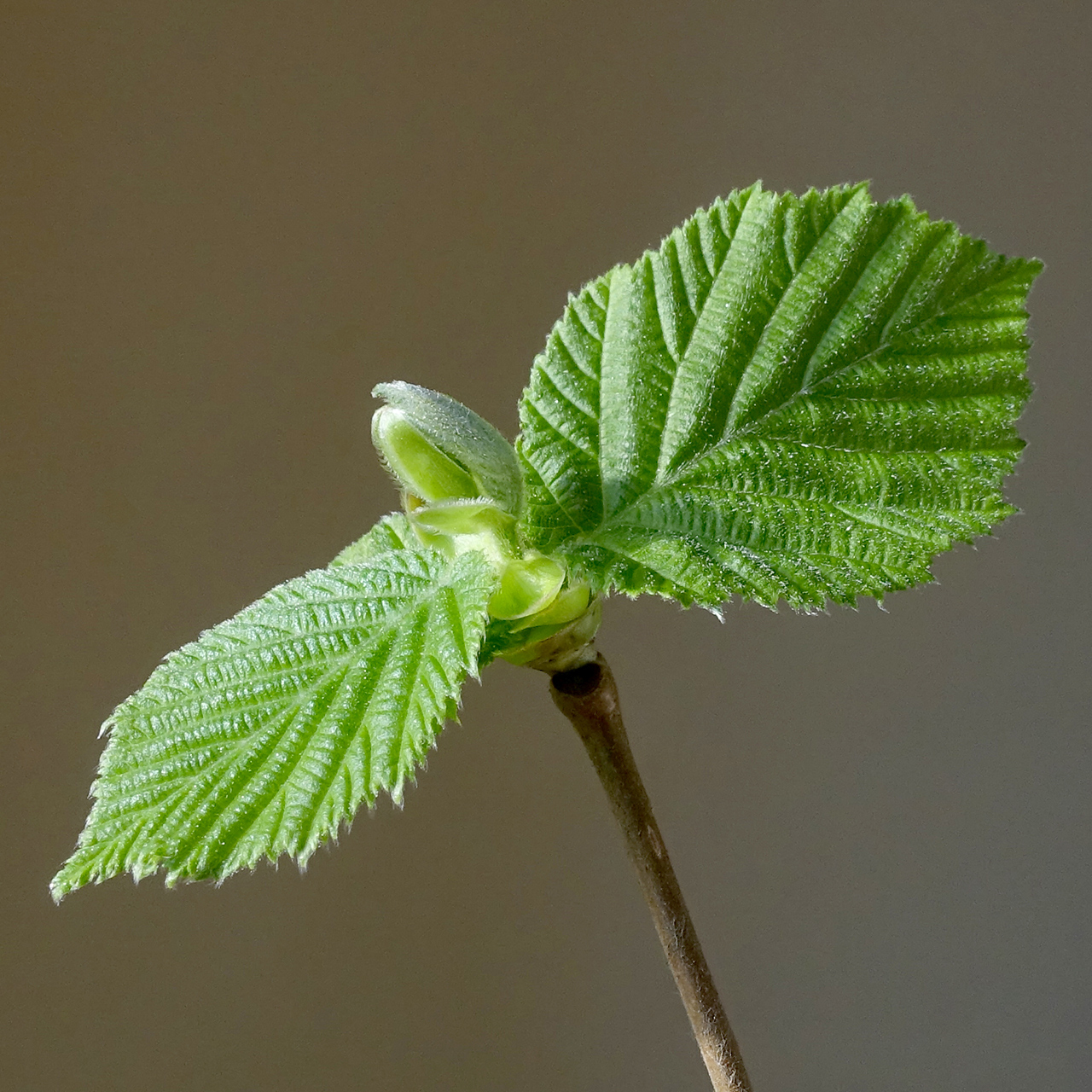
Quick Overview
| Disease | Pathogen | Main Symptom | Significance in our region |
|---|---|---|---|
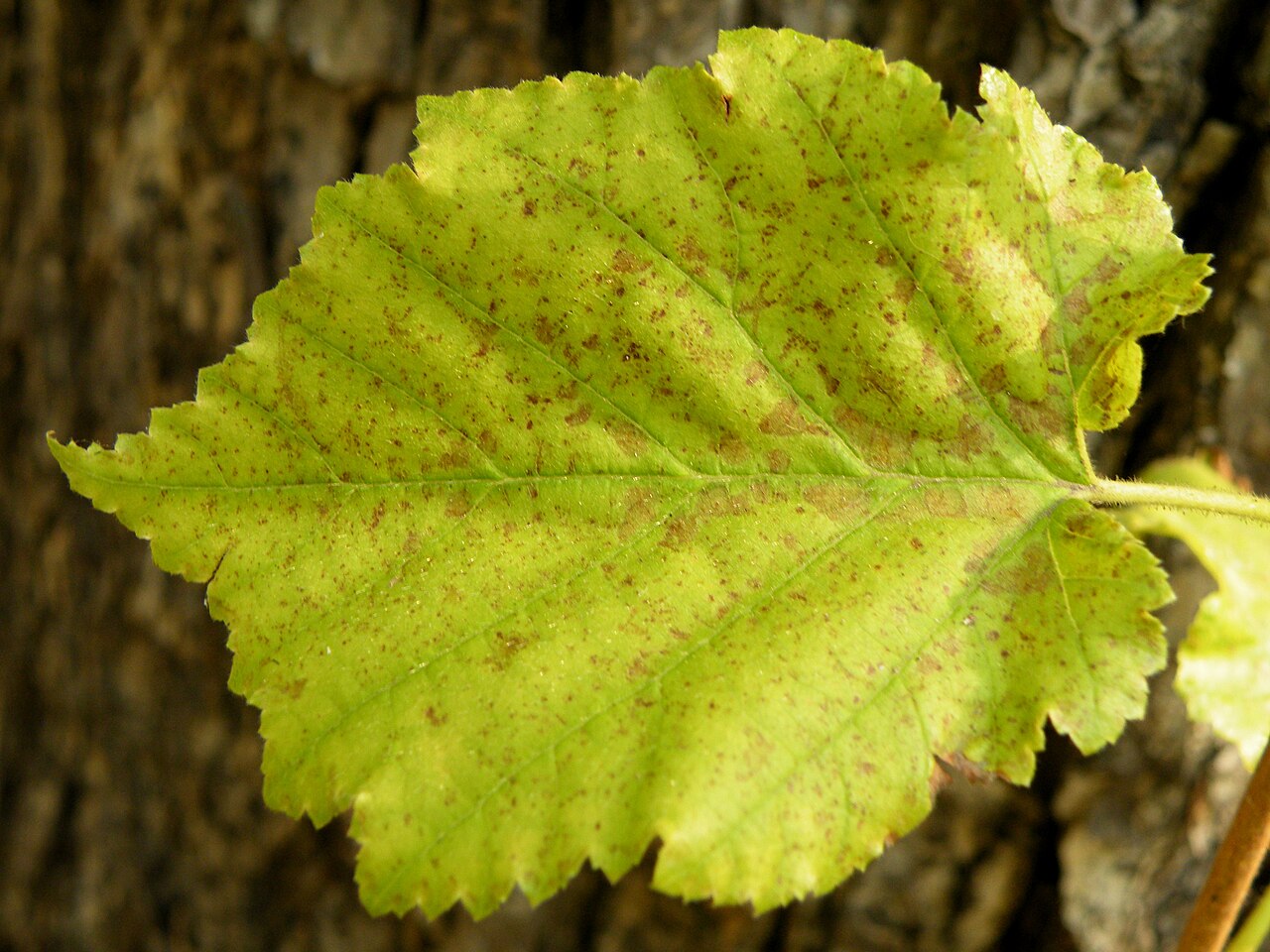
| Hazelnut Rust | Pucciniastrum coryli | orange-yellow (ochre) pustules (spore cushions) on the underside of the leaf | very rare / exotic; not a problem in HR |
| Blister Spot (Curl) | Taphrina coryli | blister-like, raised, light green to yellowish wrinkled blisters on the leaf | rare, sporadic; mostly aesthetic damage |
| Branch Canker / Scaffold Branch Breakage | Cytospora spp. (e.g., C. decipiens, C. corylicola), Neonectria ditissima (Nectria), Diaporthe/Phomopsis, Botryosphaeria | cankerous wounds on bark, red gelatinous exudate, drying and breaking of branches | increasing — growing problem in stressed orchards |
Field Rule
Orange powdery pustules on the underside of the leaf indicate rust (unlikely in our region). Raised, wrinkled "blisters" on young leaves in spring indicate Taphrina. Cankerous wounds, inflamed bark, droplets of red or reddish-brown exudate, and sudden breakage of scaffold branches in summer indicate fungal canker — this is today the most economically serious of the "minor" diseases.
1. Hazelnut Rust (Pucciniastrum coryli)
What it is and how important it is
Rusts are a group of fungi (order Pucciniales) recognizable by orange, brown, or yellow pustules (spore cushions) on leaves. Hazelnut rust is caused by Pucciniastrum coryli, a fungus that creates ochre (orange-yellow) pustules on leaves. For the Croatian grower, it is crucial to know the following: this disease is practically not a problem in European cultivation. According to available data, the range of P. coryli is largely limited to Japan, with isolated findings in China and Russia (Siberia), where it attacks mainly Asian species of the genus Corylus and, as an alternate host, some Asian species of fir (Abies). Rusts are often heteroecious — for a complete life cycle, they require two unrelated hosts.
In the Croatian RAG corpus of hazelnut literature, hazelnut rust does not appear among recorded diseases. A review paper from the Croatian Fruit Growers' Conference notes that ten fungal diseases of hazelnut have been recorded in our climate — powdery mildew, leaf spot, bud drying, brown fruit rot, kernel rot, stem breakage (Cytospora corylicola), bark canker (Neonectria ditissima), and others — but rust is not among them. Therefore, we treat it here primarily for completeness and to distinguish it from other "orange" phenomena on leaves.
Symptoms
- On the underside of the leaf, small orange-yellow to ochre pustules (uredinia) filled with powdery spores form; touching them leaves an orange trace on fingers.
- On the upper side of the leaf above the pustules, yellowish or chlorotic spots may be visible.
- Severe infection can cause premature yellowing and leaf drop, thereby weakening the bush — but this is a scenario from areas where the disease is established.
Do not confuse with other phenomena
Orange and reddish accumulations on hazelnut leaves in our region are almost always something else, not rust:
- Reddish-brown "cushions" with spores on leaves are also described in Croatian/translated literature as a symptom of spotting (e.g., Cylindrosporium / anthracnose fungi) — spots are initially reddish and then turn into yellow cushions with spores.
- Reddish outgrowths (galls) on leaves are more often the result of mites (eriophyid mites), not a fungus.
- Red gelatinous exudate is not on the leaf but on the branch bark and is a sign of fungal canker (see chapter 3).
Measures
Since hazelnut rust is not established in Croatia, no special measures are required. If it were ever to appear, general measures against rusts and leaf spots would be applied:
- Sanitary measures: collecting and removing (burning/composting outside the orchard) infected fallen leaves, as many fungi overwinter on fallen leaves.
- Crown ventilation through pruning — faster leaf drying reduces conditions for spore germination.
- Copper and other contact fungicides that are otherwise used against spotting and bacteriosis have a certain secondary effect; targeted treatment against hazelnut rust in hazelnut orchards is not registered nor justified in our region.
2. Blister Spot / Leaf Curl (Taphrina coryli)
What it is
The genus Taphrina includes fungi that cause characteristic tissue deformations — curling, blister-like blisters, galls, and "witches' brooms." The best-known representative is Taphrina deformans, the cause of peach leaf curl. On hazelnut, a related species Taphrina coryli occurs, which causes blister spot (leaf curl) of hazelnut.
The mechanism is typical for Taphrina: the fungus promotes hypertrophy and hyperplasia (increased cell growth and division) of infected tissue, so the affected parts of the leaf grow faster than the surrounding healthy tissue. The result is raised blisters (bladders) that deform the leaf blade.
Symptoms
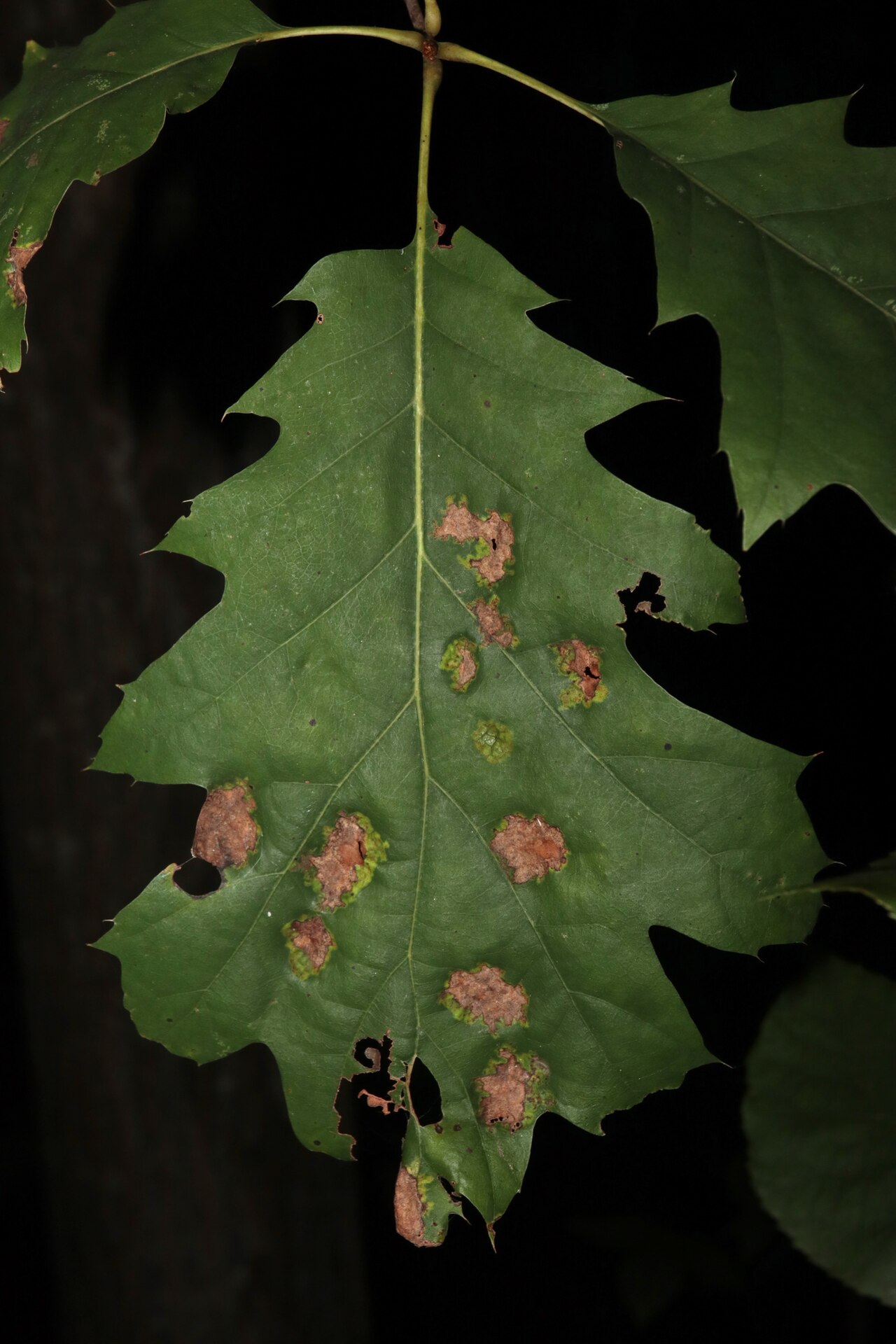
- On young leaves in spring, small blister-like, raised blisters appear, initially light green to whitish, later yellowish.
- On one side of the blister (most often on the underside), a thin, powdery fungal coating (layer of asci with spores) may develop.
- As the leaf develops, the blisters increase in size, change color, and sometimes necrotize; the leaf is wrinkled and deformed.
- The damage is usually aesthetic and local; severe, economically significant defoliation is rare.
Significance and Occurrence
Taphrina coryli belongs to minor, sporadic diseases. Foreign literature emphasizes that leaf spots and deformations of this species are less important in commercial production, and they occur more often on wild hazelnut, in hedges, and in abandoned orchards. This aligns with findings in Croatian literature that in natural forest stands, hazelnut hardly has disease problems, while monoculture plantation orchards promote them.
Distinguishing from other leaf deformations
- Blister-like blisters that grow faster than surrounding tissue → Taphrina coryli.
- Thickened, swollen, unopened buds from which stunted, pale leaves emerge → hazelnut mite (Phytoptus/Eriophyes avellanae), not Taphrina.
- Round brown spots up to 2 cm with a lightened ring zone → leaf spotting / bud drying (Gloeosporium coryli), treated in the article on powdery mildew and spots.
Measures
For Taphrina coryli in hazelnut, targeted protection is generally not performed. If it occurs frequently:
- Sanitary pruning and removal of heavily infected shoots and fallen leaves.
- Open training system and avoidance of excessive nitrogen fertilization which produces lush, sensitive shoots.
- For Taphrina diseases in fruit trees in general, copper preparations applied during dormancy / before bud burst are effective (as with peach leaf curl). On hazelnut, copper is anyway applied in the phenophase of dormancy to the appearance of the first leaves against bacteriosis, so this treatment indirectly covers any potential Taphrina. Separate treatment solely for blister spot is rarely justified.
3. Branch Canker and Skeletal Branch Breakage (Cytospora, Nectria and related fungi)
Unlike the previous two, this is a disease that is experiencing a significant increase in Croatia and the region, with producers increasingly seeking advice on it. Under the term "fungal canker of hazelnut," several different fungi with similar symptoms are grouped.
Pathogens
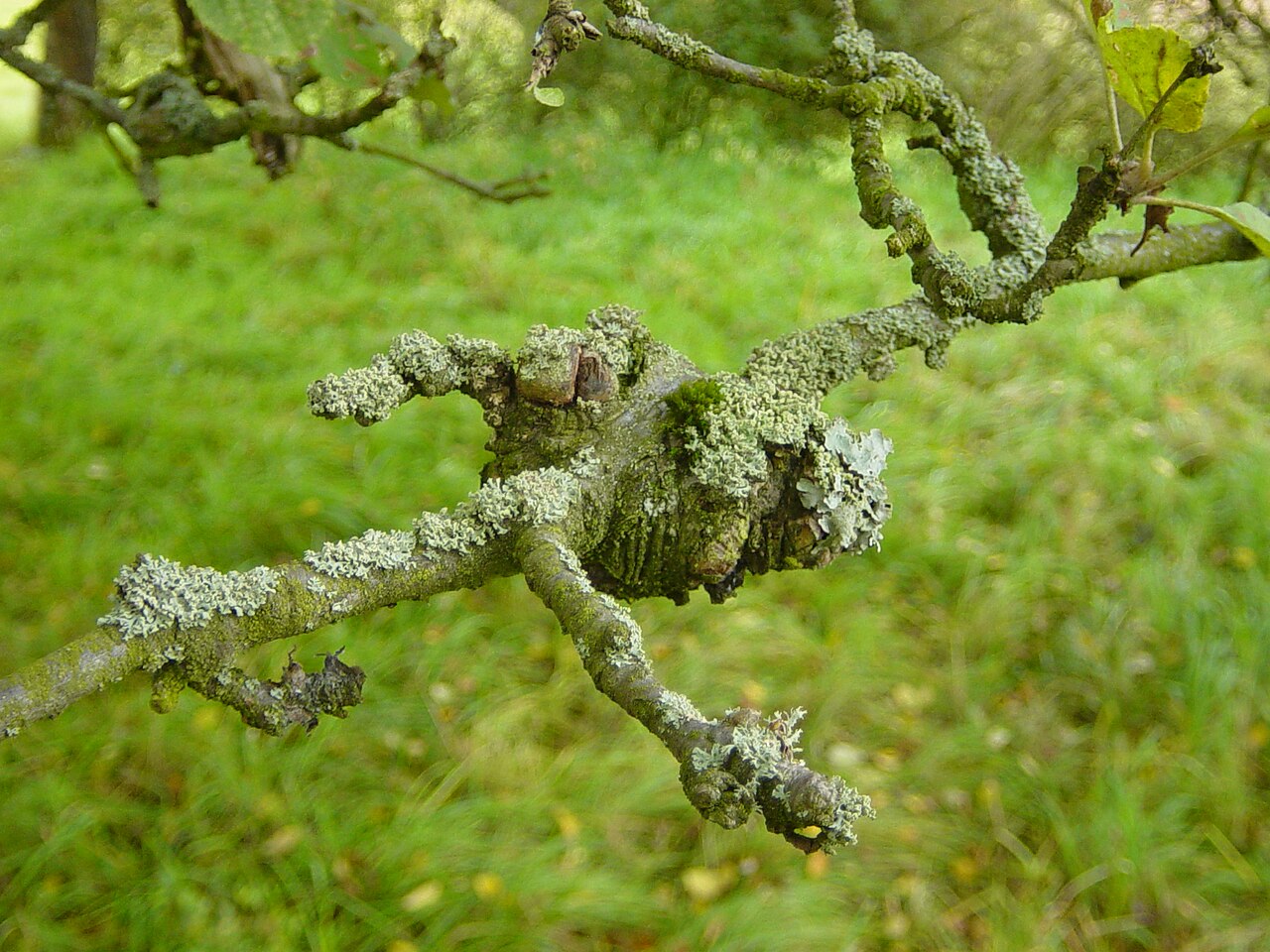
Cankery wounds and branch drying/breakage in hazelnut can be caused by:
- Cytospora spp. — in recent Croatian observations, particularly Cytospora decipiens; older literature also cites Cytospora corylicola (teleomorph Valsa) as a cause of "stem breakage." Italian experience shows that tree canker caused by Cytospora was considered a minor problem until recently, but in recent years has developed to an economically significant level, affecting even young orchards.
- Neonectria ditissima (syn. Nectria galligena, Neonectria galligena) — the classic "bark canker": cankery wounds form on the bark of branches and trunks; if the canker encircles the entire branch or trunk, that part dries out.
- Diaporthe / Phomopsis spp. and Botryosphaeria dothidea — in recent observations and studies (e.g., findings of Cytospora and Diaporthe species on hazelnut in China, as well as Croatian field observations of B. dothidea), they occur together with Cytospora on branches undergoing drying (canker & dieback complex).
Opportunistic pathogens
Most of these fungi are opportunists — they activate on plants weakened by stress. The most common triggers in the orchard are: high summer temperatures and intense insolation (sunscald), drought / lack of water, poor nutrition (especially in organic orchards), hail and stormy weather, late spring frosts, and inadequate protection against other diseases and pests. Spores (conidia) are spread by rain and wind, and enter the tissue through pruning wounds, leaf scars, damage from pests, hail, and frost, as well as through tissue damaged by other diseases.
Symptoms
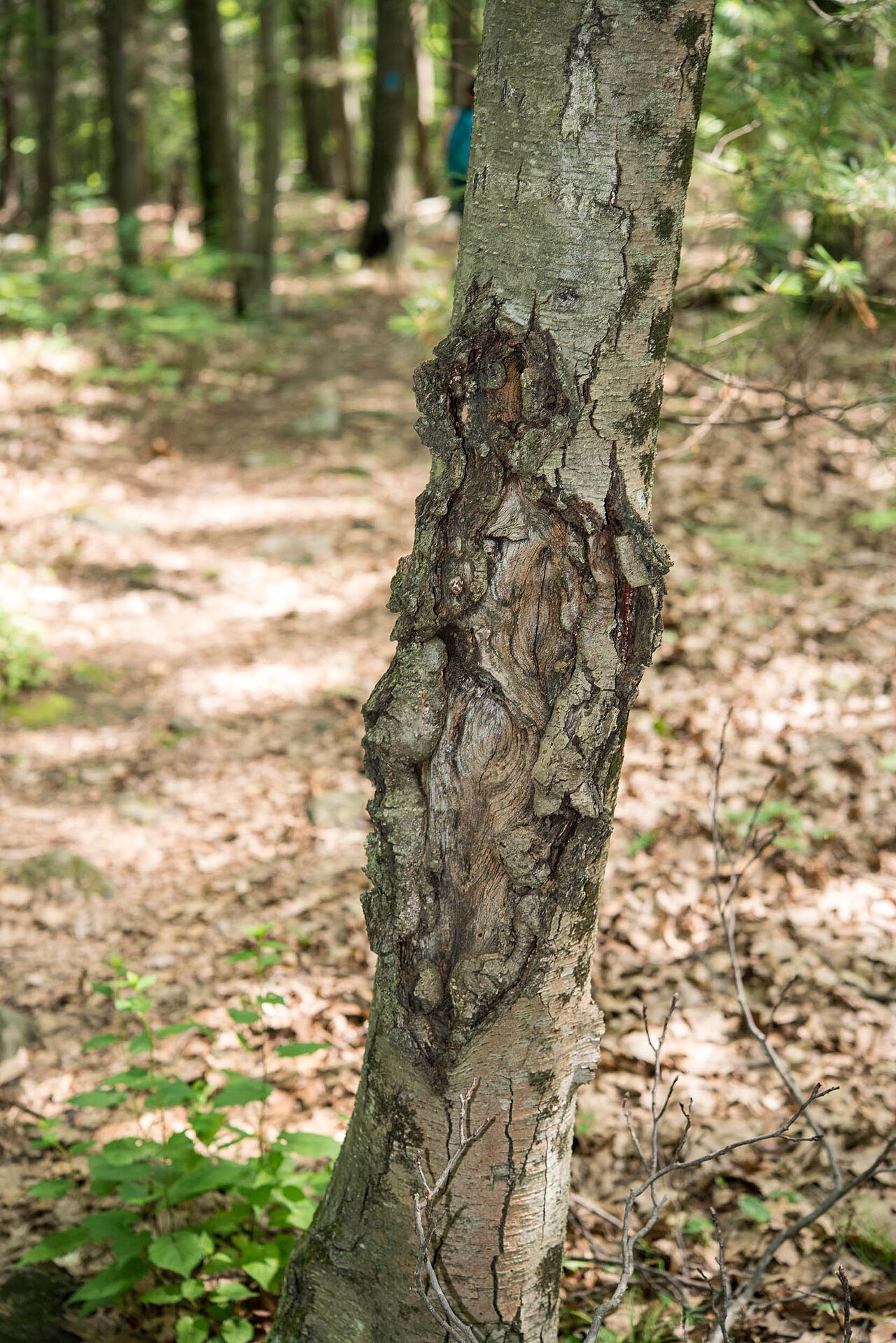
- Cankery wounds and inflammation on the bark of skeletal (primary) branches and the trunk; beneath the bark, dark necrosis is visible, diffusing into healthy tissue.
- Droplets of red (reddish-brown) gelatinous exudate on the bark — this is a very characteristic, "typical" symptom of skeletal branch infection by Cytospora decipiens described in Croatian field reports.
- Elliptical, dark lesions on the bark (when Botryosphaeria dothidea is also involved).
- Drying and wilting of the crown portion above the infected site; in advanced stages, breakage (fracture) of skeletal branches — the branch cracks and detaches under its own weight at the site weakened by the canker. With Neonectria, the canker is often sunken and concentrically cracked, and small red fruiting bodies (perithecia) may be visible on the bark in autumn/winter.
When infection occurs
For bark canker (Neonectria), the most dangerous period is leaf fall (fresh leaf scars) and the period of intensive shoot growth until mid-May; infections by ascospores and conidia can occur throughout the summer. For Cytospora and related fungi, summer stress and wounds are key — hence the branch breakage often observed specifically in June/July.
Control — focus on agronomy
There is no "magic" fungicide for branch canker; control is primarily agronomic and pomological. Croatian field recommendations cite three measures that should become standard in infected orchards:
- Reducing plant stress — irrigation during drought, hail protection, shading against sunscald, application of biostimulants and plant strengtheners, and consistent protection against other diseases and pests.
- Selective (sanitary) pruning — infected skeletal branches are cut at the base or at least 30 cm below the visibly infected part, preferably during the growing season as soon as symptoms are noticed.
- Removal and burning of pruning debris — infected wood must not be mulched and left in the orchard as it remains a source of infection; it must be removed from the orchard and burned.
Additional, long-known measures against bark canker (Nectria/Neonectria):
- Planting healthy, certified planting material when establishing the orchard.
- Intensive pruning of infected shoots and selection of a ventilated training form so that shoots do not touch each other.
- Avoiding locations prone to freezing (frost pockets), as frost creates entry wounds.
- Pruning in dry weather, disinfection of tools, and where appropriate, painting over large pruning wounds.
Chemical support (informational)
There are almost no directly registered fungicides specifically "for hazelnut branch canker"; in practice, reliance is placed on copper preparations which are permitted against bark canker and bacterial diseases, applied at key phenological phases (dormancy, around leaf fall, around bud burst). From Croatian literature and recommendations, informationally (check current registration and label):
| Preparation (active substance) | Purpose (according to literature) | Approximate dose / concentration | Pre-harvest interval (PHI) |
|---|---|---|---|
| Bordeaux mixture (copper) | fruit rot and bacterial canker | 0.5 % (2×) | 15 days |
| Neoram WG (copper) | bark canker | 0.25–0.45 % | 20 days |
| Champion 50 WG (copper hydroxide) | fungal and bacterial diseases | 2–3 kg/ha (3×) | 21 days |
| Cuprablau-Z WG/WP (copper) | bacterial spot, canker; application during dormancy | 2 kg/ha (2×) resp. 0.5–0.6 % | K = OVP* |
| Cuprablau Z 35 WG | spot and bacterial canker; dormancy to first leaves | 1.6–1.7 kg/ha (with 1000–1500 l water/ha), 2× seasonally, interval 7–10 days | — |
| Signum DF/WG | gray leaf spot (secondary) | 1 kg/ha (2×) | 28 days |
*K = OVP: the pre-harvest interval is "secured by time of application" — the preparation is permitted a limited number of times and outside the fruit vegetation (e.g., in autumn after harvest and leaf fall, and after winter pruning / at bud burst).
Doses are informational
All doses, concentrations, number of applications, and pre-harvest intervals in the table are strictly indicative and taken from literature/recommendations that vary by year. Plant protection product registration changes — before application, always check the current registration in the database (FIS/Ministry of Agriculture), label instructions, and advice from the advisory service for your cultivar and location. Especially with copper, pay attention to the allowed annual copper input per hectare, particularly in organic production.
Practical recommendations and common mistakes
- Do not panic about "orange" spots on leaves. Rust (Pucciniastrum coryli) is exotic in our region. Orange/red on hazelnut leaves in Croatia is almost always spot disease, mites, or a physiological phenomenon.
- Do not treat blister galls (Taphrina) separately — they are covered by regular copper treatment during dormancy; crown ventilation and moderate fertilization are more important.
- Take branch canker seriously and early. Red exudate on the bark and drying of individual branches are not "old age of the bush" — this is an active infection spreading. Waiting means skeletal branch breakage and loss of fruiting wood.
- The biggest mistake with canker: leaving cut infected branches in the orchard (mulching). This retains the spore source. Remove and burn.
- Another common mistake: treating canker only by spraying. Without stress reduction (water, shade, food, hail and other disease protection) and without sanitary pruning, fungicide alone does not solve the problem because the pathogens are opportunists.
- Cut to healthy wood. When removing infected branches, cut 30 cm below the visible necrosis boundary and disinfect tools between cuts.
- Prevention starts with planting. Healthy, certified planting material, avoiding frost pockets, and a ventilated training form reduce both canker and most leaf diseases.
Gallery
Sources
This article is an AI summary compiled from an internal collection of hazelnut literature (RAG corpus of professional and scientific sources in Croatian, English, Serbian, and Italian) supplemented with publicly available internet sources. Doses and recommendations are of an informational nature. Main sources used:
From the RAG corpus of hazelnut literature:
- FUNGAL CANKER OF HAZELNUT — Cytospora decipiens (field observations and recommendations, T. Validžić, 2025.) — description of symptoms (red exudate), opportunistic nature of the pathogen, and agronomic measures (sanitary pruning, removal and burning of pruning debris).
- Recommendation for owners of permanent hazelnut orchards (advisory recommendation, 2025.) — skeletal branch breakage due to Cytospora decipiens, copper and other preparations.
- Technological guidelines for integrated production (2012.) — bark canker Nectria galligena, infection timing, and agronomic measures.
- Diseases and pests of hazelnut (Repository / FAZOS; Šubić, 2019./2020.) — tables of permitted fungicides with doses and pre-harvest intervals (Neoram, Champion, Cuprablau-Z, Signum, etc.).
- Hazelnut protection in organic production (2026.) — table of copper and sulfur preparations, purposes, and pre-harvest intervals.
- Proceedings of Abstracts — 13th Scientific-Professional Conference of Croatian Fruit Growers (2018.) — list of 10 fungal diseases of hazelnut recorded in Croatia (rust is not among them); Cytospora corylicola, Neonectria ditissima.
- HANDBOOK FOR HAZELNUT PROTECTION (sr, 2020.) — tree canker from the genus Cytospora (C. corylicola), Italian experience on the increasing significance.
- PDF — Diseases and pests of hazelnut, final thesis (FAZOS, 2020.) and Hazelnut — Leaf Spots (en, 2025.) — complex of leaf spots and leaf deformations.
Public internet sources:
- Pucciniastrum coryli — Wikipedia — https://en.wikipedia.org/wiki/Pucciniastrum_coryli
- Diagnostic Fact Sheet for Pucciniastrum coryli — USDA ARS — https://nt.ars-grin.gov/taxadescriptions/factsheets/index.cfm?thisapp=Pucciniastrumcoryli
- Pucciniastrum coryli — CABI Compendium — https://cabi.org/isc/datasheet/45893
- Hazelnut (Corylus avellana) — Leaf Spots — Pacific Northwest Pest Management Handbooks — https://pnwhandbooks.org/plantdisease/host-disease/hazelnut-corylus-avellana-leaf-spots
- Taphrina deformans / Taphrina — Wikipedia — https://en.wikipedia.org/wiki/Taphrina_deformans and https://en.wikipedia.org/wiki/Taphrina
- Cytospora and Diaporthe Species Associated With Hazelnut Canker and Dieback (Beijing, China) — Frontiers in Cellular and Infection Microbiology, 2021. — https://www.frontiersin.org/journals/cellular-and-infection-microbiology/articles/10.3389/fcimb.2021.664366/full
- Sphaceloma coryli: A Reemerging Pathogen Causing Heavy Losses on Hazelnut in Southern Italy — Plant Disease (APS) — https://apsjournals.apsnet.org/doi/10.1094/PDIS-06-15-0664-RE