Certificates and schemes for market access: GlobalG.A.P., IFS/BRC, organic
Content generated by artificial intelligence — verify before application
This article was automatically compiled from a collection of hazelnut literature using artificial intelligence and may contain errors or outdated information. It serves as a starting point for further research, not as professional advice. Dosages, products, and timelines are informative and depend on the cultivar, location, and applicable regulations — always verify with advisory services and official sources before application.
For hazelnut producers, a certificate is no longer just a "badge of pride" — it is a ticket to serious markets. Major European buyers, processors, and retail chains generally will not even engage with a supplier who cannot demonstrate some form of proof of food safety and good agricultural practice. Although certification is formally not mandatory under European legislation, in practice it has become a prerequisite for entering the supply chain. This article provides an overview of the main schemes relevant to hazelnuts — GlobalG.A.P. (primary production), IFS and BRC/BRCGS (processing and packaging), and organic certification — along with an explanation of export requirements, costs, and the benefits certification brings for market access.
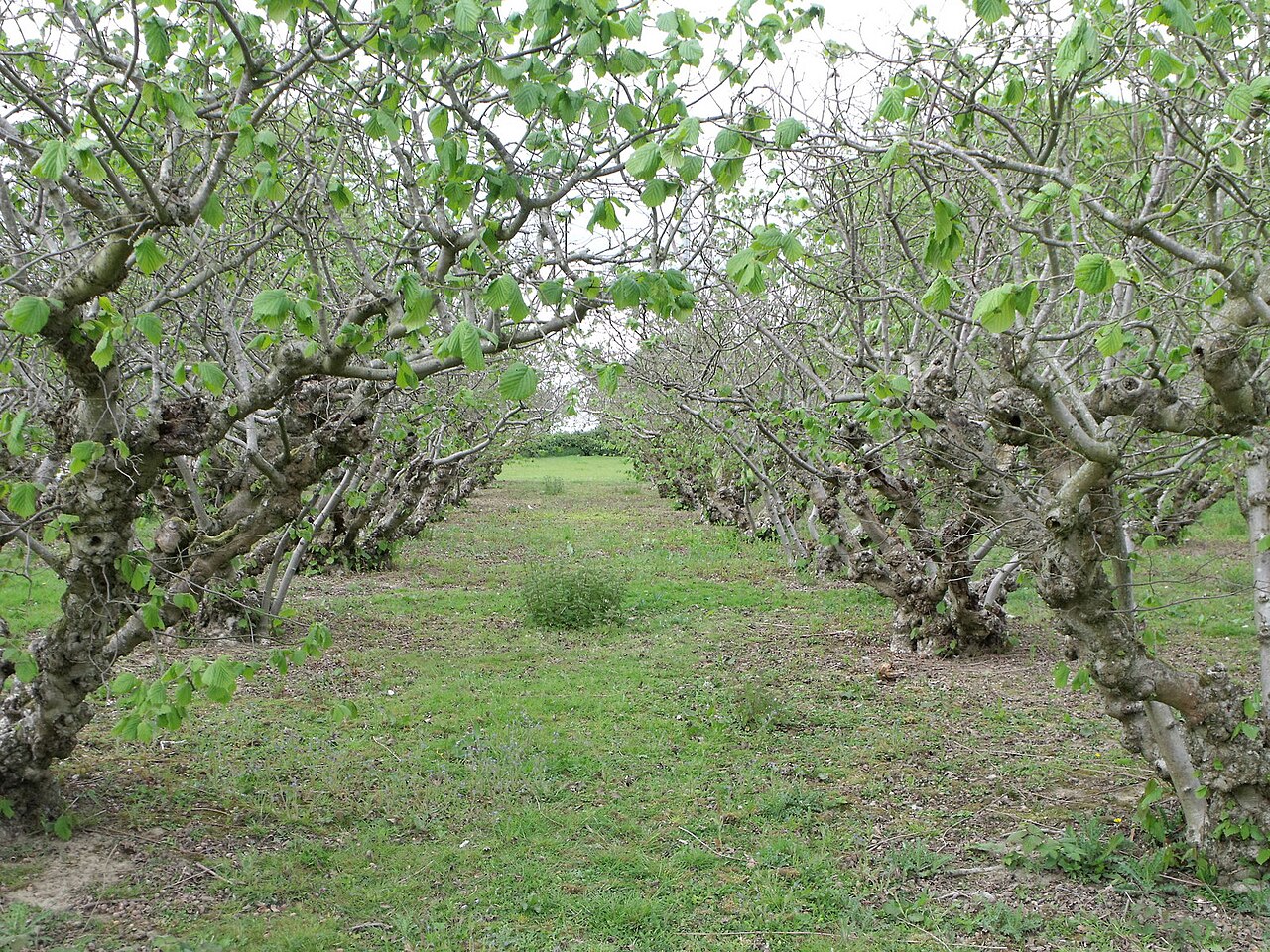
Why a certificate? The logic of a "market ticket"
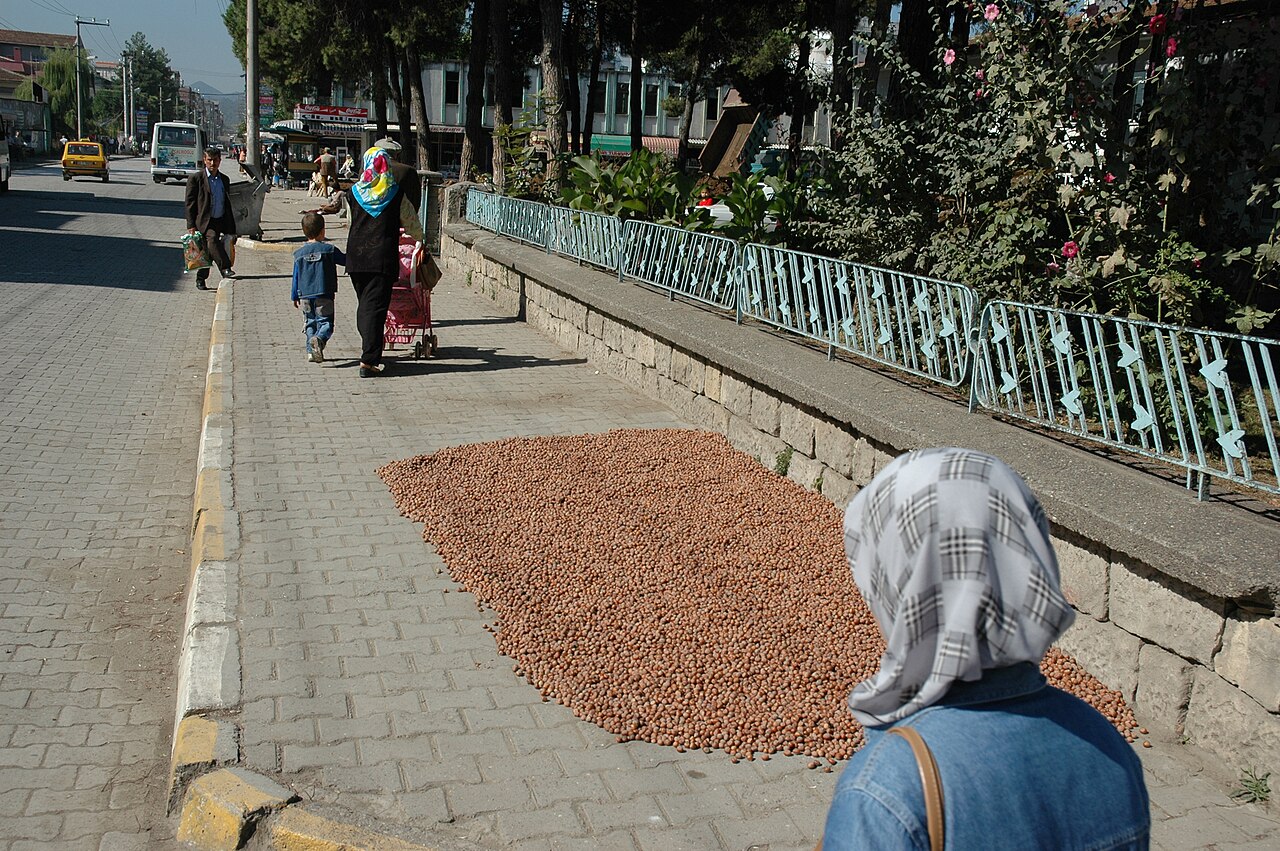
A large portion of Croatian hazelnut production remains unstandardized and inconsistent in quality, with sales channels limited to local stalls, fairs, door-to-door sales, and markets. While this channel has its place, it offers low prices and low predictability. As soon as a producer wants to sell to a processor, exporter, or retail chain, the rules change: the buyer demands verifiable traceability, risk control, and a certificate recognized in their market.
It is crucial to understand that different schemes cover different stages of the supply chain:
| Supply Chain Stage | Typical Scheme | What it proves |
|---|---|---|
| Orchard (primary production) | GlobalG.A.P. (IFA) | Good agricultural practice, field-level safety, traceability, worker welfare, and environmental care |
| Processing / Packaging (shelling, roasting, packaging) | IFS Food, BRCGS, FSSC 22000 | Food safety in processing, HACCP, contamination control, process quality |
| Entire Chain (cultivation + processing) | Organic certification (EU 2018/848) | Product produced without synthetic inputs, in accordance with organic principles |
In other words: GlobalG.A.P. proves how it was grown, IFS/BRC proves how it was processed and packaged, and organic certification proves that the entire process is organic. Many serious producers and processors combine multiple schemes.
GlobalG.A.P. — the standard for orchards
GlobalG.A.P. is an international standard for good agricultural practice, created at the request of buyers (especially retail chains) to establish a widely accepted, documented norm for primary production. For hazelnuts, the relevant standard is IFA (Integrated Farm Assurance), which is recognized (benchmarked) under the GFSI (Global Food Safety Initiative) and is particularly suitable for exports outside the USA, especially to the European Union. IFA covers not only food safety but also topics such as worker welfare and environmental protection.
How grading works
GlobalG.A.P. documents divide requirements (so-called P&C — Principles and Criteria) into three levels, and certification requires meeting very specific compliance thresholds:
| Type of Requirement | Mandatory Compliance |
|---|---|
| Major Musts (core mandatory requirements) | 100 % of all applicable |
| Minor Musts (secondary mandatory requirements) | 95 % of all applicable |
| Recommendations | No prescribed minimum |
Additionally, the producer must sign and adhere to contracts (GlobalG.A.P. sub-license, certification agreement, and agreement with the certification body — CB) and meet the requirements of the current version of the General Rules (GR). The figures 100 % / 95 % should be understood as strict conditions — a failure on even one "Major Must" requirement means the certificate will not be issued.
What GlobalG.A.P. practically requires in the orchard
- Traceability and records — from the plot to the delivered batch; who, when, with what, and how much was treated.
- Controlled fertilization — fertilization based on the actual needs of the trees, with a preference for organic fertilizers and mineral supplementation only to the extent necessary, to protect soil and water. (In Croatian orchard documentation, fertilization is explicitly planned "in accordance with the GlobalG.A.P. standard".)
- Plant protection according to label — use of only approved products, adherence to pre-harvest intervals, and record-keeping.
- Environmental protection and biodiversity — e.g., buffer zones along orchard boundaries adjacent to high-biodiversity areas (forests, rivers, protected areas) with a width of at least 10 m from wild native or spontaneous species; plot maps with sensitive areas marked.
- Worker safety and welfare.
Important limitations for "wild" crops
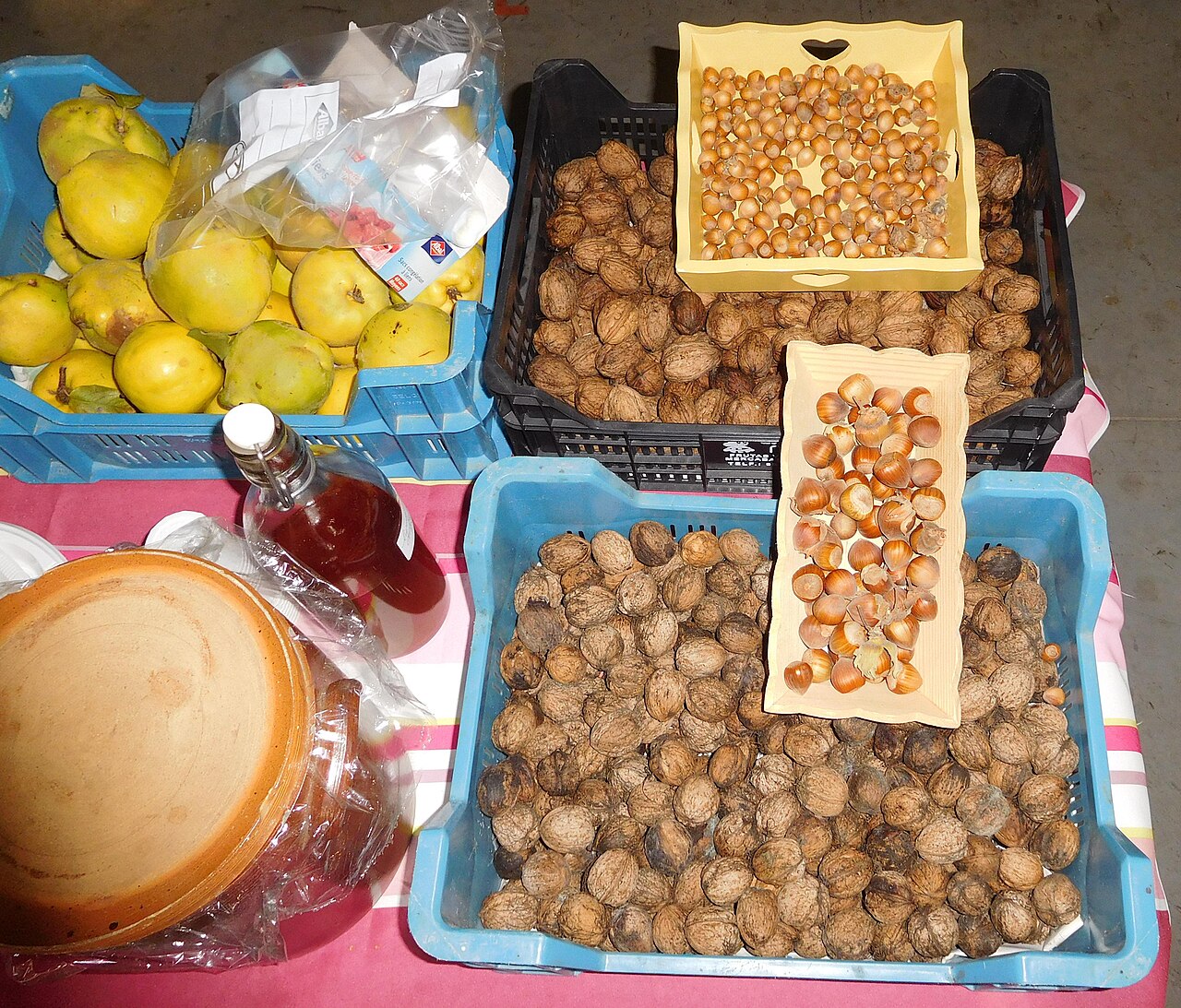
GlobalG.A.P. applies to cultivated crops. The standard explicitly states that certification cannot be obtained for wild (uncultivated) crops such as mushrooms, walnuts, jujubes, and similar. For hazelnuts, this means: only planted, cultivated orchards are certified, not wild hazelnuts from nature. There are also specialized sustainability schemes for hazelnut growers (e.g., INC sustainability standard for hazelnut growers), in which holding a GlobalG.A.P. FSA or Biodiversity certificate is recognized as fulfilling the entire category of criteria — demonstrating how schemes mutually "recognize" and build upon each other.
IFS and BRC/BRCGS — standards for processing and packaging
Once hazelnuts are processed (shelling, roasting, blanching, grinding into flour/paste) or packaged in bulk, the focus shifts from the field to food safety in the production facility. This is where GFSI-recognized standards come into play.
IFS Food
IFS (International Featured Standards) is a GFSI-recognized standard for food safety audits and process and product quality. It applies to companies that process food or package bulk food products, and is applied when the product is "processed" or when there is a risk of contamination during primary packaging. The standard contains a series of requirements for specification compliance and supports production and marketing efforts related to brand safety and quality. IFS is a particularly common requirement for German retail chains.
BRC / BRCGS
BRC (now BRCGS — Brand Reputation Compliance Global Standards) were originally developed by British retailers. The goal is to create a comprehensive, internationally recognized framework for food safety. British buyers often specifically request BRCGS.
Related standards and their common foundation
In practice, other GFSI-recognized standards accepted by European and North American buyers appear alongside IFS and BRC:
| Standard | Typical Market / Buyer |
|---|---|
| IFS Food | German and continental European chains |
| BRCGS | British chains |
| FSSC 22000 | Widely accepted in the EU |
| SQF | USA |
| PrimusGFS | USA / Latin America |
| CanadaGAP | Canada |
All of them rely on common foundations: HACCP (Hazard Analysis and Critical Control Points) and a food safety management system in line with ISO 22000. Some facilities additionally certify occupational health and safety (e.g., ISO 45001), confirming that workplace risks are within acceptable limits and that the organization complies with legal requirements.
Hazelnut specificity: aflatoxins and contamination control
For hazelnut processors, the HACCP plan and audit standards almost always place mycotoxins (aflatoxins) — a key health hazard for nuts — at the center, alongside foreign matter, allergens, and microbiological safety. Therefore, sampling, drying to safe moisture levels, and proper storage (temperature and humidity control) are practically the most important control points that auditors check.
Ecological (Organic) Certification
An ecological certification guarantees that the product has been produced in accordance with organic production regulations and meets the requirements of EU directives and national laws. For the EU market, the governing regulation is Regulation (EU) 2018/848 on organic production and labeling of organic products (applicable since 2022). The certification confirms adherence to organic principles in cultivation, production, processing, and packaging.

Conversion Period
The most important practical fact for hazelnut orchards is that the "organic" status is not obtained immediately. The conversion period is the transition phase from conventional to organic production during which organic rules are already applied, but the product is not yet labeled as "organic."
- For perennial hazelnut orchards, the conversion period typically lasts up to three years.
- The period starts no earlier than the day the producer includes the holding in the control system with an authorized control body — not from the moment the producer personally "started working organically."
A practical example from the corpus: one family farm (OPG) near Lipika entered the conversion period immediately upon establishment in 2012, but received its organic certification only in 2015. Supervision and control are conducted by an authorized control body — e.g., BIOTER d.o.o. from Koprivnica — which, upon verifying that all prescribed standards are met, issues a Certificate (Certifikat), allowing the product to be labeled and sold as organic from that point onward.
Step-by-Step Procedure (Simplified)
- Enrollment in the control system — selection of an authorized control body and registration.
- Start of the conversion period — begins upon registration; organic rules apply (prohibition of banned synthetic substances and mineral fertilizers outside permitted limits).
- Annual supervision and control — inspections, record-keeping, sampling.
- Issuance of Certificate — issued after the conversion period expires and compliance is confirmed.
- Annual renewal — the certificate is maintained through regular controls.
Support Measures for Organic Hazelnut Cultivation in Croatia
Organic cultivation in Croatia is linked to support measures. For perennial hazelnut orchards under the "Organic Cultivation" measure, the following indicative amounts are listed (informational — check current APPRRR / Ministry calls and amounts):
| Payment Type | Approximate Amount |
|---|---|
| Conversion to organic practices (EKOP) | ~750.74 EUR/ha |
| Maintenance of organic practices (EKO) | ~625.62 EUR/ha |
| Minimum plant density for support | 300 seedlings/ha |
| Minimum farm area for application | 0.5 ha (ARKOD parcel min. 0.05 ha) |
Note: Areas registered for the organic cultivation measure are generally not simultaneously eligible for the production-linked support for fruit — careful planning is required to determine which support to utilize. Amounts and conditions change by programming period, so please verify them on official sources.
Export Requirements: What EU Buyers Actually Demand
For the export of hazelnuts (fresh, dried, or processed) to the EU market, several layers of requirements practically apply:
- Food Safety (de facto mandatory): A GFSI-recognized certificate (for processing: IFS/BRCGS/FSSC 22000; for field production: GlobalG.A.P.). Without some form of proof, most established European importers will not work with a supplier.
- Contamination Limits: Compliance with EU maximum residue levels (MRLs) for pesticide residues and, specifically for nuts, maximum levels of aflatoxins.
- Phytosanitary Requirements (for planting material and reproductive material): Certified hazelnut material for export must meet the phytosanitary regulations of the importing country, particularly regarding pathogens that are also quarantine organisms. The EPPO certification scheme for Corylus avellana requires material produced from pre-basic mother material tested and free from pathogens such as Apple mosaic virus (ApMV), Prunus necrotic ringspot virus (PNRSV), and hazelnut phyllody phytoplasma.
- Planting Material on the Domestic Market: According to the Croatian Ordinance on the placing on the market of reproductive planting material and saplings (NN 09/17), only material and saplings whose category (pre-basic, basic, or certified material) has been confirmed through the certification process may be placed on the market.
- Organic Status (if sold as "organic"): A valid organic certificate according to Regulation (EU) 2018/848 for the entire chain.
- Additional Private Modules of Certain Chains: Some European chains require additional modules beyond GlobalG.A.P. (e.g., Tesco Nurture, Pesticide Transparency Add-on by Coop Italia, AH-DLL GROW Add-on by Albert Heijn and Delhaize chains).
Cost and Benefit: How to Think About Investment
Certification is a cost — both direct (fees to the certification body, audits, sampling, laboratory analyses) and indirect (time for record-keeping, facility adjustments, training). The exact amount depends on the size of the holding, number of locations, scheme, and certification body, so it should be requested as a quote.
Approximate Cost Elements:
- Annual audit + fees to the certification body (CB).
- Laboratory analyses (pesticide residues, aflatoxins, water, soil).
- Adjustments (storage, dryer, hygiene zones, documentation).
- For some schemes, there is also a temporal "waiting cost": e.g., the organic conversion period of up to 3 years for orchards, and for example, carbon sequestration certificates in the corpus mention a timeframe of 12–15 months until issuance. During this period, rules apply, but there is no price premium yet.
Benefits:
- Market Access — often binary: without a certificate, there is no buyer.
- Higher and Stable Prices — standardized, traceable, uniform-quality goods achieve better prices than non-standardized goods from stalls.
- Export Opportunities — opening doors to the global market, which for Croatian producers also requires the development of processing facilities that meet global standards.
- Organic Premium — organic status carries a market premium and access to targeted support measures.
- Risk Reduction — organized records and contamination control reduce the risk of shipment rejections and recalls.
Practical Recommendations and Common Mistakes
Recommendations:
- Start with the buyer: ask your target buyer/market exactly which certificate they require (IFS for Germany, BRCGS for the UK, GlobalG.A.P. for chains) before paying for an audit.
- Align the scheme with the stage: orchard → GlobalG.A.P.; facility → IFS/BRC/FSSC; "organic" → organic certificate. Combine as needed.
- Keep records from day one — traceability is the common denominator of all schemes; retroactively "reconstructing" paperwork is the most common cause of audit failure.
- For organic: register in the control system as early as possible because the conversion period runs from registration, not from your decision.
- For processing: structure your HACCP plan around aflatoxins and drying/storage.
Common Mistakes:
- Assuming GlobalG.A.P. is sufficient for processing (it is not — for facilities, IFS/BRC/FSSC is required).
- Attempting to certify wild hazelnuts under GlobalG.A.P. (it does not cover non-cultivated crops).
- Counting on the organic premium during the conversion period (the product may not yet be sold as organic during this time).
- Neglecting phytosanitary/quarantine requirements when exporting planting material.
- Using unregistered substances or failing to respect pre-harvest intervals — failing a "Major Must" results in denial of the certificate.
Sources
This article is an AI summary generated from an internal literature collection on hazelnuts (RAG corpus) and public sources; it may contain errors and should be verified against original documentation and advisory services. Main sources used:
- GLOBALG.A.P. General Regulations — Rules for Individual Producers (v6.0, 2022) — Major/Minor Must compliance thresholds.
- GLOBALG.A.P. Product List (v5.20, 2024) — restrictions for non-cultivated (wild) crops.
- INC Sustainability Certification Standard for Hazelnut Growers (GHAZ v1.1, 2025) — buffer zones, recognition of GlobalG.A.P. FSA/Biodiversity.
- Guidelines for the Export of Processed Fruit and Vegetable Products from Western Balkan Countries to the EU (2018) — IFS and export requirements.
- Vendor Operating Standards & Guidance Document — Produce (2015) — list of GFSI standards (BRC, IFS, FSSC 22000, SQF, PrimusGFS, CanadaGAP).
- EPPO Standards — certification scheme for Corylus avellana (2009) — phytosanitary and export requirements for planting material.
- Ordinance on the Placing on the Market of Reproductive Planting Material and Saplings (NN 09/17) — via Business Plan for Hazelnut Sapling Production (Poljinos, 2019).
- Technology and Economics of Organic Hazelnut Production at OPG Hobolić Alen (2021) — supervision and issuance of organic certificates (BIOTER d.o.o.).
- Economic Performance of Organic Production (RAG corpus, 2019) — conversion period and OPG examples.
- "Is Hazelnut Cultivation Profitable?" — Gospodarski list (2019) — EKOP/EKO support amounts and minimum density. https://gospodarski.hr/
- State and Importance of Hazelnut Cultivation in the Republic of Croatia (2018) — non-standardization of supply.
- CBI — Buyer requirements for processed fruit, vegetables and edible nuts. https://www.cbi.eu/market-information/processed-fruit-vegetables-edible-nuts/buyer-requirements
- CBI — Entering the European market for nuts. https://www.cbi.eu/market-information/processed-fruit-vegetables-edible-nuts/cashew-nuts/market-entry
- EU Rules on the Production and Labeling of Organic Products (Regulation (EU) 2018/848). https://eur-lex.europa.eu/legal-content/HR/TXT/HTML/?uri=LEGISSUM:4353956
- Bureau Veritas — Organic Production (Croatia). https://www.bureauveritas.si/certificiranje/ekoloska-proizvodnja-hrvatska
- TÜV NORD Croatia — GlobalGAP Product Certification. https://www.tuv-nord.com/hr/hr/usluge/certifikacija-proizvoda/globalgap/
- Lokvina — Conversion Period and Organic Certificate. https://lokvina.hr/ekoloska-poljoprivreda/hrvatska/prijelazno-razdoblje