Green manuring and catch crops before establishing an orchard
Content generated by artificial intelligence — verify before application
This article was automatically compiled from a collection of hazelnut literature using artificial intelligence and may contain errors or outdated information. It serves as a starting point for further research, not as professional advice. Dosages, products, and timing are informative and depend on the cultivar, location, and current regulations — always consult with an advisory service and official sources before application.
Establishing a hazelnut orchard is a long-term investment that remains on the same land for several decades. For this reason, the period before planting is a unique and unrepeatable opportunity to thoroughly improve soil conditions — its structure, organic matter content, and biological activity — while the land is still free and can be worked without obstruction. Once bushes or trees are planted, deeper soil interventions become nearly impossible without damaging the roots. Green manuring (sideration) and pre-sowing cover crops are among the most effective, and simultaneously the most cost-efficient, tools a producer can use at this stage to enrich the soil with organic matter, improve its structure, and suppress weeds before preparing planting holes.
What is green manuring (sideration) and why specifically before orchard establishment
Green manuring or sideration is the planned incorporation (plowing under) of the green above-ground and below-ground biomass of plants grown exclusively to be plowed under, thereby enriching the soil. Unlike permanent grassing of inter-row spaces in an already established orchard, pre-sowing sideration is conducted on free, open land and targets the entire soil profile that will later be occupied by the hazelnut root system.
In hazelnut literature, soil supply with organic matter is of special significance because it directly contributes to better soil microbiological activity and the activity of ectotrophic mycorrhiza on hazelnut roots — a symbiosis that is extremely important for hazelnut for water and nutrient uptake. The classic recommendation from Croatian literature is to apply approximately 40 t/ha of farmyard manure before planting. However, the same literature explicitly offers a solution for those without access to farmyard manure:
"If there is no possibility for ameliorative fertilization with farmyard manure, it is necessary to sow green manure crops in the inter-row spaces during the first three years."
In other words, sideration is not just a "nice-to-have if time permits," but a recognized substitute for ameliorative organic fertilization when farmyard manure is unavailable — a situation that is becoming increasingly common on farms.
Three main benefits (covered in this article)
| Benefit | How sideration works |
|---|---|
| Soil structure | Root systems (especially taproots of brassicas) penetrate compacted layers, create channels and pores, improve aggregate stability, infiltration, and soil aeration. |
| Organic matter and nutrients | Above-ground and below-ground biomass is converted into organic matter upon incorporation; legumes fix atmospheric nitrogen, and deep root systems "mine" nutrients from deeper layers that are less accessible. |
| Weed suppression | Dense, quickly closing crops shade the soil and suppress weeds; some species (rye, sorghum-sudan grass, mustard) also have allelopathic (bioherbicidal) effects. |
The place of sideration in the orchard establishment calendar
Sideration fits into the standard sequence of soil preparation for hazelnuts, which according to literature looks roughly like this:
- Soil analysis — mandatory above all else; the amelioration plan (pH, phosphorus, potassium, organic matter) derives from it.
- Correction of reaction and basic nutrients — liming if the soil is acidic, and ameliorative fertilization with phosphorus and potassium (e.g., in practice, spreading nitrogen-free fertilizer formulations like 0:20:30 before deep loosening, with conscious avoidance of nitrogen to reduce weed growth at the start).
- Pre-sowing sideration — one or more cycles of cover crops during the season(s) preceding planting.
- Deep cultivation — deep plowing in late summer for autumn planting; deep cultivation from summer to winter for (less recommended) spring planting.
- Planting — hazelnut is recommended to be planted in autumn.
Thus, sideration "fills" the time between soil correction and final deep cultivation, instead of leaving the land empty and allowing it to become overgrown with weeds.
Rule of thumb for timing
Green biomass should be shredded and plowed under at least 2–3 weeks before planting/sowing the main crop, and in practice, for woody crops, a longer period of 3–6 weeks is recommended so that decomposition begins, and the release of nutrients and any temporary "nitrogen lock-up" (immobilization of nitrogen in carbon-rich biomass) does not harm young plants.
Species selection: legumes, brassicas, and grasses
Cover crops for green manuring are usually divided into three functional groups. The best result is often achieved with a mixture of two or more species because it combines their advantages.
Legumes (Fabaceae) — Nitrogen fixation
They bind atmospheric nitrogen via root nodules and leave it in the soil for the future crop. Typical species from Croatian practice:
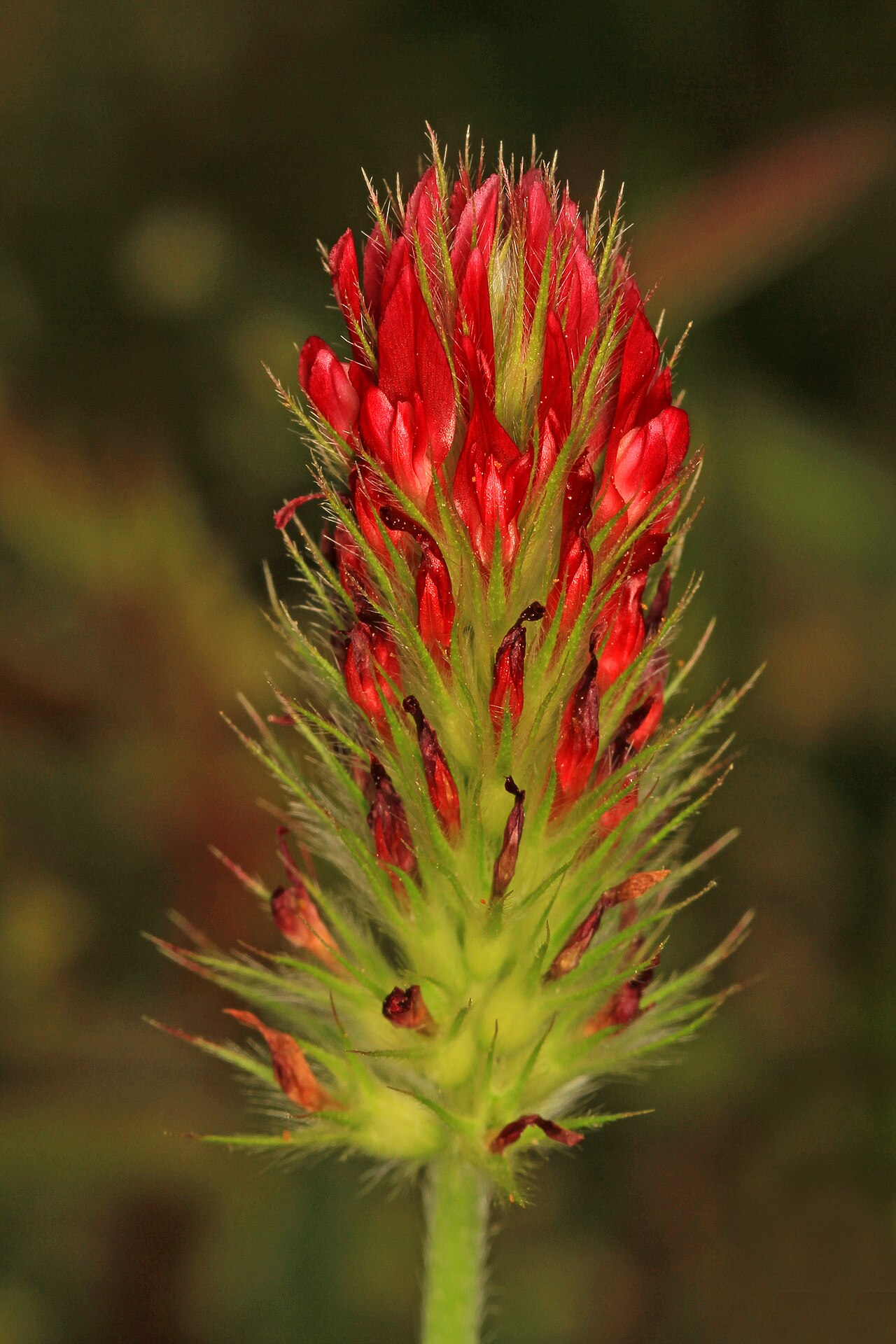
- clovers — crimson clover (red clover), sweet clover
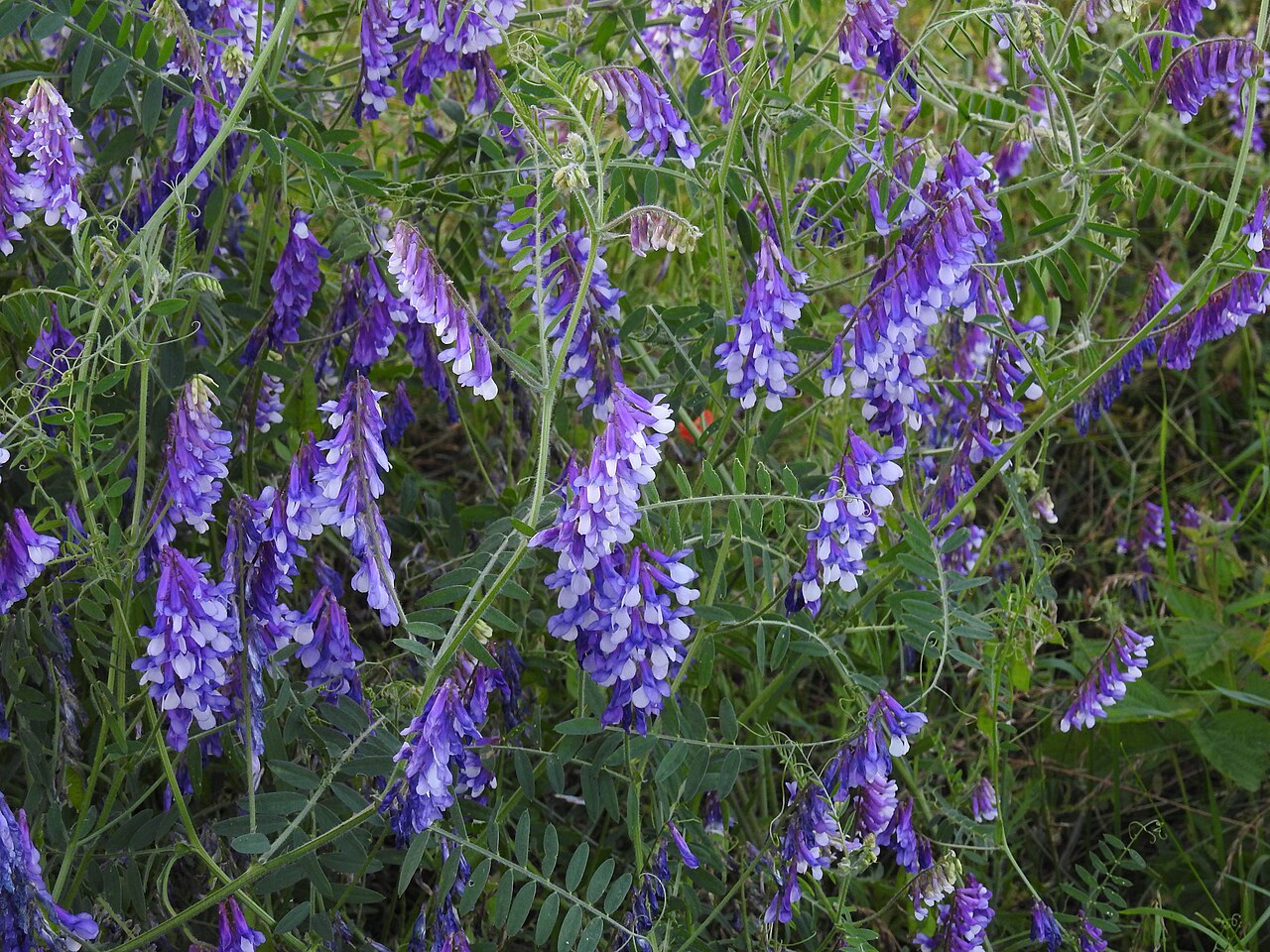
- vetches (e.g., hairy vetch / Vicia villosa)
- faba bean, field pea (e.g., winter/Austrian pea)
- sainfoin
Seed inoculation
Legume seeds often come coated with an inoculant that promotes nitrogen fixation. Such seed is very fine and must not be sown deeper than ~1–1.5 cm (about half an inch), otherwise it will not germinate.
Brassicas — Breaking compaction and "catch crops"
With taproots, they create channels, reduce soil compaction, improve infiltration, and retain (catch) nutrients, especially nitrogen, preventing leaching. Many also have allelopathic/biofumigation effects against weeds and nematodes.
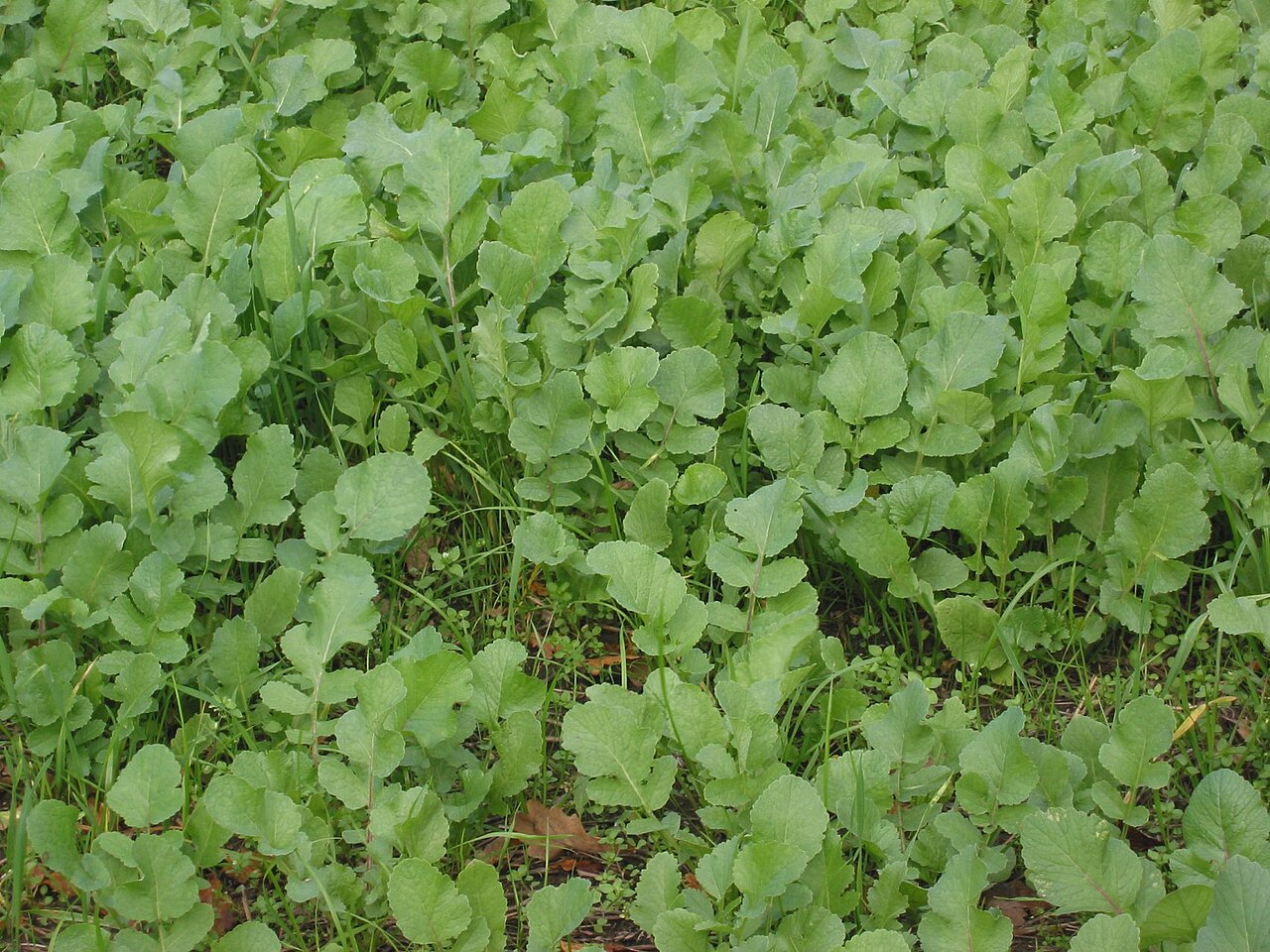
- tillage radish (Raphanus)
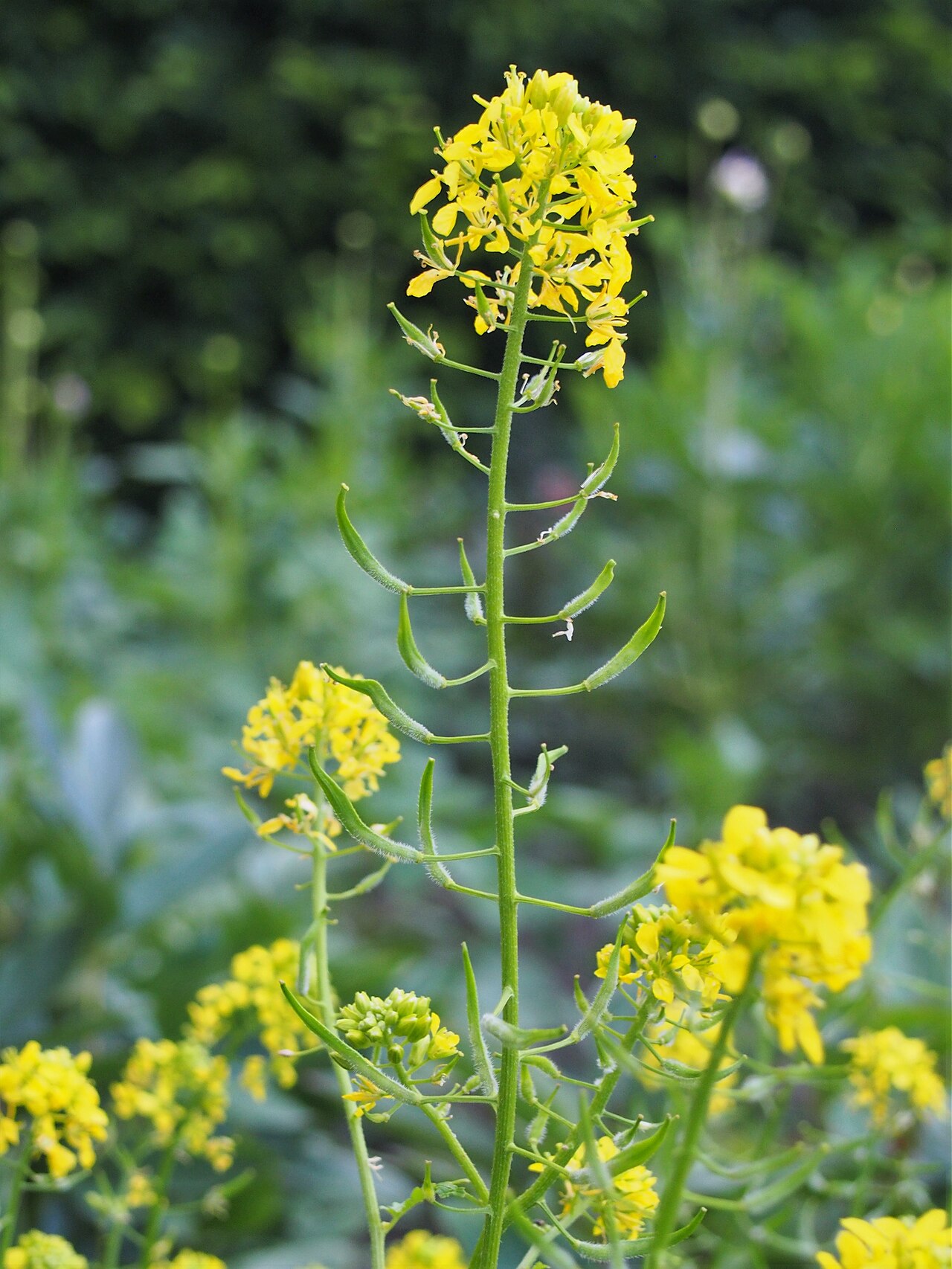
- white mustard (Sinapis alba)
- forage radish, turnip rape
Grasses and cereals — Biomass, cover, and erosion protection
They provide large amounts of biomass, quickly cover the soil, hold it through winter, and effectively suppress weeds.
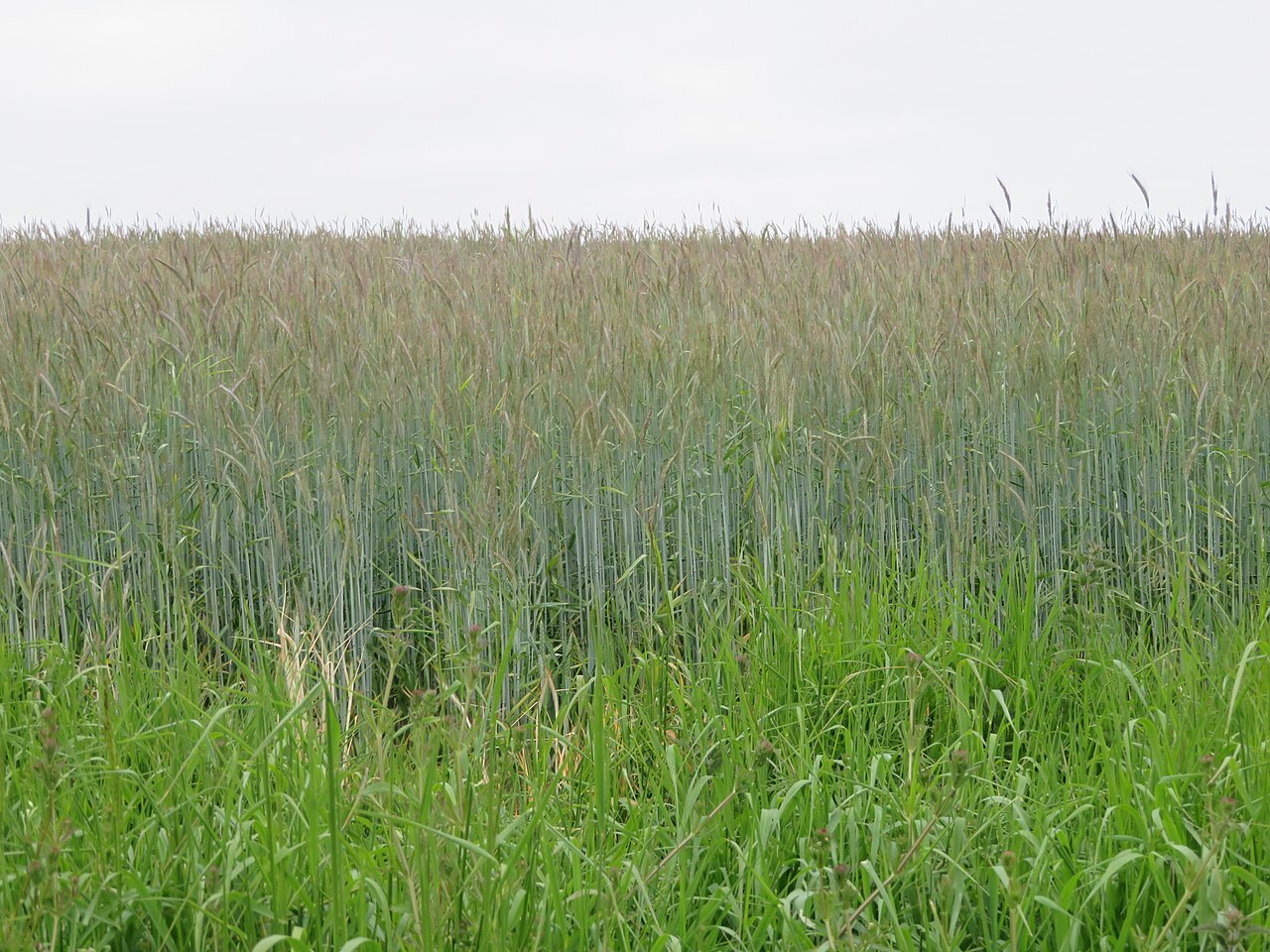
- winter rye (Secale cereale) — highly allelopathic, one of the best for weed suppression
- oats, winter wheat
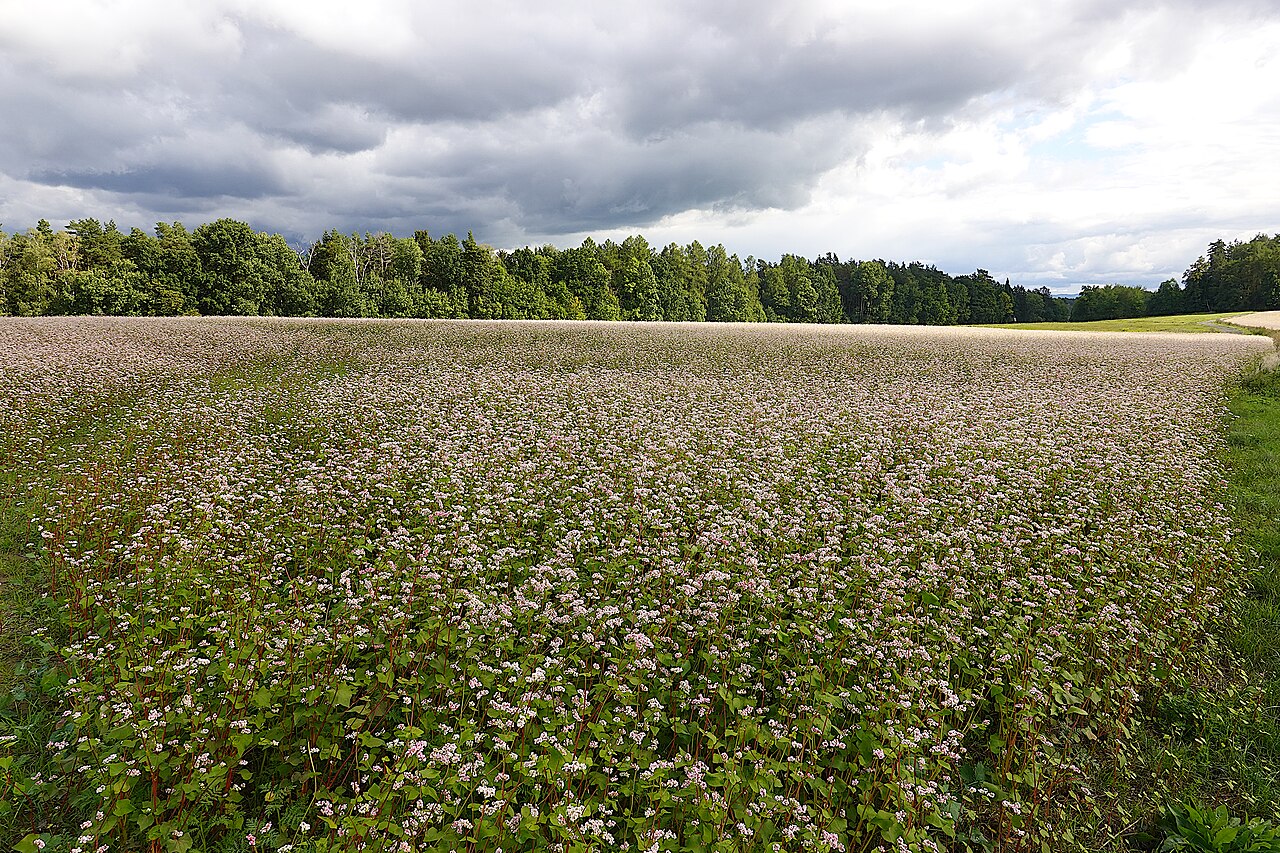
- sorghum × sudan grass ("Sudex") and buckwheat — summer crops that suppress weeds excellently (sown when soil warms up, around June)
Quick comparison of groups
| Group | Main benefit | Typical sowing time | Note |
|---|---|---|---|
| Legumes | N fixation, organic matter | Autumn (winter) / Spring | Inoculate seed; do not sow too deep |
| Brassicas | Breaking compaction, N catch, biofumigation | Late summer / Early autumn | Plow under before seed set |
| Grasses/Cereals | Biomass, cover, weed suppression, anti-erosion | Autumn (winter) or Summer (Sudex/buckwheat) | High C:N → potential temporary N immobilization |
Be careful with nitrogen fertilization with legumes
If the cover crop with legumes is additionally fertilized with nitrogen, legumes will preferentially use the ready nitrogen from the soil and will form fewer nodules and fix less atmospheric nitrogen — thereby losing the main advantage. Therefore, nitrogen is often intentionally omitted during the pre-sowing phase.
Sowing rates, depth, and biomass — informative figures
Exact sowing rates depend on the species, seed purity, sowing method, and goal, so they should be aligned with the recommendations of the seed supplier and advisory service. The following values serve exclusively as an orientational range common in literature and practice:
| Parameter | Orientational value | Note |
|---|---|---|
| Sowing depth for fine seed (clovers, mustard, inoculated legumes) | ~0.5–1.5 cm | Sowing too deep = poor germination |
| Sowing depth for coarser seed (peas, beans, cereals) | ~2–4 cm | — |
| Biomass needed for effective weed suppression | > 3 t/ha (≈ >7 t/ha for upright species) | Prostrate species (e.g., white clover) require less biomass |
| Water for biomass production | ~100 mm rainfall per ton of forage biomass | Sideration consumes water — important in dry areas |
| Time before incorporation prior to planting | at least 2–3 weeks (ideally 3–6 weeks) | To allow decomposition to start before planting |
| Stage for incorporation | beginning/full bloom | At this stage, there is the highest amount of easily degradable matter, and before seed set |
Sideration consumes water
Cover crops, like all plants, consume water. In spring, they can dry out the topsoil layer. In drier areas or where relying on rainfall, this should be kept in mind — the crop should be terminated (mulched or plowed under) before it dries out the profile too much, which the young hazelnut will later need.
Step-by-step procedure
- Initial analysis and correction. Based on soil analysis, perform liming and ameliorative PK fertilization before sowing the green manure; avoid nitrogen.
- Mixture selection. Align species with the goal: compacted soil → brassicas; nitrogen-poor → legumes; strong weed pressure → rye or Sudex/buckwheat. A mixture combines benefits.
- Sowing at the right time. Sow winter mixtures (rye + vetch + tillage radish) in late summer/autumn; summer mixtures (Sudex, buckwheat) when the soil warms up (~June). Respect depth according to seed size.
- Maintenance. Irrigate as needed for germination and biomass development; allow the crop to close and push back weeds.
- Termination at flowering. Shred (mulch) the crop at (beginning of) flowering, before it sets seed.
- Incorporation. Plow under the green biomass and wait 3–6 weeks (at least 2–3) before deep cultivation and planting.
- Deep cultivation and planting. Follow with deep plowing/loosening and, if possible, autumn planting of hazelnut.
Practical Recommendations and Common Mistakes
- Do not skip soil analysis. Green manure does not replace pH correction or phosphorus and potassium deficiencies — these must be addressed beforehand using mineral fertilizers and lime.
- Do not plant immediately after plowing. Fresh, lush green biomass decomposing can temporarily "tie up" nitrogen (immobilization) and create unfavorable conditions for young roots. Allow time for decomposition.
- Do not allow the green manure to go to seed. Brassicas and grasses that set seed become weeds in the future orchard. Terminate them at flowering.
- Do not fertilize legumes with nitrogen if your goal is nitrogen fixation.
- Factor in water. Under dry conditions, plan to terminate the crop earlier so you do not enter planting season with a desiccated soil profile.
- Utilize multiple cycles. If time permits, a combination of summer (weed suppression) and winter (ground cover + nitrogen) green manure crops over the year before planting yields the best effect on soil structure and organic matter.
- Watch out for pests. Cover crops can attract beneficial organisms and pollinators, but certain species may serve as a "trap" or host for pests — choose species in accordance with local conditions and expert advice.
Sources
This article is an AI-generated summary compiled from a collection of hazelnut literature (internal RAG corpus) and publicly available sources. Figures, dosages, and timelines are informative and depend on the cultivar, location, soil condition, and applicable regulations/labels — consult with advisory services and official sources before application.
Main sources used:
- PDF UZGOJ LIJESKE (hr, 2009) — ameliorative organic fertilization (~40 t/ha manure) and green manure as a substitute, significance of organic matter for mycorrhiza and microbiological activity (RAG corpus).
- Mehanizacija u proizvodnji i doradi lješnjaka u tvrtki Minas-Zrno (hr, 2021) — soil analysis, ameliorative fertilization, soil preparation, and planting timelines (RAG corpus).
- Lijeska — posebnosti sadnje i uzgoja, Gospodarski list (hr) — soil preparation, fertilization, and liming before planting (RAG corpus).
- Ekonomija i podizanje nasada lijeske (hr, 2021) — example of pre-planting PK fertilization (0:20:30) and avoidance of nitrogen to suppress weeds (RAG corpus).
- Cover Crops for Sustainable Cropping Systems: A Review (en, 2022) — impact of grasses and brassicas on soil structure, porosity, and infiltration, biofumigation (RAG corpus).
- Perennial Pathways: Planting Tree Crops (en, 2018) — cover crops during site preparation, weed suppression, organic matter, anti-erosion (RAG corpus).
- Orchard Management using Cover Crops… (en, 2017) — biomass requirements for weed suppression, nitrogen ratio and fixation, water consumption (RAG corpus).
- Orchard Cover Crops: Reseeding annuals… (en) — seed inoculation and sowing depth (RAG corpus).
- Hazelnut Reference Guide (en, 2023) — ground cover against erosion and humus loss (RAG corpus).
- Ministry of Agriculture, advisory service — Što je sideracija (zelena gnojidba)? — https://savjetodavna.mps.hr/2017/08/11/sto-je-sideracija-zelena-gnojidba/
- Agroklub — Zelena gnojidba ili sideracija — https://www.agroklub.com/ratarstvo/zelena-gnojidba-ili-sideracija/9305/
- Lokvina — Zelena gnojidba ili sideracija (pokrovni usjevi) — https://lokvina.hr/ekoloska-poljoprivreda/hrvatska/zelena-gnojidba-ili-sideracija
- ATTRA / NCAT — Overview of Cover Crops and Green Manures — https://attra.ncat.org/publication/overview-of-cover-crops-and-green-manures-2/
- UMass Center for Agriculture — Cover Crops & Green Manures — https://www.umass.edu/agriculture-food-environment/fruit/ne-small-fruit-management-guide/general-information/cover-crops-green-manures