Calcium and Magnesium in Hazelnut Nutrition: Roles, Ratios, and Correction
Content generated by artificial intelligence — verify before application
This article was automatically compiled from a collection of hazelnut literature with the assistance of artificial intelligence and may contain errors or outdated data. It serves as a starting point for further research, not as professional advice. Dosages, products, and timing are informative and depend on the cultivar, location, and current regulations — always consult with an advisory service and official sources before application.
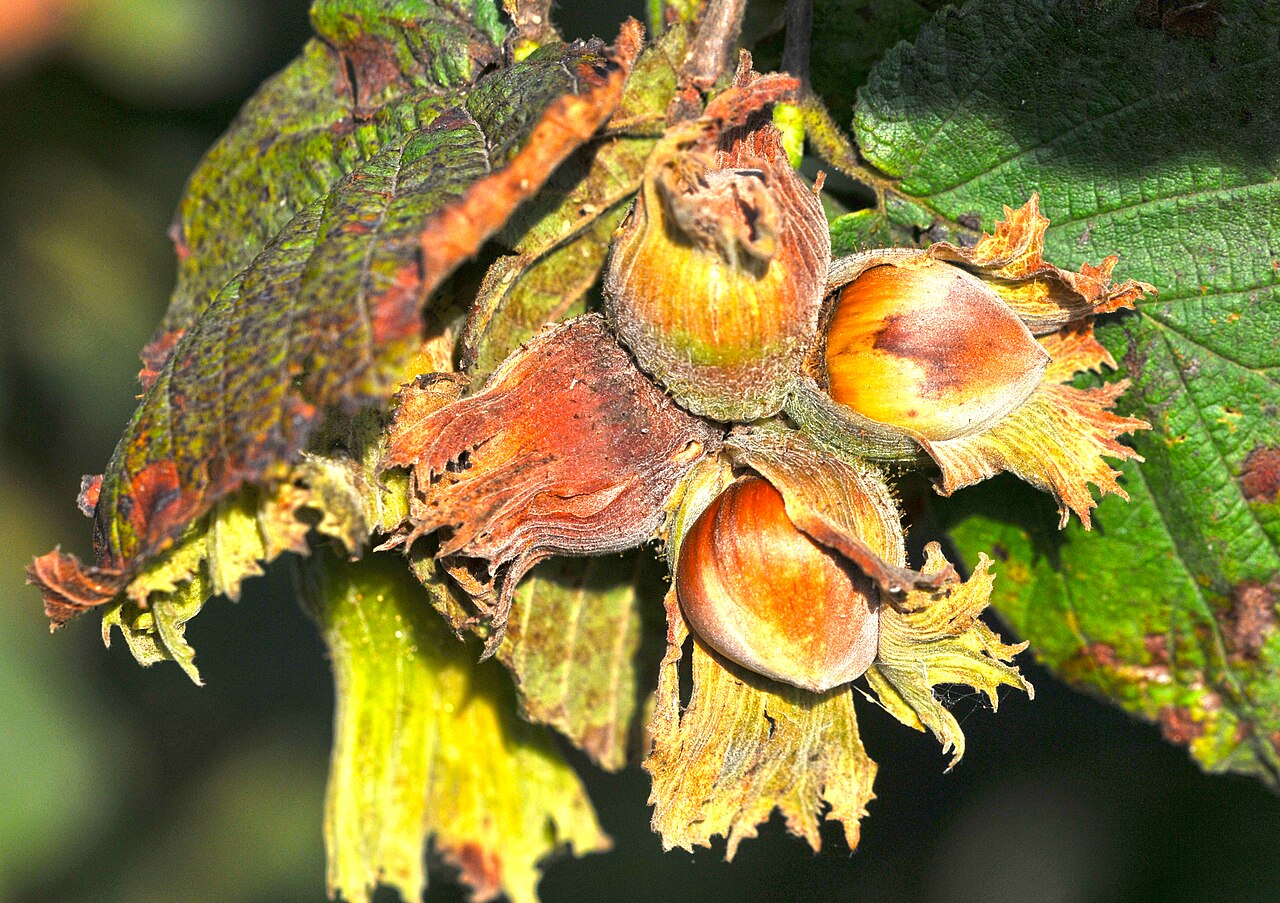
In hazelnut nutrition, the most discussion revolves around NPK (nitrogen, phosphorus, and potassium) and, at the other end, micronutrients such as boron and zinc. Between these two worlds lies a group that is unjustifiably overlooked too often — secondary macronutrients, primarily calcium (Ca) and magnesium (Mg) (along with sulfur). Hazelnut consumes these in significant quantities: according to reference leaf content values, calcium is immediately behind nitrogen among the most abundant nutrients, while magnesium is the carrier of photosynthesis. Both elements directly affect kernel quality, the plant's water regime, and the balance with potassium. This article explains their roles, critical mutual ratios (K–Mg–Ca antagonism), sources and dosages for correction, and deficiency diagnosis — filling the gap between articles on NPK fertilization and micronutrients.
Why Ca and Mg, and not just NPK
Calcium and magnesium, like potassium, are cations — positively charged particles in the soil. Potassium (K⁺) is monovalent, while calcium (Ca²⁺) and magnesium (Mg²⁺) are divalent. Due to their similar behavior at sorption sites in the soil and on the root, these three elements compete with each other during uptake. This means that Ca and Mg should not be viewed in isolation: their availability to the plant depends not only on their absolute quantity in the soil but also on the ratio to potassium and to each other.
Another characteristic is related to the soil. Hazelnut grows best on slightly acidic to neutral soils (pH approximately 5.5–7.5). Specifically on acidic soils (pH below 5.5), on sandy and light soils, and on soils receiving large amounts of potassium, magnesium is easily leached or displaced — so Mg deficiency is not uncommon. Calcium, on the other hand, is often physically present in the soil, but its uptake is linked to water: calcium in the plant travels almost exclusively via the transpiration stream (with water toward the leaf and fruit), so in dry conditions, local calcium deficiency can occur even when there is enough in the soil.
Calcium (Ca): Kernel Quality and Tissue Strength
Role of Calcium
- Builds cell walls (calcium pectinates) and keeps tissues firm — crucial for shell formation and kernel development.
- Second most important element for hazelnut (immediately behind nitrogen according to leaf content); calcium fertilization should be managed just as carefully as NPK.
- Hazelnut is a crop that consumes large amounts of calcium due to kernel growth and fruit shell formation.
- Participates in interaction with boron (both are carriers of cell wall construction), so Ca and B are functionally linked.
- Contributes to resistance against diseases, stresses, and physiological fruit disorders.
Calcium, Water, and Kernel Quality
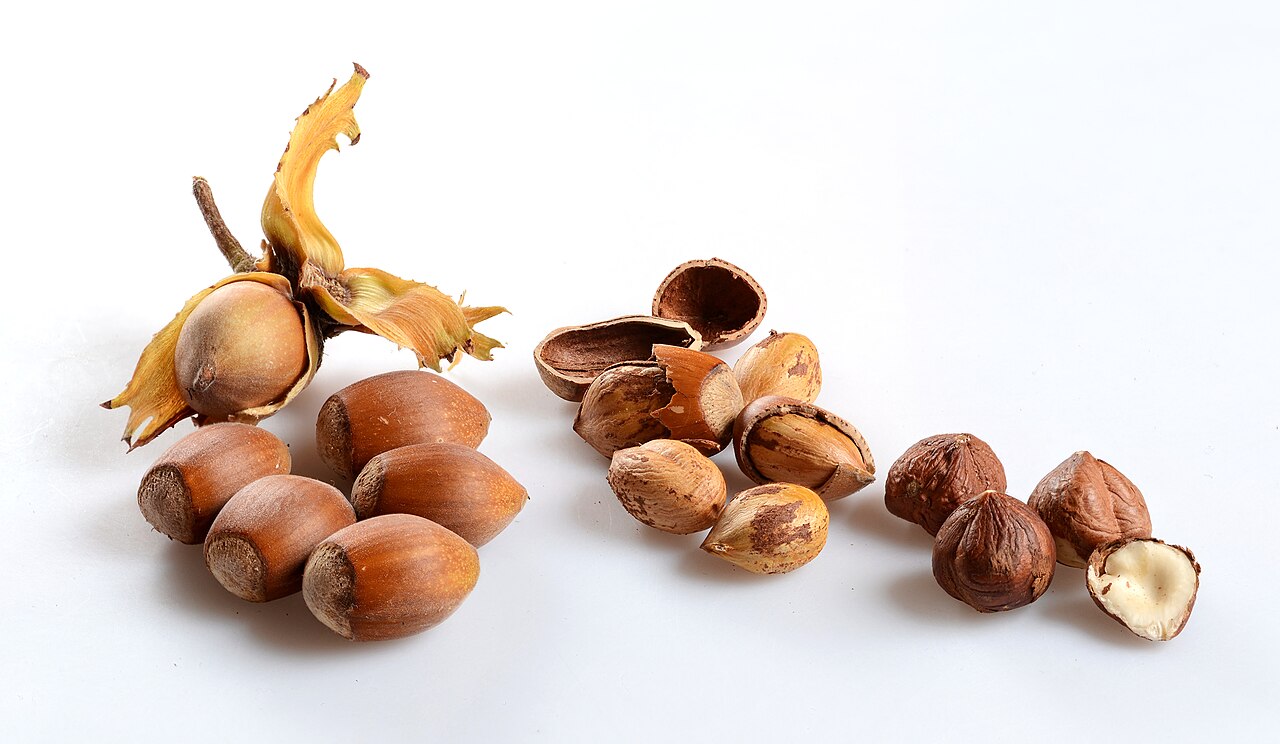
The key to understanding calcium in hazelnut is that its uptake is linked to water uptake. In dry conditions, when transpiration decreases, the influx of calcium into the fruit also decreases. The result: kernels remain smaller and of poorer quality. Therefore, calcium supply is simultaneously a matter of irrigation and the orchard's water regime — calcium fertilization on a dry, non-irrigated orchard will not yield full results if the plant lacks the water to transport calcium to the fruit.
Calcium and Soil pH (Liming)
On acidic soils, calcium has a dual role: as a nutrient and as an agent for raising pH (liming). Trials in Croatian orchards have shown that liming raised pH from approximately 5.8 to 6.2, increased soil phosphorus and potassium content, and improved the overall condition and yield of the orchard (with a slight decrease in humus). During orchard establishment, ameliorative fertilization is carried out, which includes larger amounts of calcium materials (in one Croatian report, approximately 122 t of calcium carbonate with NPK 7:20:30, plowed into the trench at 50–60 cm depth).
Do not mix calcium fertilizers with phosphates
Calcium fertilizers (granules based on calcium carbonate) must not be mixed with phosphate-based fertilizers (superphosphates): the reaction between phosphorus and calcium forms insoluble calcium phosphates, significantly reducing the effectiveness of both components. Apply them separately.
Symptoms of Calcium Deficiency
- smaller and poorer quality kernels, weaker fruit filling;
- the youngest parts are affected first (shoot tips, young leaves) because calcium is poorly mobile in the plant and does not move from old to young tissues;
- deformations and necrosis of apical tissues, increased sensitivity to stress.
Magnesium (Mg): The Heart of Photosynthesis
Role of Magnesium
- Central atom of the chlorophyll molecule — without magnesium, there is no green leaf or photosynthesis. In hazelnut foliar fertilization guides, magnesium is described as the "main photosynthesis activation element."
- Activates numerous enzymes, participates in energy transfer (ATP) and in the creation and transport of sugars (proteins and oils in the kernel).
- Particularly important during the phase of intense fruit and leaf mass growth (approximately June), when nitrogen requirements are high, so magnesium should be included alongside nitrogen.
- Poor magnesium supply means less chlorophyll, earlier leaf drop, weaker root development, and consequently reduced yield and quality.
Symptoms of Magnesium Deficiency
Magnesium is mobile in the plant, so deficiency symptoms first appear on older, lower leaves (the plant moves it to young parts):
- interveinal chlorosis — yellowing of tissue between veins, while the veins themselves remain green;
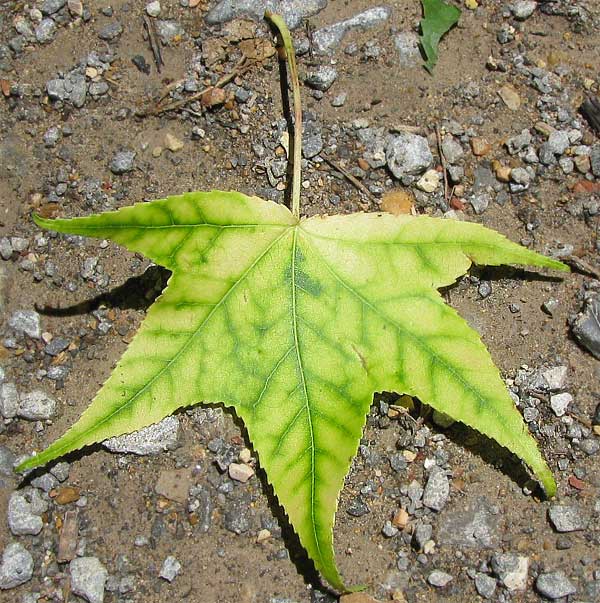
- in advanced stages, brown and reddish-purple spots appear, and leaves become sensitive to light and fall prematurely;
- this weakens the root and ultimately lowers yield and quality.
Mg or K? How to distinguish
Magnesium deficiency symptoms resemble potassium deficiency, but there is a difference in pattern: Mg deficiency starts between the veins (from the petiole inward), while K deficiency starts at the tip and edges of the leaf. Both appear on older leaves because both elements are mobile.
When and Where to Expect Mg Deficiency
- on acidic soils (pH 5 and below), where Mg is leached, and increased aluminum solubility further inhibits magnesium uptake;
- on sandy, light soils with low cation exchange capacity;
- during heavy potassium fertilization or the use of exclusively ammonium (NH₄⁺) nitrogen forms — both exacerbate Mg deficiency;
- upon application of poorly decomposed (immature) manure.
K–Mg–Ca Antagonism: The Most Important Ratios
The most well-known example of antagonism among plant nutrients is precisely that between magnesium and potassium. Since Ca²⁺, Mg²⁺, and K⁺ are similar in size and charge, sorption sites in the soil and on the root do not "distinguish" them well, so the ion present in excess displaces the others. Potassium is the strongest competitor — it binds more strongly than magnesium and easily overcomes it. A very high concentration of one cation can completely suppress the uptake of another.
The order of competition strength with magnesium is described as:
K > NH₄ > Ca > Na
Practical message: too much potassium = induced magnesium deficiency (and often calcium deficiency), even when Mg is physically present in sufficient quantities in the soil. Research on hazelnut (Corylus avellana) has shown that K×Mg interactions in the soil, triggered by magnesium fertilization, had a negative effect on yield and quality when the balance was not properly set — the conclusion is that magnesium and potassium should be applied so as not to trigger antagonism.
Approximate Target Ratios
Ratios are indicative
The ratios below originate mostly from general agronomy of fruit and woody crops and hydroponics, and serve as a rough orientation, not as a standard for hazelnut. Make the final judgment based on soil analysis (exchangeable cations) and leaf analysis for your orchard.
| Ratio | Approximate Target Value | Note |
|---|---|---|
| Ca/Mg | approximately 2:1 (not below 1) | Keep Ca/Mg above 1; too much Ca inhibits Mg |
| K/Mg | "balanced" (often ~1 part Mg to 3–5 parts K) | Excess K causes Mg deficiency |
| K:Ca:Mg | roughly 3–5 : 3–5 : 1 | From hydroponics; only as a line of thought |
Excess calcium also inhibits magnesium: when there is too much Ca in the soil, Mg availability decreases and magnesium deficiency symptoms appear. Additionally, abundant Ca adversely affects the availability of P, K, and most micronutrients (except molybdenum). Therefore, liming should be dosed according to analysis, not "just in case."
Reference Values in Leaves (Diagnostics)
The most reliable tool for assessing nutritional status is leaf analysis (foliar analysis), ideally combined with soil analysis. The table below provides the deficiency threshold and optimal range according to the hazelnut nutrition guide:
| Element | Deficiency Threshold | Optimal Leaf Content |
|---|---|---|
| Nitrogen (N) | < 1.80 % | 2.21–2.50 % |
| Phosphorus (P) | < 0.10 % | 0.14–0.45 % |
| Potassium (K) | < 0.50 % | 0.81–2.00 % |
| Sulfur (S) | < 0.08 % | 0.13–0.20 % |
| Calcium (Ca) | < 0.60 % | 1.01–2.50 % |
| Magnesium (Mg) | < 0.18 % | 0.25–0.50 % |
(% on dry leaf matter; source: Hazelnut Nutrient Management Guide, 2021.)
Interpretation of values is always contextual: if K is at the upper limit and Mg at the lower limit, antagonism is likely — and this can occur before Mg drops below the deficiency threshold. Therefore, look at both absolute values and the relationships among them.
Sources and Application Rates for Correction
Magnesium Deficiency Correction
The most common recommendations for a mature (bearing) hazelnut orchard:
| Material | Contains | Approximate Rate | Method / Timing |
|---|---|---|---|
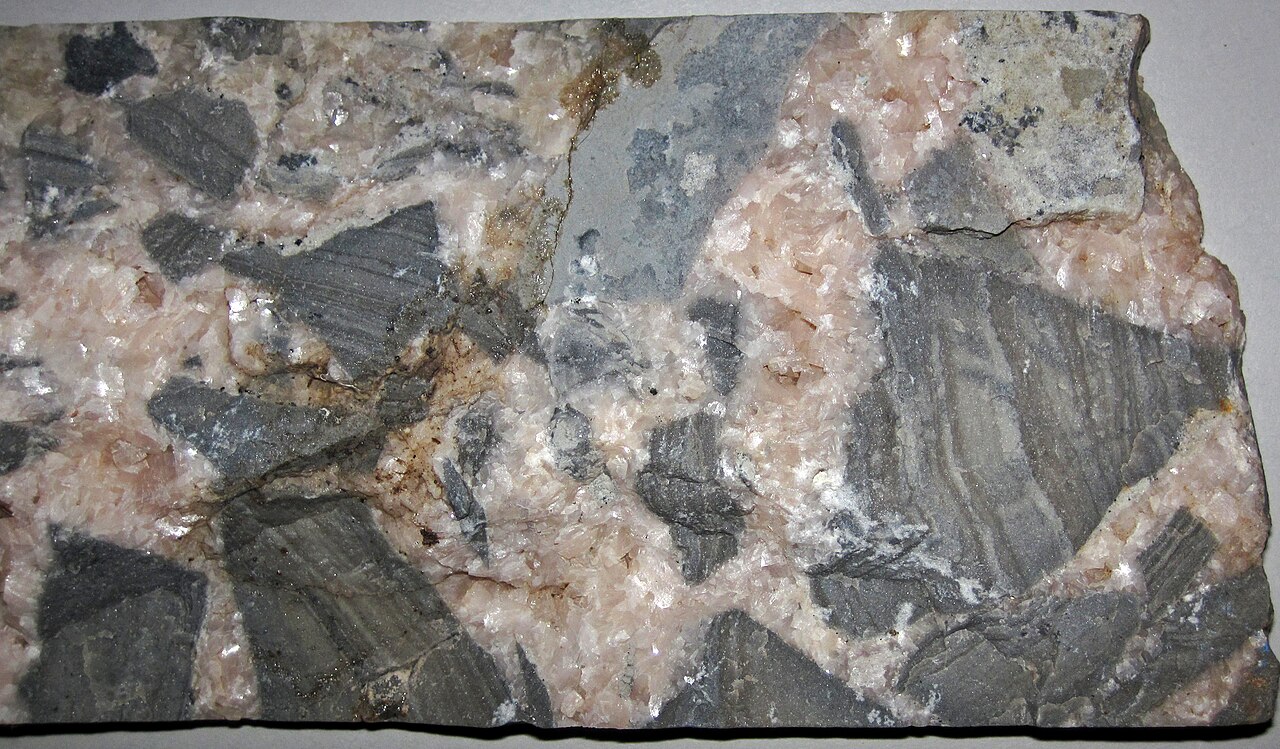
| Dolomite (dolomitic lime) | Mg-carbonate (dolomite ~ pure MgCO₃; dolomitic limestone up to ~50% MgCO₃) | as needed for liming | Incorporated into the soil when pH adjustment is already required — addresses both Mg and pH |
| Potassium-magnesium sulfate | Mg + K + S | ~30–40 lb/acre "pure" Mg ≈ ~34–45 kg Mg/ha | Incorporated into the soil, in a narrow band halfway between the trunk and the canopy edge (drip line); spring, combined with nitrogen fertilization |
| Magnesium sulfate (Epsom salt, MgSO₄·7H₂O) | Mg + S, fast-acting | ~2–4 lb/acre ≈ ~2.2–4.5 kg/ha (soil); for foliar application, typically a 1–2% solution | Rapid correction; foliar application for acute deficiency during the growing season |
Turkish magnesium fertilization trials on hazelnut used MgSO₄·7H₂O in a range of 0 to 22.5 kg/ha (levels 7.5 / 15 / 22.5), recording a positive effect on yield up to a certain limit — beyond which antagonism with potassium begins to interfere. Other sources cite applied magnesium quantities in the range of 150–250 kg Mg/ha (as a meliorative, one-time soil application), demonstrating how dependent the rate is on the initial soil condition.
Dolomite vs. Sulfate — How to Decide
- If the soil is acidic and requires liming → dolomite (addresses Mg and pH simultaneously).
- If pH is fine, but only Mg is lacking → magnesium or potassium-magnesium sulfate (does not raise pH).
- For rapid, acute correction during the season → foliar magnesium sulfate.
Calcium Deficiency Correction
- Liming (calcification) with calcium carbonate or dolomite (if Mg is also needed) — the fundamental measure on acidic soils, best guided by an analysis of hydrolytic acidity.
- Calcium nitrate for foliar summer top-dressing — simultaneously addresses nitrogen and calcium requirements.
- Calcium chloride for foliar application when calcium needs to be added without additional nitrogen — justified in vigorous orchards where nitrogen needs to be limited.
- Autumn calcium fertilization after leaf fall — because hazelnut requires significant calcium for kernel growth and hull formation.
- Irrigation: since calcium uptake is linked to water, regular water supply during dry periods is just as important as calcium fertilization itself.
Rates are Informative
All rates mentioned are approximate and converted from foreign sources (lb/acre). Actual quantities depend on cultivar, soil type and pH, soil and leaf analysis results, orchard density, and product label permissions and instructions. Consult an advisory service before application.
Practical Recommendations and Common Mistakes
Recommendations
- Analysis first, then fertilization. Soil analysis (exchangeable K, Ca, Mg, and pH) plus leaf analysis are the only reliable path. Without them, correcting Ca and Mg is guesswork.
- Look at ratios, not just quantities. Mg at the lower limit with high K indicates antagonism — resolve it before it drops into the deficiency zone.
- Align calcium with water. Without irrigation, calcium fertilization on a dry orchard yields poor results; calcium "travels" with water.
- Double-dip with liming. On acidic soil, dolomite simultaneously raises pH and adds magnesium — the most cost-effective move.
- Magnesium in spring, with nitrogen, and foliar application during fruit growth (June) when demands are highest.
- Apply calcium fertilizers separately from phosphates to avoid forming insoluble calcium-phosphates.
Common Mistakes
- Over-application of potassium — the most common cause of "hidden" magnesium deficiency; more K does not mean higher yield if it suppresses Mg.
- Blind liming — excessive Ca inhibits Mg, P, K, and micronutrients; lime according to pH and analysis.
- Ignoring drought stress — attributing poor kernel quality solely to fertilization, when the actual cause is water deficit (and the resulting calcium deficiency).
- Misreading symptoms — interveinal chlorosis on old leaves (Mg) is confused with marginal yellowing (K) or iron deficiency (which starts on young leaves).
- Mixing incompatible fertilizers (Ca + phosphates) — loss of efficacy.
Sources
This article is an AI summary compiled from an internal collection of hazelnut literature (RAG corpus) and publicly available sources. Main sources used:
- Hazelnut Nutrient Management Guide / Growing Hazelnuts in the Pacific Northwest: Orchard Nutrition (OSU Extension, EM 8786 / EM 9080) — reference leaf values and Mg correction with dolomite, potassium-magnesium sulfate, and magnesium sulfate — https://catalog.extension.oregonstate.edu/em9080
- Hazelnut Foliar Fertilization Guide (2021) — role of Mg as a photosynthesis activator and fertilization phenophase — https://gnojidba.info/wp-content/uploads/2022/06/Vodic-za-folijarnu-gnojidbu-lijeske-2021.pdf
- "Foliar Fertilization of Hazelnut for Higher Yield" — table of optimal macro/micronutrient quantities in leaves and importance of calcium for kernel quality (RAG corpus, hr)
- Nedim & Damla (2015), Effect of magnesium fertilization on some plant nutrient interactions and nut quality properties in Turkish hazelnut (Corylus avellana L.) — K×Mg antagonism and effects on yield/quality — https://doi.org/10.1007/s40319-014-0225-8
- "Magnezyum Gübrelemesinin Fındığın (Corylus avellana L.) Verim ve Bitki..." (2016.) — cation competition order (K > NH₄ > Ca > Na), MgSO₄·7H₂O rates (RAG corpus, tr)
- Yapraktan Gübreleme Rehberi / Fındık Yetiştiriciliğinde Fizyolojik Hastalıklar — Mg deficiency symptoms and impact of excess Ca on Mg availability (RAG corpus, tr) — https://agrowy.com/yazilar/findik-yetistiriciliginde-fizyolojik-hastaliklarla-mucadele
- Epidemiological Study of Hazelnut Bacterial Blight (PLoS ONE, 2013) — physical explanation of Mg/K/Ca competition at sorption sites — https://doi.org/10.1371/journal.pone.0056298
- Autumn Fertilization of Woody Crops (Gluhić, Glasnik zaštite bilja 5/2015) — liming, autumn Ca fertilization, do not mix Ca and phosphates — https://doi.org/10.31727/gzb
- Abstracts of the 13th Scientific-Professional Conference of Croatian Fruit Growers (2018) — effect of liming on pH, nutrients, and yield in a Croatian hazelnut orchard
- Environmental Protection Elaborate — hazelnut orchard, Donji Hrastovac (2021) — meliorative fertilization (NPK 7:20:30, calcium carbonate) (RAG corpus, hr)
- Understanding the potassium–calcium–magnesium relationship (Produce Grower) — targeted K:Ca:Mg ratios and Ca/Mg — https://www.producegrower.com/article/hydroponic-production-primer-potassium-calcium-magnesium/
- Plant Nutrition — Potassium to Magnesium Ratio (Yara) — K↔Mg antagonism in soil — https://www.yaracanada.ca/crop-nutrition/potassium-magnesium-ratio/
- Antioxidants in Shell and Nut Yield Components after Ca, Mg and K Preharvest Spraying on Hazelnut Plantations (PMC) — Ca/Mg/K foliar top-dressing and yield components — https://www.ncbi.nlm.nih.gov/pmc/articles/PMC9784436/
Recommended equipment
🔎 fruit tree fertilizer — Amazon →Affiliate links — we may earn a small commission at no extra cost to you.