Recognizing Symptoms of Nutrient Deficiency and Excess
Content generated by artificial intelligence — verify before application
This article was automatically compiled from a collection of hazelnut literature using artificial intelligence and may contain errors or outdated data. It serves as a starting point for further research, not as professional advice. Dosages, products, and timing are informative and depend on the cultivar, location, and current regulations — always consult with an advisory service and official sources before application.
Hazelnut leaves are the fastest and cheapest "screen" for assessing the nutritional status of the orchard. Changes in color, shape, and symptom distribution on the leaf often reveal a deficiency or excess of a nutrient weeks before yield loss becomes visible. Visual diagnosis is not a substitute for leaf and soil analysis, but it is indispensable for timely suspicion and targeted sampling. This article explains how to "read" hazelnut leaves, which symptoms indicate which element, how to distinguish between deficiency and excess (toxicity), and what corrective measures are available to the producer.
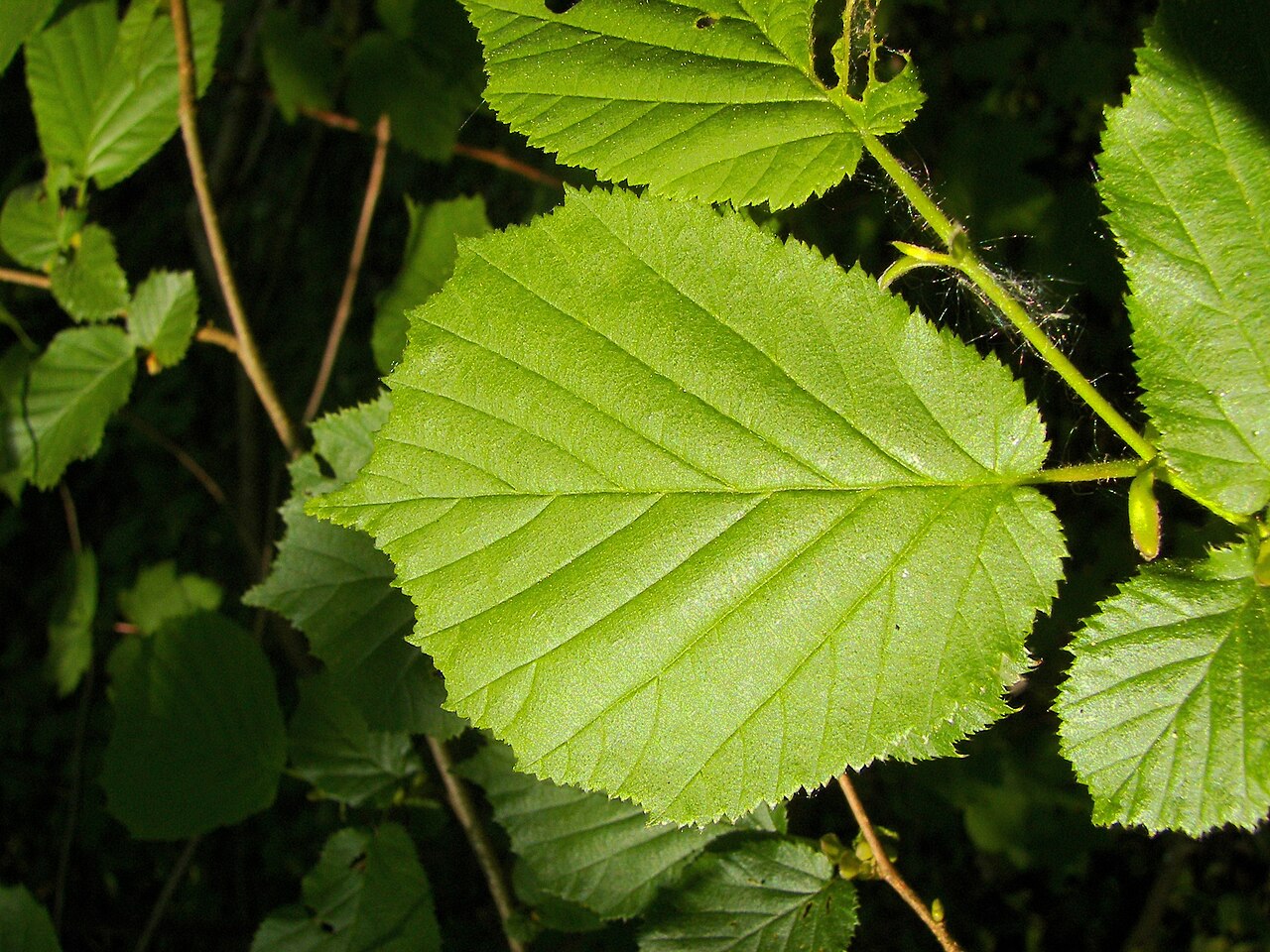
Basic Rule of Diagnosis: Where the Symptom Appears
The most important key in visual diagnosis is the mobility of nutrients in the plant, as this determines whether the symptom will first appear on old or young leaves.
- Mobile elements — nitrogen (N), phosphorus (P), potassium (K), and magnesium (Mg) — are translocated by the plant from older leaves to young, growing organs during deficiency. Therefore, symptoms first appear on old, lower leaves.
- Immobile (or poorly mobile) elements — iron (Fe), boron (B), calcium (Ca), copper (Cu), zinc (Zn), and manganese (Mn) — cannot be redistributed, so deficiency is first seen on young leaves and shoot tips.
Diagnosis before therapy
Visual symptoms often overlap between elements (multiple different deficiencies cause "yellowing"), and the same symptom can have a non-nutritional cause — drought, cold, disease, or root damage. The most reliable path is leaf analysis (foliar analysis) combined with soil analysis. The visual finding serves to tell you where and when to sample and how to interpret the laboratory result.
Other clues to record
- Distribution within the leaf: is the yellowing uniform across the entire blade (typical for N, S) or interveinal — yellow tissue with green veins remaining (typical for Fe, Mg, Mn)?
- Position on the leaf edge: marginal and tip necrosis ("burning" of edges) points to K, and sometimes to salt/chloride excess.
- Leaf size and shape: small leaves, shortened internodes, and "rosettes" (bunches of leaves) point to zinc.
- Orchard coverage: does the symptom affect individual trees, rows, or the entire orchard? A patchy distribution points to soil issues (pH, compaction, moisture), while a uniform distribution points to general fertilization.
Reference (optimal) nutrient values in leaves
The visual impression only makes sense when compared to target concentrations in the leaf. The following table serves as a guide for interpreting foliar analysis samples taken at standard time (mid-summer, mid-shoot).
| Element | Deficiency Limit | Optimal in Leaf |
|---|---|---|
| Nitrogen (N) | < 1.80 % | 2.21–2.50 % |
| Phosphorus (P) | < 0.10 % | 0.14–0.45 % |
| Potassium (K) | < 0.50 % | 0.81–2.00 % |
| Sulfur (S) | < 0.08 % | 0.13–0.20 % |
| Calcium (Ca) | < 0.60 % | 1.01–2.50 % |
| Magnesium (Mg) | < 0.18 % | 0.25–0.50 % |
| Manganese (Mn) | < 20 ppm | 25–250 ppm |
| Iron (Fe) | < 40 ppm | 51–400 ppm |
| Copper (Cu) | < 2 ppm | 5–15 ppm |
| Zinc (Zn) | < 10 ppm | 16–60 ppm |
| Boron (B) | < 25 ppm | 31–75 ppm |
Source of values: Hazelnut Nutrient Management Guide (2021), cited in Croatian professional literature. Macroelements in % on dry leaf matter, microelements in ppm (mg/kg) on dry leaf matter. Values are informative and may vary depending on cultivar, laboratory, and sampling time.
Macroelement deficiencies — symptoms and measures
Nitrogen (N)
Nitrogen is crucial for hazelnut: it positively affects photosynthesis, growth of leaves, shoots, and nuts, and the setting of flower buds. Deficiency is therefore one of the most visible.
- Symptoms (old leaves first): uniform pale green to yellow leaves, starting from the bottom of the plant. Leaves are smaller, shoots are thinner and shorter, nuts are smaller and of poorer quality. In severe deficiency, old leaves turn yellow and drop prematurely.
- Differentiation: yellowing is uniform across the blade, not interveinal (which distinguishes it from Fe and Mg). Sulfur deficiency gives a similar picture but appears on younger leaves.
- Measures: correction of nitrogen fertilization according to plan and analysis; in case of acute deficiency, rapid foliar topdressing with nitrogen is possible. Caution: nitrogen must be dosed carefully because excess causes a number of unfavorable physiological disorders (vigorous vegetative growth at the expense of yield, delayed wood maturation, increased susceptibility to diseases and frost).
Phosphorus (P)
- Symptoms: slowed shoot growth and delayed budding, leafing, and flowering. Leaves may take on a dark green to bluish tint, and in severe deficiency, reddish/purple tones (anthocyanins) on older leaves.
- Measures: phosphorus fertilization according to soil analysis; note that excessive phosphorus fertilization in soil blocks the uptake of zinc, iron, manganese, and copper and can cause their "artificial" deficiency.
Potassium (K)
Potassium regulates water regime, tissue firmness, and resistance. Deficiency is common because hazelnut consumes large amounts of it.
- Symptoms (old leaves first): yellowing, followed by browning of leaf margins and tips — the so-called "burnt edge" effect (marginal necrosis) which progresses inward and upward to younger leaves. Leaves may be wavy or curled. Water consumption increases, resistance to diseases, drought, and frost decreases; nut quality and coloration suffer.
- Differentiation: starts at the margin and tip of the leaf (Mg, conversely, starts interveinally from the base).
- Measures: potassium fertilization according to analysis. Beware of balance: disorders similar to deficiency can also occur with potassium excess, and too much K inhibits the uptake of magnesium and calcium.
Magnesium (Mg)
Magnesium is the central atom of the chlorophyll molecule, so deficiency directly shuts down photosynthesis.
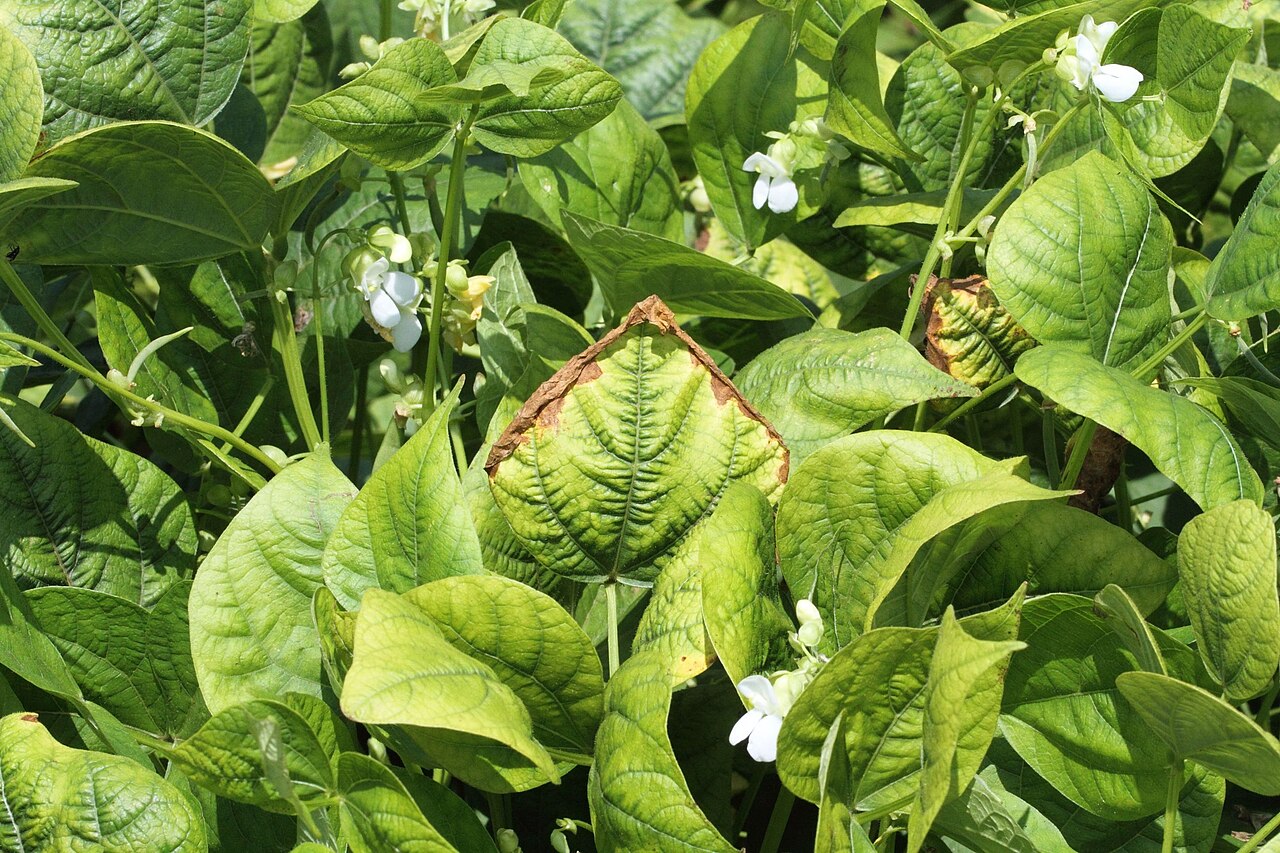
- Symptoms (old leaves first): interveinal chlorosis — tissue between veins turns yellow while veins remain green; in advanced stages, brown and reddish-purple spots appear. Affected leaves are sensitive to light and drop prematurely, weakening the root system and reducing yield and quality.
- Differentiation: interveinal yellowing on old leaves (Fe gives the same picture, but on young leaves).
- Causes: acidic and sandy soils (especially pH below 7 reduces available Mg), excessive liming, one-sided potassium or ammoniacal nitrogen fertilization, and use of poorly matured manure. High calcium and potassium in soil antagonistically suppress Mg.
- Measures: magnesium fertilization (e.g., magnesium sulfate) according to analysis; rapid correction foliarly; balance the K:Mg and Ca:Mg ratios. Caution: magnesium excess is as harmful as deficiency — it inhibits the uptake of potassium and calcium and deteriorates the quality of leaves and nuts.
Sulfur (S)
- Symptoms: general yellow-green to yellow leaves, very similar to nitrogen deficiency, but usually appears first on younger leaves (S is less mobile than N). Reduced vegetative growth.
- Measures: fertilizers containing sulfur (sulfate forms); deficiency is rare with balanced fertilization.
Microelement deficiencies and chlorosis
Iron (Fe) — Ferric chlorosis
Iron deficiency is one of the most common and recognizable problems in hazelnut cultivation, especially on calcareous soils.
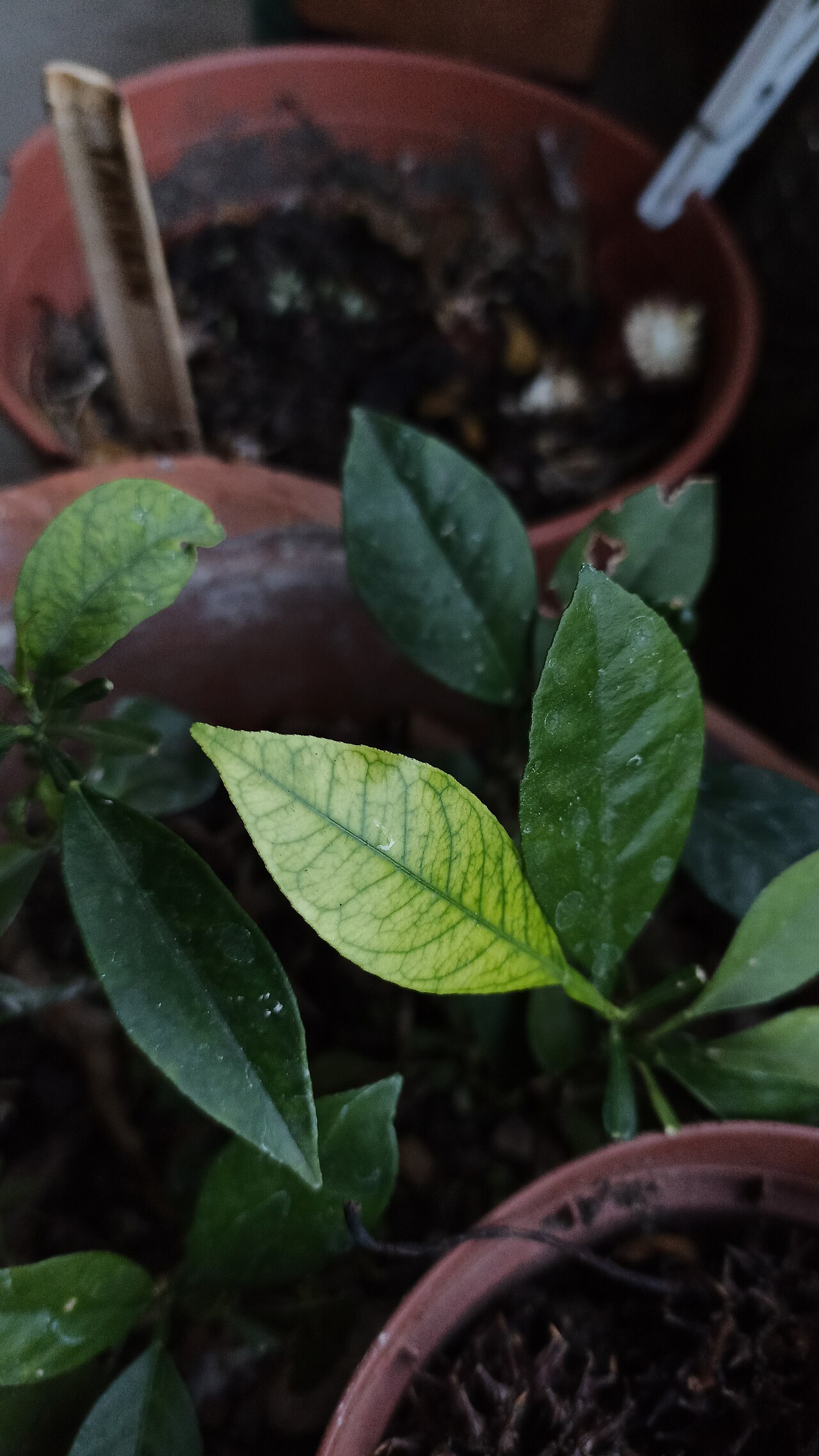
- Symptoms (young leaves first): pronounced interveinal chlorosis — the blade is yellow to almost white, while the vein network remains green; in severe cases, the leaf margins brown and dry out. This is called ferric chlorosis or chlorosis.
- Main cause is not lack of iron in the soil, but its inaccessibility: hazelnut grows poorly on carbonate and alkaline soils (pH above 8.0), where lime binds iron in an unavailable form. Drought and high lime content exacerbate the problem, and excessive phosphorus and excess manganese, copper, and zinc further inhibit iron uptake.
- Preventive criteria when establishing an orchard: optimal active lime < 8 %, limit value no more than 15 %.
- Measures: the most effective is foliar topdressing with iron (chelates) as it bypasses the blockage in the soil; long-term — lowering pH, improving structure and drainage, avoiding excessive liming and phosphorus, and choosing rootstocks/cultivars more tolerant to lime.
Boron (B)
- Symptoms (young leaves and buds first): chlorosis on terminal leaf and flower buds, browning/blackening of young leaf tips and death of terminal growing points. The most severe consequences are on pollination and nut set — poor flowering, empty and hollow nuts.
- Measures: foliar topdressing with boron in critical phenophases (around flowering/pollination). Great care with dosage: the range between boron deficiency and toxicity is very narrow, so diagnosis and dosage must be confirmed by analysis.
Zinc (Zn)
- Symptoms (young leaves first): shortening of internodes and "rosettes" (tight bunches of small leaves at the shoot tip), small and deformed leaves and small yellow (interveinal) spots on young leaves; in advanced stages, chlorotic areas turn brown. Nuts remain small.
- Causes/differentiation: common on soils with pH above 7.5; excessive phosphorus fertilization worsens zinc deficiency.
- Measures: foliar topdressing with zinc; pH correction and restraint from one-sided phosphorus fertilization.
Manganese (Mn)
- Symptoms (young leaves): interveinal chlorosis similar to iron, but the vein network and surrounding tissue are somewhat wider green, and yellow zones are "finer" and patchy; in severe deficiency, necrotic spots appear.
- Causes: high pH (calcareous soils) reduces availability.
- Measures: foliar topdressing with manganese; pH correction.
Copper (Cu) and Molybdenum (Mo)
Deficiency of these elements in hazelnut is rare. Copper participates in a number of enzymatic processes; deficiency may manifest as curling and death of young leaf tips. Molybdenum is linked to nitrogen metabolism; deficiency is most likely on very acidic soils. Both are supplemented foliarly as needed and according to analysis.
Excess nutrients and toxicity
When feeding hazelnuts, it is equally important not to overdo it. Excess manifests in two ways: direct toxicity (tissue damage) and indirectly — through antagonism, where an excess of one element blocks the uptake of another, creating the appearance of its deficiency.
| Excess / Condition | Consequence | Typical Visible Effect |
|---|---|---|
| Nitrogen (N) | Vigorous, soft growth | Excessive dark green foliage, late wood maturation, reduced cropping, increased susceptibility to diseases and frost |
| Calcium / Lime (high pH) | Blockage of Fe, Mn, Zn, B, P, K, Mg (except Mo) | Iron chlorosis (yellowing), general micronutrient deficiencies |
| Potassium (K) | Antagonism with Mg and Ca | Symptoms of magnesium and calcium deficiency |
| Magnesium (Mg) | Antagonism with K and Ca | Symptoms of potassium/calcium deficiency, decline in quality |
| Phosphorus (P) | Blockage of Zn, Fe, Mn, Cu | Zinc and iron deficiency despite sufficient levels in the soil |
| Boron (B) | Direct toxicity (narrow range) | Browning and necrosis of leaf margins, burns |
| Manganese (Mn) | Direct toxicity (very acidic soils) | Dark spots, leaf deformities |
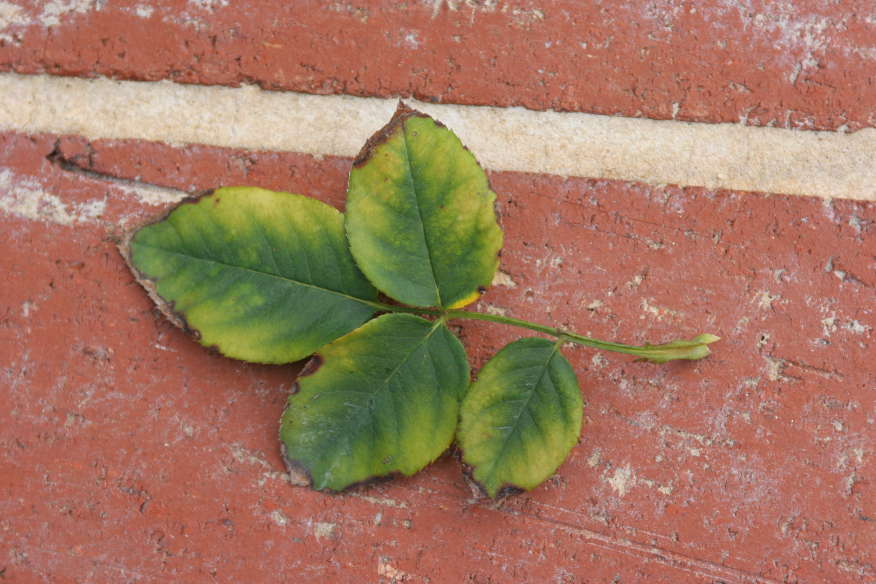
Why toxicity is hard to see with the naked eye
With some excesses (e.g., phosphorus), direct toxicity on the green parts of the plant is hardly visible — instead, a deficiency of another element appears. Therefore, "unexplained" micronutrient deficiencies should always be interpreted through the lens of possible excess/antagonism and soil pH, not just by adding the "missing" nutrient.
Quick diagnostic table
| What you see | Where (old/young) | Most likely cause |
|---|---|---|
| Uniform yellowing of the entire blade | old leaves | Nitrogen (N) |
| Uniform yellowing | young leaves | Sulfur (S) |
| Yellowing and browning of edges/tips ("burning") | old leaves | Potassium (K) |
| Interveinal chlorosis, veins green | old leaves | Magnesium (Mg) |
| Interveinal chlorosis, veins green | young leaves | Iron (Fe) — iron chlorosis |
| Small interveinal spots, similar to Fe | young leaves | Manganese (Mn) |
| Small leaves, short internodes, rosettes | young leaves | Zinc (Zn) |
| Blackening/dieback of tips, poor fruit set | terminal buds | Boron (B) |
| Dark green/bluish, red-purple tones | old leaves | Phosphorus (P) |
| Excessive dark green growth, late cropping | whole plant | Nitrogen excess (N) |
Practical recommendations and common mistakes
- First, rule out "false" causes of yellowing: drought, waterlogging, compacted soil, damaged or diseased roots, and frost give symptoms similar to nutrient deficiency. Observe soil moisture and roots before fertilizing.
- Check soil pH first. A large portion of "deficiencies" of micronutrients in hazelnuts is actually a problem of excessively high pH (lime), not a lack of the element. Adding iron to lime-rich soil often doesn't help — foliar chelates and long-term pH correction do.
- Don't treat "blindly". Visual symptoms are a suspicion; leaf and soil analysis is the diagnosis. Trees with clear symptoms should be sampled separately from healthy ones.
- Think about balance, not just individual elements. Antagonisms (K↔Mg↔Ca, P↔Zn/Fe, Ca↔Mg/Fe) mean that "more" of one nutrient can cause a deficiency of another.
- Foliar for quick correction, soil for long-term. Foliar feeding quickly alleviates acute chlorosis and targets sensitive phenophases; balanced soil fertilization and soil management address the root cause.
- Be cautious with boron and manganese — narrow range between beneficial and toxic doses; always follow analysis and label instructions.
- Doses, products, and timing are indicative and depend on cultivar, location, orchard condition, and current regulations/label approvals — confirm with an advisory service before application.
Sulfur correction: sulfate fertilizers and N:S ratio diagnostics
Sulfur deficiency in hazelnuts is rare with balanced fertilization, but it deserves additional attention because sulfur is incorporated into proteins and lipids and plays a key role in the biosynthesis of the amino acids methionine and cysteine, in enzyme structure, vitamin synthesis, and maintaining the cell's redox balance. It is particularly important that sulfur improves the utilization of applied nitrogen: under deficiency conditions, nitrogen incorporation into proteins decreases, and in severe deficiency, the undesirable concentration of nitrates in the tissue rises. Therefore, S deficiency on leaves is easily mistaken for N deficiency — it is distinguished by its position on younger leaves and, reliably, by the laboratory.
Sulfate forms of fertilizers are the simplest way to introduce sulfur "incidentally," alongside other nutrients you plan to apply. This avoids separate S fertilization while simultaneously covering the partner element:
| Fertilizer | Delivers with S | When to choose it |
|---|---|---|
| Potassium sulfate (K₂SO₄, SOP) | potassium (K), no chlorides | Potassium correction on soils sensitive to chlorides; simultaneous S input |
| Magnesium sulfate (MgSO₄, Epsom salt / "bitter salt") | magnesium (Mg), fast-dissolving | Foliar and soil application during combined Mg and S deficiency |
| Ammonium sulfate ((NH₄)₂SO₄) | nitrogen (N) in ammonium form | When mild rhizosphere acidification is desired along with N |
Ammonium sulfate also has a physiologically acidic effect, so it can be relied upon where the goal is to slightly lower the pH in the root zone along with nitrogen. Conversely, sulfate fertilizers must not be confused with elemental sulfur: sulfate (SO₄²⁻) is the form the plant takes up directly and does not significantly change soil pH, while elemental sulfur is used for lowering the pH of carbonate soils and acts slowly (via microbial oxidation to sulfuric acid, sometimes taking up to a year). Dosing, effectiveness on soils with high active lime, and necessary precautions are described in the article Soil pH Correction and Liming (Calcization).
Diagnostics via the N:S ratio. Since sulfur and nitrogen are incorporated into proteins together, the sulfur concentration in the leaf alone does not tell the whole story — a better indicator is the nitrogen-to-sulfur ratio (N:S) in foliar analysis. A wide N:S ratio (relatively high N, low S) warns that sulfur may be a limiting element even if the absolute S value is not extremely low, because the plant cannot utilize all absorbed nitrogen. Therefore, sampling for S makes sense when linked to routine summer foliar analysis (mid-summer, middle leaves of non-fruiting shoots), and the result should be interpreted together with the N value. In cases of general yellowing without a clear cause, the N:S ratio helps distinguish whether it is a nitrogen deficiency, sulfur deficiency, or both.
Sources
This text is an AI summary compiled from a collection of hazelnut literature (internal RAG corpus) and public sources. Main sources used:
- Voogt, W. et al. — Nutrient deficiency symptoms and uptake relations in juvenile hazelnut (Corylus avellana) in response to macronutrient supply (Wageningen University & Research, 2023). scholar.google.com
- Foliar fertilization of hazelnuts for higher and better quality yields — includes a table of optimal macro- and micronutrient quantities in leaves (according to Hazelnut Nutrient Management Guide, 2021). scholar.google.com
- Technology and Economic Efficiency of Organic Hazelnut Production (OPG Hobolić; according to Miljković, 2018), 2021. — role and dosage of nutrients, magnesium excess/deficiency. scholar.google.com
- Fındık Yetiştiriciliğinde Fizyolojik Hastalıklarla Mücadele (agrowy.com, 2020) — symptoms of magnesium, calcium deficiency, and antagonisms. agrowy.com
- Fındık Entegre Mücadele Teknik Talimatı (Plant Health Research, 2022) — magnesium, sulfur, and physiological disorders in hazelnuts.
- Effect of magnesium fertilization on hazelnut (2015) and Magnezyum gübrelemesinin fındık (2016) — magnesium deficiency/excess and antagonisms.
- Yapraktan Gübreleme Rehberi (2016) — symptoms of potassium, magnesium, zinc, iron deficiency; pH influence.
- Our Land and Italian Hazelnut (EcoBegić) and Impact of Low Temperatures on Frost Damage (2021) — hazelnut sensitivity to ferrochlorosis, criteria for active lime and pH.
- Guida alla concimazione (2012) — symptoms of calcium and sulfur deficiency.
- PestSmart Diagnostic Field Guide (2018) — general principles of visual diagnosis of mineral deficiencies.
- Province of British Columbia — Hazelnut tree nutrient management. www2.gov.bc.ca
- Agroklub — Recognize boron and iron deficiency on plants in time. agroklub.com
- FitoEko / Booklet on Organic Hazelnut Production (Fito Eko, 2021–2025) — role of sulfur in metabolism (methionine, cysteine, enzymes, nitrogen utilization) and sulfur preparations (FitoHeliosulfre). agroklub.com
- PestSmart Diagnostic Field Guide (2018) — sulfur as a less mobile element; yellowing first on upper (younger) leaves.
- Nutrizione del nocciolo — Manuale tecnico (Ferrero/Tecniche Nuove, 2025) — elemental sulfur for soil acidification, slow action, and caution in dosing. tecnichenuove.it
- Sun et al. — Effects of Elemental Sulfur on Soil pH and Growth (Soil Systems, 2022) — dependence of required sulfur dose on initial pH and soil type. doi.org/10.3390/soilsystems6020031
Recommended equipment
🔎 fruit tree fertilizer — Amazon →Affiliate links — we may earn a small commission at no extra cost to you.