Manual hazelnut harvest: Organization and efficiency
Content generated by artificial intelligence — verify before application
This article was automatically compiled from a collection of hazelnut literature with the aid of artificial intelligence and may contain errors or outdated information. It serves as a starting point for further research, not as professional advice. Dosages, products, and timing are informative and depend on the cultivar, location, and current regulations — always check with advisory services and official sources before application.
Harvest is one of the most demanding and expensive operations in hazelnut production — according to several sources, it accounts for up to 50% of total production costs. Although harvesting on larger areas is increasingly mechanized, manual harvesting still has its place: in small orchards and home gardens, on uneven terrain, with native cultivars that have long bracts, and as a way to beat rodents and wild animals to the harvest. This article explains how to organize the manual collection of nuts — from the ground and from the tree — how often to visit the orchard, how much labor and what tools are needed, and when manual harvesting makes sense at all.
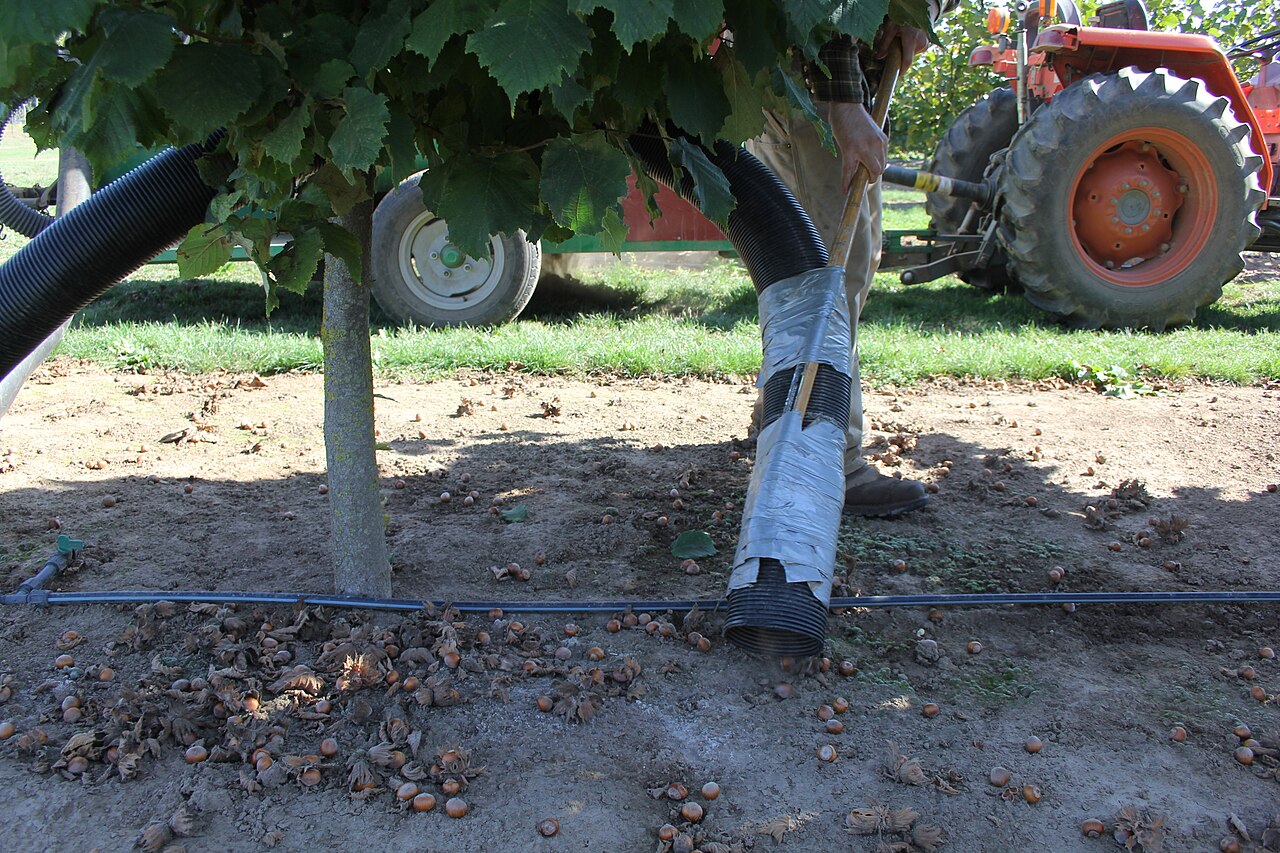
What is manual harvesting and when is it applied?
Manual harvesting implies that the worker collects the nuts directly by hand, without a harvester machine (combine with suction). In practice, there are two fundamental approaches, which are often combined:
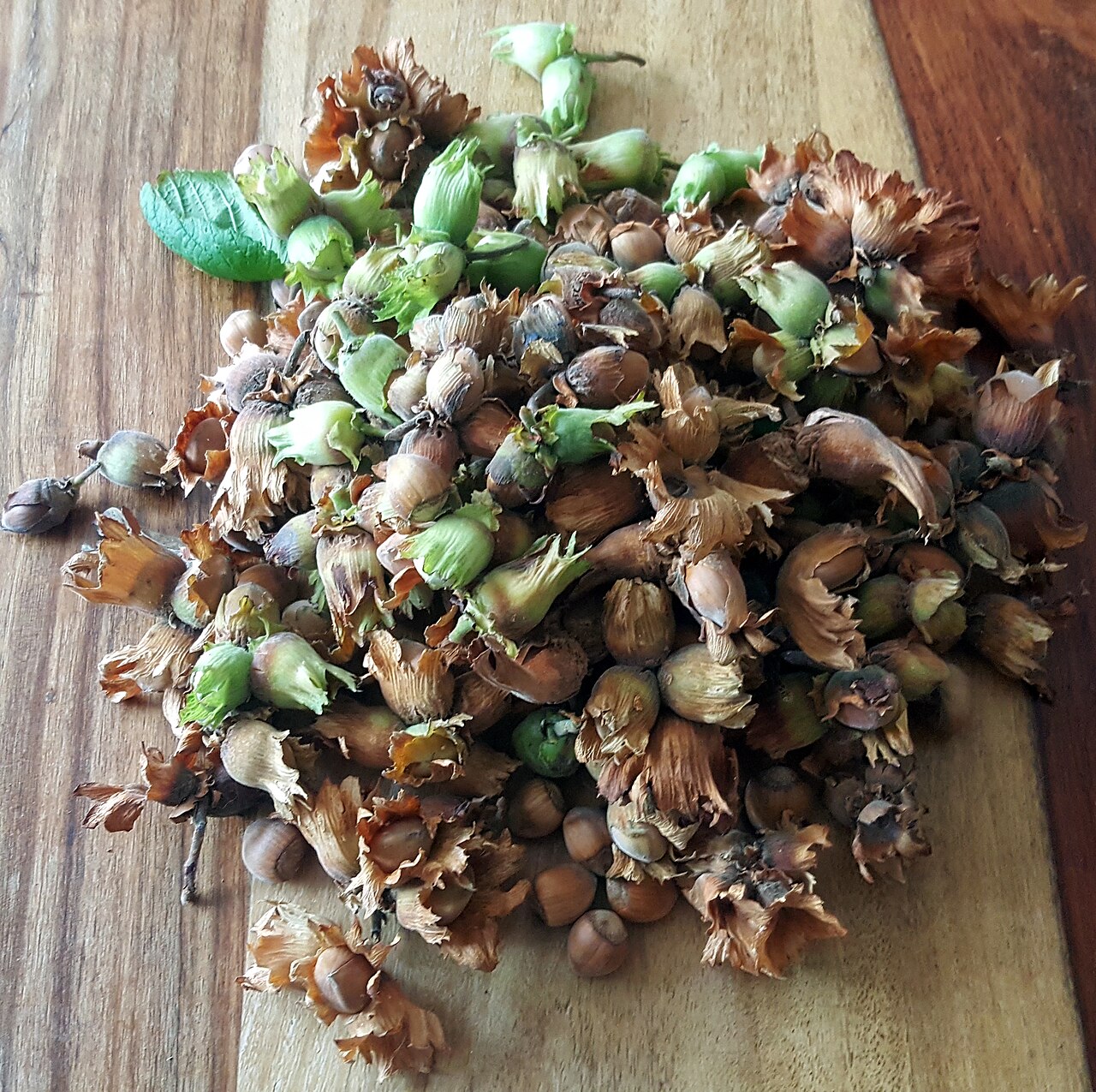
- Collecting nuts from the ground — the most common form. Ripe nuts fall out of the bract (husk) on their own and drop to the ground under the bush/tree, where the harvester collects them in baskets, buckets, or sacks. This is the main method for cultivars where the nut easily drops from the bract.
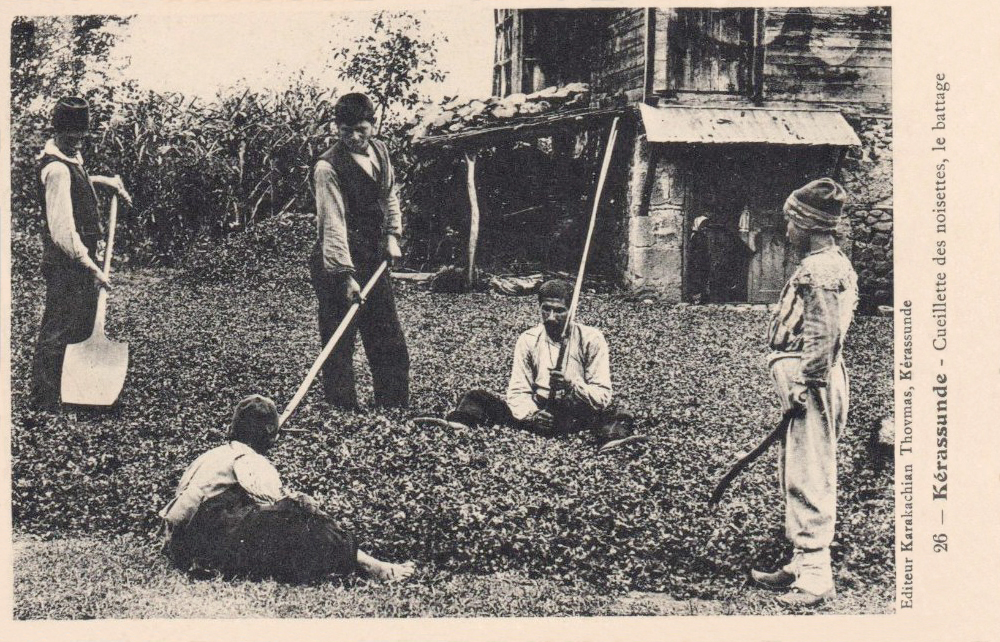
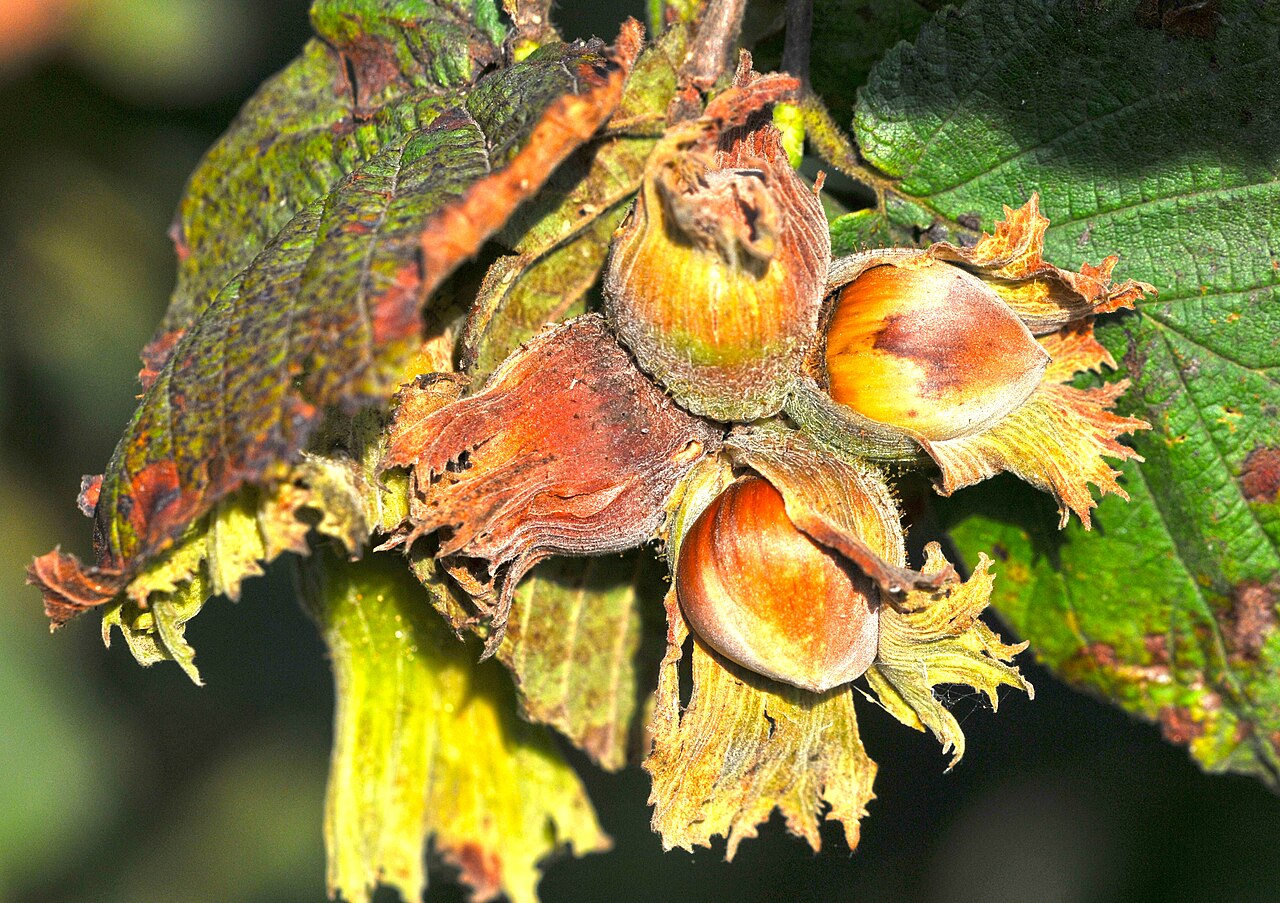
- Harvesting (picking) from the tree — nuts are picked directly from the branches while still in the bract, or the branches/whole tree are gently shaken so that the nuts fall onto a previously laid tarp, foil, or net. Harvesting from the tree is most common for cultivars where the bract is longer than the nut and narrowed at the tip, so the nut does not drop on its own even when ripe — in Croatia, this is the case with the most widespread native cultivar, 'Istarski duguljasti'.
When manual harvesting makes sense
Manual harvesting is justified in the following situations:
- Small orchards and home gardens — where investing in expensive mechanization (combine, backpack vacuum) simply does not pay off.
- Uneven, sloped, or rocky terrain — where harvesting machines cannot work effectively.
- Dense planting and bush training form — when spacing and canopy shape do not allow machine passage.
- Cultivars with long bracts (e.g., 'Istarski duguljasti') — where the nut does not drop on its own, so it must be picked from the tree.
- Protection from wildlife and rodents — small growers pick from the tree to collect the nuts before they fall to the ground, where they are attacked by rodents, birds, and wild boars that cause significant damage.
- Quality control — the advantage of manual harvesting is that the harvester immediately, "on the spot," separates dried, hollow, and insect-damaged nuts from healthy ones. This often avoids additional cleaning and sorting processes necessary with machine harvesting.
Main rule of profitability
The smaller, more uneven, and more cultivar-specific the orchard, the more sense manual harvesting makes. The larger, flatter, and more uniform the area, the faster mechanization prevails. According to literature, on areas larger than about 3 ha of hazelnuts in full production, machine harvesting (combine) almost always pays off.
Efficiency: how much one harvester collects
This is the key figure for any planning. Sources vary depending on the cultivar, crop density, terrain, and method, but all confirm that the output of manual harvesting is low:
| Source / method | Output per harvester | Note |
|---|---|---|
| Manual harvesting (Bulatović; multiple sources) | ~50 kg / day | Orientational norm, depends on a number of factors |
| Manual harvesting (Gojak, master's thesis) | 6–8 kg / hour → up to 60 kg / day | Collecting from the ground or from foil after light shaking |
| Slow manual harvesting (small orchard/home garden) | ~20 kg for 8 h | Reduces total income by 15–20 % |
| Foreign estimates (Italy) | ~10 kg / hour | Very low labor productivity |
| Machine harvesting (for comparison) | 100 kg/hour (Miljković), 120–500 kg/hour (Modic) | High capacity, little labor |
In other words, one harvester machine in one hour does the work that would take a manual harvester a whole day or more. This difference is precisely why harvesting is mechanized on large orchards, while manual harvesting remains for small and specific cases.
Figures are informative
Outputs of 6–8 kg/hour or 20–60 kg/day per harvester are orientational and depend on the cultivar, crop density, terrain, worker experience, and whether harvesting is done from the ground or from the tree. For your own orchard, measure the actual output in the first days of harvest and plan accordingly.
Harvest frequency: harvesting in waves
Hazelnut does not ripen uniformly. Nuts ripen and drop gradually over several weeks, so manual harvesting (as well as machine harvesting) is carried out in multiple rounds (waves), not all at once.
- Harvest season: depending on the cultivar and region, it lasts from mid/late July to early October; in continental conditions, most often from late August to mid/late September.
- Interval between visits: according to experience from family farms, harvesting is carried out at intervals of about 2 to 3 weeks. Many growers harvest "in two rounds" — in late August and during September.
- Distribution of crop by waves: according to experiential data, in the first wave, 70–80 % of ripe nuts fall to the ground, and the remainder must be collected in the second, and even third, wave.
When collecting from the ground, visits must be frequent enough so that nuts do not remain on the ground for too long, where they absorb moisture (risk of mold and aflatoxins) and become prey for rodents, birds, and wild boars. In contrast, for tree harvesting, one goes earlier and more targeted — before the nuts drop on their own.
Timeliness is crucial
Premature harvesting results in smaller, shriveled, and tough kernels with poorer taste. Late harvesting leaves nuts exposed to pests and moisture for longer, and part of the crop is eaten by animals. Harvesting should be carried out in dry and warm weather and before the rainy period. The nut is ripe when it changes color to yellowish-brown and drops easily from the bract.
Labor organization
The biggest cost of manual harvesting is not the tool but labor. Therefore, good team organization is key.
Estimating the required labor force
One starts with the output per harvester and the estimated crop. Typical hazelnut yield in full production ranges approximately around 2–3 t/ha (and with good agronomy, even more). With an orientational output of 50 kg/day per harvester, the rough calculation looks like this:
| Crop to harvest | Output per harvester | Total man-days | Example team and duration |
|---|---|---|---|
| 1,000 kg | 50 kg/day | 20 man-days | 4 harvesters × 5 days |
| 2,000 kg | 50 kg/day | 40 man-days | 5 harvesters × 8 days |
| 3,000 kg | 50 kg/day | 60 man-days | 6 harvesters × 10 days |
Foreign estimates for the labor required for traditional ground collection range approximately 157–180 working hours per hectare (depending on the planting system), which also shows how labor-intensive the work is. Take these figures as a guideline — always adjust to the actual output in your orchard.
Practical organization rules
- Divide the orchard into sectors/rows and assign them to harvesters so that work does not overlap and progress can be tracked.
- Harvest according to ripening waves — group cultivars by ripening time (at planting) to reduce the number of visits and organize work. This planning measure reduces costs for both manual and machine harvesting.
- Ensure sufficient packaging (baskets, buckets, sacks, crates) and a clear path from the harvester to the temporary storage area.
- Drying immediately after harvest. Do not leave nuts in a pile; spread them in a thin layer in a dry and ventilated place. For small quantities, spread them on a flat surface and mix more often. Drying is mandatory because otherwise, mold and nut spoilage occur.
- Pay attention to ergonomics. Collecting from the ground is physically very demanding — bending, squatting, and repetitive movements cause musculoskeletal injuries (back, knees, shoulders). Introduce breaks, rotate workers to different tasks, and use aids that reduce bending.
- Occupational safety. Provide gloves, appropriate footwear, sun protection, and plenty of water; when working with machines (e.g., mowers before harvest), apply prescribed protective equipment.
Orchard preparation before harvest
Good soil preparation speeds up and reduces the cost of both manual and machine harvesting, especially the collection of nuts from the ground:
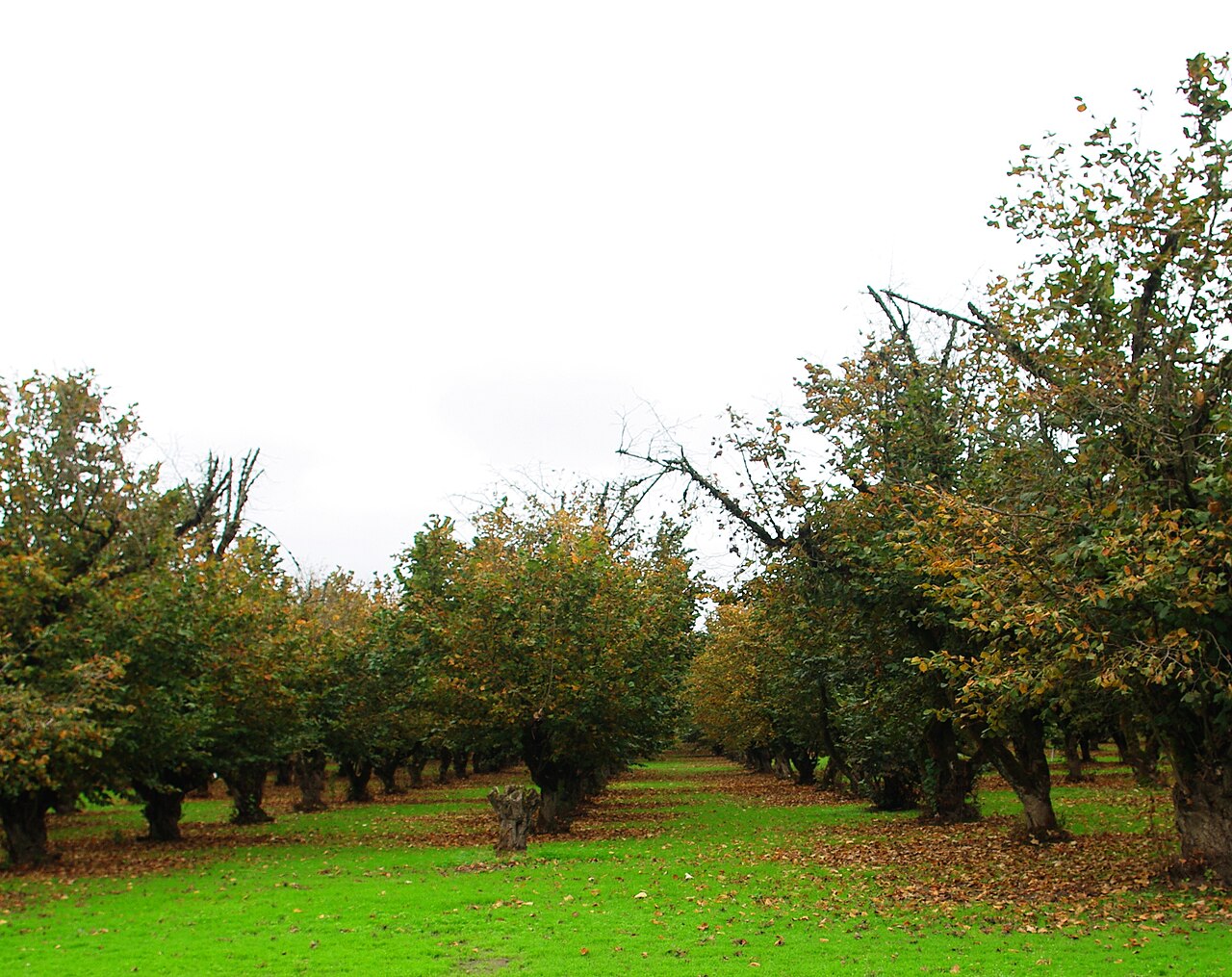
- Mow / mulch the grass under the bushes and in the rows immediately before harvest. On a clean, low surface, nuts are easier to spot and collect, and they have lower moisture content.
- Clear the soil of weeds and mowing residues — the fewer twigs, leaves, and soil, the less subsequent cleaning is needed.
- Rake nuts from the middle of the row to the edge / under the bushes ("raking") to speed up collection. In semi-mechanized harvesting, nuts are gathered into rows with rakes or special brushes.
- For harvesting on a tarp, prepare the tarp, foil, or net in advance, which you place under the bush before shaking.
Tools for manual harvesting
Unlike mechanized harvesting, manual harvesting requires little and inexpensive equipment — which is precisely its advantage in small orchards.
| Tool / aid | Purpose |
|---|---|
| Baskets, buckets, sacks, crates | Basic packaging for collecting and transporting nuts |
| Rakes | Raking (collecting) nuts from the ground to the edge of the row and under the bush |
| Tarp / foil / plastic net | Placed under the bush; nuts fall onto it after light shaking |
| Special brushes | Collecting shaken nuts into rows (preparation for suction in semi-mechanized harvesting) |
| Mower / mulcher | Soil preparation — mowing grass before harvest |
| Gloves and protective equipment | Harvester protection, injury reduction |
| Backpack vacuum (semi-mechanized harvesting) | For smaller orchards; more efficient than pure manual harvesting, and significantly cheaper than full combines |
The bridge to mechanization: semi-mechanized harvesting
If pure manual harvesting is too slow and a full combine is too expensive, consider a backpack vacuum. It is intended for smaller orchards, is more efficient than manual harvesting, and is financially much more acceptable than fully mechanized systems. This is a logical intermediate step as the orchard grows.
Costs and Profitability
- Harvest accounts for approximately 50% of total hazelnut production costs — the single largest cost item.
- Manual harvesting is slow and expensive: in small orchards, it can reduce total profits by 15–20 %.
- The main cost is labor, not equipment. Therefore, manual harvesting is acceptable for small areas (low investment in machinery), whereas for larger areas, mechanization quickly becomes more cost-effective (lower cost per kilogram).
- Using shakers and vacuum collectors (or hiring a mechanical harvesting service) significantly reduces the cost per kilogram of harvest — but only when the area is large enough to cover the fixed cost of the machine.
Harvesting service as an alternative
Many small and medium-sized growers do not purchase their own collector machine but instead use a harvesting service provided by specialized contractors or larger family farms. This is a common practice and can be more cost-effective than investing in expensive machinery that you only use for a few weeks each year.
Common Mistakes
- Premature or late harvesting — loss of kernel quality or yield loss due to pests and moisture.
- Leaving nuts on the ground for too long — absorption of moisture, mold, risk of aflatoxins, and damage from rodents/wildlife.
- Harvesting in wet weather — higher nut moisture content and increased risk of spoilage; harvest in dry conditions.
- Unclean ground cover — tall grass and weeds slow down harvesting and increase the proportion of impurities.
- Lack of immediate drying after harvest — almost guaranteed path to mold and spoilage.
- Poor ergonomics and no breaks — injuries to harvesters and reduced efficiency.
- Underestimating labor force — if there are not enough harvesters during the narrow ripening window, part of the yield is lost; plan the team based on the realistic output per harvester.
Summary of Recommendations
- Choose manual harvesting for small orchards, uneven terrain, dense plantings, and cultivars with long husks ('Istarski duguljasti'), as well as when you want to beat wildlife to the harvest.
- Expect an output of approximately 20–60 kg per harvester per day and plan the team accordingly.
- Harvest in waves, every 2–3 weeks, in dry and warm weather, before rain.
- Prepare the ground (mowed grass, clean soil, gathered nuts) — speeds up harvesting and reduces cleaning time.
- Dry nuts immediately in a thin layer in a ventilated area.
- As the orchard matures, consider a backpack vacuum or mechanical harvesting service as a more cost-effective step.
Sources
This article is an AI-generated summary compiled from an internal collection of hazelnut literature (RAG corpus) and publicly available sources. Figures (outputs, frequency, cost shares) are informative and depend on cultivar, location, and conditions. Main sources used:
- Vrtodušić et al. (2022): Harvesting, drying, and storage technology of hazelnuts: A literature review. Journal of Central European Agriculture, DOI: 10.5513/JCEA01/23.2.3493 — jcea.agr.hr
- Gojak, M.: Tractor attachment for hazelnut harvesting (diploma thesis, Faculty of Mechanical Engineering and Naval Architecture) — RAG corpus
- Hazelnut Cultivation: A Guide for Growers (2024) — RAG corpus (PDF)
- Economics and Establishment of a Hazelnut Orchard on Balog Family Farm (2021) — RAG corpus
- Technological and Economic Characteristics of Organic Hazelnut Production on Hobolić Alen Family Farm (2021), VGU repository — RAG corpus
- Technological and Economic Characteristics of Hazelnut Cultivation (2018), DOI: 10.46584/lm.v36i2.1141 — RAG corpus
- Mechanization in Hazelnut Production and Processing at Minas-zrno 1 Company (2021) — RAG corpus
- Environmental Protection Study — Establishment of a Permanent Hazelnut and Plum Orchard — bbz.hr
- Agroklub: For better and higher yields, perform timely hazelnut harvesting (2020) — agroklub.com
- Vrtodušić et al.: Hazelnut postharvest technology: A review — RAG corpus
- Agri-Export: How to Harvest Hazelnuts: Modern Methods and Machinery (2025) — agri-export.it
- Labor requirements and work efficiencies of hazelnut harvesting using traditional and mechanical pick-up methods — ResearchGate
- Gospodarski list: Hazelnut – from planting to harvest — gospodarski.hr
Recommended equipment
🔎 nut gatherer roller — Amazon →Affiliate links — we may earn a small commission at no extra cost to you.
Handheld Nut Roller Collector
For gathering nuts from the ground on small areas.
| Use Case | Option Type | What to Check Before Purchase |
|---|---|---|
| Small area collection | Manual roller device | Wheel traction and debris clearance |
| Uneven terrain | Heavy duty rollers | Frame strength and wheel size |
| Large orchards | Mechanical sweepers | Professional machinery for efficiency |