Agroforestry and Intercropping in Young Orchards
Content generated by artificial intelligence — verify before application
This article was automatically compiled from a collection of hazelnut literature using artificial intelligence and may contain errors or outdated information. It serves as a starting point for further research, not as professional advice. Dosages, products, and timing are informative and depend on the cultivar, location, and applicable regulations — always consult with advisory services and official sources before application.
A young hazelnut orchard does not produce a full yield in its first four to eight years, while simultaneously requiring investments in seedlings, fertilization, protection, irrigation, and soil maintenance. This period of "silent capital" is the greatest financial challenge for every new producer. Agroforestry and intercropping (alley cropping) offer a proven solution: while the hazelnut grows and enters production, the space between rows is used for another crop that generates income, protects the soil, and diversifies the farm. This article explains the systems, combinations, benefits, and — equally importantly — the limitations and competition that such combinations entail during the most sensitive phase of orchard development.
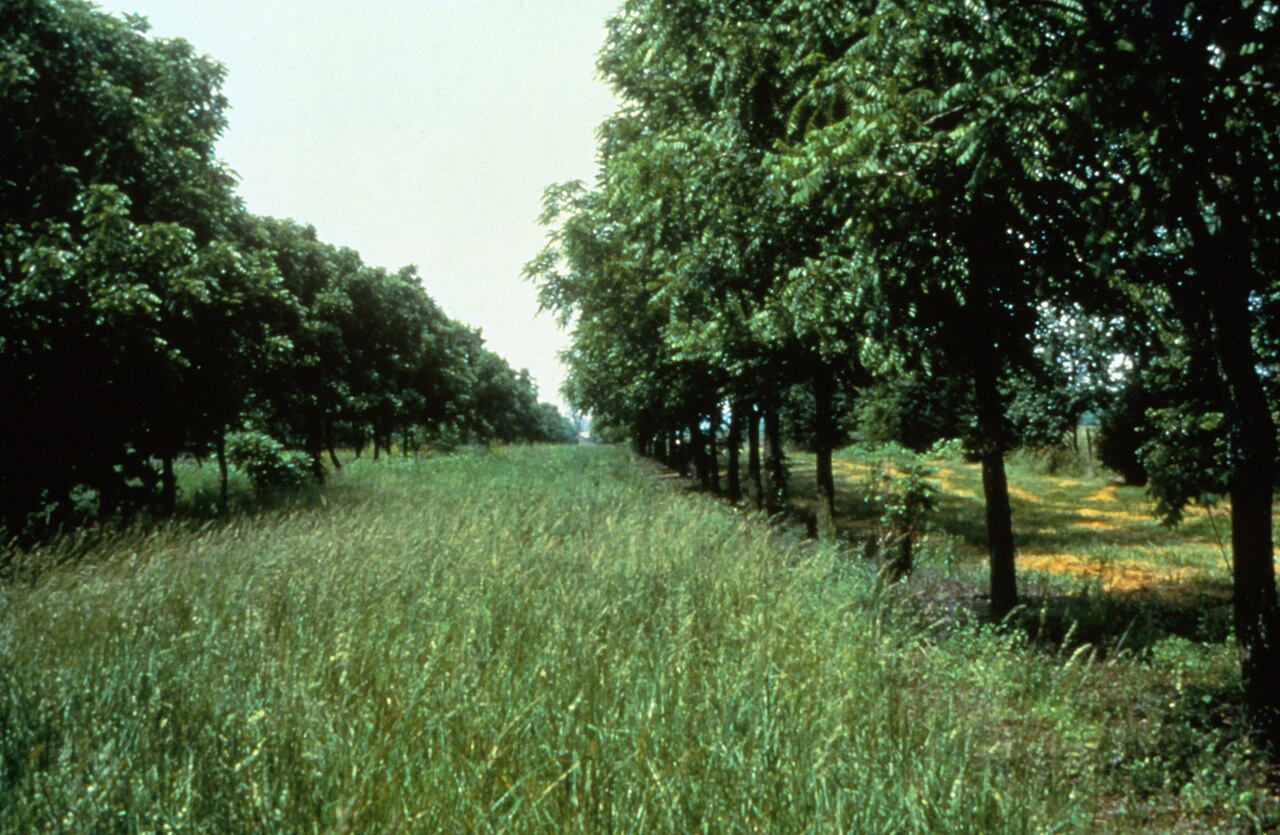
What is agroforestry and how does a young hazelnut orchard fit into it?
Agroforestry is a collective term for land-use systems in which woody perennials (trees, shrubs) are intentionally grown on the same area as agricultural crops and/or livestock, in a specific spatial arrangement or temporal sequence, with ecological and economic interactions among the components. Hazelnut is almost an ideal species for this: it is perennial, has a long orchard establishment period before full production, and rows are planted at distances that leave a wide inter-row strip.
Professional literature distinguishes several basic forms of agroforestry relevant to hazelnut:
| System | What it combines | Typical application with hazelnut |
|---|---|---|
| Silvopastoral (alley cropping / intercropping) | Woody perennials + annual or perennial field/garden crops | Cereals, legumes, grass mixtures, vegetables between rows of young hazelnut |
| Silvopastoral | Trees + livestock grazing | Mowing/grazing in the inter-row in later stages, when trees are tall enough |
| Agrosilvopastoral | Trees + crops + livestock | Mixed farming systems |
| Combined timber + fruit production | Timber tree + fruiting species | E.g., walnut for timber + hazelnut for fruit |
| Windbreaks and hedgerows | Tree rows as protective strips | Hazelnut as a border strip or protection for other crops |
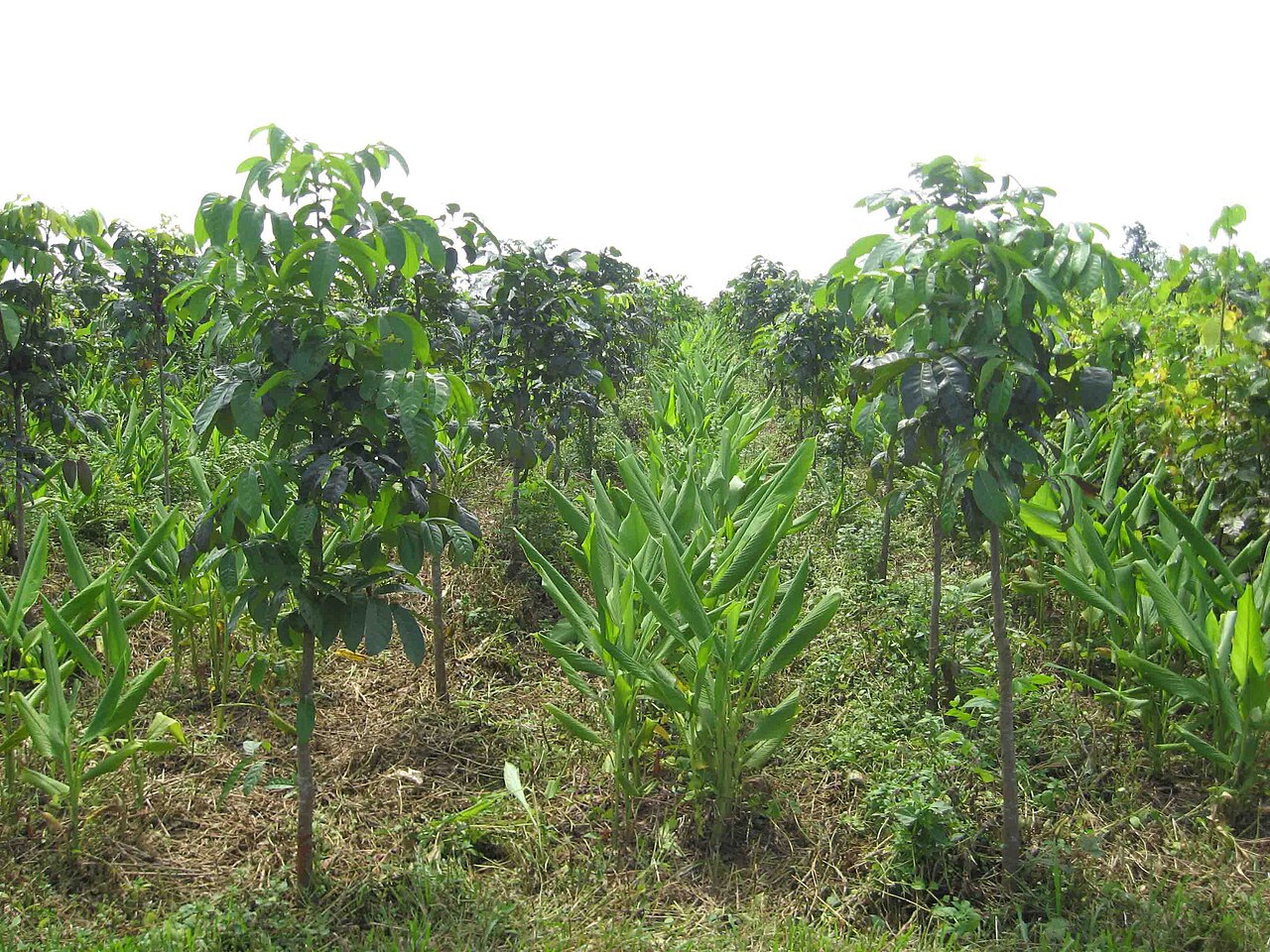
In the context of a young hazelnut orchard, the most important system is the silvoarable system — intercropping during the establishment period. Here, hazelnut is the permanent, main crop, while the intercrop is temporary and gradually abandoned as the canopies expand and the canopy closes.
Why intercrop during the establishment period
The main motivation is financial. Hazelnut does not return invested capital in the first few years: literature states that the first fruits appear after several years, and full yield is only reached at seven to eight years. Experiences from leading growing areas show why bridging this period is crucial — as one producer from the Willamette Valley says: "That’s a lot of land without income for four years. Financially, I couldn’t have sustained that." Producers there routinely bridge the first four years with an intercrop, and some extend it to five or six years.
Benefits of intercropping and agroforestry summarized:
- Cash flow during establishment — income from the intercrop covers maintenance costs while the hazelnut does not yet produce.
- Higher overall land productivity — agroforestry systems often yield higher total output than the sum of the same monocultures. This is measured by the Land Equivalent Ratio (LER): a value above 1.0 means that the combination on the same area yields more than separate monocultures. European studies for systems with hazelnut and other crops record combined LER in the range of 1.36 to 2.00.
- Soil protection from erosion and nutrient leaching — ground cover in the inter-row reduces erosion and runoff, especially on slopes and during establishment.
- Improvement of soil fertility and structure — certain intercrop species (especially legumes) fix nitrogen and increase humus content, reducing the need for mineral fertilizers.
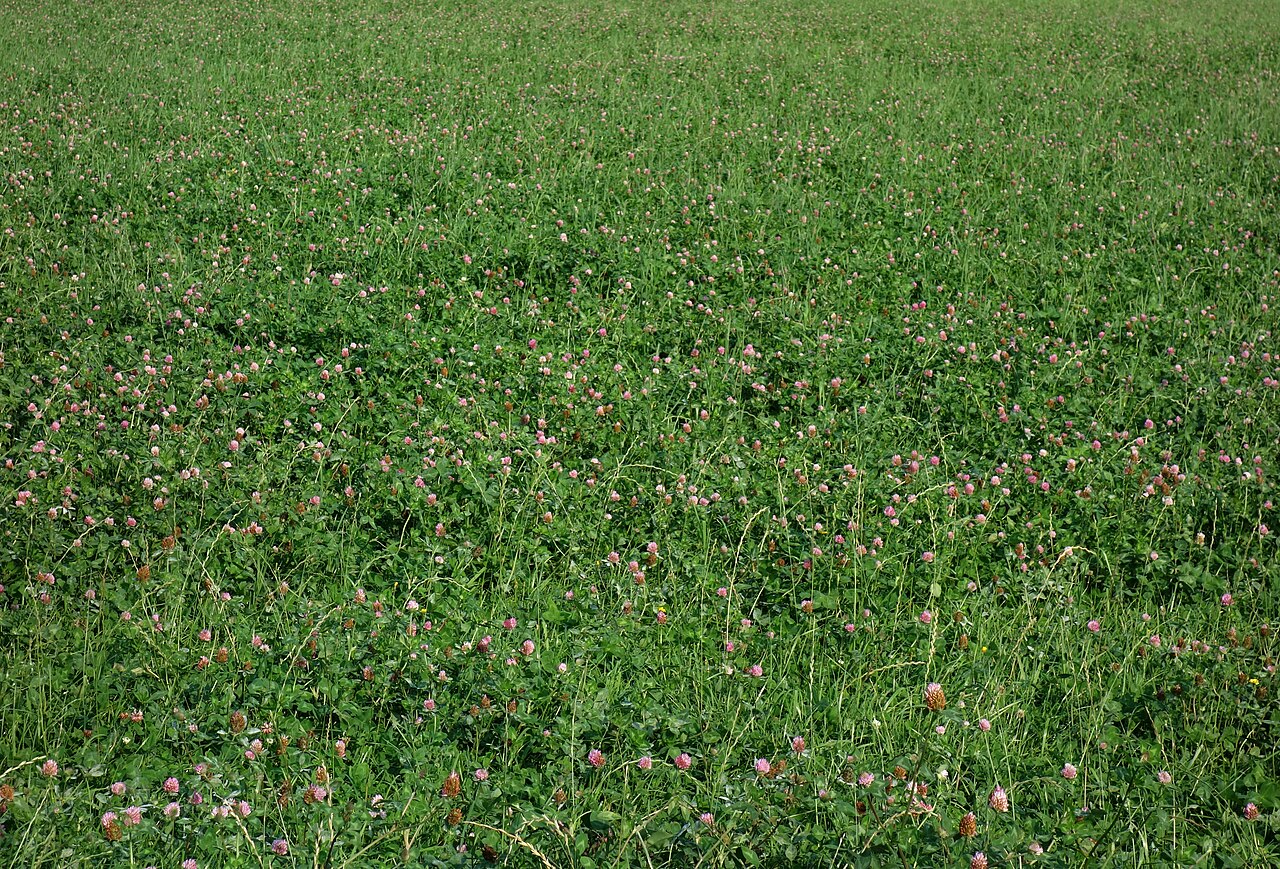
- Diversification and risk distribution — more products from the same area reduce dependence on a single crop and one market.
- Biodiversity and beneficial fauna — more diverse cover attracts pollinators and natural enemies of pests.
- Potential subsidies — in some EU countries, agroforestry systems are separately subsidized (e.g., in Germany, a measure on the order of 600 EUR/ha is cited); specific amounts and conditions vary by country and depend on current agricultural policy — check with the relevant payment agency.
Combinations: which intercrops are considered
The choice of intercrop depends on climate, soil, irrigation, mechanization, and market. The following groups are highlighted from literature and practice:
| Group | Examples | Notes |
|---|---|---|
| Grass/forage crops | perennial ryegrass, annual ryegrass, tall fescue, orchard grass for hay | Low, stable crop; easy to mow; low risk to trees |
| Legumes | red clover, vetch (Willamette/hairy), clovers in general | Fix nitrogen, improve soil; often in mixture with grass |
| Cereals | winter wheat, oats, winter barley | Caution with germination during summer irrigation of trees |
| Vegetables (with irrigation) | strawberries, beans, melons/squash, potatoes, cabbage | Higher income, but higher competition and water needs |
| Specialized/woody | Christmas trees, nursery stock (e.g., boxwood), industrial hemp | Caution: woody intercrops compete more strongly and may hinder mechanization |
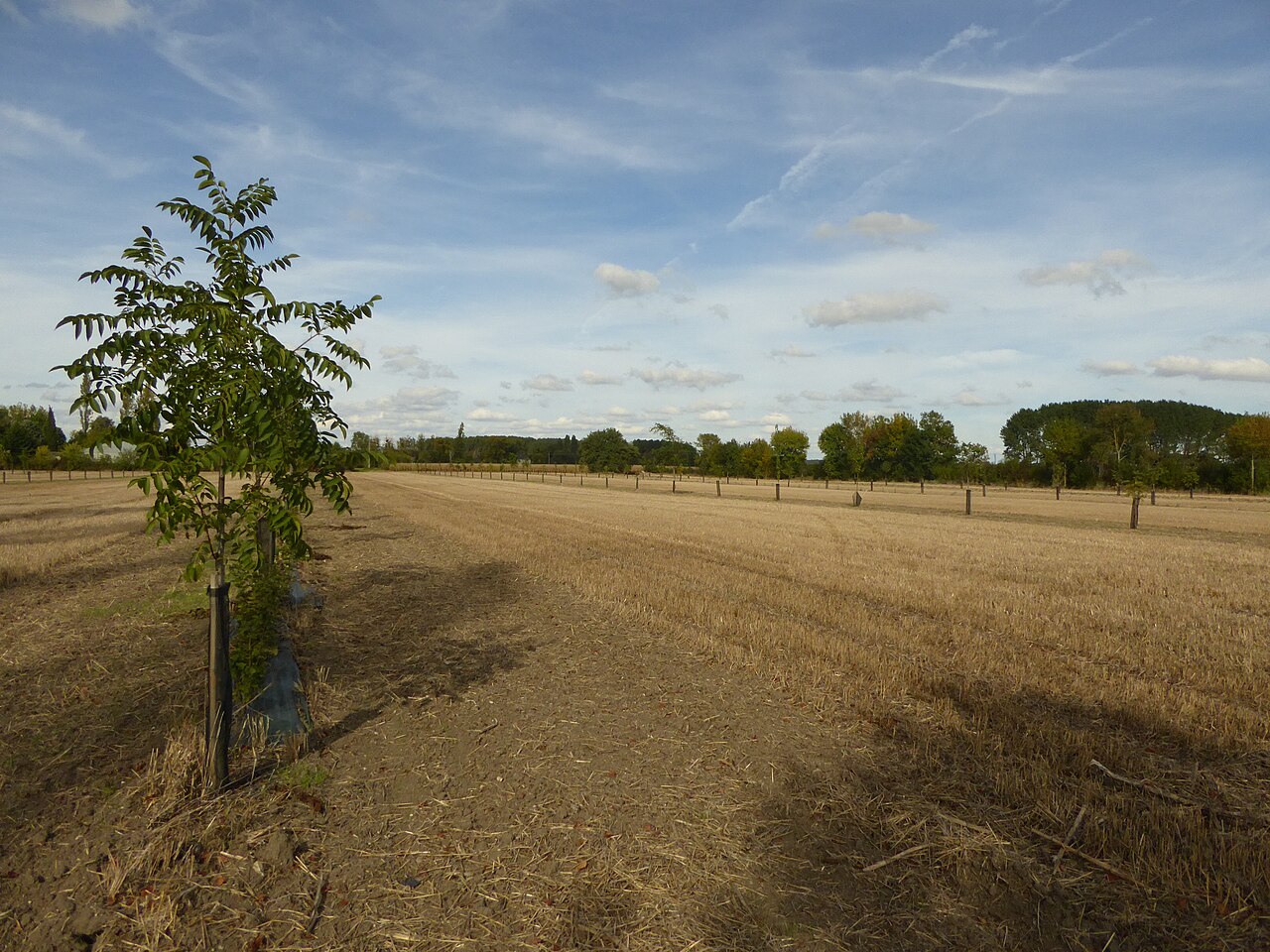
| Combination timber + fruit | walnut for timber + hazelnut for fruit | Proven compatible; hazelnut even improves walnut stem quality and reduces pruning, but the system requires more water |
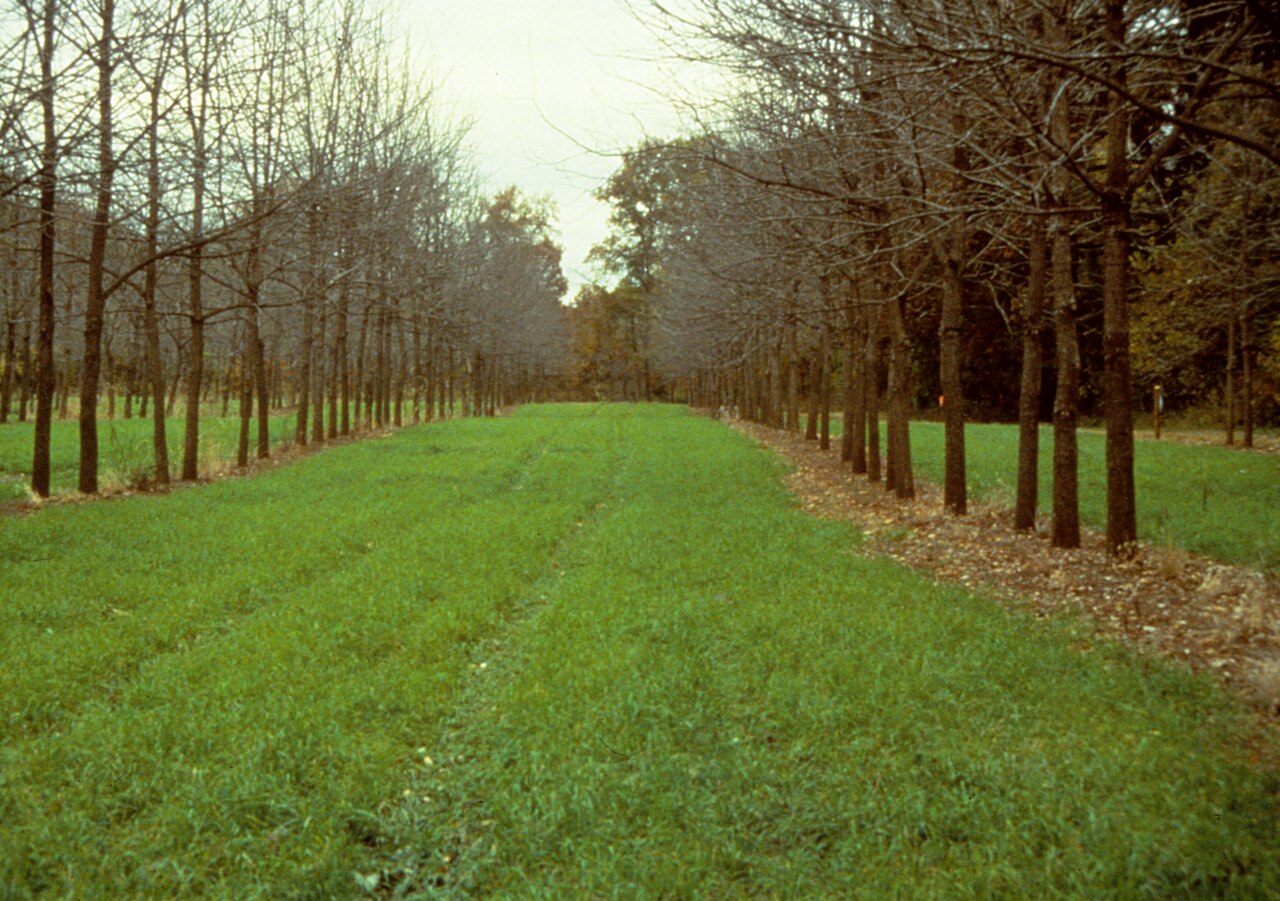
Practical guidelines from documented systems:
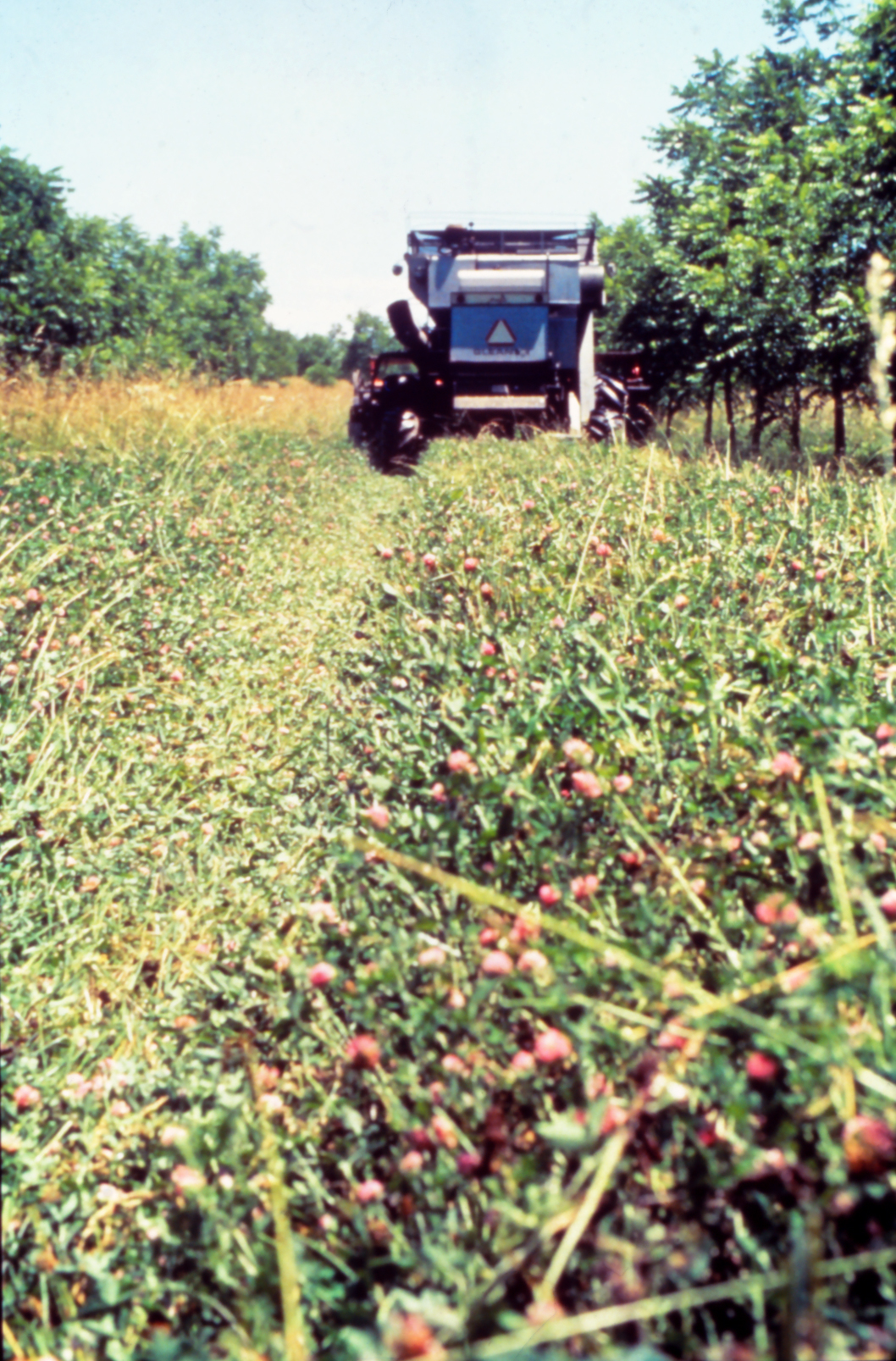
- A grass mixture with clover is the safest choice because it is low, covers the soil evenly, is easy to mow, and poses little threat to the trees.
- Cereals generate income, but wheat can germinate during summer irrigation intended for the trees; therefore, some producers switch from wheat to orchard grass for hay.
- Vegetable crops (strawberries, beans) are profitable only with guaranteed irrigation, because without water, competition becomes fatal for young trees.
Orchard geometry: how much space for intercrop
The possibility of intercropping directly stems from planting spacing. The wider the inter-row spacing, the more space there is for the intercrop and mechanization — but fewer trees per hectare.
| Element | Value from literature | Note |
|---|---|---|
| Traditional spacing (bush form) | ~4.5–6 m between rows | More space for intercrop |
| Denser canopy / tree form | narrower rows (e.g., 3 × 5.5 m), until thinning | Earlier yield, but less inter-row space |
| Square spacing for mechanization | ~5.5 × 5.5 m | Standard equipment, but narrow inter-row strip for intercrop |
| Strip for intercrop (practice) | intercrop rows ~4.5 m wide between trees | Value from practice; equipment must be small-sized |
| Spacing for raising seedlings (shoots) | inter-row 2–2.5 m, in-row 0.6–1 m | Applies to nursery, not plantation planting |
Key rule: leave enough width for machinery passage and for a vegetation-free zone around the hazelnut row itself (the so-called clean strip in-row). Young trees need a clean, weed-free zone around the trunk — competition right next to the tree is the most dangerous. The intercrop goes in the middle of the inter-row, while a herbicidal or mechanically cleaned strip is maintained along the row.
Limitations and Competition: Where Intercropping Harms
Intercropping is not without risks, the greatest of which concern sensitive young trees.
Competition for Water
This is the most critical limitation. Vegetation in the inter-row directly competes with trees for soil moisture. In non-irrigated orchards, any intercrop can be detrimental to young tree growth, sometimes significantly: both the intercrop and weeds consume moisture, leading to poor tree growth and increased mortality. The professional rule is: if you choose an intercrop, ensure sufficient irrigation to replenish the moisture the intercrop extracts from the soil. With irrigation, an intercrop in the early years can even stimulate tree growth; without it, it easily becomes a burden.
Competition for Nutrients
Hazelnut is sensitive in its youth and requires a stable supply. Literature recommends fertilizing young orchards 2 to 3 times per year with environmentally friendly fertilizers, including basic spring and autumn applications, as well as foliar treatments and amino acids for stress relief. Reference values from the corpus: approximately 100 kg/ha NPK (and in some economic plans up to 300 kg/ha NPK), with a target humus content of ~3% and pH (KCl) of around 5.5 or higher. All dosages are indicative and depend on soil analysis, cultivar, location, and the label of the approved product—fertilization must be based on soil analysis. The intercrop "draws" some of these nutrients, so the fertilization plan must be adjusted for both the hazelnut crop and the intercrop.
Competition for Light and Space (Time Limit)
As canopies grow and the stand closes, there is less light for the intercrop, and equipment finds it harder to pass through. Therefore, intercropping is temporary: in practice, it is removed after the fourth year, rarely after the fifth or sixth. Woody and tall crops can shade more strongly and compete more intensely.
Mechanization and Physical Damage
- Equipment must be small-sized because the space with tree growth narrows ("everything must be small").
- There is a risk of mechanical damage to trees by machinery (so-called "tractor blight").
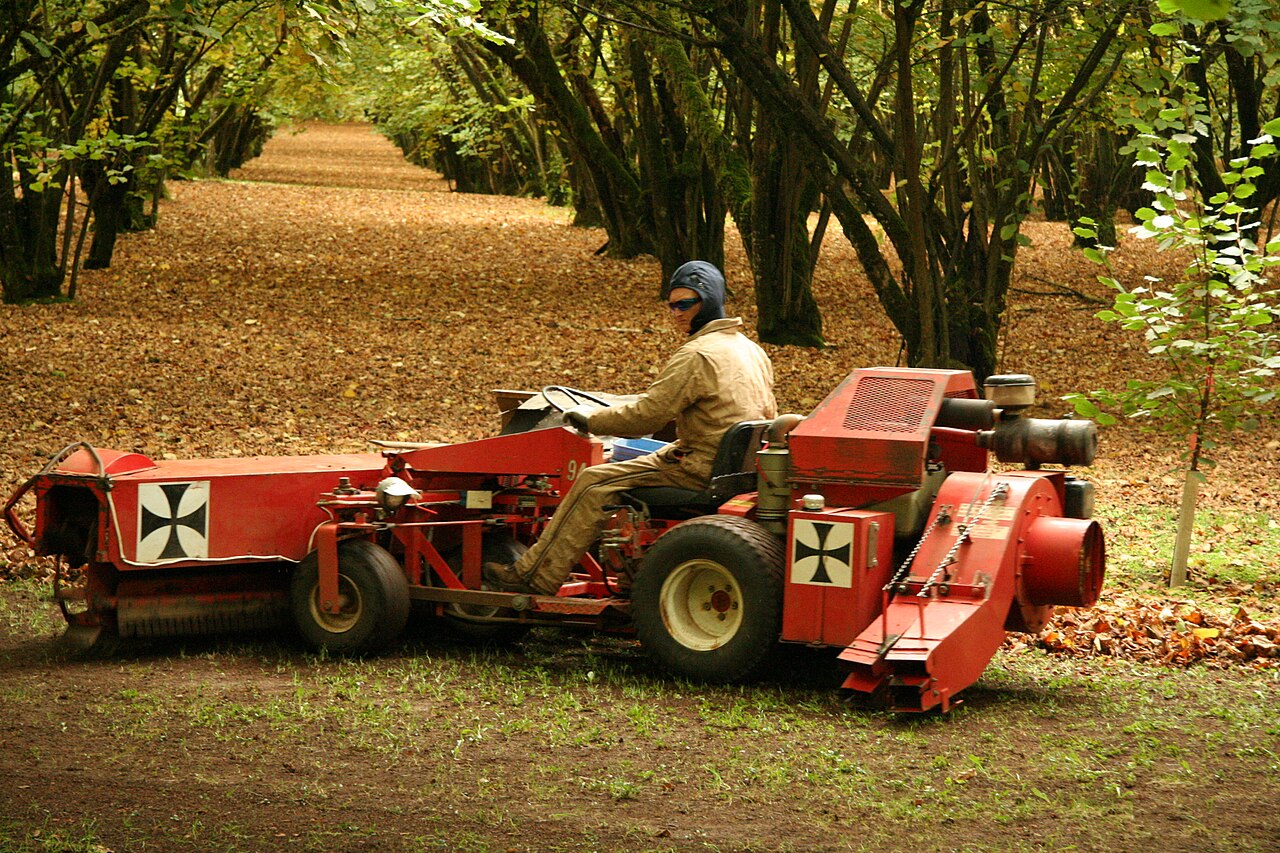
- Harvesting hazelnuts with an existing intercrop is more labor-intensive: for mechanical harvesting, the grass must be mowed and fruits raked from the middle of the row.
Pests, Diseases, and Shoots
- The intercrop (especially dense grass crops) can serve as a refuge for rodents (mice, voles) which then damage the bark of young trees.
- Moisture retained by dense cover favors fungal and bacterial diseases; literature explicitly cites retained moisture as one of the main factors in disease development.
- Own-rooted seedlings produce shoots that drain the plant and retain moisture; using hazel rootstock (Corylus colurna) reduces unwanted shoots, is drought-resistant and tolerant of alkaline soils, and can facilitate simultaneous work in the inter-row.
Practical Recommendations
- Irrigation first, then intercrop. Without reliable water in a non-irrigated orchard, avoid competitive intercrops; instead, maintain a clean inter-row strip or a low cover crop that is regularly mowed.
- Maintain a clean zone around the row. Competition is most dangerous right next to the tree; sow the intercrop in the middle of the inter-row, and mechanically or chemically maintain a clean strip along the row (always according to the approved label).
- Choose a low, easily mowable crop at the start. Grass-legume mixtures are the safest; vegetables and cereals only with guaranteed water and appropriate equipment.
- Plan an exit strategy. Determine in advance the year of abandoning the intercrop (usually after the 4th year) and the transition to a permanent cover crop or mowing.
- Adjust fertilization for both crops based on soil analysis; leguminous intercrops can reduce nitrogen requirements.
- Consider mechanization from planting day. Row spacing and remaining width must accommodate both hazelnut harvesting and intercrop cultivation.
- Monitor rodents and diseases. Regular mowing, trunk protection, and ventilation reduce risk.
Common Mistakes
- Intercropping without irrigation — the most common cause of poor growth and death of young trees.
- Weedy/grassy strip exactly along the row — directly slows hazelnut development.
- Overly large equipment — damages trees and compacts soil in the narrow inter-row.
- Keeping the intercrop too long — shading and competition reduce the onset of bearing.
- Fertilizing "by guess" — without soil analysis and correction for the intercrop, deficiencies or excesses easily occur.
- Ignoring shoots and rodents — loss of vitality and bark damage.
Conclusion
Agroforestry and inter-row production in a young hazelnut orchard are well-established methods to bridge the income-free period, protect the soil, and increase overall surface productivity (LER often above 1.0). However, benefits come only with discipline: guaranteed irrigation, a clean zone around the row, a low and easily mowable intercrop, adjusted fertilization, and a clear plan for abandoning the intercrop when canopies close. In non-irrigated conditions, the risk of water competition outweighs the benefit, making a conservative approach better. Properly implemented, such a system transforms the most difficult, "empty" establishment years into a productive and resilient period for the farm.
Gallery
Sources
This article is an AI summary created from an internal literature collection on hazelnut (RAG corpus) and public internet sources. Main sources used:
- Ministry of Agriculture of the Republic of Croatia — Hazelnut Cultivation Guide (savjetodavna.hr) — spacing, pruning, fertilization, precipitation
- Hazelnut Diseases and Pests — Repository (2020.) — moisture, shoots, yield ~3 t/ha
- Economic Viability of Hazelnut Production (RAG corpus, 2022.) — fertilization, NPK dosages, onset of bearing
- Organic Production and Organic Hazelnut Products in Croatia (RAG corpus) — fertilization of young orchards 2–3×/year, foliar feeding
- Business Plan for Hazelnut Seedling Production — Poljinos (2019.) — https://www.poljinos.hr/wp-content/uploads/2022/05/PP-za-proizvodnju-sadnica-lijeske1.pdf — spacing during propagation
- Hybrid Hazelnuts: Midwest United States Agroforestry Applications (M. Lippert, 2009.) — definition and benefits of agroforestry
- Productivity and Economic Evaluation of Agroforestry Systems... — Sustainability 12, 5429 (2020.) — LER values for hazelnut systems
- Balance de una producción combinada: madera de nogal y avellana (2018.) — walnut for timber + hazelnut for fruit combination
- Continuous Living Cover Manual — Green Lands Blue Waters (2015.) — forms of agroforestry
- Perennial Pathways: Planting Tree Crops (2018.) — alley cropping, polyculture
- WBNK Gutachten Agroforstwirtschaft (2025.) — definition of AFS, incentives (~600 EUR/ha)
- Utjecaj hranjivog medija... mikropropagacija Corylus colurna (RAG corpus, 2025.) — benefits of hazel rootstock (drought resistance, fewer shoots)
- OSU Extension — Growing Hazelnuts in the Pacific Northwest: Orchard Design / Orchard Floor Management — https://extension.oregonstate.edu/catalog/em-9077-growing-hazelnuts-pacific-northwest-orchard-design
- The ins and outs of intercropping: Generating cash flow during hazelnut orchard establishment — Capital Press (2022.) — https://capitalpress.com/2022/03/24/the-ins-and-outs-of-intercropping-generating-cash-flow-during-hazelnut-orchard-establishment/
- UMN Extension — Alley cropping — https://extension.umn.edu/agroforestry/alley-cropping
- USDA National Agroforestry Center — Alley Cropping — https://www.fs.usda.gov/nac/practices/alley-cropping.php