Wood-borers and Long-horned Beetles (Zeuzera, Cossus, Oberea, Agrilus)
Content generated by artificial intelligence — verify before application
This article was automatically compiled from a collection of hazelnut literature using artificial intelligence and may contain errors or outdated data. It serves as a starting point for further research, not as professional advice. Dosages, products, and timing are informative and depend on the cultivar, location, and current regulations — always consult with an advisory service and official sources before application.
Wood-boring pests (xylophagous pests) represent one of the most insidious threats in a hazelnut orchard. Unlike leaf or nut pests, the larvae of wood-borers and long-horned beetles live hidden within shoots, branches, and trunks, where insecticides are difficult to reach, and the first visible symptoms (drying of individual branches in the middle of a green canopy) are often noticed only after significant damage has already occurred. This article covers the hazelnut long-horned beetle (Oberea linearis), true wood-borers from the families Cossidae and Sesiidae (hazelnut clearwing moth and related species such as Zeuzera pyrina and Cossus cossus), and jewel beetles (Buprestidae, primarily Agrilus viridis / the bronze birch borer) — their symptoms on branches and trunks, and control measures.
Group Overview and Why It Is Dangerous
Wood-borers and long-horned beetles are united by the larval lifestyle: larvae feed on woody tissue, boring galleries (tunnels) into shoots, branches, and trunks. Consequences include the disruption of vascular bundles, weakening of the mechanical strength of branches, opening of entry points for secondary fungal and bacterial infections, and, in severe attacks, drying of branches and decay of the entire shrub.
| Pest (EN / Lat.) | Family / Order | What It Attacks | Type of Damage |
|---|---|---|---|
| Hazelnut long-horned beetle (Oberea linearis) | Cerambycidae (Coleoptera) | One- to three-year-old shoots, young shoots | Drying of young shoots and branches |
| Hazelnut clearwing moth and related wood-borers (Sesia / Synanthedon spp.) | Sesiidae (Lepidoptera) | Shoots and thin branches, root collar | Wilting, breakage of shoots |
| Leopard moth / Pear wood-borer (Zeuzera pyrina) | Cossidae (Lepidoptera) | Branches and trunks of older plantings | Deep tunnels, branch breakage |
| Goat moth (Cossus cossus) | Cossidae (Lepidoptera) | Trunk and thicker branches | Wide galleries, sap exudation |
| Bronze birch borer (Agrilus viridis) | Buprestidae (Coleoptera) | Woody parts of branches and trunks | Branch drying, canopy yellowing |
Important Note on Frequency
In Croatian and regional hazelnut orchards, wood-borers and long-horned beetles mostly occur locally and in low numbers, so literature often does not classify them as pests requiring regular chemical protection (Miljković, 2018.). However, in uncontrolled attacks (especially on weakened, drought-stressed orchards), damage can be significant — for the hazelnut long-horned beetle, yield losses of up to 40% are reported (Bošnjak et al., 2011.), and for the jewel beetle Agrilus viridis, potential yield loss is up to 70%.
Hazelnut Long-horned Beetle (Oberea linearis)
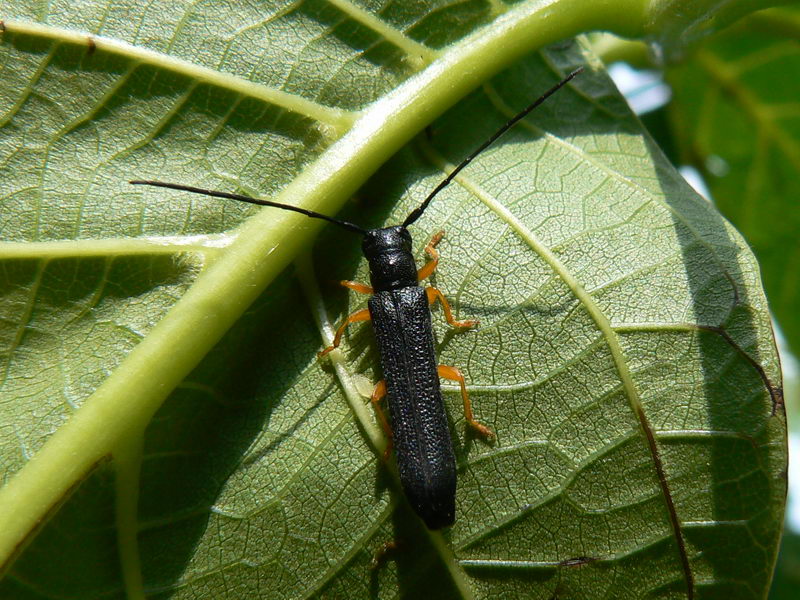
The hazelnut long-horned beetle (syn. hazelnut long-horned beetle) is the most common and best-described representative of this group in hazelnut.
Identification
- Imago (adult beetle): narrow black body, 11–16 mm long, swollen pronotum, yellow legs, and long, thread-like antennae.
- Larva: yellowish, up to 25 mm long (Kišpatić and Maceljski, 1976.).
Biology and Cycle
Imago appears in May and early June. The female lays eggs individually under the bark of one- to three-year-old shoots, typically about 20 cm from the tip of the shoot. Emerging larvae bore into young wood and create galleries perpendicular to the wood fibers, continuing to bore towards the pith. The gallery can extend 40–60 cm in length. The larva overwinters in the dried shoot and continues to cause damage the following year.
Symptoms
- Drying of shoot tips in May/June — the first and most noticeable sign.
- Leaf drying on the attacked shoot.
- Dried, brown branches clearly visible among healthy green branches; often constitute a significant proportion of damaged and dried branches.
- Upon careful inspection, a round entry hole and bored wood with frass (sawdust) are visible.
Control
The focus is on mechanical (agrotechnical) measures, because the larva hidden in the wood is not accessible to contact insecticides:
- Pruning and removal of attacked parts. Remove dried and attacked shoots and branches, preferably during summer pruning in June, cutting below the last gallery, into healthy wood.
- Burning of pruned material to destroy larvae within it and prevent spread for the next season.
- Cultivar resistance. Although shell hardening is linked to susceptibility to the hazelnut weevil, regular health pruning and overall orchard vitality generally reduce pressure from long-horned beetles.
- Biological control (in development). Research shows the potential of entomopathogenic bacteria isolated from O. linearis larvae: Bacillus thuringiensis achieved mortality of ~90%, and Serratia marcescens ~65% in trials; commercial solutions are not yet widely available.
Practical Rule
If you notice individual dried shoots every year, remove them with summer pruning and burn them before the emergence of imago in the next season. Timely pruning in June removes the larva before it bores deeper into perennial wood.
True Wood-borers — Clearwing Moths, Leopard Moth, and Goat Moth
This group of Lepidoptera can cause heavier, deeper damage to branches and trunks through larval development in wood than long-horned beetles. Although not primary pests in hazelnut, hazelnut is among their hosts, and at local population outbreaks, the damage is serious.
Hazelnut Clearwing Moth (Sesiidae)
Clearwing moths are Lepidoptera with transparent wings resembling wasps. Larvae bore into shoots and thin branches (in some species, even the root collar), causing wilting and shoot breakage. Entry holes are accompanied by accumulations of fine sawdust and frass.
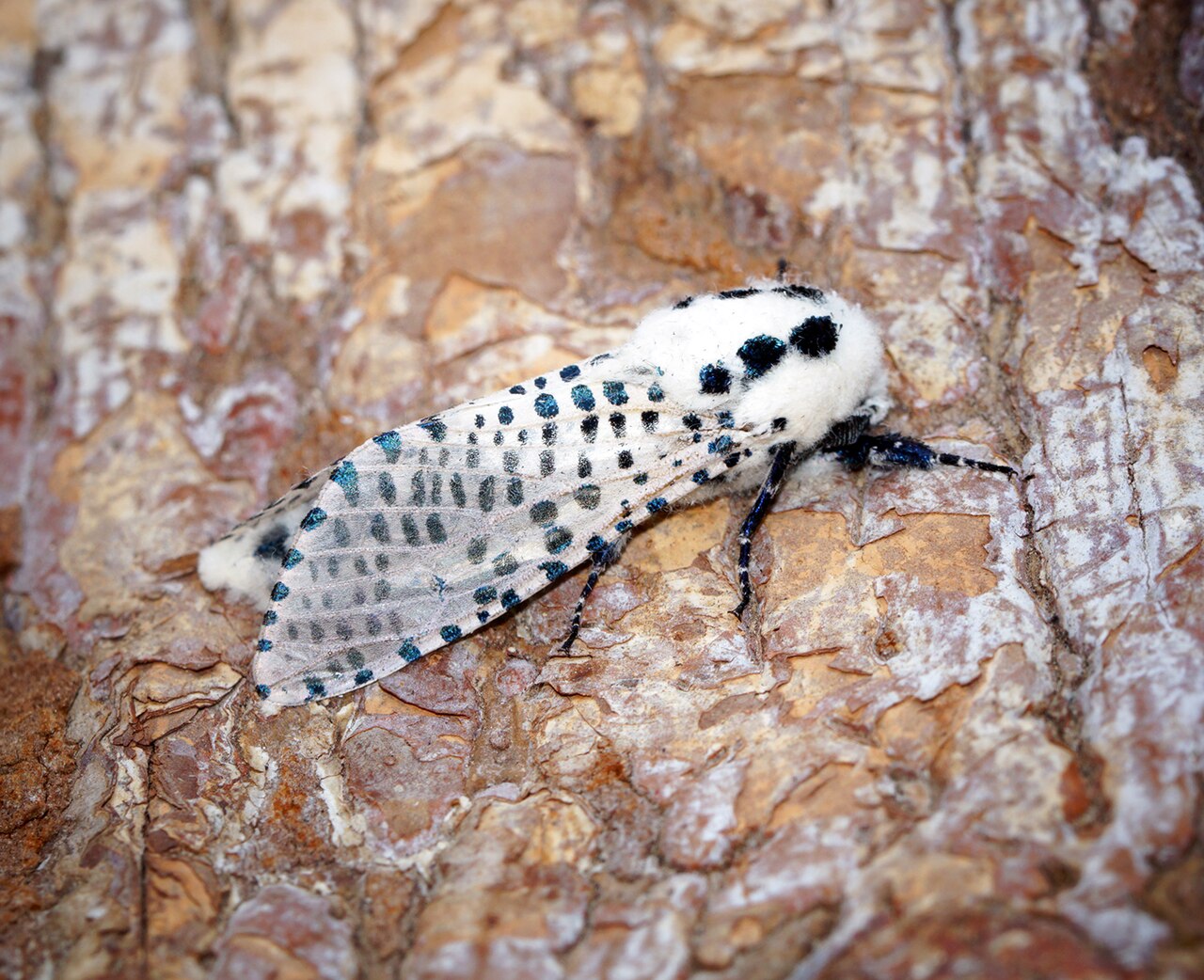
Leopard Moth (Zeuzera pyrina)
A cosmopolitan wood-borer with a wide host range — attacks pear, apple, cherry, walnut, olive, and hazelnut. Larvae bore tunnels into shoots, branches, and trunks, weakening and sometimes killing young seedlings. It is typical for young, newly established orchards with thin branches.
Goat Moth (Cossus cossus)
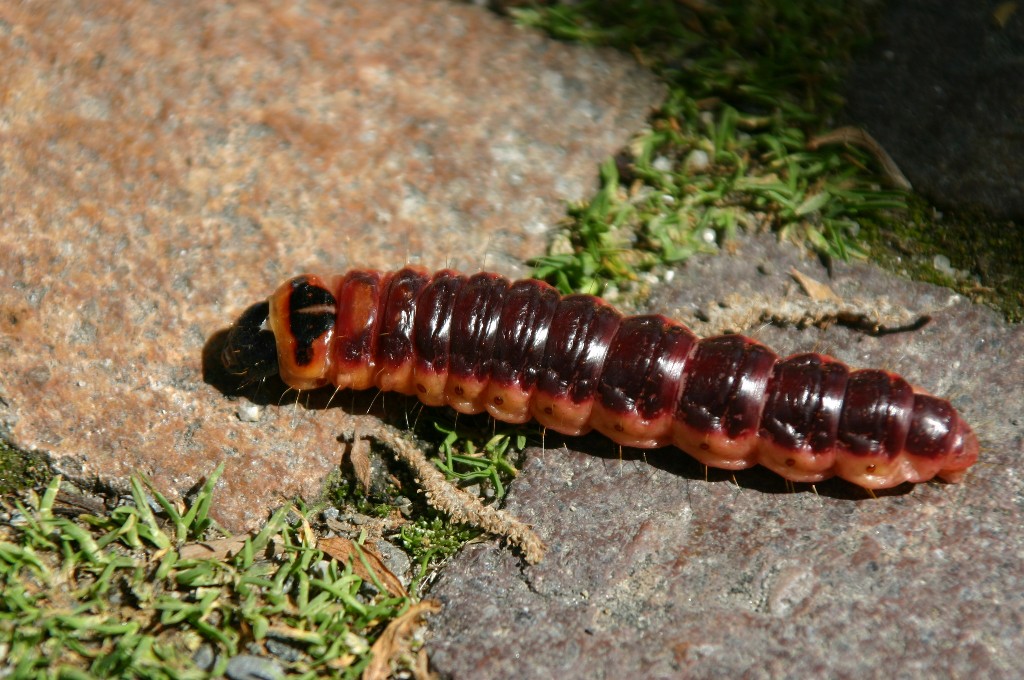
A large larva that bores wide galleries in the trunk and thicker branches, often accompanied by characteristic sap exudation, a vinegar-like smell, and coarse sawdust at the exit. Attacks are rare, but individual trees can be seriously weakened.
Symptoms (Common to True Wood-borers)
- Wilting and drying of individual shoots/branches above the attack site.
- Round entry/exit holes on the bark, from which or under which sawdust and frass protrude or accumulate.
- In severe attacks, branch breakage at weakened points.
- Sap exudation (especially in Cossus).
Control of True Wood-borers
| Measure | Description | Note |
|---|---|---|
| Pheromone Monitoring | Pheromone traps to monitor adult flight (available for Zeuzera and some clearwing moths) | Allows timely timing of measures |
| Mass Trapping | Large number of pheromone traps to reduce population | Used against Z. pyrina in orchards (e.g., Spain) |
| Mating Disruption | Pheromone dispensers interfere with partner finding | Verified technique for Zeuzera and Cossus in fruit growing |
| Mechanical Larva Extraction | Wire through entry hole or cutting out attacked part | For individual, valuable trees |
| Pruning and Burning | Removal and destruction of attacked shoots/branches | Fundamental hygiene measure |
| Entomopathogenic Nematodes | e.g., Steinernema carpocapsae injected into galleries | Showed high virulence on Z. pyrina in field trials |
Pruning Hygiene and Tool Sanitation
Wood-borers open the way to fungi and bacteria; after pruning attacked wood, disinfect tools and do not leave pruned material in the orchard — remove and burn it.
Jewel Beetles (Buprestidae) — Agrilus viridis
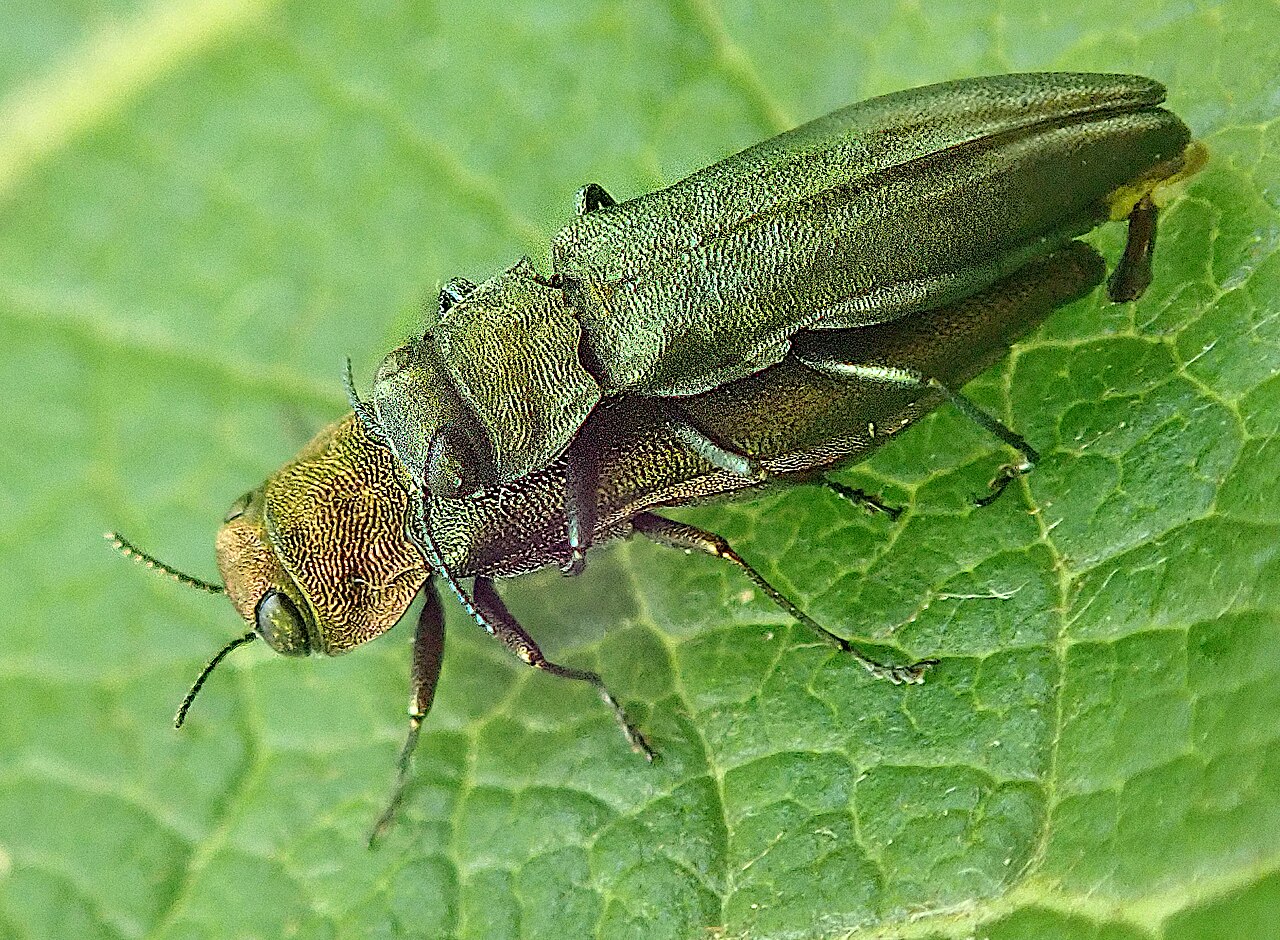
Jewel beetles are shiny, metallic-colored beetles whose larvae bore flat, winding galleries under the bark and in the wood. In hazelnut, in recent years (recorded in Italy), the bronze birch borer Agrilus viridis has appeared, a species that typically inhabits beech and birch forests.
Biology
Agrilus viridis inhabits hazelnut orchards from mid-May to October. Eggs are laid on the bark surface, up to 24 pieces in a group. Larvae bore deep galleries in the woody tissue of the trunk and branches, causing drying of branches and leaves on the attacked part.
Symptoms
- Withered, dried branches — attacked trees are recognized by the withered vegetative part.
- Canopy yellowing during summer; in heavier attacks, the canopy can dry out completely.
- Reduced vitality of the whole plant.
- Characteristic flat, winding galleries ("D"-shaped exit hole) under the bark.
Stress and Drought as Triggers
The appearance and increase in abundance of jewel beetles are expected on already weakened orchards — especially after prolonged periods of drought. Jewel beetles are typically "secondary" attackers of stressed plants.
Control of Jewel Beetles
- Vitality first. Adequate irrigation, fertilization, and stress avoidance keep the orchard resistant — the most effective "measure" against jewel beetles.
- Pruning and burning of dried and attacked branches, cutting to healthy wood.
- Removal of infection sources from the surroundings (dried beech, birch, willow trees on the orchard edge can be reservoirs).
- Biological control (promising). In a trial on the bronze birch borer, the commercial preparation Naturalis® with the entomopathogenic fungus Beauveria bassiana (concentration 1×10⁸ conidia/mL) was tested; such approaches are part of recommended more environmentally friendly IPM alternatives.
- Solarization/removal of pruned wood before adult emergence — dry trunks and branches or expose them to the sun under transparent film so adults do not emerge and attack neighboring trees.
The Role of Oberea and Zeuzera in Hazelnut Protection Programs
In existing hazelnut protection programs, Oberea (longhorned beetles) and Zeuzera (leopard moths) are typically not treated separately; they are often "covered" by treatments directed against the hazelnut weevil, mites, and true bugs in late May and early June, when the flight periods of some Oberea species overlap.
Example from literature (informative — products and doses depend on registration and label):
| Pests (target) | Product (example) | Concentration / Dose | Application Timing |
|---|---|---|---|
| Hazelnut weevil, true bugs, hazelnut Oberea | (broad-spectrum insecticide per label) | 0.25–0.3 % (e.g., ~250–300 ml/kg) | late May / early June |
| Mites (alongside Oberea in the same pass) | ORTUS 5 SC / KRAFT 18 EC | 0.075–0.1 % (75–100 ml) | according to threshold |
Doses are informative
The concentrations listed are taken from compiled literature and are not a recommendation for application. Product registrations, approved crops, and pre-harvest intervals change; always check the current registration (FIS database / competent authority) and label before each application.
Integrated Approach (Summary)
- Monitoring: winter inspection of twigs (sample ~20 cm) for pests; during the growing season, the branch-shaking method; pheromone traps for Oberea where available.
- Orchard hygiene: regular pruning of dried/infested shoots and branches, always with burning of pruned material.
- Vigor: balanced fertilization and irrigation reduce attractiveness for cerambycids and other "stress" attackers.
- Biological measures: entomopathogenic nematodes (Steinernema), fungi (Beauveria bassiana), and bacteria (Bacillus thuringiensis) — promising, partly still research-oriented.
- Chemicals only targeted: as a supplement, in the critical window (late May/June), according to registration.
Common Mistakes
- Waiting until the branch is completely dried. By then, the larva is already deep in the wood or has overwintered — prune as soon as you notice drying of the young shoot tip.
- Leaving pruned material in the orchard. Larvae continue development and emerge the following season — pruned wood must be removed and burned.
- Relying solely on contact insecticides. Hidden larvae are practically inaccessible to spraying; without pruning and hygiene, chemicals do not solve the problem.
- Neglecting orchard stress. Drought and malnutrition open the door to cerambycids — vigor is preventive.
- Ignoring edge sources of infestation (forest trees adjacent to the orchard) for polyphagous species such as Zeuzera, Cossus, and Agrilus.
Sources
This article is an AI summary generated from an internal literature collection on hazelnut (RAG corpus) and publicly available sources. Main sources used:
- Most significant hazelnut pests (2011.) — Oberea linearis, biology and control; biological measures (RAG corpus; DOI: 10.31727/gzb)
- Diseases and pests of hazelnut, Repository (2020.) — description of hazelnut Oberea, symptoms and summer pruning (RAG corpus)
- Economic analysis of hazelnut production (2023.) — yield losses up to 40 % from Oberea (RAG corpus)
- Environmental protection elaboration / EcoMission d.o.o. (2021.) — egg laying and tunnel length of O. linearis (RAG corpus)
- What are the critical periods for hazelnut orchard protection? (2026.) — winter monitoring and branch-shaking method (RAG corpus)
- Hazelnut protection manual / pests hazelnut pest management (2020.) — Agrilus viridis (green buprestid), biology and symptoms, attack threshold and potential losses (RAG corpus)
- EC2021-4 / trial with Naturalis® (Beauveria bassiana) on green buprestid (2021.) (RAG corpus)
- Control of harmful organisms in hazelnut orchards / HAZELNUT PROTECTION (2009.–2012.) — calendar and products (RAG corpus)
- Bahar & Demirbağ (2007.); Pathogenic bacteria from Oberea linearis — Bacillus thuringiensis and Serratia marcescens (DOI: 10.2478/s11756-007-0009-4)
- Control of leopard moth, Zeuzera pyrina L. — mating disruption / mass trapping — ResearchGate: https://www.researchgate.net/publication/264789637
- Comparative infectivity of entomopathogenic nematodes on Zeuzera pyrina — ScienceDirect: https://www.sciencedirect.com/science/article/abs/pii/S1049964420307532
- Mating Disruption of Cossus insularis — Springer: https://link.springer.com/article/10.1007/s10886-016-0723-x
- Agrilus viridis — Wikipedia: https://en.wikipedia.org/wiki/Agrilus_viridis
- Longhorned Beetles / Roundheaded Wood Borers — UC IPM: https://ipm.ucanr.edu/PMG/GARDEN/PLANTS/INVERT/roundheadbore.html
Recommended equipment
🔎 pheromone insect trap orchard — Amazon →Affiliate links — we may earn a small commission at no extra cost to you.