Comparative cultivar menu: a decision matrix based on purpose, region, and frost tolerance
Content generated by artificial intelligence — verify before application
This article was automatically compiled from a collection of hazelnut literature with the aid of artificial intelligence and may contain errors or outdated data. It serves as a starting point for further research, not as professional advice. Dosages, products, and timing are informative and depend on the cultivar, location, and current regulations — always verify with advisory services and official sources before application.
This article is the central entry point to the entire Cultivar Catalog. Instead of browsing profile by profile, here you can cross-compare all cultivars from the catalog based on what truly determines orchard profitability: kernel percentage, purpose (table / industrial / oil), frost and late spring frost resistance, susceptibility to Eastern Filbert Blight (EFB), pollinizer role, and status on the Croatian cultivar list and the Orchard Register. The following tables are designed as a decision matrix — starting from the column most important to you (e.g., "I must survive continental frost" or "I sell to the confectionery industry") to narrow down the list of cultivars, and then clicking on individual profiles for details. If you are just starting out, read the guide How to choose a hazelnut cultivar first, then return here for specific selection.
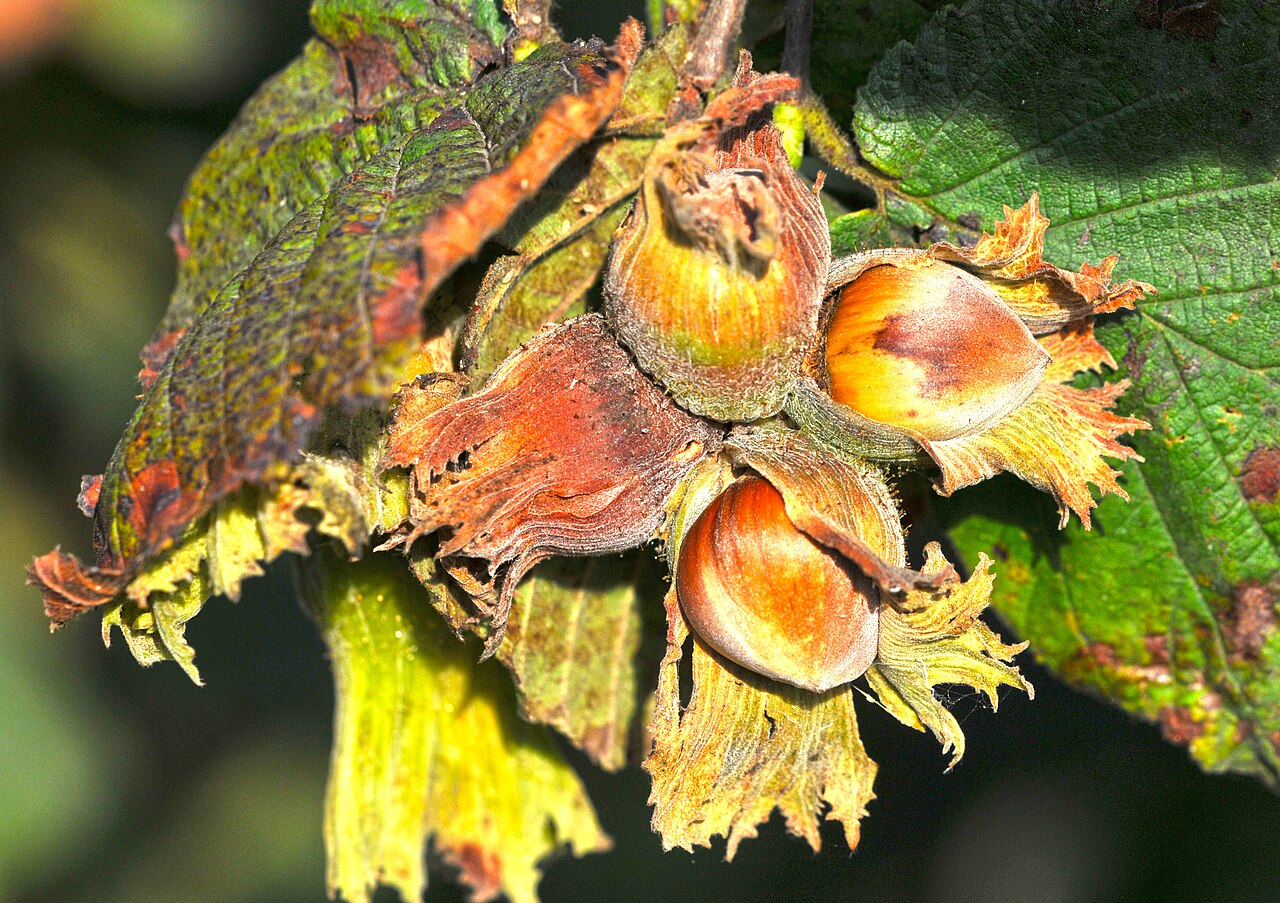
How to read this matrix
Hazelnut cultivars in the literature are traditionally divided into three groups based on fruit quality and purpose:
- table cultivars — for consumption fresh or roasted, in-shell (in-shell); size, uniformity, and appearance of the fruit are decisive;
- combined-property cultivars — suitable for both industry and table use;
- confectionery (chocolate) industry cultivars — small, round fruit, high kernel percentage, easy blanching (removal of the skin after roasting).
The industry is by far the largest consumer, seeking smaller, rounder fruits with thin shells and a high kernel percentage from which the skin is easily removed. The table market rewards the opposite — large, decorative in-shell fruit, where a lower kernel percentage is less critical because the whole fruit is sold.
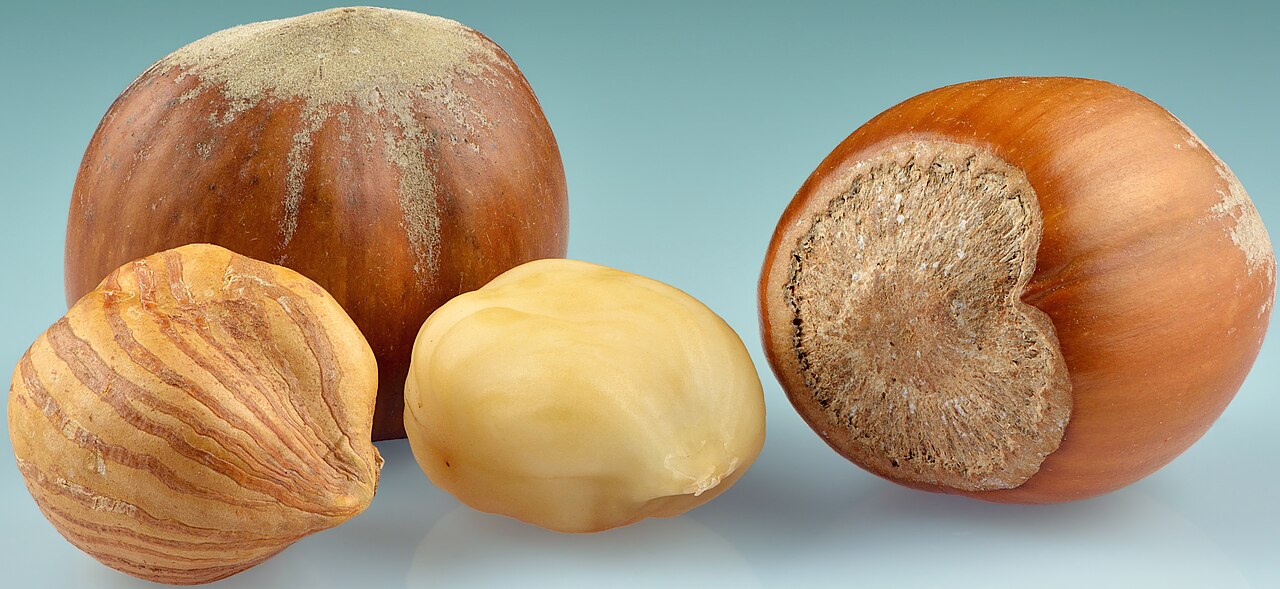
Term: kernel percentage. Kernel percentage is the mass proportion of the kernel in the whole fruit including the shell. Confectionery cultivars reach 49–55 %, good combined cultivars 43–48 %, and large-fruited table cultivars often drop to 36–46 %. The highest quality cultivars in the literature are cited with a kernel percentage of 43 to 50 %. A lower kernel percentage means more shell per kilogram — this is a loss for selling kernels, but not for selling in-shell.
Two key climatic threats distinguished by the matrix:
- Winter hardiness — survival of low temperatures during dormancy.
- Susceptibility to late (spring) frosts — hazelnuts bloom very early (December–March), so early-blooming cultivars and male catkins suffer from frost and cold precisely in this sensitive phase. A cultivar that starts vegetation late (e.g., Ennis) partially avoids this danger.
For continental Croatia, the literature consistently recommends the proven trio Istarski duguljasti + Rimski + Haleški, as they are more resistant to low temperatures than objectively higher-quality but more sensitive Italian industrial cultivars (Tonda gentile delle Langhe, Tonda gentile romana, Tonda di Giffoni), which are recommended for the coastal (Mediterranean) area.
Main comparative cultivar table
This is the central matrix. Figures are indicative and vary by location, year (dry/wet season), clone, and measurement method.
| Cultivar | Kernel Percentage | Main Purpose | Winter Hardiness | Late Frost / Late Vegetation | EFB Susceptibility | Pollinizer Role | Status on HR List / Register |
|---|---|---|---|---|---|---|---|
| Istarski duguljasti | ~43.5 % (highest in HR trials) | Combined / table | High (continent) | Good adaptation | Low–medium | Main cultivar; pollinated by Rimski | Leading, ~57.9 % of HR area |
| Istarski okrugli | medium | Combined | High | Good | Medium | Secondary / pollinizer | On list (~3.8 % of area) |
| Rimski (Römische Zellernuss) | ~42.4 % (lowest in HR trio) | Combined / table | High | Good | Medium | Key pollinizer for Istarski | Second most common (~27.9 %) |
| Haleški (Hall's Giant / Hallesche Riesennuss) | ~36–44.9 % | Table (large fruit) + pollinizer | High | Late pollinizer | Medium (more resistant than Barcelona) | Excellent pollinizer | On list (~0.33 %) |
| Tonda Gentile delle Langhe (Piedmontese) | 45–50 % (superior) | Industrial (chocolate) | Lower (sensitive) | Sensitive | Medium–high | Needs pollinizer | On list, coast (~0.93 %) |
| Tonda di Giffoni | ~43–49 % | Industrial | Lower–medium | Medium | More resistant (common pollinizer in USA) | Good pollinizer for others | On list (~1.73 %) |
| Tonda Gentile Romana | 43–46 % | Industrial / combined | Lower | Medium | Medium | Needs pollinizer | On list (~1.26 %) |
| Nocchione | ~44–46 % | Industrial / pollinizer for Romana | Medium | Medium | Medium | Pollinizer for Tonda Romana | Italian assortment |
| Mortarella | 44–45 % | Combined / secondary | High (resistant to low temps.) | Medium-early flowering, homogamy | Medium | Secondary | Italian assortment |
| Barcelona | 36–46 % | Table (benchmark in-shell) | Medium–high (zone 4–8) | Medium | Medium (pre-genetic) | Needs pollinizer (Haleški) | Not primary in HR |
| Ennis | 42–48 % | Table (large fruit) | Medium | Late start — escapes frost | Very susceptible | Needs pollinizer | Not primary in HR |
| Jefferson | ~46–48 % | Combined / industrial | Medium | Medium | Resistant (Gasaway gene) | Yamhill / Wepster as pollinizers | Not on HR list |
| Yamhill / Wepster / Dorris | 45–50 % | Industrial | Medium | Medium | Resistant (Gasaway gene) | Mutual + Jefferson | Not on HR list (Oregon) |
| Negret | ~45 % | Industrial (Spain) | Medium | Medium | Medium | Needs pollinizer | Mediterranean assortment |
| Pauetet / Segorbe / Fertile de Coutard | 40–48 % | Combined / pollinizer | Medium | Medium | Medium | Often in pollinizer combinations | Secondary / trial |
Note: values are informative and depend on cultivar, location, year, and clone. Area shares are according to the APPRRR Orchard Register (status 31.12.2020.); a total of 5,264.33 ha of hazelnut is registered in Croatia, of which Istarski duguljasti is 3,049.59 ha (57.93 %) and Rimski is 1,468.60 ha (27.90 %).
Menu by purpose
If you sell to the confectionery industry (kernels, chocolate)
Look for small, round fruit, high kernel percentage (≥45 %) and easy blanching. The best candidates:
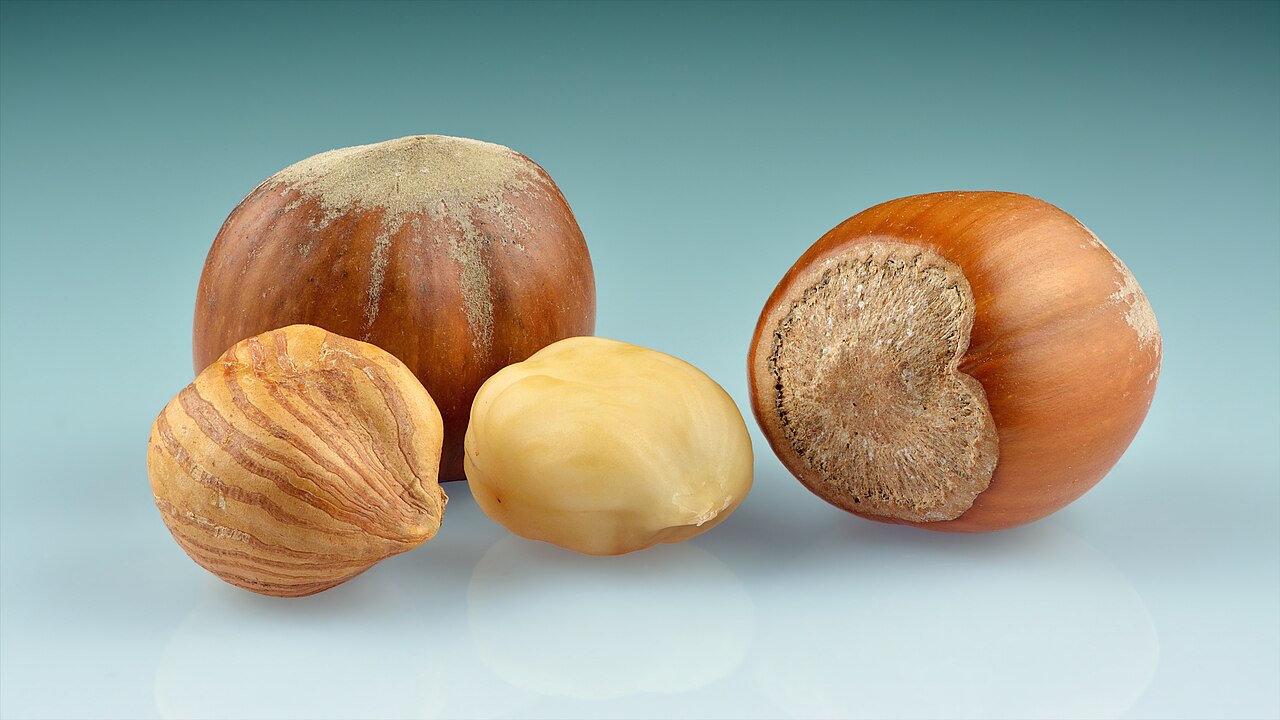
- Tonda Gentile delle Langhe — the reference "chocolate" cultivar, kernel percentage up to 50 %, superior aroma; but sensitive to cold → coast only.
- Tonda di Giffoni — high kernel percentage, very good processing, and additionally more resistant to EFB.
- Tonda Gentile Romana + Nocchione — a proven industrial pair from central Italy.
- For EFB-risk areas: Oregon resistant cultivars (Yamhill, Wepster, Dorris, Jefferson), although they are not on the HR list.
If you sell in-shell or to the table market (fresh/roasted fruit)
Look for size, uniformity, and appearance — kernel percentage is secondary:
- Ennis and Barcelona — classic large-fruited table cultivars.
- Haleški div — large fruit and dual benefit as a pollinizer.
- Istarski duguljasti — recognizable elongated fruit, plus the best kernel percentage in the HR trio, making it profitable as a combined cultivar.
If targeting oil / specialties
Oil is typically pressed from the kernel, so the same rules apply as for industry: high kernel percentage and clean, aromatic kernel. Tonda types and resistant Oregon cultivars yield a good kernel yield per hectare. (Oil extraction is mentioned as a processing purpose, but no specific "oil" cultivar is singled out in the corpus — choose based on kernel percentage and aroma.)
Menu by region and frost
| Location Scenario | Recommended Backbone | What to Avoid |
|---|---|---|
| Continental Croatia (frost, late spring frosts) | Istarski duguljasti + Rimski + Haleški (proven trio, mutually pollinating) | Early-blooming sensitive Italian industrial cultivars in exposed, frost-prone positions |
| Coast / Mediterranean climate | Tonda Gentile delle Langhe, Tonda di Giffoni, Tonda Romana (superior industrial quality) | — |
| Very cold / risky positions | Cultivars with noted winter hardiness: Mortarella (resistant to low temps.), according to literature also Circassian for cold and dry conditions | Cultivars that start vegetation early |
| Areas with late frost risk | Ennis (late start, "escapes" frost) as insurance | The earliest blooming cultivars without protection |
Practical rule on position. In continental Croatia, good positions are at an altitude above 140 m with appropriate relief (air drains, cold "frost pockets" are avoided). Hazelnuts grow well in positions suitable for grapevines; soil pH 5.0–8.0, optimal ~700 mm precipitation.
Menu by pollination
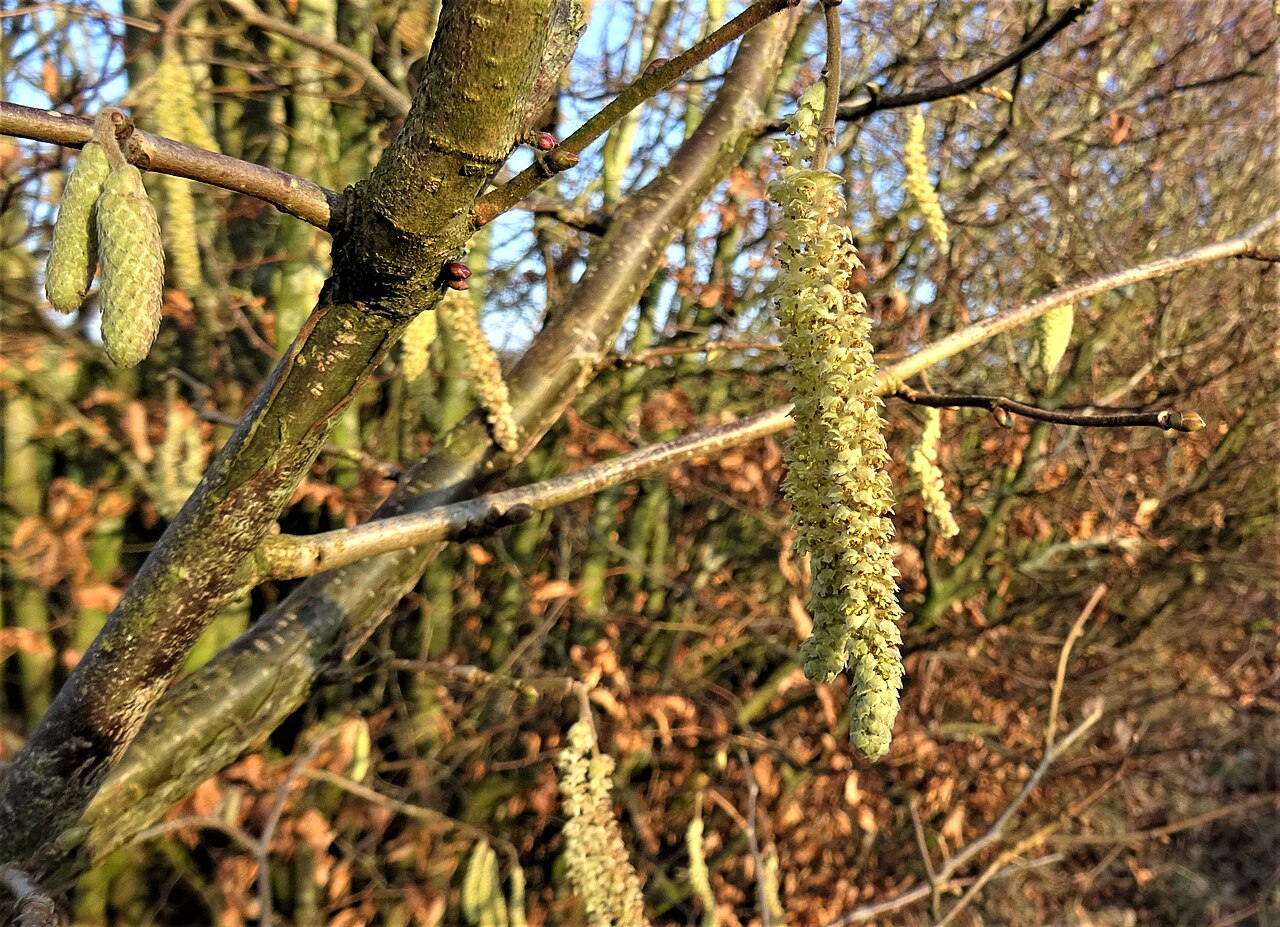
Hazelnut is cross-pollinated and self-incompatible — one cultivar cannot fertilize itself. The professional rule: plant 1–2 pollinizer cultivars alongside the main cultivar whose male catkins and female flowers overlap in time with the main cultivar (flowering phenogram). The proportion of pollinizers in the orchard is usually planned at around 8–15 %, evenly distributed.
| Main Cultivar | Proven Pollinizers |
|---|---|
| Istarski duguljasti | Rimski (ensures good and regular cropping), Istarski okrugli, Haleški |
| Rimski | Istarski duguljasti, Haleški |
| Tonda Gentile delle Langhe / Tonda di Giffoni | Mutual + Tonda Romana, Nocchione |
| Tonda Romana | Nocchione, Tonda di Giffoni |
| Barcelona / Ennis | Haleški (Hall's Giant), Tonda di Giffoni |
| Jefferson | Yamhill, Wepster |
Cultivars with dual (pollinizer) value: Haleški div, Rimski, Tonda di Giffoni, and Nocchione simultaneously provide marketable fruit and reliably pollinate the main cultivar — a smart choice when you want even the "pollinizer" rows to bear yield.
EFB (Bacterial Blight) — What to say about resistance
EFB (Eastern Filbert Blight, caused by Anisogramma anomala) is a devastating disease in North America and the reason behind the entire wave of resistant Oregon cultivars. In Croatia, it is not yet a dominant problem as it is overseas, but resistance remains a valuable "insurance policy" parameter:
- Monogenic resistance (Gasaway gene): Jefferson, Yamhill, Wepster, Dorris, McDonald, Santiam, etc. — the strongest protection; unfortunately, these cultivars are not on the Croatian cultivar list nor have they been formally tested under domestic conditions.
- Quantitative (partial) resistance: Lewis, Clark, Gem, Sacajawea.
- Medium / intermediate susceptibility: Barcelona, Tonda di Giffoni (relatively better).
- Highly susceptible: Ennis (and other old pre-genetic large-kernel cultivars).
For Croatian conditions, the practical conclusion is: integrated protection + selection of more tolerant cultivars reduces pesticide pressure in the long term, but for now, one must not sacrifice the proven winter hardiness of the domestic "big three" for the EFB resistance of imported cultivars that have not been tested for frost.
Status on the Croatian cultivar list (Orchard Register)
The distribution of planted areas (APPRRR, 31.12.2020.) clearly shows how much Croatian orchards rely on just two cultivars:
| Cultivar | Area (ha) | Share (%) |
|---|---|---|
| Istrian elongated | 3,049.59 | 57.93 |
| Roman (Römische Zellernuss) | 1,468.60 | 27.90 |
| Unclassified | 292.50 | 5.56 |
| Istrian round | 202.27 | 3.84 |
| Tonda di Giffoni (Okrugli difonski) | 91.16 | 1.73 |
| Tonda Gentile Romana | 66.08 | 1.26 |
| Tonda Gentile delle Langhe (Piedmontese) | 49.16 | 0.93 |
| Haleški (Hall's Giant / Hallesche Riesennuss) | 17.57 | 0.33 |
| Other cultivars | 27.40 | 0.52 |
| Total | 5,264.33 | 100.00 |
This concentration is a risk (narrow genetic base, exposure to common problems), but also confirmation that Istrian elongated and Roman are proven reliable under domestic conditions.
Practical recommendations and common mistakes
- Do not plant a monoculture orchard. Without pollinizers, there is no fertilization — always use 1–2 compatible cultivars, aligned by the flowering phenogram.
- Do not overestimate kernel percentage at the expense of the market. For shell-on sales, kernel size wins; for kernel/industry use, the reverse is true.
- Do not transplant coastal industrial cultivars into frost-prone areas. Tonda types yield superior quality, but suffer from frost in continental, exposed positions.
- Do not import EFB-resistant cultivars without checking winter hardiness and status on the cultivar list — quality on paper does not mean success on your land.
- Watch out for alternate (biennial) bearing in cultivars prone to it (e.g., Barcelona) — it affects average yields over the years.
- Check clone representation and seedling origin. The same "cultivars" from different nurseries can show differences in traits.
Connection to the rest of the catalog
Details of each cultivar from the matrix can be found in separate profiles:
- Istrian elongated hazelnut
- Istrian round and Roman round hazelnut
- Tonda Gentile delle Langhe and Tonda di Giffoni
- Tonda Romana, Nocchione and Mortarella
- Barcelona, Ennis and Hall's Giant
- Resistant American cultivars: Jefferson, Yamhill, Wepster, Dorris
- Spanish and other European cultivars: Negret, Pauetet, Fertile de Coutard, Segorbe
- Classic pollinizers: Daviana, Cosford, Ludolf, Gunslebert
Sources
This article is an AI summary compiled from a collection of hazelnut literature (internal RAG corpus) and public sources. Figures and recommendations are informative and depend on the cultivar, location, and current regulations — consult advisory services and official sources before implementation.
Main sources used:
- GUIDE FOR hazelnut cultivation — Ministry of Agriculture, advisory service (savjetodavna.mps.hr), 2024.
- Update of calculations for Measure 11 — Organic cultivation; table of cultivar representation, Orchard Register APPRRR 31.12.2020.
- Organic production and organic hazelnut products in Croatia (final thesis), 2022.
- Investment study for the production of innovative hazelnut-based products (Corylus avellana L.), 2019.
- Technological and economic characteristics of hazelnut cultivation — CORE — https://doi.org/10.46584/lm.v36i2.1141
- Most significant hazelnut cultivars of origin (pomological descriptions: Mortarella, Roman, kernel percentages), 2019.
- New hazelnut cultivars — Gospodarski list (EFB / Gasaway, Oregon assortment), 2026.
- Environmental Impact Assessment — Establishment of permanent hazelnut and plum orchard, Grubišno Polje, 2020. — https://bbz.hr/doc/uprava/elaborat_zastite_okolisa_visegodisnji_nasadi_lijeske_i_sljive.pdf
- Cultivar selection and training systems for hazelnut, 2009 (classification of purpose, kernel percentage)
- State and importance of hazelnut cultivation in the Republic of Croatia, 2018.
- Plant Resistant Cultivars — Oregon State University (EFB resistance) — https://bpp.oregonstate.edu/efb/management/plant-resistant-cultivars
- Hazelnut Cultivar 'Lewis' (EM 8640), Oregon State University Extension — https://extension.oregonstate.edu/sites/extd8/files/documents/em8640.pdf
- E368: Choosing Plants for a Hazelnut Orchard in New Jersey, Rutgers NJAES — https://njaes.rutgers.edu/e368/
- Varieties of Hazelnuts: A Comprehensive Guide — Hazelnut Hub — https://hazelnuthub.com/varieties-of-hazelnuts-a-comprehensive-guide/