Physiology of growth: photosynthesis and assimilate distribution
Content generated by artificial intelligence — verify before application
This article was automatically compiled from a collection of hazelnut literature using artificial intelligence and may contain errors or outdated data. It serves as a starting point for further research, not as professional advice. Dosages, products, and timing are informative and depend on the cultivar, location, and current regulations — always consult with an advisory service and official sources before application.
Photosynthesis is the engine of the entire hazelnut orchard: in the leaf, solar energy is converted into carbohydrates (assimilates, photosynthates) which then fuel the growth of shoots, roots, trunk, and — what brings revenue to the producer — the nuts. Understanding how hazelnut captures light, how efficient the canopy is in doing so, and how the produced sugars are distributed between vegetative (leaves, shoots, roots) and generative (catkins, female flowers, nuts) growth is the foundation of almost every decision in the orchard: choice of training system, planting density, pruning, fertilization, and irrigation. In this article, we explain the physiological basics of hazelnut photosynthesis, the canopy light response, the source-sink concept of assimilates, and the competition between vegetative and generative growth — always with an emphasis on what the producer can do in practice.
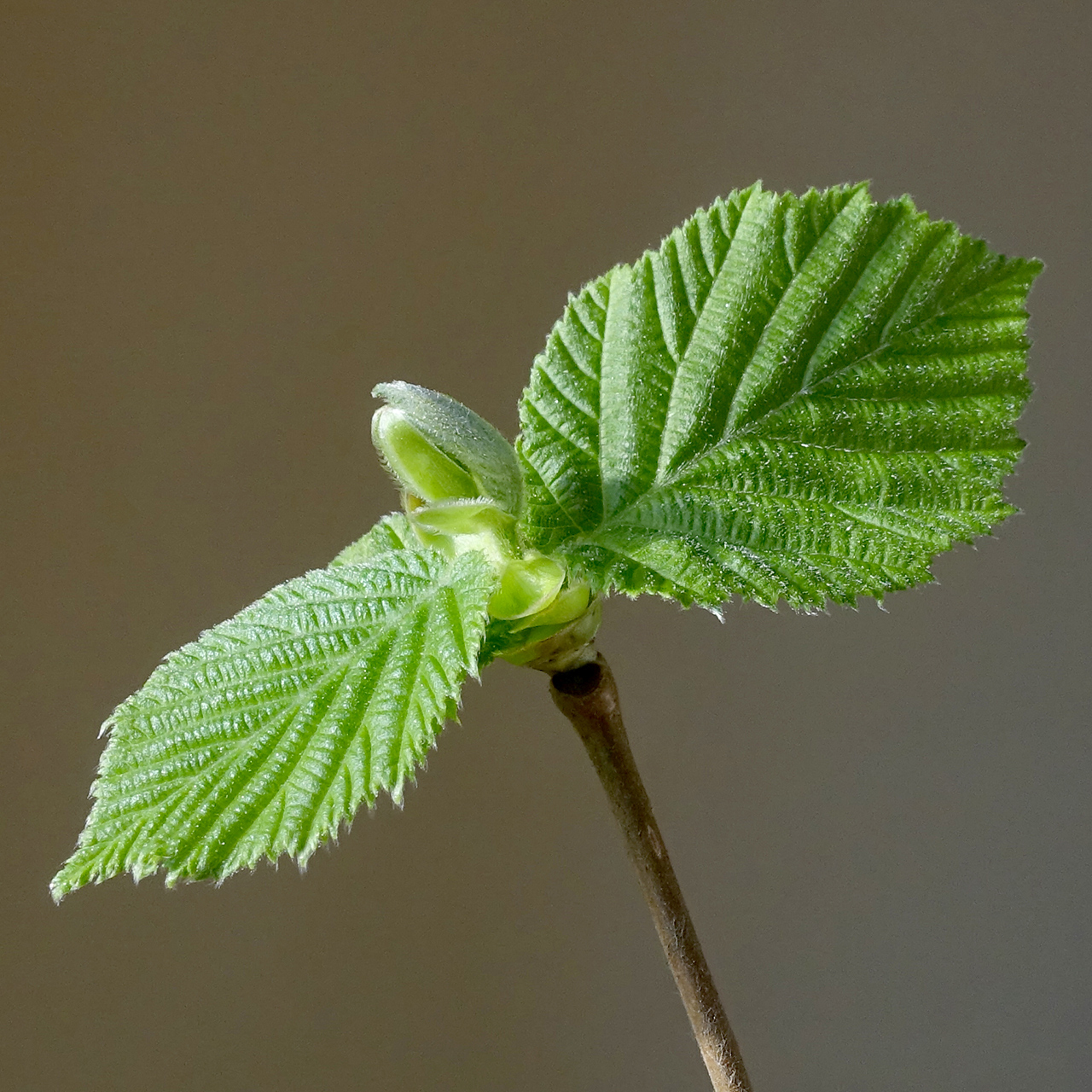
Hazelnut photosynthesis: how the leaf works
Photosynthesis is the process by which chlorophyll in the leaf absorbs visible light (approximately in the range of 400–700 nm, so-called photosynthetically active radiation, PAR) and uses this energy to convert carbon dioxide and water into sugars, releasing oxygen in the process. The leaf is excellently adapted for this: in addition to photosynthesis, it performs transpiration, assimilation (e.g., nitrogen), and respiration, so its structure and shape are adapted to all these tasks.
In hazelnut, leaves on the shoot are arranged in a regular alternate order — typically such that every sixth leaf comes above the first leaf of the previous series (phyllotaxy 2/5). This arrangement is not accidental: it achieves a uniform assimilating surface along the entire length of the shoot and good light utilization, as leaves shade each other as little as possible.
The link between photosynthesis and nutrition
Photosynthesis is not isolated — it is closely linked to plant nutrition, especially nitrogen. Nitrogen uptake and assimilation are slowed if factors necessary for photosynthesis are limited: light, temperature, availability of other nutrients, or anything that impedes the translocation (movement) of photosynthates to the root. Therefore, nitrogen absorption is highest during full vegetation, when the leaf is working at full capacity, and lasts until leaf fall. Practical message: maintaining healthy, functional foliage as long as possible in the season directly extends the period of assimilate production and nutrient uptake.
Remote monitoring of photosynthesis
Modern technology allows indirect monitoring of photosynthetic activity. Chlorophyll strongly absorbs visible light (400–700 nm), while the cellular structure of the leaf strongly reflects near-infrared radiation (approximately 700–1300 nm). From this difference in reflection, multispectral sensors (drones, satellites) calculate vegetation indices (e.g., NDVI) that describe the amount of photosynthetically active leaf area, chlorophyll content, and biomass. This allows early detection of stress, nutrient deficiency, or disease, before they become visible to the naked eye.
Canopy light response
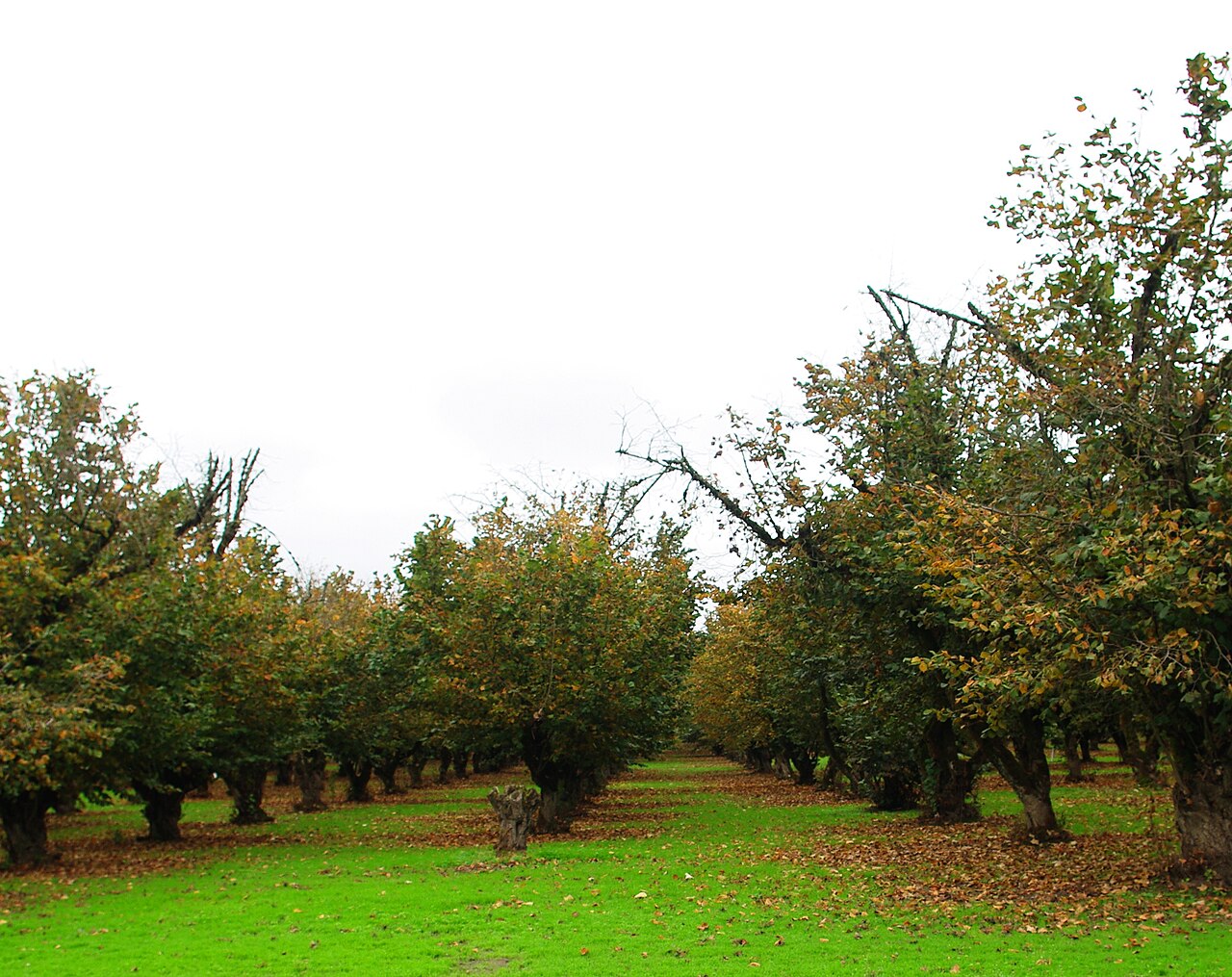
The hazelnut canopy is not uniformly illuminated: the upper layers intercept the most light, and towards the bottom and interior, the amount of PAR drops sharply. This light gradient decisively influences where the canopy will be productive and where it will "empty out."
Leaf plasticity: sun and shade leaves
Hazelnut is a species with pronounced leaf plasticity — the same genotype produces morphologically and physiologically different leaves depending on how much light it receives. Research on the leaf plasticity of Corylus avellana showed the following adaptations to shade:
| Leaf Property | Shade Leaf (shaded) | Sun Leaf (full light) |
|---|---|---|
| Specific Leaf Area (SLA) | larger (up to ~+100 %) | smaller, thicker leaf |
| Palisade / spongy tissue ratio | smaller (~−44 %) | larger |
| Chlorophyll b content (antenna pigment) | larger | smaller (higher Chl a/b ratio) |
| Light strategy | capture (maximizes absorption) | protection (dissipation of excess energy) |
The mechanism is elegant: shade leaves have more chlorophyll b, the main component of the LHCII antenna complex, so they capture and forward more available light energy to the reaction centers of Photosystem II — which increases photosynthetic efficiency under low light conditions. Sun leaves, on the other hand, have a lower proportion of chlorophyll b (higher Chl a/b ratio) and developed mechanisms for dissipating excess energy as heat and fluorescence, thereby protecting reaction centers from damage when there is too much light. In measured conditions, the difference in available light (PPFD) between sun and shade positions was up to ~97 %.
Consequence for the producer: hazelnut adapts to shade, but adaptation has limits. Leaves in deep shade become net consumers (they consume more through respiration than they produce), and in such zones, differentiation of fruit buds is absent.
Leaf Area Index (LAI) and planting density
The Leaf Area Index (LAI) expresses how many square meters of leaves are distributed above one square meter of soil. This is a key measure of the orchard's ability to intercept solar energy:
| Training System | Typical LAI (m²/m²) |
|---|---|
| Older, thinned systems | 2.5 – 5 |
| Dense planting (modern intensive orchards) | 5 – 10 |
In the cultivation of nut trees (hazelnut, walnut, almond), the aim is to maximize the use of solar radiation as the main energy source, so training forms suitable for dense planting are introduced, thereby increasing LAI. The relationship of hazelnut to solar and terrestrial radiation — i.e., the use of direct and diffuse light relative to LAI — has direct application in the choice of training system and planting density.
However, care must be taken regarding the limit: an excessively high LAI means that the upper layers "eat" the light, while the lower ones remain in the shade and stop being productive. The goal is to distribute leaf mass so that the largest possible proportion of leaves receives enough light for net positive photosynthesis and for the differentiation of fruit buds.
Vertical light distribution and productivity
Recent research confirms that the upper layers of the canopy intercept the most PAR and there produce the largest number and mass of nuts, while the lower layers receive significantly less light and produce less. This is particularly pronounced in denser plantings. Practical guidelines derived from this:
- Prune to open the canopy so that light penetrates into the interior and lower tiers.
- Control suckers (root sprouts) from the root crown, which unnecessarily consume assimilates and further shade the lower part.
- Adjust row height and width to the site's illumination and row direction (north–south for more even illumination of both sides).
- In shady conditions, vegetative growth is stronger, while full light favors the differentiation of female flowers and catkin development.
Gallery
Sources and sinks of assimilates
The physiology of assimilate distribution is described by the source–sink model:
- Source (source) is an organ that produces (or releases) more assimilates than it consumes itself — primarily mature, illuminated leaves, and in certain periods, organs with reserves (trunk, branches, root).
- Sink (sink) is an organ that consumes or stores assimilates: shoot tips that are growing, roots, developing nuts, catkins, female flowers, and organs that fill winter reserves.
Assimilates are moved (translocated) by the phloem from sources to sinks, and the direction and intensity of flow change during the season depending on which sinks are strongest ("hungeriest").
Carbohydrates in hazelnut
The main carbohydrates produced by photosynthesis are divided into monosaccharides (glucose, fructose), disaccharides (sucrose), and polysaccharides (starch, cellulose). Sucrose is the main transport form of sugar through the phloem, while starch is the main storage form. In the kernel of a mature hazelnut, sucrose makes up even ~74.6 % of total sugars, and other sugars (fructose, glucose, myo-inositol, raffinose) about 12 % — which shows how important assimilates are as the final product directed into the nut.
Reserves: "savings" for winter and start of vegetation
The role of reserve carbohydrates is particularly important. During the vegetation period, reserves (especially starch) accumulate in perennial organs — trunk, branches, and root. These reserves constitute the main source of energy for metabolic processes during winter dormancy. During dormancy and at the spring bud break, part of the starch reserves is hydrolyzed into soluble sugars that serve for respiration and for protection against freezing (cryoprotection). A greater ability to accumulate these compounds is associated with better survival and growth.
This has direct practical consequences:
- Early spring growth (bud break, first leaves, even catkin flowering which is very early) occurs largely at the expense of last year's reserves, because new leaves do not yet produce enough assimilates.
- The end of the season must be long and healthy enough for reserves to be replenished before leaf fall. Early defoliation (due to disease, pests, drought, or premature stress) "empties" the reservoir and weakens the following year.
- Everything that keeps leaf mass healthy in the second half of summer (protection against leaf spot, mites, irrigation during drought) invests in the next season.
Carbon autonomy of the branch
Research on hazelnut shows that branches bearing female flowers/nuts are not completely carbon autonomous — nut development relies significantly on the import of carbon from adjacent branches and from reserves. Experiments with girdling and defoliation show great plasticity: how much carbon will be moved depends on the balance of sources and sinks at that moment. In other words, a well-developed, illuminated canopy as a whole "feeds" the fruiting branches; an individual fruiting branch does not need to feed itself.
Competition between vegetative and reproductive growth
Since the total amount of assimilates available at any given moment is limited, vegetative and reproductive growth compete for the same pool of carbohydrates. Understanding this competition is key to achieving stable, regular cropping.
Buds: Two Destinies
Based on function, hazel buds are divided into:
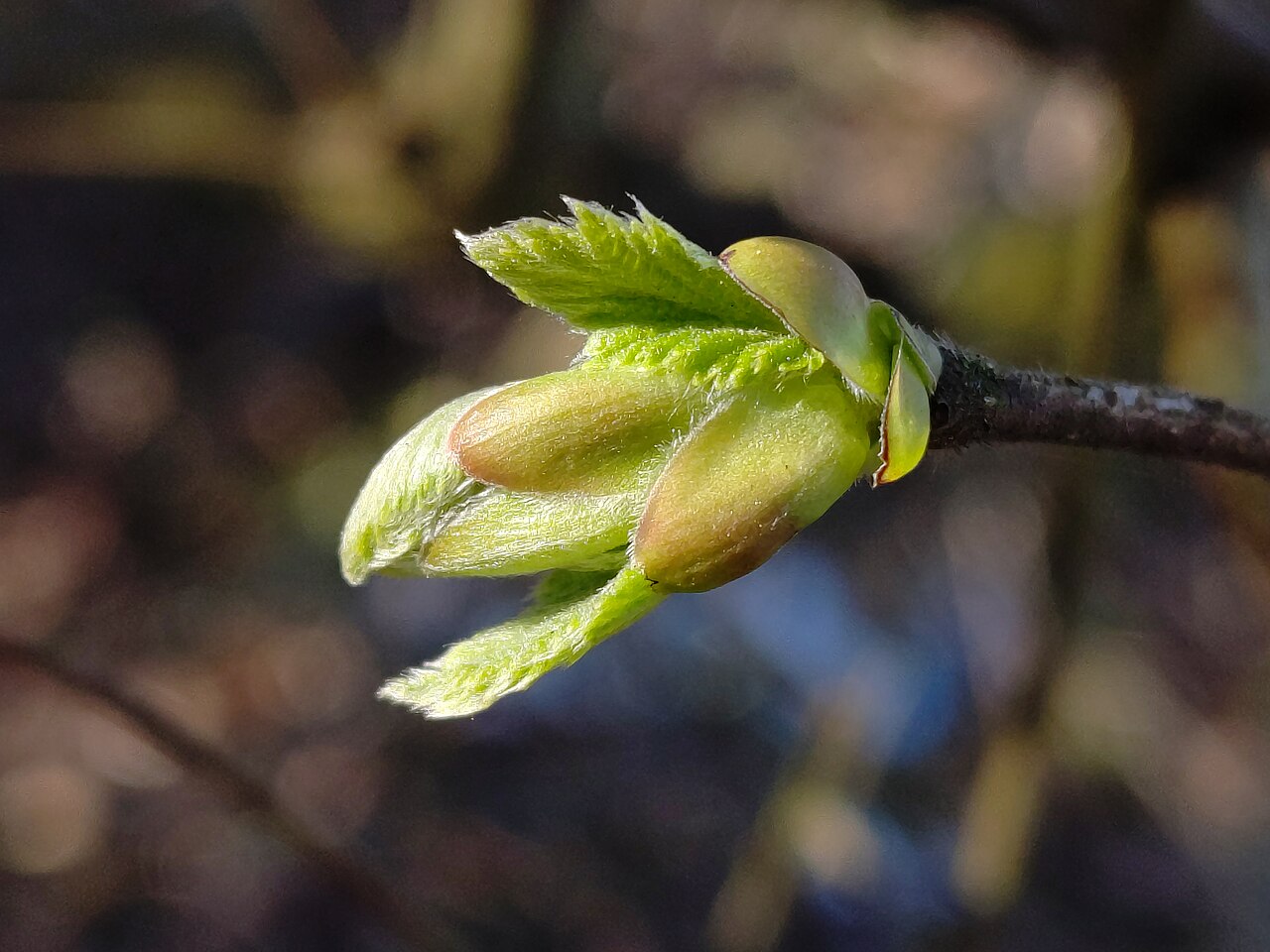
- vegetative — wood buds (from which shoots and leaves grow), transitional buds, and dormant (adventitious) buds;
- reproductive — exclusively flower buds, from which the fruit develops after pollination.
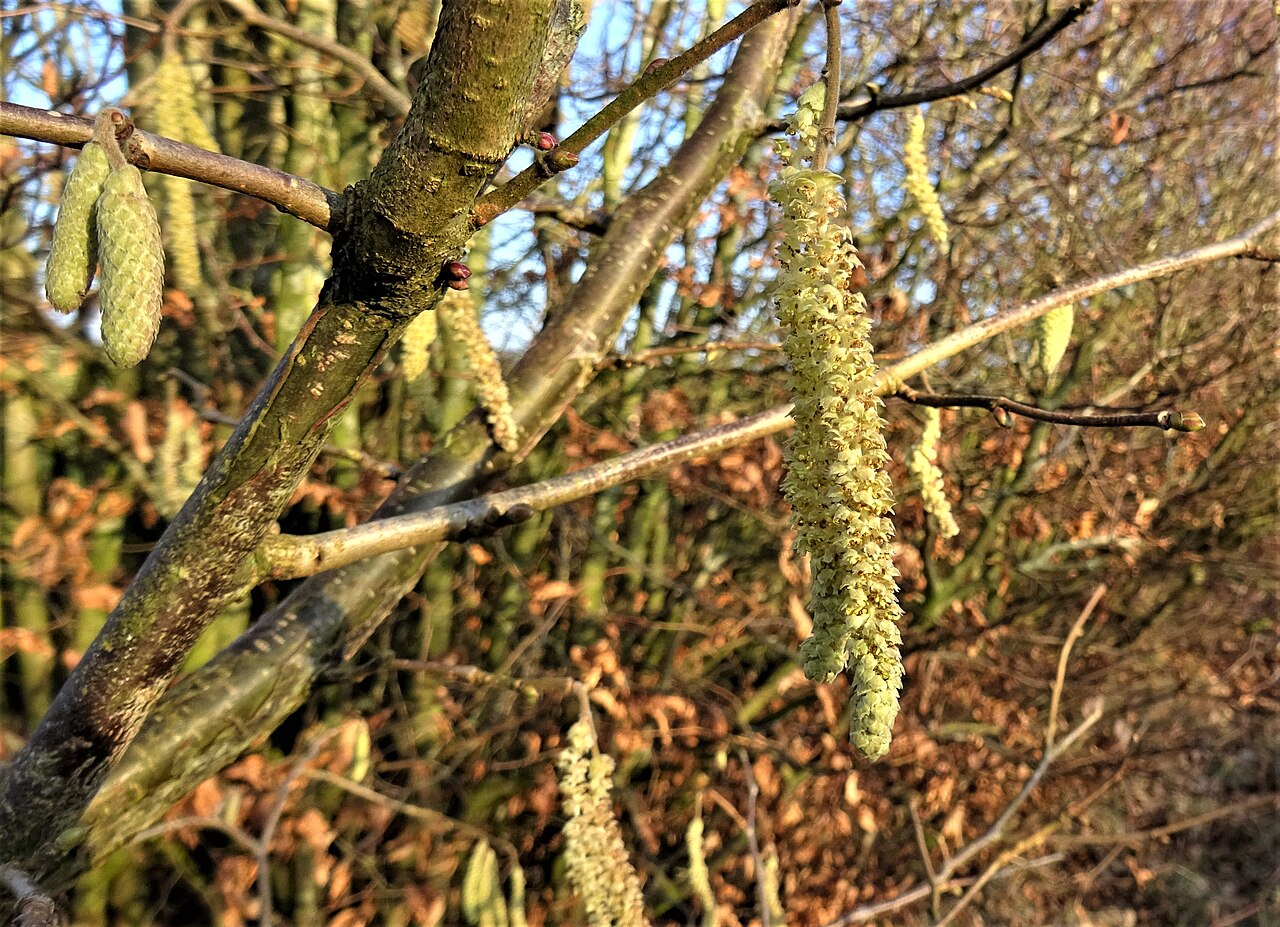
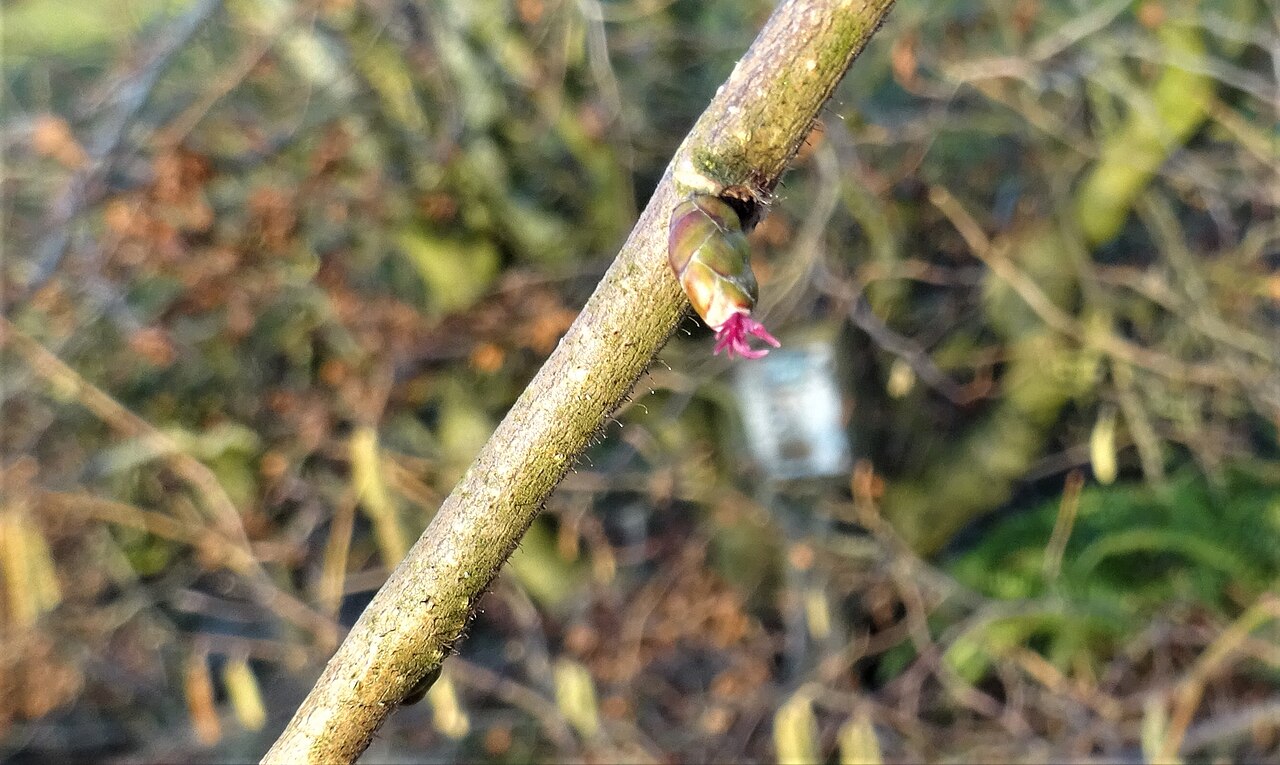
Hazel is monoecious: the same branch bears both male and female flowers. Male flowers are grouped in catkins (inflorescences) on branches from the previous year's growth; a mature tree can produce up to 1 kg of catkins, with each catkin bearing ~130–260 flowers. Pollen production is, therefore, itself a significant sink of assimilates at the end of the previous season and the beginning of the current one.
How vegetative growth "weighs" against reproductive growth
The general rule applies to hazel as well:
- Excessive vegetative growth (vigorous shoots, dense shading, abundant suckers, excessive nitrogen) consumes assimilates for wood and leaf production and shades the interior, thereby reducing the differentiation of flower buds and cropping.
- Excessive reproductive growth (overbearing) depletes reserves and can lead to alternate bearing — a "heavy" crop year is followed by a "light" year, because the plant has exhausted its reserves and failed to differentiate enough flower buds for the next season.
The goal is dynamic balance: sufficient vegetative growth to continuously renew bearing wood and leaf area, but not so much that it suppresses cropping.
Practical levers for managing balance
| Measure | Effect on source–sink balance |
|---|---|
| Pruning (thinning, opening the canopy) | More light in bearing zones, stronger differentiation of flower buds; excessive pruning promotes vigorous vegetative growth |
| Control of root suckers | Removes strong "parasitic" sinks and reduces shading of the lower canopy |
| Nitrogen fertilization | Moderate: maintains leaf area; excessive: vigor at the expense of cropping and increased risk of late frosts |
| Irrigation during critical phases | Maintains photosynthesis and kernel filling; prevents early defoliation |
| Planting density / training system | Determines LAI and light distribution — the foundation of the entire balance |
Key figures from literature: PAR 400–700 nm (photosynthetically active radiation) · LAI 2.5–5 (conventional) → 5–10 (dense planting) · shaded leaf SLA up to ~+100%, palisade/spongy tissue ratio ~−44% · sucrose ~74.6% of sugars in the kernel · ~1 kg of catkins per mature tree, 130–260 flowers per catkin.
All values are informative and depend on cultivar, location, orchard age, and agronomic practices.
Practical recommendations and common mistakes
Recommendations
- Design the orchard (spacing, row orientation, training system) so that light penetrates to lower layers — photosynthesis only "pays off" if the leaf receives light.
- Maintain an open canopy through pruning and remove suckers; light in the interior means flower buds there, not just at the top.
- Protect leaf mass from diseases, mites, and drought until the end of the season — the second half of summer fills winter reserves for the next growth flush and flowering.
- Dose nitrogen according to vigor: the goal is healthy, not excessive, leaf area.
- Monitor canopy status (visually or via vegetation indices from multispectral imagery) and react early.
Common mistakes
- Neglecting lower and internal shading: the orchard "looks green," but only the upper rim bears fruit.
- Excessive nitrogen fertilization that drives vegetative growth and opens the door to alternate bearing and late frost damage.
- Excessive, "panic" pruning that triggers a flush of vigorous shoots instead of bearing wood.
- Allowing early defoliation (disease, drought) — loss of reserves that is only felt the following year.
- Expecting each bearing branch to be self-sufficient — the canopy functions as a whole, so the overall balance of sources and sinks is crucial.
Sources
This article is an AI-generated summary compiled from an internal literature collection on hazelnut (RAG corpus) and publicly available sources. The content has been synthesized and translated into Croatian; verify figures and claims in the original sources and with advisory services before application. Main sources used:
From RAG corpus (hazelnut literature collection):
- Miljković, I. — Lijeska (book, 2018); review (Dugalić): hazel's response to solar and terrestrial radiation, use of direct and diffuse light relative to LAI.
- Corylus avellana responsiveness to light variations: morphological, anatomical, and physiological leaf trait plasticity — Photosynthetica, 2015 (sun-exposed/shaded leaves, chlorophyll b, LHCII, SLA, PPFD).
- Proceedings of the 13th Scientific-Professional Conference of Croatian Fruit Growers, 2018 (LAI and dense planting in broadleaf fruit trees).
- State and trends in production and consumption — Glasnik zaštite bilja (gzb), 2017, DOI: 10.31727/gzb.42.3.9 (leaf structure and role, bud classification, catkins and flowers).
- Glasilo biljne zaštite 3/2023 (chlorophyll absorption 400–700 nm, NIR reflection, vegetation indices).
- Seasonal Phenology, Growth, Nutrients and Biochemical Characterization (2016) (reserve carbohydrates, starch, cryoprotection).
- Master's thesis, Faculty of Agriculture, University of Zagreb (2017) and Chemical composition of hazelnuts (2017) (sucrose ~74.6% of sugars in the kernel).
- PDF Cultivation of Hazel (2009) (link between nitrogen and photosynthesis, limiting factors).
- Gusak, I. — master's thesis on suppression of hazel root suckers (2024) (suckers as sinks and shading factors).
Public web sources (supplement and currency):
- The Impacts of Light Interception on Yield and Kernel Parameters in Hazelnut Production — Horticulturae, 2025 — https://doi.org/10.3390/horticulturae11020156
- The Influence of Canopy Light Intensity on the Vegetative and Reproductive Phenology of Hazelnut Trees — Applied Fruit Science, 2025 — https://link.springer.com/article/10.1007/s10341-025-01762-4
- Corylus avellana responsiveness to light variations… — Photosynthetica, 2015 — https://link.springer.com/article/10.1007/s11099-015-0078-5
- Girdling of fruit-bearing branches of Corylus avellana reduces seed mass while defoliation does not — https://www.researchgate.net/publication/333105594
- Physiological and Yield Productivity Responses of Hazelnut to Exogenous Cytokinin and Girdling Treatments — Agronomy, 2026 — https://doi.org/10.3390/agronomy16040467
- Competition for light, water and nitrogen in an association of hazel and cocksfoot — Agroforestry Systems — https://link.springer.com/article/10.1023/A:1026475910260
- Biological Flora of Britain and Ireland: Corylus avellana — Journal of Ecology, 2022 — https://besjournals.onlinelibrary.wiley.com/doi/10.1111/1365-2745.14008