Soil and Root Pests (Melolontha, Otiorhynchus, Capnodis)
Content generated by artificial intelligence — verify before application
This article was automatically compiled from a collection of hazelnut literature using artificial intelligence and may contain errors or outdated information. It serves as a starting point for further research, not as professional advice. Dosages, products, and timing are informative and depend on the cultivar, location, and current regulations — always verify with an advisory service and official sources before application.
Soil and root pests are a specific group of problems in hazelnut orchards because they act hidden — below the surface, where the eye cannot see them, and insecticides struggle to reach them. While pests of leaves or nuts leave visible traces on the green parts of the shrub, chafer grubs, root weevil larvae, and wood-boring beetle larvae chew on roots and the root collar for months or years before the first signs appear above ground: stunted growth, yellowing, wilting, and drying, most often in hotspots (nests) within the orchard. For this reason, early diagnosis — digging and inspecting the soil around suspect plants — is key. This article covers the three most important groups of underground pests: chafer beetles and their grubs (Melolontha spp.), root weevils of the genus Otiorhynchus, and root/stem borers of the genus Capnodis.
Group Overview and Why It Is Dangerous
A common feature of these pests is that the main damage is caused by the larva, which feeds on the underground parts of the plant. Adult insects (imago) mostly chew leaves and cause cosmetic damage, while larvae in the soil can sever fibrous roots, strip the bark from roots, or hollow out tunnels in the root collar and trunk — weakening the plant and, in severe attacks, killing it. Hazelnut, with its fibrous, shallow root system, is particularly sensitive to the loss of fine roots.
| Pest (HR / lat.) | Order / Family | What is attacked (larva) | Type of damage | Development cycle |
|---|---|---|---|---|
| Common (May) chafer and grubs (Melolontha melolontha) | Coleoptera / Scarabaeidae | fibrous and thick roots, severs vessels | wilting, drying of plants in nests | 3–4 years |
| Root weevil / black vine weevil (Otiorhynchus sulcatus and related) | Coleoptera / Curculionidae | fine roots, bark of the root collar | seedling decay, poor growth | ~1 year |
| Root borer / wood borer (Capnodis spp.) | Coleoptera / Buprestidae | root collar and base of the trunk, cambium | drying of the entire tree | 1–2 years |
Frequency in hazelnut orchards
The chafer (Melolontha) and its grubs are regularly cited in Croatian literature among the most significant hazelnut pests (Bošnjak et al., 2011.). Root weevil (Otiorhynchus) and root borer (Capnodis) occur more frequently in hazelnut locally — Otiorhynchus primarily in nurseries and young orchards, and in container production, while Capnodis especially on warm, dry, continental, and Mediterranean sites and on plants under drought stress. Although less common, both can cause the decay of individual trees, and it is worthwhile to know their symptoms.
Common (May) Chafer and Grubs — Melolontha melolontha
The common or May chafer is one of the most well-known beetles in our region and, according to domestic literature, ranks among the most significant hazelnut pests (Bošnjak et al., 2011.; Ivezić et al.). Although the adult insect (imago) eats leaves, the greatest damage is caused by its larvae — grubs — which live in the soil and are highly polyphagous (feeding on the roots of many plants).
Identification
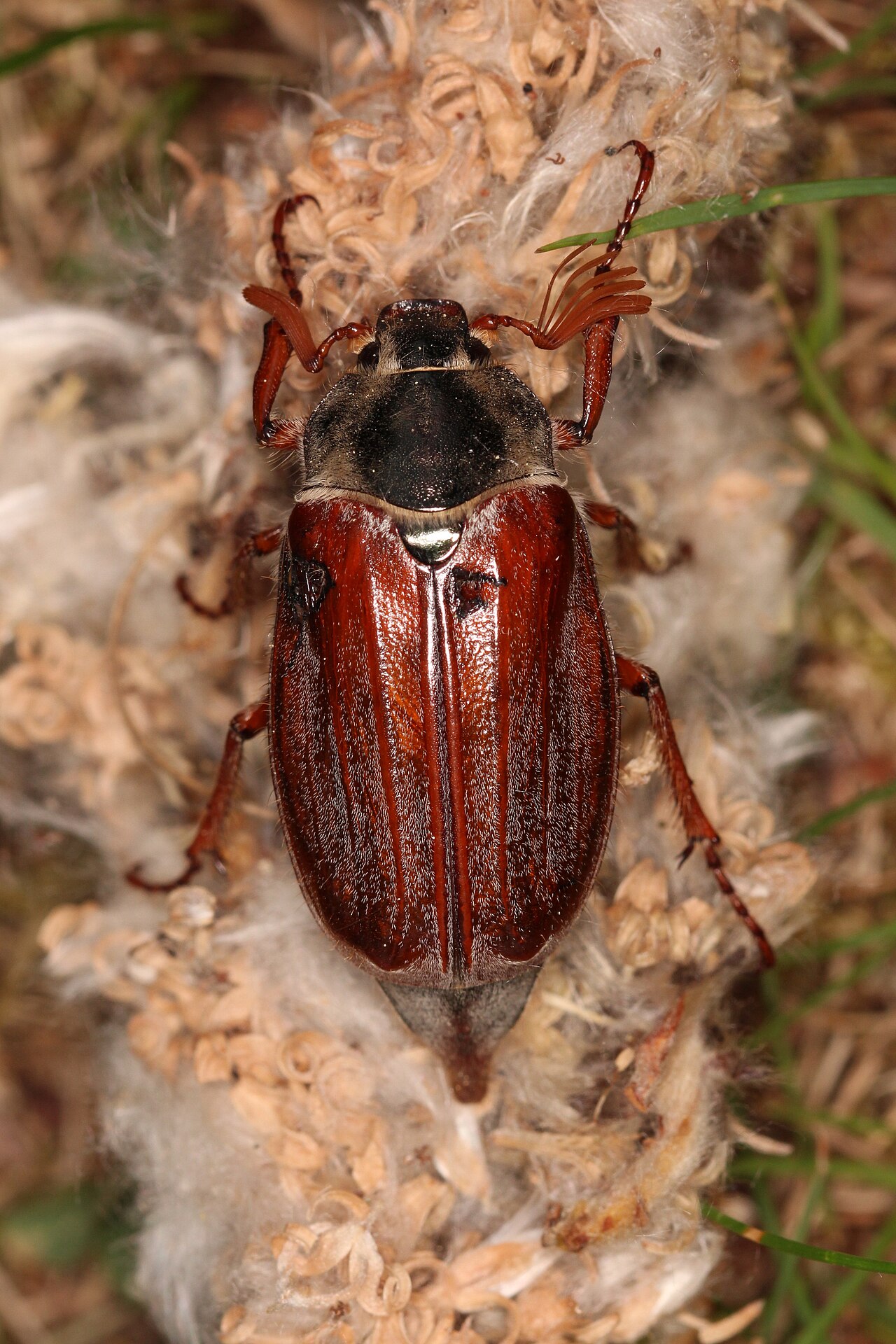
- Imago: a scarab beetle 25–30 mm long; head and body black, pronotum shiny black and covered with short hairs, legs and antennae brown, elytra reddish-brown with longitudinal folds (Bošnjak et al., 2011.).
- Grub (larva): thick, fleshy, white to yellowish-white, characteristically curved in the shape of the letter C, with a dark brown head and strongly developed mandibles; at the end of development, it can grow up to 4–5 cm.
Biology and Cycle
The common chafer has a three-year or four-year development cycle (Maceljski, 1999.). Imagos emerge in spring (often in May, hence the name May chafer), mate, and eat the leaves of hazelnut and other forest and fruit species; in some years, they can cause complete defoliation. Females lay eggs in the soil, from which grubs develop and remain in the soil for several years, passing through three larval stages (instars). The greatest damage occurs during the spring of the third year after the pest's appearance if they are not controlled by then (Bošnjak et al., 2011.) — this is the period when the last, most voracious larval stage is immediately before pupation.
Symptoms on Hazelnut
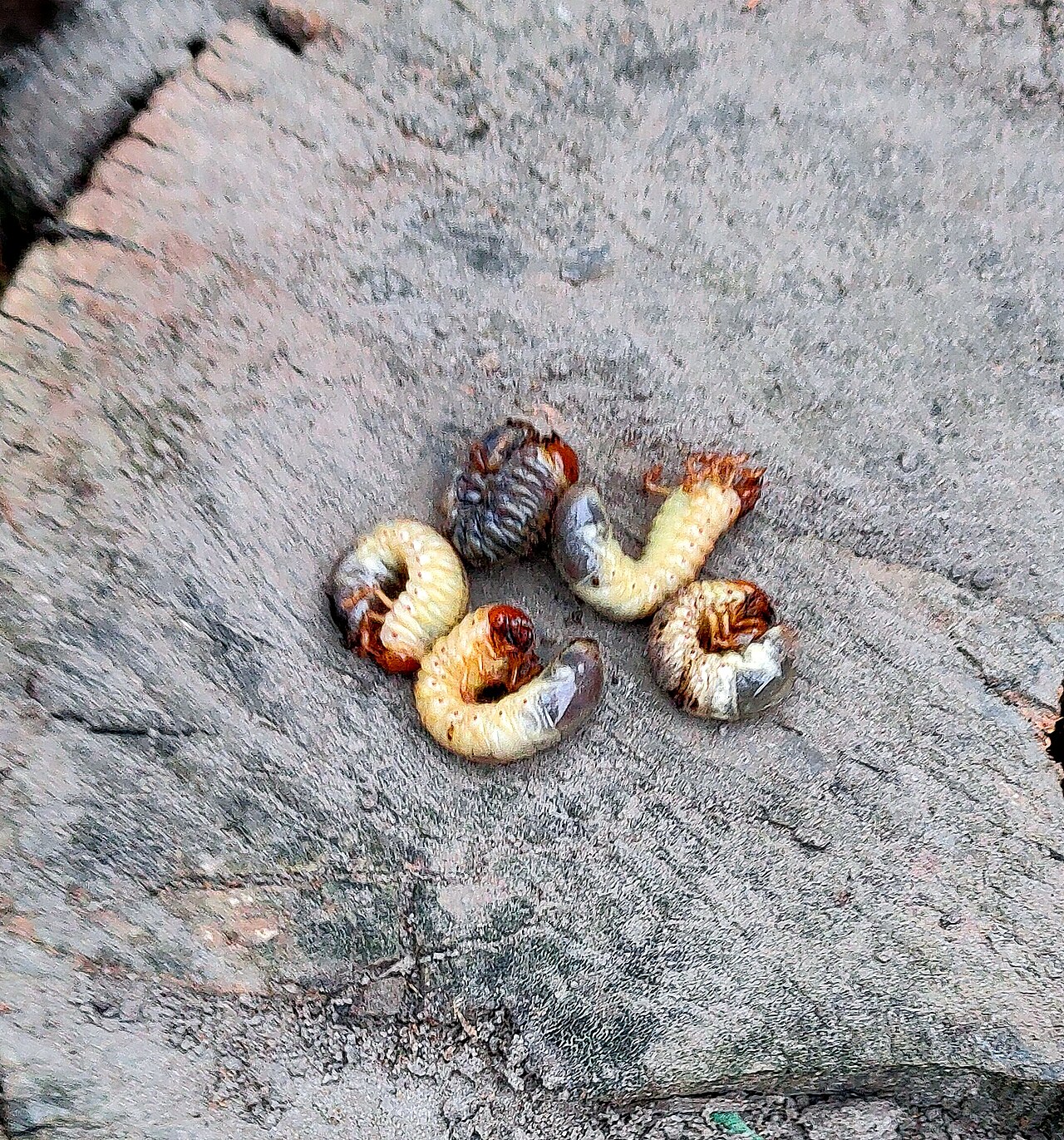
- Grubs with strong mandibles chew fine fibrous roots, and make large wounds on thicker roots; they can also sever the main root and 30 cm or deeper below the surface.
- Above ground, this manifests as stunted growth, yellowing, wilting, and sudden drying of individual plants, typically in nests (hotspots) within the orchard, because eggs are laid in clusters.
- Attacked young seedlings are easily pulled out of the soil because their roots are destroyed.
Thresholds and Diagnosis
Suspicion of grubs is confirmed by soil inspection: digging around suspect plants and counting larvae. Domestic literature recommends preventive control or where soil inspection reveals a high number of grubs (Bošnjak et al., 2011.). Orientational pest thresholds from broader (fruit and field crop) literature are very low for permanent crops:
| Orchard type / surface | Orientational threshold (grubs/m²) |
|---|---|
| Lawns | 10–30 |
| Orchards and sensitive crops | 1–5 |
Figures are orientational
The thresholds mentioned are informative and taken from general literature on white grubs; the specific decision to control depends on the age of the orchard, cultivar, soil moisture, and local recommendations from the advisory service.
Control
Mechanical and agrotechnical measures - Shaking trees early in the morning: adult chafer beetles are controlled by shaking trees early in the morning, when they cannot fly due to low temperature, and collecting and destroying the shaken insects (Bošnjak et al., 2011.). - Soil cultivation: plowing/tilling exposes grubs and pupae to the surface, predators, and drying; useful especially when establishing an orchard. - Trapping imagos with light traps and removing weeds and alternative hosts.
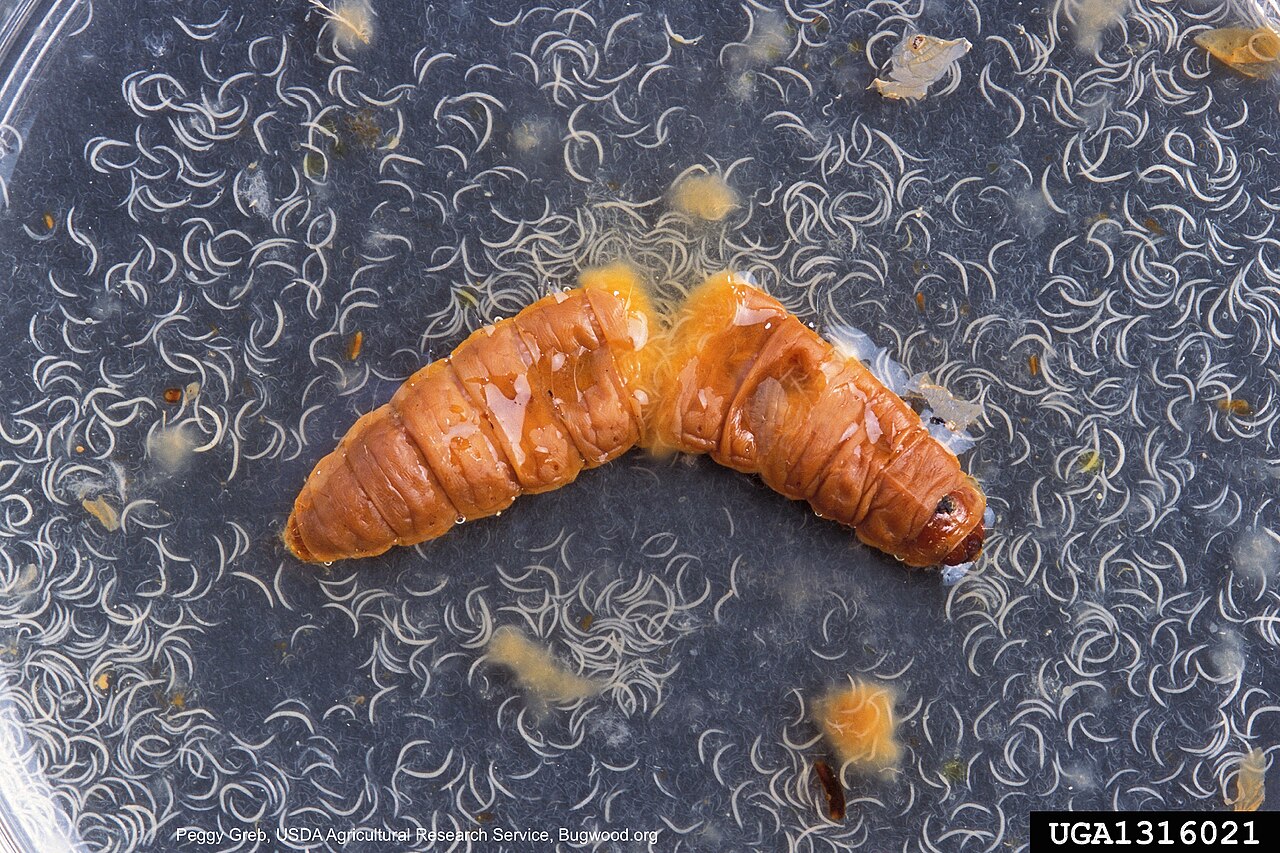
Biological measures - Entomopathogenic fungi Beauveria bassiana and especially Beauveria brongniartii are being researched and used as biological control agents for grubs in the soil. - Entomopathogenic nematodes (genera Heterorhabditis, Steinernema) can reduce grub populations in the soil with sufficient moisture and appropriate soil temperature.
Chemical measures - Only the most severely attacked trees are treated with appropriate preparations (Bošnjak et al., 2011.). Against adult chafer beetles, the allowed insecticide table for hazelnut lists, for example, Kaiso WG (aphids, borer, and chafer) at a dose of 0.15–0.3 kg/ha (2×), with a pre-harvest interval of 14 days (Šubić, 2019.). - For grubs in the soil, the historical application of soil insecticides (e.g., granules) was mentioned when establishing orchards; such measures today depend on current approvals.
Check approvals
The assortment of allowed insecticides and soil granules is changing (many older preparations, e.g., organophosphates and chlorpyrifos, have been withdrawn from use in the EU). Always check dosages, number of treatments, and pre-harvest intervals on the current label and in the FIS database, and with the advisory service.
Root (Black) Weevil — Otiorhynchus sulcatus and related species
The root weevil, also known as the black vine weevil, is one of the most widespread pests in horticulture and nursery production. It is highly polyphagous — feeding on more than 200 plant species — and spreads primarily through the transfer of infected container (planting) material. In hazelnut, it is most dangerous in nurseries and young orchards.
Identification
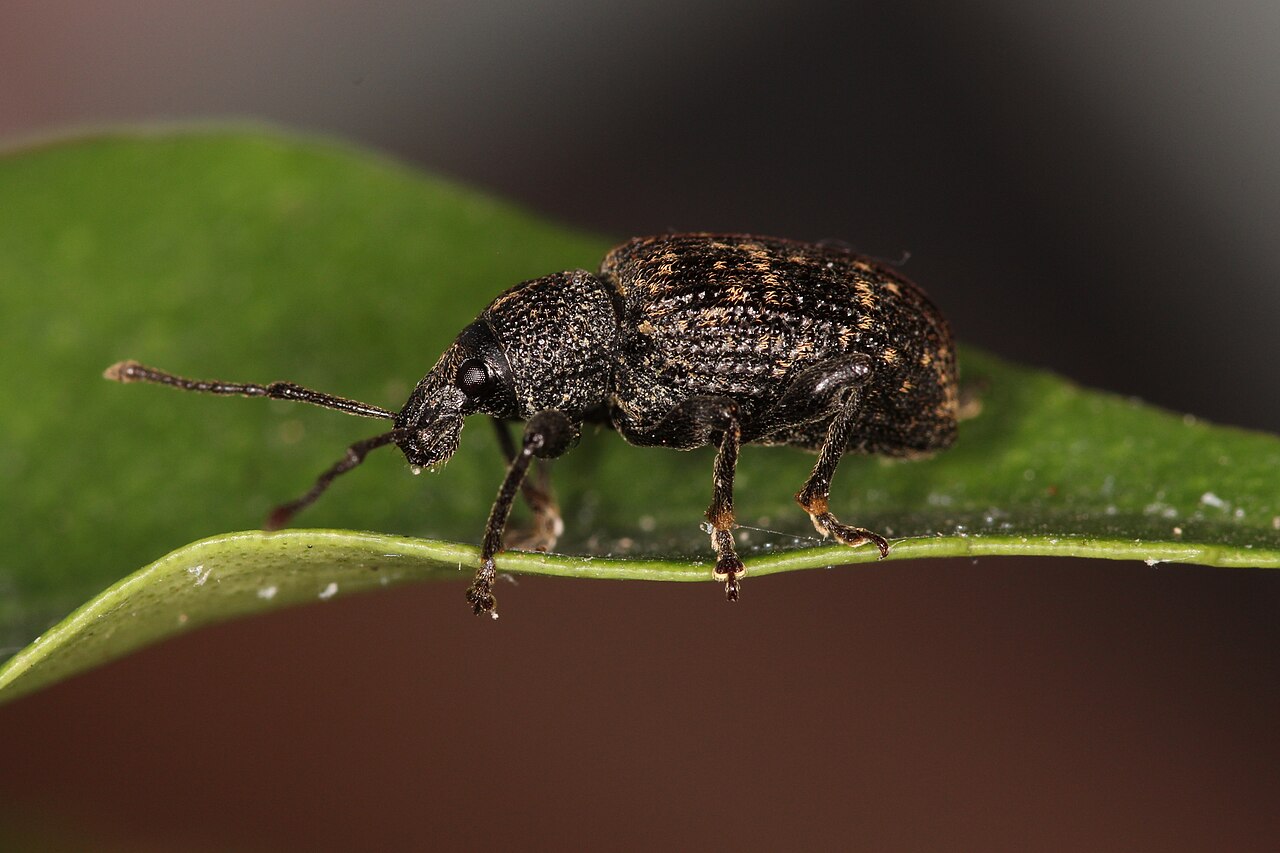
- Imago: a black beetle with a short, wide snout (curculionid); it does not fly (wings are fused), moves by walking, and is active at night. The population is predominantly parthenogenetic (almost all females), so it multiplies quickly.
- Larva: white, legless, curved in the shape of the letter C, with a brown head — very similar to a small grub, but smaller; lives in the soil near the root.
Biology and Cycle
It usually has one generation per year. Females lay eggs in the soil during summer; larvae feed on roots, overwinter in the soil, and continue feeding in spring, when they cause the most damage, before pupating. Adult beetles emerge in late spring and summer. Larvae are more active at lower soil temperatures, which is important for choosing control measures.
Symptoms on Hazelnut
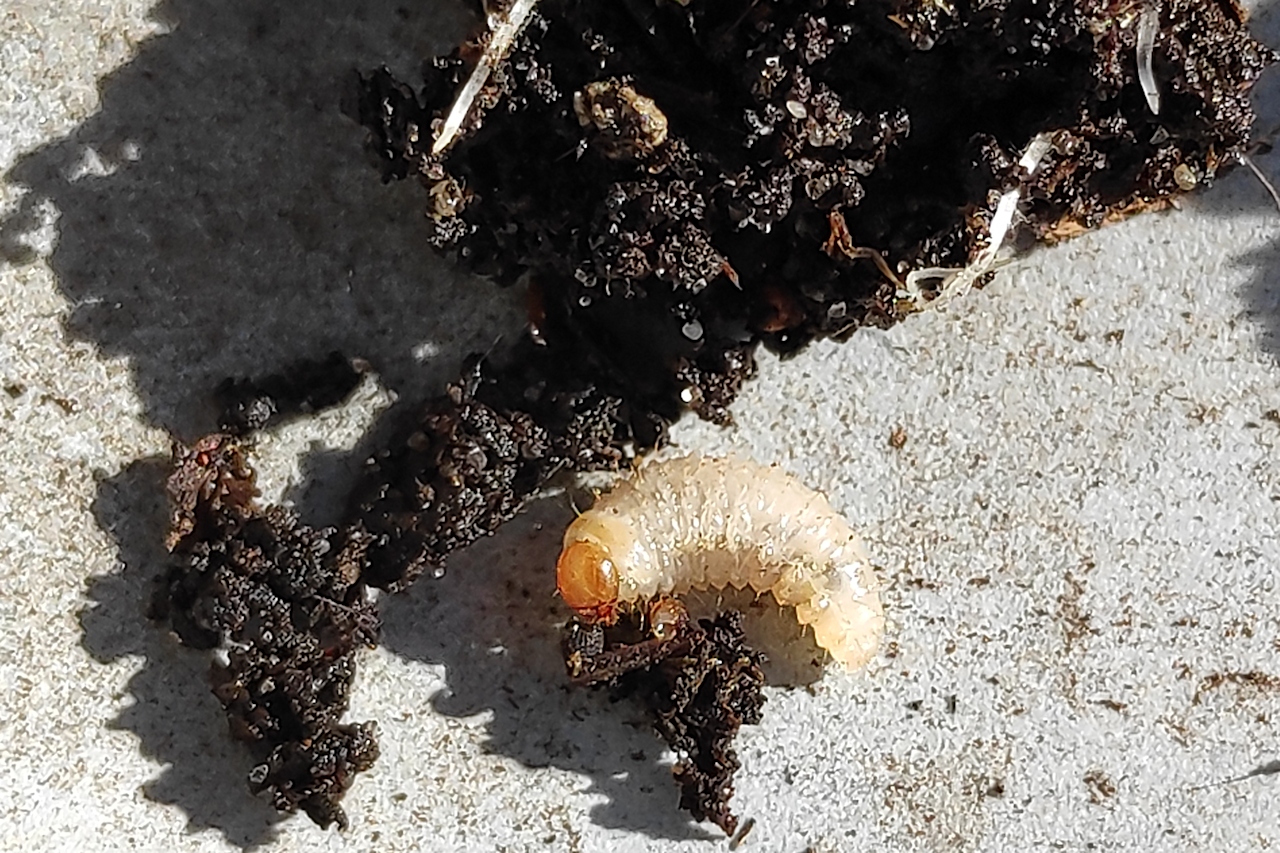
- Larvae (main damage): chew fine roots and strip bark from the root collar and base of the trunk; young seedlings grow poorly, wilt, yellow, and may die, especially in spring.
- Imago (secondary, cosmetic damage): characteristic semicircular notches (cuts) on the edges of leaves — a sure sign of the presence of adult weevils.
Control
Biological measures (most effective for larvae) - Entomopathogenic nematodes are the most effective measure against larvae, especially in container and nursery production. Nematodes of the genera Heterorhabditis and Steinernema are commercially available; they are applied by watering (drenching) the substrate/soil. - The soil/substrate temperature during application should be approximately 10–29 °C; the species Steinernema kraussei is effective at lower temperatures (around 5 °C), making it suitable for early spring and autumn application. - Effectiveness is high: in trials, a single May application resulted in larval mortality of over 90 % (with H. megidis).
| Measure against Otiorhynchus | Target | Application time |
|---|---|---|
| Entomopathogenic nematodes (watering) | larvae in soil/substrate | spring and autumn (early summer) |
| Inspection and rejection of infected planting material | prevention of entry | at purchase/planting |
| Sticky barriers around the trunk, night collection of imagos | adult beetles | summer (at night) |
Agrotechnical and chemical measures - Quarantine of planting material: since it spreads via seedlings, it is crucial to purchase healthy, inspected material. - Adult weevils (which do not fly) can be stopped with sticky tapes/bands around the trunk and collected at night by shaking. - Chemical control of larvae in the soil is difficult and depends on allowed products; preference is given to biological measures.
Root and collar borer — Capnodis spp.
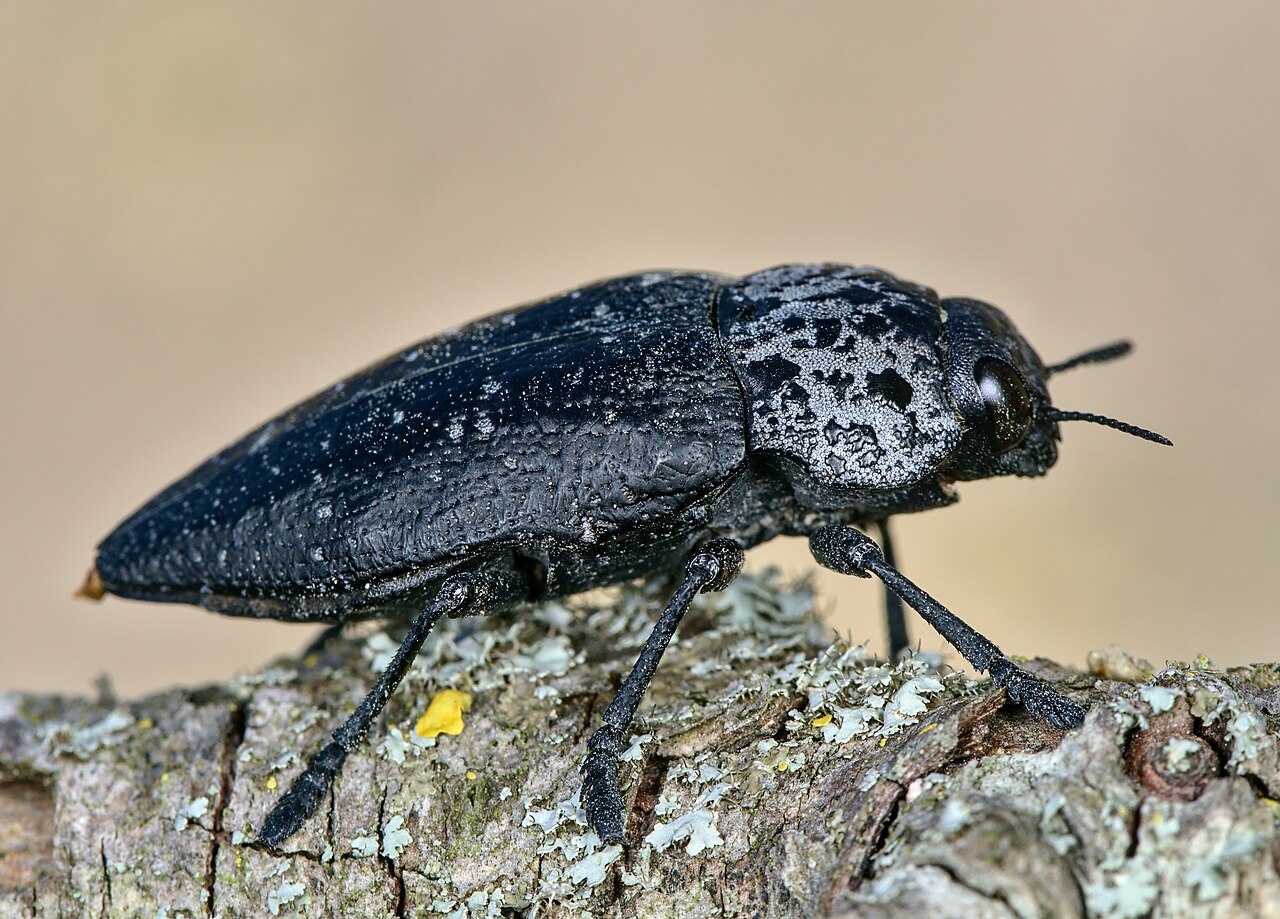
Root and collar borers of the genus Capnodis (family Buprestidae) are borers of the root collar and trunk base, best known as serious pests of stone fruits (almond, apricot, plum) in warm, dry regions. On hazelnut, they occur locally, but when they attack, they can cause drying of the entire tree, as the larva disrupts the vascular tissue at a critical location — the root collar.
Identification
- Imago: robust, hard-bodied borer, black with whitish-grayish powdery spots on the pronotum and elytra; active in heat, flies well, feeds on bark and petioles of young shoots.
- Larva: white, legless, with a distinctly enlarged anterior body part (enlarged prothorax) — the typical "hammer" shape of buprestid larvae; bores wide galleries in the root collar and trunk base.
Biology and life cycle
Development lasts one to two years. Imagines are active in summer, at high temperatures; females lay eggs in the soil near the root collar or in bark cracks at the base. Larvae bore into the cambium and wood of the root collar, where they create galleries. Drought and heat stress favor attack — vital, well-irrigated trees are significantly more resistant.
Symptoms on hazelnut
- General weakening and drying of the tree — from poor growth and yellowing to sudden wilting of the entire canopy, especially in summer.
- At the trunk base and root collar: galleries filled with frass (sawdust), damaged/lifted bark, sometimes sap exudation.
- Damage resembles symptoms of drought or root rot, so confirmation requires excavation and inspection of the root collar.
Control
There is no simple chemical solution for Capnodis; the focus is on prevention and maintaining tree vitality.
- Irrigation and avoiding drought stress: the most important single measure — vital trees are attacked much less severely.
- Site selection: avoid extremely hot, dry, and shallow soils for sensitive orchards.
- Mechanical measures: collecting and destroying imagines (shaking), removing and burning severely attacked, drying trees to reduce the source of infestation.
- Soil and root collar hygiene: avoid injury to the trunk base; keep the area around the trunk clean for easier detection of symptoms.
- Entomopathogenic nematodes are being investigated for controlling larvae/eggs in the soil near the tree base, with irrigation enhancing their effectiveness.
Capnodis on hazelnut
Most available literature on Capnodis refers to stone fruits; application to hazelnut is analogous. If you suspect root borer, contact an advisory service for confirmation of identification and current recommendations.
Integrated soil and root protection — practical recommendations
Soil pests are most effectively controlled by a combination of measures and, above all, prevention:
- Healthy planting material. The most common entry point for Otiorhynchus (and grubs) is infected roots and substrate of seedlings. Obtain inspected material from reliable nurseries.
- Soil preparation before planting. Deep tillage and soil inspection for grubs before establishing the orchard; delay planting or treat hotspots if necessary.
- Maintaining vitality. Balanced fertilization (avoiding excess nitrogen) and irrigation reduce susceptibility to Capnodis and accelerate recovery from root damage.
- Regular monitoring. Look for nests of residual/drying plants; if suspected, excavate and inspect roots and the root collar. Semi-circular notches on leaves indicate Otiorhynchus.
- Preference for biological measures. Entomopathogenic nematodes and fungi (Beauveria) target larvae in the soil without environmental burden; apply with sufficient moisture and appropriate soil temperature.
- Targeted and measured chemical control. Treat only hotspots and most severely attacked trees; excessive dosage does not increase protection but promotes resistance (Hazelnut Protection Manual, 2020).
Common mistakes
- Confusing symptoms with drought or root rot. Wilting and drying in hotspots are often attributed to drought or fungi (Armillaria, Verticillium); without excavation, soil pests are easily overlooked.
- Late reaction to grubs. Waiting for grubs to reach the third year (the most voracious stage) means maximum damage — prevention and early soil control are more cost-effective.
- Spraying the canopy against soil larvae. Insecticides on leaves do not reach larvae in the soil; effective measures against them are soil-targeted (nematodes, fungi, soil tillage).
- Neglecting irrigation for Capnodis. Drought directly increases the risk of root borer attack.
Sources
This article is an AI summary compiled from an internal literature collection on hazelnut (RAG corpus) and supplemented with public web sources. Figures, dosages, and intervals are informative and subject to regulatory changes — verify them before application.
From the hazelnut literature collection (RAG corpus): - Bošnjak, D., Ivezić, M., Majić, I., Raspudić, E., Brmež, M., Sarajić, A. — Most Significant Hazelnut Pests, Faculty of Agriculture, Osijek, 2011. — https://doi.org/10.31727/gzb - Kelčić, S. — Hazelnut Diseases and Pests, final thesis, Josip Juraj Strossmayer University of Osijek, 2020. — https://repozitorij.fazos.hr/object/pfos:2298 - Hazelnut Diseases and Pests — Repository, FAZOS, 2020. (includes tables of permitted insecticides according to Šubić, 2019.) - Hazelnut Pests — Pinova (network) - Hazelnut Protection Manual / Hazelnut Protection (pests_hazelnut_pest_management; ZAŠTITA LESKE, pdfcoffee), 2012/2020. - Control of harmful organisms in hazelnut orchards, 2009. - Environmental Protection Study — multi-year hazelnut orchards, BBZ, 2020/2021. — https://bbz.hr/doc/uprava/elaborat_zastite_okolisa_visegodisnji_nasadi_lijeske_i_sljive.pdf - Hazelnut Protection — Chromos Agro d.o.o., 2025.
Public web sources (supplement): - Melolontha melolontha (white grub cockchafer) — CABI Plantwise Knowledge Bank — https://plantwiseplusknowledgebank.org/doi/10.1079/pwkb.species.33326 - Control of cockchafer Melolontha spp. grubs — a review of methods (ResearchGate) — https://www.researchgate.net/publication/282275773 - Holistic approach to control Melolontha spp. in organic strawberry plantations, Organic Agriculture (Springer) — https://link.springer.com/article/10.1007/s13165-020-00295-2 - Black Vine Weevil — Penn State Extension — https://extension.psu.edu/black-vine-weevil - Combating vine weevil successfully — Koppert — https://www.koppert.com/news/combating-vine-weevil-successfully/ - Control of black vine weevil larvae with nematodes (Lola-Luz, 2005), Agricultural and Forest Entomology — https://resjournals.onlinelibrary.wiley.com/doi/abs/10.1111/j.1461-9555.2005.00258.x - Black Vine Weevil — Bugwoodwiki — https://wiki.bugwood.org/HPIPM:Otiorhynchus_sulcatus
Recommended equipment
🔎 pheromone insect trap orchard — Amazon →Affiliate links — we may earn a small commission at no extra cost to you.