Rodents, Wild Game, and Birds: Damage and Protection
Content generated by artificial intelligence — verify before application
This article was automatically compiled from a collection of hazelnut literature using artificial intelligence and may contain errors or outdated information. It serves as a starting point for further research, not as professional advice. Dosages, products, and timing are informative and depend on the cultivar, location, and current regulations — always consult with an advisory service and official sources before application.
While most literature on hazelnut protection focuses on insects, mites, and diseases, vertebrates — rodents, squirrels, wild boar, roe deer, and red deer, as well as birds — often cause equally significant, and sometimes greater, losses. Damage occurs in two completely different phases and requires different responses: in young orchards, the attack targets the seedling (bark, shoots, root collar, tips), while in bearing orchards, it targets the nut immediately before and during ripening. This article examines who causes what damage, how severe it can be, and which measures — fencing, nets, repellents, agrotechnics, and deterrents — have proven effective in practice under Croatian and European conditions.
Why vertebrates are a special problem
Three circumstances make hazelnut particularly vulnerable:
- Shallow roots and low, shrubby canopy. The root system develops in a layer of about 30 cm, and shoots and nuts are low — within reach of hares, roe deer, and wild boar.
- Orchard location. Hazelnut is often planted on forest edges, clearings, and poorer soils, i.e., next to scrub and forest from which wild game regularly enters. The closer the orchard is to the forest, the greater the risk of attack.
- High-value, concentrated nut. The ripe hazelnut is an extremely energy-rich food that squirrels, rodents, and birds actively seek and store, so pressure is highest in the weeks preceding harvest.
The consequence is that protection against vertebrates is not a one-time measure but a permanent system: a physical barrier erected immediately after planting, combined with agrotechnics, repellents, and — where appropriate — deterrents and population control in cooperation with hunting associations.
Rodents (mice, voles, hares)
Nature of the damage
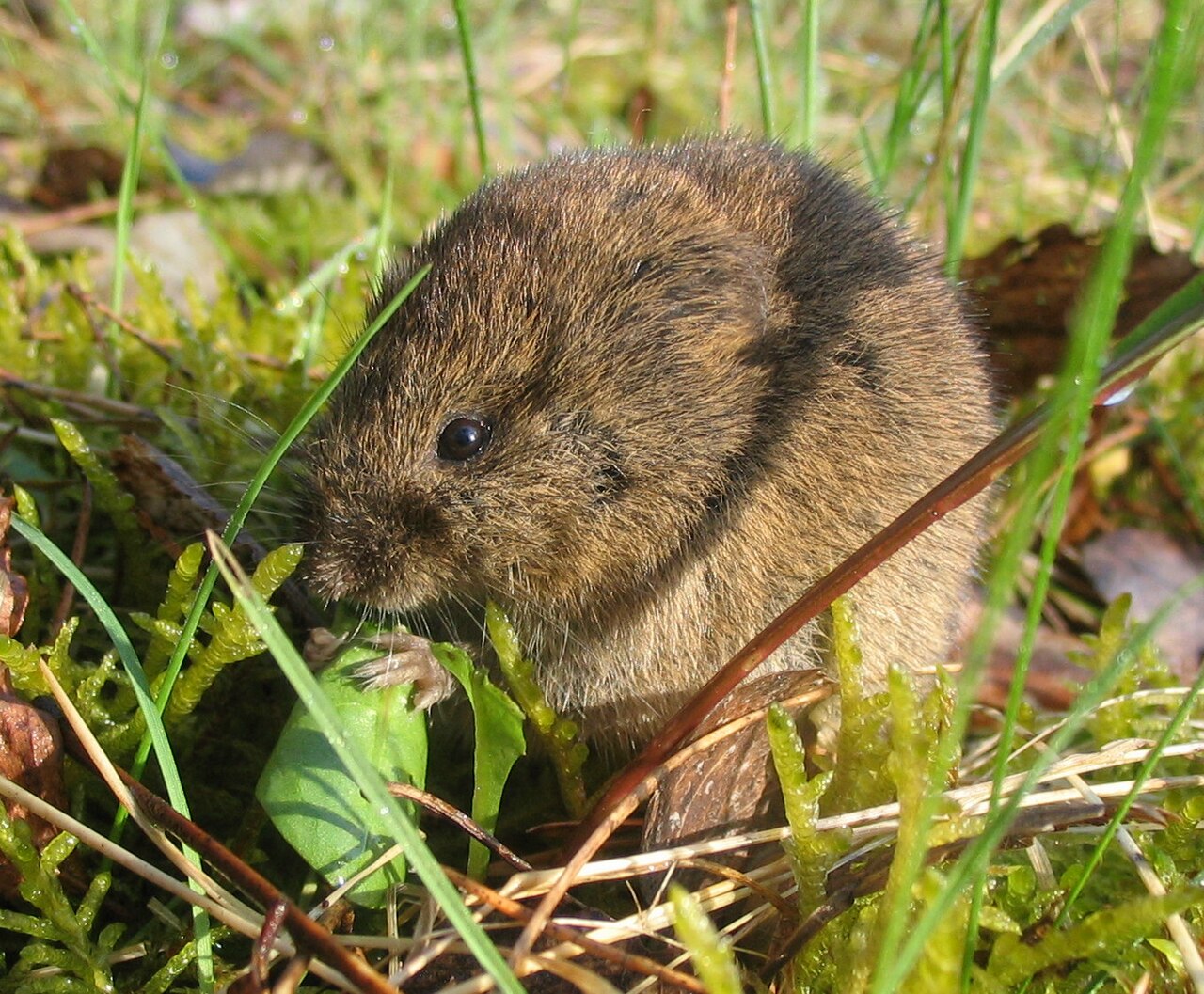
Rodents are a threat primarily to young orchards and during winter, when other food is scarce. Typical damage includes:
- Barking and root collar gnawing (voles, mice) — ring-barked bark interrupts sap flow and can kill the entire seedling.
- Underground root gnawing by voles, especially under dense, unmanaged grass cover and mulch leaning against the trunk.
- Browsing (grazing) of young shoots and tips by hares; literature explicitly states that young specimens (in that source, Turkish hazel, Corylus colurna) are subject to intensive browsing by hares.
- Theft and storage of nuts by mice in bearing orchards (less severe than squirrel damage, but measurable).
Protection measures against rodents
| Measure | How to implement | Note |
|---|---|---|
| Individual trunk guard | Plastic tube or mesh/wire "sleeve" around the root collar and trunk, at least ~60 cm high, buried a few cm into the soil | Prevents bark gnawing and browsing; informative, based on fruit growing experience |
| Fine wire mesh | Hardware cloth around the trunk, buried in the soil | Stops hares and voles that dig |
| Mowing and weed removal | Regular mowing reduces cover and nesting for voles/mice | A mowed, tidy orchard "discourages" rodent settlement |
| Keeping mulch away from the trunk | Mulch must not touch the bark | Wet mulch against the trunk attracts voles |
| Capsaicin/thiram-based repellents | Coatings and sprays that repel by smell/taste | Apply during dormancy; effect is time-limited (e.g., ~30 days, requires reapplication) |
Commercial powder and liquid repellents (e.g., products like Scoot/SCOOT PLUS) are declared effective against mice and squirrels with low risk to humans and the environment; however, with rodents, a physical barrier on the trunk remains the most reliable.
Squirrels
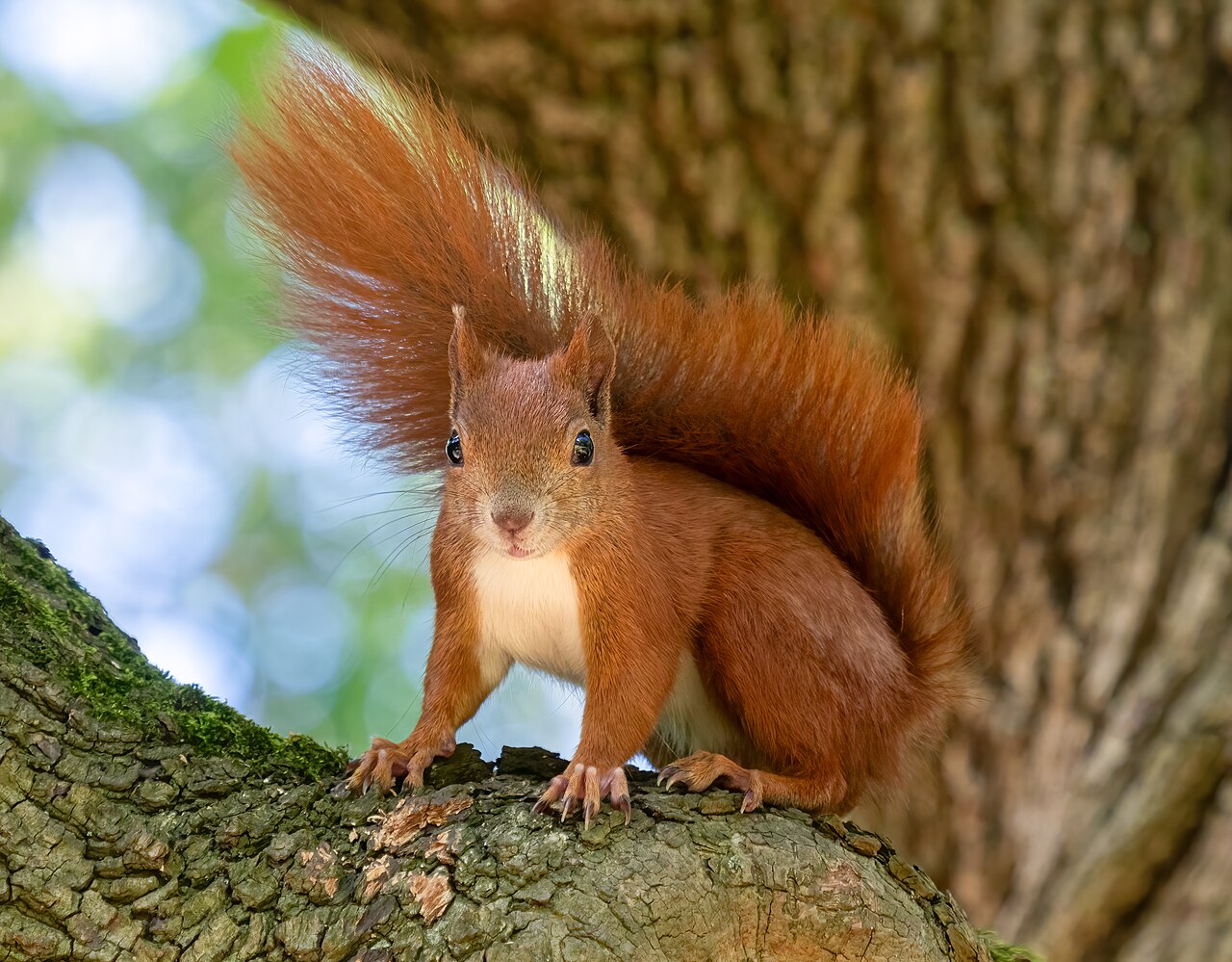
According to several sources, squirrels are the largest single "thief" of nuts in a bearing hazelnut orchard. The scale can be dramatic: literature records that 129 kg of hazelnut nuts were found in one squirrel nest. Squirrels harvest nuts before full ripeness, climb the bush, and carry nuts away for storage, so losses can be very concentrated in a short period immediately before harvest.
Measures against squirrels
- Timely harvest. The earlier and more organized the collection of ripe nuts, the smaller the "window" in which squirrels operate. During the ripening phase, special care must be taken to preserve the nuts.
- Removing "bridges". Squirrels arrive via canopies and fences; keeping the orchard away from tree rows and forests and removing branches that hang over fences reduces access.
- Smell/taste repellents (capsaicin, coatings based on hot pepper and soap on the trunk) make climbing and feeding difficult; the effect is limited in duration and requires reapplication.
- Deterrents (visual and auditory, see below) have a limited, short-term effect because squirrels quickly get used to them.
- "Sacrificial" food source away from the orchard can redirect some pressure, but is not reliable as a standalone measure.
- Population control is conducted exclusively in accordance with hunting and species protection regulations — status of the species and jurisdiction must be verified.
Birds
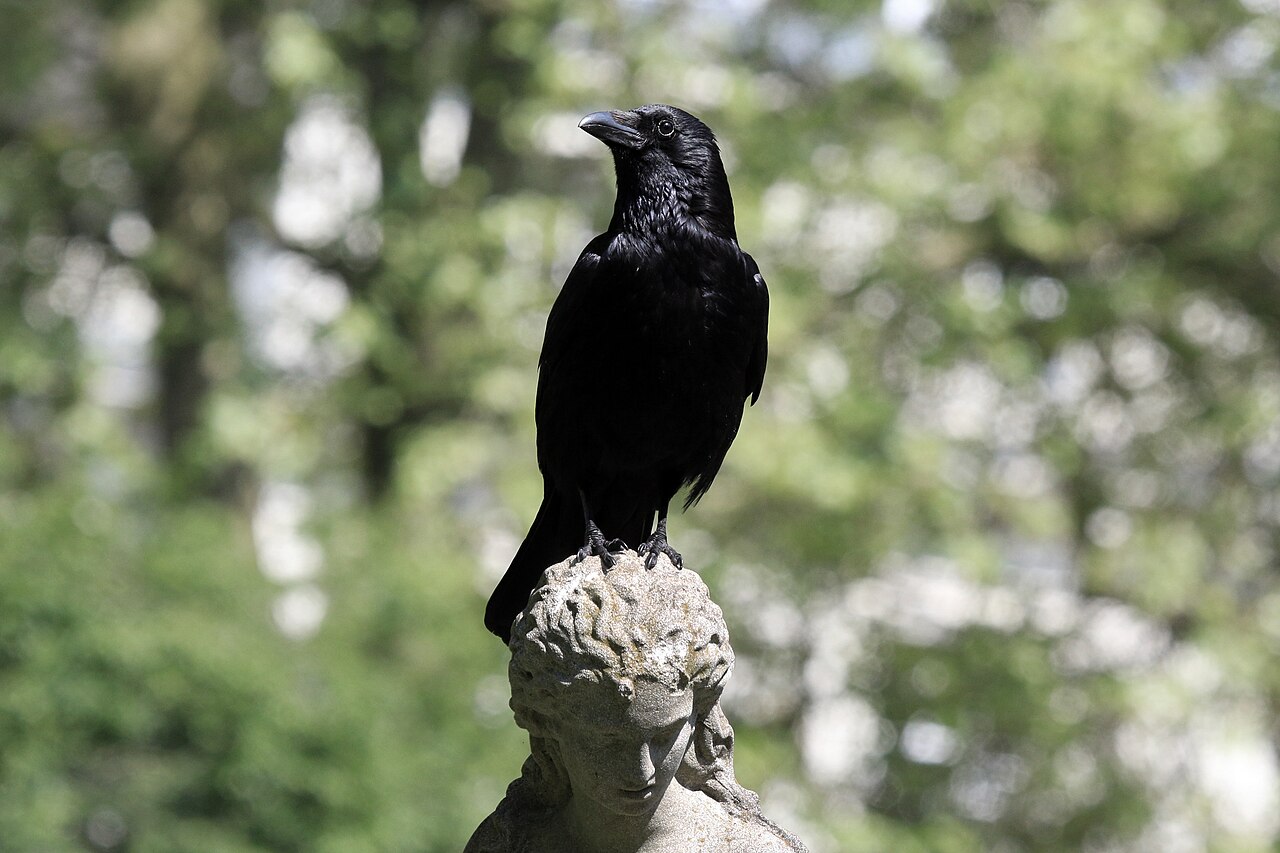
Bird damage is cited as significant, especially from crows, cuckoos, magpies, and ducks. Birds damage nuts by pecking (and steal ripe nuts), and indirectly cause damage because mechanical injuries become entry points for rot fungi (Monilinia, Nematospora, Botryosphaeria, Trichothecium roseum) — the same fungi that colonize nuts damaged by insects, hail, or wind.
Measures against birds
| Measure | Description | Duration of effect |
|---|---|---|
| Visual deterrents | Reflective strips, CDs, ribbons, plastic bags/bottles, "kites" and balloons with predator eyes | Short — birds get used to them; rotate and move |
| Auditory deterrents | Gas cannons, recorded predator/distress calls, ultrasonic devices | Limited; combine with visual |
| Protective nets | Anti-bird netting over the row/orchard | Most reliable, but expensive; justified on smaller/high-value areas |
| Timely harvest | Shortening the period of ripe nuts on the bush | Reduces exposure |
| Removing nests and scrub near the orchard | Reduces permanent bird presence | Permanent agrotechnical measure |
The key is combination and rotation of measures: no single deterrent maintains its effect for long because birds (and mammals) get used to static stimuli.
Wild Boar
Wild boar (black game) is one of the most destructive visitors to orchards next to forests. It does not climb or take nuts from the bush, but:
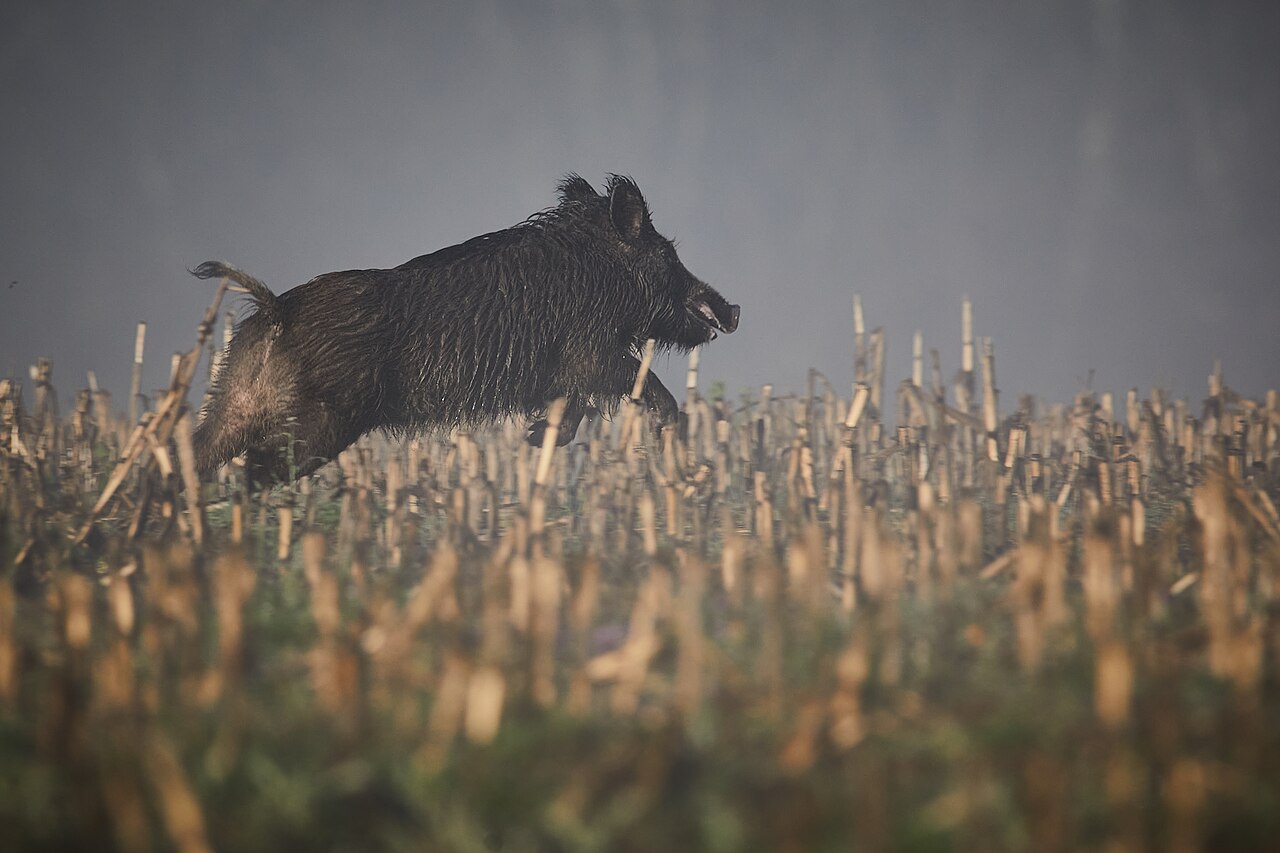
- Roots and overturns soil searching for food, thereby destroying the shallow root system, "drip by drip" irrigation system, and row surface;
- Collects fallen nuts from the ground, directly reducing yield during ground collection;
- Tramples and breaks young seedlings and orchard structures.
Interestingly, one source notes that Turkish hazel is susceptible to attacks by "all kinds of wild animals, except wild boar" — which applies to that specific species/context, but should not be generalized to a commercial ordinary hazelnut (Corylus avellana) orchard, where wild boar is a regular threat.
Measures against wild boar
- Solid lower zone of the fence buried in the soil and reinforced — see the fencing chapter; barbed wire at the bottom makes crawling and rooting under the mesh difficult.
- Low electric fence: for wild boar, a fence approximately 55–75 cm high with three wires is recommended, positioned so that the animal touches the lowest wire with its snout.
- Scent repellents for the fence belt (e.g., "scent for wild boar fencing") applied around the perimeter as an additional, but not standalone, measure.
- Quick collection of fallen nuts reduces the attractiveness of the orchard.
- Cooperation with the hunting authority for population control and, if necessary, damage compensation.
Roe Deer and Red Deer
Roe deer and red deer damage by browsing (grazing) young shoots, leaves, and tips, and stags additionally rub antlers on young trunks (bark damage). The young orchard in the first few years is most sensitive; direct browsing slows canopy formation, and bark stripping can kill a shoot or seedling.
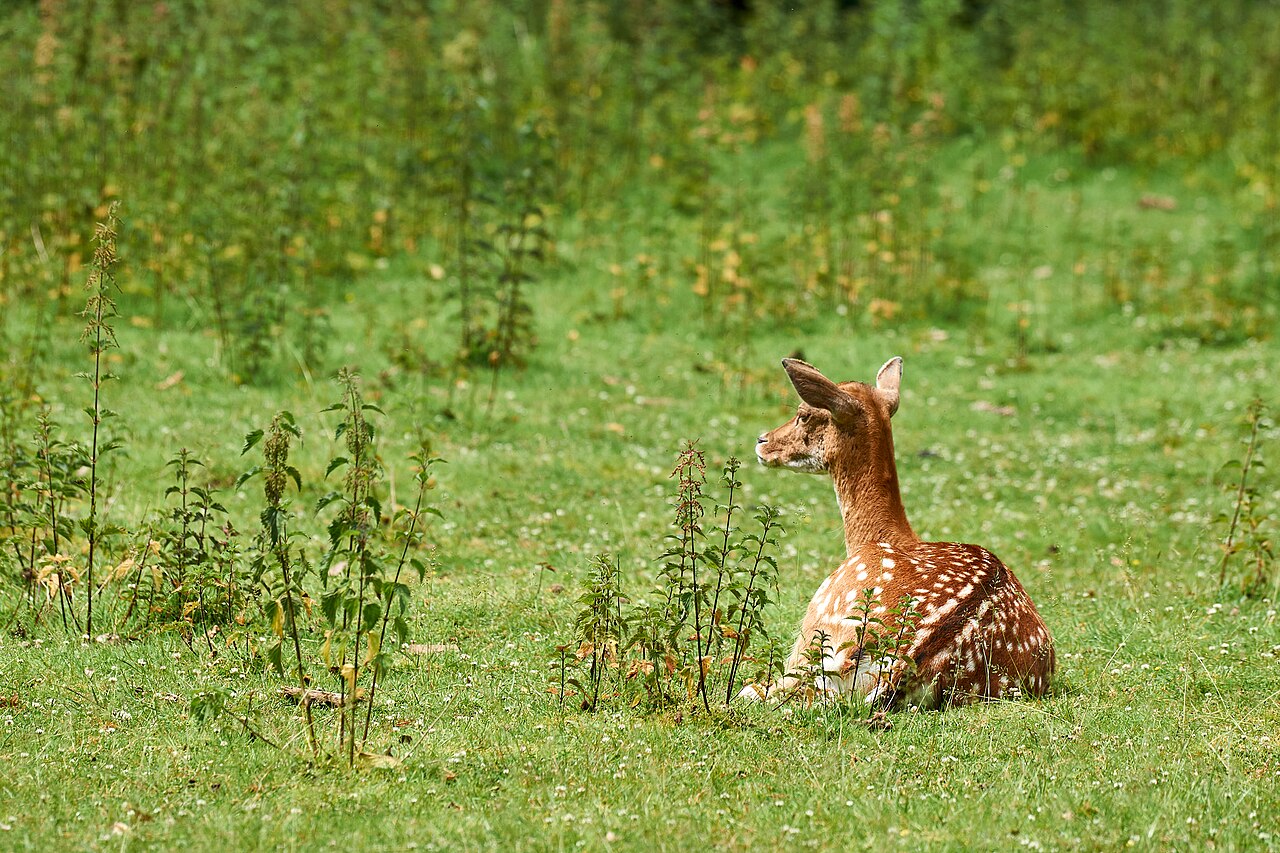
Measures against roe deer and red deer
- Sufficiently high fencing — roe deer and red deer jump over low obstacles; for red deer, literature cites heights up to ~2 m, and for grazing protection with an electric fence up to ~140 cm with five-six wires.
- Individual guards/tubes on seedlings protect bark and tips while plants are low.
- Scent and taste repellents (blood + glue/gum/perfume; fish oil; preparations based on thiram and capsaicin; traditionally even human hair in nylon stockings hung on the bush) work by smell — apply during vegetation dormancy and reapply.
- Electric fence as a supplement to permanent fencing on exposed edges.
Fence — a fundamental protection measure
Croatian environmental impact assessments for establishing hazelnut orchards almost always specify fencing as a primary measure to protect against wild animals — both to prevent damage and to ensure employee safety. From these sources, a fairly uniform "recipe" emerges:
| Element | Value from literature | Note |
|---|---|---|
| Posts | Reinforced concrete, height 270 cm (of which 70 cm in the ground) | Post spacing 3 m; every 10th post with 2 support braces |
| Alternative post spacing | 4.0 m; concrete brace on every 6th post | From a second assessment |
| Fence height (above ground) | Most often ~1.8–2.0 m, sometimes up to 2.2 m | Higher fence for deer |
| Infill | Woven/galvanized wire mesh | Finer mesh at the bottom against rodents and hares |
| Barbed wire | At the top and bottom of the fence (e.g., rows at 2.0 and 2.2 m) | Makes jumping over and crawling under more difficult |
| Burial of bottom edge | ~30 cm into the soil | Prevents rooting/digging under the fence |
| Entrance gates | E.g., 4 entrances per orchard; blocks fenced separately | Fence length in practice can exceed 1,000–1,300 m per block |
Practical notes:
- Fine mesh at the bottom + burial is crucial for the fence to stop wild boar (rooting) and hares/rodents (digging), not just deer.
- For young orchards, the rule from literature applies: install protective fencing (or individual plant guards) immediately, at planting time — damage occurs precisely in the first, most vulnerable years.
- Electric fencing is an effective supplement: high for deer/elk (up to ~140 cm, 5–6 wires), low for black game (~55–75 cm, 3 wires).
Repellents and deterrents — what really works
Repellents and deterrents are supplementary, not substitute, measures. They are divided into:
- Scent/taste repellents: commercial powders and liquids (e.g., Scoot/SCOOT PLUS type — labeled against wild boar, deer, hares, mice, and squirrels), preparations based on capsaicin and thiram, and traditional local recipes (animal blood with dye/perfume, fish oil, heated pork fat with fish meal, human hair). Scent repellents applied to fruit/foliage should be applied during dormancy to avoid affecting the fruit.
- Mechanical/sensory deterrents: ultrasonic, loud sound, vibration, LED/laser, and visual shiny and rustling devices.
| Repellent / Deterrent | Targets | Durability | Practical rating |
|---|---|---|---|
| Capsaicin/thiram coating on trunk | Rodents, hares, squirrels | Weekly — needs renewal | Good supplement to physical guard |
| Commercial powder repellent (fence edge) | Boar, deer, hare, mouse, squirrel | Up to ~30 days | Useful with fence/electric wire |
| Scent "fence" preparation against black game | Wild boar | Short, depends on rain | Only as an add-on |
| Visual deterrents (strips, CDs, balloons) | Birds, partially mammals | Very short (habituation) | Rotate and relocate |
| Sound deterrents (cannons, distress calls, ultrasonic) | Birds, partially mammals | Short | Combine with visual |
| Protective/bird netting | Birds, squirrels | Permanent while in place | Most reliable, but expensive |
Dosages and products are for informational purposes
All measures mentioned, fence heights, post spacings, and repellent data are taken from literature and market descriptions and are informational. The specific choice and permissibility of products depend on the cultivar, location, status of specific wild animal species, and applicable regulations (hunting, nature protection, product registration). Before application, consult advisory services and official sources, and always follow the product label.
Calendar of measures throughout the year
| Period | Focus | Measures |
|---|---|---|
| Planting (1st year) | Prevent fatal early damage | Fence/individual guards immediately; bury bottom edge |
| Autumn–Winter | Rodents on bark and roots | Trunk guards, mowing, mulch removal, dormant repellents |
| Spring | Deer/hare grazing on shoots | Check fence/electric wire, repellents, tip guards |
| Summer (fruit growth) | Prepare for fruit pressure | Service deterrents, check "bridges" to canopy |
| Pre-harvest and harvest | Squirrels, birds, boar on fallen fruit | Timely harvest, netting/deterrents, quick removal of fallen fruit |
Practical recommendations and common mistakes
Recommendations
- Install fences and guards immediately at planting — the greatest damage from mammals affects young plants most severely.
- Layered defense: permanent fence (with buried, fine-mesh bottom) + electric wire at edges + trunk guards + repellents + deterrents.
- Fine mesh and burial at the fence bottom to cover boar (rooting) and hares/rodents (digging), not just deer.
- Rotate deterrents (change type, position, and layout) because birds and mammals quickly habituate.
- Harvest on time and quickly collect fallen fruit — this removes the strongest attractant for squirrels, birds, and boar.
- Cooperate with the hunting rights holder and advisory service regarding population regulation and damage compensation, while respecting regulations.
Common mistakes
- Fence without buried and fine-mesh bottom — wild boar roots under, hare crawls under.
- Mulch and tall grass leaning against the trunk — an invitation for voles.
- Relying only on repellents/deterrents without a physical barrier.
- Static, unchanging deterrents that animals quickly ignore.
- Neglecting fallen fruit which attracts boar, rodents, and birds.
- Installing protection too late, after the sapling is already damaged.
Sources
This article is an AI summary compiled from an internal collection of hazelnut literature (RAG corpus) and public internet sources. Data on dosages, dimensions, and products are informational; verify them before application. Main sources used:
- Environmental Impact Assessment — Establishment of hazelnut orchard, Donji Hrastovac (Municipality of Sunja) — fence specification (height up to 2 m, barbed wire, lengths per blocks).
- Environmental Impact Assessment — Hazelnut orchard ~40 ha, Municipality of Vojnić (AGRO UTINJA) — 270 cm reinforced concrete posts (70 cm in ground), 3 m spacing, woven wire fence.
- Environmental Impact Assessment — Water Extraction, Nova Kapela — 1.8 m wire mesh + barbed wire at 2.0 and 2.2 m.
- Environmental Impact Assessment — PPO Lješnjak d.o.o. — post spacing 4.0 m, concrete brace on every 6th post.
- Environmental Impact Assessment — Hazelnut and plum orchard, Grubišno Polje — fence as a measure against wild animals.
- Hazelnut — Specifics of planting and cultivation — Gospodarski list — installation of protective fencing/fencing of saplings; risk higher near thickets and forests.
- CULTIVATION OF HAZELNUT (book) — bird damage (crows, magpies, ducks) and rodents; squirrels (nest with 129 kg of nuts); fruit protection during ripening.
- Influence of nutrient medium and plant growth regulators on micropropagation of Corylus colurna L. — susceptibility to deer and intensive grazing by hares; exclusion of wild boar (for C. colurna).
- Annual hazelnut treatment plan — Gospodarski list — mechanical damage (insects, hail, wind, birds) as entry points for rot.
- Hazelnut — Cultivation, fertilization, cultivars, planting — shallow root system (~30 cm), position at forest edges.
- Agroklub — Protection of fruit trees from wild animals and rodents (fish oil, pork fat, human hair) — agroklub.com
- LOVAC.info — Electric fencing in protection against wild animals (heights and number of wires for deer/elk and black game) — lovac.info
- AGROFORTEL.HR — Scent for fence against black game — agrofortel.hr
- Deminas / Drijen — Commercial repellents against wild animals (Scoot type, Mondo Verde) — deminas.hr
- Hobby Farms / Bonide / MIgardener / Gardenia — International guidelines (fence height for deer, wire trunk guards, thiram+capsaicin repellents, mowing, sacrificial food source).
Recommended equipment
🔎 pheromone insect trap orchard — Amazon →Affiliate links — we may earn a small commission at no extra cost to you.