Technical inspection of sprayers and operator competency (NN 46/2022)
Content generated by artificial intelligence — verify before application
This article was automatically compiled from a collection of hazelnut literature with the assistance of artificial intelligence and may contain errors or outdated information. It serves as a starting point for further research, not as professional advice. Dosages, products, and timing are informative and depend on the cultivar, location, and current regulations — always verify with the advisory service and official sources before application.
Integrated hazelnut protection does not begin in the field, but on paper. Before you are even allowed to fill the sprayer tank and drive through the orchard, Croatian law requires two things: that the device used to apply plant protection products (PPP) has passed a regular technical inspection and that the person operating the device is trained and registered in the official system. These obligations are not mere administrative formalities nor do they apply only to large orchards — they apply to every professional pesticide user, including hazelnut producers with just a few hectares. This article explains exactly what the Law on the Sustainable Use of Pesticides (NN 46/2022) prescribes: inspection deadlines for sprayers, the training and certification system for operators, the obligation to keep records, and the penalty consequences if the rules are not followed.
Legal framework: from EU directive to Croatian law
The entire system stems from the European Directive 2009/128/EC on the sustainable use of pesticides (engl. Sustainable Use Directive), which established a common framework for reducing the risks and impacts of pesticide application and promoting integrated pest management (IPM). The directive imposed three pillars relevant to this article on member states:
- Mandatory regular inspections of equipment for pesticide application in professional use.
- Training and certification of professional users, distributors, and advisors.
- Keeping records of the use of plant protection products.
Croatia initially transposed this framework with the old Law on the Sustainable Use of Pesticides (NN 14/14), and subsequently replaced it with the current Law on the Sustainable Use of Pesticides (NN 46/2022). Technical details of machinery inspections are regulated by the Regulation on Machinery for Pesticide Application and Testing Stations (NN 141/2021), while operator training is detailed in a separate regulation on training for the safe handling and correct application of pesticides.
Why this concerns even small hazelnut producers
Hazelnut is a permanent crop where treatments are conducted almost regularly — with copper preparations against bacterial blight and fungal diseases, and insecticides against the filbert weevil (Curculio nucum), mites, and true bugs. Every time a tractor sprayer or sprayer and registered PPP for professional use are employed, the user is legally considered a "professional user" and must fulfill all the obligations listed below.
Regular inspection of pesticide application equipment
Who is subject to inspection and within what timeframe
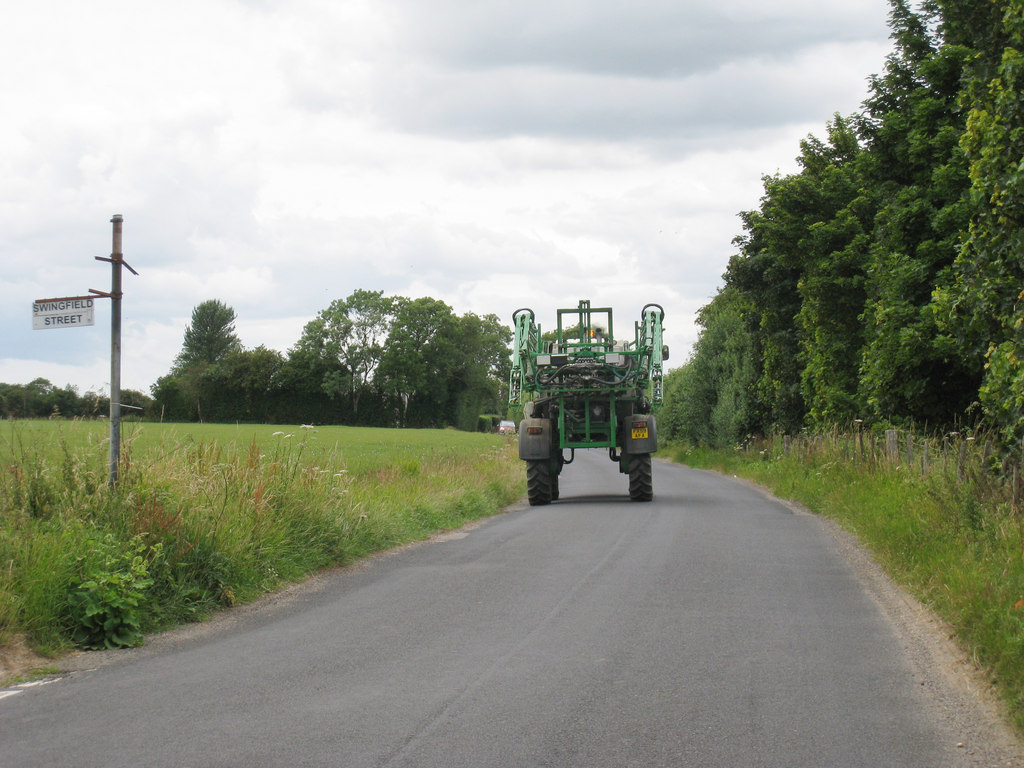
All machinery for pesticide application used by professional users is subject to regular inspection once every three (3) years. This timeframe is aligned with the EU directive, which allowed an interval of up to five years between inspections until 2020, after which it was shortened to a maximum of three years.
For new machinery, there is a concession: a newly purchased machine receives a mark indicating a completed inspection for a period of five (5) years from the date of purchase, after which it enters the regular three-year cycle.
| Type of equipment / situation | Inspection interval | Note |
|---|---|---|
| Tractor-mounted sprayer (arable, trailed/side-mounted) | every 3 years | professional use |
| Tractor sprayer (for orchards, hazelnut groves) | every 3 years | typical equipment in hazelnut orchards |
| New machine (from date of purchase) | first inspection after 5 years | then transitions to a 3-year cycle |
| Hand-held sprayers | exempt | regular inspection not mandatory |
| Backpack sprayers (mechanical, battery, engine-powered) | exempt | regular inspection not mandatory |
| Engine-powered backpack sprayers | exempt | regular inspection not mandatory |
Timeframes and exemptions are informative and based on current regulations; check the current version of the Regulation (NN 141/2021) and the Law (NN 46/2022) before proceeding.
Who performs the inspection and how it is documented
Regular inspections may only be performed by testing stations authorized by the Ministry of Agriculture. Private workshops without this authorization cannot issue a valid report. After a successful inspection:
- a mark (certification label) with the printed number of the inspection certificate is affixed to the device,
- a report on the completed regular inspection is issued,
- the authorized testing station is required to keep test machine working records, a photograph of the machine with testing equipment attached, and inspection reports for at least six (6) years.
What is checked during the inspection
The technical inspection verifies the correctness and safety of the device operation to ensure that PPP is applied accurately, evenly, and without losses to the environment. Typically, the following are checked:
- condition and flow of nozzles — worn nozzles alter the volume and distribution of the spray,
- pump operation and pressure and the correctness of the pressure gauge,
- leak-tightness of the tank, hoses, connections, and valves,
- correctness of the mixer and mixing system,
- spray pattern distribution and coverage,
- safety elements (PTO protection, operator equipment).
Inspection does not replace calibration
The regular inspection every 3 years and calibration before the season are two different things. Literature recommends calibrating the sprayer at least once a year (checking operating speed and flow of each nozzle), with additional checks during the season (checking 2 nozzles per branch) and every time nozzles, dosage, speed, wheels, or pressure are changed. The inspection confirms that the machine is technically sound; calibration ensures that you apply the exact amount in the specific orchard. Both are part of good practice and a prerequisite for accurate application of dosages listed on the label.
Operator competency and credentials
Who is allowed to apply pesticides
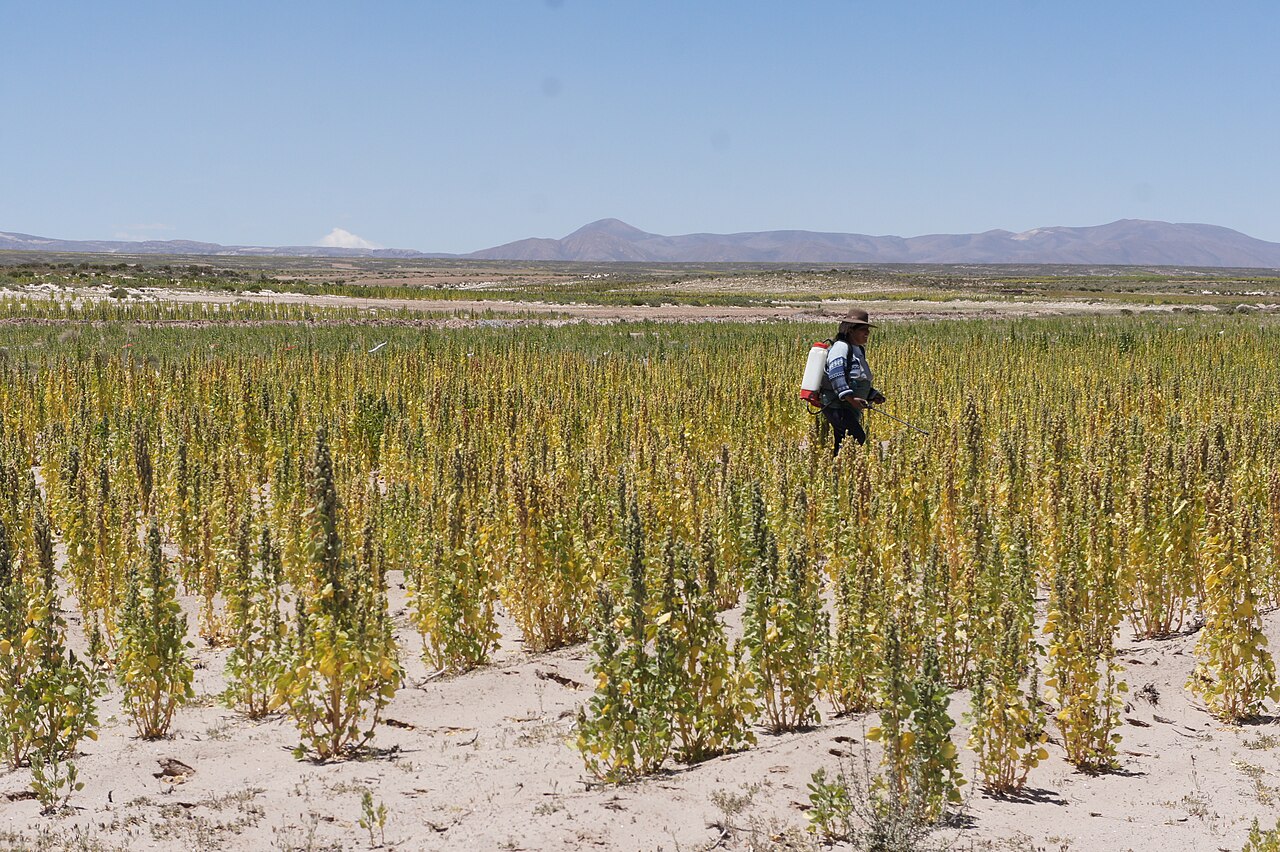
The application of plant protection products may only be carried out by persons trained in the safe handling and correct application of pesticides. This stems directly from the law and is regularly repeated in official notices to hazelnut growers: "Application of plant protection products may only be carried out by persons who have passed the exam on safe handling and correct application of pesticides; only inspected pesticide application devices may be used for application."
From ID cards to credentials
The biggest change brought by Law NN 46/2022 is the abolition of previous ID cards (certificates) for professional users, distributors, and advisors (with a transitional period) and the introduction of credentials. Credentials are personal and stored in the Phytosanitary Information System (FIS) of the Ministry of Agriculture. This digitalizes the record of trained persons and links it with other data in the system.
There are also special cases: graduated engineers in agronomy or forestry can become users without attending training if they passed relevant subjects during their studies, and certain vocational training courses can replace additional training.
Structure and duration of training
Training consists of a basic module (acquiring knowledge) and a supplementary module (refreshing and upgrading knowledge). The approximate duration stated by authorized training providers:
| Module | Approximate Duration | Purpose |
|---|---|---|
| Basic module (professional user) | approx. 17 teaching hours | initial acquisition of knowledge |
| Supplementary module (professional user) | approx. 5 teaching hours | regular refreshing of knowledge |
The number of hours depends on the participant category (user, distributor, advisor) and the current training regulation; the figures provided are informative.
The exact duration of modules and the deadline and method for regular knowledge refreshing are prescribed by the training regulation, not the law itself. Practically, this means that the credential is not permanent: knowledge must be periodically refreshed by attending the supplementary module before expiration. Check with an authorized training provider (e.g., institutes of public health, adult education centers, HAPIH) what the current renewal deadline is so that the credential does not expire in the middle of the season.
Document retention period for training
The training provider is obligated to compile a record of the conducted training/exam and keep it for at least six (6) years. This is proof that the operator has undergone training.
Records of plant protection product use
The third pillar of obligations is keeping records. According to the Law on the Sustainable Use of Pesticides (NN 46/2022), every application of PPP by a professional user must be entered into the Record of Use of Plant Protection Products. Typically, the following are recorded:
- name of the applied product,
- date and time of application,
- crop and area (parcel),
- dosage/concentration and amount used,
- reason for application (pest / disease).
The user must keep the record, including invoices for purchased pesticides. Official notices to hazelnut growers specify a retention period of three (3) years, while some technological guidelines for orchards specify keeping records of PPP use for at least five (5) years. Given the differences between sources, the recommendation is to keep all documentation for at least five years to ensure compliance.
Check PPP registration before every application
Only registered PPPs may be used, and exclusively in the manner and for the purpose prescribed on the label (or in accordance with permits for small quantities, emergency situations, or parallel trade). Registrations change, so before every application, check the Phytosanitary Information System (FIS) of the Ministry of Agriculture: https://fis.mps.hr/fis/javna-trazilica-szb/. For hazelnut, the number of permitted products is limited, making regular checks of the FIS particularly important.
Violations and Penalties
Law NN 46/2022 contains provisions on misdemeanors for non-compliance with the aforementioned obligations. Specific fine amounts vary depending on the type of offender (legal entity, sole trader/individual conducting business, or natural person). For natural persons, publicly available summaries mention fines in the range of 2,000–5,000 kuna (with the note that Croatia is changing the display of amounts with the introduction of the euro, so current amounts should be verified in the current text of the law). Fines for legal entities and sole traders are significantly higher.
Typical violations that incur monetary penalties:
- application of PPPs without valid certification/license of the operator,
- use of equipment that has not undergone regular inspection (no valid inspection sticker),
- failure to keep or improper storage of records on the use of PPPs,
- use of unregistered product or application contrary to the label,
- improper disposal of packaging waste.
Exact Fine Amounts
The amounts and categories of penalties from the misdemeanor provisions are listed here only as an approximation. Be sure to check the current full text of the Law on the Sustainable Use of Pesticides (NN 46/2022) in Narodne Novine before relying on specific amounts — misdemeanor provisions and amounts may change through amendments and conversions to euros.
Practical Recommendations and Common Mistakes
Recommendations for hazelnut growers:
- Maintain an obligations calendar: enter the expiration date of the sprayer inspection sticker and the operator's license expiration date one month in advance to allow time for renewal.
- Order the inspection certificate off-peak season (in winter or early spring), when testing stations have less congestion, so the equipment is ready for the first spring copper treatment.
- Keep records immediately after each application, not retrospectively from memory — alongside pesticide invoices, store them in one place (folder or digital table) for at least five years.
- Calibrate the sprayer every year and after any change in nozzles, speed, or pressure — the inspection every 3 years does not cover this.
- Before each treatment, check the FIS to see if the product is still registered for hazelnut and at what dose.
Common mistakes:
- Assumption that obligations "do not apply to small holders" — they apply to all professional users, regardless of area.
- Confusing inspection (certification) and calibration — these are two separate obligations/activities.
- Using a sprayer with an expired inspection sticker "because it still works" — even a functioning machine without a valid certificate is a violation.
- Believing that the license/certificate is permanent — knowledge must be periodically renewed through additional modules.
- Incomplete records (missing dose, area, or invoices) — formally considered as not keeping records.
Summary of Key Deadlines
| Obligation | Deadline / Interval |
|---|---|
| Regular equipment inspection (professional use) | every 3 years |
| First inspection of new equipment | within 5 years of purchase |
| Sprayer calibration (good practice) | at least 1× annually |
| Basic training module | ~17 teaching hours |
| Additional training module (renewal) | ~5 teaching hours |
| Retention of PPP use records | 3–5 years (recommendation: 5) |
| Retention of training records (provider) | 6 years |
| Retention of testing station documentation | 6 years |
Gallery
Sources
This article is an AI summary compiled from a collection of hazelnut literature (RAG corpus) and public sources. Main sources used:
- Law on the Sustainable Use of Pesticides (NN 46/2022) — https://narodne-novine.nn.hr/clanci/sluzbeni/2022_04_46_573.html and the consolidated text at https://www.zakon.hr/z/703/zakon-o-odrzivoj-uporabi-pesticida
- Ordinance on Machinery for the Application of Pesticides and Testing Stations (NN 141/2021) — https://narodne-novine.nn.hr/clanci/sluzbeni/2021_12_141_2389.html
- HAPIH — New Law on the Sustainable Use of Pesticides Introduces Licenses — https://www.hapih.hr/novi-zakon-o-odrzivoj-uporabi-pesticida-uvodi-vjerodajnice/
- Ministry of Agriculture — System of Regular Inspections of Machinery for the Application of Pesticides — https://savjetodavna.mps.hr/2019/02/27/sustav-redovitih-pregleda-strojeva-za-primjenu-pesticida/
- Public Open University — Training for Sustainable Use of Pesticides (module duration) — https://www.pou-stubica.hr/defaultcont.asp?id=7&n=3
- Directive 2009/128/EC on the Sustainable Use of Pesticides (EU framework, inspection intervals) — https://eur-lex.europa.eu/eli/dir/2009/128/oj
- RAG Corpus — Notice to Hazelnut Growers (Ministry of Agriculture, 2023): obligation to keep records and retain them for 3 years according to NN 46/2022
- RAG Corpus — Notice to Hazelnut and Walnut Producers (Advisory Service, 2019): applications must be carried out only by persons with passed exams and inspected equipment
- RAG Corpus — Technological Guidelines for Orchards for 2023: retention of PPP use records for at least 5 years, use of only registered PPPs (FIS)
- RAG Corpus — Crop Protection and Foliar Nutrition Programs (2024): sprayer calibration once a year, nozzle checks
- RAG Corpus — Report on the Work of HCPHS – Plant Protection Institute (2017): training system on the sustainable use of pesticides and legal framework
Recommended equipment
🔎 backpack sprayer — Amazon →Affiliate links — we may earn a small commission at no extra cost to you.