Fertilization Plan Based on Soil and Leaf Analysis
Content generated by artificial intelligence — verify before application
This article was automatically compiled from a collection of hazelnut literature with the assistance of artificial intelligence and may contain errors or outdated information. It serves as a starting point for further research, not as professional advice. Dosages, products, and timing are informative and depend on the cultivar, location, and applicable regulations — always consult an advisory service and official sources before application.
Fertilization of hazelnut (Corylus avellana) is not a series of random interventions, but an annual plan derived from two measurements: chemical soil analysis and foliar leaf analysis. The soil shows what is available in the root zone and what the reaction (pH) is, while the leaf shows what the plant has actually absorbed. Only the combination of these two allows nutrients to be added where they are truly lacking, in the correct amounts and at the right time — without wasting money on excess fertilizers and without "starvation" that reduces yield and nut quality. This article guides you through creating such a plan: from sampling, to interpreting results and nutrient norms, to the annual application schedule based on orchard age.
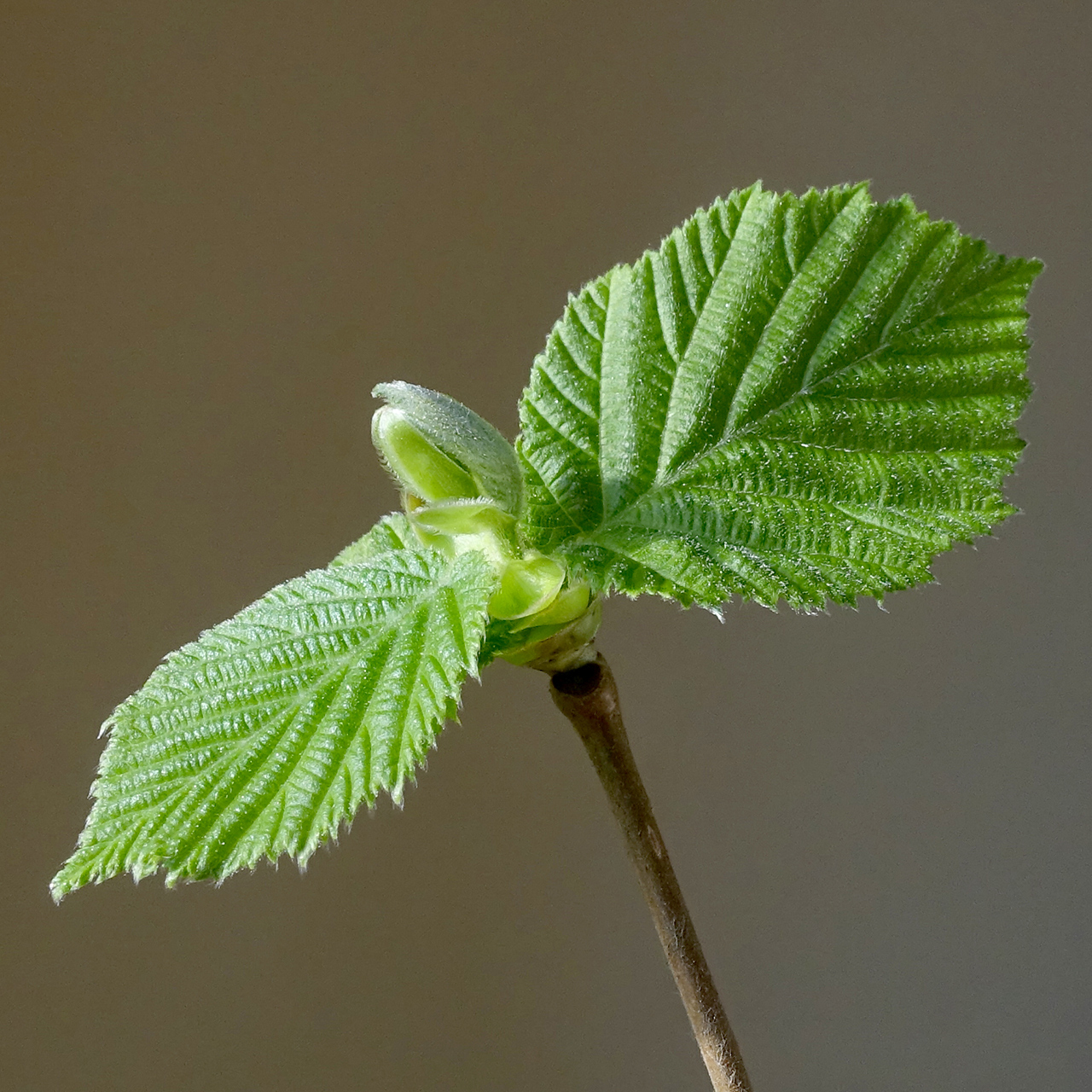
Why a plan, not blanket fertilization
Hazelnut is a permanent orchard with a shallow but extensive root system and a pronounced two-year cycle (flowering in one year, nut filling in the next phase). Blanket "recommendations from fertilizer pages" do not take into account the specific soil, cultivar, age, and condition of the orchard. Professional literature is unanimous on this: criteria for fertilization are based on chemical soil analysis (pH, N, P, K, CaCO₃, humus), soil type, cultivation method, orchard age, and developmental stage during the growing season (GUIDE TO HAZELNUT CULTIVATION, Ministry of Agriculture).
In other words, a fertilization plan has three pillars:
- Soil analysis — the foundation for ameliorative (pre-planting) fertilization and for correcting pH and phosphorus and potassium reserves.
- Foliar leaf analysis — the most accurate indicator of the current nutritional status of a bearing orchard; for woody crops, leaves better reflect the actual availability of nutrients than soil analysis alone.
- Orchard age and condition — a young orchard, an orchard entering production, and an orchard in full production have different needs.
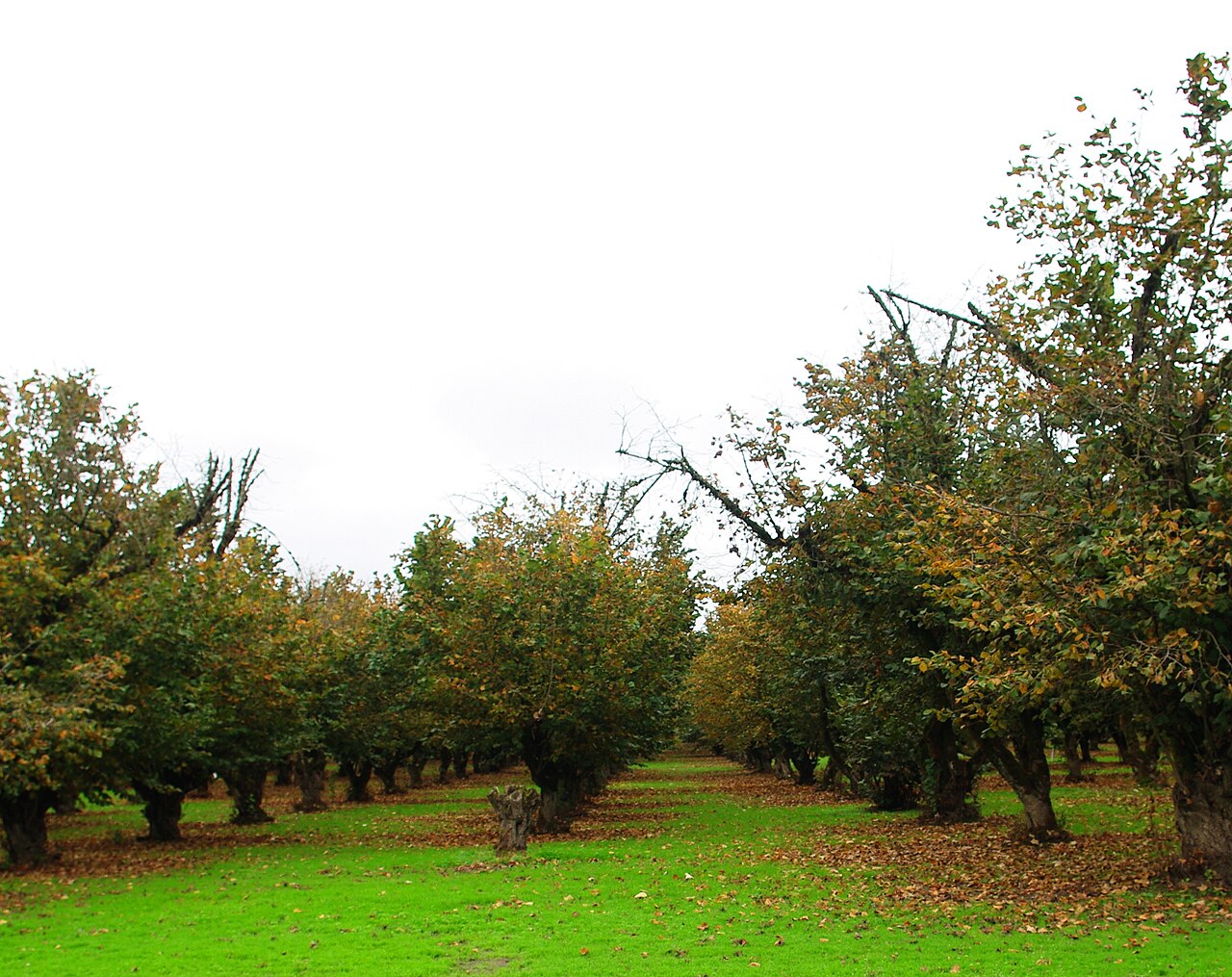
Step 1: Soil Analysis — When, How, and What to Look For
Soil Sampling
Soil analysis is mandatory before establishing the orchard and then periodically in a bearing orchard. Practical guidelines:
- Frequency in bearing orchards: at least once every two years (BC Ministry of Agriculture; gnojidba.info).
- Timing: late spring and autumn are considered the best times — if liming is necessary, there is enough time until the next growing season for the liming material to raise the pH.
- Depth: the root zone layer is sampled. For pre-plant analysis, a deeper layer is also sampled (approx. 0–30 and 30–60 cm), as ameliorative nutrients and lime are incorporated deeply (ripping to 40–60 cm).
- Representativeness: a composite sample is made from multiple individual cores from a homogeneous plot; different soil types are sampled separately.
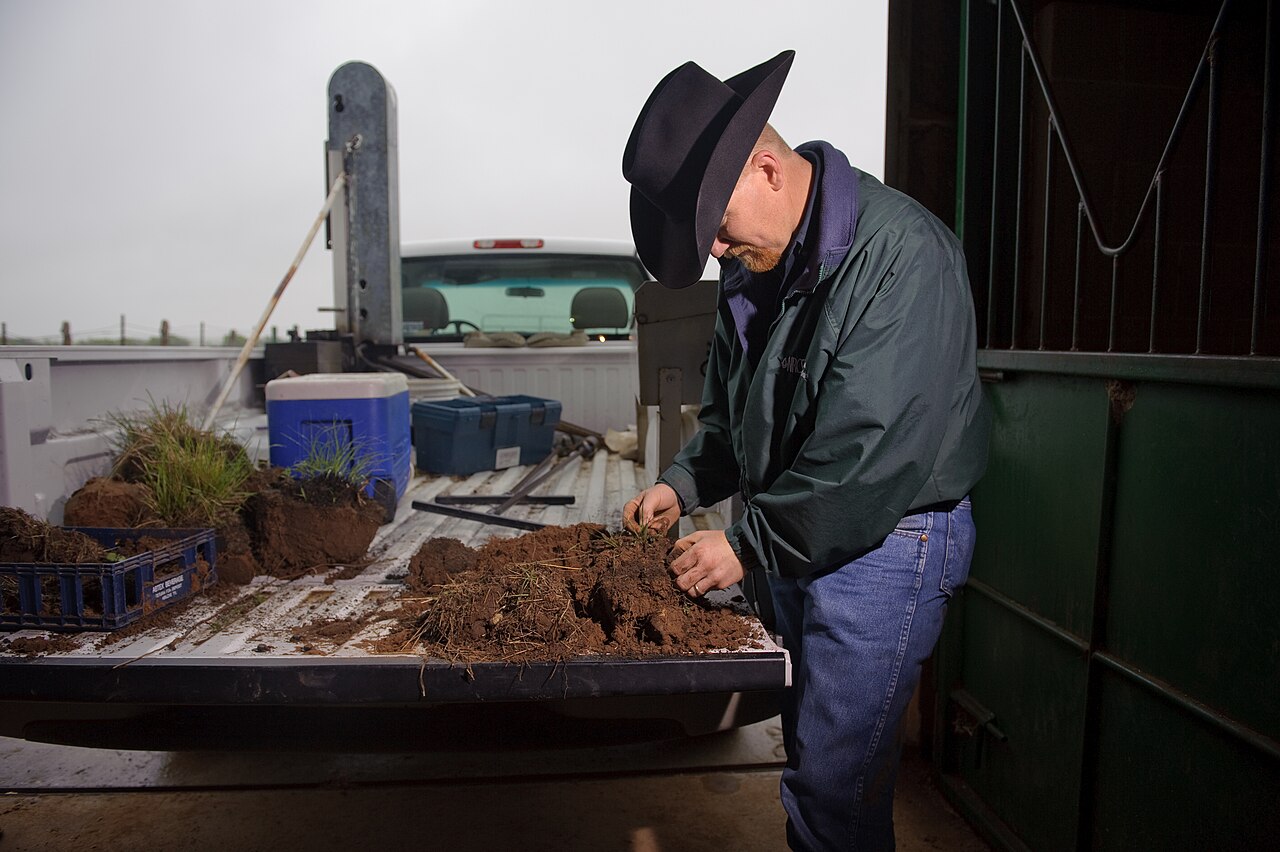
What the soil test must show and target values
| Parameter | Target/Optimal Value | Note |
|---|---|---|
| pH (soil reaction) | 6.0–6.5 | Most favorable for uptake of most nutrients; consider liming if below 5.6 |
| Humus | > 3 % | Soils with < 3% humus require organic fertilization/humification |
| Phosphorus (P₂O₅) | 20–25 mg / 100 g soil | Level of "optimal supply" |
| Potassium (K₂O) | 25–30 mg / 100 g soil | Level of "optimal supply" |
| CaCO₃ | according to soil type | High lime content hinders uptake of Fe, Zn, B |
Source of target values: GUIDE TO HAZELNUT CULTIVATION (Ministry of Agriculture, 2024.); for pH, targets are comparable to international guides. Values are informative and depend on soil type and laboratory.
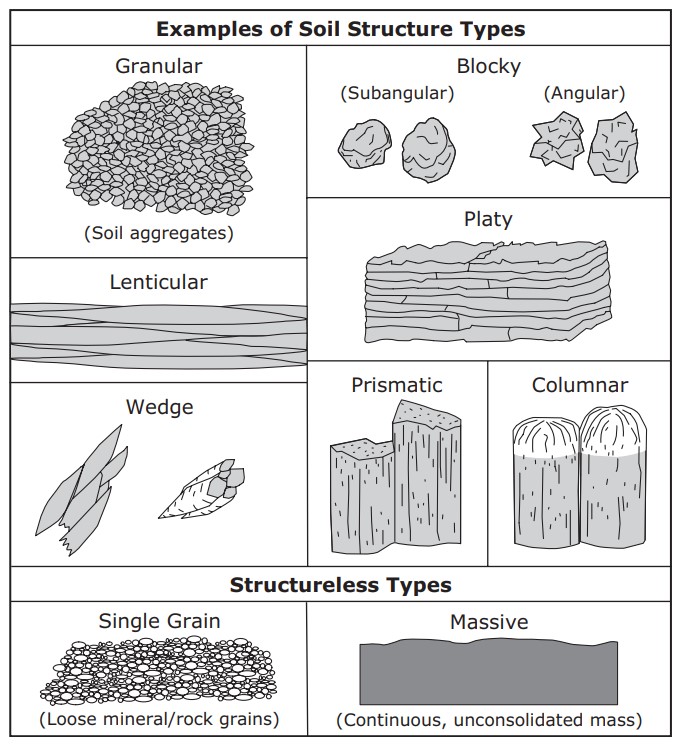
Ameliorative (pre-plant) fertilization based on results
The goal of ameliorative fertilization is to bring the soil to a level of optimal supply before planting, as P, K, and lime are difficult to incorporate deeply later in a permanent orchard. Typical interventions according to literature:
- Liming (calcization) of acidic soils: 4–12 t/ha CaCO₃, depending on measured pH and soil buffer capacity.
- Increasing P and K reserves to 20–25 mg P₂O₅ and 25–30 mg K₂O / 100 g soil by applying mineral and/or organic fertilizers to a depth of 0–45 cm.
- Humification: farm manure/compost for soils poor in humus (e.g., 2–4 kg of farm manure or 5–10 l of peat per planting hole for individual planting).
- Mineral fertilizer is spread evenly over the surface and incorporated into the future root zone by deep plowing/ripping (40–60 cm).
Note: Ameliorative fertilization is a one-time "investment in soil." If done well, it is sufficient to fertilize only with nitrogen in the first year after planting.
Step 2: Foliar Leaf Analysis — A Precise Tool for Bearing Orchards
For woody, permanent crops, leaves are a more sensitive indicator of nutrition than soil, because the leaf is the site of most intense metabolism and reacts quickly to changes in nutrient supply. Therefore, in bearing orchards, the fertilization plan is increasingly "fine-tuned" based on leaf results.
Leaf Sampling
- Timing: mid-season, typically in August (recommendation from international guides; sampling once a year).
- What to take: healthy, fully developed leaves from bearing shoots, from multiple trees per plot, without damage or dirt.
- Logic: the leaf result shows whether the plant has actually absorbed each nutrient — regardless of how much is in the soil (e.g., on limed soils, iron and zinc may be "locked" even if present in the soil).
Optimal nutrient values in hazelnut leaves
The following table is a reference framework for interpreting foliar results (source: Hazelnut, Nutrient Management Guide, 2021., according to the article "Foliar fertilization of hazelnut for higher and better yield", Gospodarski list):
| Element | Deficiency Limit | Optimal in Leaf |
|---|---|---|
| Macronutrients (% on dry leaf matter) | ||
| Nitrogen (N) | < 1.80 | 2.21–2.50 |
| Phosphorus (P) | < 0.10 | 0.14–0.45 |
| Potassium (K) | < 0.50 | 0.81–2.00 |
| Sulfur (S) | < 0.08 | 0.13–0.20 |
| Calcium (Ca) | < 0.60 | 1.01–2.50 |
| Magnesium (Mg) | < 0.18 | 0.25–0.50 |
| Micronutrients (ppm on dry leaf matter) | ||
| Manganese (Mn) | < 20 | 25–250 |
| Iron (Fe) | < 40 | 51–400 |
| Copper (Cu) | < 2 | 5–15 |
| Zinc (Zn) | < 10 | 16–60 |
| Boron (B) | < 25 | 31–75 |
How to read the result: a value below the deficiency limit indicates a clear deficit that needs to be targeted and replenished; a value within the optimal range means that nutrient is not currently a priority. Special attention on limed soils should be paid to Fe, Zn, and B, and on sandy and acidic soils to Mg and K.
When leaves require foliar top-dressing
Foliar fertilization is a supplement, not a replacement for soil fertilization — but it is extremely effective for micronutrients and for bridging stressful periods (drought, cold spring, high pH, hail). A rule from practice (Guide to Foliar Fertilization of Hazelnut, D. Gluhić, 2021.):
- Orchards in good condition and fertile soil: 2–4 foliar treatments through the growing season are sufficient.
- Difficult conditions (acidic soils, low fertility, pronounced micronutrient deficiency, high lime content, sandy soils): 6–8 treatments through the growing season.
- Spray solution: approx. 300–500 l water/ha, with a desired solution pH of around 6.5.
- 1 kg of nutrient applied via leaves replaces a much larger amount applied via roots (orientatively N ≈ 1:4, Mg ≈ 1:75, Zn ≈ 1:12, Fe ≈ 1:100, B ≈ 1:5) — therefore, foliar top-dressing is particularly cost-effective for micronutrients.
Step 3: Nutrient Norms — How Much to Add
Once results show deficits, quantities are determined based on orchard age and intensity. The following norms are orientative and must be aligned with specific soil and leaf results.
Norms for pure nutrients by age and intensity
| Period | Intensive Orchard (N – P₂O₅ – K₂O) | Semi-Intensive Orchard (N – P₂O₅ – K₂O) |
|---|---|---|
| 1st year (per tree) | 0.10 – 0.02 – 0.05 kg | 0.15 – 0.05 – 0.10 kg |
| 2nd year (per tree) | 0.20 – 0.05 – 0.30 kg | 0.30 – 0.10 – 0.20 kg |
| 3rd year and beyond (per ha) | 100–500 – 30–80 – 100–150 kg | 100–120 – 20–60 – 60–150 kg |
| Full production (per ha) | 150–200 – 35–80 – 100–200 kg | 100–120 – 20–60 – 60–150 kg |
Source: Brzica, 2002. (transferred in professional literature). Values are approximate.
Other orientative norms for bearing orchards appearing in literature: N ≈ 80 kg/ha, P₂O₅ ≈ 40 kg/ha, K₂O ≈ 160 kg/ha (modeled on apple trees). Differences among sources are precisely why soil and leaf results are crucial — they "calibrate" these numbers for the specific plot.
Nitrogen by tree age — orientative
Classic continental practice for the first years (when ameliorative fertilization has been done well, only nitrogen is applied in early spring, around the bush, slightly wider than the canopy edge):
| Year | Nitrogen Fertilizer per Bush/Tree |
|---|---|
| 1st year | 0.5 kg (KAN 27 %) |
| 2nd year | 0.6 kg |
| 3rd year | 0.8 kg |
| 4th year | 1.0 kg KAN |
From 4th to 8th year, the orchard is fertilized with complex NPK fertilizers (in autumn, over the entire surface) with an additional orientative 20 kg/ha phosphorus and 150 kg/ha potassium, and in spring ~100 kg/ha nitrogen (≈ 350 kg/ha KAN). From the 8th year onwards, the same principle is applied, but the quantities of individual nutrients are increased by ~35 %, as the orchard enters full production.
International guides provide comparable nitrogen growth by age (converted from lb/tree): approx. 0.06 kg N/tree in the 2nd year, 0.11–0.15 kg in the 3rd–5th, 0.15–0.23 kg in the 6th–7th, 0.23–0.34 kg in the 8th–10th year, and 0.7–0.9 kg N per mature tree, applied in March/April around bud break (BC Ministry of Agriculture; OSU EM 9080).
Example of "variants" of fertilization from trials
In a demonstration trial in Međimurje (acidic, moderately humic soil, poor in P and K, 8-year-old orchard), the best variant yielded ~4.4 t/ha with: 500 kg/ha NPK 7-20-30 + 150 kg/ha UREA + 100 kg/ha KAN, with foliar top-dressing (Proceedings of Abstracts, 2018.). This illustrates how basic (soil) and supplementary (leaf) fertilization are combined.
Annual Fertilization Schedule (Calendar)
A plan only makes sense when nutrients are distributed throughout the year according to phenological phases. An approximate annual calendar for a bearing orchard:
| Period | Action | What and Why |
|---|---|---|
| Autumn (pre-planting) | Soil amelioration fertilization | Lime (4–12 t/ha CaCO₃ as needed), P and K incorporated deep, humification — applied once, before planting |
| Late Autumn | Soil base fertilization | Complex NPK with emphasis on K and P; spread over the entire surface area |
| Autumn (foliar) | Autumn foliar application | Fertilizers based on boron (B) + biostimulant (e.g., seaweed extracts) after harvest; increases cold tolerance and improves flowering/fruit set for the following year |
| Early Spring (before bud break) | Nitrogen application | N/CAN/UREA — crucial for growth and nut filling; N uptake is most efficient during spring growth |
| Spring–Summer | Foliar treatments | 2–4 applications (up to 6–8 under difficult conditions): micronutrients (Fe, Zn, B, Mn), Ca, based on leaf analysis and phenological phase |
| Mid-season (August) | Leaf sampling | Foliar analysis that guides corrections and planning for the autumn/following season |
| Every 2 years | Soil sampling | Monitoring pH and P and K reserves |
Boron is special in autumn: literature recommends boron-based fertilizers after harvest, while foreign guides also mention spring-summer foliar dosing (e.g., up to ~1 kg pure B/ha), stopping application if leaf boron exceeds ~200 ppm (boron has a narrow margin between deficiency and toxicity).
Practical Recommendations and Common Mistakes
Recommendations
- Measure first, then fertilize. Without soil and leaf analysis, the plan is guesswork. Soil every ~2 years, leaves every year.
- Fix pH first. At pH levels outside 6.0–6.5, nutrient uptake is poor, so "higher doses" do not help — liming or acidification is required.
- Separate roles: Soil = base supply (N, P, K, lime, humus); Leaves = targeted supplementation and micronutrients.
- Nitrogen in spring, potassium and phosphorus in autumn. Timing follows phenological phases and uptake dynamics.
- Keep records of analyses, doses, and yields per plot — this allows fine-tuning of the plan year after year.
Common Mistakes
- Excessive nitrogen (vigorous vegetative growth, poor fruit set, susceptibility to diseases and frost) — quantity should be guided by leaf analysis, not applied "just in case".
- Ignoring micronutrients on limed soils (Fe, Zn, B "locked up") — resolved via foliar application, not by increasing NPK.
- Using foliar application as a substitute for soil fertilization — it is a supplement; base amounts of N, P, K must go through the soil.
- Spraying at high temperatures/sunlight and with incorrect solution pH — keep solution around pH 6.5 and spray during cooler parts of the day.
- Boron overdose — narrow range between benefit and phytotoxicity; monitor leaf analysis.
Gallery
Sources
This article is an AI summary compiled from a collection of hazelnut literature (internal RAG corpus) supplemented with publicly available sources. Doses, products, and timing are informative and depend on cultivar, location, and current regulations/labels — consult an advisory service before application. Main sources used:
- HAZELNUT GROWING GUIDE — Ministry of Agriculture / Advisory Service (fertilization criteria, target values for P, K, pH, CaCO₃) — https://savjetodavna.mps.hr
- Foliar fertilization of hazelnuts for higher and better yields — Gospodarski list (optimal nutrient values in leaves; foliar analysis) — https://gospodarski.hr/rubrike/vocarstvo-rubrike/folijarnom-gnojidbom-lijeske-do-veceg-i-boljeg-uroda/
- Guide to Foliar Fertilization of Hazelnuts (D. Gluhić, 2021.) — gnojidba.info — https://gnojidba.info/wp-content/uploads/2022/06/Vodic-za-folijarnu-gnojidbu-lijeske-2021.pdf
- Autumn fertilization of woody crops / Soil analysis — gnojidba.info — https://gnojidba.info/gnojidba-vinove-loze/jesenska-gnojidba-drvenastih-kultura/
- Foliar fertilization of hazelnuts (expert advice) — Agrimatco — https://agrimatco.hr/strucni-savjeti/lijeska
- Proceedings of Abstracts, 13th Scientific-Professional Conference of Croatian Fruit Growers (2018.) — fertilization variants and yields (RAG corpus)
- Technology and Economic Efficiency of Organic Hazelnut Production; Mechanization in Hazelnut Production and Processing (soil preparation, amelioration fertilization) (RAG corpus)
- Nutrient Norms (Brzica, 2002.) and classic N/P/K norms by orchard age (RAG corpus)
- Hazelnut Tree Nutrient Management — Province of British Columbia (sampling, N by age, pH, B, Mg) — https://www2.gov.bc.ca/gov/content/industry/agriculture-seafood/agriservice-bc/production-guides/hazelnuts/hazelnut-orchard-establishment/managing-established-nut-bearing-trees/nutrient-management
- Growing Hazelnuts in the Pacific Northwest: Orchard Nutrition — OSU Extension EM 9080 — https://extension.oregonstate.edu/catalog/pub/em-9080-growing-hazelnuts-pacific-northwest-orchard-nutrition
- Hazelnut Reference Guide (2023.) — IAF BC — https://iafbc.ca/wp-content/uploads/2023/05/HAZELNUT-REF-May-2023_.pdf
Recommended equipment
🔎 fruit tree fertilizer — Amazon →Affiliate links — we may earn a small commission at no extra cost to you.