Phomopsis/Diaporthe and Cytospora — Hazelnut Branch Canker
Content generated by artificial intelligence — verify before application
This article was automatically compiled from a collection of hazelnut literature using artificial intelligence and may contain errors or outdated information. It serves as a starting point for further research, not as professional advice. Dosages, products, and timing are informative and depend on the cultivar, location, and current regulations — always consult with an advisory service and official sources before application.
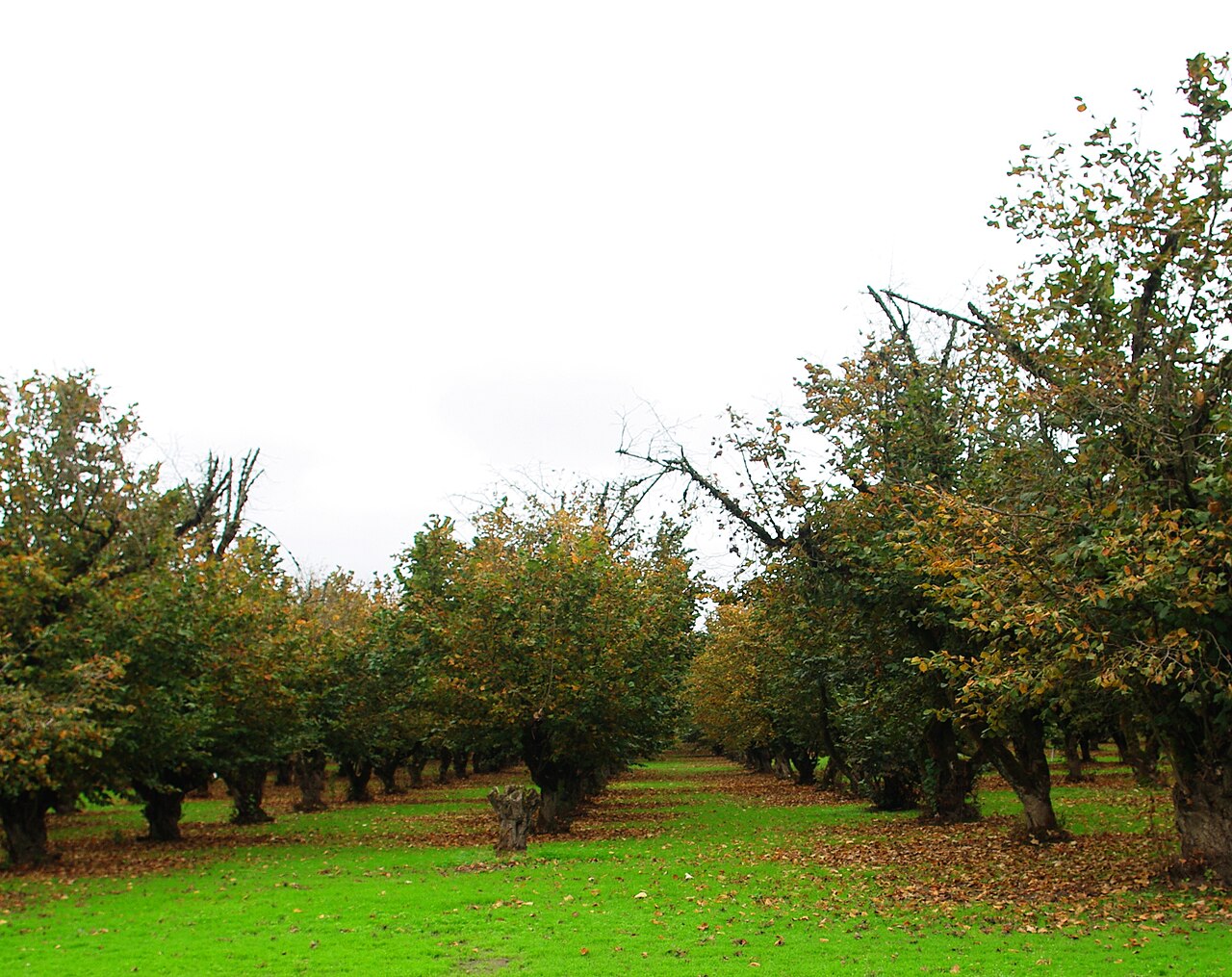
Drying branches and the appearance of canker-like lesions on the trunk and scaffold branches of hazelnut (Corylus avellana) are becoming increasingly common sights in our orchards. Rarely is a single fungus behind these symptoms — most often, it is a complex of fungal pathogens causing canker and branch dieback in which fungi from the genera Phomopsis/Diaporthe, Botryosphaeria (Botryosphaeriaceae), and Cytospora and Neonectria/Nectria act together or alternately. What they all have in common is that they are mostly opportunists that colonize plants weakened by stress, enter through wounds, and cause bark necrosis, wood drying, and, in advanced stages, breakage of scaffold branches. This article details this complex: how to identify individual pathogens, how they differ, and how to control them through sanitary pruning, stress reduction, and wound dressing.
Relationship to other articles in the compendium
This article is a detailed, dedicated treatment of fungal branch canker. The Cytospora/Nectria complex is also mentioned in the article Minor and Secondary Hazelnut Diseases (rust, Taphrina, Cytospora, Nectria), but there only as one of three minor chapters. Here, the focus is on Phomopsis/Diaporthe and Botryosphaeria dothidea as well as practical pruning and wound dressings. For bacterial canker (Pseudomonas avellanae) and bacterial blight (Xanthomonas arboricola pv. corylina), see Bacterial Blight and Canker of Hazelnut, as they are easily confused with fungal canker in the field.
What is "branch canker" and why is it on the rise
Canker is a localized, often depressed and demarcated necrosis of the bark and the tissue beneath it, which the fungus spreads inward (into the xylem) and longitudinally along the branch. When a canker girdles the branch radially around its entire circumference, the flow of water and nutrients is cut off, and the part of the branch above the wound dries out — this is dieback. Branch drying is therefore the consequence, and canker the cause.
Fungi from this complex are described in world literature as an increasingly significant economic problem in permanent orchards — Botryosphaeriaceae are cited as a growing problem in almond, walnut, grapevine, and pistachio, and Cytospora causes canker and dieback in more than 85 (according to some reviews, over 130) woody species worldwide. The same pattern repeats in hazelnut: diseases that were until recently considered insignificant or "diseases of old, neglected orchards" are now affecting young, intensive orchards.
Main triggers (why now and why in our region)
Most of these fungi are weak (facultative) parasites — they live as endophytes or saprophytes while the plant is healthy, but become aggressive when the plant is weakened by stress:
- summer heat and intense insolation (sunscald on bark) — research on hazelnut Cytospora shows a strong positive correlation between summer temperatures (July/August) and disease severity;
- drought and water deficit;
- low levels of organic matter in the soil and unbalanced nutrition (negative correlation with organic matter, association with Mg/K ratio);
- hail, stormy weather, late spring and early autumn frosts (all create entry wounds);
- pruning wounds, leaf scars, pest damage, and other diseases.
Spores (conidia) are dispersed by rain and wind and enter the tissue through fresh wounds.
Pathogens of the complex — who is who
Under "fungal canker of hazelnut" in the field, several different genera of fungi with similar symptoms are actually hidden. Accurate identification requires a laboratory (morphology of fruiting bodies + molecular analysis, e.g., ITS, tef-1α, β-tubulin), but knowing the characteristics helps in assessment and differentiation.
| Genus / species | Anamorph / syn. | Typical symptom imprint | Note |
|---|---|---|---|
| Diaporthe spp. (especially D. eres complex) | anamorph Phomopsis | canker-like lesions, branch drying; also associated with kernel defects/rot | "cosmopolitan" genus, common endophyte; confirmed as the main cause of hazelnut kernel defects in Turkey and the Caucasus |
| Botryosphaeria dothidea (Botryosphaeriaceae) | — | elliptical, dark lesions on bark, shoot drying, wood necrosis, sometimes bud necrosis | in Croatian field observations, cited alongside "fungal canker of hazelnut" |
| Cytospora spp. (C. decipiens, C. corylicola) | teleomorph Valsa | irregular brown to reddish spots on bark, red gelatinous exudate, branch breakage | "mal dello stacco" / "stem break"; classically a disease of weakened and older orchards |
| Neonectria ditissima | syn. Nectria galligena; anamorph Cylindrocarpon | depressed, concentrically cracked canker, small red fruiting bodies (perithecia) on bark | "bark canker"; infection especially through leaf scars in autumn |
Why together?
In the same orchard, and even on the same branch, two or more of these fungi are often present simultaneously. Italian laboratory characterizations of hazelnut regularly report groups of Botryosphaeriaceae, Diaporthe/Phomopsis-like, and Cytospora-like together. Therefore, literature speaks of a complex, and practitioners do not always distinguish them in the field — nor is it necessary for decision-making regarding control measures.
Phomopsis / Diaporthe
The genus Diaporthe (anamorphic, asexual stage = Phomopsis) belongs to the family Diaporthaceae; the type species is Diaporthe eres. Members of the genus are a cosmopolitan group that includes plant pathogens, saprobes on dying tissue, and endophytes distributed in tropical and temperate zones. This is precisely why Diaporthe can lie dormant in the plant for a long time and only switch to a pathogenic lifestyle under stress.
In hazelnut, Diaporthe (especially the D. eres complex) has been confirmed as the main fungus associated with fruit and kernel defects in Turkey and as an important pathogen in the Caucasus and northern Italy, where hazelnuts often show kernel rot. Additionally, Diaporthe participates in canker and branch dieback: samples from hazelnut (Beijing, China) describe Cytospora and Diaporthe species together as causes of canker and dieback, and in European hazelnut, canker and shoot dieback caused by D. australafricana has been recorded (Chile). Symptoms of kernel defects associated with D. eres include black and brown spots and necrotic patches on the kernel surface and discoloration of the kernel interior — linking this article to the topic of kernel rot.
Botryosphaeria dothidea (Botryosphaeriaceae)
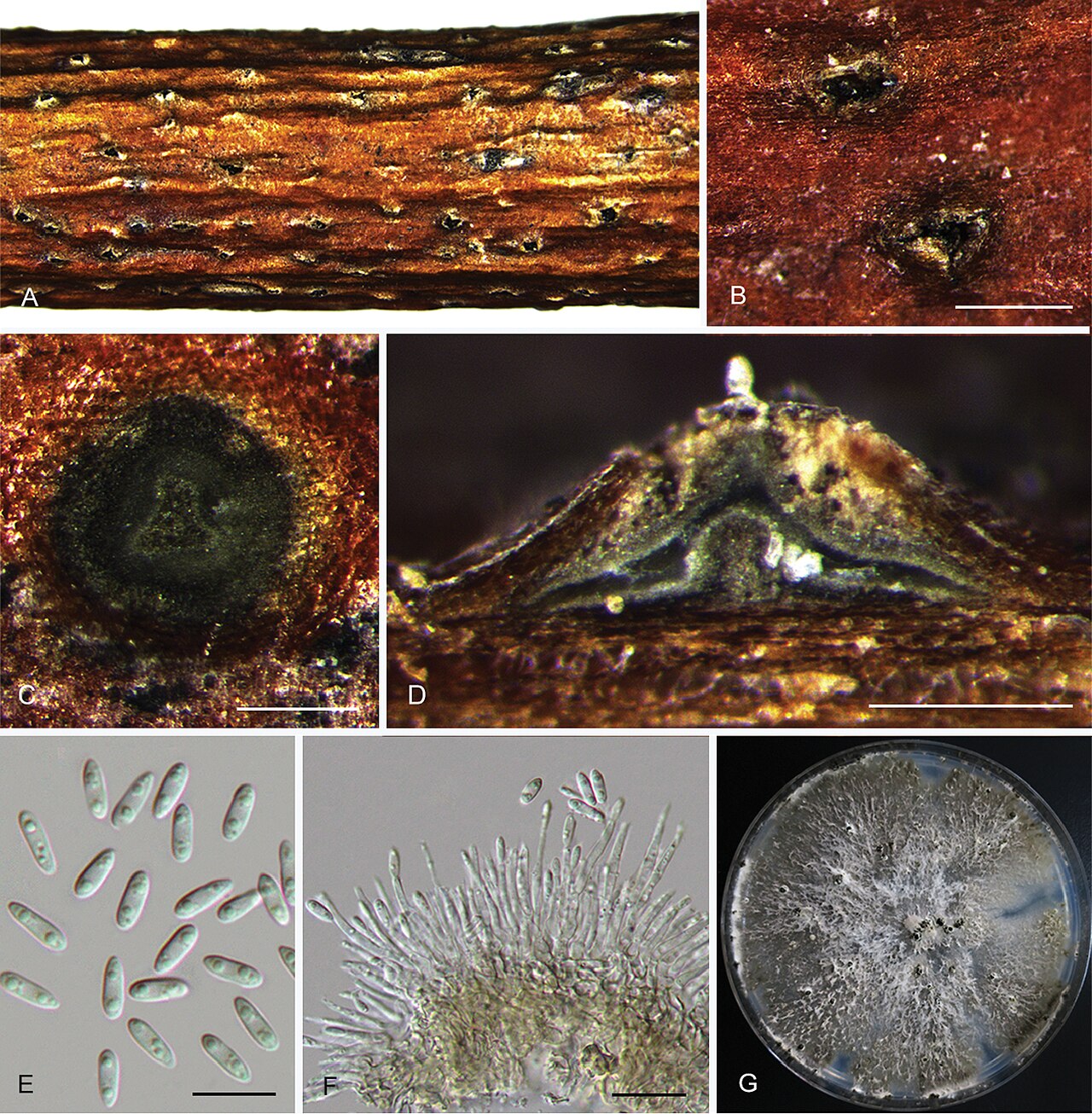
The family Botryosphaeriaceae generally consists of borderline pathogens, endophytic fungi that attack woody hosts and become a problem when favorable (stressful) conditions coincide in the orchard. On hazelnut, Botryosphaeria dothidea is explicitly listed in Croatian advisory recommendations as one of the causes of "fungal canker of hazelnut" (alongside Pseudomonas avellanae as the bacterial cause). The typical imprint on the bark is elliptical (elongated), dark, depressed lesions that gradually spread, fissure (crack), and expose the wood beneath. Symptoms of Botryosphaeriaceae generally also include leaf spots, fruit rot, bud necrosis, shoot drying, and discoloration of conducting wood.
Conidia of B. dothidea are unicellular, hyaline (colorless), thin-walled, elliptical to fusiform, approximately 20–27 × 4–6 µm in size — data useful for the laboratory, not the field.
Cytospora (teleomorph Valsa)
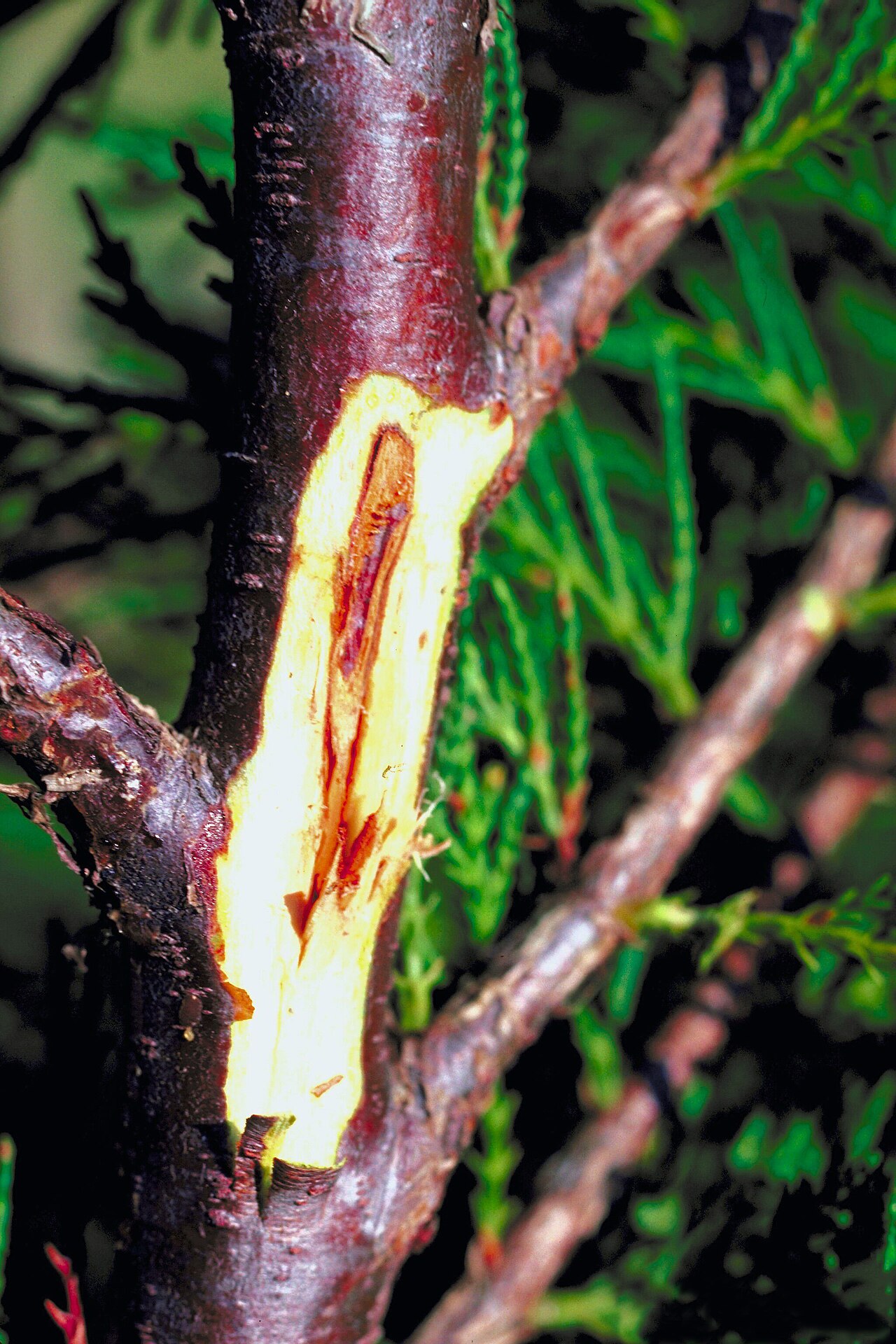
Cytospora spp. cause classic tree and branch canker — in Italian literature it is called mal dello stacco (Cytospora corylicola), and in older Croatian literature "stem break". Main symptoms:
- irregular, more or less expanded spots brown to reddish-rufous in color on the bark of the trunk and branches;
- under moist conditions, glassy, ruby-red granules (drops) emerge from the bark — these are masses of conidia; this red gelatinous exudate is a very characteristic field sign;
- beneath the affected bark, tissue necrotizes, and the fungus moves from the bark into the woody tissue;
- resistance (firmness) of the affected zone is compromised, so even ordinary mechanical force (wind) can break the branch.
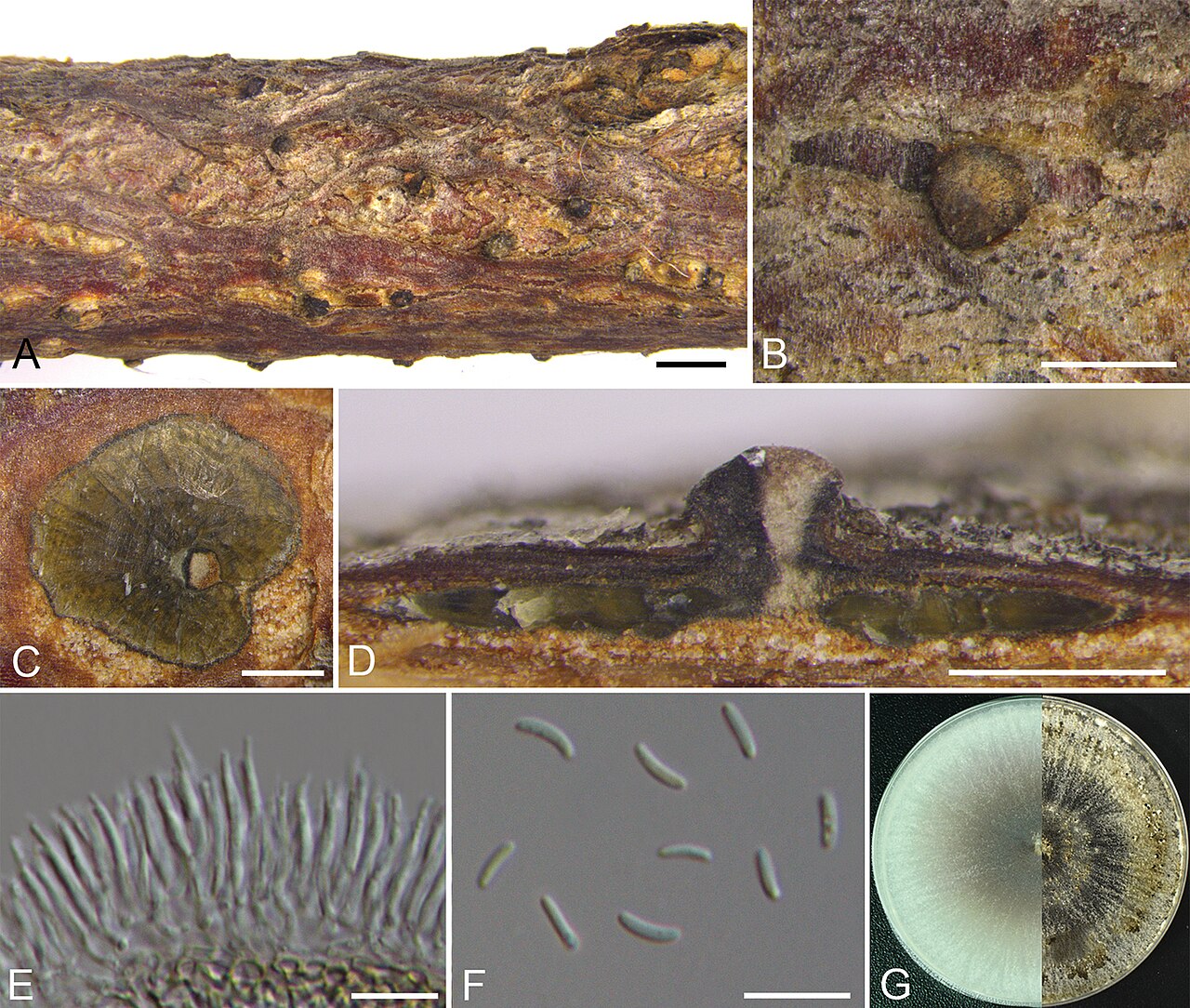
Cytospora is classically associated with older orchards and plants with poor vegetation due to poor growing conditions, previous pest attacks, etc. — but, like the rest of the complex, recent observations increasingly find it in younger, stressed orchards. In recent Croatian field reports, Cytospora decipiens is particularly highlighted as the cause of drying and breakage of scaffold branches.
Neonectria ditissima (bark canker)
Neonectria ditissima (syn. Nectria galligena, Neonectria galligena; anamorph Cylindrocarpon) is a classic cause of "bark canker": canker-like lesions form on the bark of branches and trunk; beneath the bark, dark necrosis is regularly visible, diffusing into healthy tissue. The bark cracks and falls off to the wood, and the encompassed part of the branch dries out and cracks. On the dead bark, fruiting bodies (perithecia) initially yellow, then red in color form. Perithecia form at 18–22 °C; in summer, when temperatures rise, whitish sporodochia with conidia form, which carry out infection through natural openings and wounds.
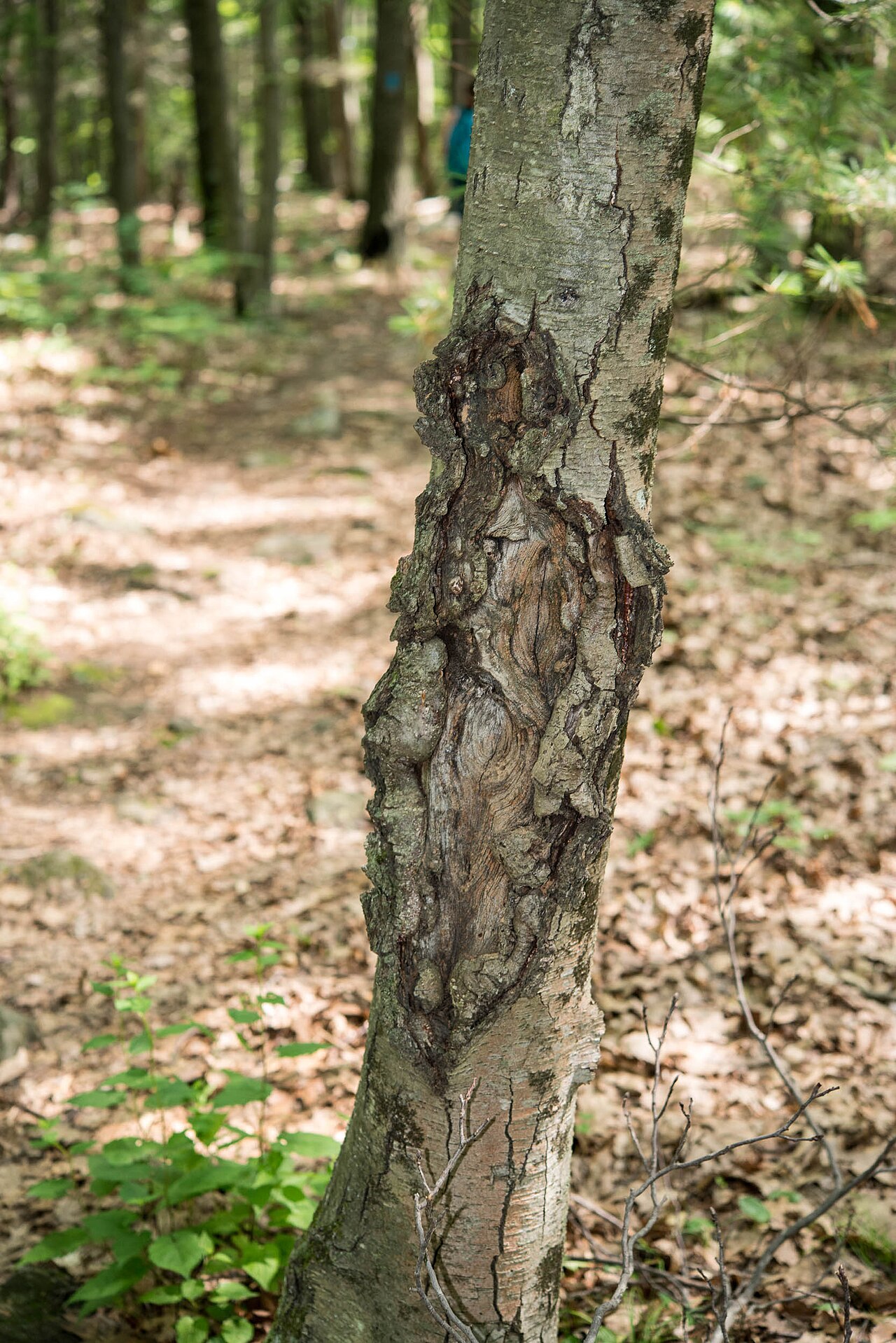
Symptomatology — what you see in the orchard
Although the causal agents differ, the field "branch cancer syndrome" is recognizable. Proceed systematically:
- Drying of individual branches or tips — most noticeable in spring of the following season, after the onset of vegetation, when healthy branches sprout while infected ones remain dry. The drying is typically "scattered," starting on lower branches or around wounds on the trunk.
- Cankerous wounds and inflammation on the bark of skeletal (main) branches and the trunk — sunken, well-defined zones; in Neonectria, concentrically cracked.
- Elliptical, dark lesions on the bark indicate the involvement of Botryosphaeria dothidea.
- Red (reddish-brown) gelatinous exudate — droplets emerging from the bark indicate Cytospora (highly characteristic for C. decipiens/C. corylicola).
- Dark necrosis under the bark that diffuses into healthy tissue (cut with a knife and check the boundary) — a general sign of fungal canker, pronounced in Neonectria.
- Fruiting bodies on the bark — small red (perithecia of Neonectria) or black pycnidia (Diaporthe/Phomopsis, Botryosphaeria, Cytospora).
- Radial (ring-like) spread of canker → complete branch collapse — most common during summer; necrosis spreads deeper into the xylem, and decay fungi colonize the bark.
- Breakage of skeletal branches under wind or their own weight — the final outcome; if no action is taken, drying spreads to other skeletal branches and eventually the entire tree/shrub dies.
Field rule — fungal or bacterial canker?
- Red/rubbery gelatinous exudate on bark + branch breakage → likely fungal canker (Cytospora).
- Elliptical dark lesions, shoot drying, wood necrosis → Botryosphaeria / Diaporthe complex.
- Yellow (yellowish) bacterial discharge from canker wounds + curling of shoot tips "in the shape of an umbrella handle" → bacterial canker (Pseudomonas avellanae) — this is not the topic of this article (see Bacterial Blight and Canker).
The color of the exudate (red = fungus Cytospora vs. yellow = bacteria) is the fastest field indicator, but it is not absolute; confirmation requires laboratory analysis.
When infection occurs (epidemiology)
| Pathogen | Highest risk period for infection | Entry points |
|---|---|---|
| Neonectria ditissima | Leaf fall (fresh leaf scars) and intense shoot growth until mid-May; ascospores/conidia throughout the summer | Leaf scars, wounds, frost cracks |
| Cytospora spp. | Summer stress + wounds; branch breakage noticeable in June/July | Pruning wounds, sunscald, hail damage |
| Diaporthe/Phomopsis, Botryosphaeria | Warm, humid weather; throughout the vegetation when wounds are present | Wounds, natural openings, weakened tissue |
Common denominator: wound + stress + moisture for sporulation and dispersal. Hence, the core measures — remove the source of infection (sanitary pruning), reduce stress, and protect/avoid wounds.
Control — focus on agronomy and pruning
There is no "magic" fungicide for branch canker. Control is primarily agronomic and pomological, with chemistry playing only a supportive role. The best "cure" is prevention — keep the plant strong and free of unnecessary wounds.
1. Reducing plant stress
Since the pathogens are opportunists, stress reduction is the primary measure:
- Irrigation during dry periods;
- Protection against hail (hail nets where justified) and sunscald on the trunk/skeletal branches (whitewashing the trunk, shading young trees);
- Balanced nutrition and increasing soil organic matter (mulching inter-row spaces, organic fertilization) — research on Cytospora links low organic matter to severe disease;
- Consistent protection against other diseases and pests (every wound and every weakening opens the door to canker);
- Biostimulators / plant strengtheners as support.
2. Selective (sanitary) pruning — key measure
Sanitary pruning removes the source of spores and stops spread:
- Cut deep into healthy wood. Croatian recommendations specify a cut at least 30 cm below the visibly infected zone, and preferably lower — to the base of the branch / to a higher-order branch if the canker is advanced. (For bacterial canker, literature sometimes suggests 60–90 cm — be more conservative if bacterial infection is suspected.)
- Prune as soon as symptoms are noticed, preferably during vegetation, do not wait for winter pruning.
- Prune in dry weather — moisture favors sporulation and infection of fresh cuts.
- Disinfect tools between cuts (see table below).
- Trees/shrubs that have experienced collapse (blight, drying of the entire plant) should be uprooted and removed.
3. Removal and burning of pruning debris
- Remove infected wood from the orchard and burn it.
- The biggest mistake is mulching cut infected branches and leaving them in the orchard — this leaves a source of spores for new infections in the orchard.
4. Wound sealing (disinfection)
Large cuts and pruning wounds should be protected to prevent the entry of fungi and bacteria:
- Disinfection of the cut with copper-based products — e.g., Cuprocaffaro 50 WP at a concentration of 0.8–1.0 % or Bordeaux mixture caffaro 20 WP at a concentration of 1.5 % (informational, from Croatian recommendations).
- Large cuts can also be sealed with grafting wax / wound paste after disinfection, to help the wound close faster and stay dry.
- Sealing is not a substitute for a proper cut to healthy wood — it is a supplement.
Wound sealants — realistic expectations
Wound sealants reduce the risk of pathogen entry through fresh cuts, but they are not a cure for existing canker. The most effective "wound treatment" is a correct, clean cut to healthy tissue in dry weather, plus tool disinfection. Overly thick, impermeable sealants can trap moisture and worsen the situation.
5. Prevention when establishing the orchard
- Healthy, certified planting material (planting material is the main pathway for long-distance introduction of infection).
- Avoiding frost pockets and locations prone to freezing (frost creates entry wounds).
- Open training system so that shoots do not touch each other and the canopy dries quickly.
- Site selection with good soil (organic matter, drainage) and irrigation capability.
Chemical support (informational)
There are almost no directly registered fungicides "against hazel branch canker." In practice, reliance is placed on copper preparations allowed against bark canker and bacterial blight, applied at key phenological stages (dormancy, around leaf fall, around bud burst). The following is informational and taken from Croatian recommendations/literature — registration changes, always check the label and substance database:
| Purpose | Product (example) | Approximate dose / concentration | Note |
|---|---|---|---|
| Cut/wound disinfection | Cuprocaffaro 50 WP (copper) | 0.8–1.0 % | sealant after pruning |
| Cut/wound disinfection | Bordeaux mixture caffaro 20 WP | 1.5 % | sealant after pruning |
| Early spring / dormancy (blight, canker) | Cuprablau Z (copper) | 0.5 % (≈ 0.5 kg/100 l) | "bathing" the tree/shrub |
| Insecticidal addition to copper in dormancy | Paraffin (white/mineral light) oil | 3–4 % | do not mix sulfur with mineral oil |
| Tool disinfection | 70 % alcohol | — | between cuts |
| Tool disinfection | Sodium hypochlorite | ≈ 3 % | between cuts |
Doses are informational
All concentrations, doses, number of applications, and waiting periods are strictly indicative and vary by year and source. Plant protection product registration changes — before application, always check the current registration (FIS / Ministry of Agriculture), label instructions, and advice from the advisory service for your cultivar and location. Pay special attention to the allowed annual copper input per hectare, especially in organic production. Sulfur products must not be mixed with mineral (white/light) oils.
Differentiation from related diseases
To avoid confusion (and incorrect measures), here is how the fungal branch canker complex differs from phenomena it is often confused with:
| Phenomenon | How to differentiate | Where discussed |
|---|---|---|
| Bacterial canker (Pseudomonas avellanae) | Yellow bacterial discharge from canker wounds, curling of tips "in the shape of an umbrella handle"; worsens in humid years | Bacterial Blight and Canker |
| Bacterial blight (Xanthomonas arboricola pv. corylina) | Spots on leaves and fruit, blight; bacterial, not fungal | Bacterial Blight and Canker |
| Root and crown rot (Armillaria / "honey fungus", Phytophthora, Rosellinia necatrix) | Drying of the entire shrub from the bottom, soft/moist crown tissue, fungal smell, white mycelium | Root Diseases |
| Rust, Taphrina, brief overview of Cytospora/Nectria | Leaf symptoms (pustules, blisters) and brief overview of canker | Minor and Secondary Diseases |
| Kernel rot (Diaporthe, Nematospora etc.) | Symptoms on the kernel/fruit, not on branch bark | Hazelnut Kernel Rot |
Diaporthe — same fungus, two problems
Diaporthe/Phomopsis is interesting because the same genus causes both canker/drying of branches (topic of this article) and defects/kernel rot (topic of the kernel rot article). The endophytic nature (the fungus "waits" in healthy tissue) explains how, depending on conditions, two different types of damage arise from the same fungal population.
Practical recommendations and common mistakes
- Take canker seriously and early. Red exudate on bark and drying of individual branches are not "shrub age" — this is active, spreading infection. Waiting means skeletal branch breakage and loss of bearing wood.
- The biggest mistake: leaving (mulching) cut infected branches in the orchard. Remove and burn them.
- Another common mistake: treating canker only by spraying. Without stress reduction (water, shade, nutrients, organic matter, hail and other disease protection) and without sanitary pruning, fungicide alone does not solve the problem because the pathogens are opportunists.
- Cut to healthy wood — at least 30 cm below the necrosis boundary, in dry weather, with tool disinfection between cuts.
- Do not confuse exudate color — red indicates Cytospora (fungus), yellow indicates bacterial infection; measures partially overlap, but diagnosis helps.
- Prevention starts with planting — healthy certified material, avoiding frost pockets, open training system, and soil rich in organic matter reduce the risk of canker.
- Do not react to "every branch individually" without a plan — if drying is spreading, assess whether it is cheaper to restore individual skeletal branches or clear and replant heavily infected trees.
Sources
This article is an AI-generated summary compiled from an internal literature collection on hazelnut (RAG corpus of professional and scientific sources in Croatian, English, Serbian, and Italian), supplemented with publicly available internet sources. Dosages and recommendations are for informational purposes only. Main sources used:
From the hazelnut literature RAG corpus:
- Hazelnut fungal canker — Cytospora decipiens (field observations and recommendations, 2025.) — drying and breakage of structural branches, red exudate, opportunistic nature, sanitary pruning and burning of pruned material.
- Recommendations for owners of permanent hazelnut orchards (advisory recommendations, 2023.) — cut 30 cm below the dried area, removal and burning of collapsed trees, wound disinfection with copper (Cuprocaffaro, Bordeaux mixture), tool disinfection; Botryosphaeria dothidea in association with Pseudomonas avellanae.
- Technological guidelines for integrated hazelnut production (2012.) — bark canker caused by Nectria/Neonectria galligena, infection timing (leaf fall, shoot growth until mid-May), agrotechnical measures.
- Bacterial canker of hazelnut — Pseudomonas avellanae (Serbian, 2024.) and Identify diseases and pests on hazelnut (2020.) — distinguishing fungal from bacterial canker (yellow exudate, cut 60–90 cm below infection).
- Do not delay early spring protection (2019.) and Orientation programs for protection and fertilization — Hazelnut (2024.) — copper and sulfur preparations, paraffin oil, application phenophases.
- PhD Thesis, M. Waqas (2024.) and Waqas et al. (2024) — Molecular Characterization and Pathogenicity of Diaporthe Species Causing Nut Rot of Hazelnut in Italy — taxonomy of Diaporthe (anamorph Phomopsis), D. eres as the type species, role in kernel defects.
- Summer Heat and Low Soil Organic Matter Influence Severity of Hazelnut Cytospora Canker (Lamichhane et al., 2014.) — correlation between summer temperatures and low soil organic matter with the severity of Cytospora canker.
- Italian guidelines (Linee guida Agrion 2016; ASCOPIEMONTE — Guida alla coltivazione; Univ. della Tuscia) — mal dello stacco (Cytospora corylicola), branch cankers (Sphaeropsis/Phomopsis), elliptical lesions, removal and burning of branches.
- First report … Botryosphaeria dothidea on hazelnut (Bayraktar et al., Turkey, 2021.) — morphology of B. dothidea conidia (20–27 × 4–6 µm).
Public internet sources:
- Cytospora and Diaporthe Species Associated With Hazelnut Canker and Dieback in Beijing, China — Frontiers in Cellular and Infection Microbiology (2021.) — https://www.frontiersin.org/journals/cellular-and-infection-microbiology/articles/10.3389/fcimb.2021.664366/full
- Diaporthe spp. Is Confirmed as the Main Fungus Associated with Defective Turkish Hazelnuts — Plant Health Progress (APS) — https://apsjournals.apsnet.org/doi/full/10.1094/PHP-01-22-0006-RS
- First Report of Diaporthe australafricana-Caused Stem Canker and Dieback in European Hazelnut in Chile — PubMed — https://pubmed.ncbi.nlm.nih.gov/30716827/
- Ecology of Diaporthe eres, the causal agent of hazelnut defects — ResearchGate — https://www.researchgate.net/publication/349979902
- Hazelnut (Corylus avellana) — Cankers — Pacific Northwest Pest Management Handbooks — https://pnwhandbooks.org/plantdisease/host-disease/hazelnut-corylus-avellana-cankers
- Cytospora Canker — Utah State University Extension — https://extension.usu.edu/pests/ipm/ornamental-pest-guide/diseases/cytospora-canker.php