Storing and Preparing Bare-Root Seedlings from Pickup to Planting (Trenching/Heeling-In)
Content generated by artificial intelligence — verify before application
This article was automatically compiled from a collection of hazelnut literature with the assistance of artificial intelligence and may contain errors or outdated information. It serves as a starting point for further research, not as professional advice. Dosages, products, and timelines are informative and depend on the cultivar, location, and applicable regulations — always consult with an advisory service and official sources before application.
The moment your hazelnut seedlings arrive is one of the most underestimated, yet simultaneously most dangerous, steps in establishing an orchard. Planting is often planned for months — site selection, soil analysis, trenching, fertilization, cultivar arrangement — yet all that effort can easily be ruined in the first 24 hours after pickup if bare-root stock is handled carelessly. Bare-root seedlings are dug from the nursery while dormant, and their root system is completely exposed to air, sun, and wind. Every hour of drying of the fine, hairy root hairs reduces the plant's ability to establish and increases so-called transplant shock (transplanting stress). This article practically explains how to receive, temporarily store (via trenching/heeling-in), protect roots from drying, prepare them by trimming roots and dipping (mudding or hydrogel coating), and how bare-root seedlings differ from container-grown ones — all with the goal of minimizing losses at planting.
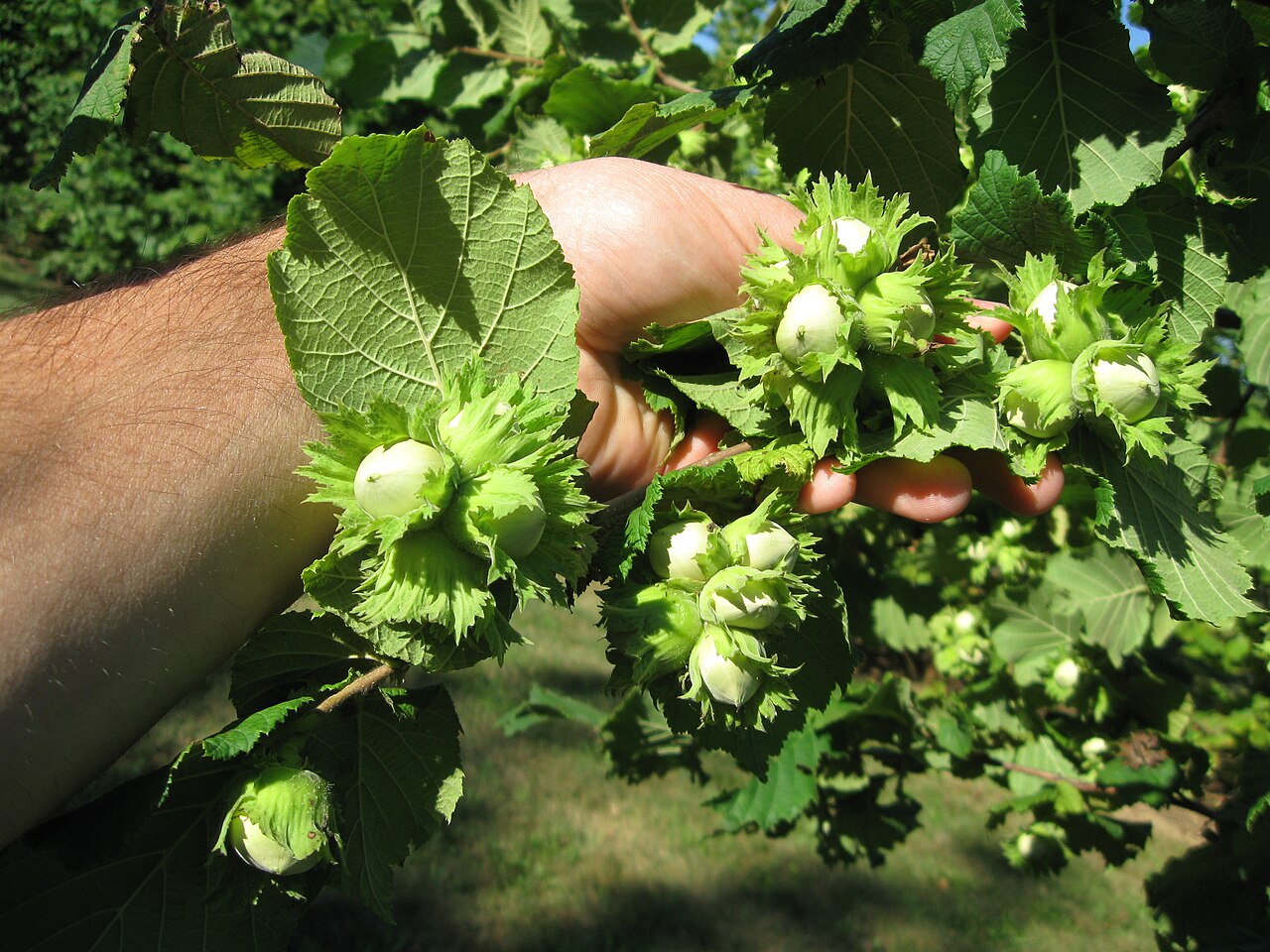
Why Roots Are Most Vulnerable Immediately After Pickup
A bare-root seedling has no protective soil ball around its roots. The finest part of the root system — the tiny absorptive root hairs that actually take up water — begins to deteriorate after even short exposure to dry air and sunlight. Literature directly mentions this danger: a quality seedling should be 10–15 mm thick, preferably two years old, with a well-developed root system, and during transport and storage, it is important to ensure the roots do not dry out (CORE, untitled, 2024). Cold, dry winter winds dry out exposed roots surprisingly quickly, so the rule is: roots must never be left uncovered in the air, not even "for a short while."
From this follows the most important rule of the entire process, which is unambiguously formulated in a Serbian nursery production textbook: "Heeling-in must be done on the same day the seedlings are dug to prevent root drying." (Textbook Nursery Production, 2015, trust ~0.68). The same applies to the producer picking up the seedlings — if they are not planted immediately, they must be protected on the same day.
First Steps Upon Receiving Seedlings
When packages or bundles of seedlings arrive, before any storage, do the following:
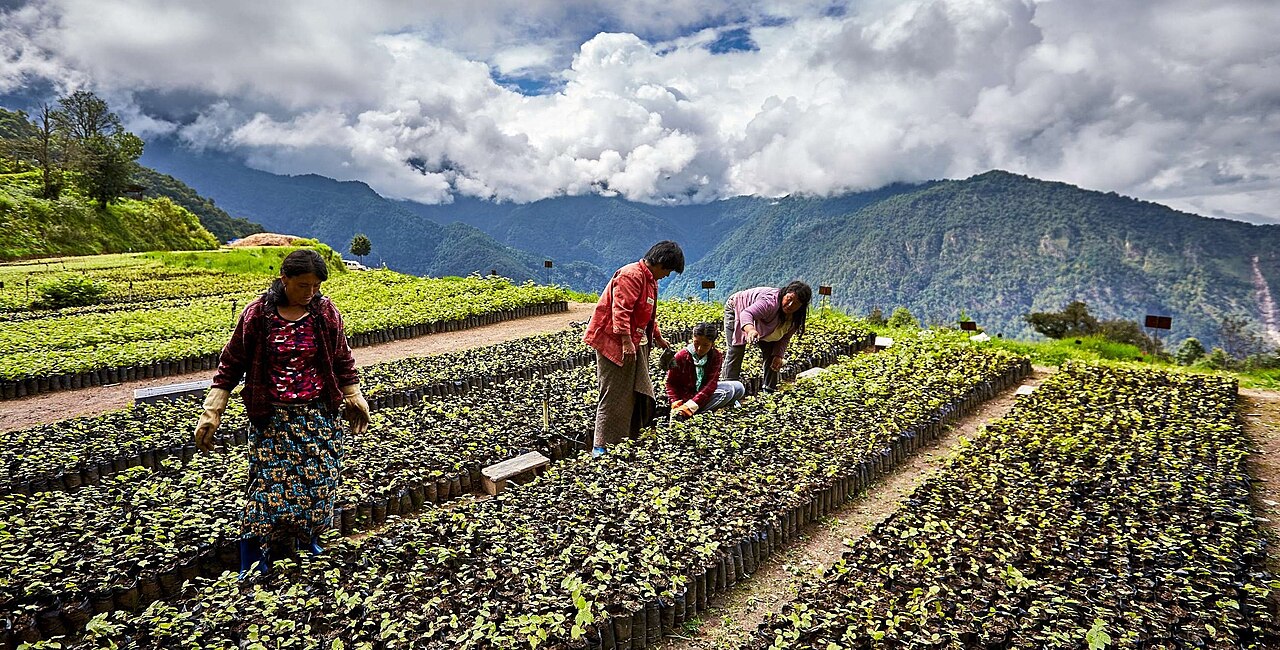
- Open packaging and inspect roots. Check if roots are moist, if the packaging (moist sawdust, paper, foil) has retained moisture, and if there are any signs of mold or rot.
- Check the label and cultivar. Each bundle should have a label with the cultivar and rootstock name. Use only certified planting material from authorized producers; the "gray market" (classified ads, etc.) carries questionable quality and health risks (Bošnjak, 2020/2023).
- Moisten roots immediately. If you plan to plant within one to two days, cover the roots with moist material and keep them in a cool, shaded place. Web sources for fruit planting material recommend spraying roots with water upon arrival and covering them with moist packaging material, with regular moisture checks every few days (Stark Bro's; Fruition Seeds).
- If planting is delayed — trench (heel-in). For any delay longer than a few days, trench the seedlings (see continuation).
Quick Rule
Planting same day → keep roots moist in shade. Planting in 2–10 days → temporary trench or cold, dark storage. Planting in several weeks / all winter → winter trench (trenching) or cold storage.
Trenching / Heeling-In (Trenching): Temporary and Winter
Trenching (in Croatian, the terms utrapljivanje and trapljenje are also used) means temporarily burying the seedling roots in loose soil until the time for planting arrives. This keeps the roots moist, the seedlings remain dormant, and premature vegetative growth is avoided.
We distinguish two types of trenches:
- Temporary trench — when seedlings are planted or distributed during autumn, i.e., for a shorter period.
- Winter trench — when seedlings remain trench-planted throughout the winter, until spring planting.
How to Dig a Winter Trench
According to the nursery production textbook and the manual on sexual propagation of fruit trees, the procedure is as follows:
| Trench Element | Literature Recommendation |
|---|---|
| Location | Well-drained site (to prevent water stagnation), sheltered |
| Trench Depth | approx. 60 cm |
| Trench Width | approx. 1 m |
| Length | as needed, depending on the number of seedlings |
| Covering | roots + approx. 30 cm of above-ground part covered with soil |
| Rodent Protection | poisoned bait at the bottom (e.g., boiled wheat) + woven wire fence |
| Labeling | separate cultivars, clearly label, create a trenching plan |
(Source of quantitative data: Textbook Nursery Production, 2015; Sexual Propagation of Fruit Trees. Values are informative.)
Seedlings are placed in the trench in rows, the roots are covered with soil, and the soil is tamped to eliminate air pockets around the roots — it is precisely these air pockets that expose the roots to drying. Above the roots, the soil should cover part of the trunk (approx. 30 cm) for additional protection against frost and drying.
Three Rules Often Overlooked
- Labeling and trenching plan. "A trenching plan is essential because the tags and labels used to mark cultivars can be destroyed or erased during winter" — in spring, what was written in autumn often cannot be read. If you mix pollinizer and main cultivars, losing labels means a chaotic arrangement in the orchard.
- Rodent protection. The trench must be fenced with woven wire: rabbits and mice can "cause real devastation in just one night, stripping bark from fruit seedlings." Stripped bark around the root crown often means a lost seedling.
- Well-drained site. A trench on wet, compacted terrain leads to water stagnation and root rot during winter.
Alternative: Cold Storage
Larger nurseries and producers can store seedlings in cold storage. Such cold stores must have a system for maintaining high relative air humidity, and the storage temperature is usually around 2 °C. Seedlings stored this way can be planted even after optimal timelines have passed, but mandatory irrigation after planting is required (Nursery Production Manual, 2020). Web sources for fruit planting material cite comparable values: for short-term storage, a cold, dark place at approx. 4 °C (40 °F), and in spring, seedlings can remain trench-planted for up to a month at a temperature that keeps them dormant (Grow Organic; Stark Bro's).
| Storage Method | Temperature | Duration (approximate) | Note |
|---|---|---|---|
| Moist roots in shade | shade, ambient | 1–2 days | only until quick planting |
| Cold, dark storage (foil) | < ~6 °C, ideal ~4 °C | up to ~1 week | maintains dormancy |
| Temporary / Winter trench | external conditions, well-drained | weeks to full winter | with labels and rodent protection |
| Cold store with high humidity | ~2 °C | longer, beyond optimal timelines | with irrigation at planting |
(Values are informative and depend on location, cultivar, and weather conditions.)
Protecting Roots from Drying Before and During Planting
Even when you remove seedlings from the trench or cold store, the danger of drying returns as soon as the roots come into contact with air. Therefore:
- Keep roots covered until the moment of lowering into the planting hole (moist bag, bucket with wet material). Do not carry a pile of bare-root seedlings across the field in the sun and wind.
- Rehydration by soaking. Before planting, it is beneficial to submerge the roots in water. Web sources for fruit trees recommend soaking roots for 12–24 hours to replenish moisture lost during storage; research mentions that well-hydrated roots can provide up to 30 days of water to the new seedling, significantly reducing transplant stress (MSU Extension; Stark Bro's). For hazelnut, before planting bare-root scions, sources equally recommend thoroughly moistening the roots (Hazelnut — Gardener's Guide, 1988).
Root Trimming (Root Pruning) Before Planting
Root trimming serves a dual purpose: it removes damaged and dried parts and stimulates the formation of new absorptive root hairs, thereby establishing a balance between the above-ground and below-ground parts.
Practical guidelines from the corpus:
- Remove all damaged and dry rootlets at planting — this is necessary (CORE, untitled, 2024).
- Trim roots to ~20–25 cm with sharp shears, ideally immediately after removing seedlings, before dipping into protective slurry (Economic Analysis of Hazelnut Production, 2023).
- Generally, seedling preparation for planting in textbooks is described as "trimming roots and removing twigs" (Textbook Nursery Production, 2015).
The cut should be clean and sharp (not crushed), so that the wound heals quickly. Trimming to a uniform length also facilitates spreading the roots in the planting hole without bending upwards.
Root Dipping: Clay (Clay Slurry) and Hydrogel
Dipping means immersing the roots in a thick protective coating immediately before planting, thereby retaining moisture on the roots and improving root-soil contact.
Clay / Loam Slurry (Traditional)
The most common traditional method: after root trimming, the roots are dipped in a slurry made of loam, manure, and water (Economic Analysis of Hazelnut Production, 2023). For Turkish hazelnut (Corylus colurna), a source equally notes that roots are cut and dipped in clay slurry immediately before planting, which "contributes to a better survival rate" (Hazelnut like a tree — Turkish walnut). The slurry coats the roots with a thin moist layer that slows drying and helps fine soil particles adhere to the roots.
Hydrogel (Modern Alternative)
Hydrogel (superabsorbent polymer) absorbs large amounts of water and, upon root dipping, creates a moist layer similar to clay slurry, but it is cleaner to work with and easier to apply to larger quantities of seedlings. The hazelnut corpus does not provide specific hydrogel dosages, so it is cited here as general practice in nursery production and mass planting of bare-root stock; follow the dosage and preparation method according to the manufacturer's instructions on the label.
What Dipping Solves, and What It Doesn't
Dipping reduces moisture loss and improves root-soil contact, but it DOES NOT replace proper storage, irrigation after planting, or correct planting depth. It is the last protective layer, not a magic wand.
Bare-root vs. container-grown saplings
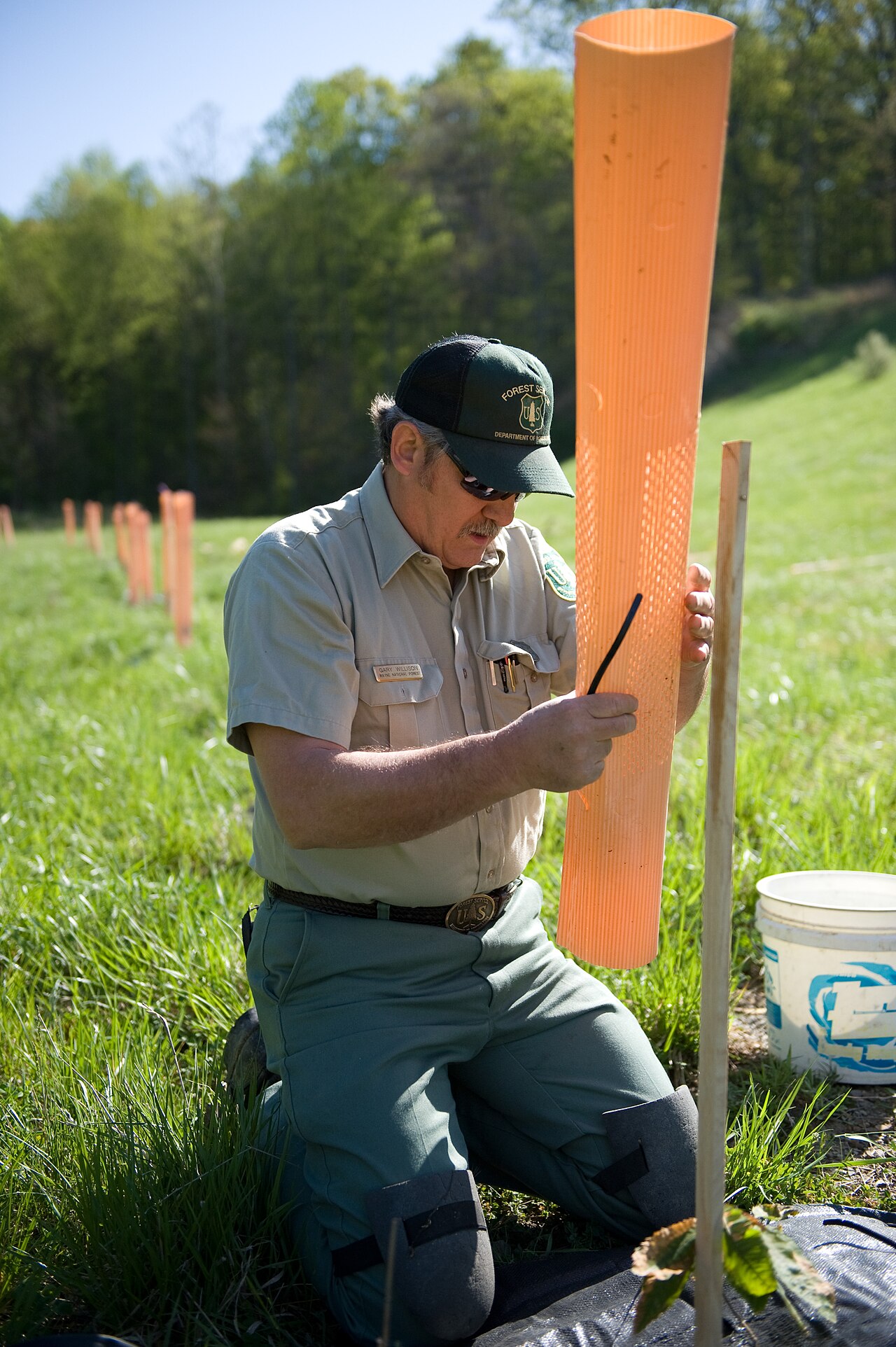
Understanding the difference helps you decide how much attention to pay to root handling.
| Feature | Bare-root sapling | Container-grown sapling |
|---|---|---|
| Root condition at pickup | Exposed, no root ball | In substrate, protected |
| Susceptibility to drying | Very high — planted during dormancy | Lower, roots remain moist |
| Planting season | Mostly autumn/winter (dormancy); November–December, part in spring | Broader, more flexible |
| Cost / Transport | Cheaper, easier transport | More expensive, heavier |
| Heeling-in / Trenching | Required if not planted immediately | Generally unnecessary |
| Transplant shock | Greater if roots dry out | Lower with proper handling |
A large portion of hazelnut orchards in our region are established at the end of the year (November and December) while vegetation is dormant, and part in spring (Gospodarski list, Hazelnut — Specifics of Planting and Cultivation). This is why bare-root planting is dominant, making root handling so critical. It is also worth noting the age of the sapling: one-year-old saplings are more sensitive and under greater stress, while two- and three-year-old saplings with stronger stems and developed lateral branches are hardier and considered more ideal (Bošnjak, 2020/2023; Gospodarski list).
Planting depth — protecting your investment
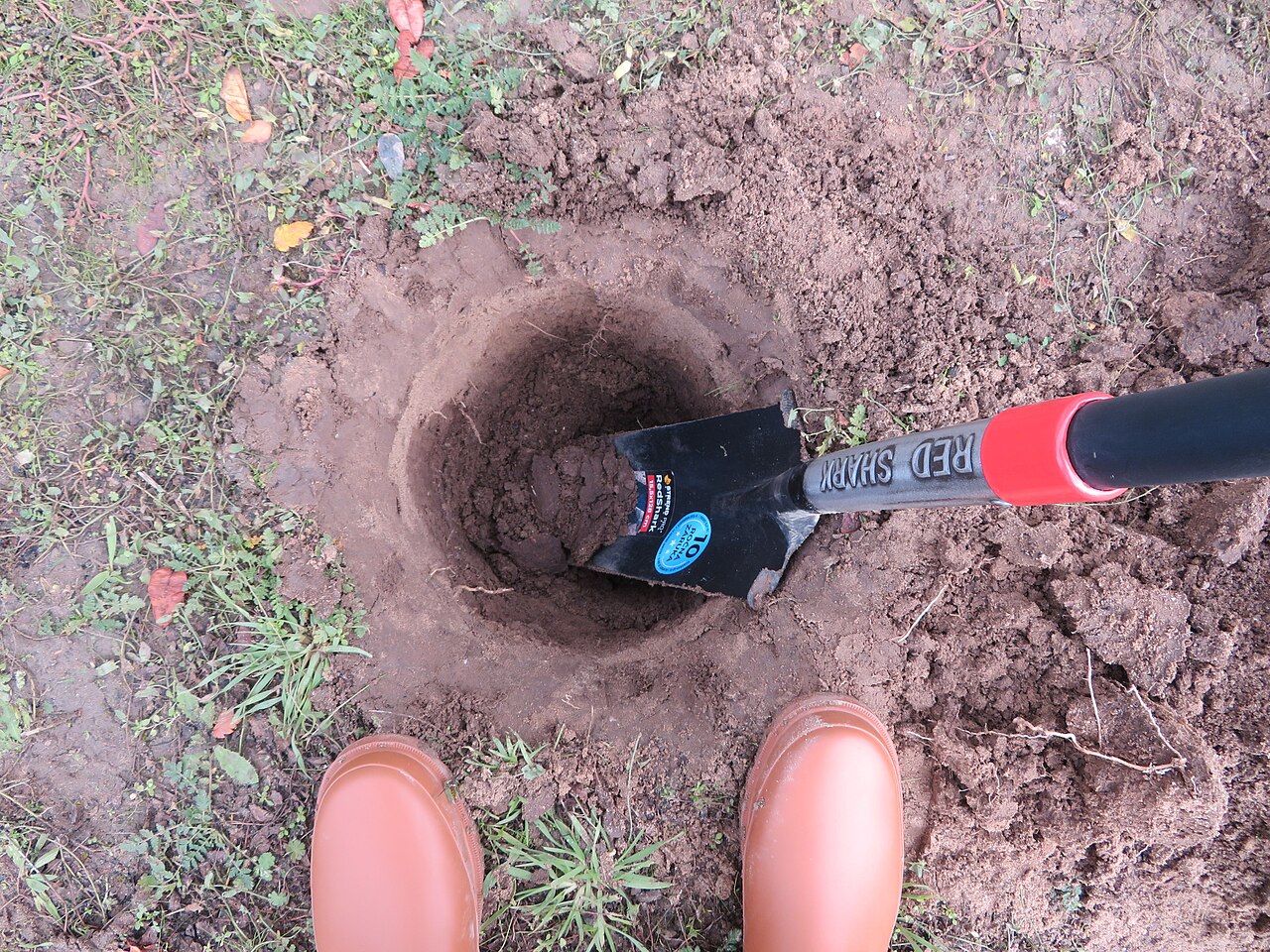
After all, do not ruin the planting with incorrect depth. The sapling must be planted at the same depth it grew in the nursery; if planted too deeply, it develops superficial root systems that are less resistant to adverse weather conditions, and the primary root dies off (Environmental Protection Elaborate, 2020). The planting hole is dug to a depth of about 20–25 cm (or a wider hole for individual planting), the roots are spread without bending, the soil is tamped to eliminate air pockets, and the saplings are well-watered after planting.
Practical recommendations and common mistakes
Recommendations
- Heel in or protect the roots on the same day you pick up the saplings.
- Keep the roots covered and moist every time they are exposed to air, both in the trench and when carrying them across the field.
- Trim roots to ~20–25 cm with sharp shears and remove dry/damaged roots.
- Mud-ball the roots with a clay slurry (clay + manure + water) or hydrogel immediately before planting.
- Label cultivars and make a heeling-in plan — labels disappear over winter.
- Fence the trench with wire and set traps against rodents.
- Choose a well-drained site for heeling-in and water well after planting.
Common mistakes
- Leaving bare-root saplings in the sun/wind "just for a short while" — fine rootlets dry out.
- Delaying heeling-in after pickup ("I'll plant it tomorrow") without any root protection.
- Heeling-in on wet, compacted ground → water stagnation and rot.
- Lack of protection from rabbits and mice → bark stripped over winter.
- Loss/mix-up of cultivar labels → incorrect pollinizer arrangement in the orchard.
- Planting too deeply → primary root die-off, weaker sapling.
- Dry planting without subsequent watering, especially for saplings stored in cold storage.
Gallery
Sources
This article is an AI summary compiled from an internal collection of hazelnut literature (RAG corpus) and supplemented with public web sources. Dosages, dimensions, temperatures, and timelines provided are informational and depend on the cultivar, location, and applicable regulations. Main sources used:
- Textbook Nursery Production (part Horticulture), 2015 — sapling preparation, heeling-in (depth ~60 cm, width ~1 m), root trimming.
- Vegetative Propagation of Fruit Trees — Production of Planting Material — temporary and winter heeling-in, rodent protection, heeling-in planning.
- Handbook of Nursery Production, 2020 — storing saplings in cold storage (~2 °C, high relative humidity).
- Economic Analysis of Hazelnut Production, 2023 — trimming roots to 20–25 cm, mud-balling with clay + manure + water.
- untitled (CORE), 2024 — sapling quality (10–15 mm, two-year-old), root protection from drying during transport, removal of damaged roots.
- D. Bošnjak — Hazelnut (agro-klaster.hr), 2020/2023 — certified planting material, one-year-old vs. two/three-year-old saplings.
- Hazelnut — Specifics of Planting and Cultivation — Gospodarski list — planting season (November–December), sensitivity of one-year-old saplings.
- Environmental Protection Elaborate (environmental impact assessment), 2020 — planting depth (20–25 cm), danger of planting too deeply.
- Hazelnut like a tree — Bear walnut — cutting and dipping roots in clay slurry before planting.
- Hazelnut — Vrtlarica, 1988 — moistening roots before planting.
- Stark Bro's — What to Do If You Can't Plant When Your Order Arrives — https://www.starkbros.com/growing-guide/article/how-to-delay-planting
- MSU Extension — Hydrating new bare root trees for planting — https://www.canr.msu.edu/news/hydrating_new_bare_root_trees_for_planting
- Grow Organic — Heeling in Your Bare Root Trees or Plants — https://www.groworganic.com/blogs/tip-of-the-week/heeling-in-bare-root-trees-or-plants-if-you-cant-plant-right-away
- Ashridge Nurseries — "Heeling In" Bareroot Trees & Plants — https://www.ashridgetrees.co.uk/blogs/gardening/heeling-in-bareroot-trees-plants
- Fruition Seeds — Caring for Bare Root Trees Upon Arrival — https://www.fruitionseeds.com/learn/blog/caring-for-bare-root-trees-upon-arrival/