Tonda Gentile delle Langhe and Tonda di Giffoni
Content generated by artificial intelligence — verify before application
This article was automatically compiled from a collection of hazelnut literature using artificial intelligence and may contain errors or outdated information. It serves as a starting point for further research, not as professional advice. Dosages, products, and timing are informative and depend on the cultivar, location, and current regulations — always consult with an advisory service and official sources before application.
Italian hazelnut production has shaped global standards for kernel quality for centuries, and two cultivars embody this more than any others: Tonda Gentile delle Langhe from Piedmont and Tonda di Giffoni from Campania. Both are "round noble" cultivars (Italian tonda = round) intended primarily for processing — the confectionery industry, production of roasted kernels, creams, and chocolate fillings. Although often mentioned together as "leading industrial cultivars," their behavior in the orchard, processing suitability, and agronomic requirements differ significantly. This article summarizes their characteristics based on hazelnut literature and public sources, focusing on what growers care about in practice: what the kernel is like, how much and how regularly it bears, how it behaves in the orchard, where it is profitable to plant, and what processing it is truly intended for.
Quick overview — comparative table
| Property | Tonda Gentile delle Langhe | Tonda di Giffoni |
|---|---|---|
| Origin | Piedmont (Langhe, province of Cuneo), northern Italy | Giffoni Valle Piana, Campania, southern Italy |
| Label protection | PDO / PGI ("Nocciola Piemonte / Nocciola del Piemonte") | PDO / PGI ("Nocciola di Giffoni") |
| Vigor | Medium, semi-erect habit | Medium to medium-vigorous, transitional habit |
| Suckering tendency | Medium-high | Moderate (does not develop excessive suckers) |
| Flowering type (dichogamy) | Location-variable; classically protandrous, but HR sources also record protogyny/homogamy | Location-variable; classically protandrous, but newer measurements record protogyny |
| Self-fertility | Self-incompatible — pollinizers required | Self-incompatible/self-sterile — pollinizers required |
| Flowering time | Very early | Mid-early / early |
| Ripening | Early (mid-August) | Early (late August – early September) |
| Fruit weight | ~2.2–2.5 g | ~2.0–2.5 g |
| Kernel extraction rate | ~46–50 % (HR sources and 45.5–47 %, some up to 49–54 %) | ~43–47 % (HR sources ~46 %) |
| Industrial extraction rate (kernel after processing) | ~45.6 % | Good and stable |
| Kernel shape | Spherical to short-cylindrical | Spherical, very white kernel |
| Pellicle removal (perisperm) | Very good after roasting | Very good ("kernel blanching") |
| Main purpose | Roasting, premium confectionery | Confectionery, creams, broad processing |
| Resistance to late frost | Sensitive | Sensitive (early flowering) |
| Adaptability outside native area | Poor — best in Piedmont | Very good — thrives even outside classic areas |
| Recommendation for HR assortment | Less common/supplementary; risky outside the terroir | Main (promising) cultivar in the group of main cultivars |
Note: Numerical ranges differ among sources and depend on the clone, location, year, and agrotechnics. Take the values as a guide, not a guarantee.
Dichogamy of both cultivars — why "protandry" is not the whole truth
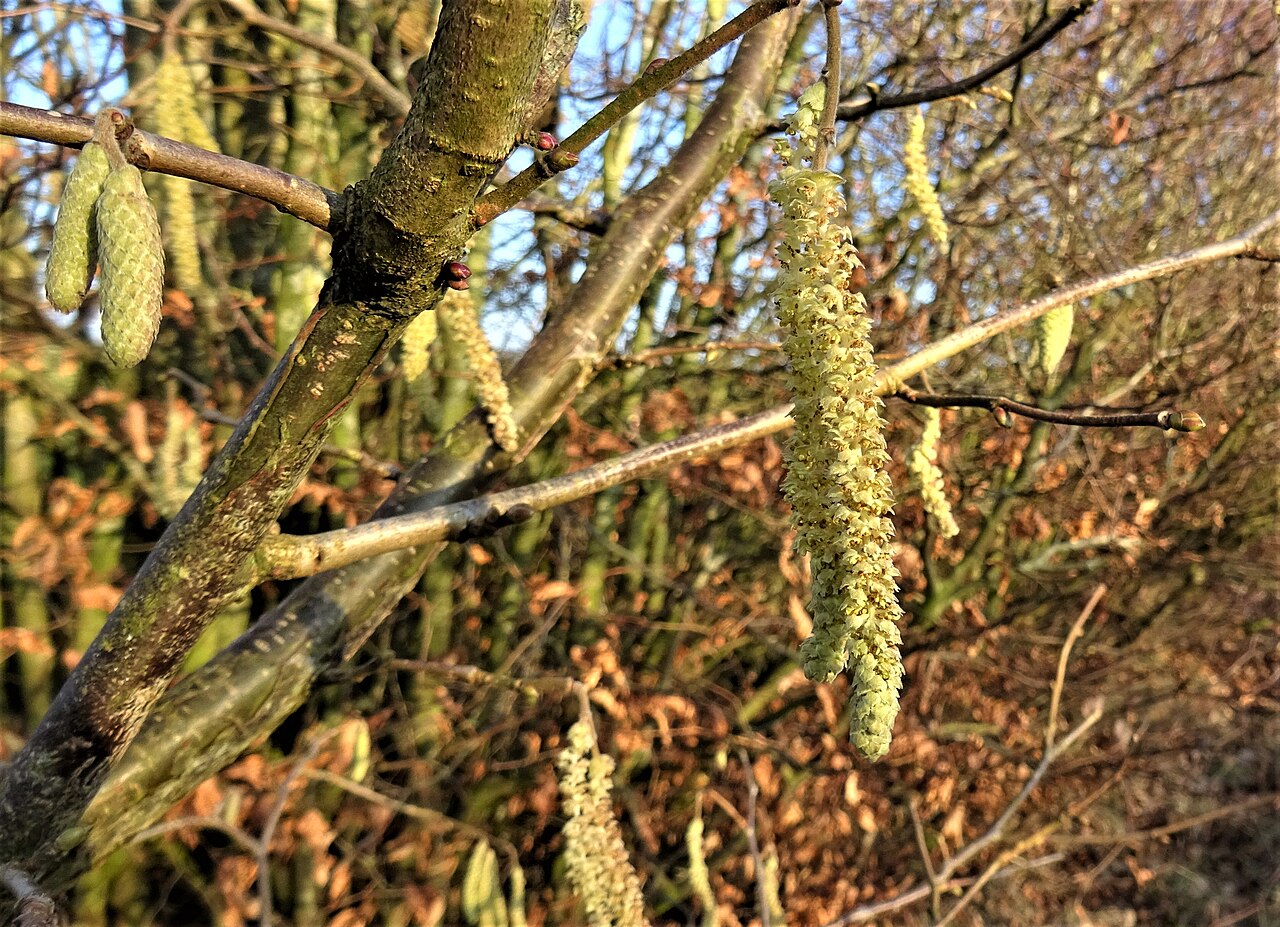
In older literature, Tonda Gentile delle Langhe is routinely described as strongly protandrous (male catkins release pollen before female flowers are receptive), and a similar description is given for Tonda di Giffoni. This is true as an average for the native, warmer area, but misleading if taken as an unchanging cultivar trait.
Dichogamy (the time lag between male and female phases) in hazelnut is not solely a cultivar trait — it changes with climate, location, and within individual years:
- Croatian research (Vujević et al., orchard in Orahovica, 2008 and 2015) explicitly concludes that the start and duration of flowering, as well as the occurrence of protandry, protogyny, and homogamy, are not exclusively cultivar traits, but depend on location and meteorological conditions of the individual year. It is generally stated that protogyny is more common in cooler areas, and protandry in warmer ones.
- Frontiers in Plant Science (2021) specifically highlights that early-maturing cultivars like TGdL are particularly "labile" in this regard: male and female flowers react strongly to increases in air temperature from bud burst, so the range of dichogamy is the result of the joint action of genotype and climate.
- In a Romanian study on floral biology (Fruit Growing Research, 2024), TGdL was recorded as protandrous under the given climatic conditions, while Tonda di Giffoni was measured as protogynous (female phase earlier than male) in the same experiment. This does not contradict Italian descriptions — it shows exactly that warm December–February first stimulates the catkins, while cooler weather prolongs or delays male flowering.
| Cultivar | Classical description (warm, native area) | What HR/SE-European sources record |
|---|---|---|
| Tonda Gentile delle Langhe | Strong protandry | Protandry, but in cooler years/locations, homogamy/protogyny is possible |
| Tonda di Giffoni | Protandry | Protandry, but protogyny has been recorded (e.g., RO 2024) |
Practical consequence. When assembling the cultivar assortment, do not blindly rely on "book" protandry, but — if possible — determine the flowering phenogram at your own location or consult with the local advisory service. The goal is for the pollinizer to release pollen exactly when the female flowers of the main cultivar are receptive; since this relationship can shift from year to year, security is provided by a combination of 2–3 cultivars with staggered flowering periods, not just a single pollinizer aligned with the average.
Tonda Gentile delle Langhe
Origin and status
Tonda Gentile delle Langhe (synonyms: Piedmontese, Tonda Gentile Trilobata, Nocciola del Piemonte) originates from the Langhe, a hilly area in the province of Cuneo in Piedmont, and is considered one of the highest-quality hazelnut cultivars in the world. It is grown almost exclusively in suitable areas of Piedmont because it has proven to be low-yielding in other environments — the cultivar is strongly tied to its native terroir. It is protected in the European system by a geographical indication label (PDO / PGI), commercially known as "Nocciola Piemonte" or "Nocciola del Piemonte".
Tree and behavior in the orchard
The plant is of medium vigor with a semi-erect habit and medium-high tendency to develop suckers (root shoots), which means a regular need for sucker removal during cultivation. (Note: some Croatian literature describes it as more vigorous with few suckers, which is another reminder that habit varies depending on rootstock and conditions.) Flowering is classically protandrous and very early, making the cultivar sensitive to late spring frosts; the type of dichogamy can, as explained, shift depending on the climate. The cultivar is self-incompatible and cannot be pollinated by its own pollen.
There is a recorded tendency for alternate (biennial) bearing — in some years, yield is very high (literature mentions up to ~38 kg per tree under exceptional conditions), and the following year it is lower; good agro- and pomotechnics mitigate this phenomenon.
Pollinizers. In literature, Camponica and Tonda Gentile Romana are cited as suitable pollinizers, and Croatian sources add Negret, Cosford, Coutard (Fertile de Coutard), Mortadella, and Nocchione. When planning the orchard, align the flowering periods of the pollinizers with the very early female flowering of the main cultivar.
Ripening is early — by mid-August — and ripe fruits easily drop from the husk, facilitating harvest (including mechanized ground harvest).
Fruit and kernel
| Parameter | Value (approximate) |
|---|---|
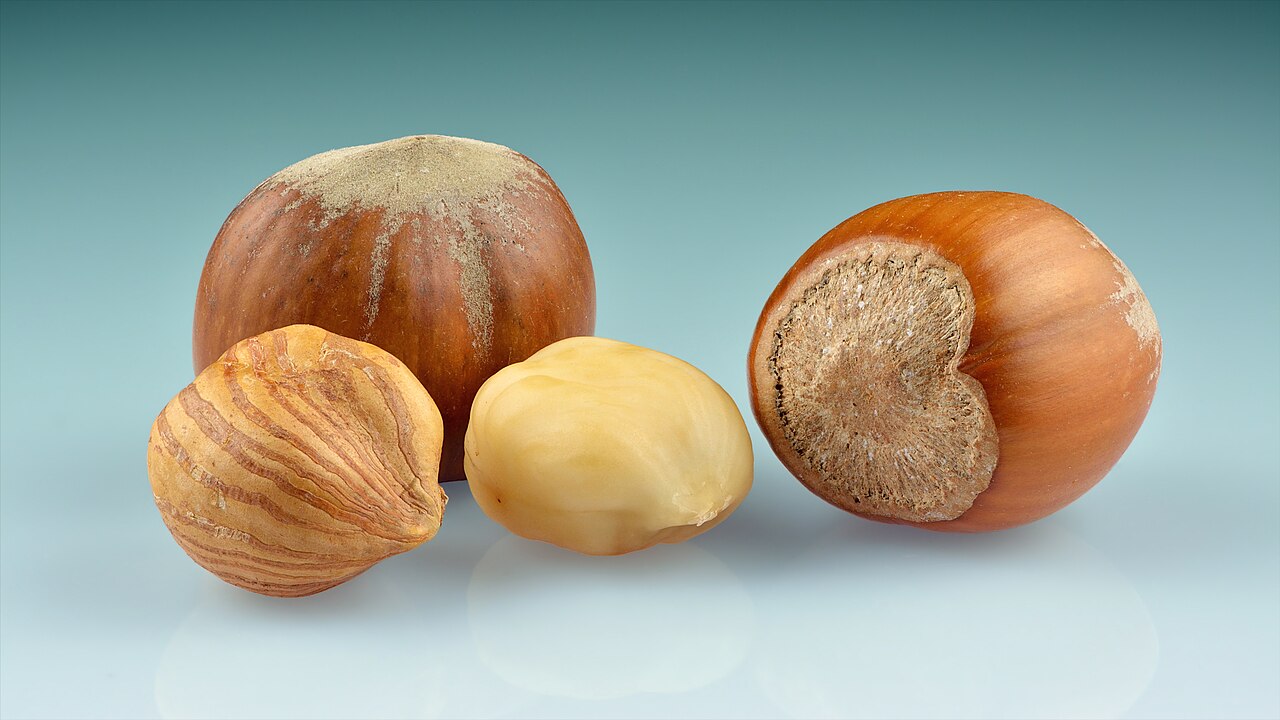
| Fruit weight | 2.2–2.6 g |
| Fruit shape | Spherical |
| Shell | Thin to medium thickness, light brown, with medium presence of stripes |
| Kernel extraction rate | 46–50 % (HR sources 45.5–47 %; some 49–54 %) |
| Industrial extraction rate | ~45.6 % |
| Kernel weight | ~1.17 g |
| Kernel shape | Spherical to short-cylindrical, medium fibrous |
| Kernel diameter | ~11–13 mm |
| Pellicle removal after roasting | Very high |
How high is the extraction rate really? What about "up to 58%"
An earlier text cited an extraction rate of "up to ~58% for clones". This data cannot be confirmed from the most reliable sources and should be nuanced here:
- Official label Nocciola Piemonte PGI (Italian sources, incl. Italian Wikipedia and consortium) cites an extraction rate (sgusciatura) of 46–50% thanks to the thin shell.
- Croatian professional literature (Miljković; thesis PBF, 2022.) cites 45.5–47% for the same cultivar, with an average kernel weight of 1.17 g.
- One Croatian review (CORE, 2018.) cites a wider range of 49–54%, which is likely the highest reliably documented upper limit.
- Clone selection indeed increases extraction rate and uniformity, but published values for selected Piedmontese clones still remain in the range of ~50%, not 58%.
Conclusion: realistically expect ~46–50% kernel extraction rate (exceptionally up to ~54% under favorable conditions/years). Treat the figure "up to 58%" as unconfirmed until supported by a specific source citing the clone; it is most likely a confusion with an industrial indicator or a single, non-repeatable value.
The key advantage of this cultivar is almost complete pellicle (perisperm) removal after roasting — a property that directly and positively affects the organoleptic properties of the roasted product. This is exactly why the processing industry ranks it among the best industrial cultivars in the world: after toasting, it gives an excellent taste and aroma, and the thin skin separates well. On the other hand, the cultivar is sensitive to mites.
Processing suitability
Sensory panels consistently award it the highest scores for pleasantness and intensity of smell, confirming its aromatic value. Literature emphasizes:
- Excellent for producing roasted (toasted) kernels — this is its primary processing purpose.
- Less suitable for direct (table) consumption due to morphological and aromatic properties of the fruit that come to the fore only after roasting.
In other words, the full potential of the cultivar is released only in processing, not on the table — which for an industrial producer is actually an advantage, as it targets the processing channel with the highest added value.
Clone selection
Due to the economic importance of the cultivar, programs for micropropagation and clone selection have been launched in Italy. The University of Turin (DISAFA), in collaboration with CReSO, has conducted over 20 years of clone selection, from which clones UNITO MT5, UNITO AD17, and UNITO PD6 emerged, improving the cultivar in terms of quality, productivity, and sgusciatura extraction rate. Earlier programs (e.g., "Corinnova", TG29-type clones) provided certified planting material through Piedmontese nurseries. RAPD analyses of earlier selections showed genetic uniformity within clones (trueness-to-type), i.e., selected material and cultivar authenticity.
For the producer, this means that when purchasing seedlings, it is worth asking for certified, health-checked material of a known clone, as extraction rate and uniformity vary among clones.
Tonda di Giffoni
Origin and Status
Tonda di Giffoni is an Italian cultivar originating from Giffoni Valle Piana in Campania, arising from selection within a natural hazelnut population. It is protected under the geographical indication "Nocciola di Giffoni" (PGI). Typical of the Mediterranean region, it adapts very well to areas that are not classic hazelnut-growing zones—unlike Tonda Gentile delle Langhe. Due to this adaptability, consistent cropping, and early harvest, it has become one of the most widespread reference industrial cultivars and a frequent choice for new orchards across Europe (it is also established in Spain and France). In some French organic orchards, it is planned as the main cultivar, comprising up to 70% of the trees.
Tree and Orchard Behavior
The cultivar develops moderately vigorous trees/shrubs with an intermediate canopy habitus and does not produce excessive shoots. It enters the productive phase early and bears regularly and very well—the combination of early bearing and stability makes it particularly attractive economically. Flowering is classically protandrous (with the previously described location-dependent variability of dichogamy). The cultivar is self-incompatible (self-sterile) and therefore requires pollinizers.
Pollinizers. Literature cites Tonda Gentile Romana, Mortarella (Mortadella), Nocchione, and Tonda Gentile delle Langhe as good pollinizers. Tonda di Giffoni itself is a good pollinizer for a number of other cultivars.
Early harvest as an agronomic advantage. Early ripening (late August) allows harvesting during a dry period, reducing the risk of fruit contamination and spoilage due to rain. Additionally, the earlier development of a relatively thick shell (~1.3 mm) contributes to resistance against the hazelnut weevil (balanin), as the ripe fruit becomes harder to attack. The cultivar is described as slightly sensitive to mites (phytoptus) and resistant to bacterial blight—important advantages in integrated and organic production. However, Croatian literature notes that it is sensitive to late frost and mites, so its resistance should be considered relative.
Fruit and Kernel
| Parameter | Value (approximate) |
|---|---|
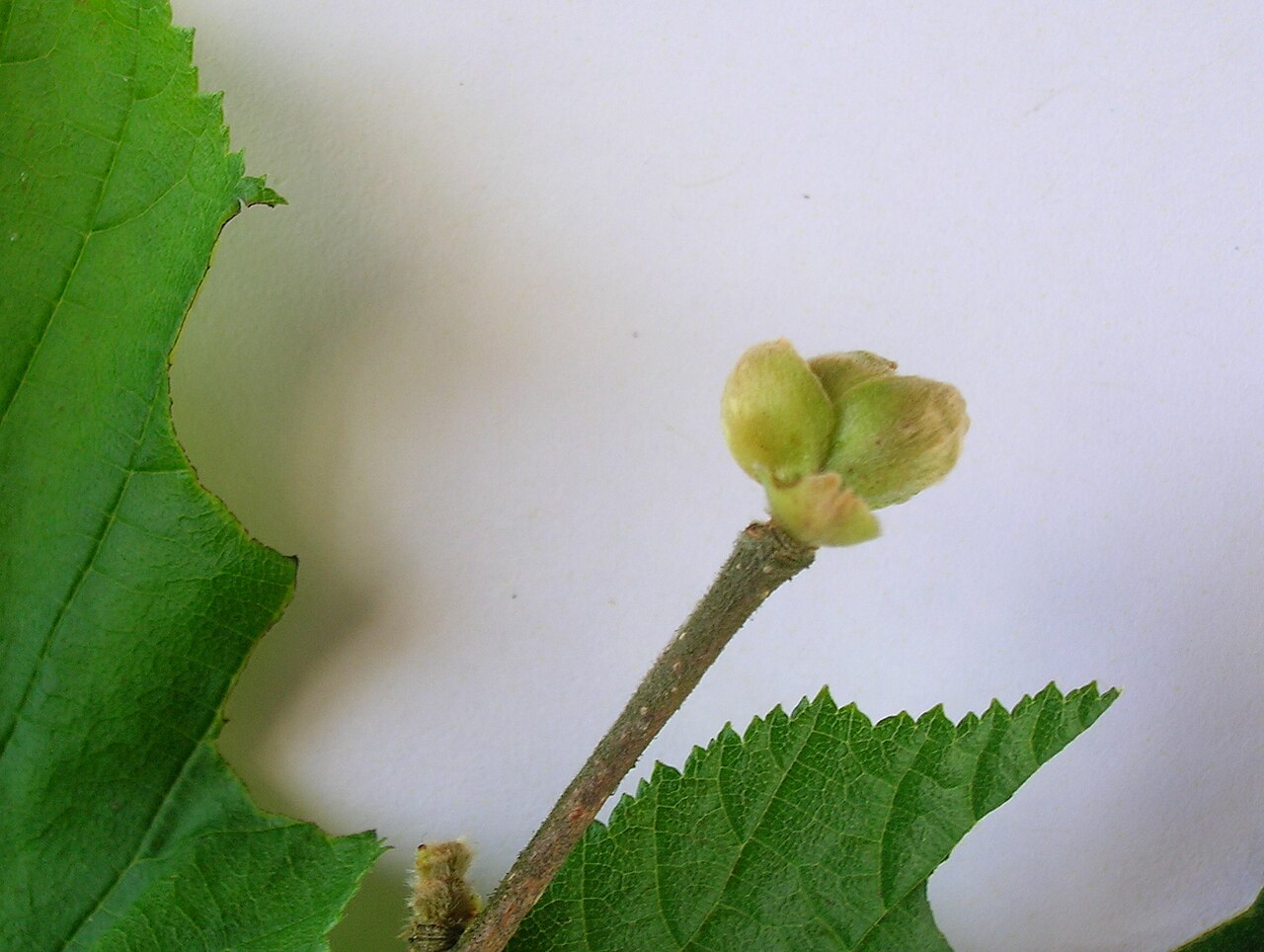
| Fruit weight | 2.0–2.5 g (some sources up to ~3.4 g) |
| Fruit shape | roundish |
| Shell | medium-thin, chestnut-brown, with two darker transverse stripes |
| Shell thickness | ~1.2–1.3 mm |
| Kernel weight | ~1.2 g |
| Kernel ratio | 43–47% (HR sources ~46%, some 46–48%) |
| Shellability after roasting | very good (skin separates well) |
The husk is longer than the fruit, but ripe fruits drop easily from the husk, facilitating (including mechanized) harvesting. The kernel is small, very white, firm, and aromatic, and the skin separates well during roasting.
Suitability for Processing
Tonda di Giffoni produces stable fruits with optimal organoleptic properties, highly valued and sought after in the confectionery industry—especially for chocolate and creams. Sensory panels award it the highest scores for aroma (alongside Tonda Gentile delle Langhe). The fruit can be valorized as both table and processing nuts, providing flexibility in marketing. High and consistent yields, combined with good quality of both kernel and fruit, are the main reasons for its popularity in new orchards.
Yield and Planting Density
Although Tonda di Giffoni is known as a high-yielding cultivar, yield is highly dependent on the environment—in some areas, it has not performed well, confirming the importance of matching the cultivar to the pedoclimatic conditions of the site. Trials with high-density planting and appropriate rootstocks show significant shifts:
| System | Density | Cumulative Yield (approximate) |
|---|---|---|
| Tonda di Giffoni + RST4 rootstock | 5 × 1 m | ~398 kg/ha |
| Tonda di Giffoni + RST4 rootstock | 5 × 1.5 m | ~634 kg/ha |
Figures come from high-density trials (Chile/FIA) and exceed the set target (~375 kg/ha) under these conditions. Yields in your orchard depend on orchard age, rootstock, irrigation, fertilization, and climate, and cannot be directly mapped.
For mechanized harvesting, an approximate figure from Italian practice: one harvester machine per ~100 ha of orchard, with a mechanical blower and several manual blowers per machine, assuming ~30 days of harvesting.
Where to Plant: Altitude and Aspect
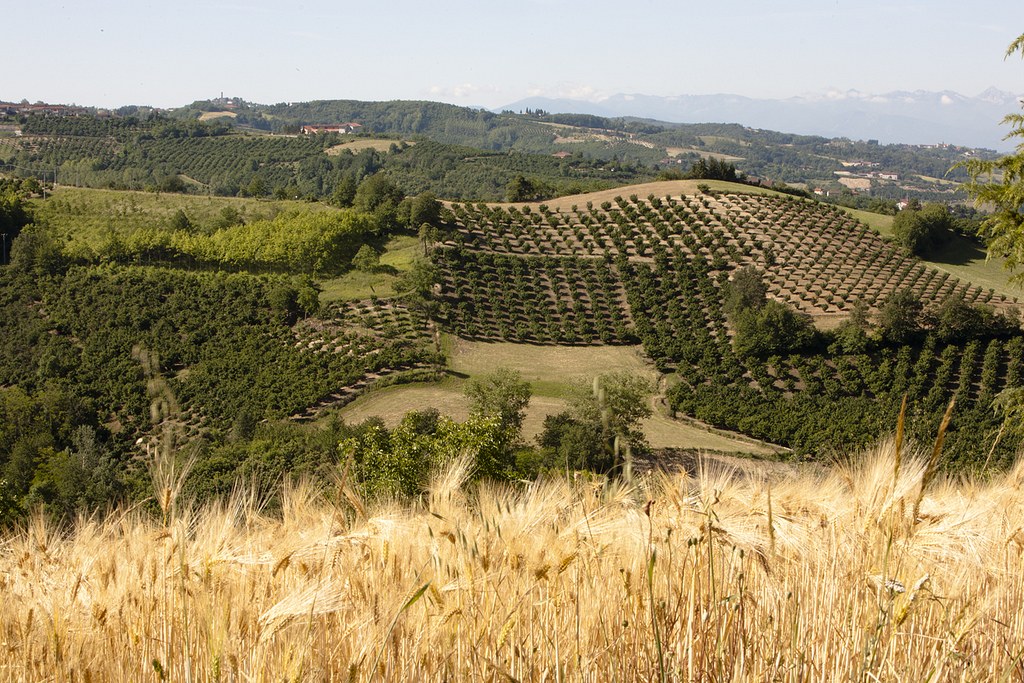
Hazelnut is a Mediterranean crop and has a clear altitude limit that applies to both of these cultivars. Approximate limits from literature:
| Conditions / Climate | Recommended Altitude | Note |
|---|---|---|
| General recommendation (depending on latitude) | 200–500 m | optimal commercial range |
| Moderately continental climate (e.g., most of continental HR) | up to ~600 m | above this, frost risk increases and ripening is poorer |
| Warmer/southern areas | up to ~800 m | with good yields |
| Croatia, practical boundary values | ~140 to 600 m | good sites above ~140 m with appropriate relief |
| Lower limit near the coast | not below ~20 m | sea air (salt) damages leaves and organs |
Although cultivated hazelnut varieties can vegetate at much higher altitudes (even up to ~1500 m), economically viable production under our conditions is maintained within the range of ~140–600 m. The Italian designation Nocciola Piemonte specifies a range of 150–750 m for TGdL, corresponding to the warmer, native area of that cultivar.
Aspect is more important than altitude alone. Due to the very early flowering of both cultivars and sensitivity to late frost:
- Avoid frost pockets, depressions, and basins where cold air and fog settle; ensure air drainage (gentle slope of 3–10%).
- Hazelnut is a heliophile—choose sunny, well-drained sites; in warmer regions, north/northeast aspects are favorable, while in cooler regions, northeast, northwest, and west aspects are preferred.
- Proximity to water bodies and forest areas is desirable (they moderate temperature fluctuations). | Soil: deep, well-drained, sandy-loam to loam, pH 6.0–8.0, with adequate precipitation (ideally 800–1200 mm/year, at least ~350–400 mm during the growing season) or irrigation.
Tonda di Giffoni and Tonda Gentile delle Langhe in the Croatian Cultivar List
Status in Croatia
The leading cultivars in Croatia are Istarski duguljasti (native cultivar), Rimski, and Haleški, which make up the largest share of orchards. Tonda di Giffoni, Tonda Gentile delle Langhe, and Tonda Gentile Romana are currently less represented, but:
- Tonda di Giffoni is proposed for cultivation in the group of main cultivars in Croatia and stands out as promising (e.g., at the trial site of the Institute for Fruit Growing in Donja Zelina, alongside Tonda Gentile Romana, TGdL, Haleški, and Fertile de Coutard).
- Tonda Gentile delle Langhe remains supplementary/low-representation due to its tie to the Piedmont terroir and the risk of poor cropping outside of it.
Recommended Cultivar Proportions
| Cultivar Element | Approximate Share | Source / Context |
|---|---|---|
| Main cultivar (e.g., Tonda di Giffoni) | dominant; individually up to ~43% (Spanish practice), up to 70% (French organic orchards) | never the sole cultivar |
| Pollinizers — traditional hazelnut-growing areas | 8–10% of trees | Italian practice; Nocciola di Giffoni IGP disciplinary allows up to 10% other cultivars |
| Pollinizers — areas without hazelnut tradition | up to ~20% | higher share compensates for uncertain pollination |
| Upper limit of pollinizers (Spanish experience) | no more than ~25% | above this, yield of the main cultivar is lost |
The disciplinary of the Nocciola di Giffoni IGP allows the presence of cultivars other than Tonda di Giffoni in up to 10%, with a recommended pollinizer share of 8–10% of the main cultivar's trees—this is a good guideline for orchards outside Italy targeting a "Giffoni-style" cultivar mix.
Practical arrangement. Place pollinizers at a distance of up to ~30 m from the main cultivar (although wind can carry pollen up to 1 km, better results are achieved at shorter distances). Plan for 2–3 pollinizers with staggered flowering to cover annual shifts in dichogamy.
Comparison and Selection: Which Cultivar for Which Orchard?
Both cultivars are self-sterile, early-flowering, and thus sensitive to late frost; both produce high-quality kernels with excellent shellability and are primarily processing-oriented. The differences that decide in practice:
- Terroir and adaptability. Tonda Gentile delle Langhe delivers peak results almost exclusively in Piedmont and similar conditions; outside of this, it is unpredictable and often poorly cropping. Tonda di Giffoni is much more adaptable and a safer choice for orchards outside classic areas—including much of Croatia, where it is recommended in the group of main cultivars.
- Cropping and economics. Tonda di Giffoni enters bearing earlier and crops more regularly, shortening the return on investment. Tonda Gentile delle Langhe commands a premium price (PGI, reputation in high-end confectionery), but with higher agronomic risk, lower productivity outside its native area, and a tendency to alternate bearing.
- Purpose. Tonda Gentile delle Langhe targets the processing peak exclusively (roasting), while Tonda di Giffoni offers both processing and (conditional) table nut valorization.
- Health resistance. Tonda di Giffoni has recorded advantages (resistance to bacterial blight, lower sensitivity to phytoptus, thicker shell against balanin), making it easier to manage in integrated and organic production; both cultivars are sensitive to mites.
Practical Recommendations
- Never plant only one cultivar. Both are self-sterile; plan for 2–3 mutually compatible cultivars and align flowering overlap—since dichogamy is location-variable, aim for staggered flowering of pollinizers, not just average alignment.
- Pollinizer share: approximately 8–10% in areas with hazelnut growing tradition, and up to ~20% where hazelnuts have not been grown before; maximum ~25% total.
- Tonda di Giffoni as main cultivar: for new Croatian orchards outside classic areas, it is a safer choice; plan it as dominant (up to ~43%, exceptionally more), with several pollinizers.
- Assess the site before the cultivar. For Tonda Gentile delle Langhe, realistically expect poorer results outside Piedmont.
- Altitude and frost. Stick to ~140–600 m in continental Croatia (up to ~800 m in warmer regions); avoid frost pockets and cold basins, choose sites with good air flow.
- Planting material. Seek certified, health-checked saplings of known clones (for TGdL, e.g., UNITO MT5/AD17/PD6)—kernel ratio and uniformity vary among clones.
- High density + rootstock (e.g., RST4) can significantly boost early cumulative yields of Tonda di Giffoni, but require irrigation and intensive agrotechnics.
Common Mistakes
- Planting Tonda Gentile delle Langhe outside its terroir while expecting Piedmontese yields.
- Treating "book" protandry as guaranteed: dichogamy changes with climate and year, so a pollinizer aligned only by average may "miss" the female phase of the main cultivar.
- Neglecting pollinizers or relying on a single pollinizer.
- Assessing cultivar quality "on the table": Tonda Gentile delle Langhe shows its full potential only after roasting.
- Confusing kernel ratio (kernel share in the fruit) with industrial yield (kernel after processing/drying)—these are different indicators; this is likely where the unconfirmed figure of "up to 58%" comes from.
- Planting above the economically reasonable altitude or in a frost pocket, while expecting regular cropping.
Sources
This article is an AI-generated summary compiled from an internal hazelnut literature collection (RAG corpus) and public internet sources. The main sources used:
From the RAG corpus (hazelnut literature collection):
- Chemical composition of hazelnuts (CORE; multiple versions, 2018) — descriptions of cultivars TGdL and Tonda di Giffoni, kernel recovery (49–54 % for TGdL), intended use.
- Chemical composition of hazelnuts from the 2020 season (diploma thesis, PBF University of Zagreb, 2022) — TGdL (kernel mass 1.17 g, recovery 45.5–47 %, susceptibility to mites) and Tonda di Giffoni (fruit 2.4 g, kernel 1.2 g, recovery 46 %, recommended in the group of main cultivars in HR).
- Stan Adelina — Research regarding floral biology of hazelnut (Fruit Growing Research, Vol. XL, 2024) — DOI: https://doi.org/10.33045/fgr.v40.2024.03 — flowering dates and dichogamy type: TGdL protandrous, Tonda di Giffoni protogynous under the given conditions; dichogamy depends on climate and year.
- Vujević et al. (2014/2018) — Flowering period of hazelnut cultivars and occurrence of dichogamy in the agroecological conditions of continental Croatia / Status and importance of hazelnut cultivation in the Republic of Croatia — protandry/protogyny/homogamy depend on location and meteorological conditions, not just on the cultivar (orchard Orahovica).
- Frontiers in Plant Science (2021) — DOI: https://doi.org/10.3389/fpls.2021.749394 and https://doi.org/10.3389/fpls.2021.785015 — early-maturing cultivars (TGdL) are labile in dichogamy; the range of dichogamy depends on genotype and climate; protandry and self-incompatibility.
- Impact of low temperatures on frost damage (2021) and Hazelnut Cultivation Guide (savjetodavna.mps.hr, 2024) — altitude (200–500 m, up to 600/800 m), exposure, soil, pH, precipitation; leading and prospective cultivars in HR.
- Mechanization in hazelnut production and processing (Minas-Zrno) (2021) and From planting to hazelnut harvest (savjetodavna.mps.hr, 2017) — altitude range 140–600 m, climatic conditions.
- Investment study for the production of innovative hazelnut-based products (CORE, 2019) — boundary altitudes in HR (140–600 m).
- Evaluation of 'Tonda Gentile delle Langhe' clones (Acta Horticulturae / ISHS, 2001) — clonal selection, RAPD trueness-to-type, recovery as a key trait for processing.
- Atlante dei fruttiferi autoctoni italiani — Piemonte (2015) and Nocciolo speciale (Tecniche Nuove / Edagricole, 2017) — clones and clonal selection of TGdL.
- Università degli Studi della Basilicata (2022) — description of TGdL (ZOZP/PGI, pollinizers Camponica and Tonda Gentile Romana, recovery 46–48 %).
- PDF Economics and establishment of hazelnut orchards (2021) — TGdL: productivity up to ~38 kg/tree, alternate bearing, variable dichogamy (homogamy/protandry/protogyny).
- Mejoramiento de competitividad del cultivo de avellano europeo (FIA, Chile, 2020) — Tonda di Giffoni + RST4 rootstock in high-density planting, cumulative yields.
- Réhabilitation d'une exploitation en plantation de noisetier en agriculture biologique (2019) — Tonda di Giffoni as the main cultivar (up to 70 %), early harvest, resistance to blight and phytophthora.
- Good hazelnut yield depends on good pollinizers (2015) — pollinizers for TGdL and Tondu di Giffoni.
- Hazelnut Cultivation (book, 2017) — proportion of pollinizer cultivars (up to 25 %, maximum 43 % one cultivar), recoveries, intended use.
- Status and importance of hazelnut cultivation in the Republic of Croatia (2018) and trial site Donja Zelina — Tonda di Giffoni as a prospective cultivar.
- Hazelnut — Vrtlarica.hr — concise descriptions of both cultivars.
Public internet sources:
- Nocciola del Piemonte — Wikipedia (IT) — recovery 46–50 %, altitude 150–750 m, yield 20–30 q/ha, clones UNITO MT5/AD17/PD6.
- Consorzio Tutela Nocciola Piemonte IGP
- Disciplinare di produzione Nocciola di Giffoni IGP (Regione Campania) — allowed up to 10 % other cultivars, pollinizers 8–10 %.
- coltivarenocciole.it — Varietà e impollinatura — Tonda di Giffoni as the main cultivar, pollinators.
- Battistini Vivai — Tonda Gentile delle Langhe
- Vivaio Traversa Lorenzo — Hazelnut varieties
- Rasadnik AgroMax — Tonda Gentile delle Langhe
- Evaluation of 'Tonda di Giffoni' hazelnut clones — ScienceDirect
- One Green World — Tonda di Giffoni Hazelnut
- Burnt Ridge Nursery — Tonda di Giffoni
- Combined Spraying of Boron and Zinc … cv. Tonda di Giffoni (PMC)
- Rutgers NJAES E368 — Choosing Plants for a Hazelnut Orchard
- Hazelnut Cultivation Guide — savjetodavna.mps.hr