Is hazelnut cultivation profitable? Realistic yield and income expectations
Content generated by artificial intelligence — verify before application
This article was automatically compiled from a collection of hazelnut literature using artificial intelligence and may contain errors or outdated data. It serves as a starting point for further research, not as professional advice. Dosages, products, and timelines are informative and depend on the cultivar, location, and applicable regulations — always consult an advisory service and official sources before application.
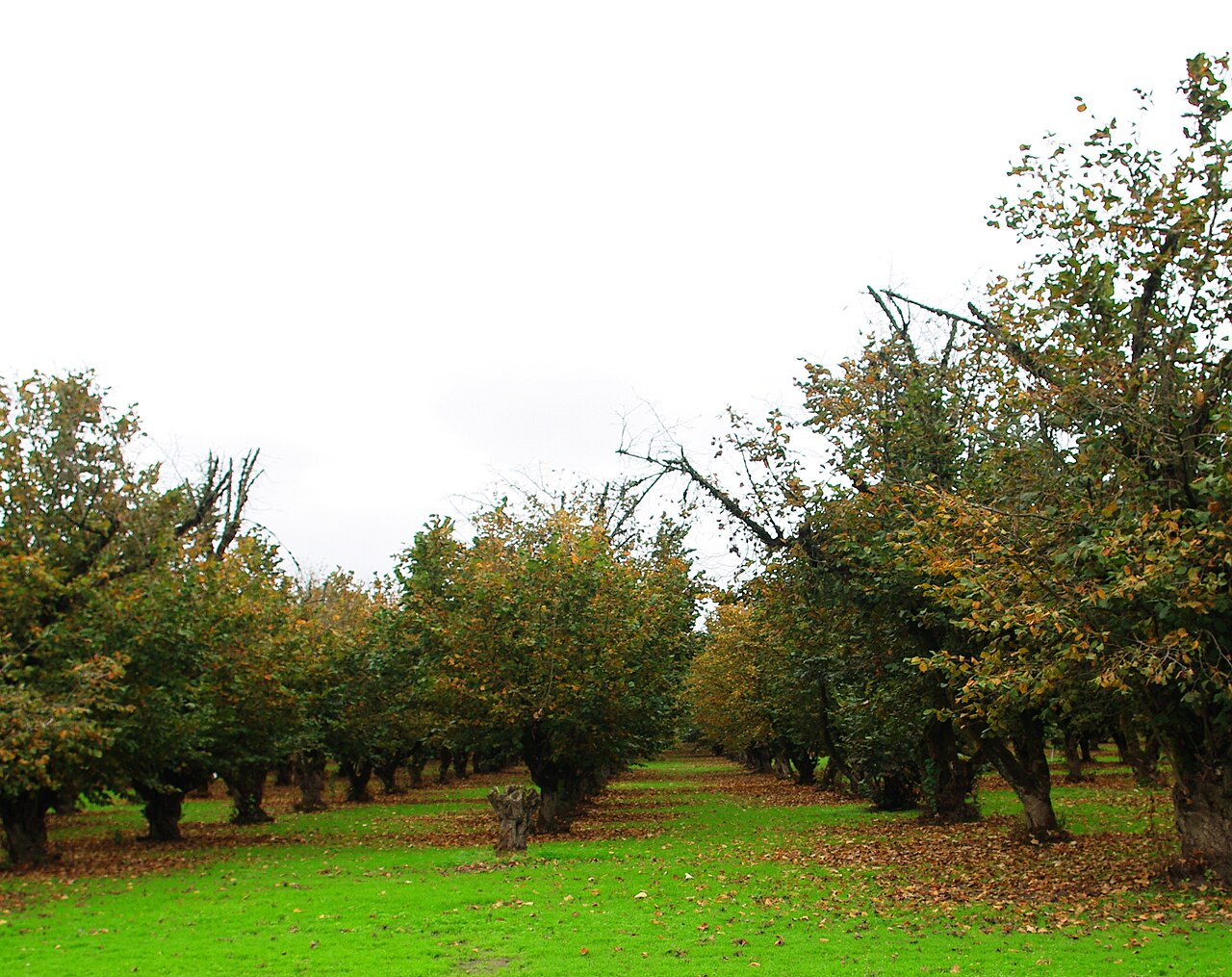
In recent years, hazelnut (Corylus avellana) cultivation in Croatia has been one of the fastest-growing crops in terms of area: from about 4,000 hectares ten years ago, we have grown to nearly 8,000 hectares, with most orchards still young. The reason is simple — hazelnuts generate significantly higher income per hectare than cereals, and an orchard produces for decades. However, profitability is not guaranteed, nor is it immediate: hazelnuts require a large initial investment, take years to produce the first significant crop, and carry real risks (market prices, pests, weather). This article provides a realistic picture — when an orchard comes into production, what the yields are year by year, a rough calculation of income in euros, and the main pitfalls — so that you can make your decision based on numbers, not enthusiasm.
All figures in euros
Since Croatia adopted the euro on January 1, 2023, the official currency is the euro (€). In this article, all amounts are converted and expressed primarily in euros, with amounts in Croatian kuna (kn) provided only in parentheses where the source originates from the pre-conversion period. The fixed conversion rate was 1 € = 7.53450 kn.
When does an orchard come into production: time frame
The most important fact that many underestimate is: hazelnut is not a crop for the impatient. Years pass between planting and the first fruit, and between the first fruit and full production, during which the orchard only consumes resources and does not generate income.
Based on literature and practice, the following approximate timeline applies:
| Phase | Year after planting | What happens |
|---|---|---|
| Planting and rooting | 1st – 2nd | Highest investments, no income (except possibly subsidies) |
| First fruits | 3rd – 4th | Hazelnuts begin to produce, but modestly; does not cover costs |
| Growing crop | 5th – 6th | Yield increases, 4–10 kg per plant, orchard approaches profitability |
| Full production | 7th – 8th | Plant in full production; one bush/tree yields 8–12 kg |
| Stable production | 8th – 30th | Regular and abundant crop, best yields up to about the 30th year |
| Gradual decline | after 30th | Yields slowly decrease, consideration of renewal/rejuvenation |
In other words, the first fruit usually appears in the 3rd or 4th year, and full production is reached only in the 7th or 8th year after planting. Some sources cite an even later first significant crop (6th–7th year), depending on the cultivar, training system, and care. Foreign sources (Oregon, USA) speak of positive cash flow only from the fifth year and cumulative positive investment around the eighth year — which aligns well with Croatian experience.
The lifespan of an orchard is long: intensive cultivars produce for 50–80 years (wild hazelnut for over 100), and they bear fruit regularly for several decades. It is precisely this longevity that makes the investment profitable in the long term — but only after surviving the "lean" first five to seven years. A detailed overview of the payback period can be found in the article Return on Investment and Profitability.
What are the yields per hectare
Yield depends on the cultivar, planting density, training system, orchard age, and agronomy. Figures from literature vary, so they should be read as a range, not a promise.
Per individual plant:
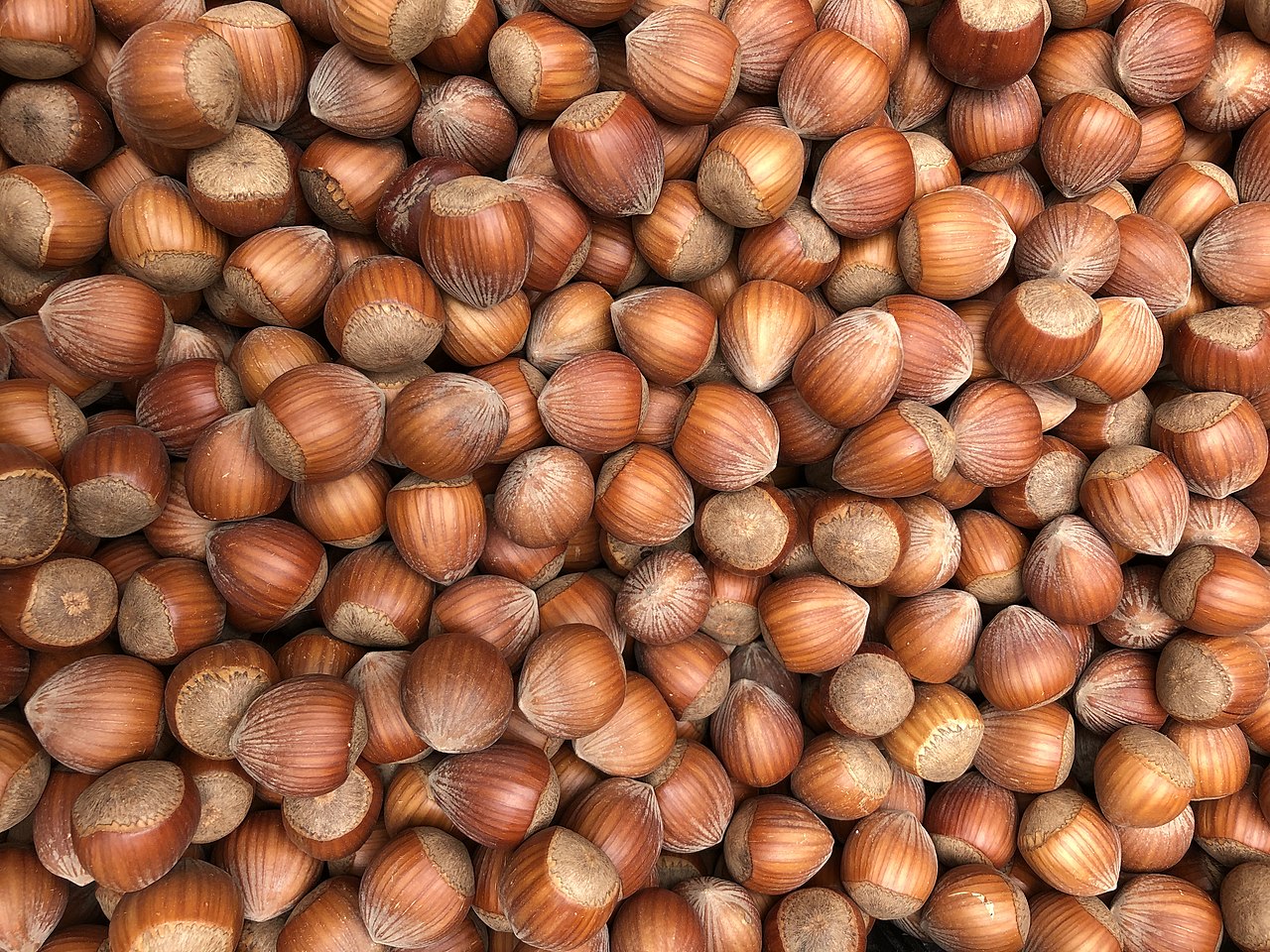
- in full production, one tree/bush yields 8–12 kg of nuts in shell (some sources cite 5–8 kg)
- younger plants in growing production: 4–10 kg per plant (5th–7th year)
Per hectare:
| Source / estimate | Yield (in shell) |
|---|---|
| Classic literature (range depends on agronomy) | 2.2 – 3.6 t/ha |
| Wide range (young to mature orchards) | 1 – 3 t/ha |
| Croatian practice, good locations | 2.5 – 3.5 t/ha |
| Economic calculation (3rd year, modest start) | ~2.0 t/ha |
As a working assumption for a mature orchard in full production, it is reasonable to calculate about 2.5–3 t/ha in shell. Very good, well-managed orchards on favorable locations can reach 3.5 t/ha, but this is not the average to count on in a business plan. For comparison, the Croatian average yield is significantly lower than the potential — a large portion of orchards are still young or just entering production.
Shell vs. kernel — recovery rate
Prices and yields are often confused because trade occurs both with nuts in shell and kernels. The recovery rate (proportion of kernel in the nut) depends on the cultivar and is approximately 40–50 % — the rest is shell. A practical example: an orchard of Istrian long hazelnut yielded 2.3 t in shell, which with a recovery rate of ~40 % meant about 900 kg of kernel. When comparing prices and yields, always check whether it refers to shell or kernel — the difference is almost double. Buyers (e.g., PP Orahovica) purchase fruit reduced to standard quality with a minimum recovery rate of 40 %, moisture of 7 %, and impurities up to 1 %.
The global market dictates the price
The price of hazelnuts in Croatia is almost entirely linked to the global market, which is extremely concentrated. Turkey is by far the largest producer: in an average year, it harvests 600,000–700,000 t and accounts for about 60–70 % of global production (≈ 61 % in the record year 2024, and in "full" years close to two-thirds of global supply). Turkey also holds about 80 % of global exports. Italy, USA (Oregon), Azerbaijan, Georgia, Chile, and China follow; Croatia is only around 15th place in the world.
The consequence of this concentration: one bad season in Turkey raises prices worldwide. In spring 2025, strong frosts (down to −15 °C) and summer droughts devastated the Turkish harvest — estimates spoke of a drop of up to ~36 % (to ~500,000 t). The result was a sharp spike in kernel prices on the global market: natural kernel (11–13 mm) for delivery to Europe increased during 2025 from ~8 €/kg to 10–13 €/kg. This volatility is a double-edged sword: a Croatian producer can do well in such a year, but a calculation built on high prices easily becomes unprofitable as soon as the Turkish crop recovers.
You can find a deeper analysis in the articles Global Hazelnut Market and Price Formation and Price Risk.
Rough income calculation
An idealized calculation should be taken with reserve — hazelnut prices are variable and dictated by the global market (see above). Nevertheless, the framework helps.
Initial assumptions (informative):
- yield of a mature orchard: ~2.5 t/ha in shell
- purchase price in shell: ~2.45–2.65 €/kg (18.50–20.00 kn/kg) — official purchase conditions of PP Orahovica for the 2021/2022 crop (Istrian/mixed vs. Roman/Italian cultivars)
- the actually realized price after deducting transport and quality standards could be lower — e.g., ~2.0 €/kg when sold to a wholesaler (recorded ~1.99 €/kg in one calculation for the 2021 crop)
Gross income from sales (mature orchard, 2.5 t/ha):
| Item | Value |
|---|---|
| Yield | 2,500 kg/ha |
| Price (lower) ~2.45 €/kg (18.50 kn) | ≈ 6,140 €/ha (≈ 46,250 kn) |
| Price (upper) ~2.65 €/kg (20.00 kn) | ≈ 6,640 €/ha (≈ 50,000 kn) |
One published economic estimate calculates from the 3rd year with a yield of 2 t/ha and a price of ~2.65 €/kg (20 kn/kg), resulting in ≈ 5,300 €/ha (40,000 kn/ha) gross income — but this is an optimistic assumption of early production. It is more realistic that this magnitude is reached and exceeded only in full production.
What remains (net): after deducting costs for harvesting, drying, protection, fertilization, and labor, a documented calculation from an OPG (family farm) (2021 crop) shows: sales income of 1,200 kg × ~1.99 € = 2,389.94 €, with subsidies total income 3,451.72 €/ha, costs 2,588.04 €/ha, and profit 863.68 €/ha (cost price 2.15 €/kg, efficiency 1.33, profitability 33.4 %). Older calculations for a mature continental orchard (2 t/ha) show a profit of the order of ~820 €/ha (6,193 kn/ha). Foreign data for mature orchards give a gross margin of approximately 2,500–4,400 €/ha (average ~3,500 €/ha) — but in countries with different cost structures and yields. See the detailed calculation by item in Operational Maintenance Costs and Cost Price and Break-even Point per Kilogram.
First years = loss
Economic analyses unanimously show that income is generated only from the 3rd year, so producers necessarily operate at a loss for the first two to three years. Total costs for establishing and maintaining the orchard for the first three years are estimated at ~4,430 €/ha (33,394 kn/ha). In the first year, costs per hectare exceed income; in one Croatian study, the deficit amounted to ≈ −218 €/ha (−1,641.48 kn/ha), and subsidies covered 82.59 % of total costs in the first year. Without subsidies for the first years, the calculation is even tougher.
Sensitivity table: income depending on price and yield
Since the result crucially depends on two uncertain parameters — purchase price and yield — we present a matrix of gross income per hectare (nuts in shell). The figures are informative and do not include costs or subsidies.
| Yield \ Price | 2.0 €/kg (low) | 2.5 €/kg (medium) | 3.5 €/kg (high) | 5.0 €/kg (peak cycle) |
|---|---|---|---|---|
| 1.5 t/ha (young/poor orchard) | 3,000 €/ha | 3,750 €/ha | 5,250 €/ha | 7,500 €/ha |
| 2.5 t/ha (realistic full production) | 5,000 €/ha | 6,250 €/ha | 8,750 €/ha | 12,500 €/ha |
| 3.5 t/ha (very good orchard) | 7,000 €/ha | 8,750 €/ha | 12,250 €/ha | 17,500 €/ha |
How to read the table: with annual operational costs for a mature orchard of approximately 2,500–3,500 €/ha, the fields in the upper left corner (low price × low yield) mean barely covering costs or a loss, while the right columns (price spikes like in 2025) provide significant profit. A conservative business plan relies on the left half of the table. More on price risk and protection against it in Price Formation and Price Risk and Business Plan and Risk Management.
The Role of Subsidies
Subsidies are an important, sometimes decisive part of the economic calculation — especially during the period while the orchard is not yet bearing. The amounts and rules changed significantly with the transition to the Strategic Plan of the CAP 2023–2027, so the old amounts from the Rural Development Programme 2014–2020 are no longer valid.
- Minimum density: a minimum of 300 seedlings/ha is required for the subsidy.
- Organic farming (Intervention 70.04 in the SP CAP 2023–2027): hazelnut and walnut are classified as perennial crops, for which the unit subsidy amount is:
- Transition to organic farming (EKOP): for the first 10 ha 480 €/ha + an additional 60 €/ha, for the remaining area 480 €/ha
- Maintenance of organic farming (EKO): for the first 5 ha 480 €/ha + an additional 60 €/ha, for the remaining area 480 €/ha
- Note: older amounts (EKOP ~750.74 €/ha, EKO ~625.62 €/ha) date back to the RDP 2014–2020 period and are no longer relevant — use the current Year’s Regulation on the implementation of direct aid and IACS measures of rural development.
- Conditions: minimum farm area 0.5 ha, minimum ARKOD parcel 0.05 ha.
- Areas declared for organic farming are not eligible for the production-linked aid for fruit.
- Hazelnut is otherwise linked to a number of other interventions (crop diversification, grassing of permanent crops, extensive maintenance, etc.).
In the documented calculation for the 2021 crop, revenue from sales (1,200 kg × ~1.99 €) amounted to ~2,390 €/ha, and additional incentives of ~1,062 €/ha — meaning subsidies accounted for almost one-third of total revenue (3,452 €/ha). This shows how much subsidies can shift the result, but also that relying exclusively on them (especially in organic farming) means that revenue comes mostly from subsidies, not from the market.
Conventional vs. Organic
Available sources indicate that conventional production is still more profitable than organic when looking at market revenue, while in organic farming, revenue comes predominantly through subsidies. Subsidy amounts and conditions change almost every year — always check the current calls for applications with the Agency for Agricultural Payments and advisory services.
Costs to Include
The largest cost is establishing the orchard in the first year. Typical items from calculations (1 ha, indicative; amounts converted to euros):
| Item | Amount |
|---|---|
| Seedlings (~500 pcs × ~1.59 €) | ~795 € |
| Soil preparation: deep loosening | ~398 € |
| Liming (~500 kg) | ~332 € |
| Organic fertilizer (manure ~35 t) and mineral (NPK 8-26-26 ~700 kg) | ameliorative fertilization |
| Delivery of seedlings, loading/unloading, fertilizer distribution, leveling | labor and mechanization |
| Total before/during planting | ~2,222 €/ha |
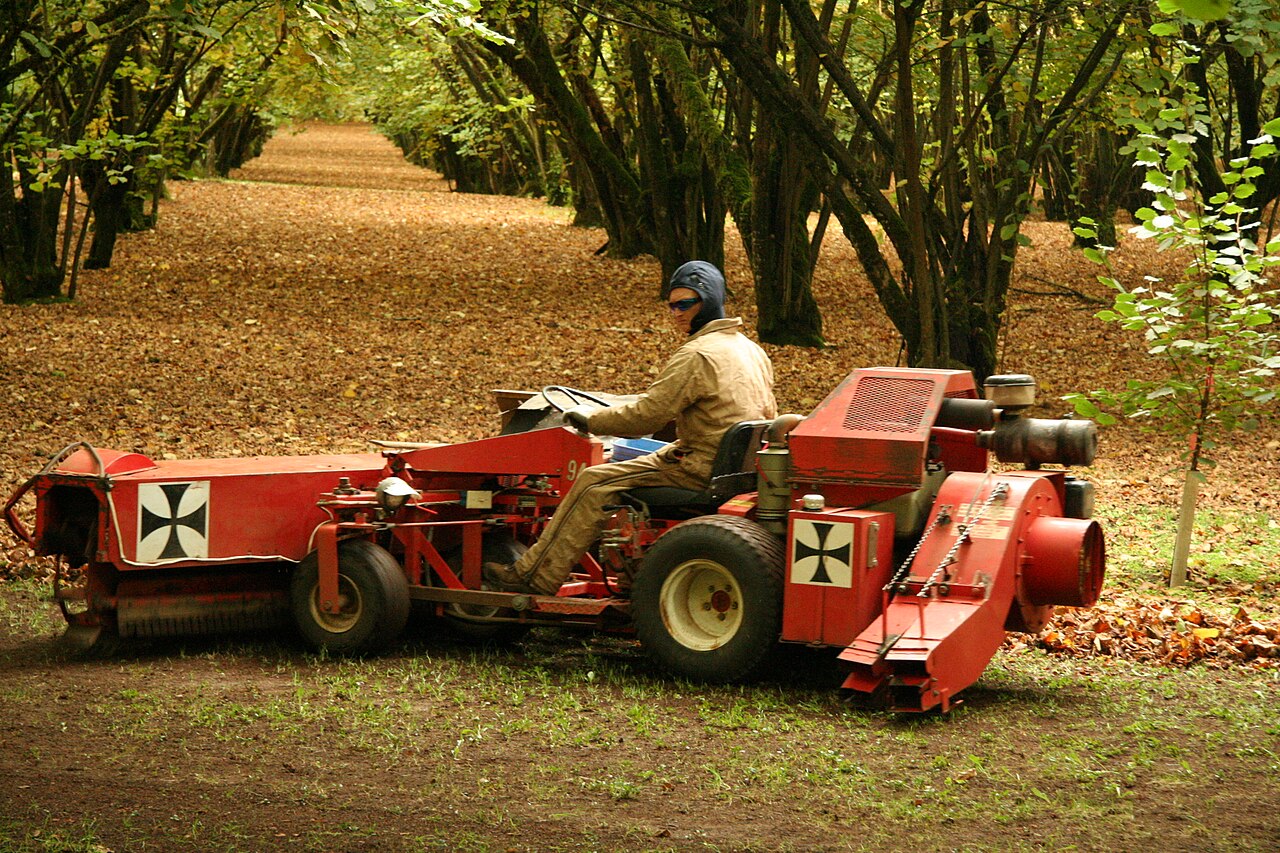
These are added to permanent annual costs: protection (hazelnut weevil, hazelnut eriophyid mite, fungal diseases), fertilization, mowing/cultivation, irrigation where needed, and later harvesting and drying (the fruit must be dried from 30–35% moisture to ~7–10% at ~40 °C). In the published calculation for a mature continental orchard, the largest individual annual cost items were harvesting (~760 €/ha), protection (~430 €/ha), and own mechanization (~330 €/ha). Mechanization (vacuum harvesters, shellers, processing lines) is a significant additional investment — many producers acquire it through calls for small producers. A complete overview in Cost of orchard establishment per hectare and Orchard financing: loans and leasing.
Risks and Common Mistakes
- Market price. The biggest risk. The price is dictated by the world market (Turkey ~60–70% of production); frost, drought, or yields in large countries can suddenly shift the purchase price in both directions. A calculation that "works" at 2.65 €/kg (20 kn/kg) can be loss-making if the price drops to 2.0 €/kg.
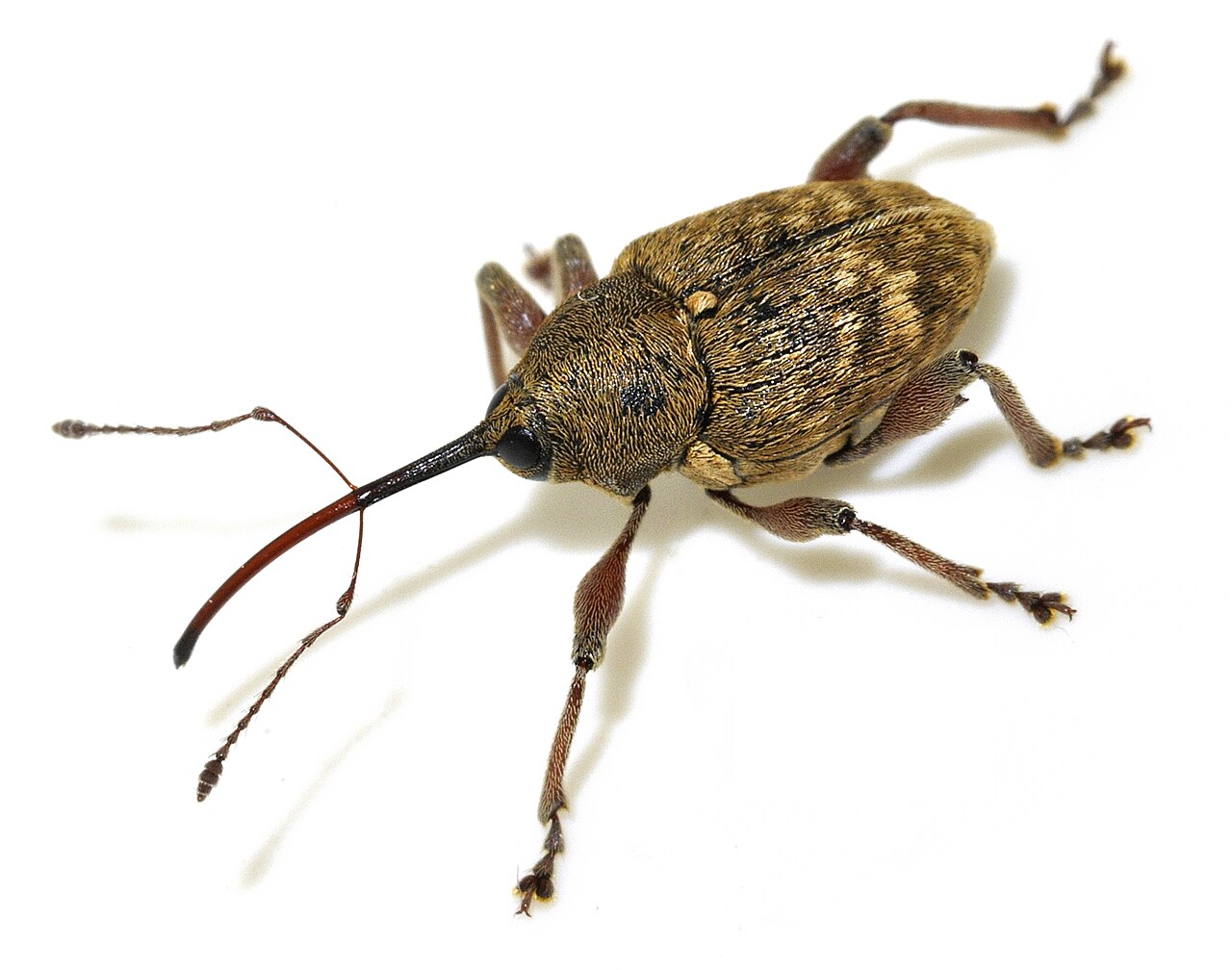
- Pests and diseases. The hazelnut weevil (wormy fruit) and hazelnut eriophyid mite are the main pests; bite sites open the door to fungal rots (Monilinia, Botrytis, Fusarium). In unfavorable (rainy) conditions, crop loss of over 50% has been recorded. Protection must be timely (e.g., mites are controlled before they close in buds).
- Overestimated early yield. A typical mistake in a business plan — counting on a full crop already in the 3rd–4th year. It is realistic that serious revenue arrives from the 5th–7th year.
- Underestimated initial capital and patience. You need to withstand several years of investment without revenue (~4,430 €/ha cumulative cost in the first three years). Without a capital reserve or additional source of income, the orchard easily gets "stuck".
- Planting too deep. A seedling planted deeper than in the nursery can stagnate for up to three years — directly delaying the onset of bearing.
- Poor location / lack of soil analysis. A soil analysis and ameliorative fertilization are mandatory before planting; the wrong choice of site is difficult and expensive to correct for a permanent orchard.
- Relying solely on subsidies. Subsidies help, but conditions and amounts change (see the transition from RDP to SP CAP); a sustainable model must be profitable in the market as well.
Practical Recommendations
- Prepare a business plan using conservative figures: yield ~2.5 t/ha at full production, price at the lower end of the range (~2.0 €//kg), first serious revenue from ~5th year — i.e., in the left part of the sensitivity table.
- Ensure a financial reserve for the first 3–5 years and, if possible, a second source of income.
- Choose proven cultivars for your climate (e.g., Istrian long-shaped, Roman in continental conditions) and mandatory pollinizers.
- Plan for mechanization and drying from the start — harvesting and drying significantly affect quality and price.
- Monitor the market and subsidies continuously; align the model (conventional/organic) with a realistic calculation, not just the subsidy amount.
- Invest in plant protection on time — crop loss from pests/rots can eat up the entire annual profit.
- Consider associating (cooperatives, producer groups) — associated producers regularly achieve better purchase prices and easier access to processing.
Conclusion
Is hazelnut profitable? Long-term — yes, with conditions. Per hectare, you can earn more than from arable crops, the orchard bears for decades, and yields are best up to about the 30th year. However, profitability comes slowly: the first two to three years are loss-making (~4,430 €/ha cumulative cost), full crop only in the 7th–8th year, and the result crucially depends on market price (dictated by Turkey with ~60–70% of world supply), protection from pests, and quality of agrotechnics. Under realistic assumptions (2.5 t/ha, ~2.0–2.5 €/kg), a well-managed mature orchard brings on the order of 800–3,500 €/ha annually net, with large deviations in both directions depending on the year. Those who enter with realistic expectations, sufficient capital, patience, and good cultivars and locations have prospects for a solid and long-lasting income. Those who count on quick profits and a full crop "in two years" will almost certainly be disappointed.
Sources
This article is an AI summary from a collection of hazelnut literature (internal RAG corpus) and public sources. Figures are indicative and depend on cultivar, location, year, and current regulations — verify them with advisory services and official sources before making a decision. Main sources used:
- Economic analysis of hazelnut production (OPG De Martini, 2021 crop) — RAG corpus (revenue 3,451.72 €, costs 2,588.04 €, profit 863.68 €, price 1.99 €/kg)
- Economic profitability of hazelnut production (2022) — RAG corpus (estimate 2 t/ha, ~2.65 €/kg; revenue from 3rd year; costs for first three years ~4,430 €/ha)
- Economic comparison of different hazelnut training systems (University of J. J. Strossmayer, 2015) — RAG corpus (profit ~820 €/ha; recovery rate 50%)
- Purchase conditions for conventional hazelnuts in shell, 2021/2022 crop — PP Orahovica (prices 18.50–20.00 kn/kg ≈ 2.45–2.65 €/kg, quality standard: moisture 7%, recovery rate min. 40%)
- Regulation on the implementation of direct agricultural aid and IACS rural development measures for 2025 — Ministry of Agriculture (intervention 70.04, perennial crops: 480 €/ha + 60 €/ha)
- Advisory material 2024, Intervention 70.04 Organic Farming — advisory service (EKOP/EKO amounts for hazelnut and walnut)
- Technological and economic characteristics of hazelnut cultivation (2018) — https://doi.org/10.46584/lm.v36i2.1141
- Chemical composition of hazelnuts / Diploma thesis, PBF UNIZG (2017/2018) — yields, bearing by year, world production (Turkey)
- Foreign trade exchange and economic efficiency of hazelnut production (2014) — RAG corpus (Turkey ~70% of world production)
- Hazelnut planting — AgroPortal.hr — https://www.agroportal.hr/vocarstvo/29701
- From planting to hazelnut harvest — Ministry of Agriculture, advisory service — https://savjetodavna.mps.hr/2017/10/24/od-sadnje-do-berbe-lijeske/
- Is hazelnut cultivation profitable? — Gospodarski list — https://gospodarski.hr/rubrike/pitanja-i-odgovori/pravni-savjeti/isplati-li-se-uzgajati-lijesku/ (subsidies, seedling density)
- Associated hazelnut growers achieve better prices — Gospodarski list — https://gospodarski.hr/rubrike/vocarstvo-rubrike/udruzeni-ljesnjikari-postizu-bolju-cijenu/
- Agricultural Market Price Information System (TISUP) — https://tisup.mps.hr/ (current purchase prices)
- 2024/2025 Hazelnut Market Forecast — Cardassilaris — https://www.cardassilaris.com/news/2024/2025-hazelnut-production-forecast-impact-on-global-market-prices (Turkey ~70% production, 82% export)
- Hazelnut Production by Country — World Population Review — https://worldpopulationreview.com/country-rankings/hazelnut-production-by-country
- Hazelnuts: the wait is over / prices reached the ceiling — Mundus Agri — https://www.mundus-agri.eu/news/hazelnuts-wait.n36051.html (kernel prices 2025, frost in Turkey)
- Orchard Economics: The Costs and Returns of Establishing and Producing Hazelnuts — Oregon State University — https://appliedecon.oregonstate.edu/sites/agscid7/files/oaeb/pdf/AEB0043.pdf
- The Economics of Hazelnut Production: Costs vs. Revenue — Hazelnut Hub — https://hazelnuthub.com/the-economics-of-hazelnut-production-costs-vs-revenue/