Fertigation: Fertilization through the irrigation system
Content generated by artificial intelligence — verify before application
This article was automatically compiled from a collection of hazelnut literature using artificial intelligence and may contain errors or outdated data. It serves as a starting point for further research, not as professional advice. Dosages, products, and timing are informative and depend on the cultivar, location, and applicable regulations — always consult an advisory service and official sources before application.
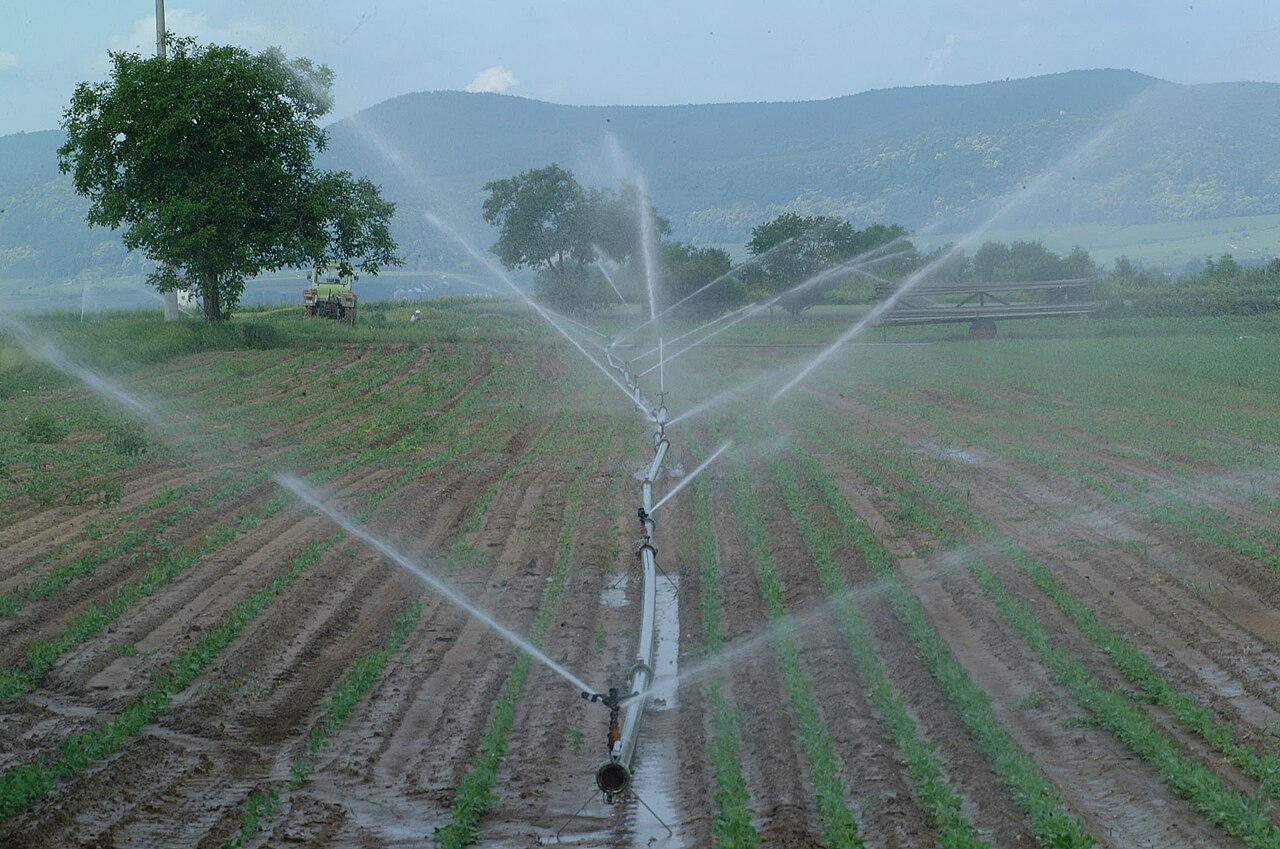
Fertigation is the simultaneous application of water and soluble fertilizers through an irrigation system, most commonly drip irrigation. Instead of spreading fertilizer once or twice a year over the entire surface and waiting for rain to incorporate it into the soil, fertigation delivers nutrients dissolved in water directly to the moist root zone in small, frequent doses, exactly when the orchard needs them. For hazelnut (Corylus avellana), this is particularly attractive: the hazelnut root system is shallow, the orchard is sensitive to drought and soil acidification, and the uptake of nitrogen and potassium strongly depends on moisture and pH in the root zone. This article explains how to set up and manage fertigation, how to dose nutrients through drip irrigation throughout the season, what to watch out for regarding fertilizer compatibility, and why fertigation is more efficient than traditional broadcasting.
Why fertigate a hazelnut orchard
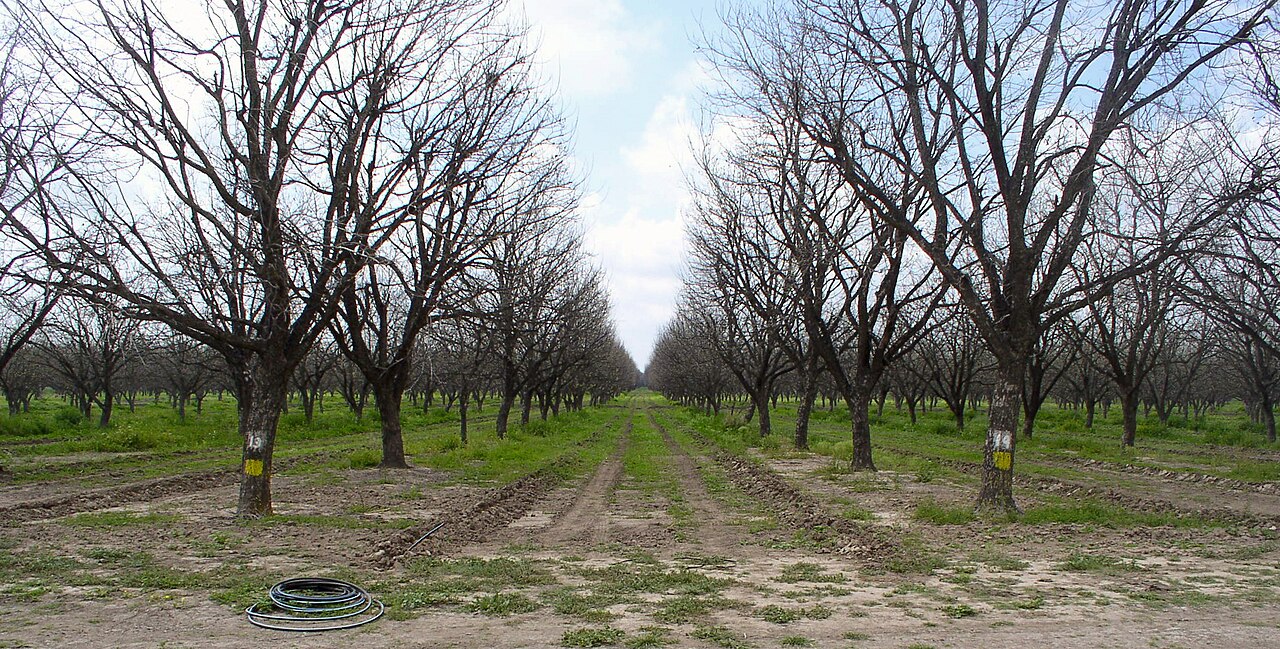
Hazelnut is very sensitive to water deficiency and requires irrigation throughout the growing season, with critical phases (June, July, August — fruit filling and development) falling precisely in the period when the soil naturally dries out. Without irrigation, the soil dries out by late June and July exactly when the fruit is filling and when nutrients should be most available — paradoxically, they are then least available. A drip system solves both problems: it delivers water and, through the same tubing, nutrients.
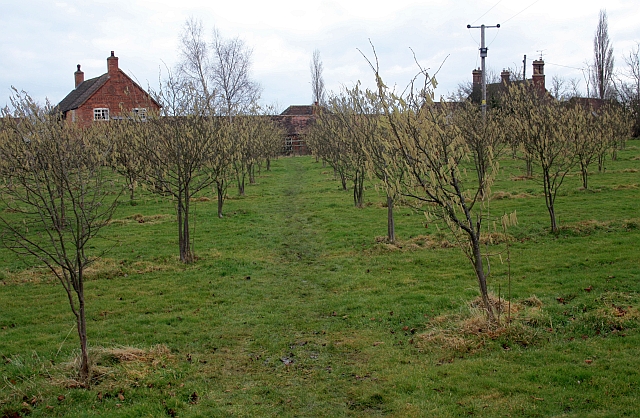
Advantages of drip fertigation compared to traditional broadcasting:
- Higher nutrient use efficiency — nutrients are delivered directly to the moist root zone, reducing leaching (especially of nitrogen) and fixation, so less fertilizer is needed for the same effect.
- Precise control of dose and concentration — nitrogen and other nutrients can be applied in small, frequent doses, ensuring continuous availability in the root zone without sudden "spikes."
- Lower water and energy consumption — only a narrow zone around the plant and within the row is moistened, while the inter-row space remains dry (fewer weeds, easier harvest).
- Higher yields and better fruit quality with the possibility of automation and control.
- Seasonal adaptability — nutrient ratios (e.g., more nitrogen in spring, more potassium and calcium during fruit filling) can be easily changed from one dose to the next.
Limitations: higher initial investment (pump, filters, fertilizer injector/doser, drippers), need for water-soluble (more expensive) fertilizers, risk of clogging drippers, and need for regular monitoring of solution EC and pH. Fertigation also does not replace ameliorative (pre-planting) fertilization nor the autumn application of phosphorus and potassium to the root zone, as these elements are poorly mobile.
Setting up a fertigation system
Hazelnut fertigation is practically implemented using above-ground (most often suspended on the first wire) or underground drip systems. A typical system consists of:
- Water source and pump — water from a well, reservoir (rainwater) or watercourse. One Croatian plan for an orchard of ~12 ha plans drip irrigation above-ground on the first wire, with water from a reservoir filled by precipitation and supplemented from a well.
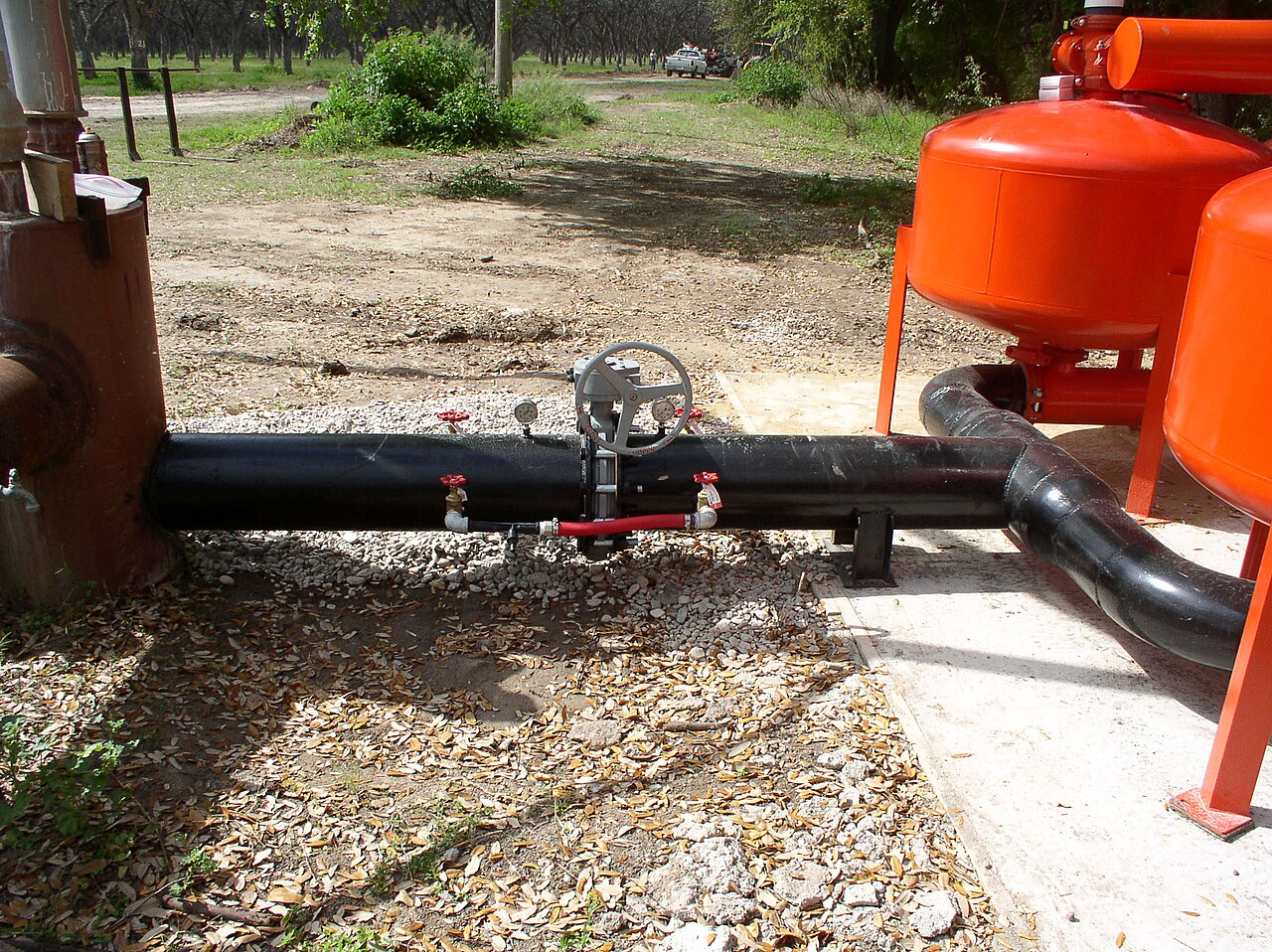
- Filtration — mandatory (mesh, disc, or sand filters). Water-soluble fertilizers and particles in the water are the main causes of dripper clogging.
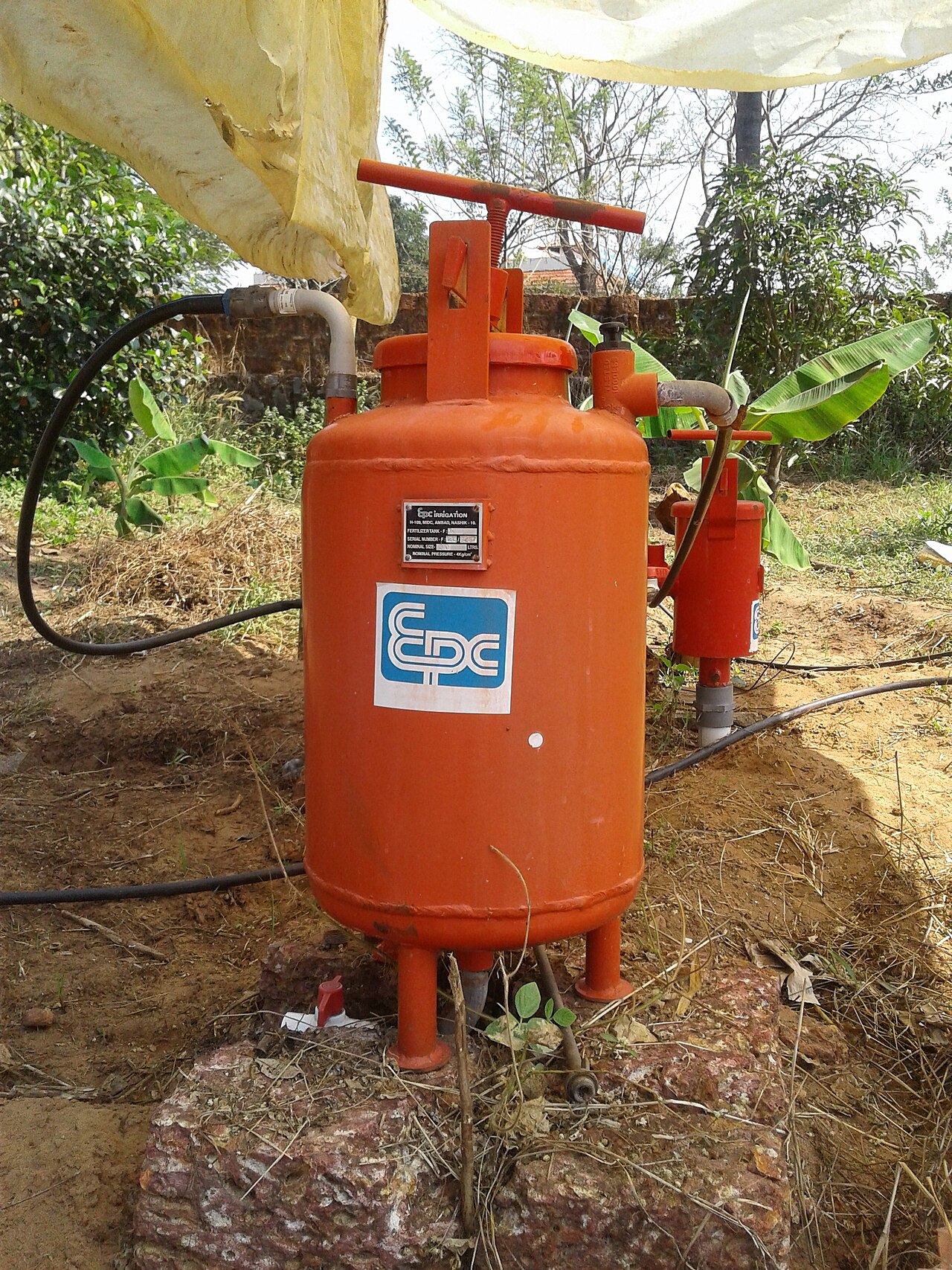
- Fertilizer doser/injector — Venturi injector, dosing pump, or tank with solution. The injector introduces a concentrated solution (stock solution) into the main water line at a set ratio.
- Measuring instruments — EC meter and pH meter (ideally in-line), soil moisture meters (tensiometers or digital "watermark" meters) to determine timing and amount of irrigation.
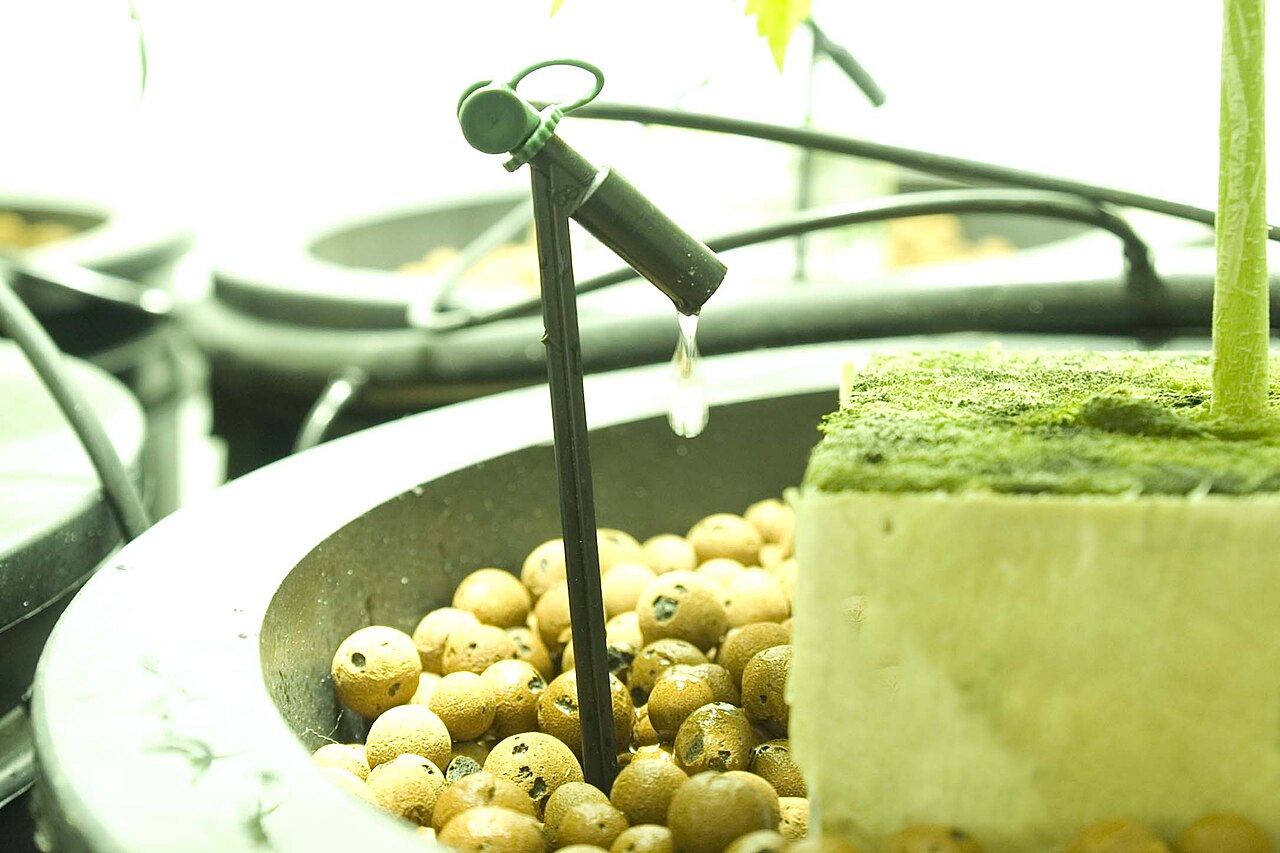
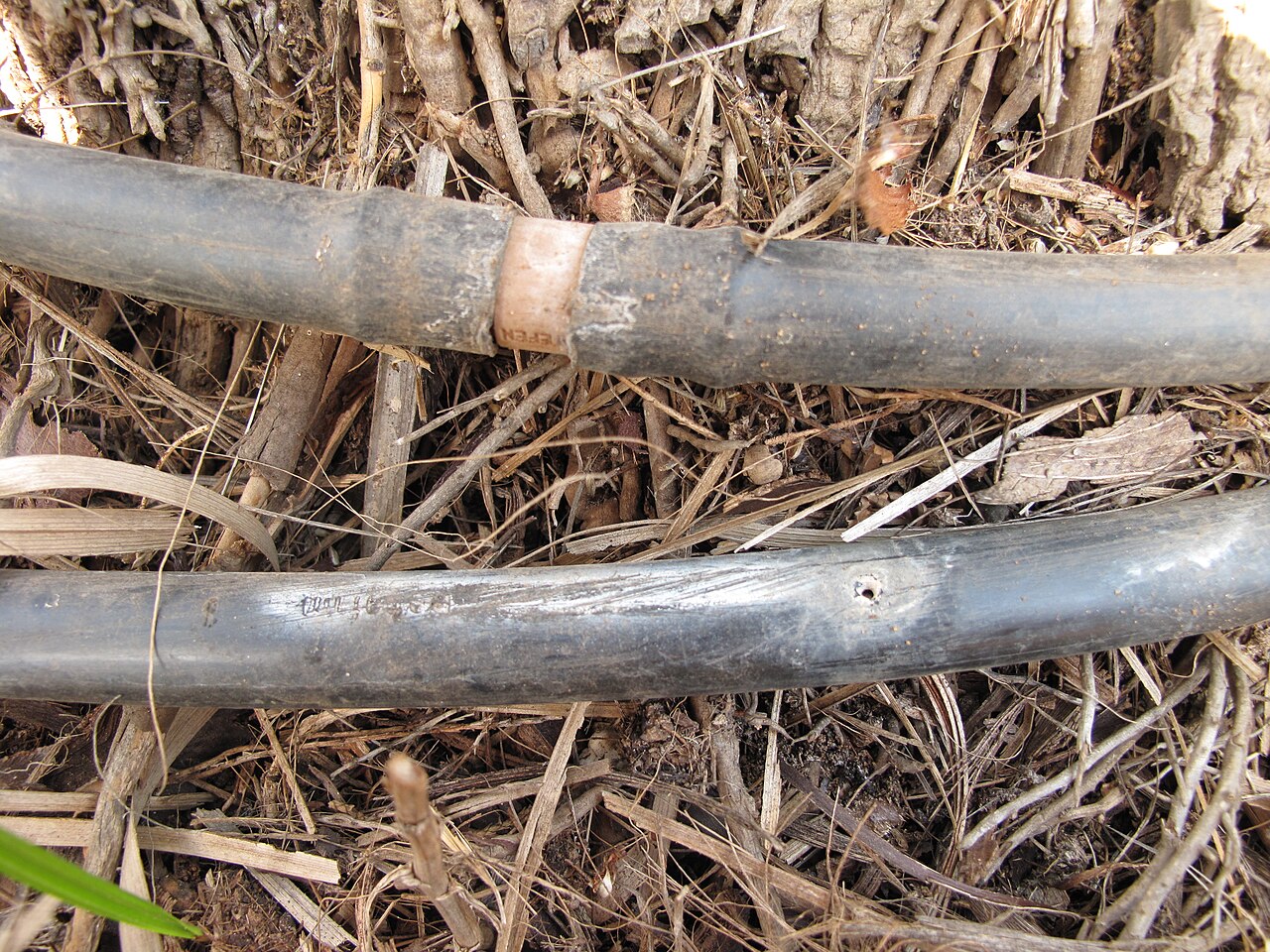
- Distribution network and drippers — laterals with integrated drippers (most often flow rate 1.6–4 l/h, dripper spacing adjusted to planting distance and soil type). Larger orchards are divided into zones/blocks irrigated row by row.
Irrigation timing and quantity should be guided by actual need: hazelnut irrigation frequency depends on soil type and can be every 1–3 days during dry periods, with quantity adjusted according to evapotranspiration and moisture meter readings. Total water needs are approximately 800–1,200 mm annually (including precipitation), with highest demand during vegetation; irrigation during June positively affects fruit size, and during August affects kernel mass.
Managing fertigation through the season
The basic principle is: fertilizer follows phenological phase. Nitrogen dominates in spring and early summer (shoot growth, leaf development, fruit set), while potassium and calcium become more important during fruit filling and ripening. The classic fruit tree rule — applying phosphorus and potassium and about one-third of nitrogen in autumn, and the rest of nitrogen in spring — is "broken down" into several small doses during vegetation in fertigation.
A rough fertilization calendar for hazelnut (according to phases in literature) can be mapped to fertigation doses:
| Phase | Period (approx.) | Focus in fertigation |
|---|---|---|
| Vegetation break, budding | from ~April 15 to May 1 | Nitrogen (start NPK with emphasis on N), micronutrients |
| Intensive vegetation and pollination | ~45 days after break | Balanced NPK, nitrogen + potassium |
| Fruit set and filling | ~30 days (June–July) | Potassium increases, calcium and boron for kernel quality |
| Ripening and harvest | summer–early autumn | Reduce nitrogen, focus on potassium |
| Post-harvest, before leaf drop | ~15 days after harvest | Replenishing reserves, moderate N + micronutrients |
Nitrogen should be gradually reduced towards the end of the season — late excess nitrogen prolongs vegetation and harms ripening and winter hardiness. Monitoring solution EC and moisture meter readings, along with periodic leaf analysis (around July), are the best guides for fine-tuning.
Dosing nutrients through drip irrigation
The key to fertigation is dosing in small, frequent doses of low concentration, which prevents root zone salinization and losses through leaching. For orchards with drip irrigation, the following practical guidelines emerge from literature:
- Nitrogen fertilizer concentration in water: approximately 1–2 g of pure nitrogen per liter of water.
- Nitrogen dose per application: approximately 5–7 kg of pure N/ha in one dose, applied more frequently throughout the season.
- Solution EC in the root zone should be kept within a range acceptable for the crop and monitored with a meter; high EC fertilizers (e.g., ammonium nitrate, ammonium sulfate) require caution on sensitive/salinized soils.
From commercial hazelnut protection and nutrition programs, a typical sequence of fertigation doses through drip irrigation is visible (values are manufacturer examples and are purely informative):
| Phase | Type of water-soluble fertilizer (example) | Approximate quantity | Frequency |
|---|---|---|---|
| After planting / start | start NPK type 11-40-11 + micronutrients | ~25 kg/ha | 2× at 5–7 day intervals |
| Vegetative growth | NPK type 24-10-10 + 2 MgO + ME | ~25 kg/ha | 2× at 5–7 day intervals |
| Intense fruit growth | NPK type 13-5-30 + Mg + Ca + ME or potassium nitrate | ~25 kg/ha | 2× at ~10 day intervals |
| Fruit filling (Ca deficit) | calcium nitrate through drip irrigation | ~0.5–2 g/plant | every 7–10 days |
As a guide for total seasonal needs in a productive hazelnut orchard, recommendations for pure fertilizers (Brzica, 2002) can serve, which are divided into doses in fertigation:
| Period / orchard | N | P₂O₅ | K₂O |
|---|---|---|---|
| First year (per tree) | 0.10–0.15 kg | 0.02–0.05 kg | 0.05–0.10 kg |
| Second year (per tree) | 0.20–0.30 kg | 0.05–0.10 kg | 0.20–0.30 kg |
| Third year and onwards (per ha) | 100–500 kg | 30–80 kg | 100–150 kg |
| Full production period (per ha) | 150–200 kg | 35–80 kg | 100–200 kg |
All quantities are informative and depend on soil and leaf test results, cultivar, orchard age and productivity, soil type and pH, and applicable regulations and product labels. During fruit filling, the ratio shifts towards potassium; in orchards with calcium deficit, calcium is added through drip irrigation (calcium nitrate) because it is poorly mobile in the plant.
Practical procedure for one dose
- First, irrigate with clear water to moisten the root zone.
- Follow with the fertilizer phase — inject the solution, monitor EC/pH at the outlet.
- Finally, flush the system with clear water (5–15 min) so that fertilizer does not remain in the laterals and drippers (preventing clogging and precipitation).
Selection and compatibility of fertilizers
Only highly soluble (water-soluble) fertilizers are used for fertigation. Solubility and properties differ significantly:
| Fertilizer | N Content | Solubility (g/l) | EC (dS/m, approximate) | Note |
|---|---|---|---|---|
| Calcium nitrate | 15.5% N + ~26.5% CaO | ~1,220 | ~1.20 | Nitrate N, does not acidify soil; do not mix with sulfates/phosphates |
| Ammonium nitrate | 34.5% N (50% NO₃ / 50% NH₄) | ~1,920 | ~1.71 | High EC, caution on saline soils |
| Magnesium nitrate | Nitrate N + Mg | ~2,250 | — | Source of Mg |
| UREA | 46% N (ammoniacal) | ~1,030 | ~0.00 | No EC contribution, flexible |
| Potassium nitrate (KNO₃) | Nitrate N + K | Good | — | Source of K without chlorides |
Compatibility rules (very important for preventing precipitation and clogging):
- Calcium (calcium nitrate) MUST NOT be mixed in the same stock solution with phosphates or sulfates — insoluble precipitates form (calcium phosphate, gypsum) that clog drippers. Keep in separate tanks (Tank A and Tank B) and dose separately.
- Avoid mixing high EC fertilizers simultaneously with sensitive preparations.
- Chloride fertilizers (e.g., potassium chloride) are poorly tolerated by hazelnut, especially in spring and at high doses — defoliation has been recorded; prefer potassium nitrate or sulfate.
- Pay attention to solution and soil pH: physiologically acidic fertilizers (ammonium sulfate, MAP) lower pH; since low pH values drastically reduce nitrogen and potassium uptake in hazelnut (shallow root!), the root zone pH should be monitored and corrected if necessary.
- Always check the manufacturer's compatibility table and perform a mixing test ("jar test") before application in the system.
On the market, there are also dedicated liquid/pelleted preparations for drip application (e.g., soil conditioners of the Bramisoil type, dose ~3–5 l/ha every 7–15 days; biostimulators and amino acids), as well as special water-soluble NPK fertilizers with micronutrients. Dosages and intervals depend on the development stage and are mentioned solely as examples from the label.
Fertigation Efficiency and Nutrient Uptake
Fertigation efficiency stems from three facts. First, nutrients are delivered to the moist, active root zone at the time of demand, reducing losses from leaching (nitrogen) and fixation (phosphorus on acidic soils). Second, small, frequent doses maintain a stable concentration in the soil and avoid "salt spikes" that could damage the shallow roots of hazelnuts. Third, the moisture provided by irrigation itself unlocks uptake: without water, nutrients in the soil are physically unavailable to the roots, which is critical for hazelnuts in July and August.
It is important to keep in mind the biological specificities of hazelnuts that fertigation helps mitigate, but does not eliminate:
- Shallow root system — reduced nitrogen uptake from deeper soil layers; targeted application in the shallow moist zone is an advantage.
- Low soil pH — a "hidden" limiting factor for N and K uptake; pH must be monitored and corrected.
- Alternate bearing — nitrogen demand varies from year to year; trees with depleted reserves after a heavy crop year uptake more nitrogen earlier. Monitoring tree condition and leaf analysis help adjust doses.
- Nitrogen feedback loop — well-fertilized trees uptake less nitrogen from later applications; "forcing" nitrogen is pointless and results in weak, overly vigorous trees.
Data from hazelnut fertilization trials (Međimurje, 8-year-old orchard) show that balanced variants with sufficient potassium, combined with foliar feeding, yield the highest production (up to ~7.3 kg per bush, or ~4.4 t/ha), while the unfertilized control lags behind. This confirms that precision and balance of nutrients, rather than sheer quantity, drive yield. Fertigation is precisely the tool for achieving this precision.
Practical Recommendations and Common Mistakes
Recommendations
- Base the fertilization plan on soil and leaf analysis, not on "feel"; fertigation is merely a delivery tool—the decision on quantities is driven by the test results.
- Dose frequently and in small amounts (low concentration, EC under control), rather than infrequently and in large doses.
- Keep separate stock solutions for calcium/nitrates and for phosphates/sulfates.
- Always flush the system with clean water after each dose and regularly clean filters and emitters.
- Manage irrigation according to soil moisture sensors and evapotranspiration, not on a fixed schedule.
- Reduce nitrogen towards the end of the season; emphasize potassium and calcium during the nut-filling stage.
- Maintain pre-planting ameliorative fertilization and autumn P and K applications—fertigation supplements these, it does not replace them.
Common Mistakes
- Mixing calcium-based and phosphate/sulfate fertilizers in the same tank → precipitation and clogging of emitters.
- Excessively high concentration (high EC) → root damage and salinization of the moist zone.
- Ignoring pH → "invisible" locking of nitrogen and potassium on acidic soils.
- Using potassium chloride in spring and in high doses → defoliation.
- Skipping the final flush → precipitation, microbial growth, and clogging.
- "Forcing" nitrogen for greater growth → vigorous, weak trees and smaller, poorer-quality nuts.
- Fertigation without moisture monitoring → either drought during critical phases or nutrient leaching due to excessive irrigation.
Gallery
Sources
This article is an AI-generated summary derived from a collection of hazelnut literature (internal RAG corpus of professional and scientific sources) and publicly available internet sources. Figures (doses, concentrations, timelines) are informative and depend on cultivar, location, soil/leaf test results, and applicable regulations and product labels. Main sources used:
- Galenika-Fitofarmacija — Plant Protection and Nutrition Program 2025 (fertigation and foliar application on hazelnut; dose schemes via drip irrigation).
- Green Has — Product Catalog Europe 2024 (HR) (foliar and fertigation doses, note on saline soils).
- EcoMission d.o.o. — Environmental Impact Assessment… hazelnut orchard and irrigation system, Donji Hrastovac, Municipality of Sunja (2021) (drip irrigation system, irrigation frequency, advantages of drip).
- Environmental Impact Assessment… ~40 ha hazelnut orchard, Municipality of Vojnić (2021) (automated drip irrigation system, water consumption).
- Hazelnut (Vrtlarica.hr) (irrigation, precipitation 800–1,200 mm, nitrogen fertilization by year).
- Fitoeko — Catalog 2024/2025 (Bramisoil and application via drip; doses and intervals).
- Agrimatco — Professional Advice: Foliar Fertilization of Hazelnut (feeding phases, potassium and CAN, activators).
- Foliar Fertilization of Hazelnut for Higher… (impact of low pH on N and K uptake; shallow root system).
- Proceedings of the 13th Scientific-Professional Conference of Croatian Fruit Growers (2018) (fertilization trial, yields).
- Brzica, 2002 — recommended amounts of pure nutrients for hazelnut fertilization (reproduced in literature).
- High Yield Technologies — Nitrogen in Fertigation: Concentrations, Doses, EC, Solubility of Fertilizers — https://gnojidba.info/gnojidba-po-kulturama/povrtlarstvo/dusik-u-fertirigaciji-povrca-kljuc-za-visok-prinos-i-kvalitetu/
- Agroklub — Irrigation and Fertigation of Plantation Orchards — https://www.agroklub.com/vocarstvo/navodnjavanje-i-fertirigacija-plantaznih-nasada/16339/
- Agroklub — Foliar Fertilization of Hazelnut — https://www.agroklub.com/vocarstvo/folijarna-gnojidba-lijeske/15409/
- OSU Extension — Growing Hazelnuts in the Pacific Northwest: Orchard Nutrition (EM 9080) — https://extension.oregonstate.edu/catalog/pub/em-9080-growing-hazelnuts-pacific-northwest-orchard-nutrition
- West Coast Nut — Fertilization: Important Points to Consider When Fertilizing Hazelnuts — https://wcngg.com/2019/08/09/fertilization-important-points-to-consider-when-fertilizing-hazelnuts/
Recommended equipment
🔎 fruit tree fertilizer — Amazon →Affiliate links — we may earn a small commission at no extra cost to you.