Carbon Sequestration and the Carbon Credit Market
Content generated by artificial intelligence — verify before application
This article was automatically compiled from a collection of hazelnut literature using artificial intelligence and may contain errors or outdated data. It serves as a starting point for further research, not as professional advice. Dosages, products, and timing are informative and depend on the cultivar, location, and applicable regulations — always consult an advisory service and official sources before application.
A hazelnut orchard is not just a production system for hazelnuts, but a long-lived perennial crop that binds carbon in woody biomass and soil for decades. In an era when the European Union is building rules for "carbon farming" and certified carbon removal, hazelnut producers are increasingly asking two questions: how much carbon is my orchard actually binding, and can I generate revenue from it through carbon credits? This article explains how hazelnut binds carbon in the tree and soil, how the carbon footprint of production is calculated, and what the realistic opportunities and pitfalls are for entering the carbon credit market.
How hazelnut binds carbon
Carbon sequestration in a perennial orchard occurs through two main reservoirs ("sinks"):
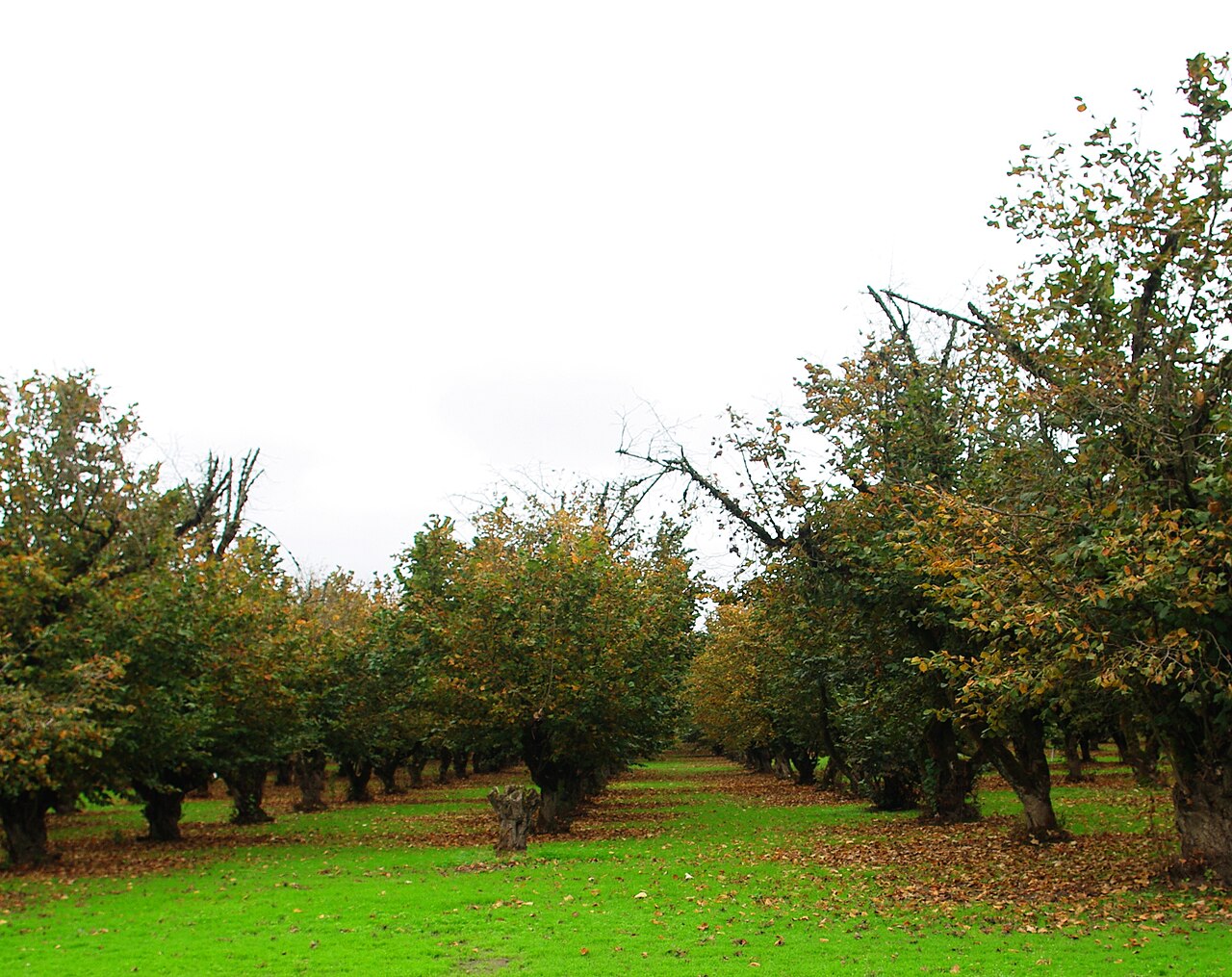
- Woody tree biomass — trunk/stems, branches, root system. Hazelnut is most commonly grown as a multi-stemmed shrub, accumulating significant permanent woody mass over the years that remains in the orchard for its entire lifespan (often 20–40+ years).
- Soil organic carbon (SOC) — through fallen leaves, fine roots, pruning residues, and biomass from inter-row cover crops, carbon is incorporated into humus.
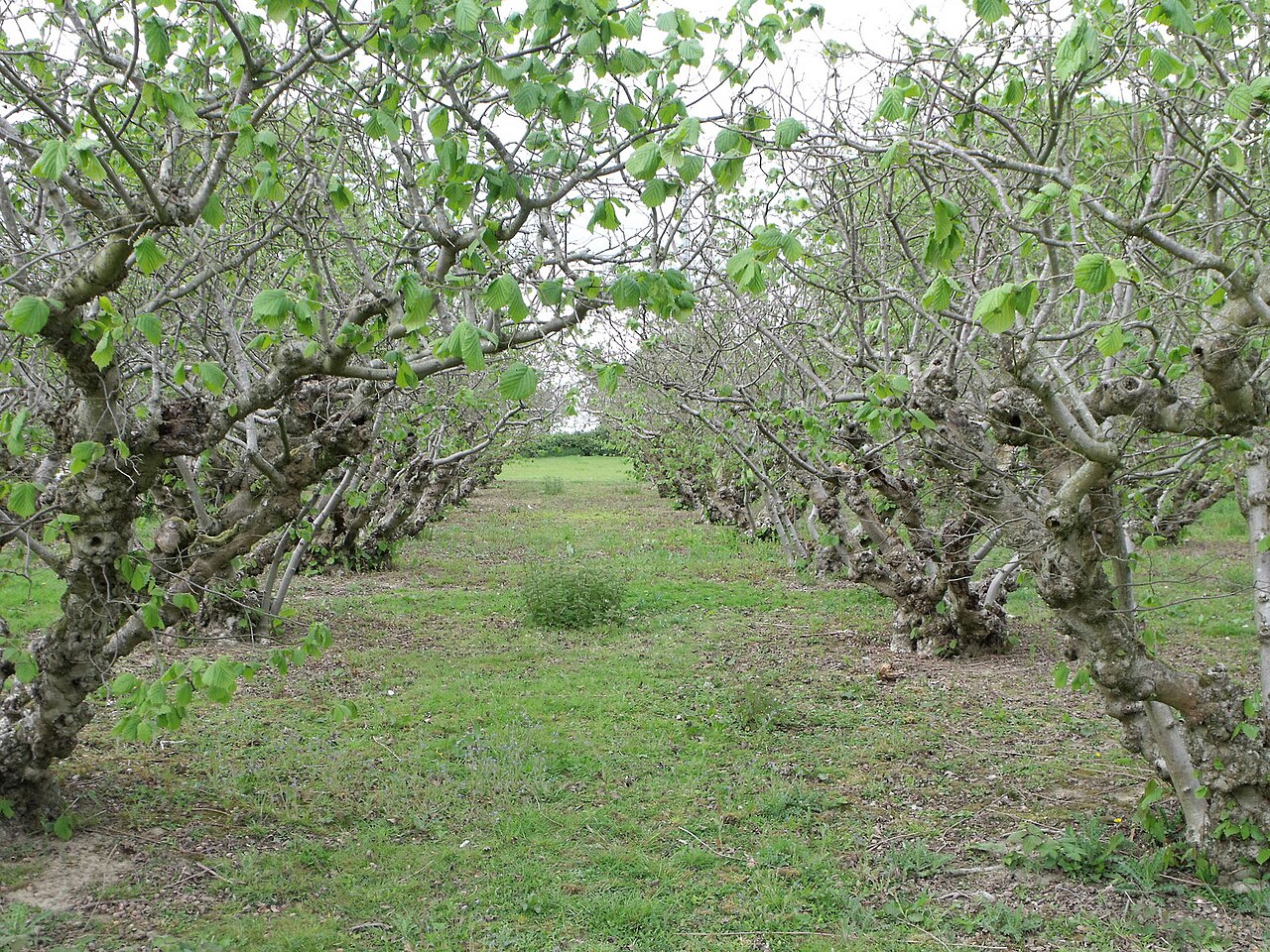
Environmental protection assessments for Croatian hazelnut orchards explicitly state that planting perennial orchards and restructuring existing chestnut and walnut orchards into hazelnut "enables further carbon sequestration," as green areas are not reduced but only the crop species changes, and no heat islands are created (EZO, MUNDO MELIUS / Borg).
How much carbon is that? Real figures
The most detailed measured data comes from research on hazelnut orchards in central Italy (Sciencedirect, 2022.). The picture is nuanced and important to understand before declaring an orchard a "carbon sink":
| Indicator | Value | Note |
|---|---|---|
| Soil carbon stock decline in the first 3–5 years | 23–58 % | After orchard establishment (soil tillage, loss of grassland) |
| Carbon binding in tree biomass | ~0.6–3.3 Mg C/ha | Depends on age and vigor |
| Mature orchard vs. grassland | similar or higher total sink | Due to accumulated woody mass |
| Effect of excessive N fertilization | reduces SOC potential | Excessive nitrogen is counterproductive |
Key lesson: in the first years after planting, the orchard can be a net source of carbon (because soil tillage and loss of previous grass cover release carbon from the soil), and only a mature, well-managed orchard becomes a true sink. This directly affects the ability to sell credits — credits are recognized for additional and permanent binding, not for a state that would exist anyway.
Figures are informative and vary greatly with soil type, climate, cultivar, planting density, and soil management method. For your own orchard, the only reliable basis is measurement (see below).
Carbon footprint of hazelnut production
The carbon footprint is the other side of the balance: how much CO₂ (and other greenhouse gases) production emits. The main sources of emissions in a hazelnut orchard are:
- production and application of mineral fertilizers (especially nitrogenous — the largest single source in most crop balances),
- fuel for mechanization (soil tillage, mulching, mowing, protection, harvest, transport),
- production of plant protection products,
- energy for drying and processing hazelnuts (dryers are energy-intensive),
- irrigation (water pumping).
A Croatian environmental protection assessment for one hazelnut orchard estimated the total carbon footprint at 10.25 t CO₂ per year, which is far below the threshold of 20,000 t CO₂/year from the EU Technical Guidelines for the preparation of climate change infrastructure 2021–2027 (2021/C373/01). In other words, hazelnut production is a low-emission activity (EZO, Borg, 2024.).
What increases and what decreases the footprint
| Factor | Effect on footprint | Practical measure |
|---|---|---|
| High doses of mineral N | ↑ footprint, ↓ SOC | Fertilization based on soil/leaf analysis, split doses |
| Intensive soil tillage | ↑ (releases SOC) | Reduced tillage, permanent grass cover in inter-rows |
| Diesel mechanization | ↑ | Fewer passes, efficient machinery, combining operations |
| Drying energy | ↑ | Efficient dryers, renewable sources |
| Organic production / organic fertilizers | ↓ | Manure, green manure, eco-nitrogen fertilizers |
| Grazing in the orchard (agroforestry) | ↓ | Reduces mowing and fertilization |
Italian research on agroforestry (Università della Basilicata) shows that grazing animals in hazelnut orchards reduces tillage and fertilization costs, thereby reducing the carbon footprint of production, with additional revenue. Hazelnut grown as a multi-stemmed shrub also has a preventive role against soil erosion (Serdar and Akyüz, 2017.), which indirectly preserves carbon in the soil.
Simplified balance
Net climate effect of the orchard = bound carbon (tree + soil) − production emissions. The goal of sustainable cultivation is to keep this difference positive (net sink). For credit certification, this balance must be proven by measurement and in relation to a reference state (what would be on that surface without intervention).
Measurement: the foundation of everything
Without credible measurement, there are no serious credits. In practice, a combination is used:
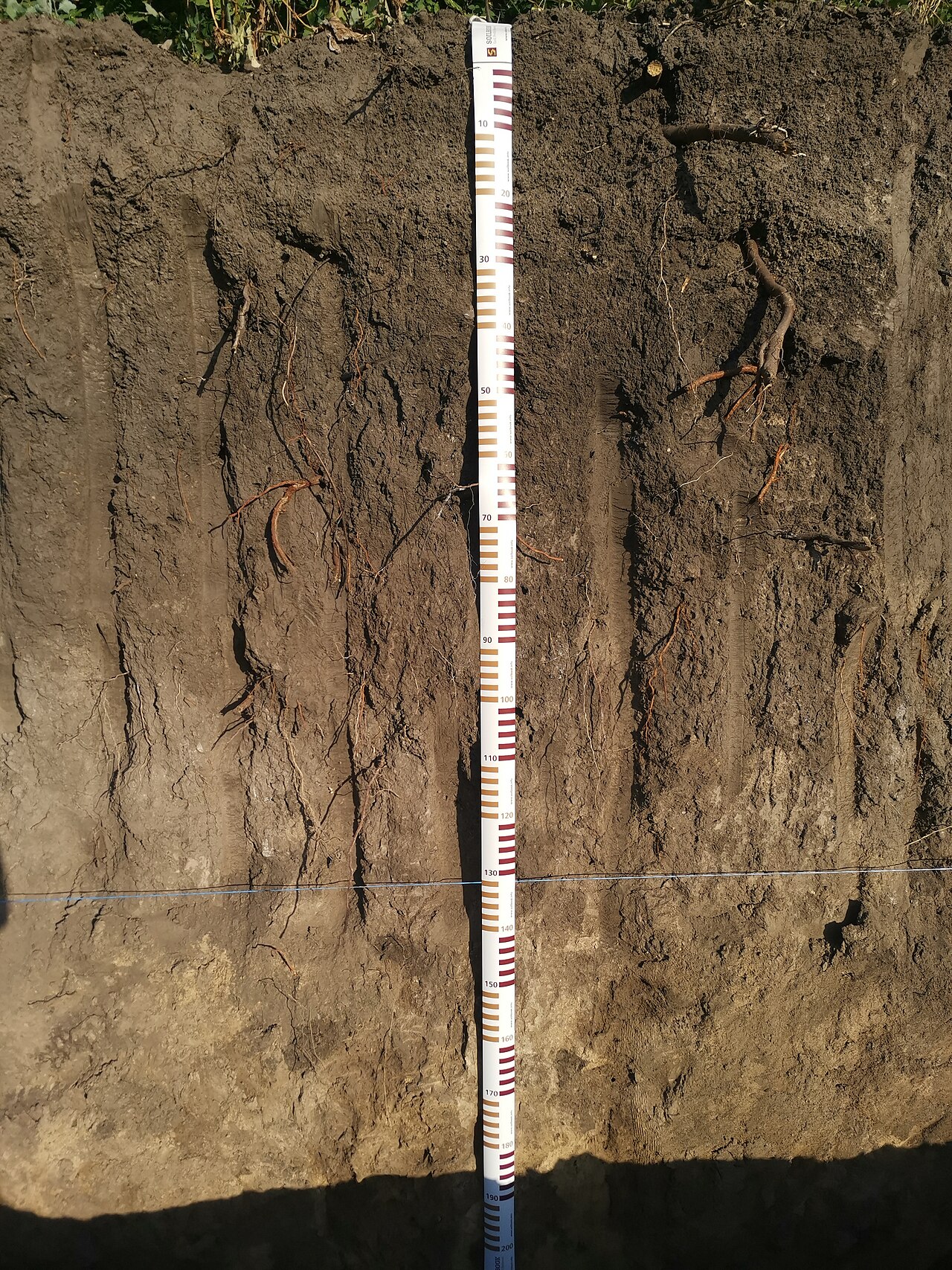
- Soil sampling at multiple depths and repeated over years (soil organic carbon content, % humus, bulk density). Croatian orchards typically have humus in the range of 1.6–3.7 % with pH 5.3–6.2 (Proceedings of the Croatian Fruit Growers, 2018.), which is a good baseline reference.
- Estimation of tree biomass via allometric equations (trunk diameter, number of shoots, orchard age).
- Remote sensing (satellite/drone vegetation indices) for monitoring cover.
- MRV protocols (Monitoring, Reporting, Verification) required by the certification scheme.
Note on fertilization: since excessive nitrogen reduces soil carbon stocks and increases the footprint, fertilization should be guided by analysis. Orientational doses from Croatian practice range, for example, from 150 kg/ha NPK to 500–700 kg/ha NPK with urea/CAN depending on the variant and nutrient status — always adjust to soil analysis, cultivar, and location, and do not apply uniformly.
Carbon credits and carbon farming
A carbon credit is a market unit representing one ton of CO₂-equivalent that has been avoided or removed from the atmosphere. Companies wishing to neutralize their emissions purchase these credits, and a producer who can prove carbon binding can sell them — with additional revenue (result-based payments).
There are two basic channels:
- Compliance markets (e.g., EU ETS) — primarily for industry, agriculture does not participate directly there.
- Voluntary markets (VCM) — where agricultural and forestry projects most often sell credits to customers who voluntarily offset their footprint.
Market context and prices
From the corpus (Treesury White Paper, 2024/2025.) and public sources:
| Data | Value | Source |
|---|---|---|
| Growth in credit prices from "natural solutions" | +173 % in 2021 | Treesury WP / S&P Global |
| Credit price (natural solutions) | ~12.70 US$ / t CO₂ | Treesury WP, 2021. |
| Example project capacity | ~120 t CO₂e | Treesury (illustrative) |
The Treesury White Paper explicitly identifies carbon credit sales as a revenue source from hazelnut production, with a key condition: for sales on official exchanges, certification of the orchard as a "producer" of carbon credits is required based on its CO₂ sequestration capacity; for voluntary schemes, this condition may not apply.
A good practical model is also offered by the Italian project for olive groves (S03, 2024.): the goal is (1) to calculate avoided emissions and increased sequestration through sustainable agronomic practices, (2) to calculate the corresponding credits, (3) to sell them on the voluntary market, and (4) to establish a regulatory and certification framework transferable to other perennial orchards — including hazelnut.
EU framework: CRCF regulation
The most important new development is the EU CRCF regulation (Carbon Removals and Carbon Farming), adopted in December 2024, the first EU voluntary framework for certifying carbon removal, carbon farming, and carbon storage in products:
- The Commission is finalizing certification methodologies for carbon farming (agriculture, agroforestry, afforestation, rewetting of peatlands) which enable payments based on results.
- The activity must generate at least one co-benefit for biodiversity or the ecosystem.
- Certification schemes must be recognized by the Commission according to a standardized protocol (compliance and audit standards).
- The Commission will begin receiving scheme applications in early 2026; public consultations on draft methodologies ran until February 2026.
For Croatian producers, this means that the legal framework is only forming, which could open access to certified, sellable carbon credits for hazelnut orchards — but rules, methodologies, and recognized schemes should be monitored through advisory services and official EU sources.
Principles that credits must meet
For credits to be credible (and sellable), almost every scheme requires:
- Additionality — binding that would not have happened "on its own" (without the project).
- Permanence — carbon must remain bound for a longer period; release (logging, fire, plowing) voids the credit (reversibility risk).
- Measurability and verifiability — MRV with independent verification.
- Avoidance of double counting — the same carbon cannot be sold more than once.
- Co-benefit (in the EU CRCF) — benefit for biodiversity/ecosystem.
Practical Recommendations
Measures that simultaneously increase sequestration and reduce the footprint (and prepare the orchard for future schemes):
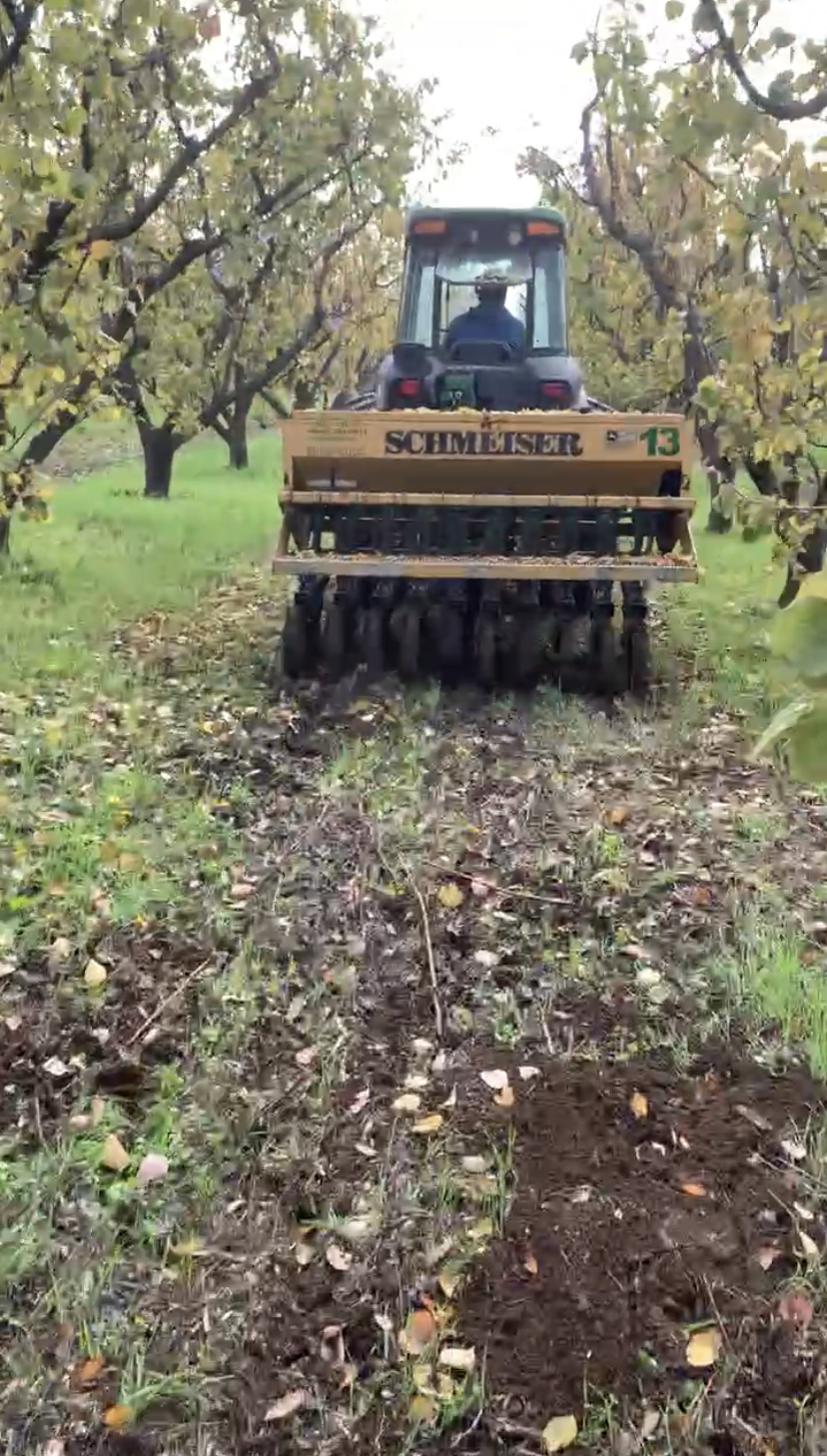
- Permanent grass cover in the inter-row combined with mulching — returns carbon to the soil, reduces erosion and tillage.
- Reduced soil tillage, especially after the first few years, to prevent humus decomposition.
- Fertilization based on soil and leaf analysis — avoid excessive mineral nitrogen; favor organic/ecological fertilizers and green manure.
- Returning pruning biomass to the orchard (mulching) instead of burning.
- Efficient mechanization and drying — fewer passes, combined operations, renewable energy sources for the dryer.
- Agroforestry / controlled grazing where feasible — less mowing and fertilization, additional income.
- Keep records (fuel, fertilizers, yields, operations) — future certification will require documented data.
Common Mistakes
- Overestimating sequestration in young orchards — for the first 3–5 years, the orchard may be a net source of carbon.
- Excessive N-fertilization "just in case" — increases the footprint and reduces SOC.
- Burning pruning residues — loss of carbon and organic matter.
- Expecting quick and easy profits from credits — low prices, high transaction costs, and strict requirements (additionality, permanence, MRV) often make small projects unprofitable on their own; pooling producers and credit aggregators can help here.
- Entering without a certified scheme — unverified credits are difficult to sell and carry reputational risk.
Sources
This article is an AI summary compiled from an internal collection of hazelnut literature (RAG corpus) and publicly available sources. Main sources used:
- Environmental Protection Study — establishment of hazelnut orchards (carbon sequestration; carbon footprint 10.25 t CO₂/year; threshold 20,000 t CO₂, 2021/C373/01), MUNDO MELIUS d.o.o. / Borg, 2020.–2024. — RAG corpus; partially: https://bbz.hr/doc/uprava/elaborat_zastite_okolisa_visegodisnji_nasadi_lijeske_i_sljive.pdf
- Treesury White Paper (carbon credit market, orchard certification, prices, +173 %, ~$12.70/t), 2024.–2025. — RAG corpus
- Master’s thesis (issues with suckers, hazelnut area in Croatia 2012.–2022., role of shrubs against erosion; Serdar and Akyüz, 2017.), 2024. — RAG corpus
- Proceedings of Abstracts, 13th Scientific-Professional Conference of Croatian Fruit Growers (humus 1.6–3.7 %, pH, fertilization), 2018. — RAG corpus
- Università degli Studi della Basilicata — agroforestry and grazing in hazelnut orchards (reducing carbon footprint), 2022. — RAG corpus
- S03: Fruit Production Systems for Sustainable and Resilient Development — carbon credit model for permanent orchards (olive), 2024. — RAG corpus
- Carbon sequestration of hazelnut orchards in central Italy — ScienceDirect, 2022. — https://www.sciencedirect.com/science/article/abs/pii/S0167880922001049
- EU Carbon Removals and Carbon Farming (CRCF) Regulation — European Commission, Climate Action — https://climate.ec.europa.eu/eu-action/carbon-removals-and-carbon-farming_en
- Establishing a Union certification framework (CRCF) — EUR-Lex — https://eur-lex.europa.eu/EN/legal-content/summary/establishing-a-union-certification-framework-for-permanent-carbon-removals-carbon-farming-and-carbon-storage-in-products.html
- Agricultural Carbon Credits and Carbon Farming Guide — carboncredits.com — https://carboncredits.com/what-are-carbon-credits-in-agriculture/